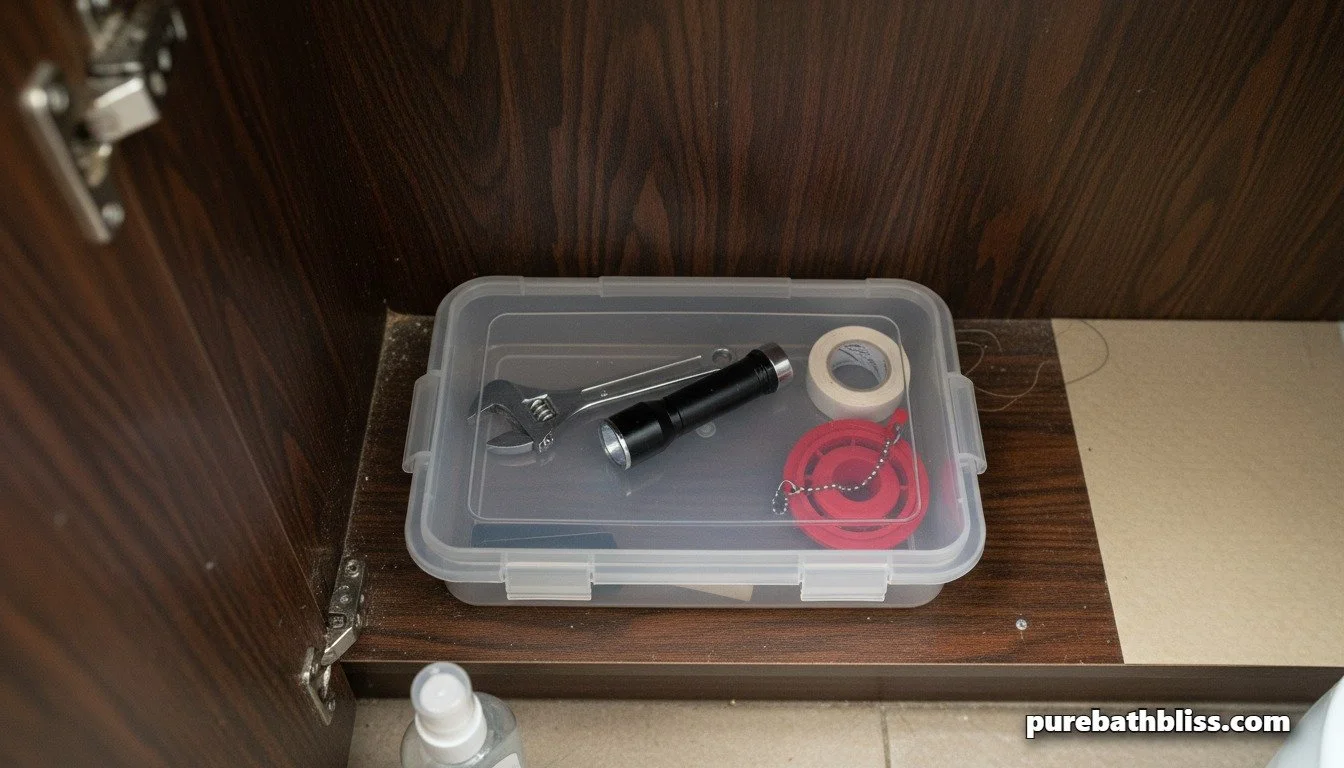
The Bathroom Emergency Kit: Protecting Your Home’s Infrastructure
In my years as a builder, I’ve noticed that most homeowners are reactive rather than proactive. They wait for a pipe to pinhole or a toilet to overflow before they start looking for a wrench. But in 2026, high-performance home ownership is about "Infrastructure Insurance."
If a leak starts at midnight, your organized vanity drawers won't help you if they don't contain the right tools. A "Bathroom Emergency Kit" is a small, dedicated bin tucked into the back of your cabinet that contains everything you need to stop a minor issue from becoming a major renovation.
Here are the 7 essential items I recommend hiding behind your vanity to protect your home’s "Internal Infrastructure."
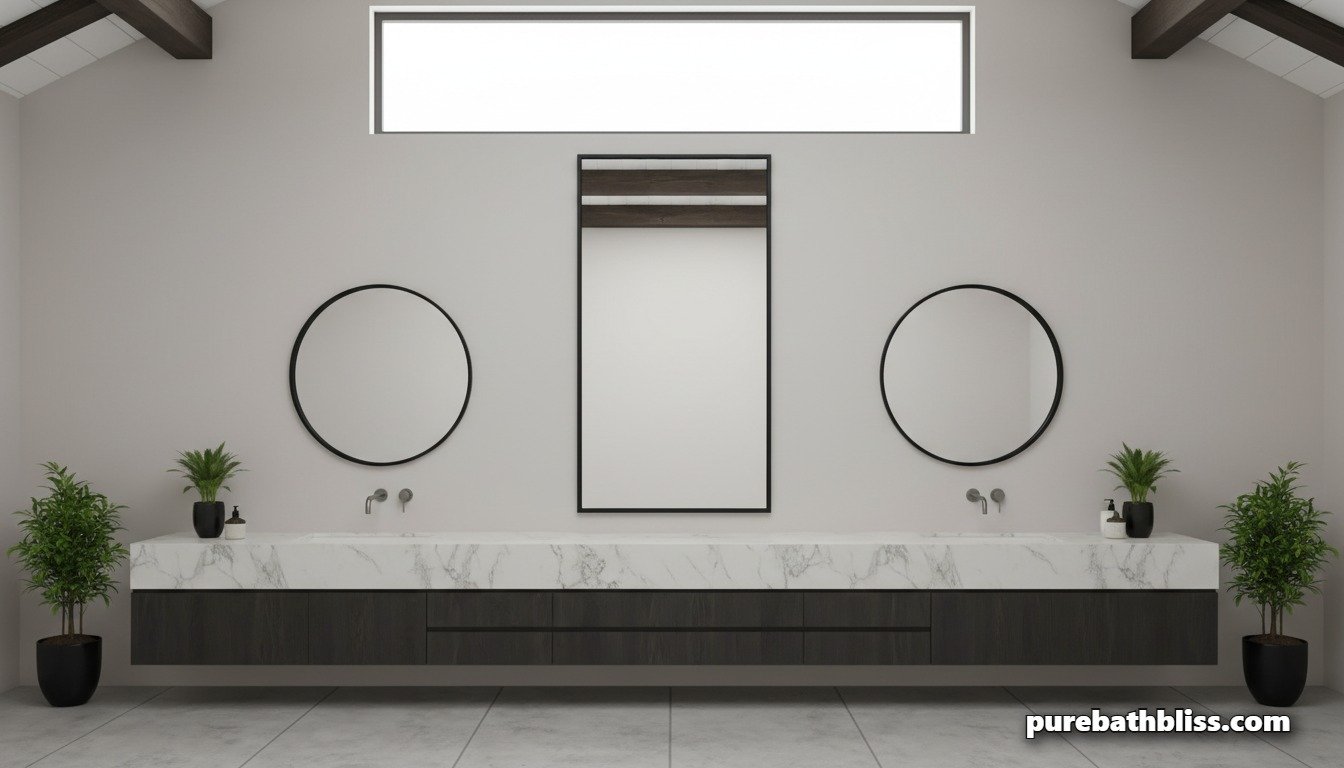
Mirror Shapes & Psychology: Choosing the Right "Scale" for Your Space
In bathroom design, we often treat the mirror as an afterthought—a utility piece meant for checking your teeth. But as a builder, I view the mirror as the primary "Visual Infrastructure" of the room. It is the largest reflective surface in the space, meaning it dictates how light travels and how the room’s "Energy" feels.
In 2026, we are moving away from standard, frameless builder-grade sheets of glass. We are now selecting shapes based on the Psychology of Scale. Whether you are outfitting a tiny jewel box powder room or a sprawling master bath, the shape you choose can either reinforce the room's rigid lines or soften the "Industrial Infrastructure."
Here is the professional guide to choosing between round and rectangular mirrors and the psychological impact each has on your daily routine.
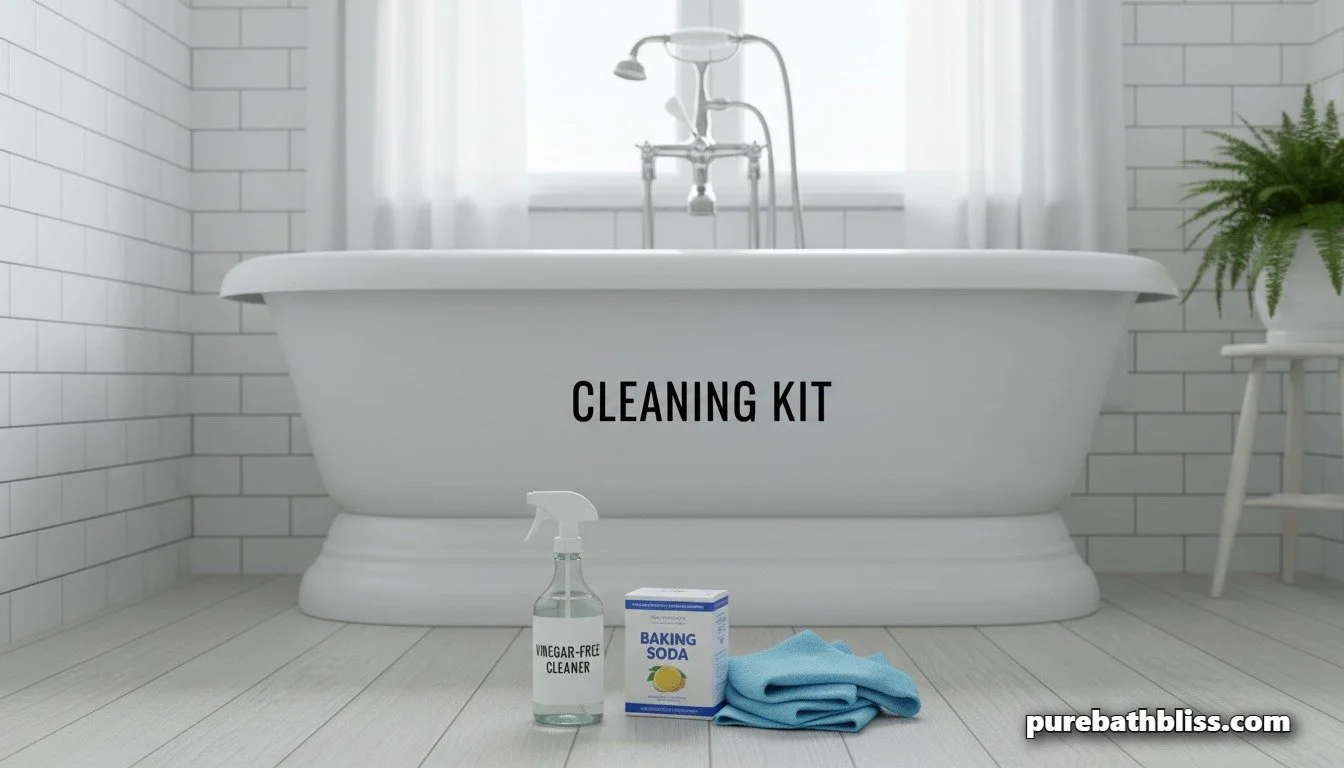
The Cleanup Protocol: When a Child is Sick on the Bathroom Floor
As a parent, your first instinct is comfort; as a builder, mine is surface protection. Stomach acid is a highly corrosive substance. On the pH scale, it sits between 1.5 and 3.5, similar to a strong industrial cleaner or lemon juice. If left to sit, it can etch your stone counters, dull your brushed brass fixtures, and eat through the sealers on your floor.
In 2026, we are moving away from harsh bleach-based cleanups that destroy air quality. Whether you have a seamless microcement bathroom finish or tile with high-performance epoxy grout, the goal is a "Safe-Scrub" that neutralizes the acid and removes the odor without damaging your home's infrastructure.
Here is the professional 4-step protocol for cleaning up after a "Stomach Bug" incident.

The Shower Curtain Height Hack: Airflow Meets Aesthetic
In most homes, the shower curtain is hung at a "Standard" height, usually just high enough to keep water in the tub. But as a builder focused on "Healthy Home Infrastructure," I see the standard height as a missed opportunity for both air quality and design. If your curtain is hung too low, it creates a "Stagnant Cap" at the top of the shower, trapping steam and heat exactly where pink slime bacteria and mold love to grow.
In 2026, we are moving the "Curtain Line" up. By hanging your shower curtain closer to the ceiling—sometimes called the "Grand Scale" move—you change the way air moves through the room. It’s a simple mechanical adjustment that improves the performance of your no-window powder room ventilation and makes a small bathroom feel like a luxury spa.
Here is why you should ditch the standard rod height and go for the "High-Hang" strategy.

The Tension Rod Strategy: Maximizing "Vertical Infrastructure"
In a small bathroom, the most underutilized real estate isn't the floor or the counter, it’s the air. As a builder, I’m always looking for ways to increase "Storage Density" without drilling permanent holes into a high-end microcement bathroom finish. Drilling into waterproof membranes is a risk most homeowners shouldn't take.
The solution is a classic "SpongeHack" favorite: the Tension Rod. By utilizing lateral pressure, you can create new layers of storage infrastructure in seconds. Whether you are trying to tame the chaos in your organized vanity drawers or need more room in a cramped shower, the tension rod is the ultimate non-permanent tool.
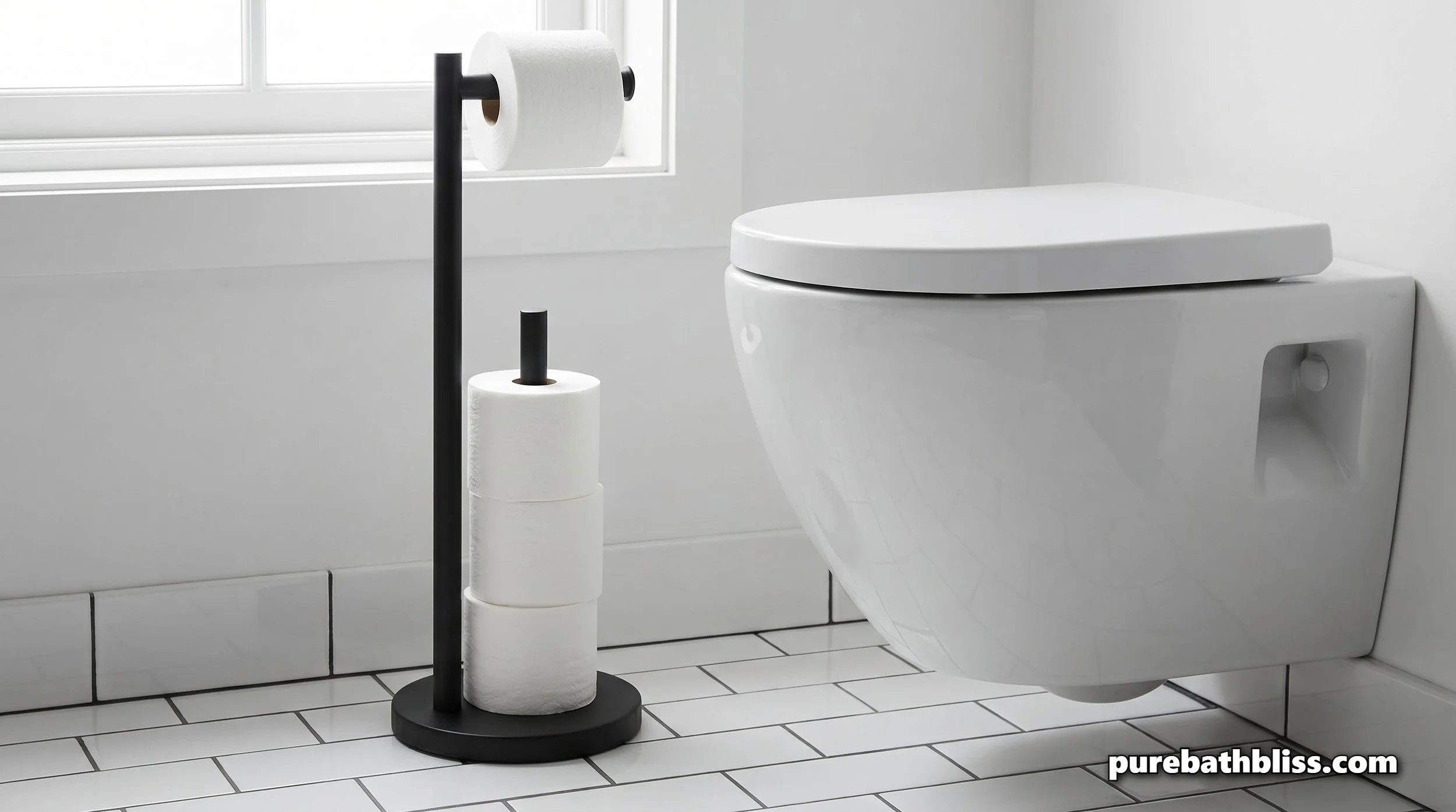
The Floor-Standing Fix: 3 Best TP Holders to Save Your Drywall
Following up on my lesson about child-proofing bathroom hardware, I want to focus on the single most common "Infrastructure Failure" in a family home: the wall-mounted toilet paper holder. As a builder, I’ve seen that no matter how many toggle bolts you use, a toddler leaning on a wall-mounted bar will eventually win the battle against your drywall.
The solution is to bypass the wall entirely. By switching to a floor-standing toilet paper holder, you remove the leverage point that leads to "Drywall Rot." If a child grabs it for balance, the stand simply tips—no repairs required. Plus, it allows you to move the holder out of the way for deep cleaning around the base of the toilet.
In 2026, the high-performance bathroom is all about mobility and resilience. Here are the three best floor-standing TP holders you can buy on Amazon to protect your jewel box powder room and keep your walls pristine.

Kids vs. Bathroom Hardware: The "Tear-Out" Lesson Every Parent Needs
Most people prepare for kids by putting locks on the organized vanity drawers. But after my first two kids, I learned that the real danger to your home’s "Infrastructure" isn't what’s inside the cabinets, it’s what is bolted to the walls.
When I moved into my latest home, the first thing I did was take a screwdriver and remove every single towel rack and toilet paper holder in the kids' bathroom. Why? Because I learned the hard way that to a toddler, a towel bar isn't a place for a washcloth; it’s a gymnastics bar. They lean on them, they hang from them, and eventually, they tear them right out of the drywall, leaving behind a jagged, expensive hole.
In 2026, we are designing "Kid-Resilient" bathrooms that favor hooks and heavy-duty alternatives over flimsy bars. Here is the professional guide to prepping your bathroom hardware for the reality of children.
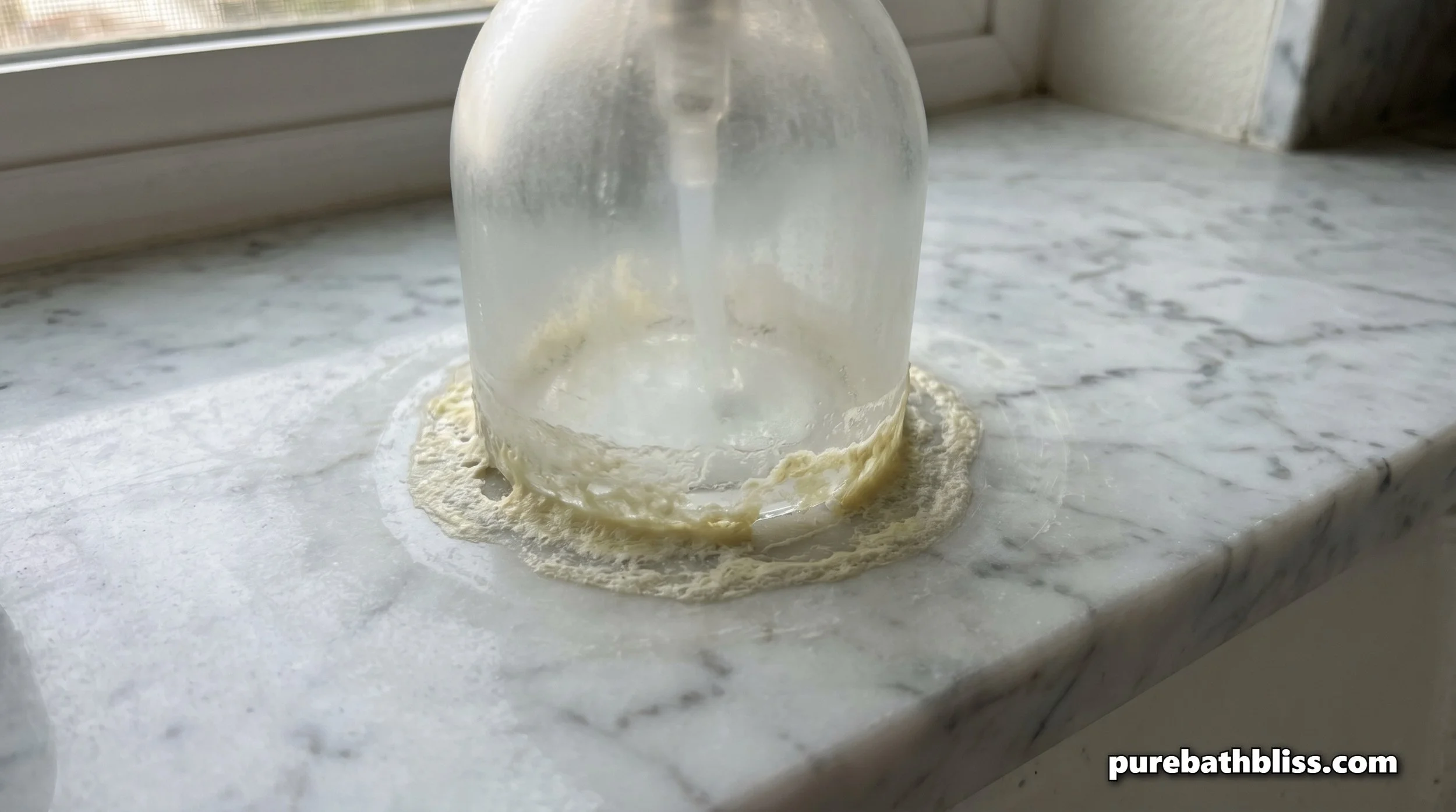
The Cost of Residue: Why Soap and Shampoo Are Silent Surface Killers
In the world of home maintenance, we often view soap scum as a mere aesthetic nuisance, a cloudy film that makes a shower look "unclean." But as a builder, I view soap and shampoo residue as a chemical threat to your bathroom’s "Internal Infrastructure." Most modern liquid soaps and shampoos contain surfactants, oils, and synthetic fragrances that are designed to be rinsed away immediately. When they sit on a surface, they become a corrosive "bio-film."
In 2026, we are seeing more high-end finishes like brushed brass fixtures and natural stone. These materials are particularly vulnerable to the long-term effects of "standing soap." Whether it’s on your counter, your shower floor, or the rim of your tub, leaving residue to sit is the fastest way to degrade the sealers and finishes you’ve invested in.
Here is why the "Post-Shower Rinse" is the most important 30 seconds of your daily routine.

The Built-in Toe-Kick Step: A Bathroom Independence Hack
When kids can’t reach the sink, the standard solution is a plastic step stool. But as a builder, I see these stools as "Infrastructure Hazards." They clutter the floor, scratch your seamless microcement finish, and create a tripping hazard in the middle of the night.
In 2026, the high-performance family home is moving toward Integrated Independence. The best way to foster a child's autonomy is to build the solution directly into the cabinetry. The Built-in Toe-Kick Step is a hidden drawer located at the very base of your vanity that pulls out to become a sturdy platform.
By moving the step into the "Internal Infrastructure" of the vanity, you clear the floor while ensuring your children can reach the brushed brass faucets safely. Here is how to plan, build, and maintain this genius bathroom hack.

The Indestructible Kids' Bath: Building for Floods and Finishes
When designing a bathroom for children, most parents focus on colorful shower curtains and rubber duckies. But as a builder, I focus on durability and moisture control. Kids are "heavy users" of bathroom infrastructure, they splash, they drop heavy toys, and they create "micro-floods" every single night.
In 2026, the goal is to build a bathroom that is essentially bulletproof. By using industrial-grade materials like high-performance epoxy grout and seamless floorings, you can create a space that survives the toddler years and transitions perfectly into the teenage years without a single renovation.
Here is how to build a kids' bath that is truly indestructible.
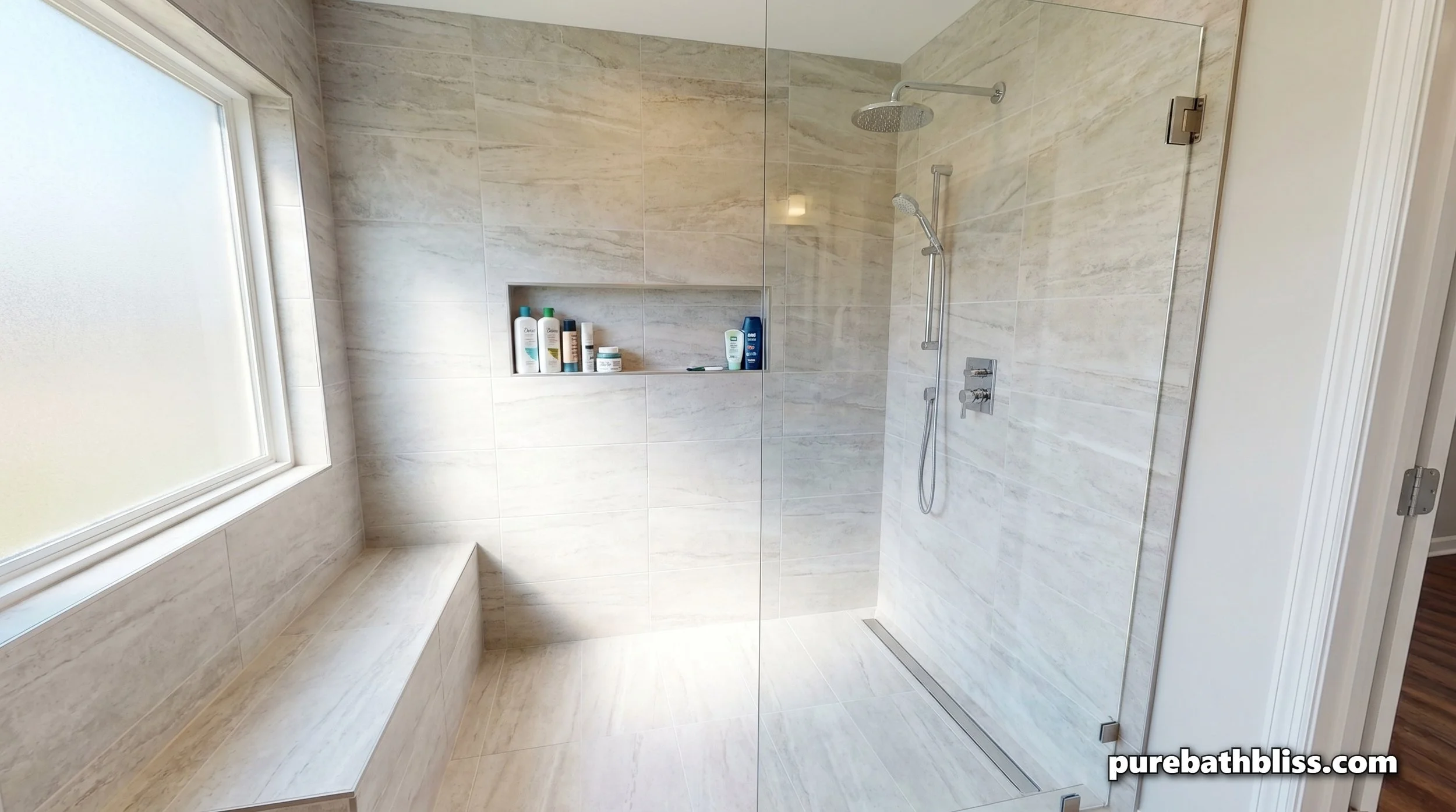
High-Performance Grout: The End of Scrubbing
In traditional construction, grout is often the "weak link" of the bathroom. Most standard cement-based grouts are porous, meaning they act like a hard sponge that absorbs water, soap scum, and pink slime bacteria. As a builder, I’ve spent more time answering questions about "how to clean grout" than almost any other topic.
But in 2026, we’ve moved past the era of porous cement. If you want a bathroom that stays pristine with minimal effort, you need to upgrade your "Grout Infrastructure" to High-Performance Epoxy or Urethane. These materials aren't just fillers; they are liquid plastics and resins that create a 100% waterproof, stain-proof barrier.
Whether you are pairing them with a seamless microcement bathroom finish or traditional tile, choosing the right grout is a "Builder-Grade" decision that will save you years of scrubbing.
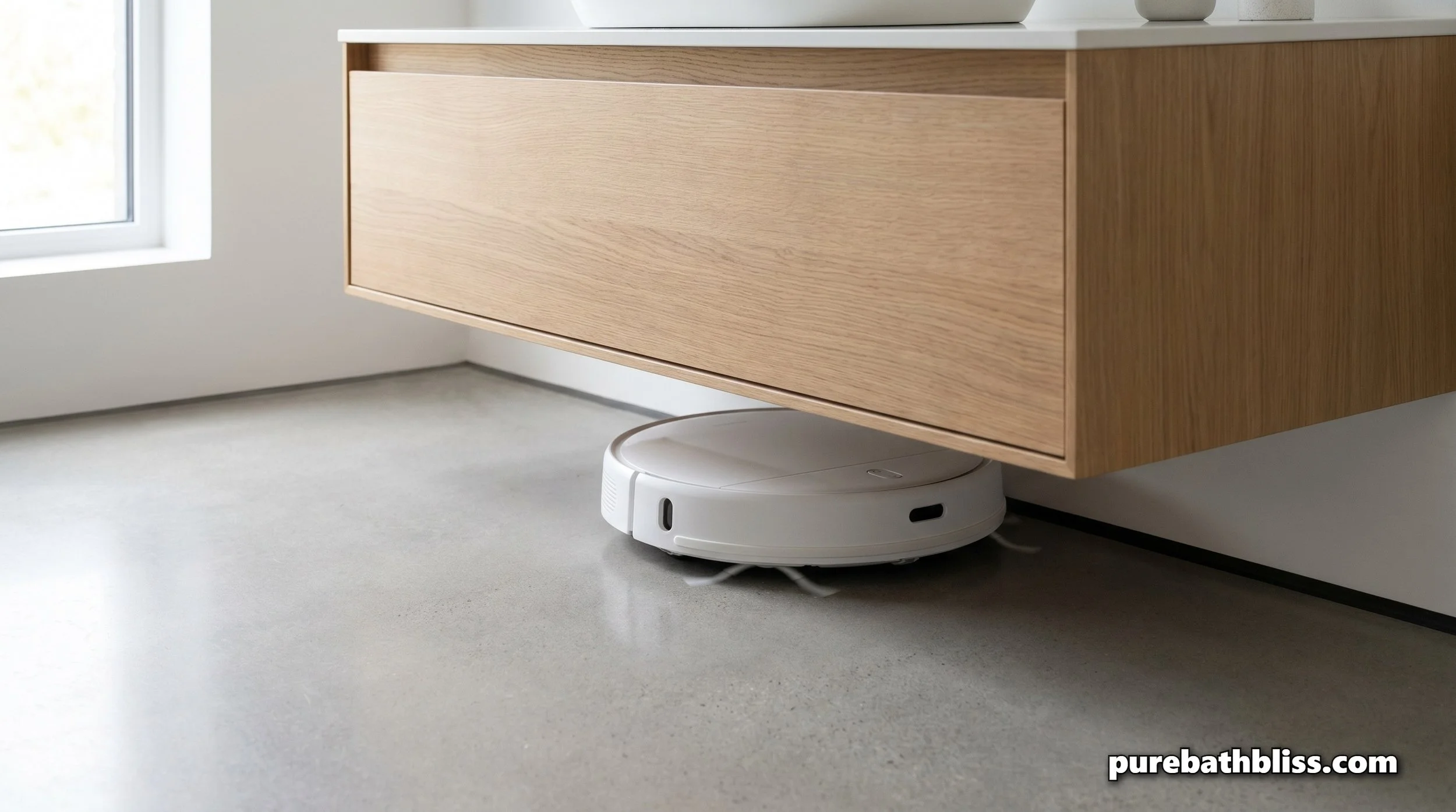
The "Floating" Vanity Advantage: Why Wall-Hung is the New Standard
In the world of high-end residential construction, the "Infrastructure" of a bathroom is shifting. We are moving away from heavy, floor-mounted cabinets that trap dust and towards the Floating Vanity. As a builder, I’ve seen this trend explode in 2026, and it’s not just about the "minimalist" look. It’s about functionality, hygiene, and the psychology of a clean bathroom.
A wall-hung vanity creates an unbroken plane of flooring, which is essential if you’ve invested in a seamless microcement bathroom finish. By lifting the cabinetry off the ground, you eliminate the "Gunk Zone", that impossible-to-clean crevice where the vanity meets the floor.
But installing a floating vanity requires a different approach to your home’s "Internal Infrastructure." Here is the professional guide to why you should consider going wall-hung and the builder-secrets to doing it right.

4 Genius Bathroom Hacks Using Shampoo: The Surfactant Secret
Most people think of shampoo as a personal care product, but in the world of professional maintenance, it is actually a highly sophisticated surfactant. It is engineered to trap oils and rinse them away without damaging organic fibers. As a builder, I’ve found that this exact chemistry makes it the ultimate "SpongeHack" for high-end bathrooms.
If you have brushed brass fixtures or a modern microcement shower, you know that standard acidic cleaners can be too aggressive. They can eat through the sink seals and dull the finish of your hard work.
In 2026, the trend is toward "Safe-Scrub" methods that utilize what you already have in your linen closet. Here are 5 ways to use a bottle of shampoo to maintain your bathroom infrastructure.

The "Jewel Box" Powder Room: Bold Design in a Small Footprint
In residential construction, the powder room is often referred to as a "Jewel Box." Because it is a self-contained space, usually tucked under a staircase or at the end of a hallway, it doesn’t have to play by the same rules as the rest of the house. As a builder, I always tell my clients that if they’re going to take a major design risk, the powder room is the place to do it.
In 2026, the trend has moved away from safe, neutral "Greige" powder rooms and toward high-impact, high-contrast environments. We are layering rich textures, bold patterns, and brushed brass fixtures to create a space that feels intentional rather than secondary.
When you combine a bold aesthetic with the no-window air quality strategies we’ve discussed, you transform a tiny utility room into a luxury destination for your guests. Here is the professional guide to building your own Jewel Box.
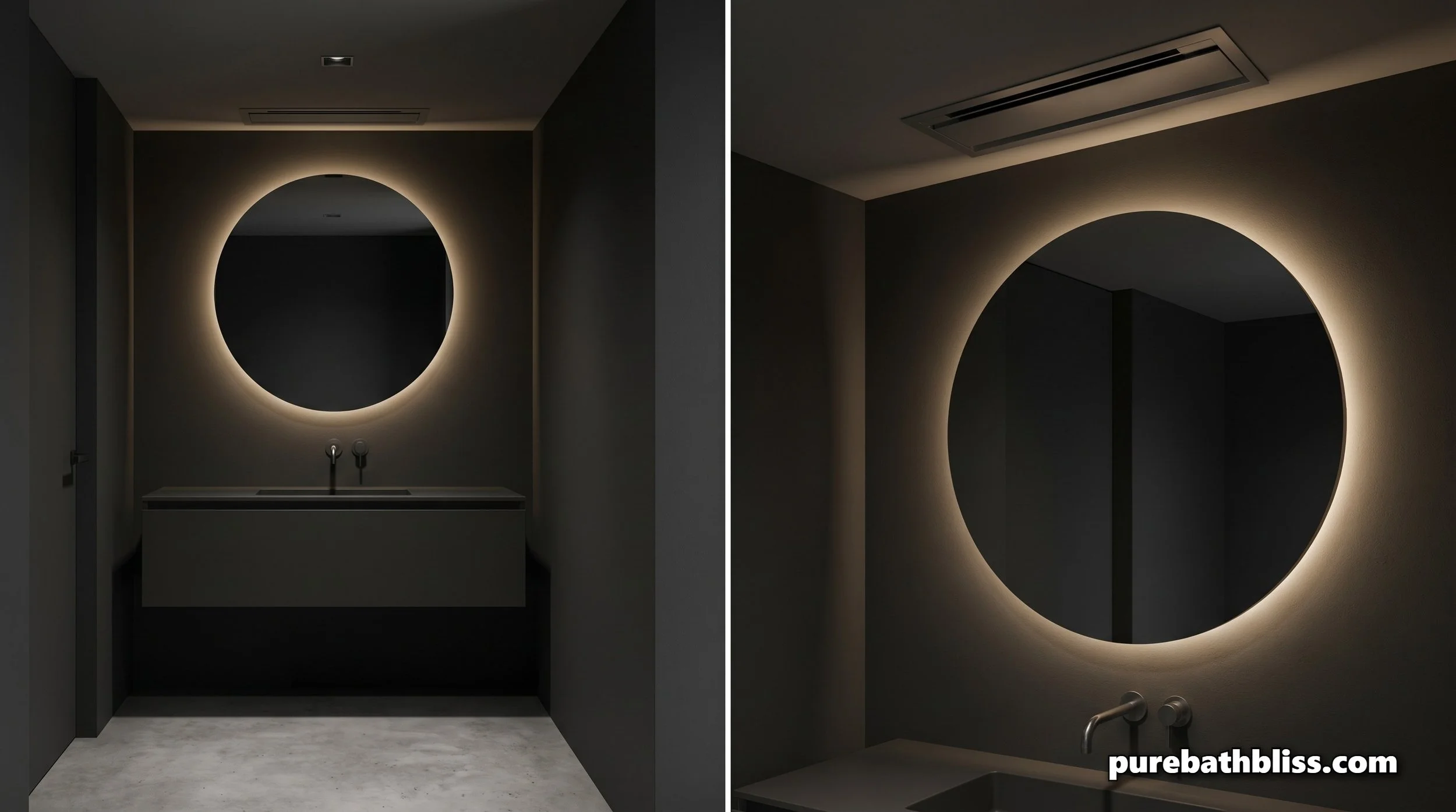
The "No-Window" Powder Room: High-Performance Air Quality
The powder room is often the most used bathroom in the house, yet it typically occupies the smallest footprint, and almost never has a window. As a builder, I see this "Infrastructure" challenge constantly. Without natural cross-ventilation, a windowless powder room can quickly become a stagnant zone where humidity, odors, and VOCs from cleaning supplies get trapped.
In 2026, we are moving away from the "masking" philosophy, where you just spray a heavy perfume to cover up a problem, and toward a Source-Control philosophy. If you want your guests to feel comfortable, you need a room that breathes, even without an exterior wall.
From mechanical upgrades to the dry baking soda moisture hack, here is the professional guide to maintaining pristine air quality in a windowless powder room.
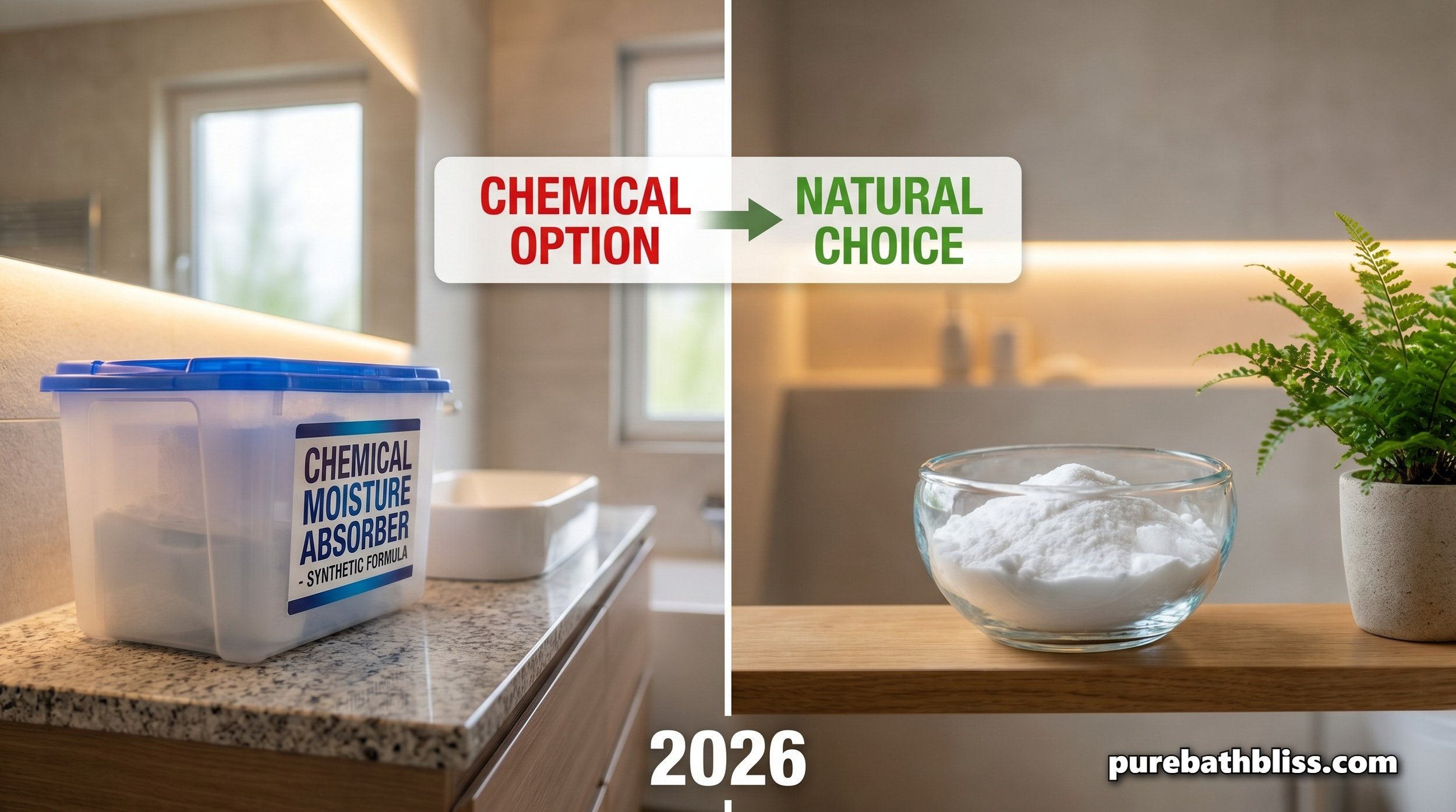
The Dry Baking Soda Sweep: The Ultimate Bathroom Moisture Hack
In the world of home maintenance, moisture is the ultimate enemy of "Internal Infrastructure." As a builder, I’ve seen thousands of dollars in custom cabinetry ruined by a simple, silent culprit: high humidity trapped in enclosed spaces. Whether it’s a deep vanity drawer or a cramped linen closet, moisture settles in these "dead zones," leading to warped wood, peeling liners, and that unmistakable musty smell.
Most people reach for a spray or a candle to mask the odor, but in 2026, we are focused on the source. If you want to maintain the psychology of a clean bathroom, you have to manage the humidity levels inside your storage.
Enter the "Dry Baking Soda Sweep." This is a classic hack that utilizes the chemical properties of Sodium Bicarbonate to act as a non-toxic desiccant. It’s the cheapest "Builder-Grade" fix for protecting your bathroom’s cabinetry and linens.

The Mirror Rot Protocol: How to Fix and Hide "Black Edges"
It starts as a tiny dark speck in the corner, and before you know it, a jagged, black "rot" is creeping across the edges of your bathroom mirror. In the construction industry, we call this desilvering. As a builder, I see this in almost every home over ten years old, and while it looks like a catastrophic failure of your bathroom "Infrastructure," it’s actually a very common chemical reaction.
Your mirror isn't just a piece of glass; it’s a high-performance sandwich. The back of the glass is coated with a thin layer of silver (which creates the reflection) and then sealed with a protective layer of copper and paint. When moisture or harsh chemicals penetrate that protective backing, the silver begins to oxidize, literally rusting away and leaving those ugly black edges behind.
If you’ve been working on the psychology of a clean bathroom, those black spots can be incredibly frustrating. They make a clean space feel neglected. Today, I’m going to show you the professional ways to stop the spread, hide the damage, and prevent it from happening to your new mirrors.
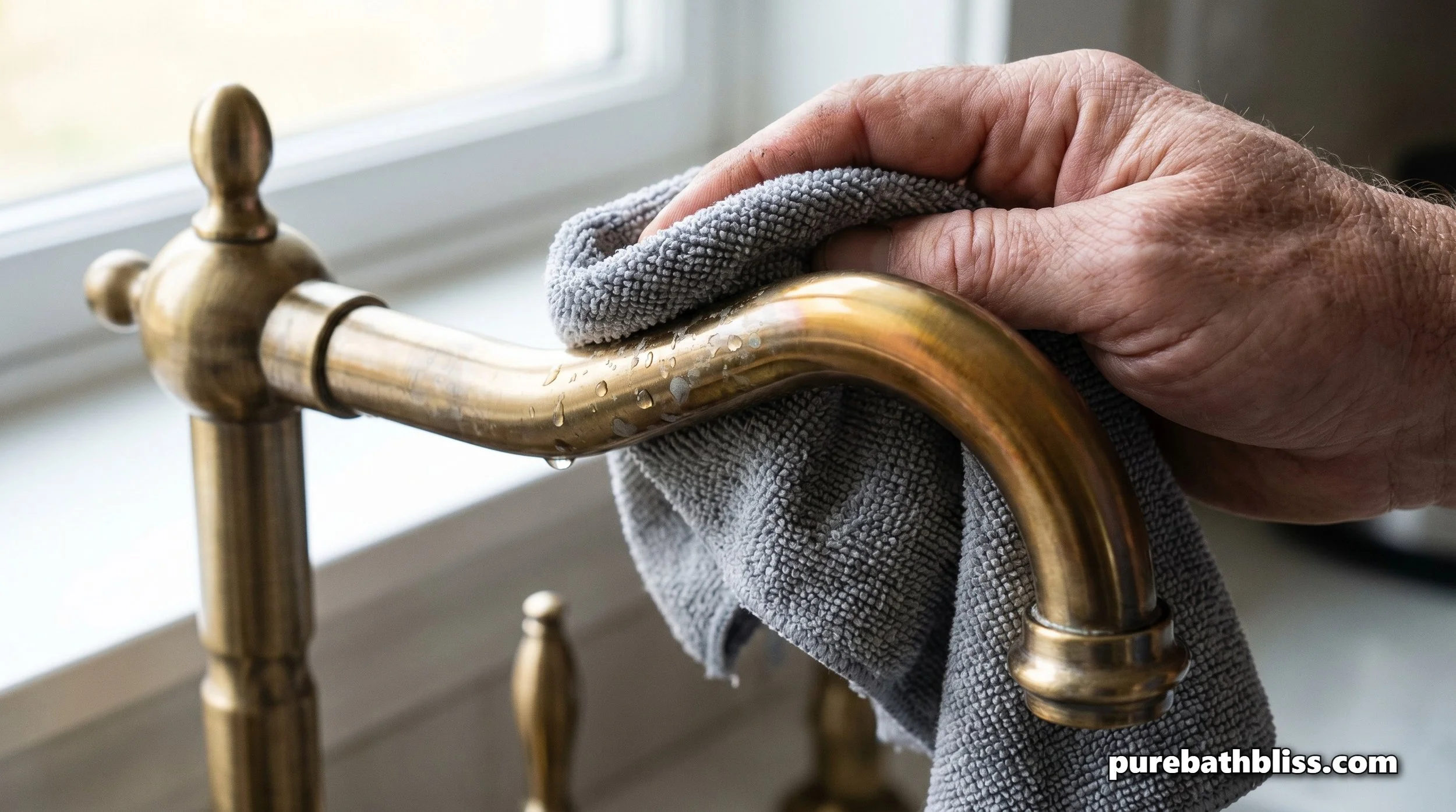
The Non-Toxic "Safe-Scrub" Guide: Protecting Your Bathroom Infrastructure
In the pursuit of a spotless home, most people reach for the most aggressive chemicals they can find. But as a builder, I’ve seen the long-term "collateral damage" caused by these products. Harsh bleaches and acidic sprays don't just kill germs; they eat through the seals around your sink, degrade the finish on your brushed brass fixtures, and can even cause the structural desilvering of your mirrors.
In 2026, the high-performance bathroom is all about "Safe-Scrub" chemistry. This isn't just about being "green"—it's about protecting the investment you've made in your home’s infrastructure. Whether you have a modern microcement shower or a classic porcelain setup, using the wrong cleaner can strip protective coatings and lead to porous surfaces that trap pink slime and black mold.
Here is the professional guide to cleaning your bathroom with non-toxic, "Safe-Scrub" methods that preserve your finishes while ensuring a laboratory-level clean.
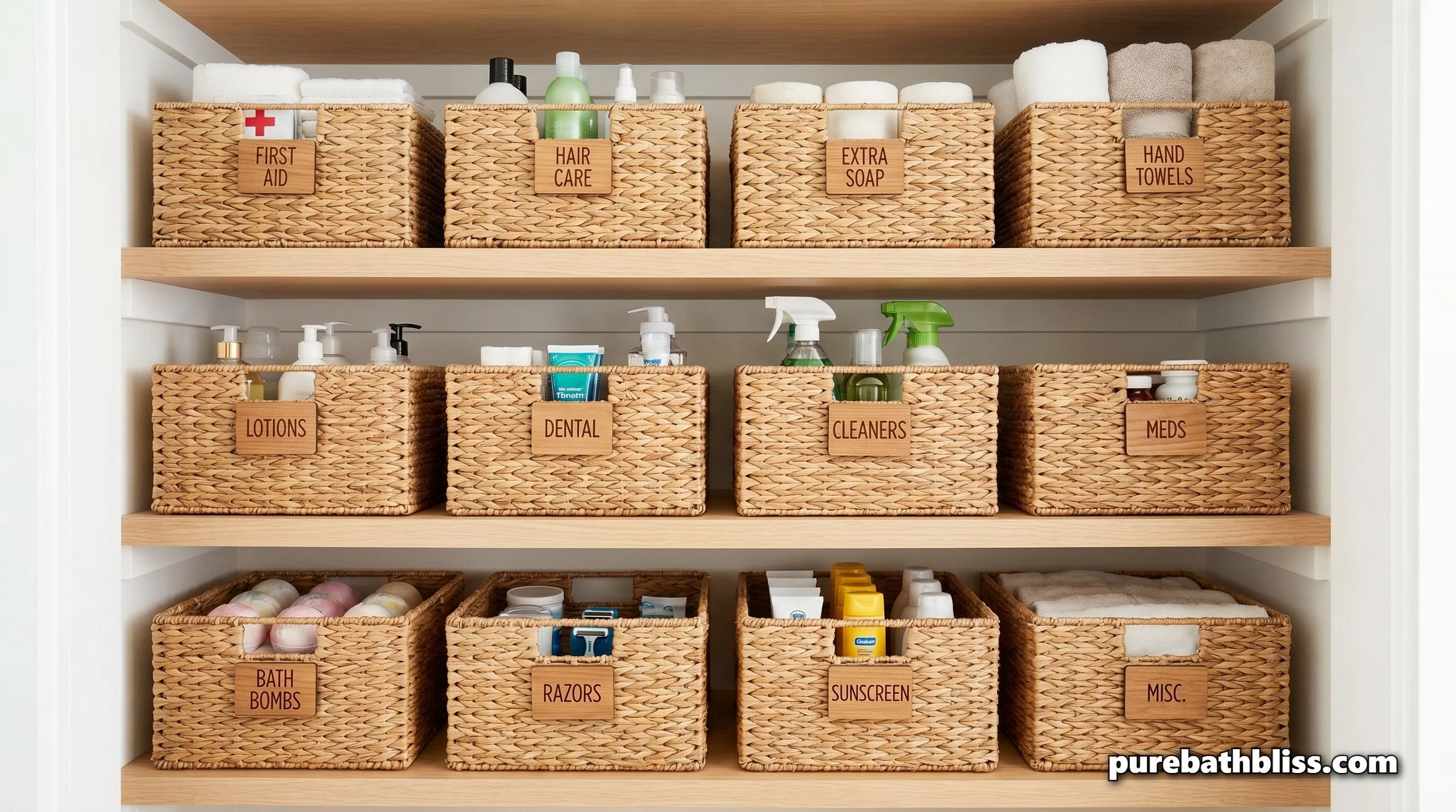
How to Organize a Small Bathroom Linen Closet: Maximizing Every Inch
In many homes, the linen closet is the most neglected piece of "Storage Infrastructure." It’s often a narrow, deep cavern where towels are shoved into dark corners and half-empty bottles of shampoo go to be forgotten. As a builder, I’ve seen that even the most beautiful microcement bathroom loses its spa-like appeal if the closet across the hall is a chaotic mess of mismatched linens and tumbling toiletries.
The problem with small linen closets isn't usually a lack of space, it’s a lack of logic. Standard wire shelving is notorious for letting small items tip over, and deep shelves encourage a "front-to-back" stacking method that buries your best towels. To fix this, we need to apply the same "Vertical Infrastructure" rules we used to organize deep vanity drawers.
Here is the professional guide to reclaiming your small linen closet using builder-grade organization hacks that turn a cramped cupboard into a high-performance storage zone.

The "Microcement" Aesthetic: 2026’s Seamless Shower Trend
If you’ve spent any time looking at high-end architectural digests recently, you’ve likely noticed a shift away from the busy, grid-like patterns of traditional tile. In 2026, the "Quiet Luxury" movement has reached the bathroom, and its primary medium is Microcement.
As a builder, I’ve seen every trend from subway tile to penny rounds, but microcement is different. It’s an "Infrastructure" shift. We are moving toward a monolithic, "carved from stone" look where walls, floors, and even sinks blend into one continuous surface. By eliminating grout lines, you don't just change the look; you fundamentally change the psychology of a clean bathroom by removing the visual clutter and the #1 hiding place for pink slime and black mold.
In this guide, we’ll explore why microcement is dominating the 2026 design landscape, how it performs in wet zones, and the professional "Safe-Scrub" secrets for maintaining its seamless beauty.