Mirror Shapes & Psychology: Choosing the Right "Scale" for Your Space
In bathroom design, we often treat the mirror as an afterthought—a utility piece meant for checking your teeth. But as a builder, I view the mirror as the primary "Visual Infrastructure" of the room. It is the largest reflective surface in the space, meaning it dictates how light travels and how the room’s "Energy" feels.
In 2026, we are moving away from standard, frameless builder-grade sheets of glass. We are now selecting shapes based on the Psychology of Scale. Whether you are outfitting a tiny jewel box powder room or a sprawling master bath, the shape you choose can either reinforce the room's rigid lines or soften the "Industrial Infrastructure."
Here is the professional guide to choosing between round and rectangular mirrors and the psychological impact each has on your daily routine.
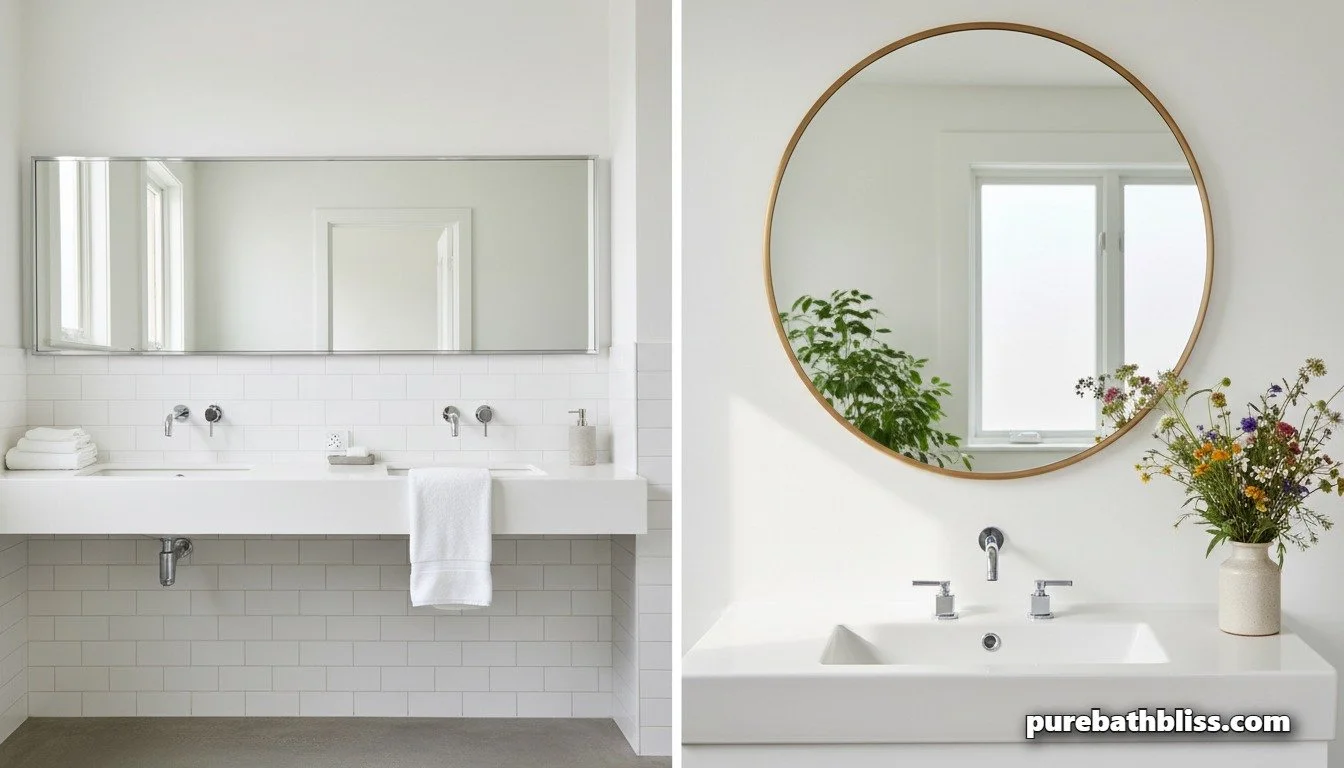
1. The Circular Mirror: Softening the "Hard" Infrastructure
Bathrooms are naturally full of hard, 90-degree angles: the vanity, the tile, the low-flow toilet, and the shower enclosure.
The Psychology: Circles represent wholeness and movement. A round mirror "breaks" the grid of the bathroom, providing a visual resting point.
The Scale Move: In a small space, a round mirror creates an illusion of "Infinite Depth." Because the edges curve away, your eye doesn't get trapped in the corners, making a no-window powder room feel less like a box and more like a sanctuary.
2. The Rectangular Mirror: Structural Authority
If your goal is to emphasize the height of your ceilings or the length of a floating vanity, the rectangular mirror is your best tool.
The Psychology: Straight lines and right angles represent stability and order. A vertical rectangular mirror draws the eye upward, which is a perfect partner for our shower curtain height hack.
The "Alignment" Rule: For a high-performance look, ensure the width of your rectangular mirror is slightly narrower than your vanity. This creates a "Step-In" effect that feels architecturally intentional.
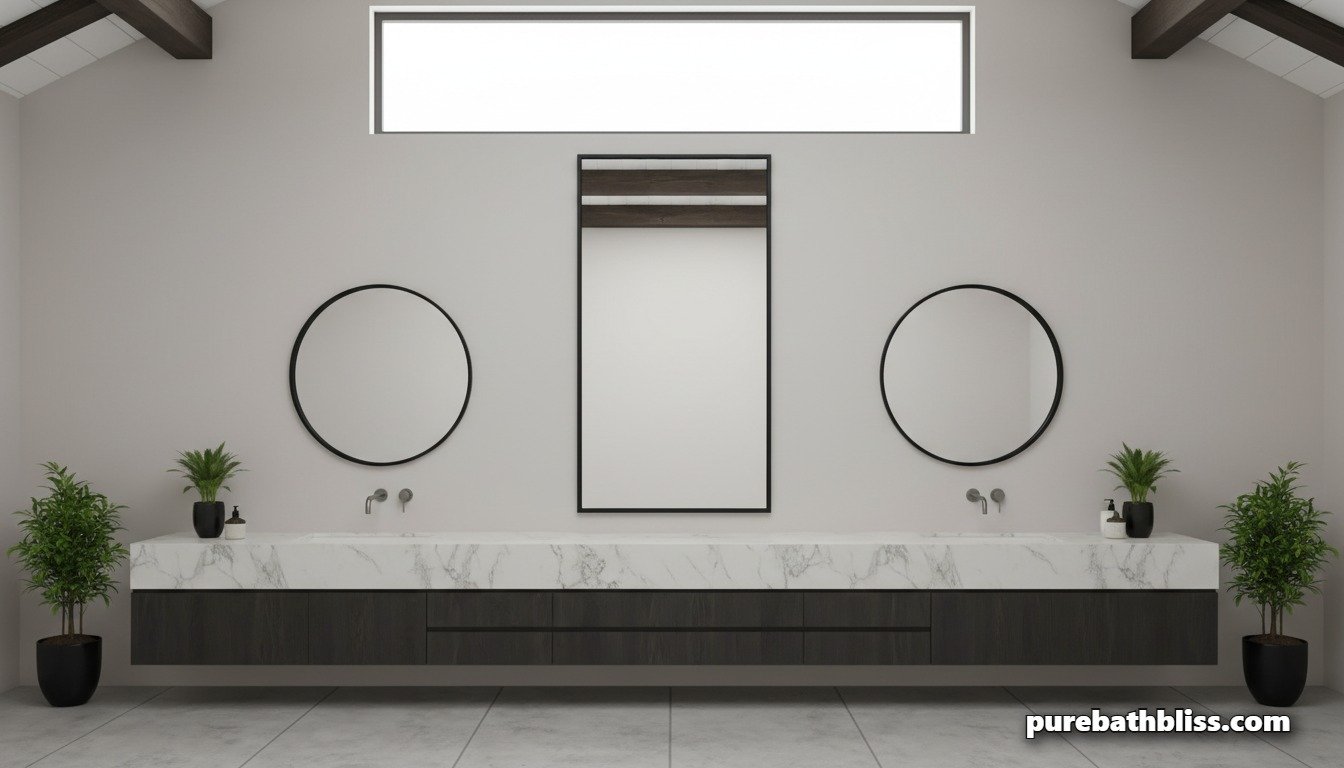
3. Shape Selection Matrix
| Shape | The Psychology | Best Infrastructure For |
|---|---|---|
| Round | Soft, Organic, Calm | Small Powder Rooms / Busy Tile |
| Rectangular | Formal, Stable, Bold | Double Vanities / High Ceilings |
| Oval | Elegant, Transitional | Traditional Pedestal Sinks |
| Arched | Architectural, Unique | Making a "Statement" Wall |
4. The Lighting Connection
The shape of your mirror dictates where you can place your "Lighting Infrastructure."
Round Mirrors & Sconces: Round mirrors look best with twin sconces placed at the 10 o'clock and 2 o'clock positions, or a single light centered above.
Rectangular Mirrors & Backlighting: A rectangular mirror is the perfect candidate for a hidden LED strip. The straight edges provide a consistent glow that highlights your wall texture, whether it’s tile or paint.
5. Summary: The Mirror Shape Checklist
Assess the Angles: If your room feels too "boxy," go with a Round mirror to soften it.
Measure the Vanity: A rectangular mirror should be 2-4 inches narrower than the cabinet.
Check the Height: Ensure the top of the mirror is at least 6-8 inches above eye level.
Complement the Faucet: A curved gooseneck faucet pairs beautifully with an oval or round mirror.
Think about Light: Round mirrors create "Halos," while rectangular mirrors create "Frames."
Scale it Up: When in doubt, go larger. A small mirror makes the "Infrastructure" look cheap.
Match the Finish: Coordinate the frame with your brushed brass or matte black hardware.
Choosing a mirror shape isn't just about what you see in the reflection, it’s about how the room reflects you. By selecting a shape that balances the hard lines of your bathroom’s infrastructure, you create a space that feels visually balanced and psychologically calm.