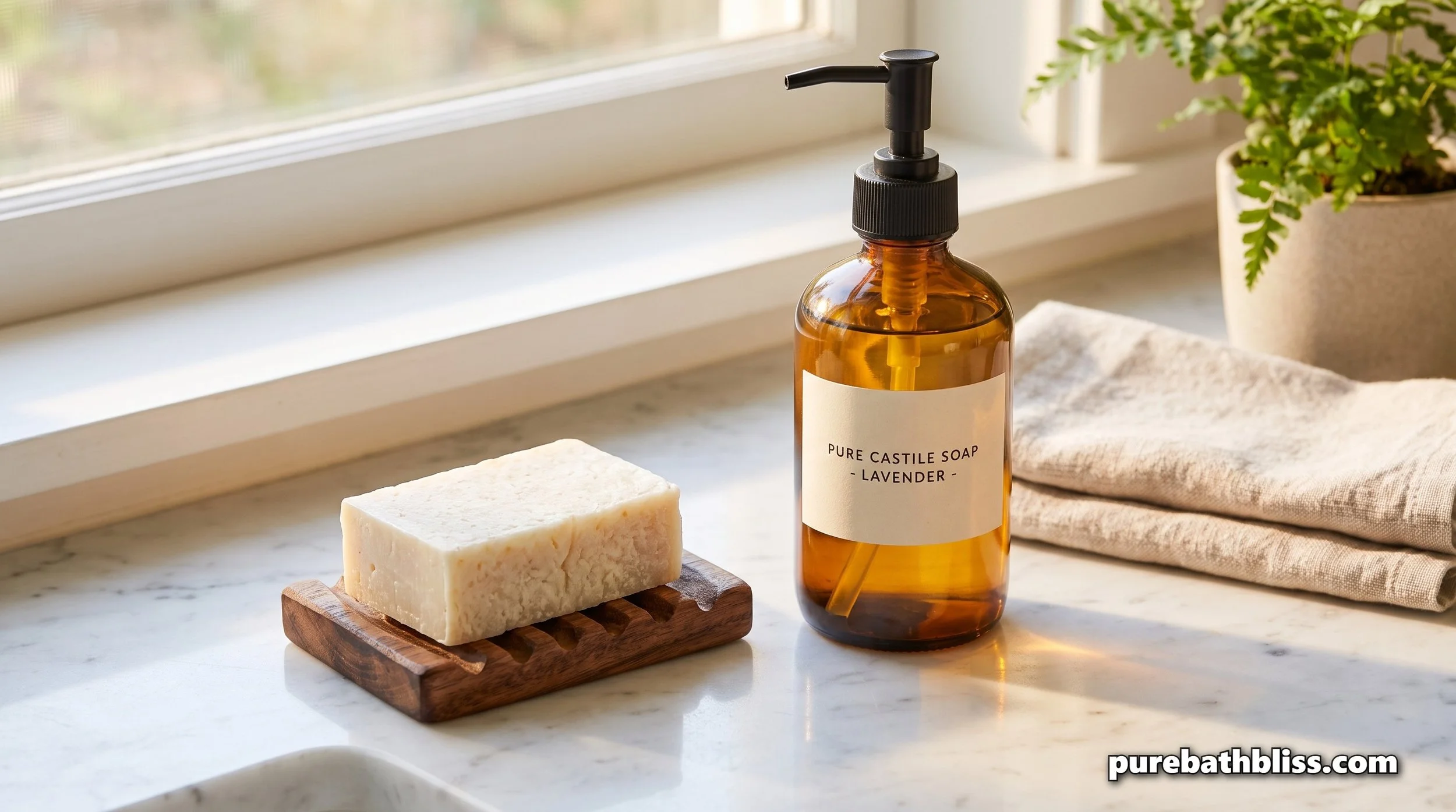
Bar Soap vs Liquid Soap: The Honest Comparison for Skin, Hygiene, and the Environment
Bar soap versus liquid soap is one of the most searched personal care comparisons online and one of the most superficially answered. Most guides pick a winner and move on. The honest answer is that both clean skin equally well and the meaningful differences are in pH, surfactant chemistry, what each one does to the skin barrier over repeated use, the environmental cost of packaging and production, and cost per use. Here is the complete picture.
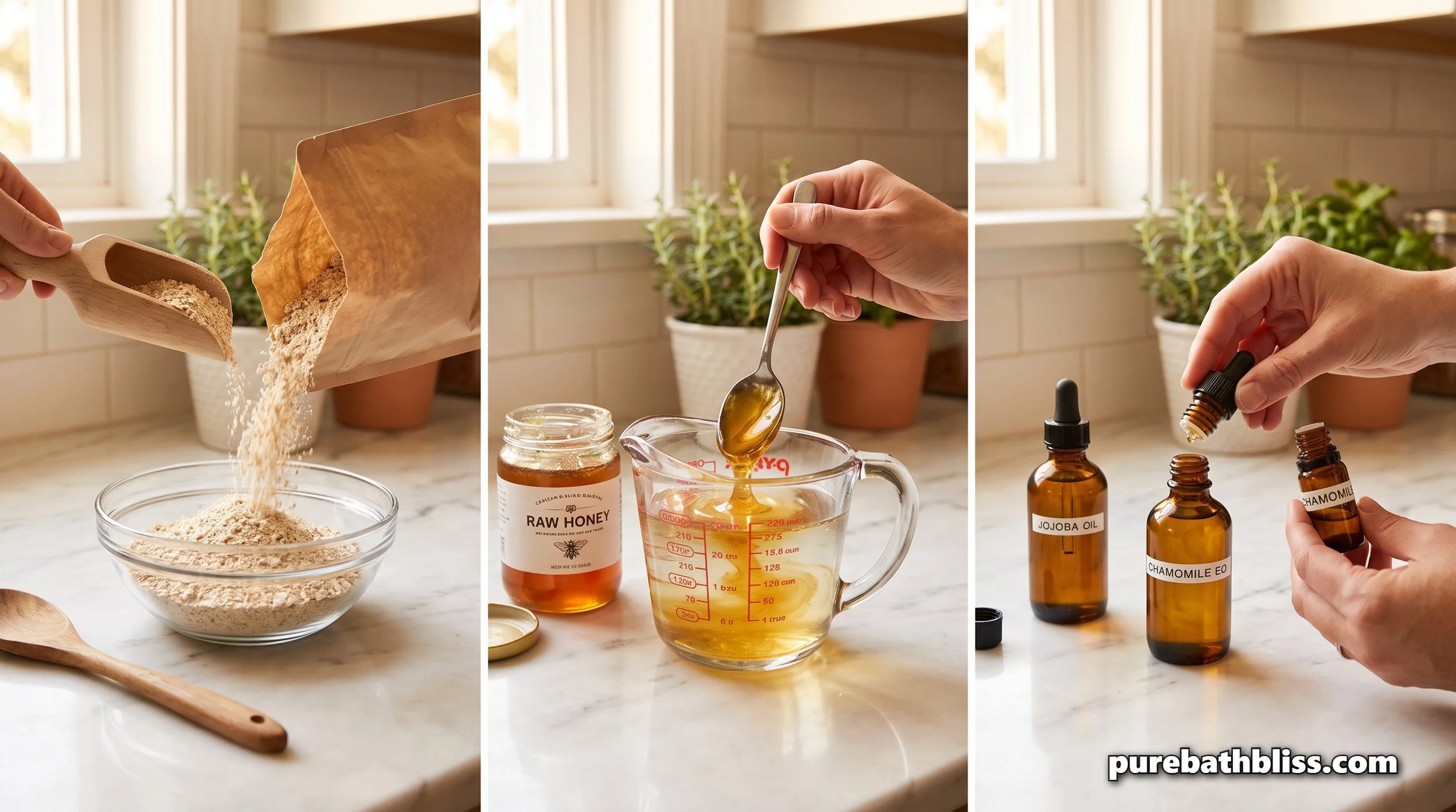
Natural Bath Products for Sensitive Skin: What Actually Works and Why
Sensitive skin in the bath is not a mystery once you understand what the skin barrier actually is, what disrupts it, and which natural compounds have clinical evidence behind them for repair and protection. Here is what the science says about colloidal oatmeal, ceramides, magnesium, and the specific ingredients worth avoiding, plus three DIY bath recipes that use ingredients most people already have in the kitchen.
5 Summer "Spa at Home" Essentials for Under $50 (That Actually Look Expensive)
By the time mid-July hits, the heat is usually at its peak, and the "holiday reset" we just finished has left us craving a little extra pampering. But let’s be honest: between summer travel and rising utility bills, not everyone has the budget for a full-blown bathroom remodel or a $200 massage.
The good news is that in 2026, the "spa-at-home" trend has moved away from over-the-top luxury and toward micro-upgrades. It’s about those small, sensory changes that make your Tuesday morning shower feel like a staycation at a boutique hotel in Tulum. I’ve scoured Amazon for the absolute best-performing, aesthetic essentials that come in under the $50 mark. These aren't just "gadgets"; they are the "lightbulb moment" fixes that solve real problems, like soggy mats and low water pressure, while making your vanity look like a million bucks.
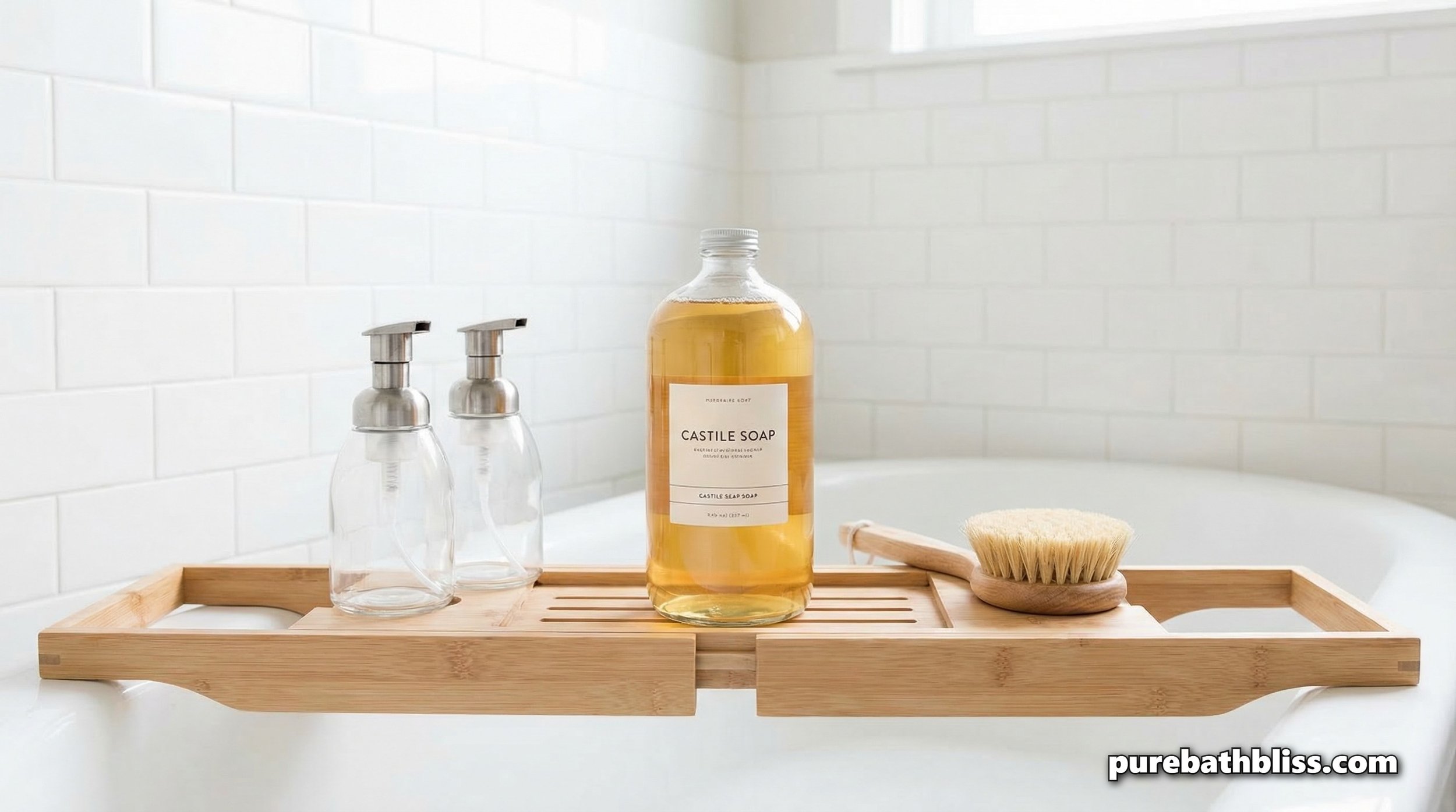
6 Brilliant Uses for Castile Soap in the Bathroom
In our quest to create a healthier, more sustainable home, we often overlook the simplest solutions. We tend to buy a different plastic bottle for every single task: one for the mirror, one for the floor, one for the toilet, and another for our skin. Not only does this clutter your cabinets, making it harder to stay organized as we discussed in How to Keep Your Guest Bathroom Simple, but it also fills your home with a cocktail of synthetic chemicals and artificial fragrances.
Enter Castile soap. Named after the Castile region of Spain where it was traditionally made with 100% olive oil, modern Castile soap is a concentrated, vegetable-based soap that is entirely biodegradable and non-toxic. It is the "Swiss Army Knife" of the cleaning world.
If you’ve already started simplifying your home, you might have seen our sister site's guide on 5 Brilliant Uses for Castile Soap in the Kitchen. But today, we are bringing this powerhouse into the bathroom. Because it is a true soap (made from fats and oils) rather than a synthetic detergent, it works differently than store-bought cleaners. It emulsifies dirt and oils, allowing them to be rinsed away without leaving behind the harsh residues that can damage your bathroom’s infrastructure.
Here are six brilliant ways to use Castile soap in your bathroom sanctuary.
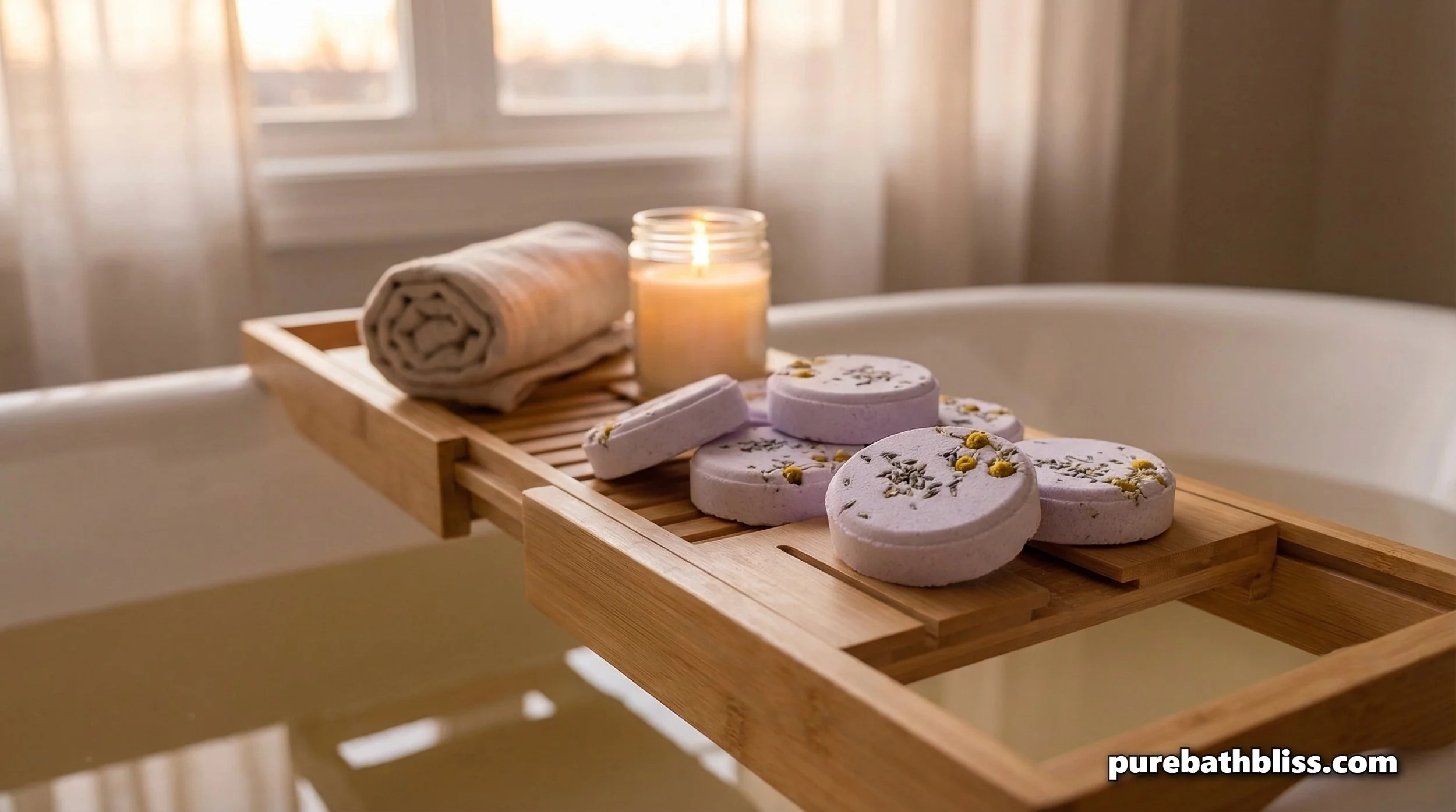
DIY Relaxing Shower Steamers: The Lavender Chamomile Sleep Blend
If you are looking for a way to wind down at night without a full bathtub ritual, shower steamers are the answer. Many people love the idea of a spa-like experience but simply do not have the time, or the desire, to soak in a tub for an hour. This is where the shower steamer comes in. It is essentially a bath bomb for your shower, designed to dissolve slowly and release essential oils into the steam.
This specific "Sleep Blend" uses lavender and chamomile to help calm the mind and soothe tension. It is the perfect project for anyone trying to build a more restorative nighttime routine. However, making these isn't just about mixing ingredients; it’s about understanding the science of how they work and how to store them so they don't lose their scent.
In this guide, we will walk through the exact recipe for Lavender Chamomile steamers and discuss how they fit into a healthy, non-toxic bathroom environment.
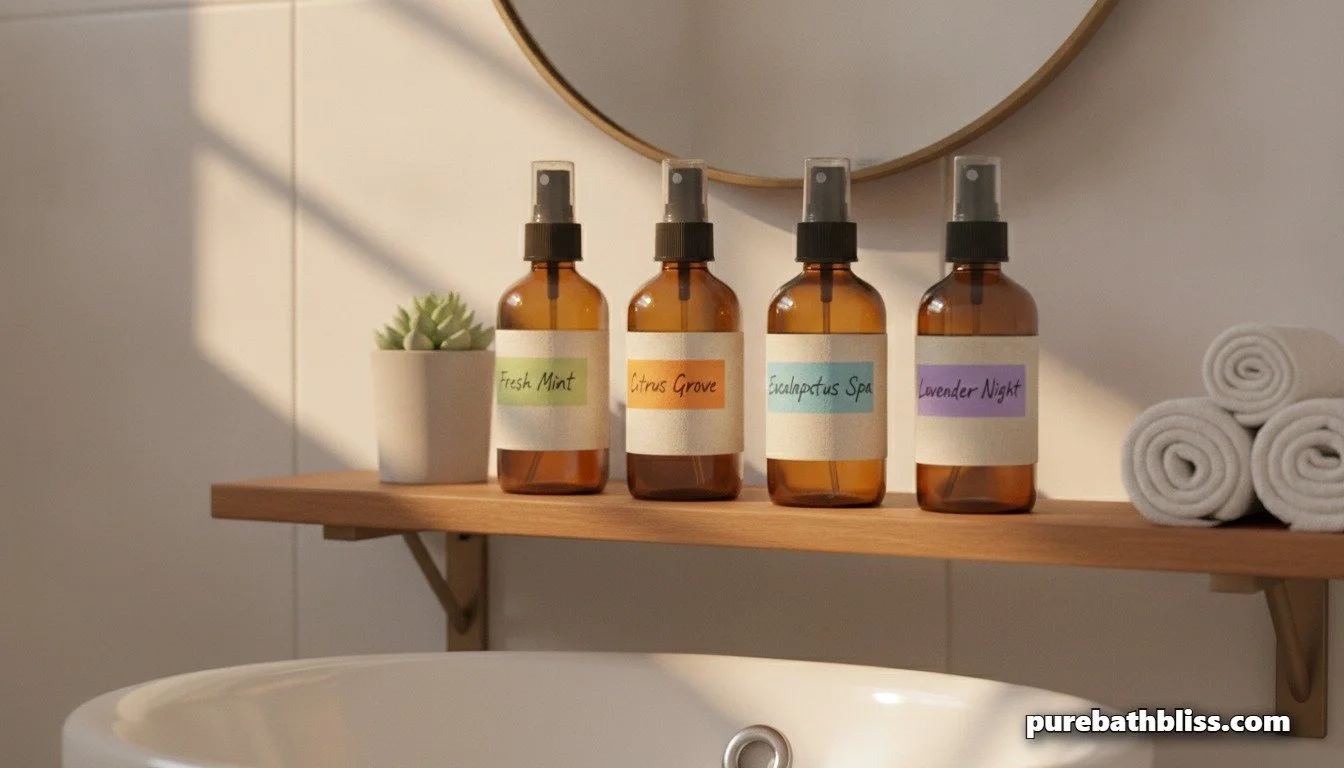
DIY Toilet Odor Neutralizer: The Before-You-Go Spray That Actually Works
A few years ago a family friend left a small amber bottle on the back of our toilet with no explanation. It had a handwritten label that just said "spray before." I assumed it was some kind of cleaner. Then someone in the family actually read the label properly and we tried it. Within a week every adult in our house was using it and asking where to get more.
The commercial version of this product, Poo-Pourri being the most famous, sells for around $10 to $15 for a two-ounce bottle. Once you understand how it works, you realise you can make the exact same thing at home for about forty cents a bottle using ingredients you can get anywhere. I have been making our own for two years now and we will never go back to the commercial version.
Here is the full recipe, the science behind why it works, four scent variations worth making, and the troubleshooting guide for the two most common mistakes people make.
The Builder’s Guide to Eco-Friendly Bath Toys
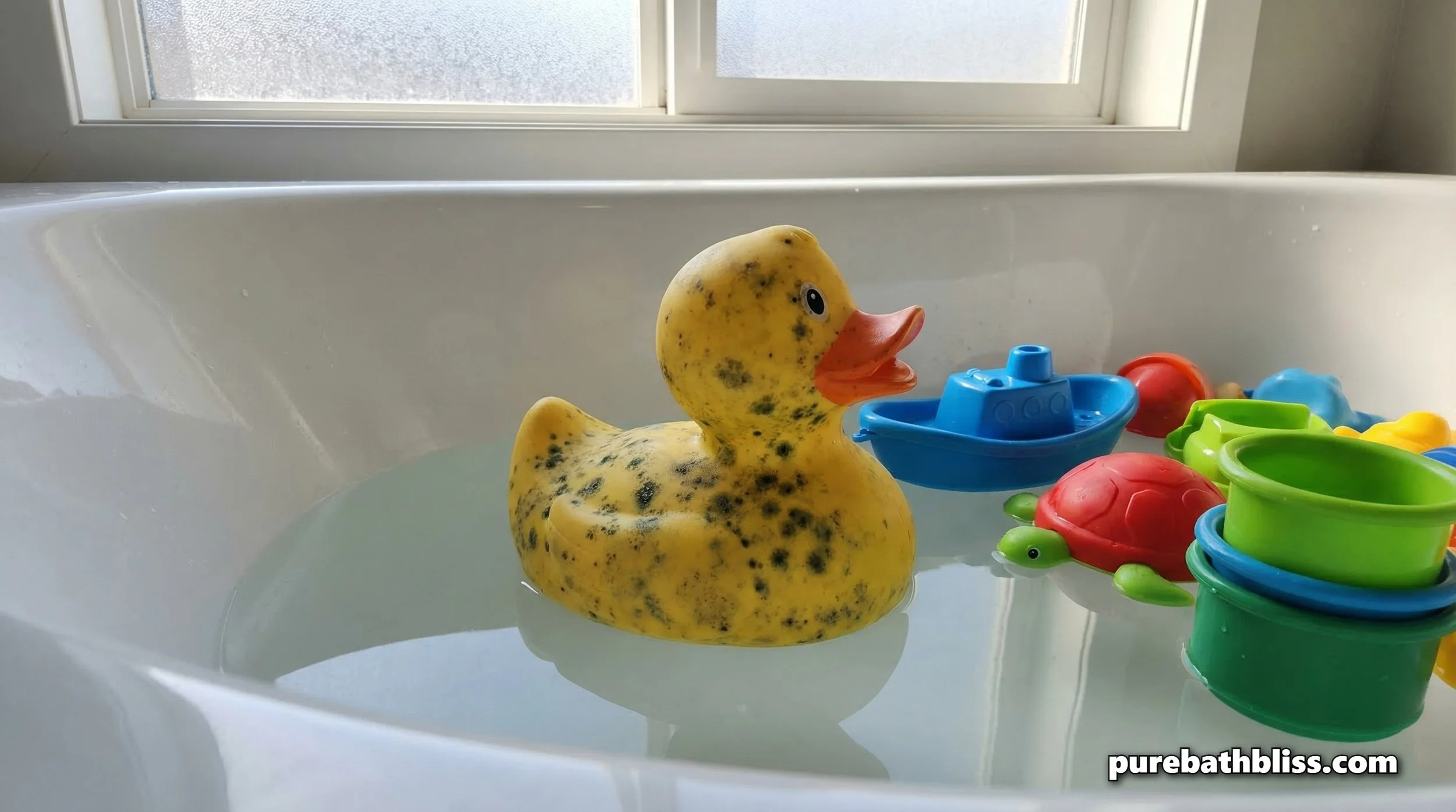
As a father of four, I’ve seen more "bath toy graveyards" than I’d like to admit. You know the ones—that collection of rubber ducks and plastic squirters that eventually start leaking black sludge into your pristine, clean tub.
It’s a common frustration for parents who are trying to maintain a Sustainable Sanctuary. The problem isn't just the toy; it’s the infrastructure of the toy. Most traditional bath toys are made of cheap PVC/vinyl and designed with a small hole in the bottom. That hole is a one-way ticket for moisture to enter, get trapped, and grow mold that you can never fully clean out.
If you’re ready to stop the cycle of buying, cleaning, and eventually tossing "mystery slime" toys, it’s time to upgrade to sustainable, mold-resistant options. Here are my top three eco-friendly picks for 2026 that you can find on Amazon.
The Happy Day Ritual: DIY Mood Boosting Shower Steamers
n a Sustainable Sanctuary, even a five-minute shower can be transformed into a vital mental "reset." As a parent of four and a Red Seal Carpenter, I appreciate DIY projects that are low-waste, high-impact, and—thankfully—don't require heavy power tools.
The Mood Boosting Shower Steamer is the perfect first project for your sanctuary. It uses bright, citrusy oils that act as an "infrastructure for your emotions"—lifting foggy moods and clearing mental clutter before you start a busy day with the family. Unlike store-bought versions that often contain synthetic fragrances and plastic packaging, these "Pure" steamers use simple pantry ingredients to support emotional harmony.
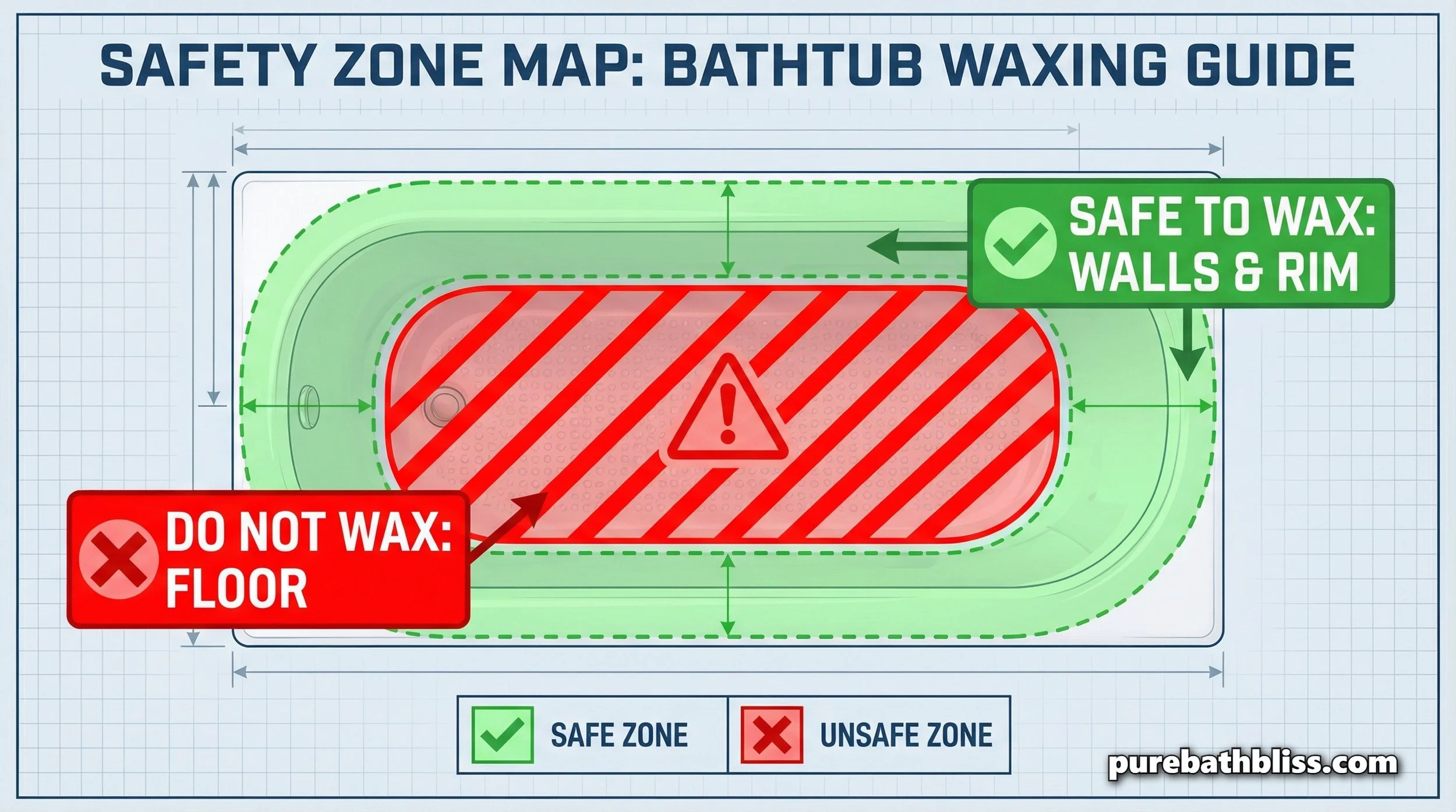
The Invisible Shield: Why You Should Wax Your Bathtub
In a Sustainable Sanctuary, the goal is to work smarter, not harder. As a builder, I know that the glossy finish on your bathtub—whether it's acrylic, fiberglass, or porcelain—is its "first line of defense." Once that factory gloss wears down, the material becomes porous. That is when the permanent stains, rust, and the Bath Bomb Aftermath take over.
If you have a family of six, you don't have time to scrub the tub every single day. That is why I treat my bathtub like I treat a high-end tool or a classic truck: I wax i
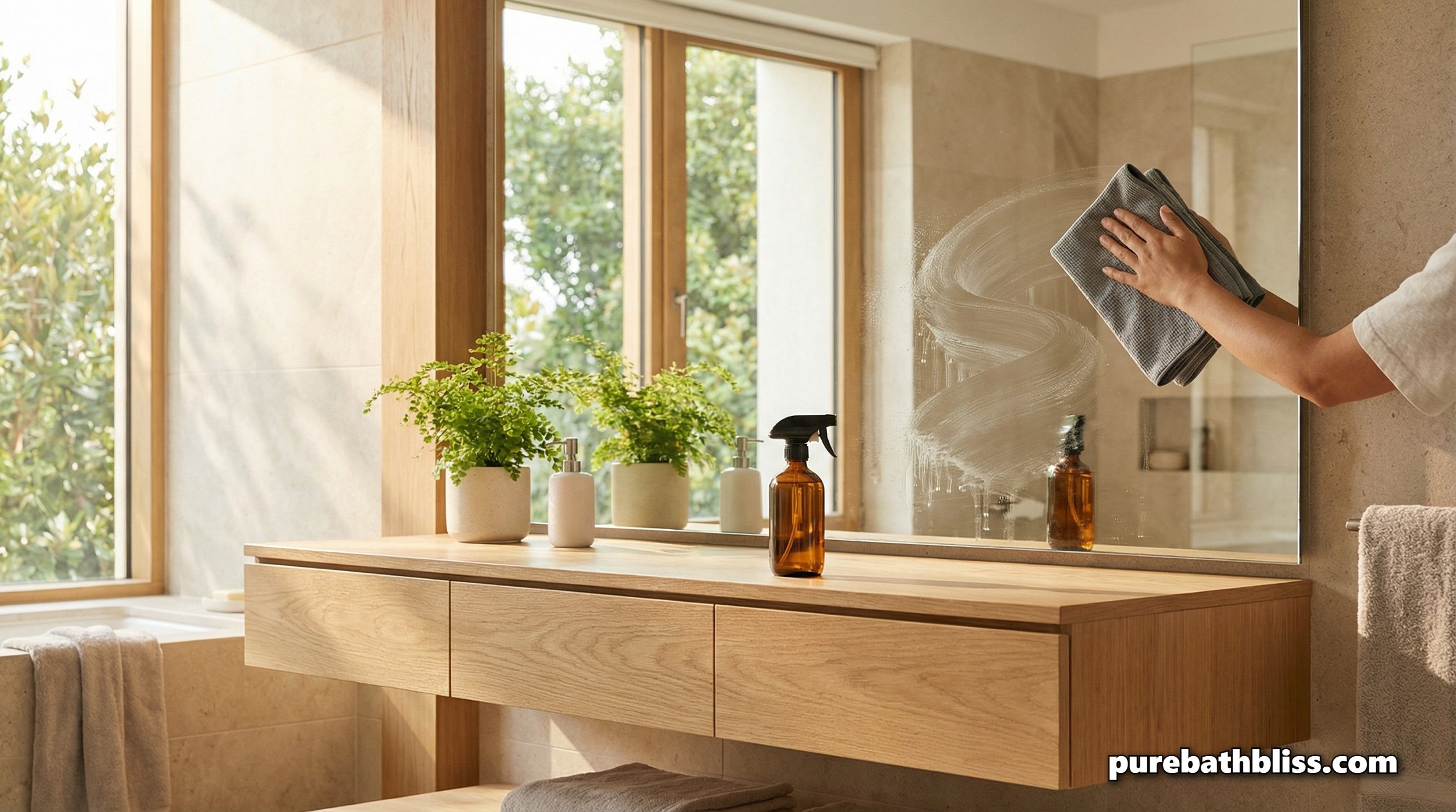
The Saturday Reflection: A Simple Ritual for Crystal Clear Mirrors
In a house with four kids, the bathroom mirror is the ultimate witness to the morning chaos. Between hairspray mist, toothpaste splatters, and the steam from six consecutive showers, your mirror takes a daily beating.
Most homeowners grab a blue chemical spray and soak the glass until it drips. But there is a hidden risk here: if liquid drips down and pools behind the bottom edge, it attacks the silver backing, causing those permanent black spots. To keep your Sustainable Sanctuary "Pure," you need a technique that prioritizes the glass's longevity as much as its shine.
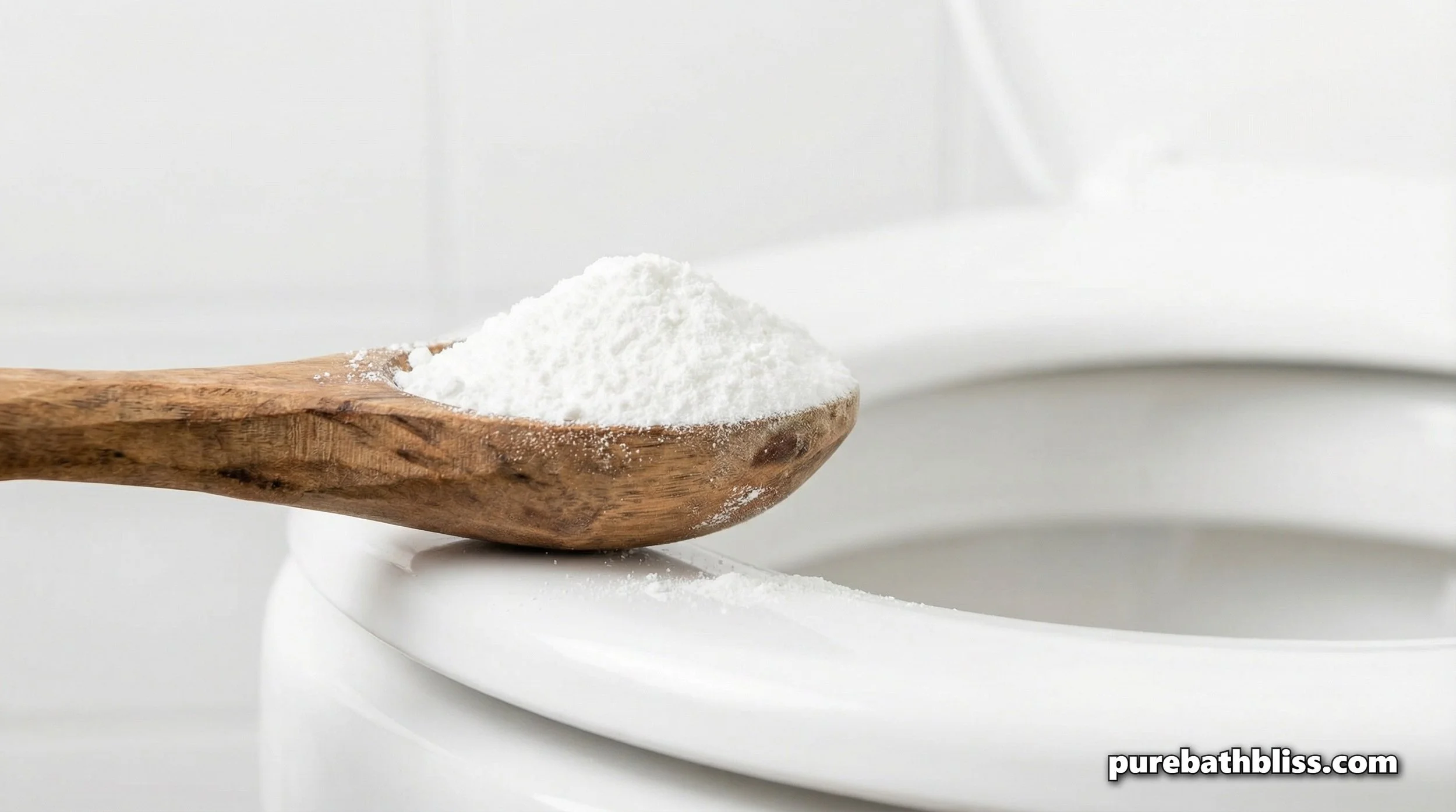
How to Remove Toilet Rust Stains with Cream of Tartar (And Why It Works Better Than Bleach)
The orange-brown ring that develops in a toilet bowl is one of those bathroom problems that makes people reach immediately for the harshest chemical they can find. I understand the impulse. It looks bad. It implies something dirty is happening even in a bathroom that gets cleaned regularly. And the instinct is that something that looks that stubborn must require serious chemical firepower to remove.
The problem is that bleach, the product most people reach for, is exactly the wrong tool for rust. Bleach is an oxidiser. Rust is already iron oxide, meaning it is already the product of an oxidation reaction. Adding more oxidiser does not break rust down. It can actually set the stain deeper into the porcelain surface, making it significantly harder to remove. It is the equivalent of trying to put out a fire with petrol.
What actually dissolves rust is acid. Specifically, a chelating acid that can bind to the iron ions and pull them away from the porcelain surface in a water-soluble form. Cream of tartar, a byproduct of winemaking that lives in most baking cupboards, contains tartaric acid that does exactly this. I have used this method on toilets in house renovations and in our own home, and it consistently removes rust staining that bleach had made worse. Here is the complete guide.
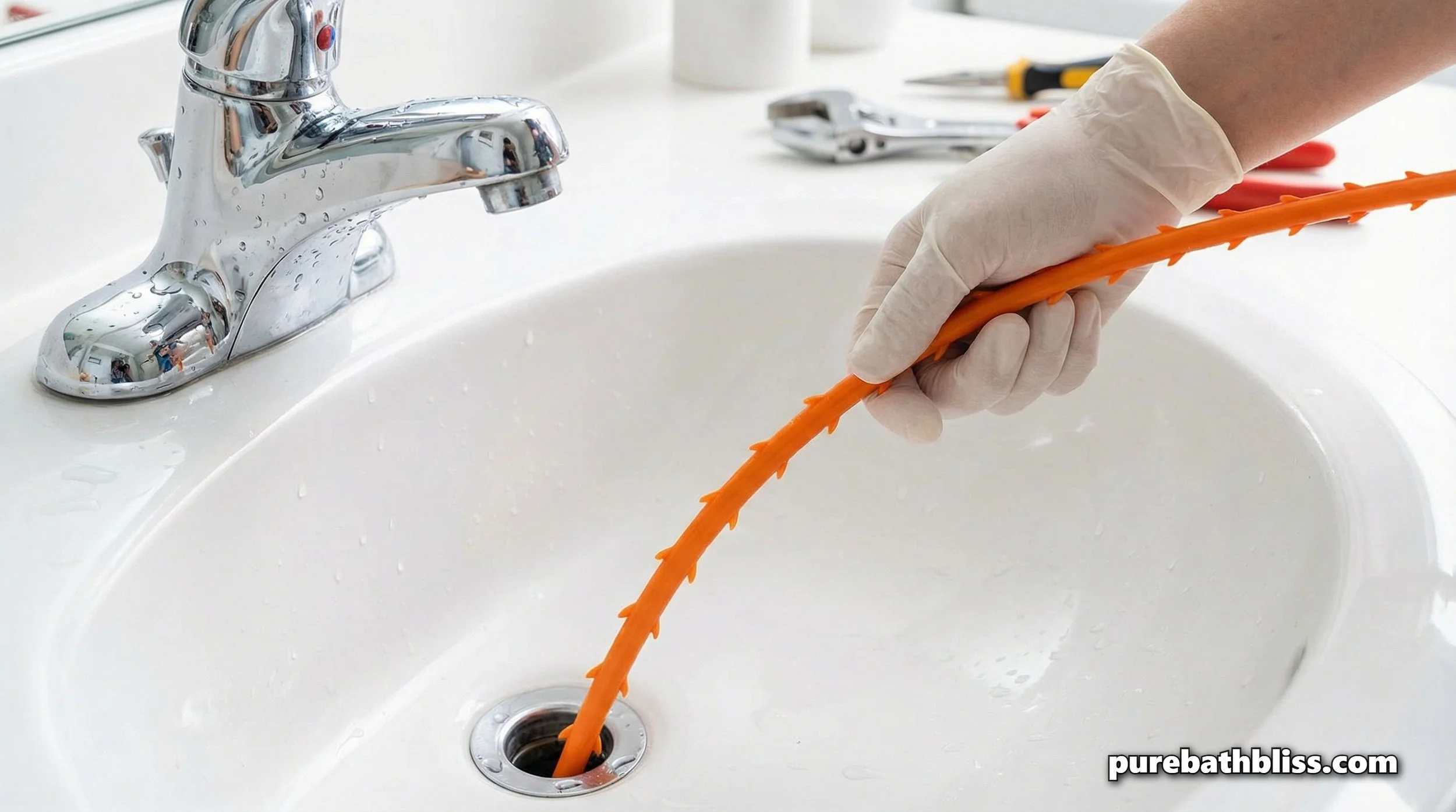
The Hair-Clog Crisis: How to Protect Your Plumbing in a Family of 6
When I’m building a master suite for a client, I spend a lot of time calculating the "pitch"—the subtle slope of the pipes that ensures gravity does its job. But even a perfectly engineered 2-inch shower drain is no match for the cumulative shedding of six people.
Hair is one of the most difficult things for a plumbing system to handle because it doesn't break down; it doesn't dissolve like toilet paper. Instead, it acts like a structural "net," catching soap scum, hair conditioner, and skin cells until it forms a solid, waterproof plug. In my home, we’ve moved past the "hope for the best" stage. We treat drain maintenance as a scheduled ritual, much like changing the furnace filter or checking the smoke detectors.
The Unseen Guest: 5 Toxic Chemicals Hiding in Your Bathroom (and How to Swap Them)
In the pursuit of a Sustainable Sanctuary, we often focus on the visible, the aesthetic tile, the plush towels, and the sleek fixtures. But as a curator of a healthy home, the most important elements are the ones you can’t see.
Modern bathrooms are a hotspot for "silent" toxins. Because bathrooms are small, humid, and often poorly ventilated, chemicals released from cleaners, cabinetry, and even toilet paper can reach high concentrations quickly.
Here are the five most common toxic offenders currently hiding in your bathroom and the organic, high-performance swaps to replace them.
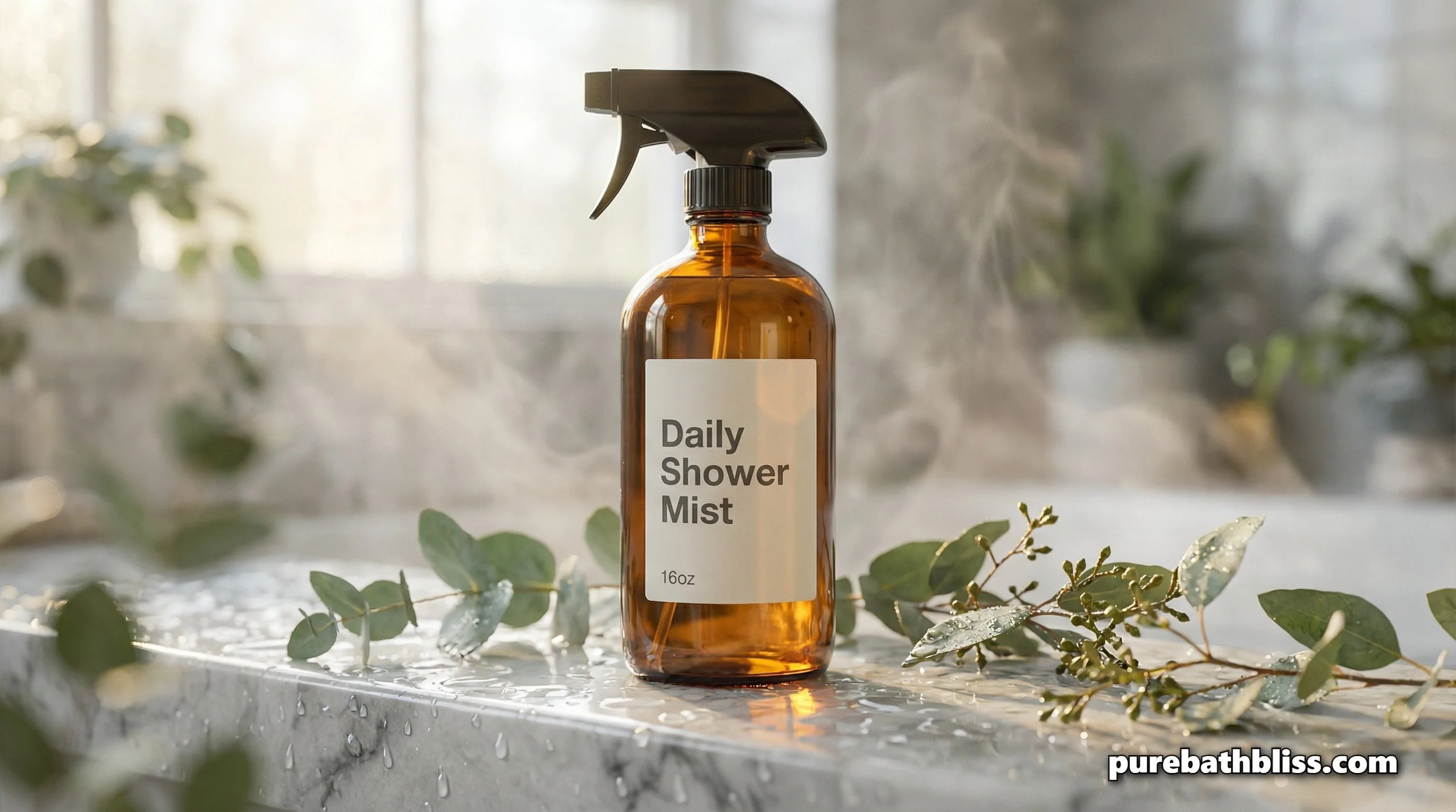
The Daily Mist: A 3-Ingredient Tea Tree Spray for a Mold-Free Sanctuary
The most sustainable way to clean a bathroom is to ensure it never gets truly dirty in the first place. In a high-moisture environment, the battle against mold, mildew, and "pink slime" is constant. Most people wait for the buildup to become visible and then reach for harsh, abrasive chemicals to scrub it away.
In a Sustainable Sanctuary, we take a different approach: Preventative Aromatherapy.
By using a daily Tea Tree and water solution, you can neutralize mold spores on contact and prevent soap scum from bonding to your surfaces. It takes ten seconds at the end of your shower, but it saves hours of scrubbing and protects your home’s air quality.
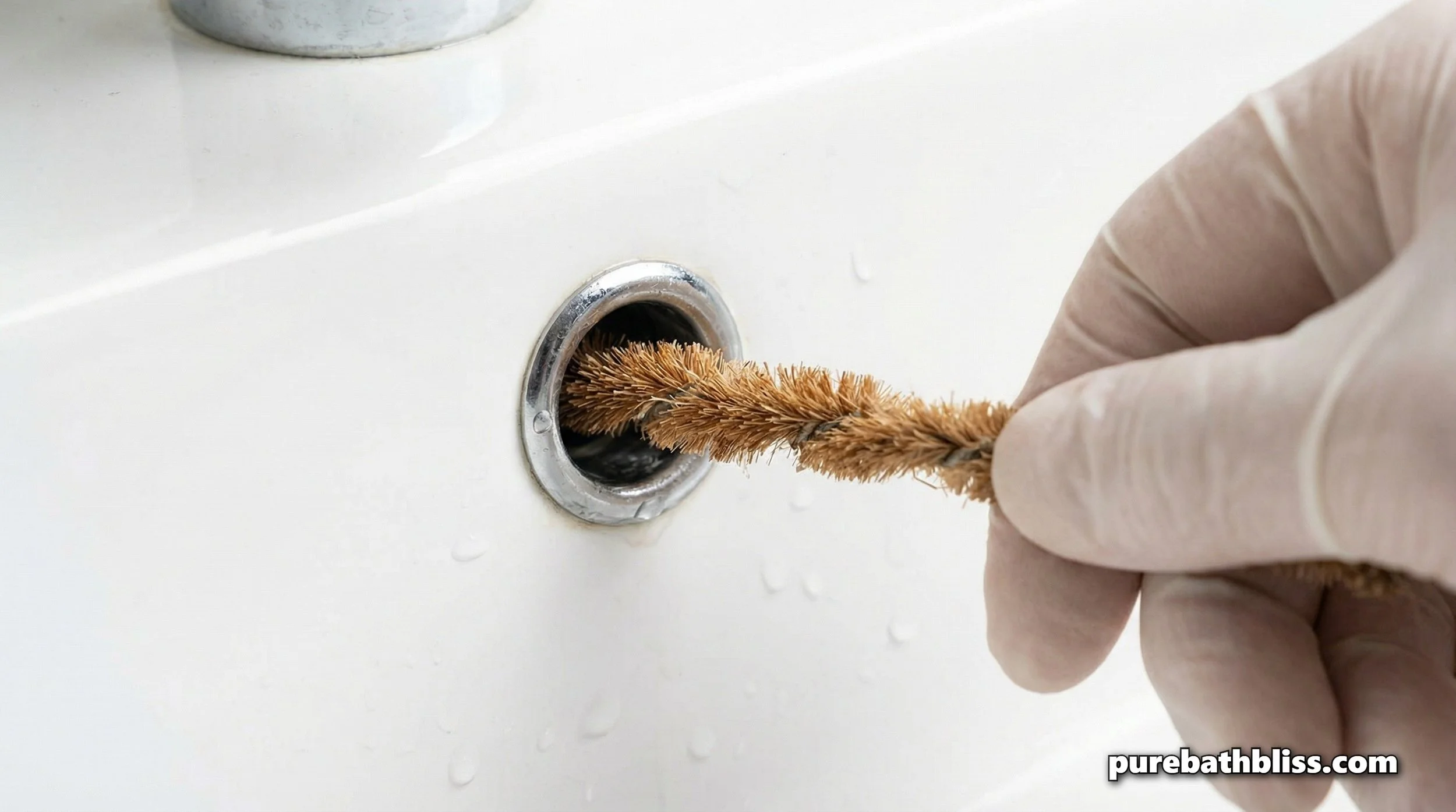
The Hidden Logic of the Sink Overflow: A Guide to Bathroom Health and Safety
In a Sustainable Sanctuary, we believe that every detail of your home’s design has a purpose, even the ones that seem like an afterthought. That small, often-overlooked hole near the rim of your bathroom sink isn't just a design quirk; it is a critical safety feature and a guardian of your home’s infrastructure.
We want to dive deeper into the mechanics of the overflow, how it prevents structural disasters, and, most importantly, how to keep this hidden channel clean using non-toxic, organic methods.
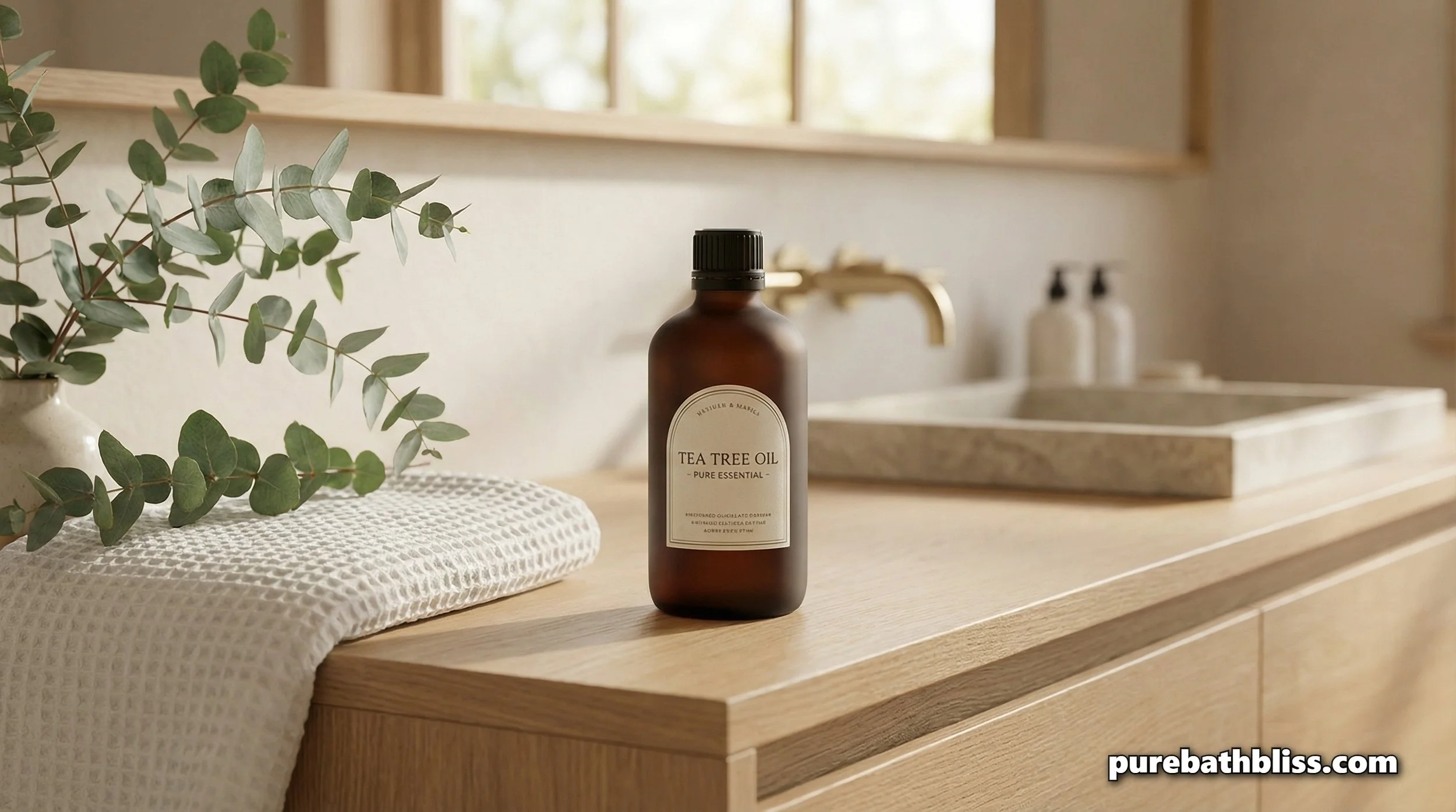
The Medicine Cabinet in a Bottle: Every Way to Use Tea Tree Oil in Your Bathroom
In the journey toward a Sustainable Sanctuary, we often look for complex solutions to common household problems. But sometimes, the most effective tool is a single, potent essential oil derived from the Australian paperbark tree.
Most people reach for bleach to solve bathroom woes, but bleach is a "blunt instrument." It’s harsh on your lungs, corrosive to your home’s surfaces, and often just "whitens" mold rather than neutralizing it at the root. Tea Tree Oil is the organic alternative. With its powerful antifungal, antibacterial, and antiseptic properties, it isn't just an apothecary staple; it’s a powerhouse for maintaining a healthy, non-toxic home.
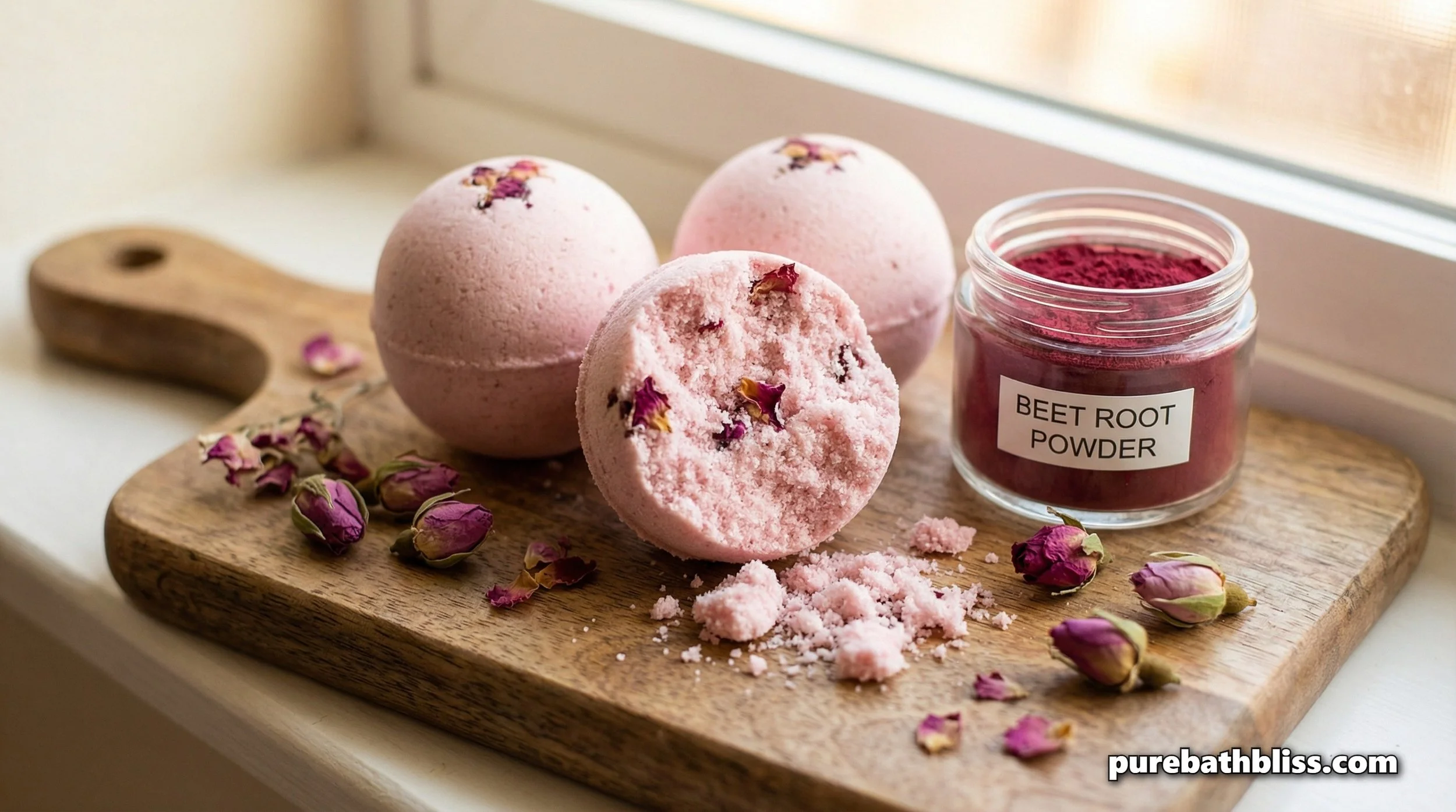
DIY Natural Pink Bath Bombs: The Ultimate Sustainable Self-Care
There is nothing quite like dropping a fizzy, fragrant bath bomb into a warm tub after a long day of projects or chasing the kids around. But if you look at the back of a store-bought bath bomb, the list of artificial dyes (like Red 40) and synthetic "parfums" can be a bit overwhelming. That said, if I don;t have time
In our Sustainable Sanctuary, we believe luxury shouldn't come with a chemical footprint.
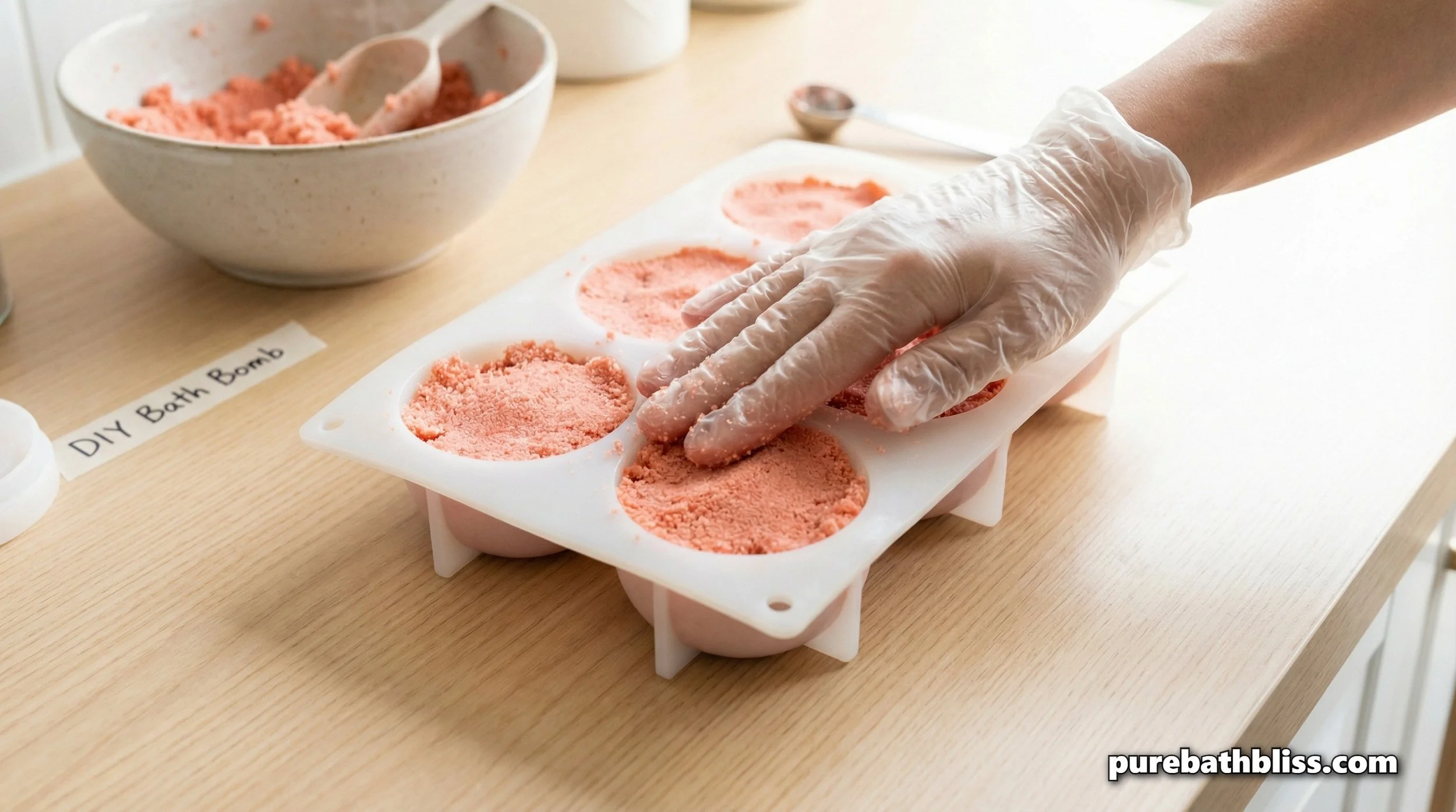
Making your own bath bombs is surprisingly simple; it’s essentially a kitchen science experiment that results in a spa-like experience. Today, we’re making Natural Pink Bath Bombs. We’ll achieve that beautiful rosy hue using plant-based ingredients and scent them with pure essential oils.
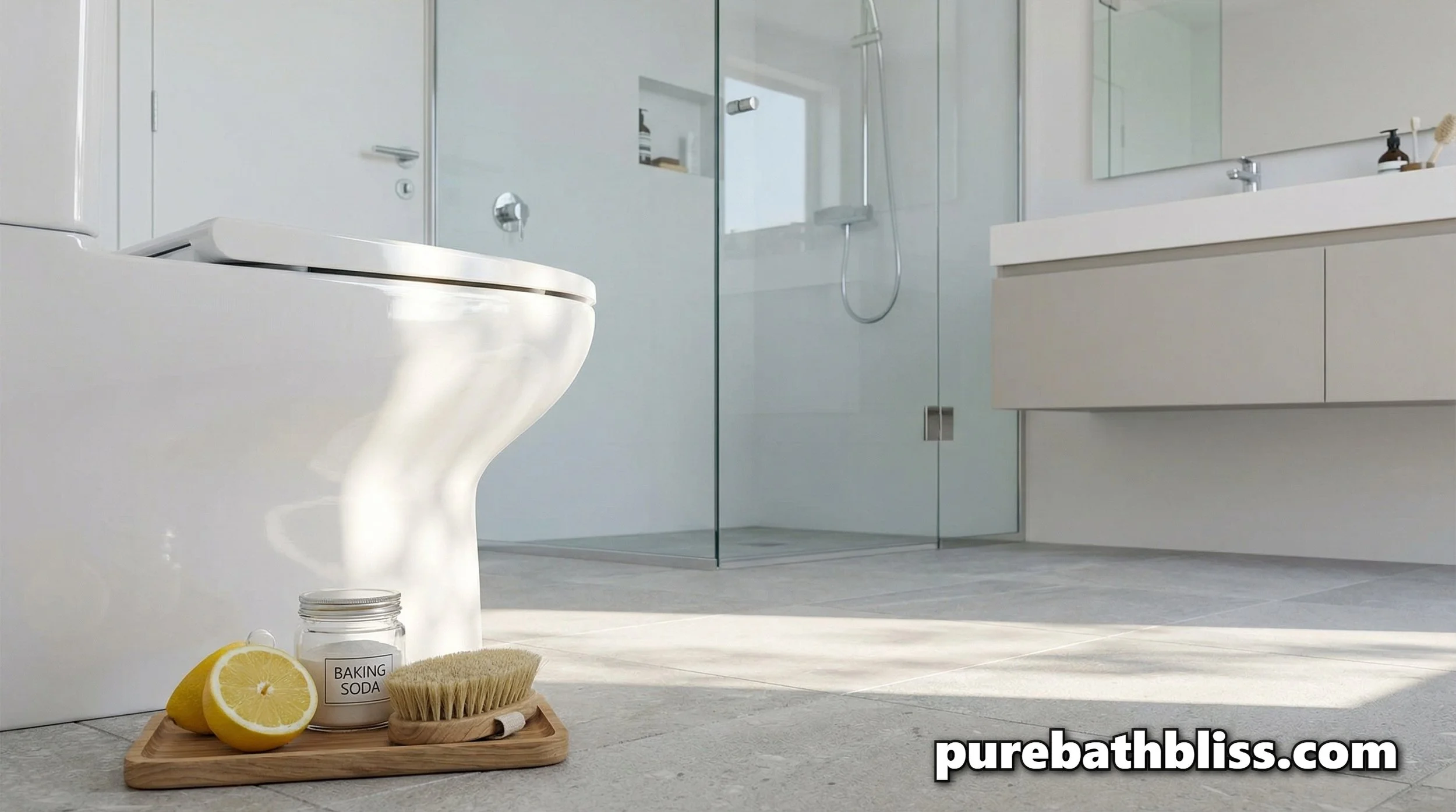
Why Does My Toilet Get Stains? The Ultimate Guide to a Sparkling Bowl
It’s one of the most frustrating moments in home maintenance: you’ve just spent the weekend deep-cleaning your bathroom, only to look down a few days later and see a stubborn ring or a strange streak appearing in the toilet bowl.
Stains in the toilet are often seen as a sign of a "dirty" home, but between you and me, that’s rarely the case. Most toilet stains have nothing to do with how often you clean; they are a result of the chemistry of your water, the age of your pipes, and the organic realities of a high-traffic bathroom.
Understanding why these stains happen is the secret to stopping the cycle of endless scrubbing. In this guide, we’ll diagnose the most common toilet stains—from minerals to "biofilms"—and provide the non-toxic, Sustainable Sanctuary solutions to get rid of them for good.
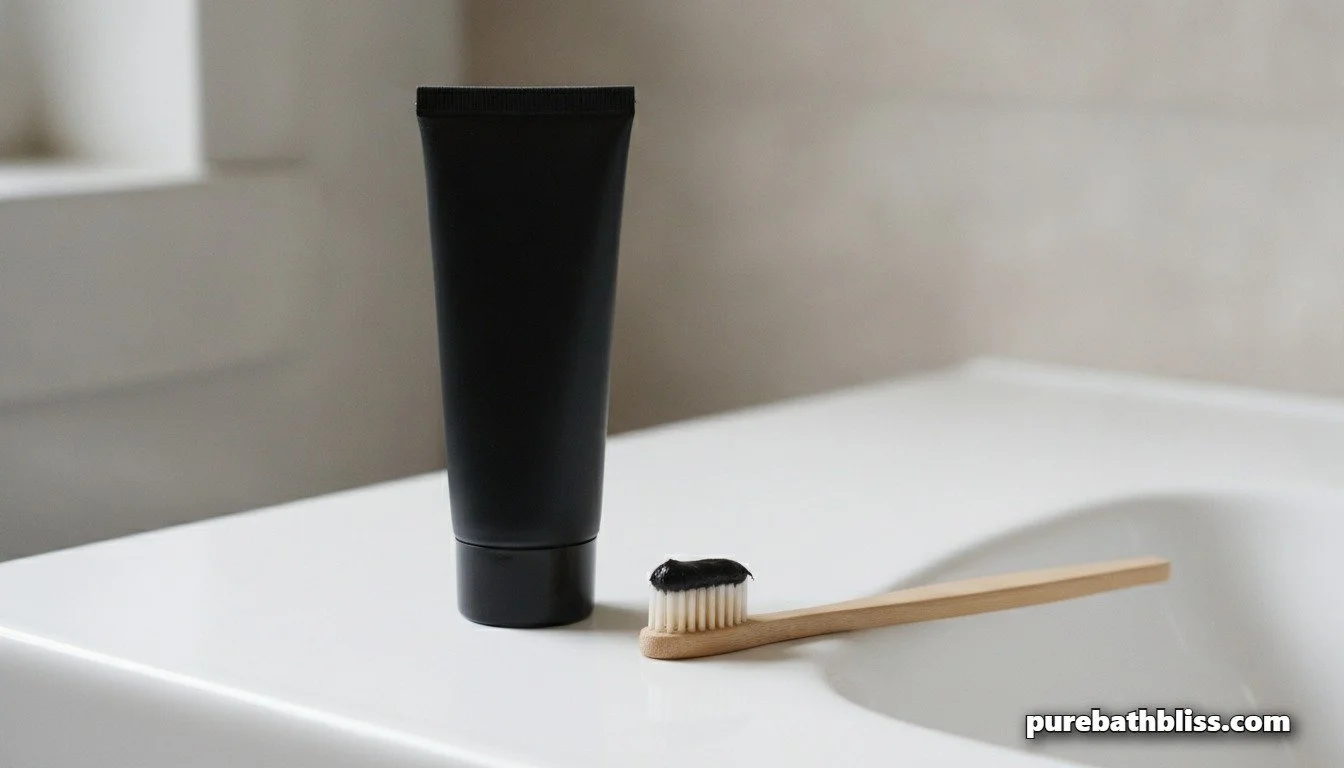
What Is Charcoal Toothpaste? (And Is It Actually Safe for Your Teeth?)
Charcoal toothpaste has surged in popularity for its promise of whiter teeth and detoxifying benefits, but what is it exactly? Made with activated charcoal from coconut shells or wood, it’s a black paste designed to bind to stains and toxins. This guide explains what charcoal toothpaste is, its ingredients, benefits, and considerations for your oral hygiene routine, aligning with PureBathBliss.com’s bathroom health focus.
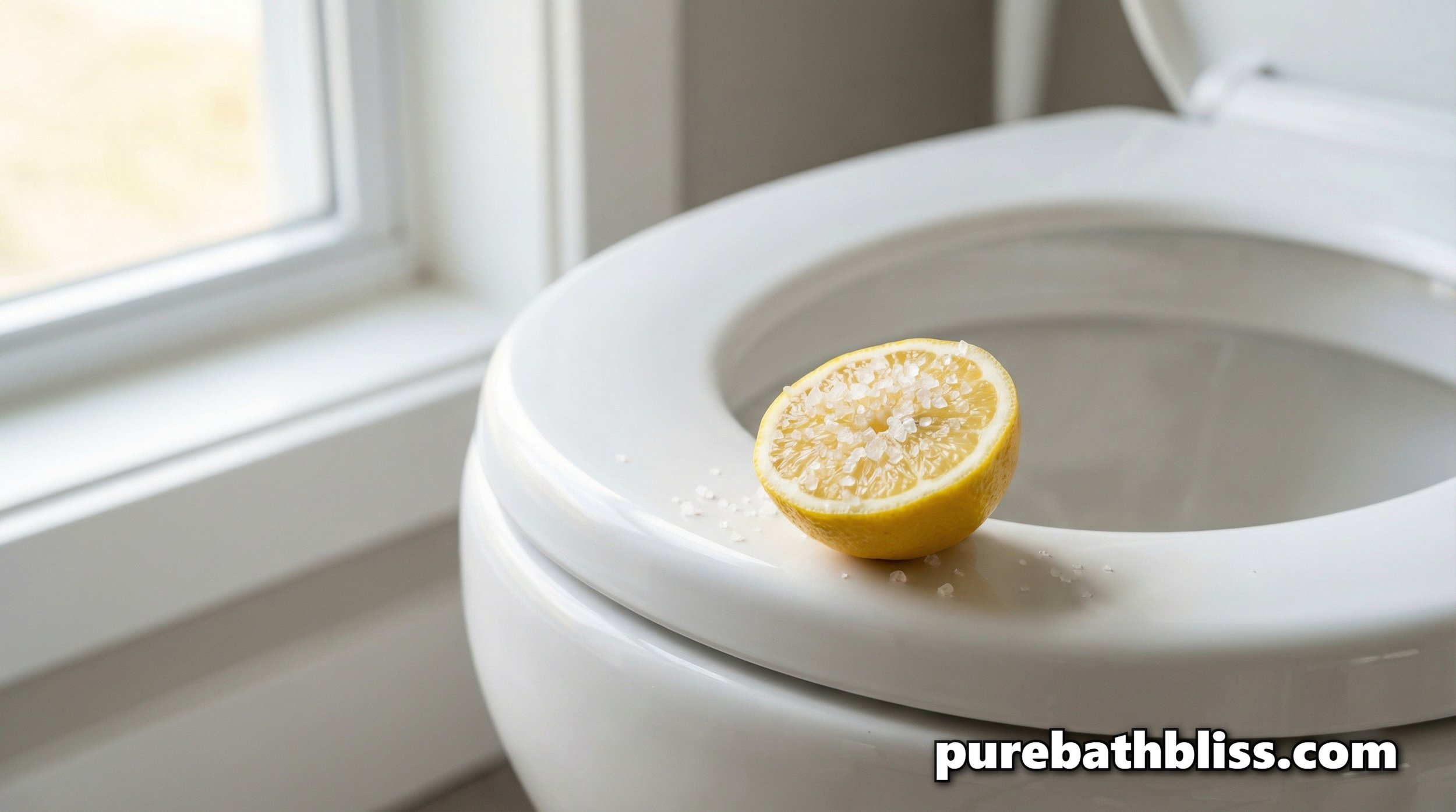
Beyond the Bleach: How to Use Lemon and Salt for a Sparkling Toilet
Most people reach for the harshest chemicals they can find the moment they see a brown ring in the toilet. But those "scorched earth" cleaners can actually strip the protective glaze over time, making it even easier for stains to stick in the future.
The best way to handle a stained toilet is often with two things you probably already have in your kitchen: Lemon and Salt. This duo acts as a natural "demolition crew" for hard water stains without the fumes or the cost of specialty products.