How to Organize a Small Bathroom Linen Closet: Maximizing Every Inch
Transparency Note: We independently select these products based on research and user reviews. If you buy something through our links, we may earn a commission.
Here is the professional guide to reclaiming your small linen closet using builder-grade organization hacks that turn a cramped cupboard into a high-performance storage zone.
In many homes, the linen closet is the most neglected piece of "Storage Infrastructure." It’s often a narrow, deep cavern where towels are shoved into dark corners and half-empty bottles of shampoo go to be forgotten. As a builder, I’ve seen that even the most beautiful microcement bathroom loses its spa-like appeal if the closet across the hall is a chaotic mess of mismatched linens and tumbling toiletries.
The problem with small linen closets isn't usually a lack of space, it’s a lack of logic. Standard wire shelving is notorious for letting small items tip over, and deep shelves encourage a "front-to-back" stacking method that buries your best towels. To fix this, we need to apply the same "Vertical Infrastructure" rules we used to organize deep vanity drawers.
Here is the professional guide to reclaiming your small linen closet using builder-grade organization hacks that turn a cramped cupboard into a high-performance storage zone.
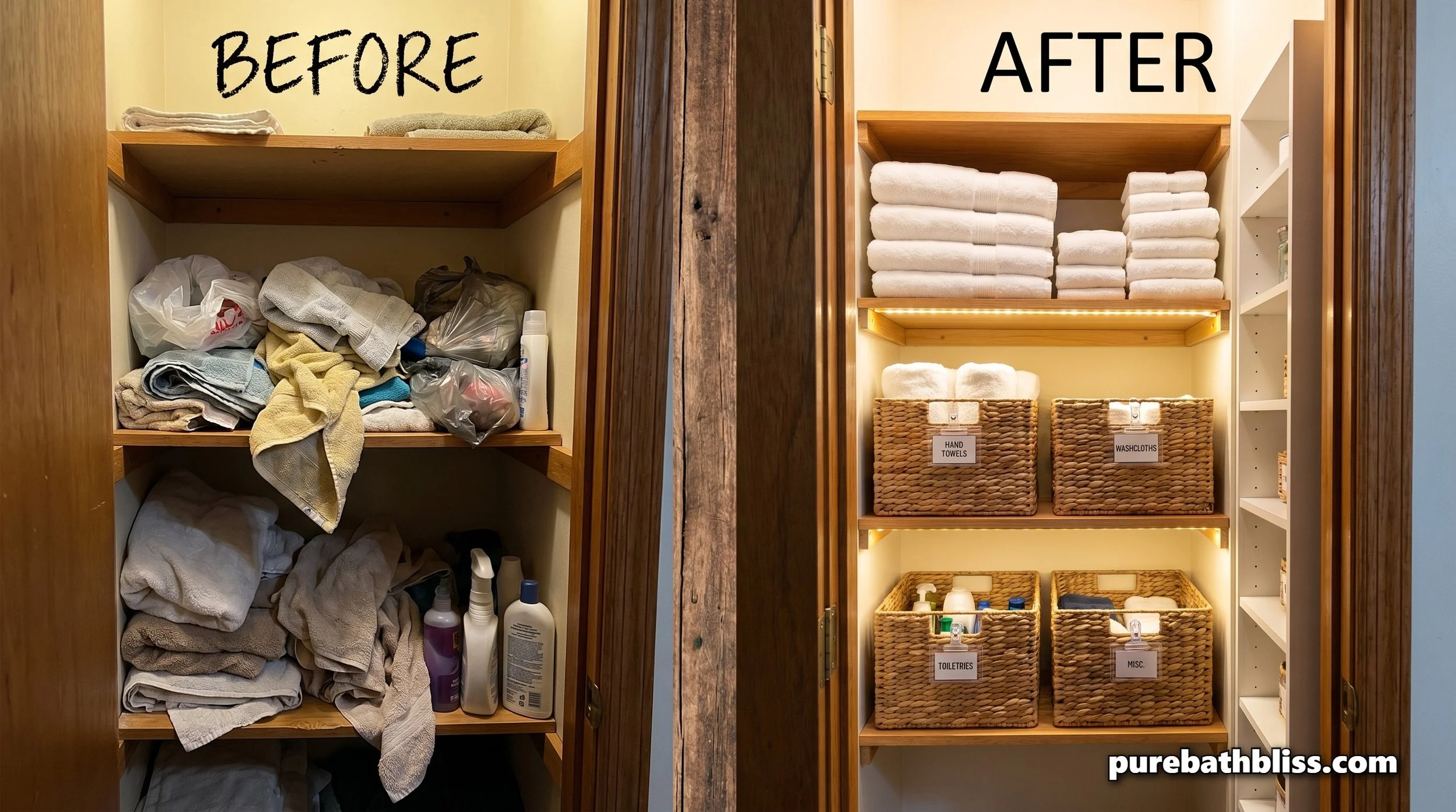
The "Shelf-in-Shelf" Strategy
Most builder-grade linen closets come with fixed shelving that is spaced too far apart. This leads to the "Leaning Tower of Towels" that eventually topples over.
Shelf Dividers: In 2026, we use acrylic or wire dividers to create dedicated "lanes" for your towels. This keeps your bath sheets separate from your hand towels and prevents the whole stack from sliding when you pull one out.
Under-Shelf Baskets: Utilize the "dead air" under each shelf by sliding on wire baskets. These are perfect for lightweight items like mindfulness shower steamers or extra washcloths.
Acrylic Shelf Dividers for Closets – These offer a high-end, "invisible" look that makes your closet feel like a boutique hotel.
Under-Shelf Wire Hanging Baskets – Instantly doubles your storage capacity for small, flat items.
Categorizing the "Clutter Zones"
A high-performance closet is divided into "Frequency Zones." If you are reaching for it every day, it should be at eye level. If it’s backstock, it goes to the "Basement" or the "Attic."
The Eye-Level Zone: This is for your daily towels and frequently used skincare.
The High Zone (The Attic): Use the top shelf for seasonal items, like beach towels or extra pillows.
The Low Zone (The Basement): This is for heavy items or bulk cleaning supplies. Storing your non-toxic cleaning kit at the bottom prevents any accidental leaks from ruining your clean linens.
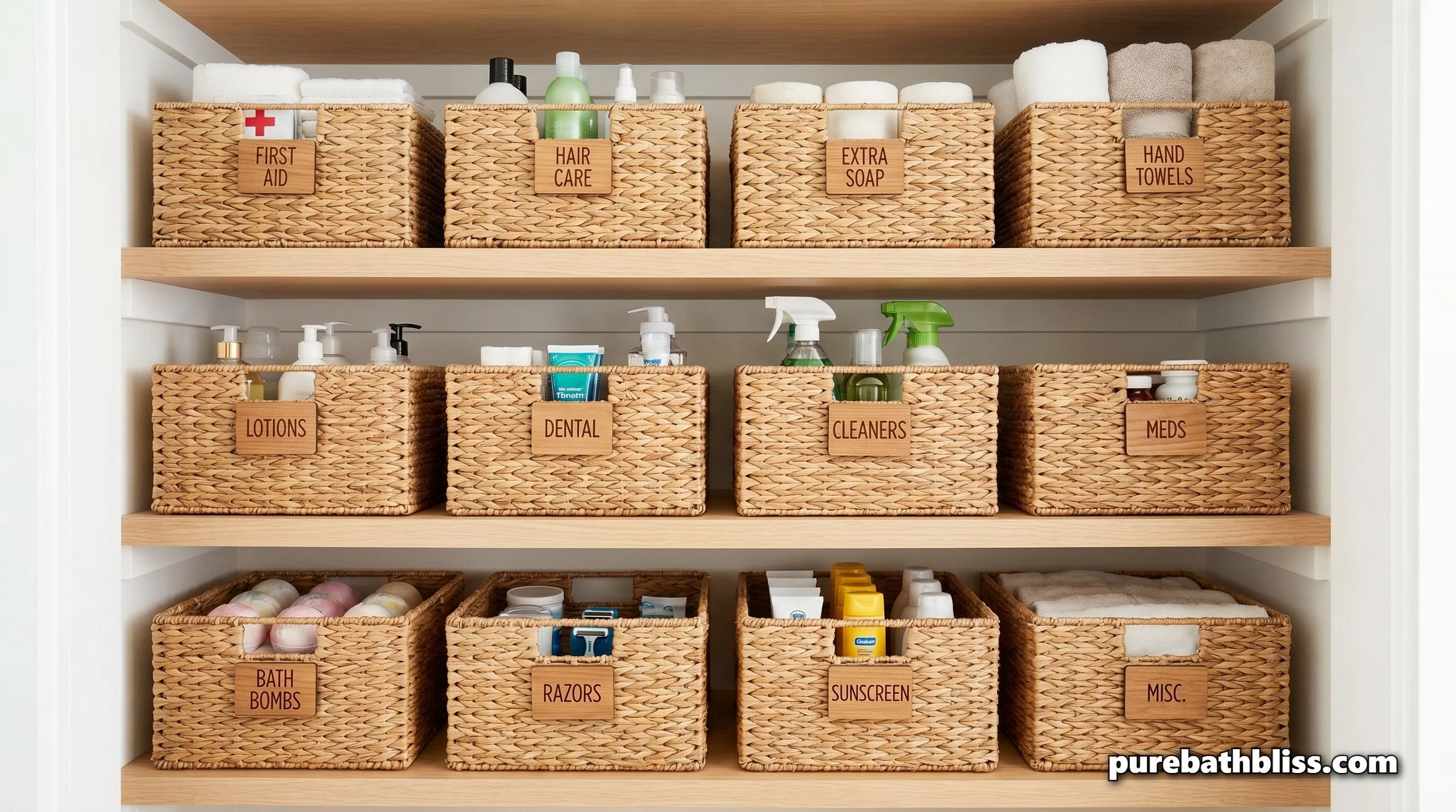
The Linen Closet Logic Table
| Shelf Level | Items Stored | Accessibility Goal |
|---|---|---|
| Top Shelf | Bulky blankets, beach towels, guest bedding. | Rarely used (Monthly) |
| Eye Level | Bath towels, hand towels, daily skincare. | High Frequency (Daily) |
| Lower Shelves | Backstock TP, soap, first aid, hair tools. | Medium Frequency (Weekly) |
| Floor Space | Hamper, heavy cleaning jugs, extra bath mats. | Functional / Heavy Storage |
The Aesthetic of the "Fold"
The psychology of a clean bathroom extends to the way your fabrics are presented. In 2026, we’ve moved away from the "tri-fold" and toward the "spa-roll" or the "edge-in" fold.
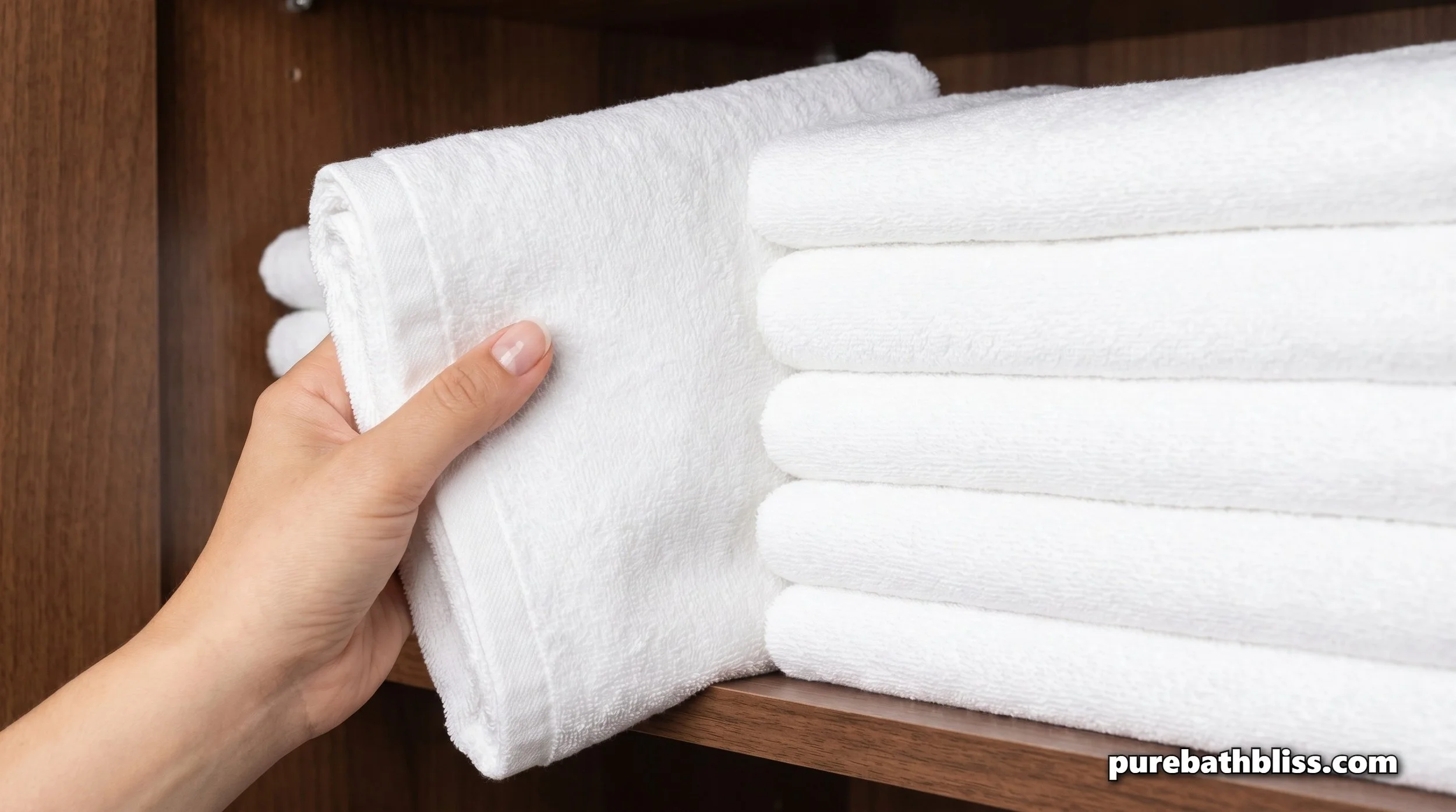
The Edge-In Fold: Fold your towels so the "raw" edges are tucked inside. When placed on the shelf, only the soft, folded spines are visible. This creates a uniform, monolithic look that mimics the microcement aesthetic.
Bin Uniformity: If you use baskets, ensure they are the same material. Mixing plastic bins with wicker and wire creates "visual noise." Stick to one texture, like water hyacinth or clear acrylic, to keep the infrastructure looking professional.
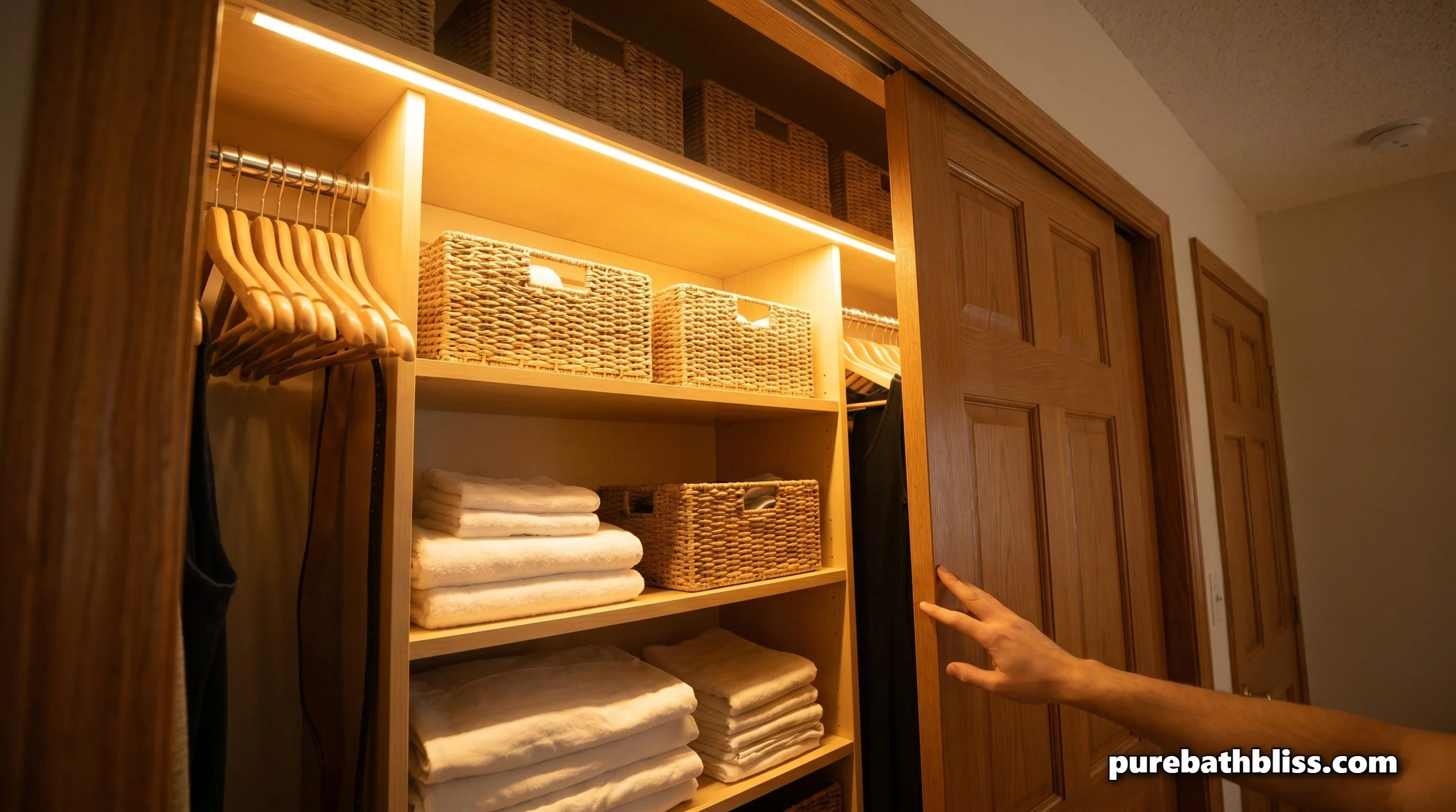
Lighting and Airflow
Because linen closets are often small and enclosed, they can become stagnant.
The "Breathable" Rule: Don't pack your towels so tightly that air can't circulate. This leads to that "stale" smell. Leave about an inch of space between the top of your towel stack and the shelf above.
Motion-Sensor Lighting: Just as we did in our vanity drawer guide, installing a simple LED strip can change the entire experience.
Rechargeable Motion Sensor LED Closet Light – Magnetic and easy to install. No wiring required, which is perfect for a quick weekend infrastructure update.
Cedar Blocks for Closets – Naturally repels moths and keeps your linens smelling like a fresh-cut forest.
Summary: The Linen Closet Upgrade Checklist
Purge First: If you haven't used that tattered beach towel since 2018, it doesn't deserve prime real estate.
Divide and Conquer: Use shelf dividers to prevent towel "landslides."
Go Vertical: Use under-shelf baskets to utilize every cubic inch of air.
Uniform Storage: Stick to one style of bin to reduce visual clutter.
Label Everything: Use clip-on labels so every family member knows where the "Extra Soap" goes.
Maintain the Fold: Always fold with the edges in for a high-end spa look.
Add Light: Motion-sensor LEDs make it impossible to lose items in the back corners.
By organizing your linen closet with these "Builder-Grade" principles, you turn a chaotic storage unit into a streamlined part of your daily routine. It’s about more than just finding a washcloth; it’s about creating a home infrastructure that supports a calm, efficient life.