The Indestructible Kids' Bath: Building for Floods and Finishes
When designing a bathroom for children, most parents focus on colorful shower curtains and rubber duckies. But as a builder, I focus on durability and moisture control. Kids are "heavy users" of bathroom infrastructure, they splash, they drop heavy toys, and they create "micro-floods" every single night.
In 2026, the goal is to build a bathroom that is essentially bulletproof. By using industrial-grade materials like high-performance epoxy grout and seamless floorings, you can create a space that survives the toddler years and transitions perfectly into the teenage years without a single renovation.
Here is how to build a kids' bath that is truly indestructible.
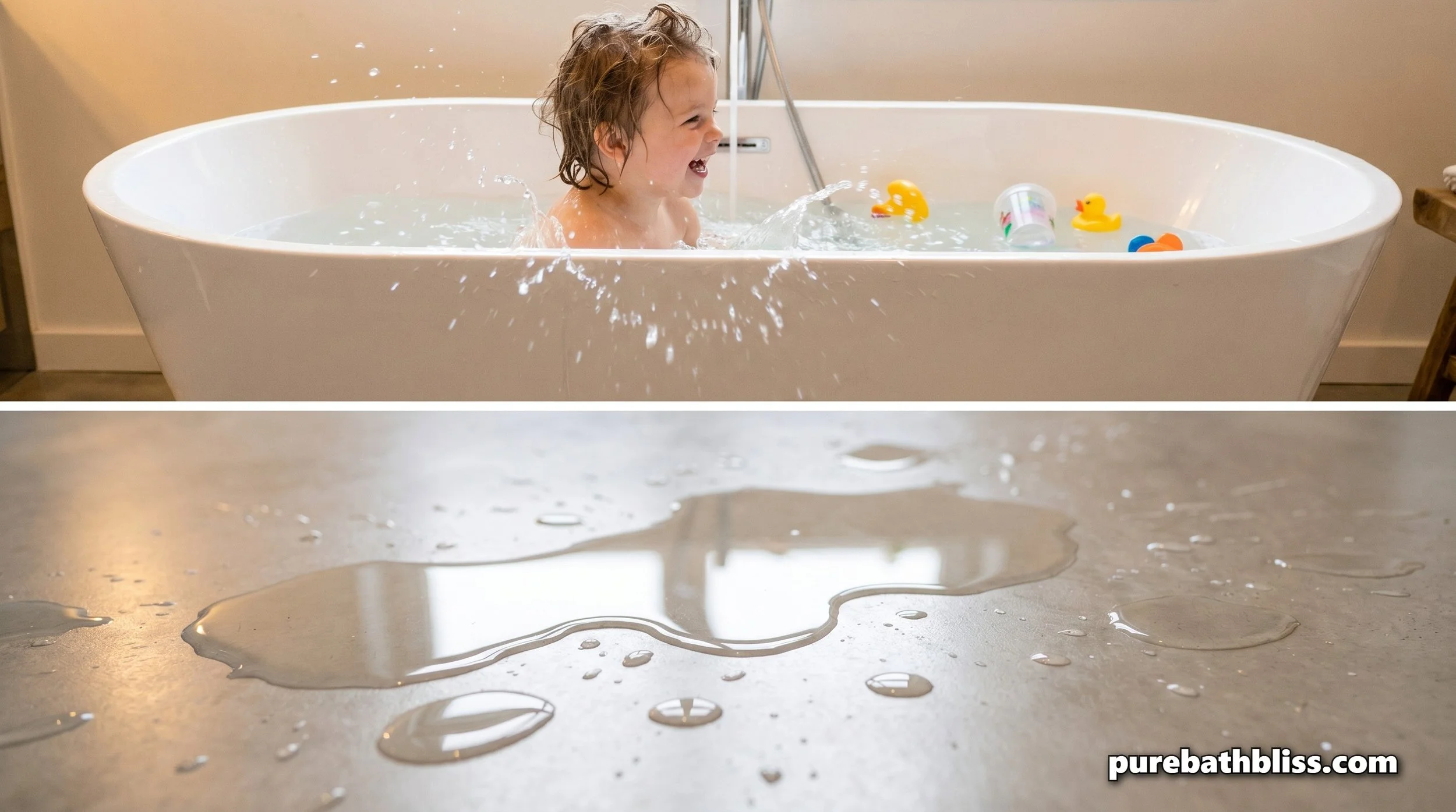
1. The "Flood-Proof" Floor: Seamless Microcement
The #1 cause of damage in a kids' bathroom isn't the kids, it’s the water. Between bath-time splashes and the occasional sink overflow, standard flooring can quickly suffer from subfloor rot.
Seamless Microcement: As we’ve seen in luxury microcement bathroom designs, this material is a single, continuous layer. There are no seams for water to seep through, making it the ultimate choice for a "splash zone."
Slip Resistance: Despite being seamless, microcement can be textured to be incredibly slip-resistant, which is critical for little feet running across a wet floor.
2. Epoxy Grout: The Stain-Proof Barrier
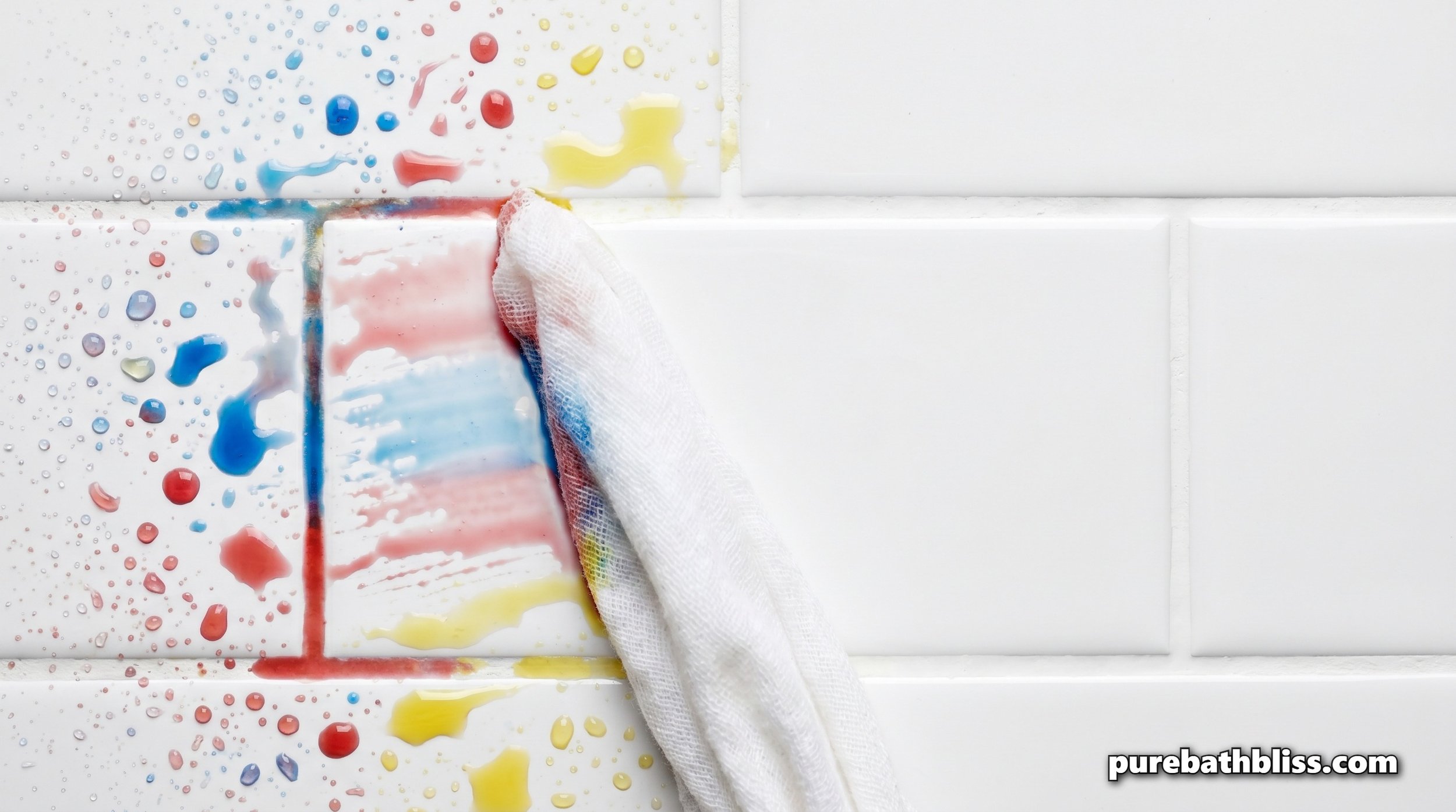
If you prefer tile for your kids' bath, the "Weak Link" is the grout. Standard cement grout absorbs bath paints, juice spills, and pink slime bacteria.
The Resin Advantage: Epoxy grout is a waterproof resin. It doesn't just resist water; it rejects it. It won't stain when they inevitably drop colored soaps or bathtub crayons, and it never needs to be sealed.
Maintenance: Because it’s non-porous, you can use a non-toxic cleaning routine to wipe away grime without the need for heavy scrubbing.
3. The "Indestructible" Surface Chart
| Surface | The "Kids' Bath" Risk | The High-Performance Fix |
|---|---|---|
| Flooring | Water seeping into subfloor. | Seamless Microcement |
| Tile Joints | Mold, mildew, and stains. | Epoxy Resin Grout |
| Walls | Scuffs and splash damage. | Scuff-Proof Semi-Gloss |
| Fixtures | Corrosion from heavy use. | PVD Finished Brass |
4. Hardware that Survives
Kids aren't always gentle. They pull on handles, slam drawers, and leave water pooling on counters.
Soft-Close Hinges: This is a mandatory "Infrastructure" move. Soft-close drawers prevent pinched fingers and stop kids from "slamming" the vanity out of alignment.
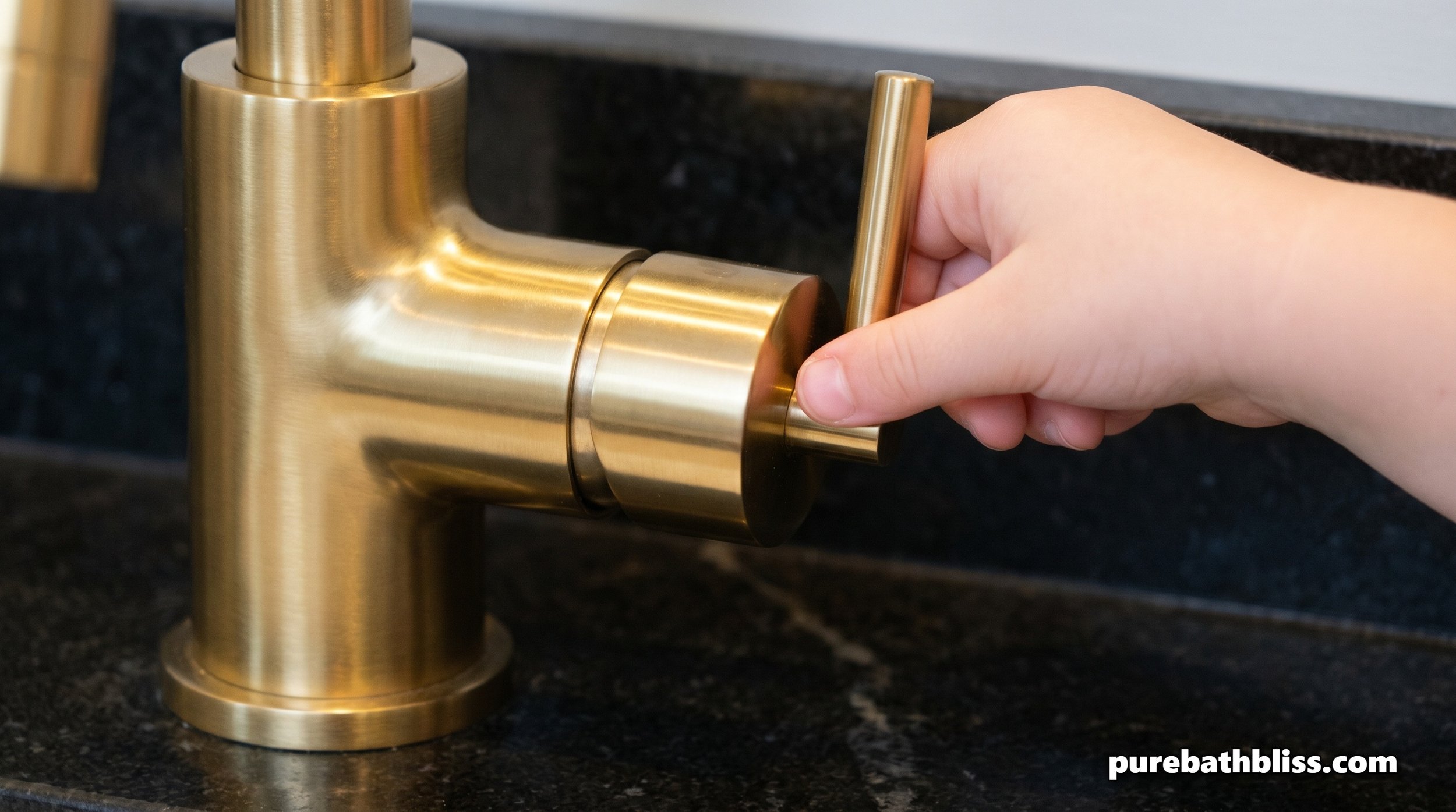
PVD Finishes: If you are choosing brushed brass fixtures, ensure they have a PVD (Physical Vapor Deposition) finish. This is an industrial coating that is virtually scratch-proof and won't corrode from constant handling.
5. Maintenance: Protecting the Investment
An indestructible bathroom only works if you keep the "Aesthetic Infrastructure" intact.
Ventilation: High-performance surfaces like epoxy are mold-resistant, but you still need to cycle the air. Ensure your exhaust fan is running for 20 minutes after every bath.
The "Dry-Sweep": Even with waterproof floors, don't let puddles sit for days. Use a squeegee to move water toward the drain to prevent mineral buildup.

Summary: The Indestructible Surface Checklist
Go Seamless: Use microcement on floors to eliminate "seepage zones."
Epoxy Everything: If you tile, use resin grout to block mold and stains.
Choose PVD Finishes: Protect your brushed brass with high-end industrial coatings.
Soft-Close Hardware: Protect fingers and your cabinetry’s integrity.
Semi-Gloss Paint: Use scuff-resistant paint on walls for easy wiping.
Manage the Air: Use high-performance ventilation to keep surfaces dry.
Quality Seals: Ensure every sink seal is watertight.