The Built-in Toe-Kick Step: A Bathroom Independence Hack
Transparency Note: We independently select these products based on research and user reviews. If you buy something through our links, we may earn a commission.
When kids can’t reach the sink, the standard solution is a plastic step stool. But as a builder, I see these stools as "Infrastructure Hazards." They clutter the floor, scratch your seamless microcement finish, and create a tripping hazard in the middle of the night.
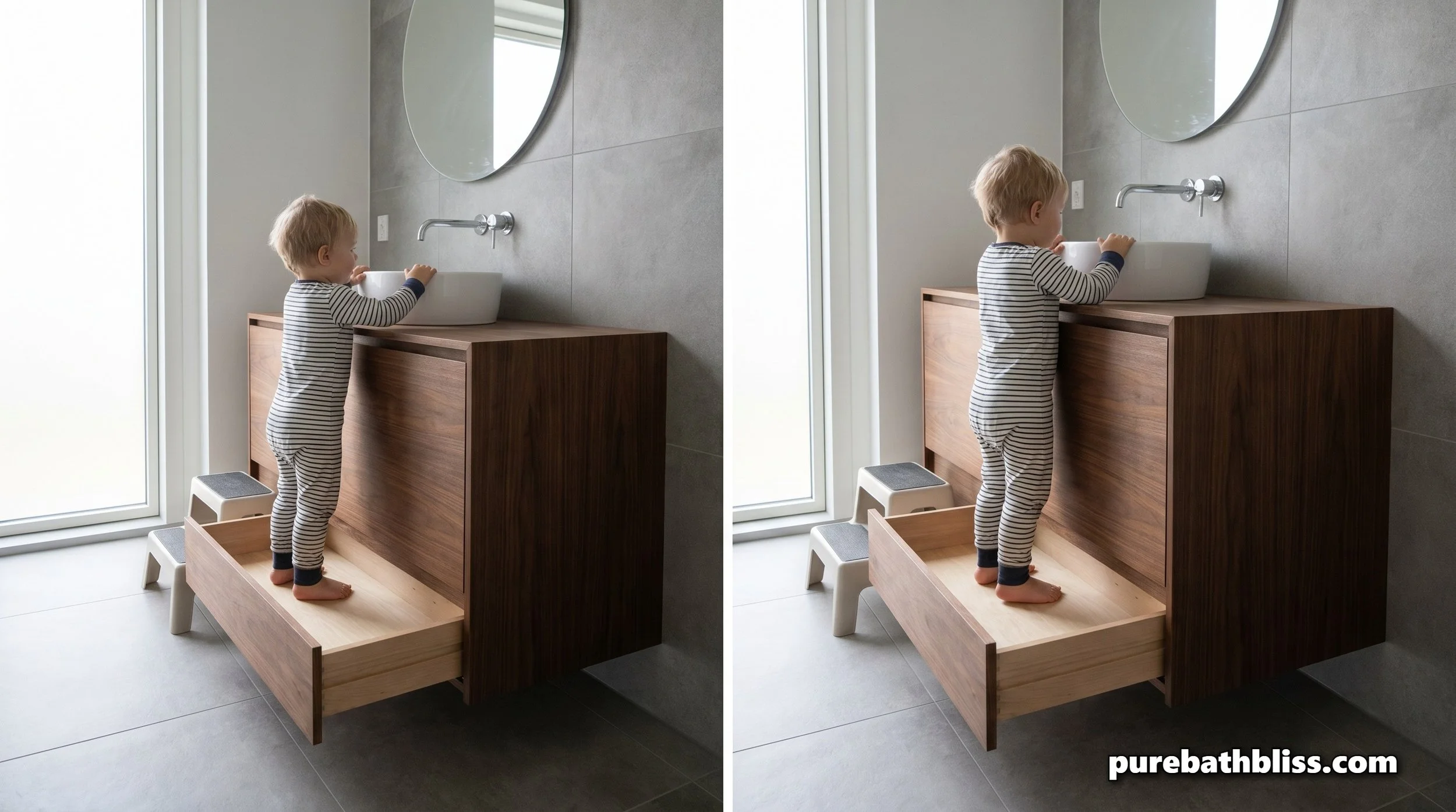
In 2026, the high-performance family home is moving toward Integrated Independence. The best way to foster a child's autonomy is to build the solution directly into the cabinetry. The Built-in Toe-Kick Step is a hidden drawer located at the very base of your vanity that pulls out to become a sturdy platform.
By moving the step into the "Internal Infrastructure" of the vanity, you clear the floor while ensuring your children can reach the brushed brass faucets safely. Here is how to plan, build, and maintain this genius bathroom hack.
1. What is a Toe-Kick Step?
The "toe-kick" is the recessed space at the bottom of a cabinet that allows you to stand close to the counter without stubbing your toes. Usually, this is dead space.
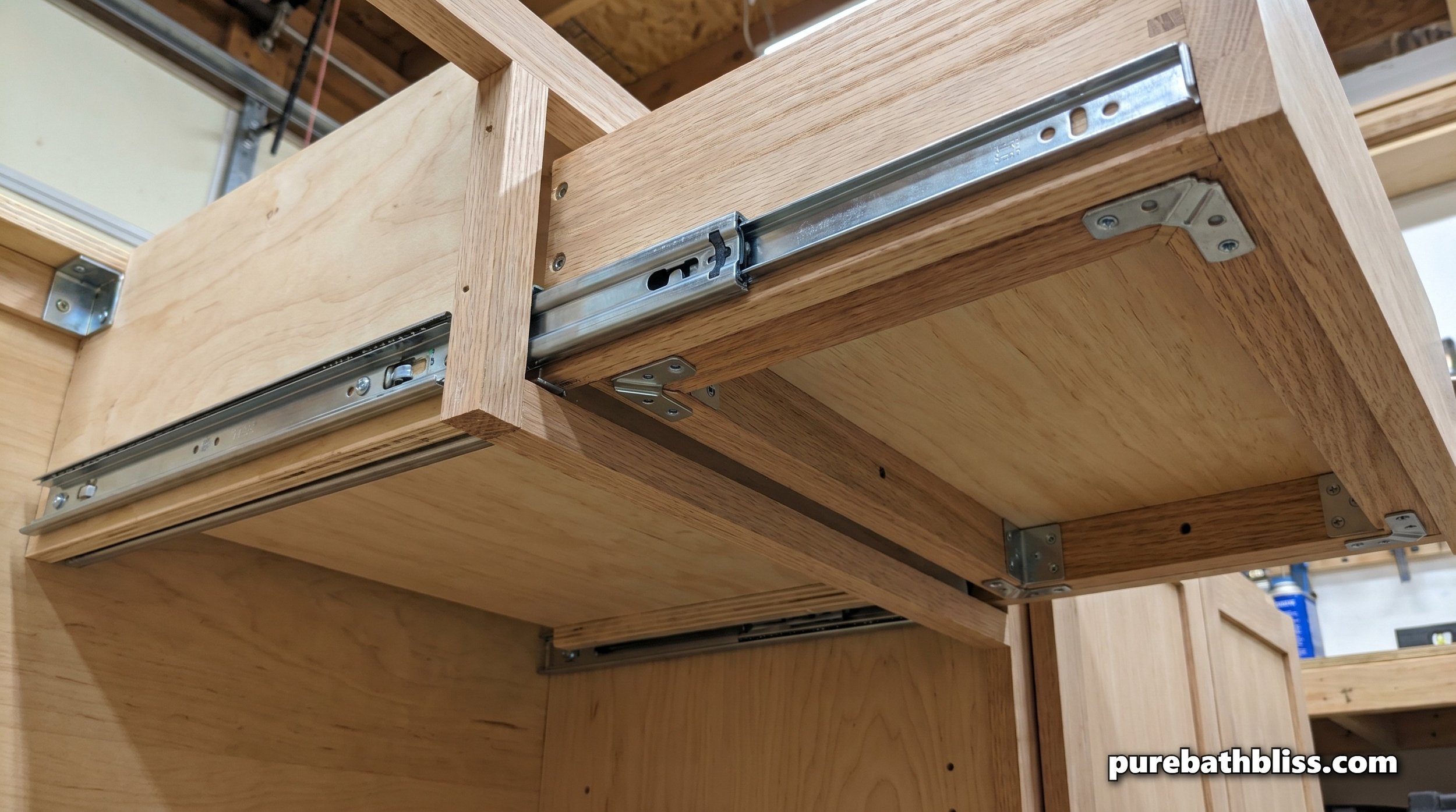
The Mechanical Design: We replace the stationary toe-kick board with a shallow, heavy-duty drawer. The drawer is installed with a solid "lid" that acts as the stepping surface.
The Weight Requirement: Unlike a standard organized vanity drawer, which holds toiletries, this drawer needs "Builder-Grade" slides rated for at least 150–200 lbs to safely support a growing child.
2. Planning the Installation
This is best done during a renovation, but it can be retrofitted if you have a standard cabinet base.
Height Matters: Most toe-kicks are 4 inches high. This provides a perfect "boost" for toddlers. If you need more height, you can design a "double-step" drawer, though this requires custom cabinetry.
Non-Slip Surfaces: The top of the step must be finished with a non-slip material. In 2026, we often use a thin layer of textured rubber or a grip-tape that matches the cabinet color to maintain the "Jewel Box" aesthetic.
3. Toe-Kick Step Specifications
| Component | Minimum Requirement | The "Pro" Choice |
|---|---|---|
| Slide Rating | 100 lbs (Standard) | 200 lbs (Heavy-Duty) |
| Step Surface | Painted Wood | Textured Non-Slip Rubber |
| Operation | Hand-Pull | Touch-Release (Push to Open) |
| Clearance | 1/8" Floor Gap | Self-Leveling Slides |
4. Maintenance: The "Clean-Sweep" Rule
Because this drawer sits at floor level, it is susceptible to dust and hair.
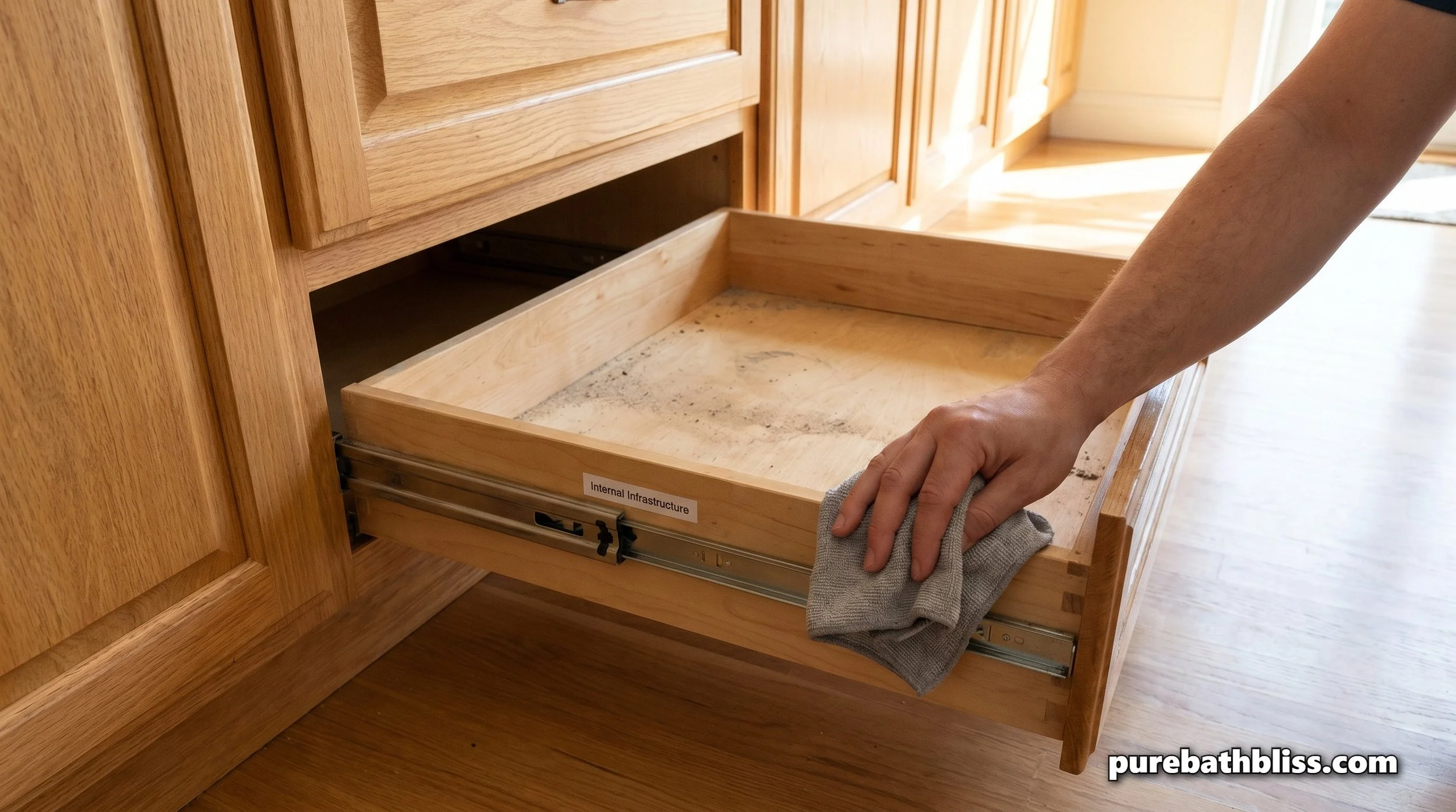
Debris Prevention: Use a "magnetic" dryer sheet hack to wipe the drawer slides once a month. This prevents hair from gumming up the bearings.
Moisture Protection: Since it’s a "Wet Zone," ensure the drawer is sealed with a water-resistant finish. Using the dry baking soda hack inside the vanity cabinet above the step will help keep the air dry and prevent the wood from swelling.
5. Amazon: The Step-Up Hardware Kit
If you are ready to build this independence hack, here are the mechanical components I recommend:
Vadania Heavy Duty Drawer Slides (250lb Capacity) – These are the "Infrastructure" backbone of a safe toe-kick step.
Black Self-Adhesive Anti-Slip Grip Tape – Provides the necessary traction for wet feet without ruining the look.
Sugatsune Push-to-Open Magnetic Catch – Allows the child to "kick" the step open with their toe, no hands required.
Summary: The Built-in Step Checklist
Verify Weight Capacity: Ensure slides are rated for at least 150 lbs.
Add Traction: Always use a non-slip top surface.
Choose "Touch-Release": Makes the step easier to operate for small children.
Protect the Floor: Leave a small gap to ensure the drawer doesn't scratch your microcement.
Seal for Moisture: Use water-resistant coatings on all wooden parts.
Clean the Rails: Keep the tracks free of hair and dust for smooth operation.
Transition Plan: When the kids grow up, the drawer can be used for flat storage (like extra bath mats).
The built-in toe-kick step is the ultimate "Builder-Grade" hack for families. It respects the design of your home while empowering your children to take charge of their hygiene. It’s a small investment in your bathroom’s infrastructure that pays off every morning.