The Cost of Residue: Why Soap and Shampoo Are Silent Surface Killers
In the world of home maintenance, we often view soap scum as a mere aesthetic nuisance, a cloudy film that makes a shower look "unclean." But as a builder, I view soap and shampoo residue as a chemical threat to your bathroom’s "Internal Infrastructure." Most modern liquid soaps and shampoos contain surfactants, oils, and synthetic fragrances that are designed to be rinsed away immediately. When they sit on a surface, they become a corrosive "bio-film."
In 2026, we are seeing more high-end finishes like brushed brass fixtures and natural stone. These materials are particularly vulnerable to the long-term effects of "standing soap." Whether it’s on your counter, your shower floor, or the rim of your tub, leaving residue to sit is the fastest way to degrade the sealers and finishes you’ve invested in.
Here is why the "Post-Shower Rinse" is the most important 30 seconds of your daily routine.
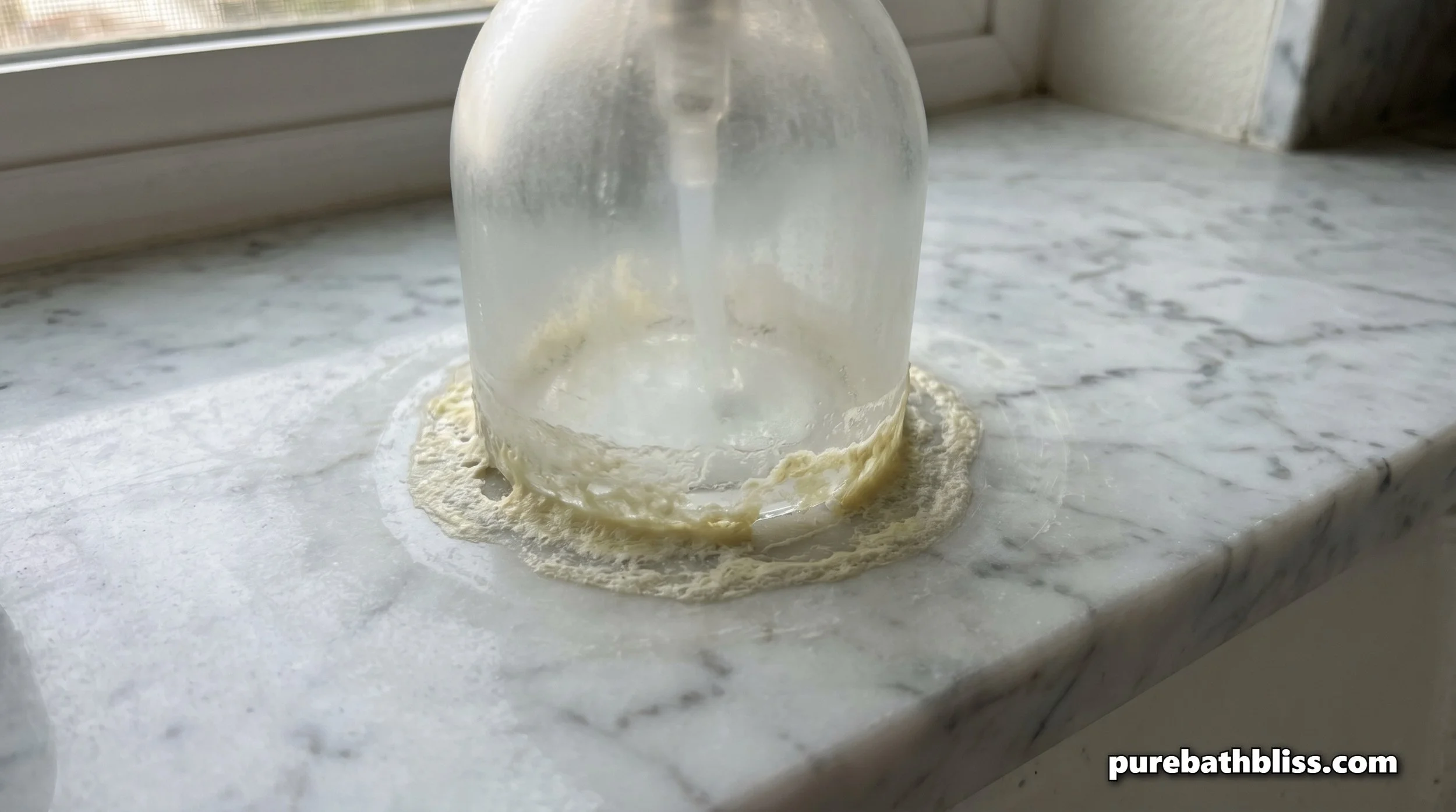
1. The Chemical Attack on Grout and Seals
Standard cement grout and even some high-performance epoxy grouts can be compromised by the fats and proteins found in shampoo.
The Breeding Ground: Soap residue creates a sticky "food source" for bacteria. This is exactly how the dreaded pink slime bacteria takes hold. Once the slime integrates with the soap film, it becomes a water-resistant barrier that is much harder to clean.
Degrading the Seal: Constant exposure to the chemicals in soap can prematurely wear down the sink seals and silicone beads around your tub, leading to hidden leaks behind the walls.
2. Etching and Oxidation on Metals
Many people don't realize that "standing soap" is actually acidic or highly alkaline depending on the brand.
The Brass Threat: If you leave shampoo suds to dry on your handles, the chemicals can etch into the protective coating. Over time, this leads to permanent spotting that no shampoo cleaning hack can fix.
Microcement Vulnerability: Soap residue that sits on a microcement bathroom finish can eventually "cloud" the sealer. Because microcement relies on a pristine top-coat for its waterproof integrity, this clouding is a sign that the "Infrastructure" is being weakened.
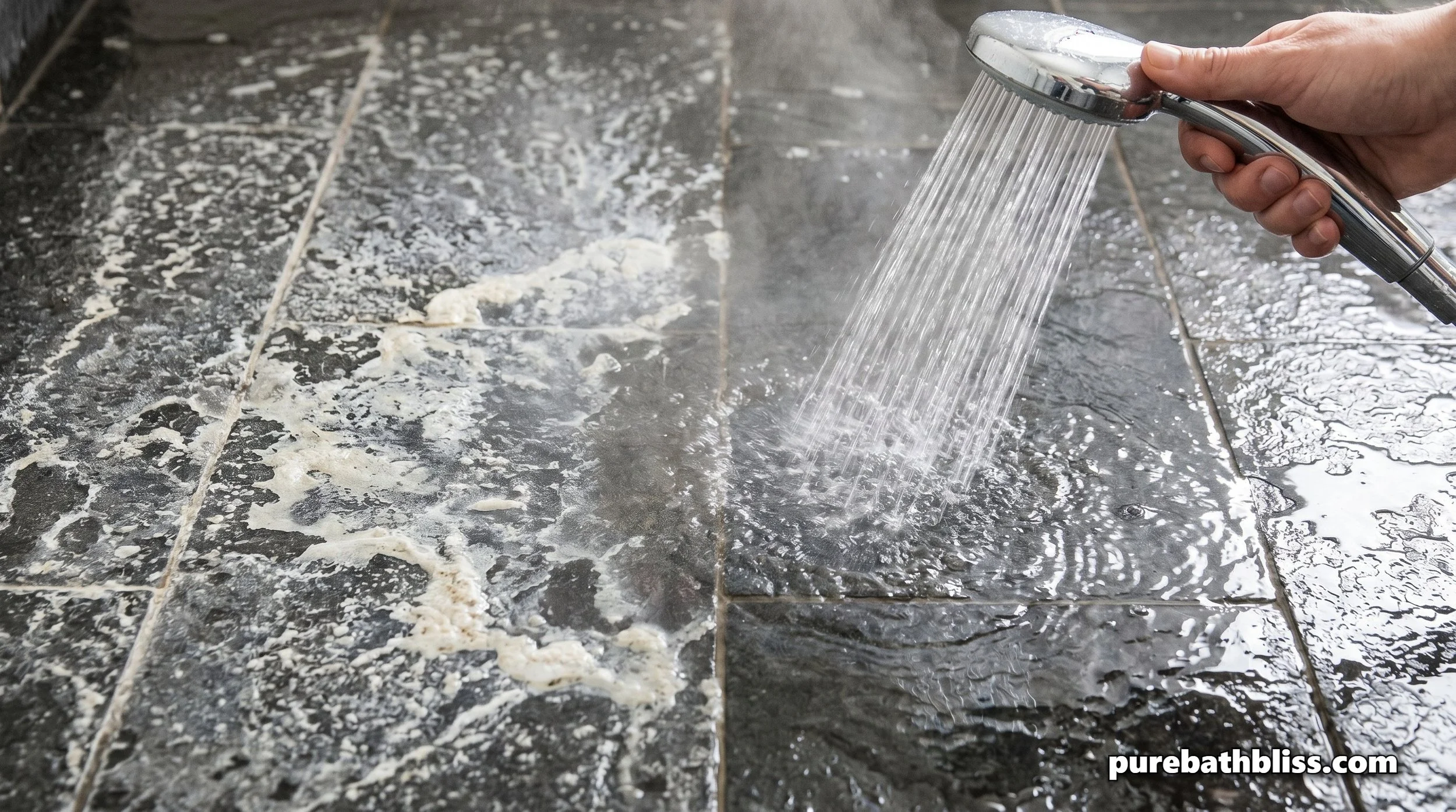
3. The "Residue Risk" Table
| Surface | The "Sit" Effect | Long-Term Damage |
|---|---|---|
| Natural Stone | Etching & Dulling | Permanent "water ring" stains. |
| Metal Fixtures | Finish Degradation | Pitting and loss of luster. |
| Grout Lines | Bio-film Growth | Mold and deep-seated staining. |
| Acrylic/Fiberglass | Yellowing | Hard-to-remove "soap crust." |
4. The 30-Second Maintenance Protocol
You don't need a deep-clean every day to prevent this damage. You just need a "Rinse-and-Dry" habit.
The Final Rinse: After your shower, use the hand sprayer to rinse all soap bubbles down the drain. This takes 10 seconds but removes 90% of the threat.
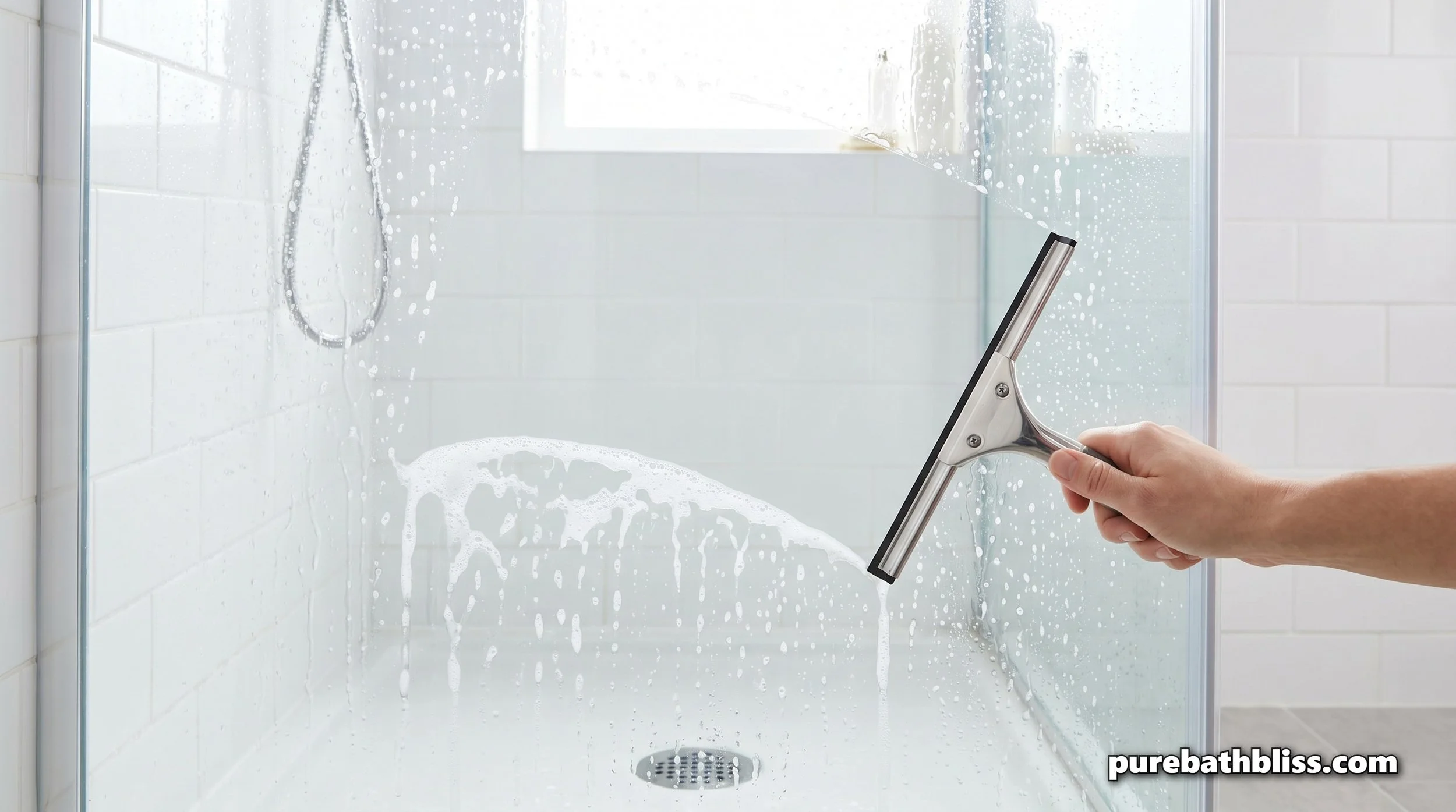
The Squeegee Habit: Moving water and soap off the walls prevents it from settling into the grout.
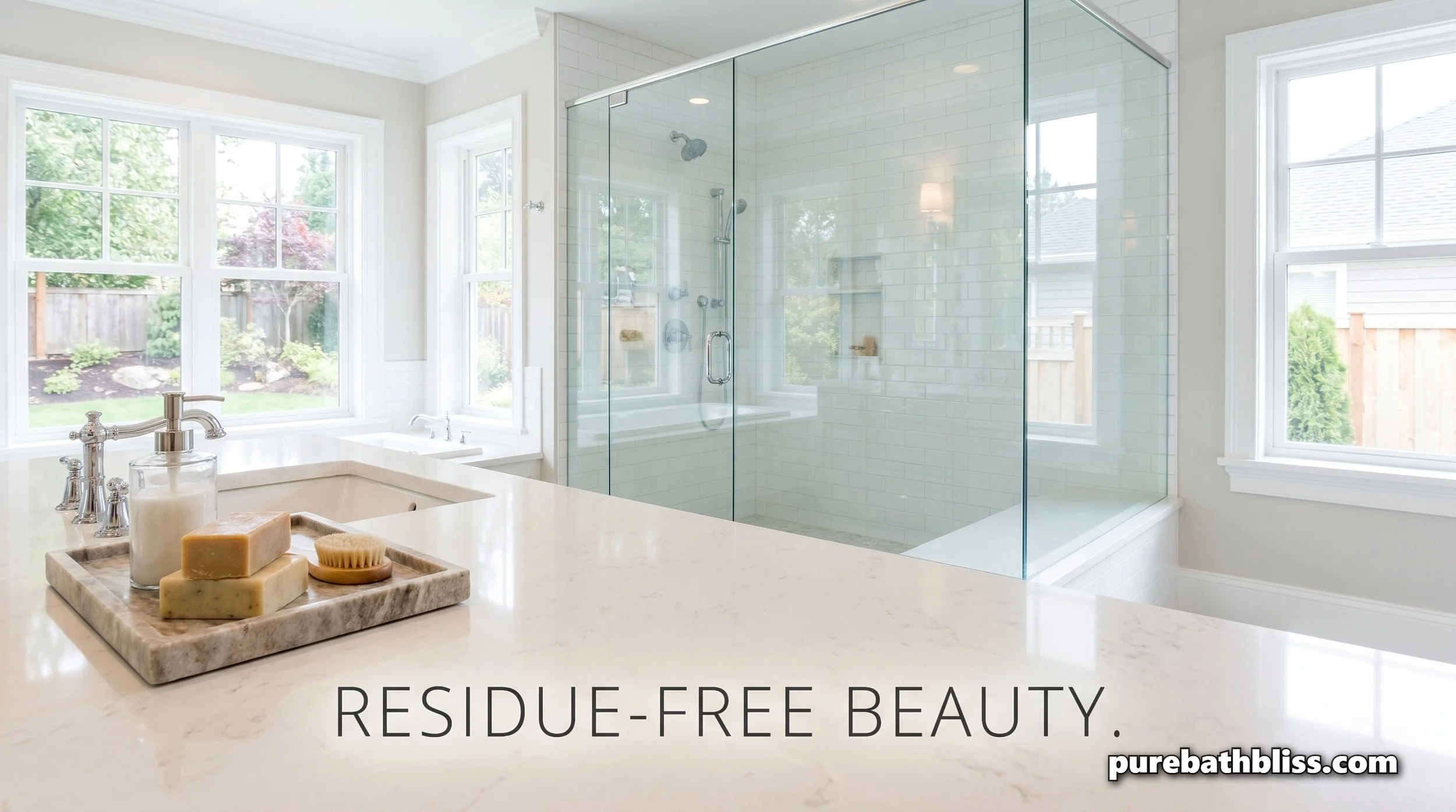
The "Elevated" Soap Hack: Don't let soap bottles sit directly on the counter. Use a stone or wooden tray to keep the "Infrastructure" of your vanity dry.
5. Cleaning Up the "Leftovers"
If you already have buildup, don't reach for the industrial acid.
Targeted Scrubbing: Use a soft brush and a pH-neutral cleaner. The goal is to dissolve the fats in the soap without scratching the surface.
Microfiber Buffing: After rinsing, buff your fixtures with a dry microfiber cloth. This removes the "ghosting" that soap residue leaves behind, restoring the "Jewel Box" glow to your fixtures.
Summary: The No-Residue Checklist
Rinse Immediately: Never leave suds to dry on any surface.
Elevate Your Products: Use trays to prevent soap rings on counters.
Protect Your Brass: Soap is a chemical that can dull brushed brass.
Squeegee Daily: Keep soap and minerals off the glass and tile.
Watch the Seals: Residue eats into sink and tub seals.
Avoid Bio-film: Don't let pink slime get a foothold in standing soap.
Maintain the Finish: Protect your microcement with a simple post-shower rinse.
By taking a few seconds each day to ensure no residue is left behind, you are effectively extending the life of your bathroom by years. It’s the simplest "Infrastructure" habit you can adopt to keep your sanctuary looking and performing at a "Builder-Grade" level.