The "Floating" Vanity Advantage: Why Wall-Hung is the New Standard
Transparency Note: We independently select these products based on research and user reviews. If you buy something through our links, we may earn a commission.
In the world of high-end residential construction, the "Infrastructure" of a bathroom is shifting. We are moving away from heavy, floor-mounted cabinets that trap dust and towards the Floating Vanity. As a builder, I’ve seen this trend explode in 2026, and it’s not just about the "minimalist" look. It’s about functionality, hygiene, and the psychology of a clean bathroom.
A wall-hung vanity creates an unbroken plane of flooring, which is essential if you’ve invested in a seamless microcement bathroom finish. By lifting the cabinetry off the ground, you eliminate the "Gunk Zone", that impossible-to-clean crevice where the vanity meets the floor.
But installing a floating vanity requires a different approach to your home’s "Internal Infrastructure." Here is the professional guide to why you should consider going wall-hung and the builder-secrets to doing it right.
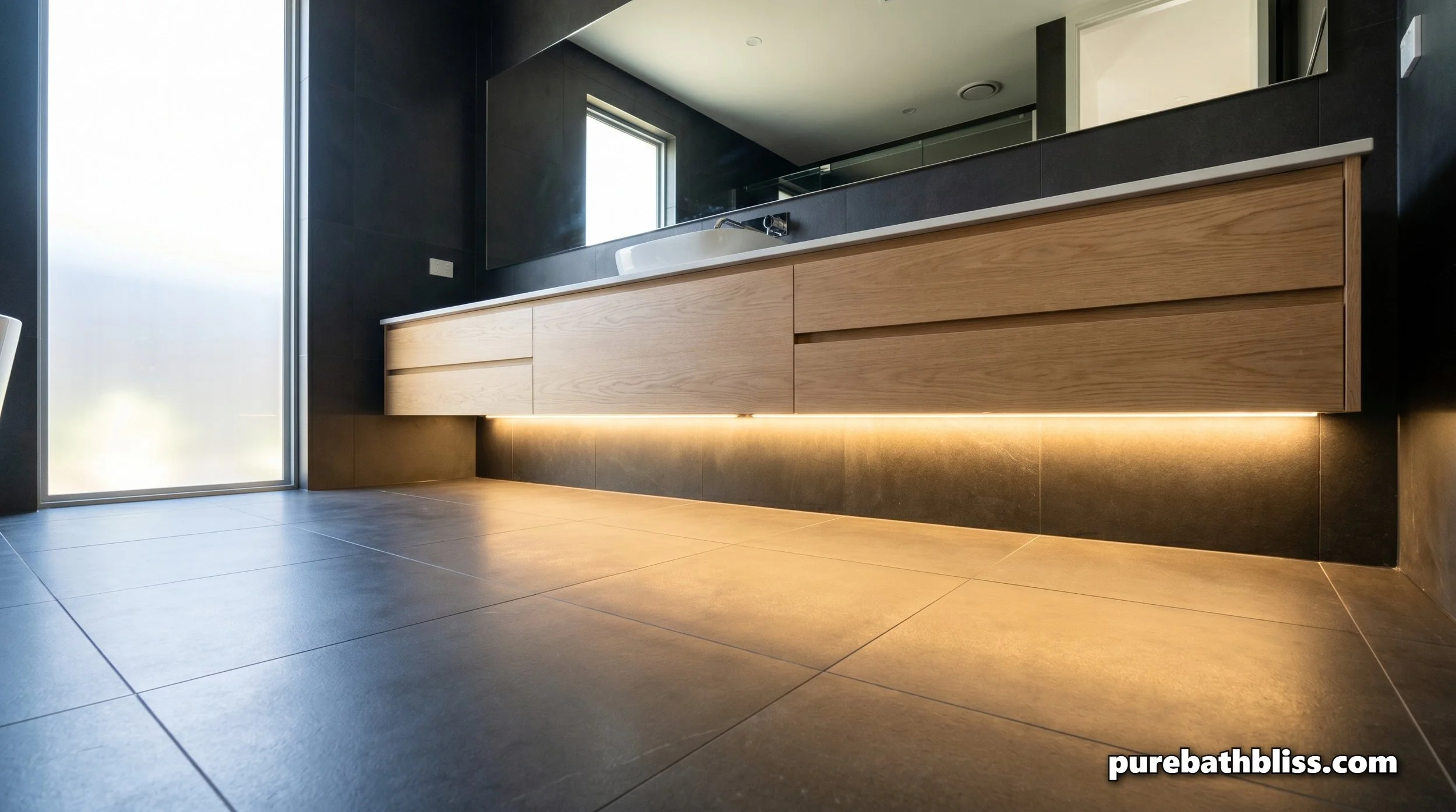
1. The Visual Expansion Trick
The most immediate benefit of a floating vanity is the "Square Footage Illusion." In a small jewel box powder room, seeing the floor extend all the way to the wall makes the room feel significantly larger.
Unbroken Sightlines: When the eye can see the floor underneath the vanity, the brain perceives more space.
Airflow Improvement: Without a bulky cabinet blocking the path, air can circulate more freely. This is a critical component of the no-window powder room air quality strategy, as it prevents stagnant pockets of humidity near the floor.
2. The "Infrastructure" of Support
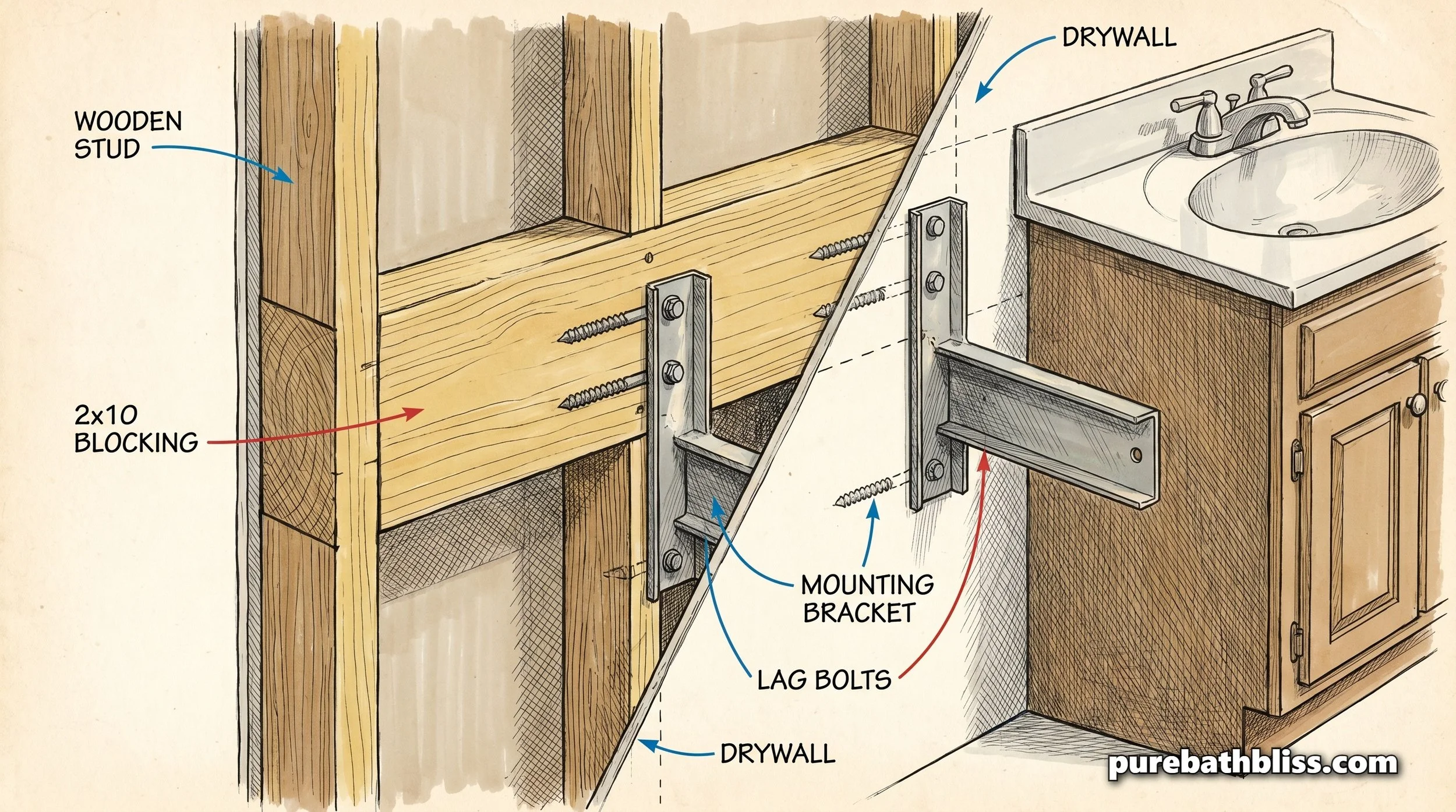
You cannot simply screw a heavy vanity into standard drywall and hope for the best. A floating vanity requires Structural Blocking.
Behind the Scenes: Before the walls are finished, a builder must install 2x10 or 2x12 wood blocking between the studs at the mounting height. This creates a solid "Anchor Zone" that can support the weight of the cabinet, the stone countertop, and the water-filled sink.
The Plumbing Move: Because the space under the vanity is exposed, your plumbing must be "Builder-Grade" neat. This often means using a decorative chrome or brushed brass P-trap instead of standard white plastic, as the pipes are now a visible part of the design.
3. Floating vs. Floor-Mounted
| Feature | Floating (Wall-Hung) | Standard (Floor-Mount) |
|---|---|---|
| Cleaning | Effortless (Mop under) | Difficult (Dust traps) |
| Visual Space | Airy & Expansive | Heavy & Grounded |
| Plumbing | Visible / Requires Finish | Hidden inside cabinet |
| Installation | Requires wall blocking | Standard stud-attachment |
4. Maintenance: The "No-Gunk" Lifestyle
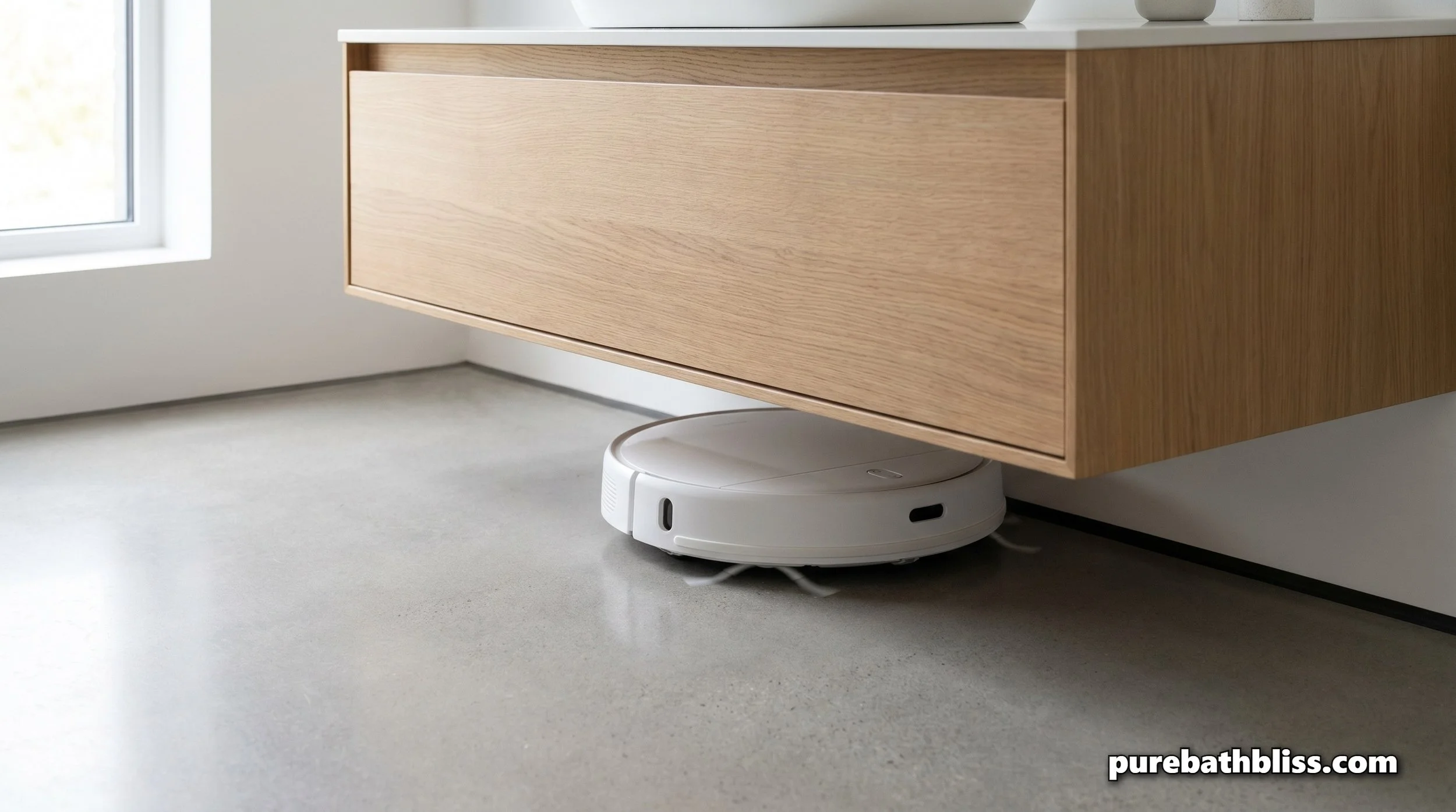
The biggest "SpongeHack" for a floating vanity is that you don't actually need one. Because there is no kick-plate or baseboard to scrub around, maintenance is a 5-second swipe.
Robotic Vacuum Friendly: In 2026, most homeowners use automated vacuums. A floating vanity allows these robots to clean the entire bathroom floor without getting stuck in corners.
The "Dry-Sweep" Advantage: If you use the dry baking soda hack inside your vanity drawers, a floating unit ensures that no moisture is trapped underneath the cabinet either, further protecting the wood from rot.
5. Sourcing the Look: Amazon Favorites
To achieve a high-performance floating look, you need more than just the cabinet; you need the hardware to match.
KOHLER Jute 30" Wall-Hung Vanity – A classic, high-quality build that offers excellent storage while maintaining a slim profile.
Kraus Decorative Bottle P-Trap in Brushed Gold – Essential for when your plumbing is exposed. It matches perfectly with brushed brass fixtures.
Ekena Millwork Floating Vanity Support Brackets – If you are DIYing the installation, these heavy-duty steel brackets are a must-have for safety.
Summary: The Floating Vanity Checklist
Check Your Studs: Ensure you have horizontal blocking before the drywall goes up.
Upgrade Your Trap: Use a decorative metal P-trap instead of white plastic.
Mind the Height: Standard height is 34-36 inches from the floor to the top of the counter.
Seal the Back: Ensure the sink seal against the wall is watertight to prevent drips behind the cabinet.
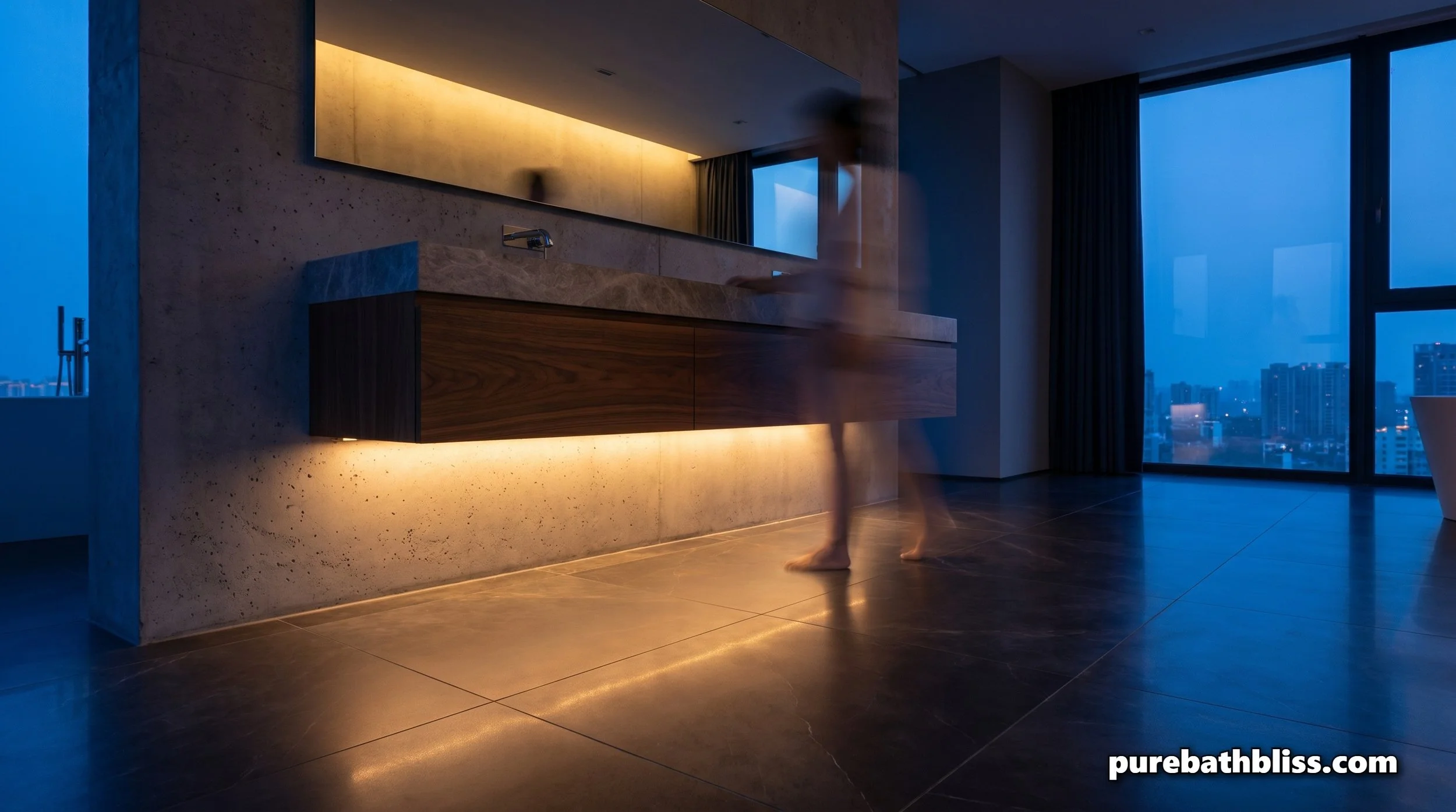
LED Lighting: Install a toe-kick light for a high-end "glow" and nighttime safety.
Maximize Flooring: Run your tile or microcement all the way to the wall.
Choose the Right Mirror: Pair with an oversized mirror to maximize the visual expansion.
A floating vanity is the ultimate intersection of form and function. By modernizing your bathroom's "Infrastructure" with a wall-hung unit, you create a space that is easier to clean, more spacious to the eye, and built to the highest standards of 2026 design.