The Psychology of a Clean Bathroom: Why a Tidy Space Calms the Mind
Transparency Note: We independently select these products based on research and user reviews. If you buy something through our links, we may earn a commission.
In the world of home maintenance, we often focus on the "how", how to fix a vibrating fan, how to scrub grout, or how to stop a leak. But in 2026, as the lines between our work lives and our personal lives continue to blur, the "why" is becoming even more important. Specifically: Why does a clean bathroom have such a profound impact on our mental health?
The bathroom is the only room in the house where we are truly alone, often both physically and digitally. It is where we start our day by setting our intentions and where we end it by shedding the stress of the world. Psychologists refer to this as a "Liminal Space", a transitional zone where we move from one state of being to another. When this space is cluttered, grimy, or smelling of "biofilm" from a sink, as we discussed in Why Your Bathroom Sink Smells Like Sulfur, that transition is interrupted by stress.
In this guide, we will explore the "Sanctuary Effect," the science of cortisol in domestic environments, and how a clean bathroom infrastructure supports a clear mind.
The "Visual Noise" and Cortisol Connection
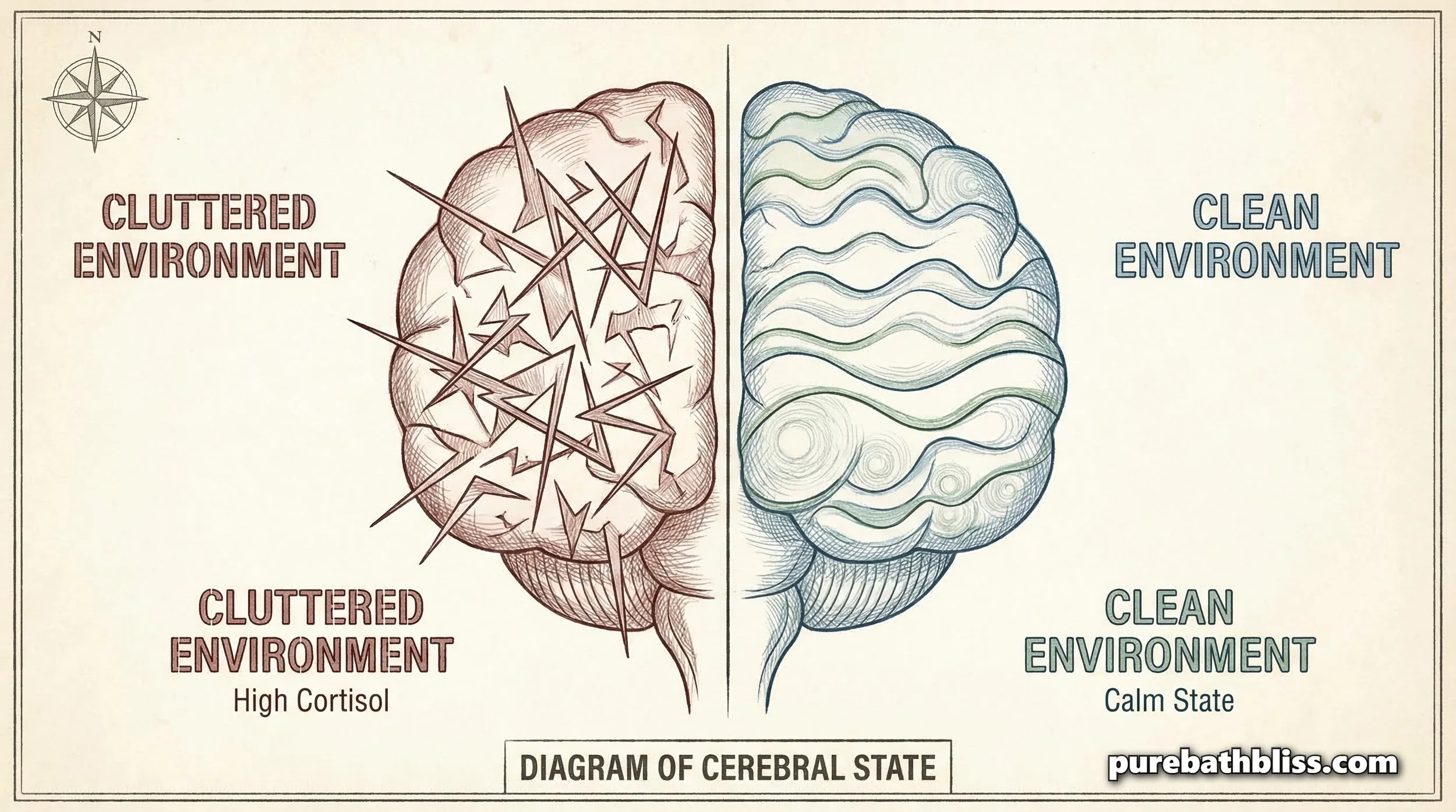
Our brains are constantly processing the environment around us. Every bit of clutter, a half-empty bottle of shampoo, a pile of damp towels, or a pink-stained shower curtain is "visual noise." According to environmental psychology, high levels of visual noise can trigger the release of cortisol, the body’s primary stress hormone.
When you walk into a bathroom and see a "sweating" toilet or fogged-up mirrors, your brain immediately adds "maintenance tasks" to your mental to-do list. This prevents the parasympathetic nervous system from taking over, which is the system responsible for "rest and digest." By following the Drying Out Your Bathroom: The Post-Soak Protocol, you aren't just protecting your walls; you are silencing the visual noise that prevents your brain from relaxing.
Gather Your Sanctuary Supplies: The Mental Clarity Kit
To transform your bathroom from a "utility closet" into a psychological retreat, you need tools that appeal to all five senses. Here is what I recommend for 2026:
Amber Glass Apothecary Bottles – To decant mismatched plastic soap bottles and reduce visual clutter.
Ultrasonic Essential Oil Diffuser – To keep the air smelling like the "Purity" of a spa rather than cleaning chemicals.
Dimmable Warm-Tone LED Bulbs – To mimic the natural circadian rhythm and reduce "blue light" stress.
Bamboo Tray for Tub Storage – To keep your 7 Brilliant Uses for Epsom Salt in Your Bathroom organized and within reach.
1. The Ritual of "Resetting"
There is a psychological phenomenon known as "completion mechanism." When we finish a task, our brain rewards us with a small hit of dopamine. This is why a "reset" routine is so powerful.
If you spend five minutes every evening ensuring the mirrors are clear and the counter is wiped down, you are essentially telling your brain that the day is "closed." Using a gentle, natural cleaner like the ones we suggested in 6 Brilliant Uses for Castile Soap in the Bathroom allows you to perform this ritual without the sensory assault of harsh bleach or ammonia. The scent of real soap and essential oils reinforces the feeling of safety and cleanliness.
2. Order as a Form of Control
The world can feel chaotic, but your bathroom is a space where you have total control over the "Infrastructure." When your fixtures are polished and your fan is running quietly, it provides a sense of mastery over your environment.
A vibrating or rattling fan is more than just a nuisance; it is an auditory stressor that can cause low-level irritability. By taking twenty minutes to fix the issue using our guide on Why Is My Bathroom Fan Vibrating?, you are removing a psychological barrier to peace. A quiet bathroom allows for "Internal Dialogue," which is essential for mental processing.
3. The Olfactory Anchor: Purity vs. Perfume
Our sense of smell is the only sense directly linked to the amygdala and hippocampus, the areas of the brain that process emotion and memory. This is why the smell of a "dirty" bathroom can instantly ruin your mood.
In 2026, we are moving away from heavy, synthetic "air fresheners" that only mask odors. Instead, we focus on Air Quality & Healthy Home standards by removing the source of the smell. When you deep clean your drains or eliminate the bacteria behind Why Your Shower Curtain Gets That "Pink Slimy" Mold, you are clearing the olfactory air. This allows you to use "scent anchors" like lavender or eucalyptus to intentionally trigger a relaxation response.
4. Tactile Comfort and Grounding
The transition from a warm shower to a cold, hard floor can be a psychological "jolt" that ends the relaxation period too abruptly. Grounding is a therapeutic technique that involves physically connecting with the earth or a soft surface to bring yourself back to the present moment.
A dry, soft bath mat or a warm towel serves as a "tactile bridge" back to reality. This is why we pay so much attention to the drying process. A damp towel doesn't just feel bad; it feels like a failure of the home’s systems. Ensuring your linens dry properly is a small act of self-care that pays off every single morning.
Summary: The Sanctuary Checklist
Reduce Visual Noise: Decant products and clear the counters.
Silence Auditory Stressors: Fix vibrating fans or dripping faucets.
Optimize the Air: Remove odor sources rather than masking them.
Practice the Reset: Spend 5 minutes a night preparing the space for the morning.
Engage the Senses: Use soft lighting, natural scents, and dry textiles.
Respect the Infrastructure: A well-maintained room is a well-maintained mind.
When you care for your bathroom, you are ultimately caring for yourself. A clean, functional, and "Organic" space isn't just a home value booster, it is a foundation for a calmer, more productive life.