The Dry Baking Soda Sweep: The Ultimate Bathroom Moisture Hack
Transparency Note: We independently select these products based on research and user reviews. If you buy something through our links, we may earn a commission.
In the world of home maintenance, moisture is the ultimate enemy of "Internal Infrastructure." As a builder, I’ve seen thousands of dollars in custom cabinetry ruined by a simple, silent culprit: high humidity trapped in enclosed spaces. Whether it’s a deep vanity drawer or a cramped linen closet, moisture settles in these "dead zones," leading to warped wood, peeling liners, and that unmistakable musty smell.
Most people reach for a spray or a candle to mask the odor, but in 2026, we are focused on the source. If you want to maintain the psychology of a clean bathroom, you have to manage the humidity levels inside your storage.
Enter the "Dry Baking Soda Sweep." This is a classic hack that utilizes the chemical properties of Sodium Bicarbonate to act as a non-toxic desiccant. It’s the cheapest "Builder-Grade" fix for protecting your bathroom’s cabinetry and linens.
1. The Science of the "Dry Sweep"
Baking soda is a natural pH neutralizer and an amphoteric substance, meaning it can react with both strong acids and strong bases. But for our purposes, its most important quality is its hygroscopic nature.
Moisture Absorption: In the humid environment of a bathroom, baking soda literally pulls water molecules out of the air. This prevents the "Biofilm Zone" from forming on your sink seals and inside your cabinets.
Odor Neutralization: Unlike air fresheners that just layer scent on top of rot, baking soda eliminates odors at the molecular level. It’s an essential part of any non-toxic cleaning kit.
2. How to Perform the "Baking Soda Sweep"
This isn't just about throwing a box in the closet; it’s about strategic placement to ensure 360-degree protection.
The "Sachet" Method for Drawers
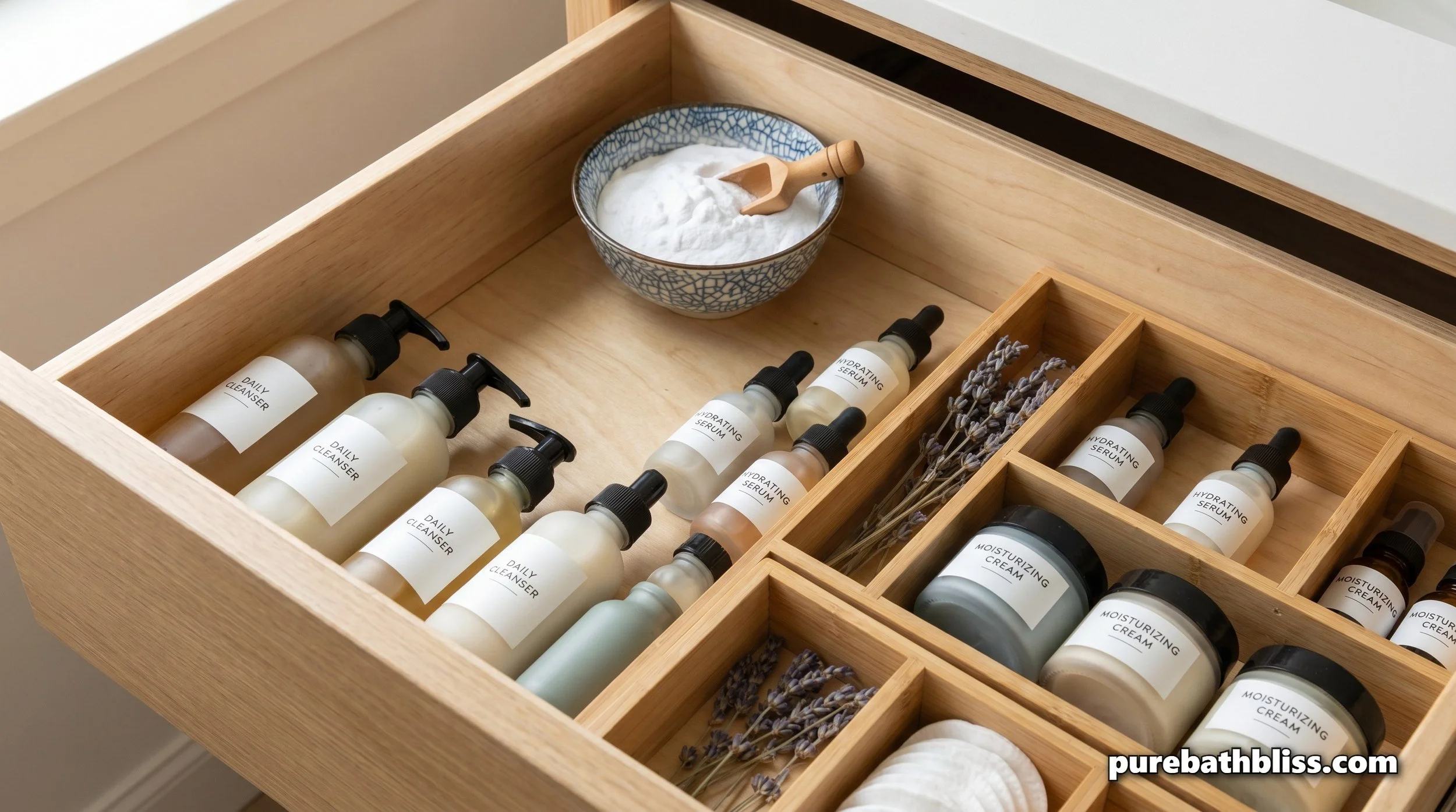
If you don't want an open bowl of powder sliding around, use a coffee filter or a small muslin bag. Fill it with ½ cup of dry baking soda, tie it with a rubber band, and toss it in the back of your vanity drawer. This keeps your drawer "Infrastructure" dry without the risk of a white powder spill.
The "Dusting" Hack for Linens
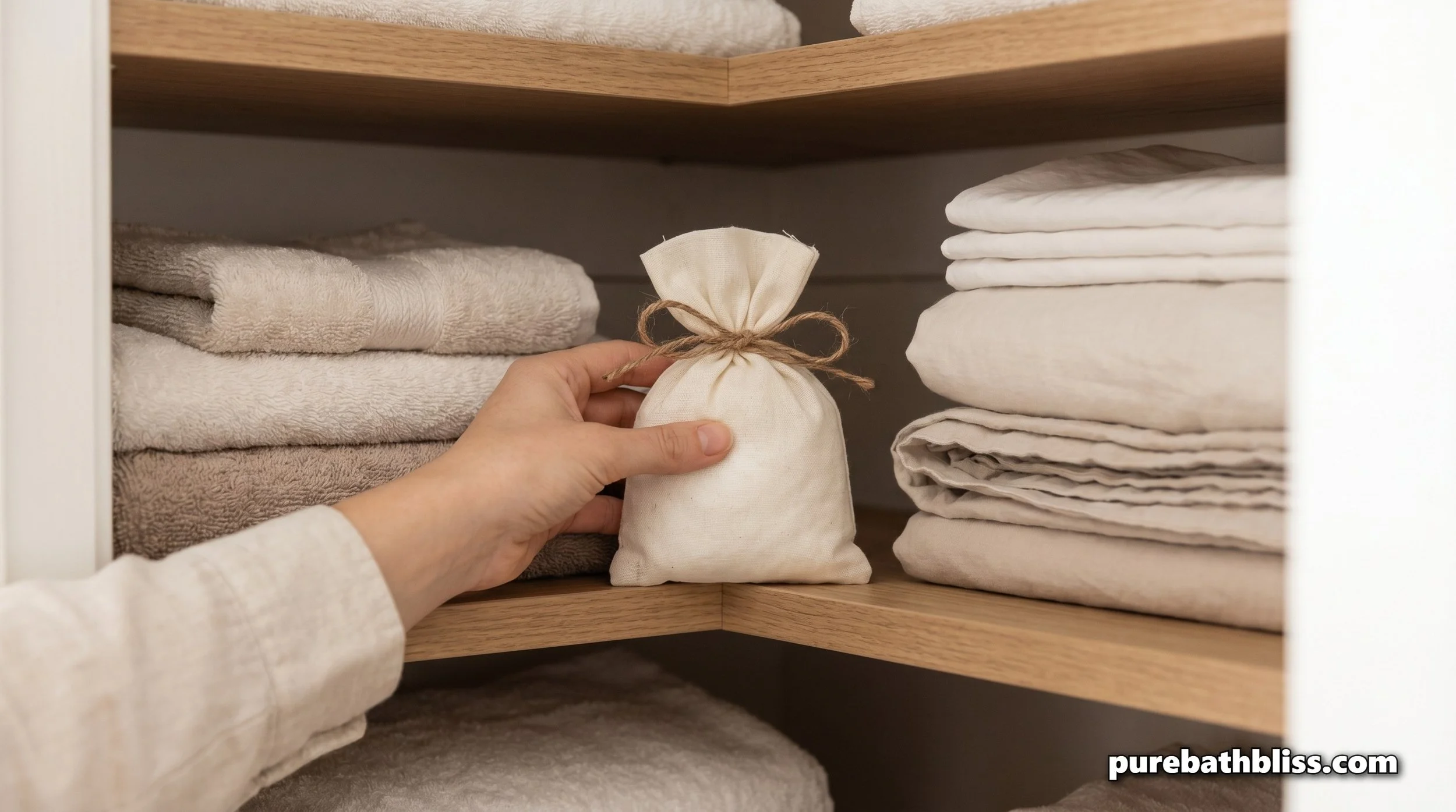
When you are organizing your linen closet, moisture can get trapped between the folds of your towels. Lightly sprinkle baking soda on the shelves (underneath your liners). It creates a "Moisture Barrier" that keeps your linens smelling like they were just pulled from the dryer.
3. The Moisture Management Cheat Sheet
| Location | The "Baking Soda" Method | Maintenance Cycle |
|---|---|---|
| Vanity Drawers | Loose bowl in the "Plumbing Gap." | Replace every 3 months. |
| Linen Closet | Sprinkled under shelf liners. | Refresh during seasonal purge. |
| Under Sink | Open box or sachet near the P-Trap. | Replace if it feels "clumped." |
| Trash Cans | Loose sprinkle at the bottom. | Replace with every bag change. |
4. Why This Beats Store-Bought Dehumidifiers
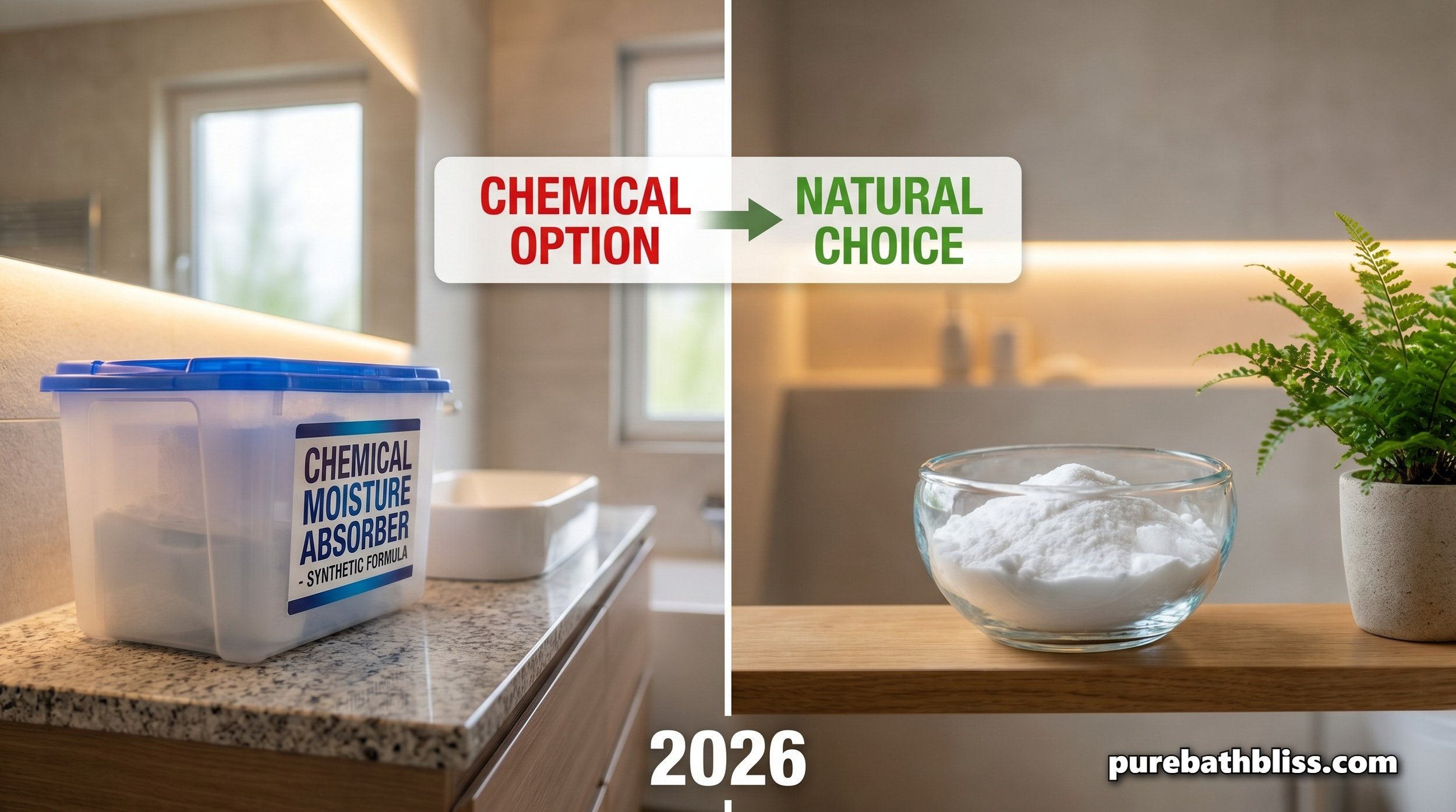
You’ve seen those plastic tubs that collect water in the closet. While effective, they are often filled with calcium chloride, which can be toxic if spilled and creates a lot of plastic waste.
Pet & Kid Friendly: If your toddler gets into the under-sink storage, baking soda is a food-grade ingredient. It’s the "Safe-Scrub" choice for a high-performance home.
Cost-Effective: You can buy a massive 5lb bag of baking soda for the price of one specialized dehumidifier tub.
Arm & Hammer Baking Soda – The best value for a whole-house moisture sweep.
Cotton Muslin Drawstring Bags – Perfect for making your own non-toxic moisture sachets.
Glass Jar with Wood Lid – For those who want the "Aesthetic" bowl look inside their vanity.
5. Maintenance: The "Clump" Test
How do you know when your baking soda has done its job? As a builder, I use the "Clump Test" to check on the humidity levels of a subfloor, and you can use it for your drawers.
Check the Texture: Fresh baking soda is fine and powdery.
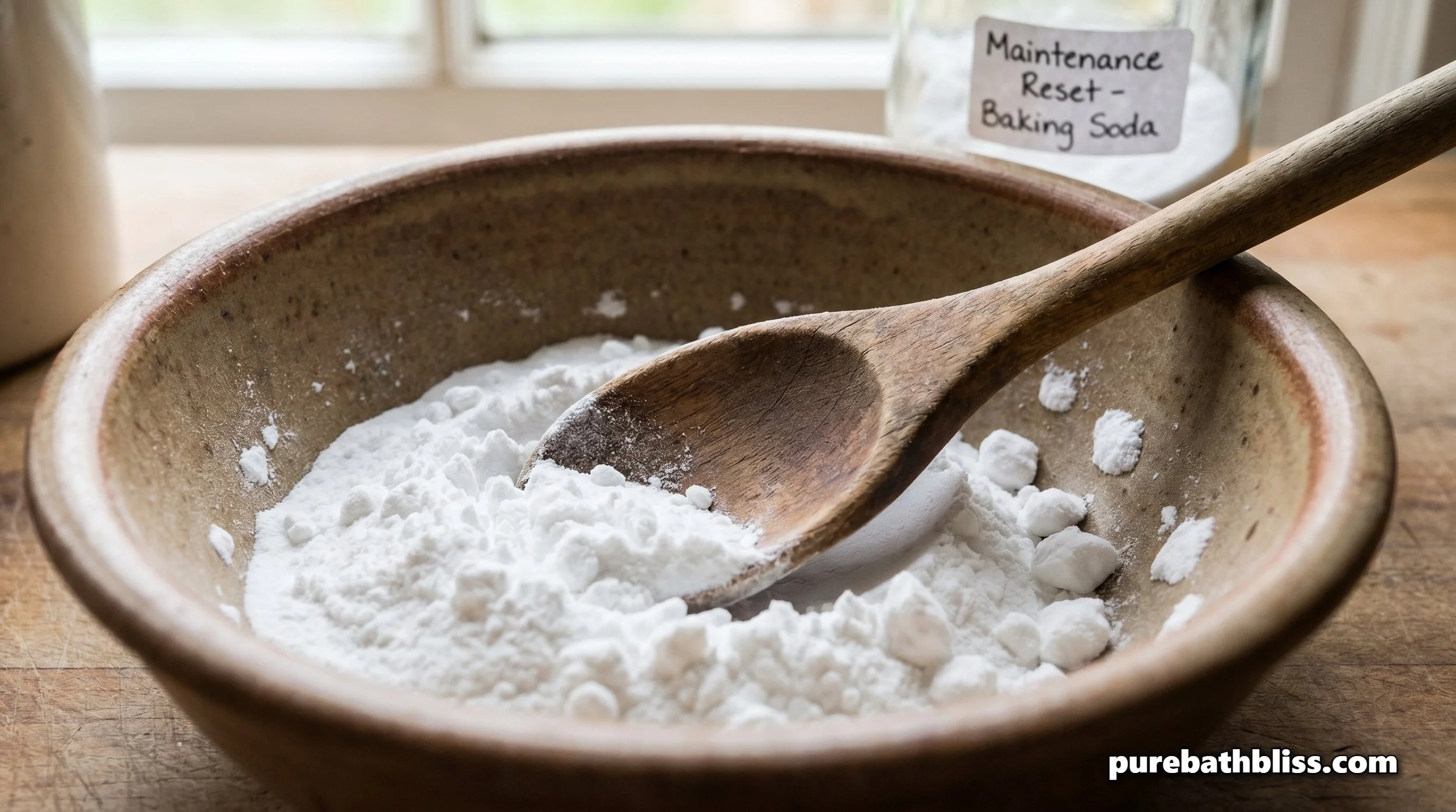
Observe the Clumps: When baking soda has absorbed its maximum capacity of moisture, it will begin to form hard, pebble-like clumps.
The Reset: Once the powder looks "heavy" or clumped, it’s time to dump it and start fresh. Don't throw it away, though! You can still use that "spent" baking soda to scrub the grime off your microcement shower floor or sanitize your toilet.
Summary: The Dry Baking Soda Checklist
Target the Dead Zones: Focus on vanity drawers and the linen closet.
Use Sachets: Coffee filters or muslin bags prevent mess in high-traffic drawers.
Sprinkle Under Liners: Create a permanent moisture barrier on your shelves.
The 90-Day Rule: Replace your baking soda every 3 months for peak "Infrastructure" protection.
Recycle the Waste: Use the old powder for a non-toxic deep clean before tossing.
Safety First: It’s the safest moisture solution for homes with kids and pets.
Pair with Ventilation: This hack works best when your bathroom fan is also in top shape.
By implementing the "Dry Baking Soda Sweep," you are using simple chemistry to solve a complex architectural problem. It’s a genius, low-cost hack that preserves your bathroom’s cabinetry, protects your linens, and keeps your entire sanctuary smelling as fresh as a new build.