Pink Slime vs. Black Mold: What’s Growing in Your Bathroom?
In the world of home maintenance, few things are as unsettling as spotting a new "growth" in your sanctuary. As a homeowner, you’ve likely seen it: a neon-orange streak along the grout or a fuzzy black patch in the corner of the ceiling. While both look like "bathroom rot," they are fundamentally different organisms with very different "diets."
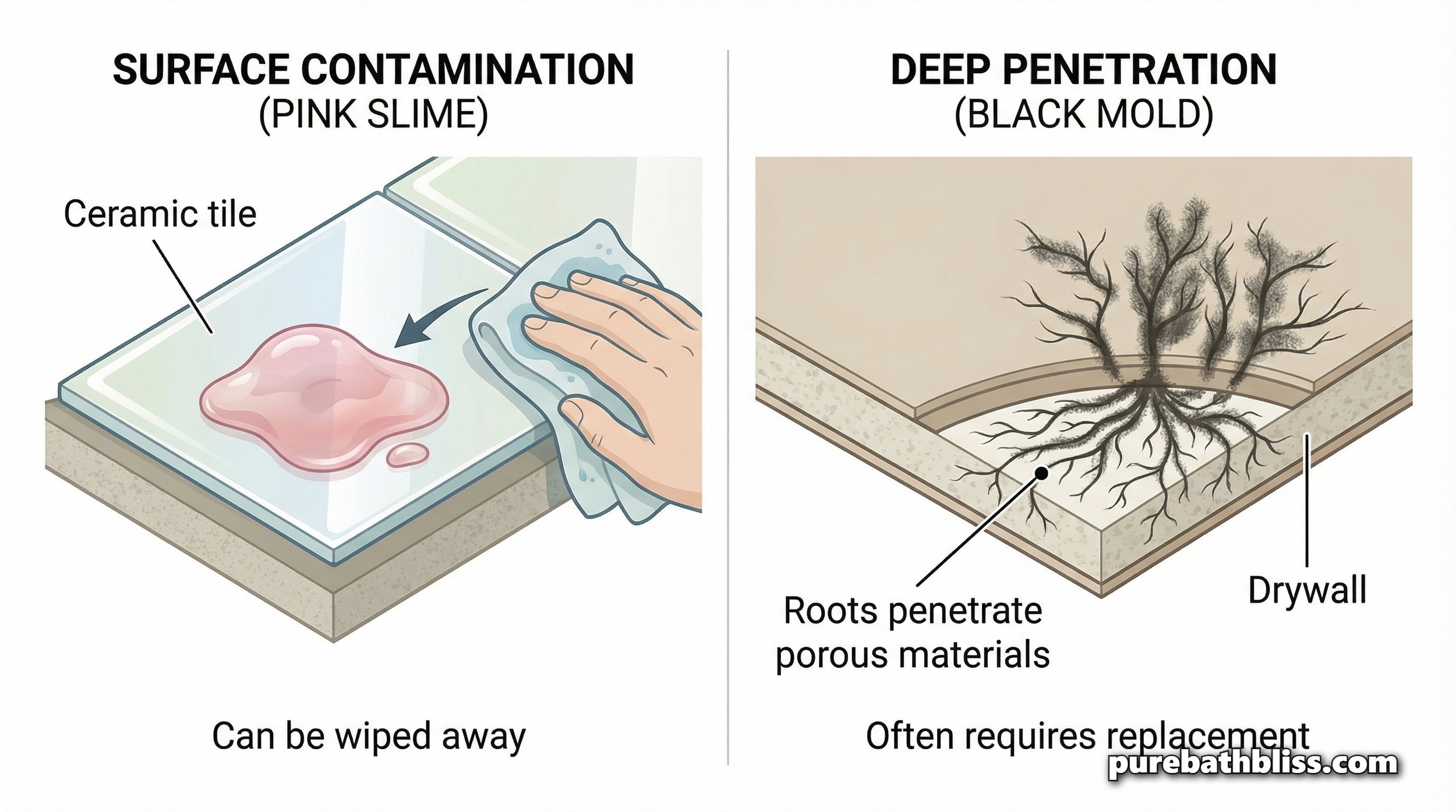
Understanding the difference between Pink Slime (a bacterium) and Black Mold (a fungus) is critical for your home’s infrastructure. One is a surface-level nuisance that eats your shampoo, while the other is a structural threat that eats your drywall. If you treat them the same way, you might solve the aesthetic problem but miss the underlying "system failure" in your bathroom's ventilation or plumbing.
In this guide, we’ll break down the biology of these bathroom invaders, what specifically is causing them to thrive, and the professional steps to eradicate them for good.
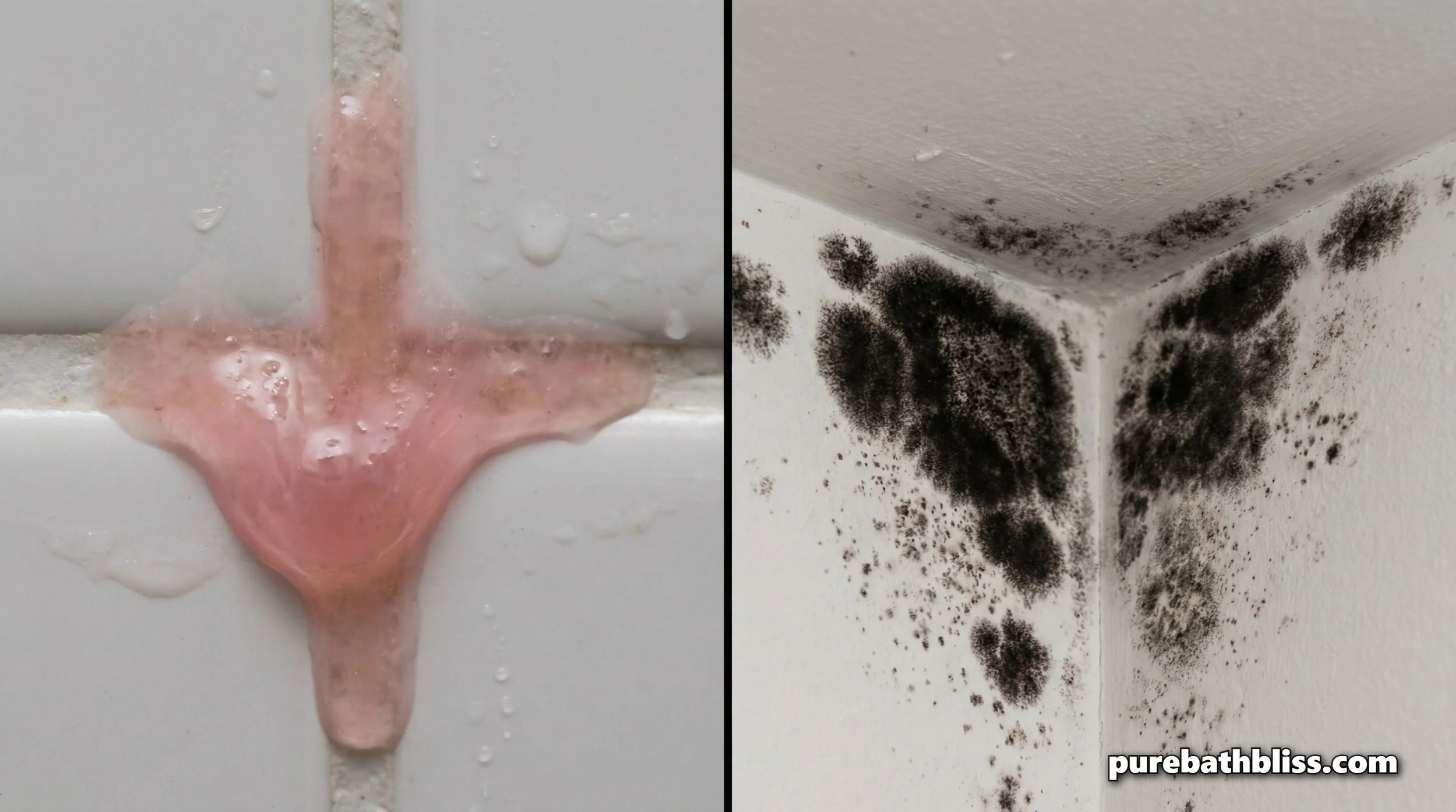
1. What is Pink Slime? (The Soap Eater)
Despite its common name, "Pink Mold" isn't a mold at all. It is a bacterium called Serratia marcescens. It is airborne and thrives in moist environments, but unlike mold, it doesn't need wood or paper to survive.
What it eats: It feeds on fatty acids and phosphorus, the primary ingredients in your soaps, shampoos, and conditioners.
The Cause: If you have pink slime, it’s a sign that soap residue is lingering on your surfaces. It loves the "warm and wet" conditions of a post-shower stall, especially if you haven't followed a post-soak drying protocol.
The Risk: For most healthy adults, it’s harmless. However, it can cause urinary tract or respiratory infections if it enters an open wound or is inhaled by someone with a compromised immune system.
2. What is Black Mold? (The Infrastructure Eater)
Black mold (Stachybotrys chartarum) is a fungus. Unlike pink slime, which sits on the surface, black mold sends out "hyphae" (microscopic roots) into porous materials.
What it eats: It feeds on cellulose. This includes the paper backing on your drywall, the wooden studs behind your shower, and even the dust that collects on your bathroom exhaust fan.
The Cause: Black mold requires a constant source of moisture, usually a slow leak or extreme humidity. If you see it, it’s a red flag that your "Internal Infrastructure" is failing. It often follows a hidden bathroom leak that has been saturating the wall for weeks.
The Risk: Black mold releases mycotoxins into the air. This can lead to chronic coughing, fatigue, and severe allergic reactions.
3. Comparing the "Biofilm" Environments
Why does one bathroom have pink grout while another has a black ceiling? It comes down to the "Micro-Climate."
| Feature | Pink Slime (Bacteria) | Black Mold (Fungus) |
|---|---|---|
| Primary Nutrient | Soap Scum, Shampoo Oils & Body Fats | Cellulose (Wood, Drywall Paper, Dust) |
| Light Preference | Tolerates light; thrives in open showers | Prefers dark, stagnant, unventilated areas |
| Growth Speed | Very fast (can appear overnight) | Slower (takes days or weeks of moisture) |
| Surface | Non-porous (tile, glass, plastic, porcelain) | Porous (drywall, wood, grout, ceiling paint) |
| Infrastructure Risk | Low (Surface nuisance) | High (Structural threat to drywall/framing) |
In a high-traffic family bathroom, you often see both. The pink slime colonizes the bath toys and the shower floor, while the black mold hides in the corners of the ceiling where the steam pools.

4. Professional Removal Strategies
How to Kill Pink Slime
Because it’s a bacterium, you can effectively kill it with a 50/50 mix of white vinegar and water.
Spray and Sit: Let the vinegar sit for 10 minutes to break down the biofilm.
Scrub: Use a stiff-bristled brush to lift the pink residue from the grout lines.
Rinse and Dry: Rinse thoroughly and use a squeegee to remove every drop of water.
How to Manage Black Mold
If the patch is smaller than 10 square feet, you can treat it yourself, but you must be careful not to spread the spores.
Identify the Leak: Find out why the area is wet. Is it a roof leak, a pipe leak, or just steam?
Seal the Area: Turn off your vibrating bathroom fan so it doesn't blow spores into other rooms.
Clean with Peroxide: Use 3% hydrogen peroxide. It’s a safer "non-toxic" alternative to bleach that actually penetrates the mold's roots.
Replace Drywall: If the drywall is soft or crumbling, cleaning the surface won't work. It must be cut out and replaced.
5. Prevention: The "Dry Home" Philosophy
The ultimate "fix" for both pink slime and black mold is airflow.
The 20-Minute Rule: Your exhaust fan must run for at least 20 minutes after every shower.
The Squeegee Habit: Removing standing water from the tiles removes the "buffet" for pink slime.
Seal Your Grout: Properly sealed grout prevents both water and bacteria from entering the pores of the cement.Properly sealed

Summary: Pink Slime vs. Black Mold Checklist
Identify by Color: Pink/Orange = Bacteria; Black/Green = Fungus.
Check the Food Source: Is it eating soap (Slime) or the wall (Mold)?
Spray with Vinegar: Use for pink slime to dissolve the biofilm naturally.
Check for Leaks: If you see black mold, go hunt for the water source immediately.
Audit Your Fan: Ensure your exhaust fan is actually pulling air out of the room.
Squeegee Daily: This is the #1 defense against pink slime "resetting" every night.
By knowing exactly what you're fighting, you can choose the right "tools" for the job. Keeping your bathroom free of pink slime and black mold isn't just about aesthetics, it's about protecting the "Internal Infrastructure" of your home and the health of everyone inside it.
| Identify by Color | Pink/Orange = Bacteria; Black/Green = Fungus. |
| Check Food Source | Is it eating soap (Slime) or the wall (Mold)? |
| Removal Tool | Vinegar for Slime; Peroxide or removal for Mold. |
| Prevention | 20-minute fan rule and daily squeegee habit. |