How to Organize a Deep Vanity Drawer: Builder’s Hacks for the Storage Abyss
Transparency Note: We independently select these products based on research and user reviews. If you buy something through our links, we may earn a commission.
In the world of custom cabinetry, deep vanity drawers are often sold as a luxury "storage solution." On paper, they offer massive cubic footage; in reality, they frequently become a chaotic "black hole" where hairspray bottles, spare non-toxic shower curtains, and half-used skincare products go to disappear. As an expert who looks at the "Internal Infrastructure" of homes daily, I can tell you that nothing ruins the psychology of a clean bathroom faster than a junk drawer you have to wrestle with every morning.
The fundamental design flaw of a deep drawer is a lack of verticality. When you drop items into a 10-inch or 12-inch deep space without a plan, you are only effectively using the bottom 20% of the real estate. Everything else becomes a jumbled pile. To reclaim this space, we have to stop thinking like a decorator and start thinking like a builder: we need to create "floors," improve the lighting, and navigate around the existing plumbing "infrastructure."
Here is the comprehensive guide to transforming your deep vanity drawers from a disorganized abyss into a high-performance, tiered storage system.
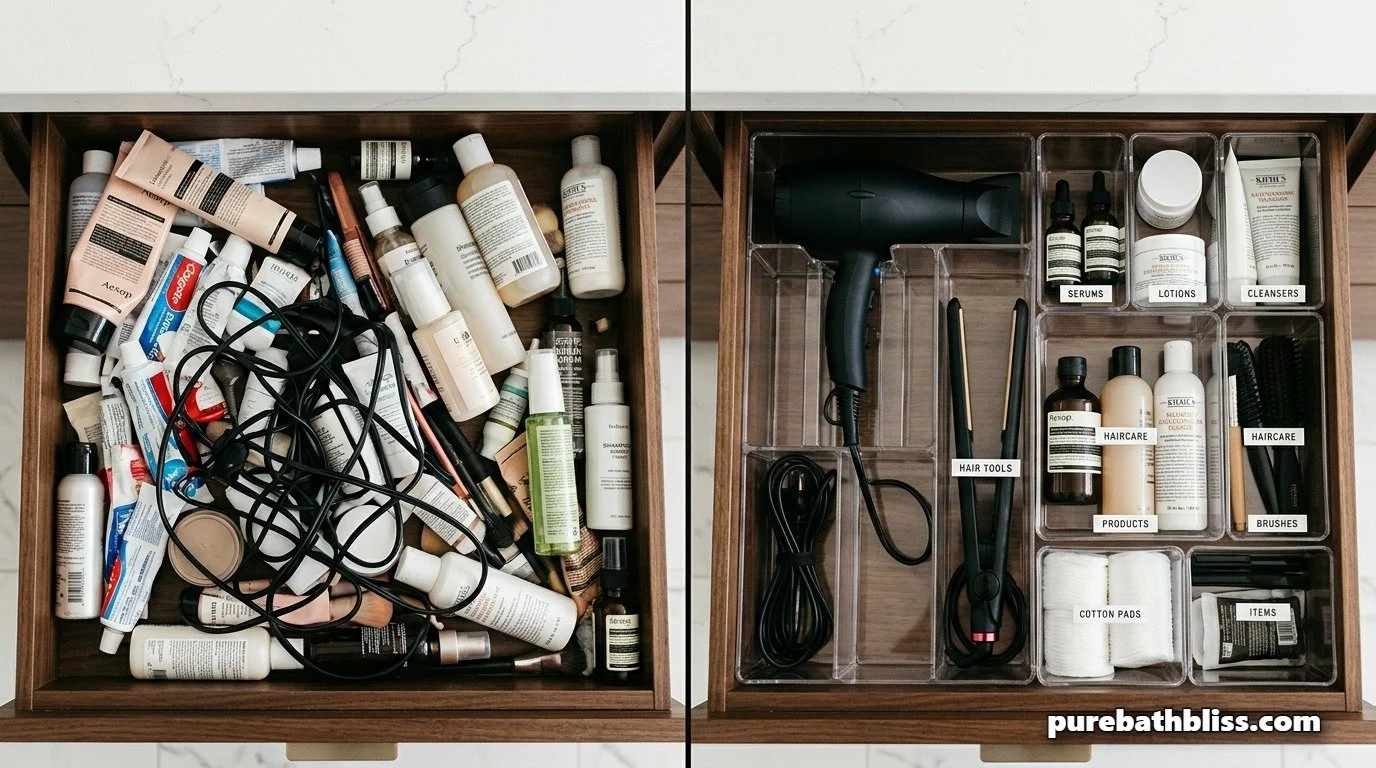
1. The Vertical Logic: Building "Floors" into the Drawer
The most common mistake homeowners make is treating a deep drawer like a shallow one, laying everything flat. If your drawer is 10 inches deep, you have enough vertical space to stack three layers of products, but only if you have the right "scaffolding."
The Sliding Internal Tray
Many high-end, modern vanities now feature a "drawer-within-a-drawer" system. This is a shallow internal tray that sits on top of the deeper drawer box. If yours doesn't have one, you can DIY the effect using Clear Acrylic Stackable Bins. By choosing bins that are designed to nest, you can create a "basement" for backstock items (like extra soap or DIY magnesium flakes) and a "top floor" for your daily-use items like contacts and toothbrushes.
Vertical Filing
For items like palettes, washcloths, or even extra non-toxic bath mats, stop stacking them horizontally. Stacking creates a "leverage" problem: to get to the bottom item, you have to move everything on top. "File" them vertically so every single item is visible and accessible without disturbing the rest of the system.
2. Navigating the "U-Shape" Plumbing Gap
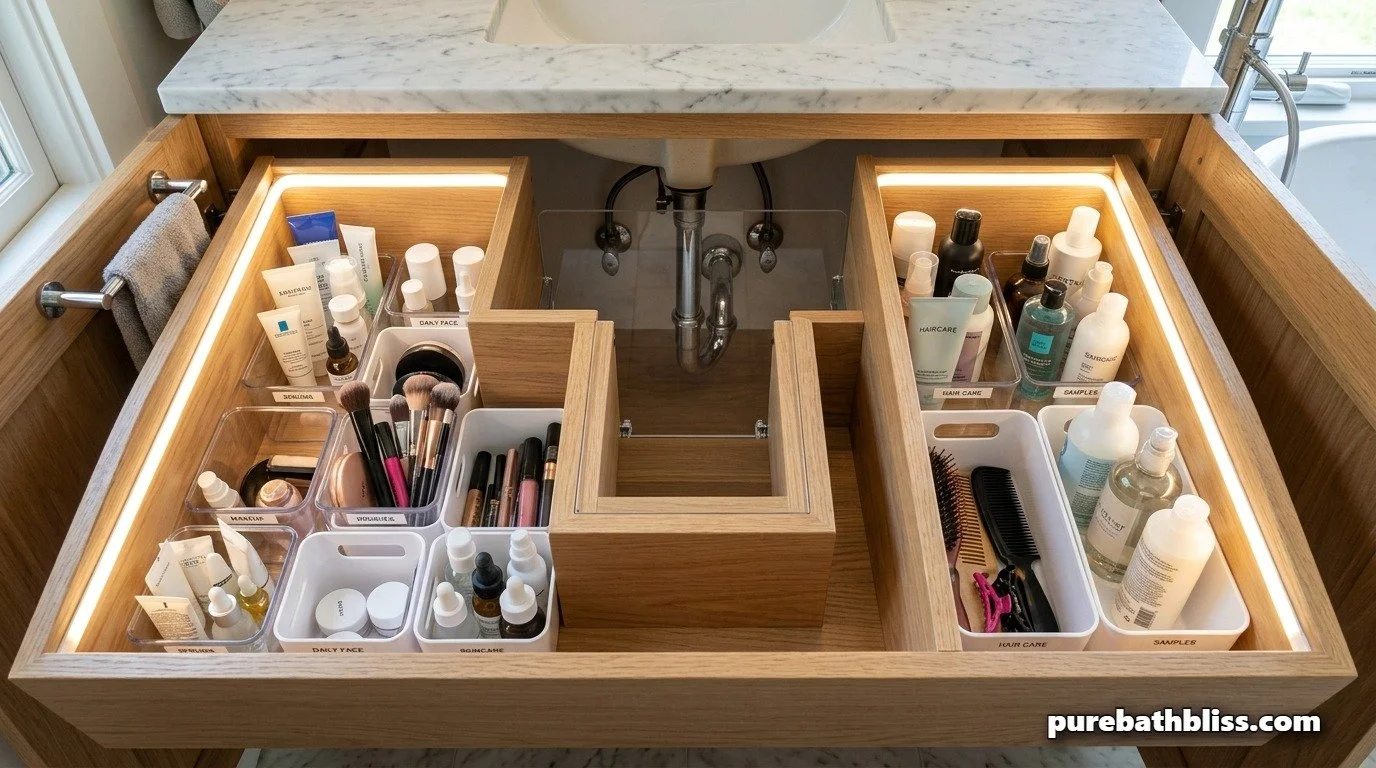
In almost every bathroom vanity, the top deep drawer has to contend with the sink's P-trap and supply lines. This often leaves you with a "U-shaped" drawer that feels impossible to organize. This is where your knowledge of your home’s faucet plumbing and cartridge comes in handy.
Protecting the Infrastructure
Water lines can sweat, and P-traps can develop slow leaks if bumped. You should never have loose items resting against your plumbing.
Custom Dividers: Use adjustable bamboo or acrylic dividers to wall off the plumbing section completely. This creates two distinct "towers" of storage on either side of the pipes.
The Command Hook Hack: Use the "dead space" on the interior side of the drawer face (the wood that faces the pipes) to mount heavy-duty Command hooks. This is the perfect spot to hang a hair dryer or curling iron. It keeps them off the counter and prevents cords from getting tangled in your drawer slides.
3. The Vertical Storage Cheat Sheet
| Storage Layer | Recommended Items | Access Level |
|---|---|---|
| The Top Floor (Shallow Bins) |
Lip balm, dental floss, daily skincare, jewelry, contact cases. | High Priority (2-4x daily) |
| The Mid-Level (Standing Storage) |
Deodorant, hairbrushes, hairsprays, standing lotion bottles. | Medium Priority (1x daily) |
| The Basement (Deep Stacked) |
Backstock toothpaste, extra soap bars, spare sponges, bulk magnesium. | Low Priority (Weekly/Monthly) |
| The Plumbing Gap (Hanging) |
Hair dryers, flat irons, diffusers (on hooks). | Functional (As needed) |
4. Lighting the "Soot Zone": Eliminating Dark Corners
One reason deep drawers become cluttered is that you simply cannot see what is at the back. When an area is dark, it naturally collects "junk."
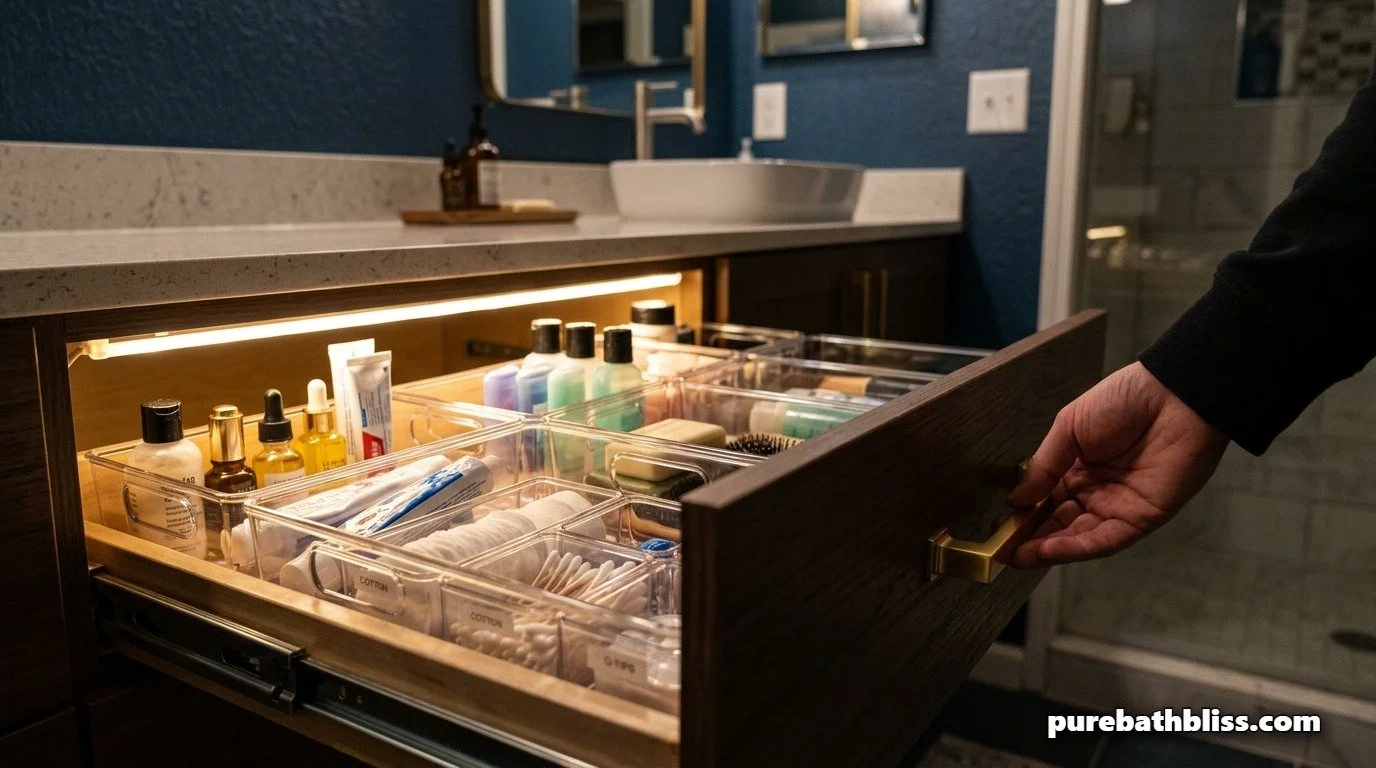
The LED Upgrade: In 2026, there is no reason to have a dark vanity. Install a Motion-Sensor LED Light Strip along the top edge of the cabinet frame. These are battery-powered and trigger the moment the drawer is pulled out.
Reflective Finishes: Use clear acrylic or white organizers instead of dark wood or grey plastic. Clear bins allow light to pass through to the lower layers, while white bins reflect the LED light back up, making it much easier to spot a small item that has fallen to the bottom. This visibility is your best defense against the pink slime bacteria that thrives in dark, damp, forgotten corners.
5. The "Anti-Slide" Foundation
Deep drawers are heavy. When you pull a heavy drawer open, physics wants the contents to stay put while the drawer moves, this results in all your bins sliding to the back of the drawer box every time you use it.
Silicone Liners: Before you put a single bin in, install a Non-Adhesive Silicone Drawer Liner. Silicone has a much higher "coefficient of friction" than standard contact paper. It grips the bottom of your acrylic bins and keeps them locked in place.
The Moisture Barrier: Beyond organization, these liners serve as a secondary "Infrastructure" layer. If a bottle of soap leaks in a deep drawer, a silicone liner will catch the spill, preventing the liquid from soaking into the MDF or wood base of your vanity. This is the same logic we use when insulating pipes or choosing mirror heights to protect the home from moisture damage.
6. Curating Your Inventory
A deep drawer is not an excuse for hoarding. As a builder, I see "cabinet creep" happen in every home. Once you have the space, you feel the need to fill it.
Perform a "Scent and Seal" check every six months. If a product has changed color, lost its scent, or the seal is sticky, it’s likely hosting bacteria. This is especially true for organic products like DIY floral steamers. Keeping your inventory lean is the only way to ensure your tiered organization system continues to work.
Summary: The Deep Drawer Organization Checklist
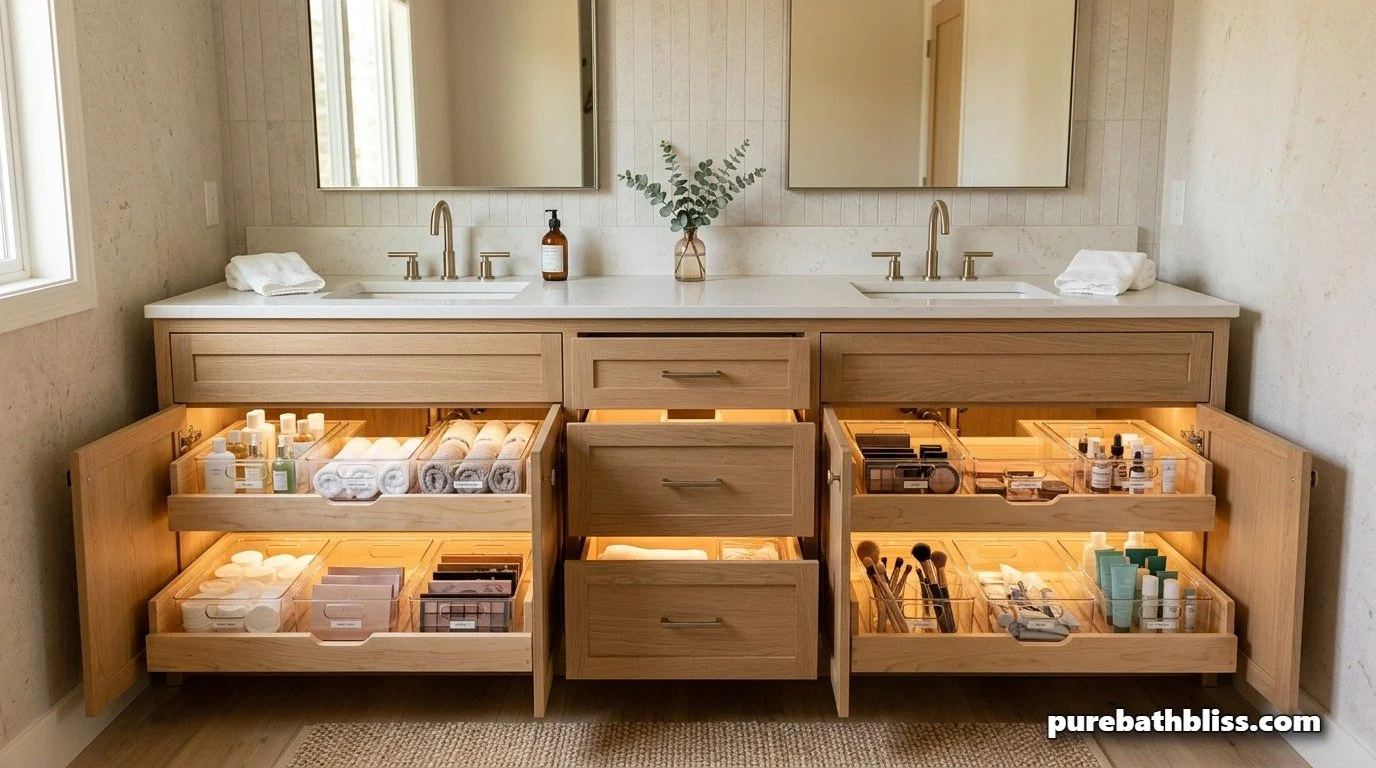
Map the Plumbing: Use dividers to create a "no-fly zone" around your pipes.
Go Vertical: Use stackable bins to create "floors" within the drawer.
Light the Abyss: Use motion-sensor LEDs so no corner stays dark.
Stand and File: Vertical bottles and "filed" towels save 30% more space.
Grip the Bottom: Use silicone liners to prevent bins from sliding and to protect from leaks.
Maintain the Tiers: Keep your most-used items on the top "sliding" layer.
By applying these structural "Builder Hacks" to your deep vanity drawers, you aren't just cleaning, you are optimizing your bathroom's daily workflow. When your "Infrastructure" supports your routine, the psychology of your space shifts from stress to sanctuary.