Epsom Salt vs. Magnesium Flakes: The Ultimate Guide to a Therapeutic Detox Bath (A Science-Backed Guide)
Transparency Note: We independently select these products based on research and user reviews. If you buy something through our links, we may earn a commission.
Last updated: June 2026
Quick answer: Epsom salt (magnesium sulfate) and magnesium flakes (magnesium chloride) both deliver magnesium through your bath water, but they differ in chemistry, how readily your skin absorbs them, and what each one does best. Epsom salt is better for drawing out swelling and muscle soreness; magnesium flakes are better for skin hydration, sleep support, and deeper mineral replenishment. Read on for the full breakdown — including the exact recipe and temperatures that actually matter.
Why Magnesium Matters More Than You Think
Before we compare the two products, it's worth understanding why you're adding magnesium to a bath in the first place.
Magnesium is involved in more than 300 enzymatic reactions in the human body, everything from muscle contraction and nerve signaling to sleep regulation and energy metabolism. Yet according to population surveys cited in Nutrients (2025), nearly half of American adults fail to meet the Estimated Average Requirement for dietary magnesium. A 2018 review published in Open Heart estimated that 10–30% of the general population has subclinical magnesium deficiency, meaning their blood levels look "normal" but tissue-level stores are depleted.
Modern soil depletion, processed foods, chronic stress (which causes the body to excrete magnesium faster), and even some medications all chip away at our levels.
The appeal of a mineral bath is simple: it offers a way to top up magnesium through the skin, bypassing the digestive system entirely. But the two main products on the market are not interchangeable.
The Chemistry: Epsom Salt vs. Magnesium Flakes
Epsom Salt — Magnesium Sulfate (MgSO₄)
Epsom salt has been used therapeutically for centuries, named after the saline springs in Epsom, Surrey, England. Chemically, it is a compound of magnesium, sulfur, and oxygen.
The sulfate component is doing real work here. Research published in Rheumatology found that sulfate ions can be absorbed through the skin, and sulfate plays a role in detoxification pathways in the liver (Phase II sulfation) and in reducing inflammation. This is why Epsom salt baths have long been prescribed for post-workout muscle soreness, bruising, and swelling.
The honest limitation: Magnesium sulfate is less water-soluble than magnesium chloride, which means fewer free magnesium ions are available for potential skin absorption. A 2025 review in JAAD Reviews (Journal of the American Academy of Dermatology) confirmed that magnesium chloride is more soluble than magnesium sulfate and dissociates more readily, increasing the availability of free Mg²⁺ ions for potential absorption.
Additionally, high concentrations of Epsom salt can have a mildly drying effect on skin, something to be aware of if you have eczema or dry skin conditions. (More on that below.)
Best for: Post-workout recovery, sore muscles, sprains, temporary swelling, general relaxation.
Magnesium Flakes — Magnesium Chloride (MgCl₂)
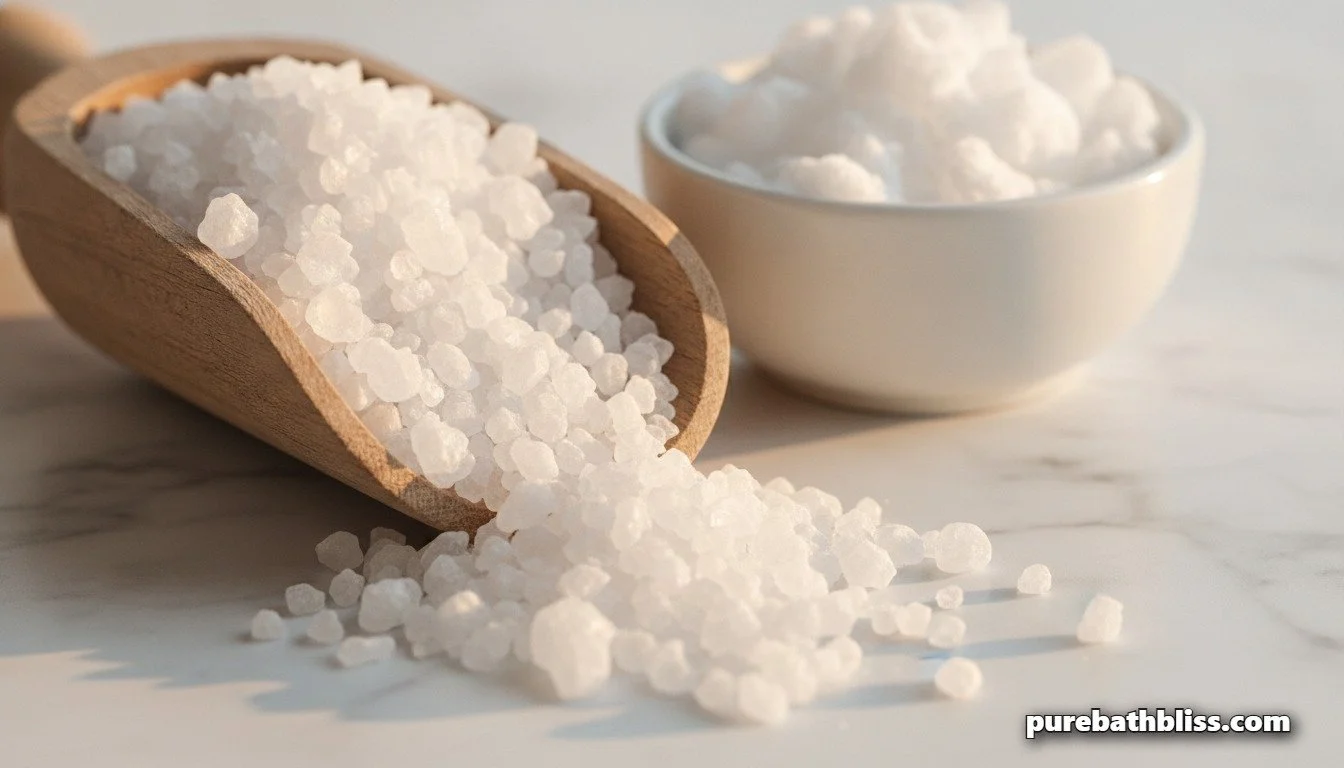
Magnesium chloride flakes are the newer entrant to the bath aisle, but they're rapidly becoming the preferred choice among practitioners who work with mineral therapies. The highest-quality flakes are sourced from ancient, landlocked seabeds, the most well-known being the Zechstein Seabed in the Netherlands, a deposit sealed underground for roughly 250 million years, untouched by modern agricultural runoff or pollutants.
The absorption advantage is meaningful. Because magnesium chloride dissociates more readily in water, it releases a higher concentration of free magnesium ions that can interact with skin. A 12-week clinical observation found that transdermal application of a 31% magnesium chloride solution raised both blood and intracellular magnesium levels. A 2016 in vitro study also noted that magnesium chloride achieved significant skin permeation within 15 minutes, partly through hair follicles (which may contribute up to 40% of total transdermal absorption).
The honest caveats: The research on transdermal magnesium is still developing, and a 2017 review in Nutrients concluded that evidence for bath-based magnesium meaningfully raising serum levels remains insufficient for firm clinical claims. The most defensible position: a magnesium flake bath offers real localized and skin-level benefits (relaxed muscles, hydrated skin, nervous system support), while any systemic effect is a supplement to, not a replacement for, dietary intake or oral supplementation.
Magnesium flakes also have a skin-softening effect rather than a drying one, making them the better choice for people with sensitive, dry, or eczema-prone skin. (We go deep on this in our guide to natural eczema relief and the Soak and Seal method.)
Best for: Sleep support, anxiety relief, skin hydration, long-term mineral bathing practice, sulfur sensitivity (since there's no sulfate).
Side-by-Side Comparison
| Epsom Salt (Magnesium Sulfate) | Magnesium Flakes (Magnesium Chloride) | |
|---|---|---|
| Active minerals | Magnesium + Sulfate | Magnesium + Chloride |
| Absorption potential | Moderate | Higher (more free Mg²⁺ ions) |
| Skin effect | Can be drying at high doses | Moisturizing / skin-softening |
| Best use case | Sore muscles, swelling, post-workout | Sleep, anxiety, skin health, regular use |
| Sulfur sensitivity | ⚠️ Contains sulfate | ✅ Sulfate-free |
| Price | $ (very affordable) | $$ (moderate) |
| Availability | Everywhere | Health stores, Amazon |
The "Detox Bath" — What's Real and What's Hype
Let's be honest about the word "detox," because it's one of the most misused terms in wellness.
Your liver and kidneys handle systemic detoxification. A bath will not pull toxins out of your bloodstream, that's not how skin or osmosis works.
What a warm mineral bath does do, with reasonable scientific support:
Opens pores and promotes sweating. Warm water raises your skin temperature, dilates surface capillaries, and encourages perspiration. Sweat contains trace amounts of heavy metals including lead and cadmium, though the amounts are small compared to what the kidneys process daily.
Provides localized magnesium contact. Magnesium ions in contact with your skin interact with surface tissues and muscle groups near the skin, this appears to have a real relaxing effect on muscle tension, which is why athletes and physical therapists have long recommended magnesium soaks.
Reduces cortisol through parasympathetic activation. A warm bath activates the parasympathetic nervous system (your "rest and digest" state), lowers cortisol, and has been shown in small studies to improve sleep onset, separate from any mineral effect.
Softens and hydrates the skin barrier (especially with magnesium chloride).
Think of it less as "detox" and more as active recovery and nervous system reset. That's a genuinely valuable thing, it just doesn't need inflated language to be worth doing.
If you're specifically looking to upgrade your soaking setup, the tub itself, we reviewed the best modern spa bath options in Are Spa Baths Making a Comeback? 2026 Pros, Cons, and Trends. Air tubs in particular are a strong pairing with regular mineral soaking.
One More Variable: Your Water Quality
Here's something most bath guides skip entirely, and it matters a lot.
If your tap water is chlorinated, which most municipal water is, you're bathing in a mild disinfectant. Chlorine can irritate skin, disrupt the skin microbiome, and potentially counteract some of the mineral benefits you're trying to achieve. If you're spending money on high-quality magnesium flakes, filtering your bath water is worth considering.
Adding ½ cup of baking soda to your bath is a simple, inexpensive way to neutralize residual chlorine in tap water, it also softens skin and slightly alkalizes the water, which may support absorption.
Our Recommended Products
For Magnesium Flakes (Best Overall)

Editor's Pick
Ancient Minerals Magnesium Bath Flakes (Zechstein)
Pure magnesium chloride sourced from the Zechstein Seabed. No fillers, no fragrance. The benchmark for topical magnesium quality.
View on Amazon →For Epsom Salt (Best Budget Pick)

Budget Pick
Dr Teal's Pure Epsom Salt Soak (Unscented, 4 lb)
A reliable, widely available USP-grade Epsom salt. Go unscented if you plan to add your own essential oils.
View on Amazon →The Recovery Bath Recipe (With Exact Ratios)
The difference between a pleasant soak and a genuinely therapeutic one comes down to concentration, temperature, and timing.
| Ingredient | Amount | Why It's In There |
|---|---|---|
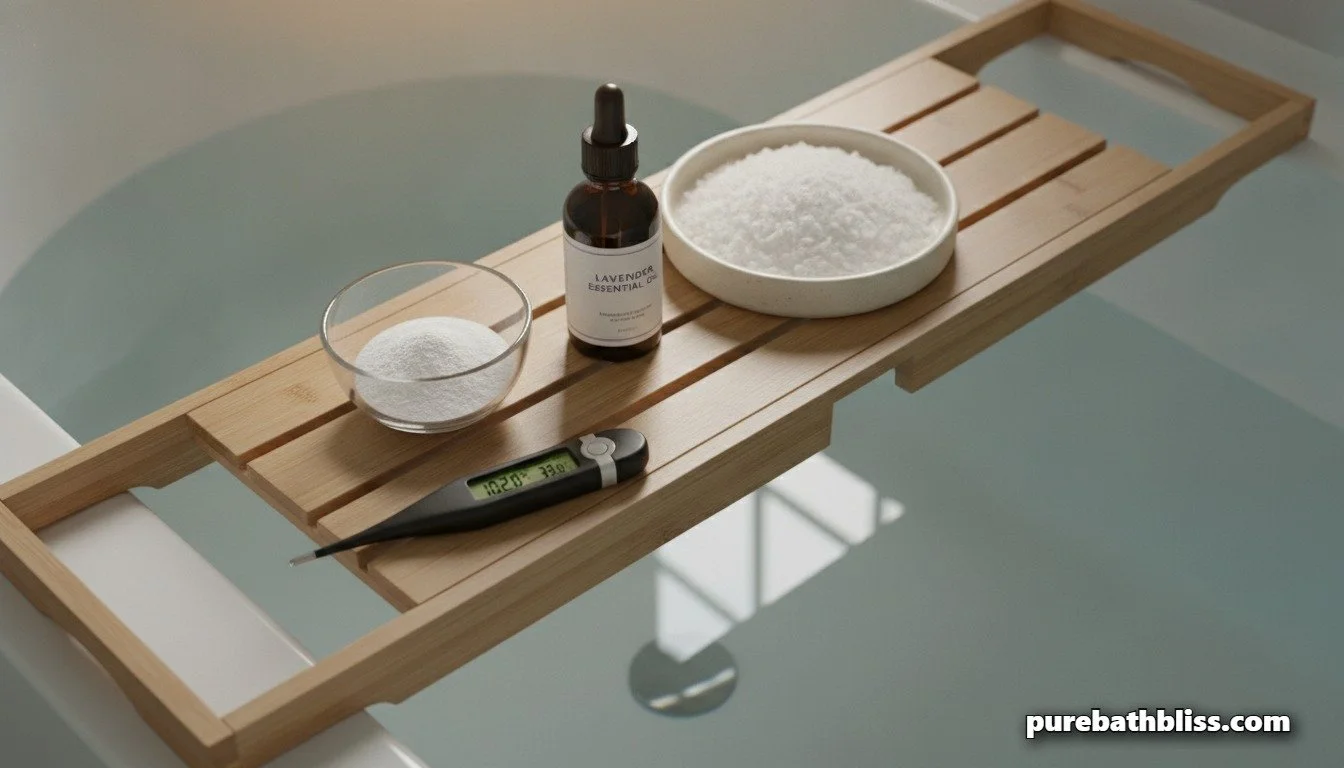
| Magnesium Flakes or Epsom Salt | 2 cups (~500g) | You need a meaningful concentration. Less than 1 cup in a full tub is largely symbolic. |
| Baking Soda | ½ cup | Neutralizes chlorine in tap water, softens skin, and slightly alkalizes the bath. |
| Essential Oil (optional) | 10–15 drops | Pre-mix into salt before adding to water. Never drop straight into the tub. |
| Carrier Oil (optional) | 1 tbsp | Jojoba or sweet almond oil. Good for dry or sensitive skin. Makes the tub slippery — take care exiting. |
The Method
Step 1 — Get the temperature right. Fill your tub to approximately 38–40°C (100–104°F), warm but not scalding. Water that is too hot causes your body to prioritize cooling (aggressive sweating and vasodilation), which works against absorption. Warm water allows your pores to open without triggering a stress response.
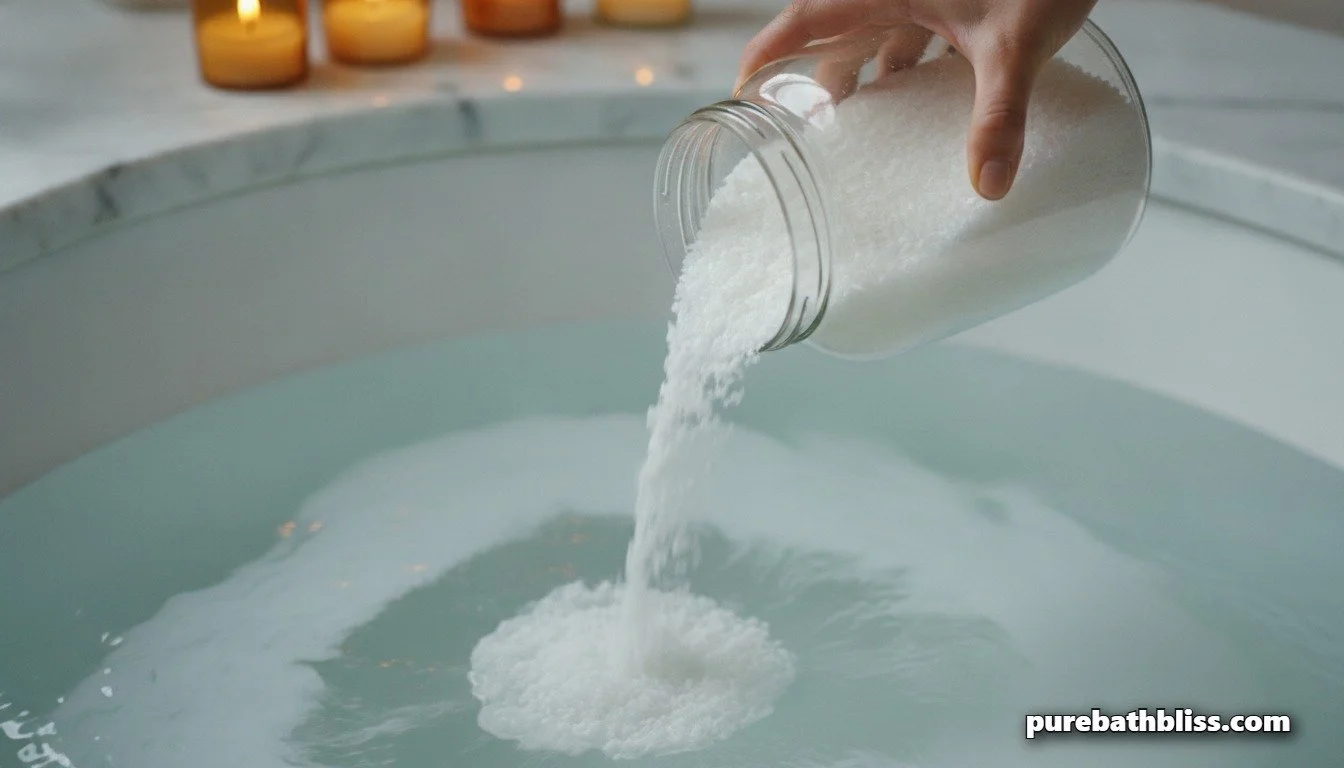
Step 2 — Dissolve salts while the water runs. Add your salts and baking soda while the tap is still running. This ensures full dissolution before you get in. Undissolved crystals sitting on the tub floor don't absorb through your skin.
Step 3 — Soak for 20–30 minutes minimum. The first 10–15 minutes involve initial heat response and skin preparation. Mineral contact becomes more meaningful in the second half of the soak, once your skin is fully hydrated. Set a timer, it's easy to get out too soon.
Step 4 — Don't rinse immediately. After you exit, pat dry rather than rubbing, and avoid a cold rinse for at least 10 minutes. If you used magnesium flakes, a light residue of magnesium chloride on the skin continues to absorb as you dry off.
Step 5 — Hydrate and rest. A warm bath is mildly dehydrating. Drink a glass of water before or after. The parasympathetic activation from a warm soak is ideal preparation for sleep, don't undermine it by immediately checking your phone.
Customizing Your Soak
For Post-Workout Muscle Recovery
Use Epsom Salt as your base, the sulfate component is specifically anti-inflammatory for sore muscle tissue. Add 5 drops of peppermint essential oil for its natural cooling/analgesic effect. Soak within 2 hours of training.
For Sleep & Anxiety
Use Magnesium Flakes as your base. Add 10 drops of lavender or Roman chamomile essential oil, pre-mixed into the salt. Take this bath 60–90 minutes before bed, the drop in core body temperature after you exit is itself a sleep-onset trigger (the same mechanism as why a cool bedroom helps you fall asleep)
For Dry, Irritated, or Eczema-Prone Skin
Use Magnesium Flakes only, Epsom salt can be drying on compromised skin. Add 1 tbsp of colloidal oat powder or jojoba oil. Keep water temperature on the cooler end (~37°C/99°F) and pat dry very gently. We cover this in much more depth in our guide: Natural Eczema Relief and the "Soak and Seal" Method.
For Cold, Flu, or Body Aches
Add ½ cup of apple cider vinegar. This helps balance skin pH and may ease the body aches that accompany low-grade fever. Keep the soak shorter (15 minutes) if you're genuinely ill, you don't want to overheat.
For Combining Both (Advanced)
A 50/50 blend of Epsom salt and magnesium flakes (1 cup each) gives you sulfate's anti-inflammatory action and chloride's superior magnesium bioavailability. Many regular mineral bathers use this as their standard protocol.
Frequently Asked Questions
How often can I take a magnesium bath? Most practitioners suggest 2–3 times per week for ongoing magnesium support. Daily is generally fine for healthy adults, though very frequent Epsom salt baths may dry skin over time.
Can I use both Epsom salt and magnesium flakes in the same bath? Yes. A 50/50 blend (1 cup each) is a great approach if you want the benefits of both sulfate and chloride. This is one of the most underrated protocols in mineral bathing.
Will a magnesium bath fix a magnesium deficiency? Probably not on its own. For confirmed deficiency, oral supplementation is more reliable (magnesium glycinate or malate are well-tolerated forms). A mineral bath is best understood as a complementary practice — valuable for local muscle effects, skin health, and nervous system support, rather than a medical treatment.
What's the minimum amount that actually does something? Less than 1 cup in a full-size tub is unlikely to produce meaningful mineral effects. Aim for 2 cups minimum. For intensive recovery, some practitioners use up to 4 cups of magnesium flakes.
What about the tub itself, does it matter? More than most people think. Cast iron tubs hold heat significantly longer than acrylic, which extends your effective soak time without reheating. Air tubs and soaking tubs are also worth considering if you do this regularly, we compared the current options in Are Spa Baths Making a Comeback? 2026 Pros, Cons, and Trends
Is it safe during pregnancy? Warm (not hot) baths are generally considered safe during pregnancy. However, check with your midwife or OB about any supplemental minerals, including topical magnesium, especially in the first trimester.
What do I do with my towels after a mineral bath? If you soak frequently, minerals and skin oils can build up in your towels faster than usual, leading to stiffness. Our guide on how to soften stiff towels with citric acid covers exactly how to restore bath towels to spa-quality softness — it's a 20-minute fix.
The Bottom Line
Epsom salt and magnesium flakes are both legitimate therapeutic tools, they're just not the same tool.
If you're recovering from hard training, dealing with swollen joints, or just want the most affordable option, Epsom salt works. If you're trying to build a regular mineral bathing practice for sleep, skin health, and nervous system support, magnesium flakes, particularly Zechstein-sourced magnesium chloride, are worth the extra cost.
Either way, the details matter: use enough (2 cups minimum), get the temperature right (warm, not scalding), and stay in long enough (20+ minutes). A few thoughtful adjustments turn a regular bath into one of the most effective, low-tech recovery tools available.
References & Further Reading
DiNicolantonio, J.J. et al. (2018). Subclinical magnesium deficiency: a principal driver of cardiovascular disease and a public health crisis. Open Heart, 5(1).
Gröber, U. et al. (2017). Magnesium in prevention and therapy. Nutrients, 9(9).
JAAD Reviews (2025). The role of magnesium in dermatology. Journal of the American Academy of Dermatology.
Chandrakanth et al. (2016). Transdermal magnesium chloride skin permeation in vitro study. (Cited in JAAD Reviews, 2025.)
Global Dietary Magnesium Deficiency: Prevalence, Underlying Causes, Health Consequences, and Strategic Solutions. IJVNR, 2025.