11 Ways to Clean Your Entire Bathroom with Just a Lemon
Originally published January 2026, Updated July 2026
There is a lemon sitting in most people's kitchens right now that could clean their bathroom better than half the products under the sink. That is not an exaggeration. The citric acid in lemon juice is one of the most effective naturally occurring descalers and soap scum dissolvers available, and it does something that most commercial bathroom cleaners cannot: it smells genuinely wonderful while it works.
I started using lemon regularly in the bathroom after going through the process of simplifying our cleaning products. We had accumulated an absurd collection of specialty sprays and I wanted to understand what each one was actually doing chemically. What I found was that a significant portion of bathroom cleaning boils down to dissolving alkaline mineral deposits with acid, which is exactly what citric acid does, at roughly 5 to 8 percent concentration in a fresh lemon.
Here are eleven practical applications, including the specific technique for each one, the science behind why it works, and the two important warnings about surfaces you should never clean with lemon.
Why Lemon Works: The Chemistry in 60 Seconds
Most bathroom grime falls into two categories. The first is mineral deposits, specifically the calcium and magnesium carbonate left behind when hard water evaporates on surfaces. These are alkaline compounds. The second is soap scum, which forms when fatty acids in soap bond with those same calcium and magnesium ions in hard water to create calcium stearate, a waxy film that adheres to tiles, glass, and chrome.
Both problems require an acid to dissolve them, and this is where most commercial glass cleaners and general-purpose sprays fail. They are typically neutral or mildly alkaline, meaning they cannot chemically dissolve what they are wiping over. They push the residue around.
Citric acid works through two mechanisms. The first is straightforward pH chemistry: at a pH of around 2, it is acidic enough to react with the alkaline calcium carbonate and break it apart into soluble compounds that rinse away. The second is chelation, where the citric acid molecules actually bind to calcium and magnesium ions and hold onto them, pulling them away from the surface. A 2009 study in the Journal of Endourology confirmed that lemon juice contains approximately 1.44 grams of citric acid per ounce, roughly 5 to 6 percent concentration, which is sufficient for meaningful cleaning work on most bathroom mineral deposits.
The critical point for application: citric acid needs dwell time to do its work. Spraying and immediately wiping is significantly less effective than spraying, waiting five to ten minutes, and then wiping. The longer the acid is in contact with the mineral deposit, the more completely it dissolves it. For heavy limescale, a second application after the first rinse often produces noticeably better results than scrubbing harder on the first pass.
This same citric acid chemistry works just as powerfully in the kitchen. Our sister site Pure Kitchen Bliss has a companion guide on using citric acid to descale appliances and soften stiff kitchen towels that covers the same chelating principles applied to kettles, dishwashers, and coffee makers.
Two Surfaces to Never Clean with Lemon
Before the hacks, this warning needs to come first because it is the most important thing in this article.
Never use lemon juice on natural stone: marble, travertine, limestone, onyx, or granite. These surfaces are calcium-based, meaning the citric acid will react with the stone itself rather than just the deposits on top of it. The result is permanent etching, a dull, roughened patch on the surface that cannot be reversed. Even brief or diluted contact with acid on unpolished natural stone can cause visible damage. If your bathroom has natural stone surfaces, use only pH-neutral cleaners on them. This is the same warning we give in our guide to non-toxic grout cleaning and it cannot be overstated.
Never mix lemon juice with bleach. The acid and bleach combine to release chlorine gas, which is toxic and dangerous in an enclosed bathroom space. If you have used a bleach-based cleaner on a surface, rinse it thoroughly and let it dry before applying any lemon-based cleaner.
What You Need Before You Start
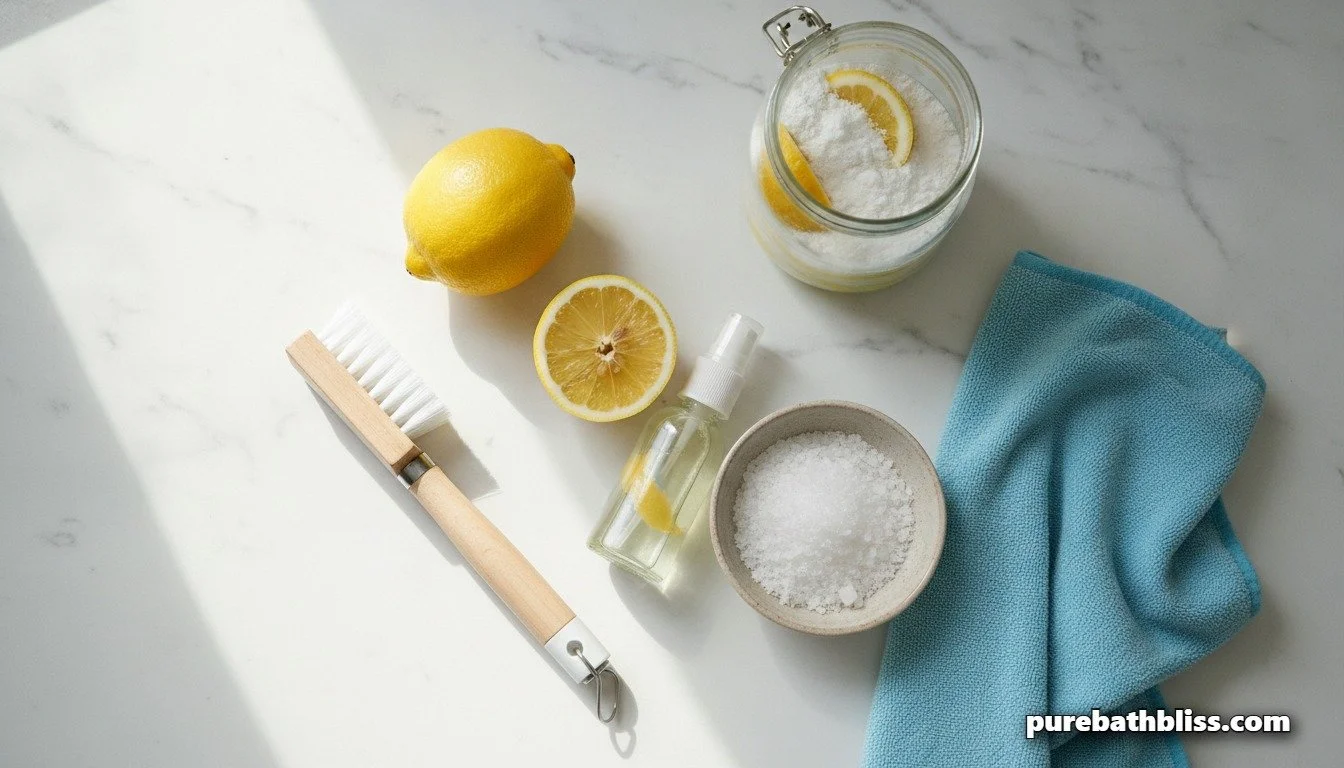
Most of these hacks require nothing beyond the lemon itself. For a few of them, a glass spray bottle and a dedicated grout brush make the application considerably more effective. These are the three items worth having on hand:
A good lemon squeezer: A handheld citrus squeezer gets significantly more juice from each lemon than squeezing by hand, and the built-in strainer keeps seeds and pulp out of your spray bottle nozzle.
A glass spray bottle: An amber glass spray bottle is worth using over plastic because D-limonene, the citrus oil in lemon, can degrade certain plastics over time. Glass also keeps the lemon solution fresher longer.
A stiff grout brush: A dedicated grout brush with stiff nylon bristles makes the grout hacks dramatically more effective than using a cloth or a soft sponge. The bristles get into the porous grout surface where cloth cannot reach.
The 11 Hacks
1. Chrome Taps and Fixtures
Hard water spots on chrome are one of the most visually irritating things in a bathroom and one of the easiest to fix with lemon. Cut a lemon in half and rub the cut face directly across the tap, paying particular attention to the base where the tap meets the sink where mineral rings accumulate thickest. Let the juice sit for five minutes, then wipe clean with a damp microfiber cloth and buff dry. The calcium deposits dissolve quickly on chrome, which is a non-porous, acid-resistant surface. For very heavy buildup, soak a folded cloth in neat lemon juice, press it against the fixture, and leave it for fifteen minutes before wiping. Finish with a dry buff for a streak-free shine.
2. Shower Glass and Mirrors
The soap scum and hard water film that makes shower glass look perpetually foggy is exactly what citric acid is designed to dissolve. Mix fresh lemon juice with an equal part of warm water in a spray bottle and apply liberally to the glass. Let it dwell for five to ten minutes. For heavier deposits, use undiluted lemon juice and extend the dwell time to fifteen minutes. Wipe with a microfiber cloth using vertical strokes, then rinse with warm water and immediately squeegee from top to bottom. The dry buff at the end is what produces the streak-free result.
If your shower glass has significant hard water etching that lemon alone cannot shift, our hard water stain removal guide covers the heated vinegar method which is more aggressive for stubborn mineral bonding.
3. Toilet Stains and Limescale Ring
The limescale ring that forms at the waterline of the toilet bowl is a classic hard water problem. Squeeze half a lemon directly into the bowl and use the other half to scrub around the waterline, applying the cut face of the lemon directly to the ring. The mild abrasion of the pith combined with the citric acid works effectively on light to moderate limescale. For the more detailed toilet cleaning method using lemon and salt, which provides extra abrasion for tougher stains, our full guide to cleaning toilet stains with lemon and salt covers the complete protocol.
4. Showerhead Descaling
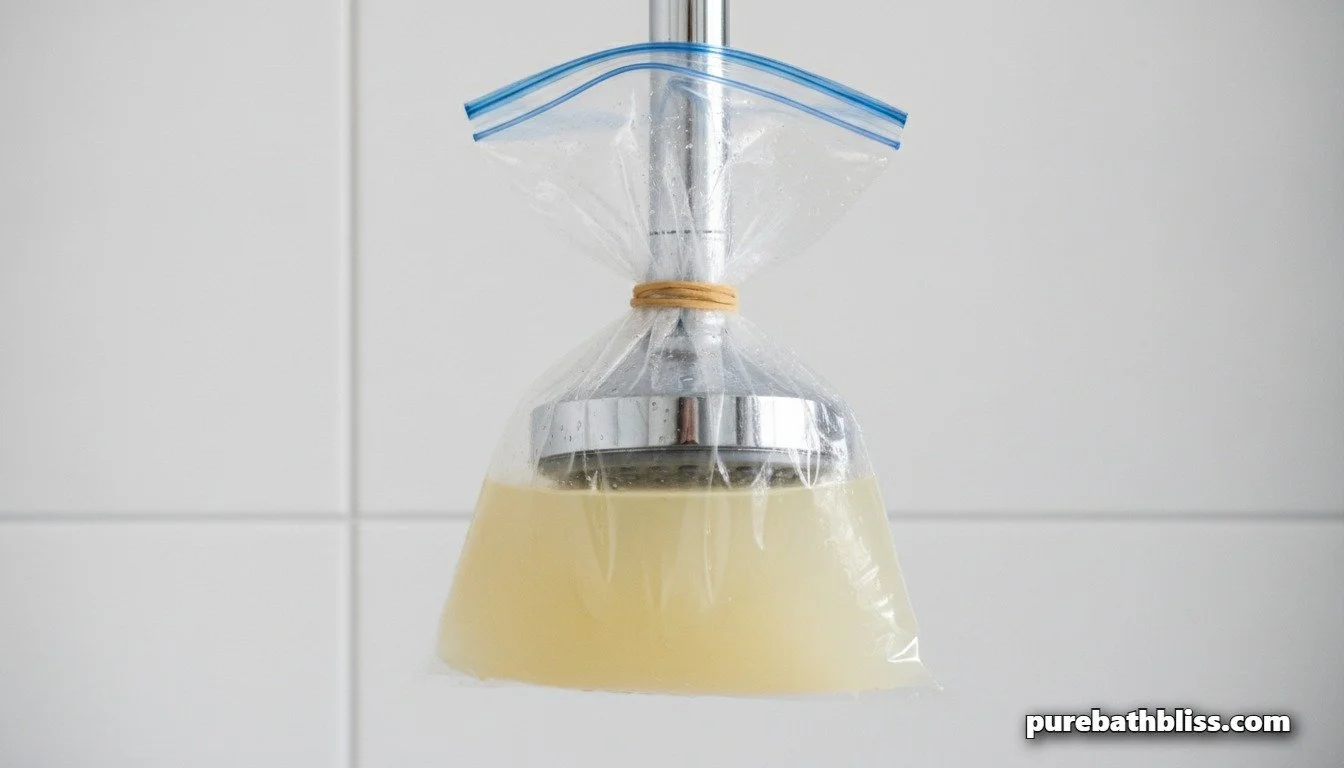
When a showerhead starts spraying at odd angles or losing pressure, limescale has blocked the nozzles. Fill a small plastic bag with neat lemon juice, enough to submerge the showerhead face, and secure it around the showerhead with a rubber band so the nozzles are fully submerged. Leave it for at least thirty minutes, longer for significant buildup. Remove the bag, run the shower on hot for a minute to flush the loosened deposits, and use an old toothbrush to clear any remaining blockage from the individual nozzle holes. The same citric acid chemistry that cleans chrome fixtures works here on the mineral deposits inside the nozzles.
5. Grout Lines on Ceramic and Porcelain Tile
Lemon juice applied directly to ceramic or porcelain tile grout and scrubbed with a stiff grout brush lifts soap scum and mild surface staining effectively. For best results, squeeze lemon juice along the grout lines, let it sit for five minutes, then scrub with a grout brush and rinse. For whitening effect alongside the cleaning, a paste of lemon juice and baking soda applied to the grout and left for ten minutes provides both the acid action and the mild abrasion of the baking soda. Note: the acid-base reaction between the lemon and baking soda produces fizzing, which is visually satisfying but actually reduces the cleaning effectiveness of both. For maximum effectiveness, apply them separately: lemon first, rinse, then baking soda paste if more scrubbing is needed. Never use this on natural stone grout.
6. Soap Scum on the Tub and Shower Walls
Mix lemon juice with a small amount of dish soap for a combination cleaner that addresses both the mineral deposits and the oily soap residue simultaneously. The citric acid dissolves the mineral bonds holding the soap scum to the surface, and the dish soap cuts through the fatty acid component. Spray liberally, let sit for ten minutes, then scrub with a non-scratch sponge and rinse thoroughly. This combination works on acrylic, fibreglass, and ceramic or porcelain surfaces. The citrus smell during this particular cleaning task is genuinely one of the more pleasant experiences in bathroom cleaning.
7. Faucet Aerator Descaling
The small mesh screen at the end of your sink tap gradually fills with mineral deposits and sediment, reducing water pressure and causing the stream to spray sideways. Unscrew the aerator, drop the components into a small glass of undiluted lemon juice, and leave to soak for fifteen to thirty minutes. The citric acid dissolves the calcium deposits on the mesh. Rinse, gently scrub with an old toothbrush, and reassemble. This is a two-minute job that most people never do, despite it being one of the easiest pressure-restoration fixes available. For a detailed guide on the aerator itself, our faucet pressure guide covers the full removal and cleaning process.
8. Bathroom Mirror
A 50/50 mix of lemon juice and water in a spray bottle makes an effective mirror cleaner that cuts through the hairspray residue, toothpaste splatters, and hard water spots that standard glass cleaners struggle with. Spray lightly, wipe with a dry microfiber cloth in circular motions, and buff to a streak-free finish. The key with mirrors is using very little liquid. Excess spray that runs into the mirror edges can cause desilvering over time, regardless of what cleaner you use. A light application is always better than a heavy one.
9. Mildew Stains on Grout and Caulk
Lemon juice has documented antibacterial and antifungal properties, and it is genuinely effective against the early stages of mildew on ceramic grout and silicone caulk. Apply neat lemon juice to the affected area, let it dwell for fifteen minutes, then scrub with a stiff brush. For established mildew where the staining has penetrated deeper into the grout, follow the lemon treatment with a hydrogen peroxide application and let that dwell before the final scrub. The combination of the acid and the oxidising agent is more effective than either alone on biological staining. For caulk that has mildew behind rather than on the surface, no amount of cleaning will resolve it and the caulk needs to be replaced.
10. Drain Deodoriser
Pour the juice of half a lemon down the bathroom sink or shower drain, followed by a handful of coarse salt and then a kettle of boiling water. The lemon juice addresses the bacterial biofilm causing the odour, the salt provides mechanical abrasion as it moves through the drain, and the boiling water flushes everything through. Do this weekly as a maintenance habit rather than waiting until the drain smells. It is considerably more pleasant than commercial drain deodorisers and does not introduce synthetic fragrance chemicals into a drain that leads directly to the water system. For a persistent sulfur smell coming from the drain, our bathroom smell diagnosis guide covers all the causes and their specific fixes.
11. Natural Air Freshener
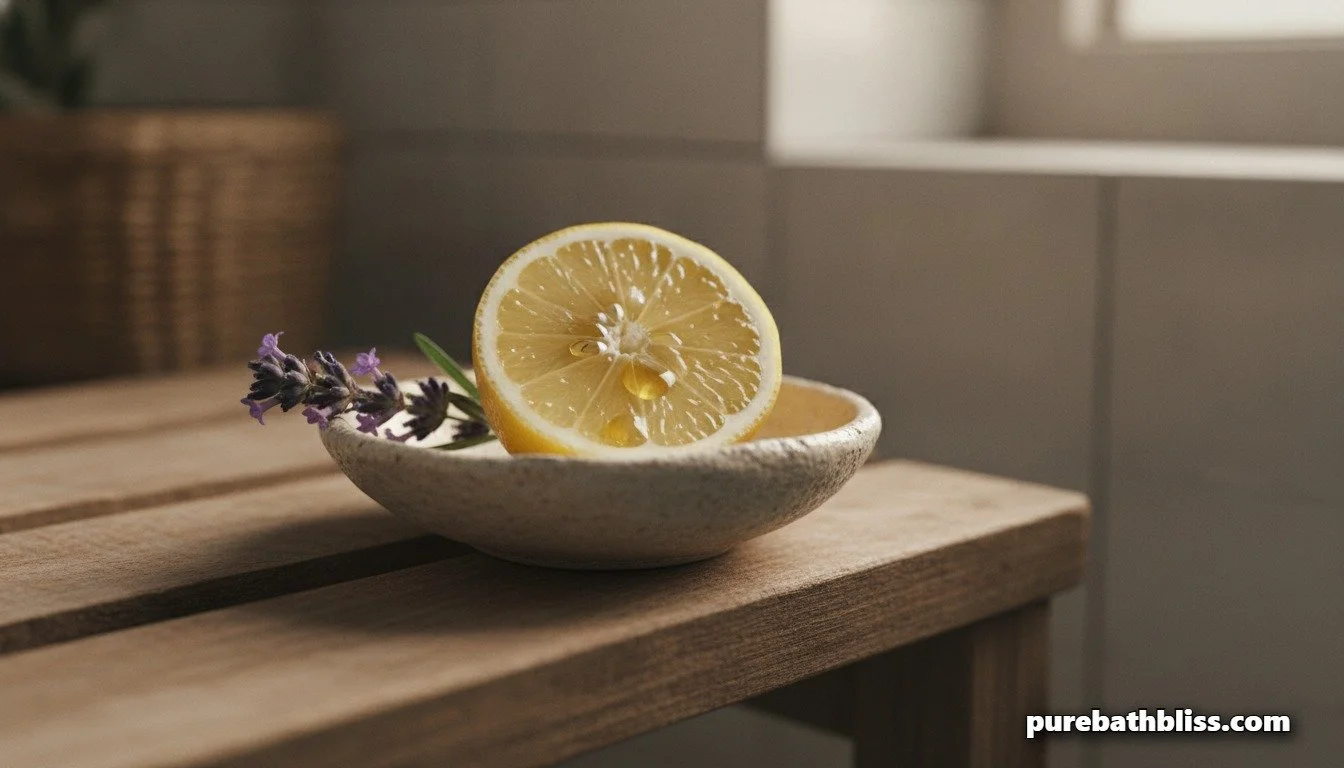
Rather than boiling lemons and carrying a hot pot into the bathroom, which is the original article's suggestion and one that presents an obvious hazard, a simpler approach is to place a halved lemon on a small dish in the bathroom. Add three drops of tea tree oil to the cut face. The combination of the citrus scent and the tea tree's antifungal compounds creates a natural air freshener that does genuine work rather than just masking odours. Replace every two to three days as the lemon dries out. In a bathroom without a window or with poor ventilation, this pairs well with a reed diffuser rather than replacing the ventilation strategy entirely. Scent is the finishing layer, not the foundation.
Getting the Most from Your Lemon: A Few Practical Notes
Warm juice works better than cold. Room temperature or slightly warmed lemon juice has higher molecular activity, meaning the acid reacts faster with mineral deposits. If you have a lemon stored in the fridge, let it come to room temperature for fifteen minutes before using it, or microwave it for ten seconds. You will notice a meaningful difference in how quickly it dissolves mineral deposits.
Bottled lemon juice works for most of these hacks. Fresh is marginally better because it contains trace citrus oils alongside the citric acid that improve the cleaning action slightly, but bottled lemon juice at a similar citric acid concentration performs comparably on most surfaces. Keep a bottle specifically for cleaning and replace it when the concentration starts to feel weaker, usually after two to three months.
Always rinse and dry after cleaning. The residual acid on surfaces can attract new mineral deposits from the next contact with water. Rinsing thoroughly and wiping dry immediately after cleaning with lemon prevents this and also protects chrome and metal finishes from prolonged acid contact.
Lemon is a complement to your cleaning toolkit, not a complete replacement. For disinfection beyond what citric acid provides, hydrogen peroxide is the right tool. For mould on grout, tea tree oil outperforms lemon on its own. For heavy soap scum where you want maximum dwell time and degreasing power, the two-week citrus peel infused vinegar cleaner is stronger than fresh lemon juice because it combines D-limonene from citrus oils with the acetic acid of vinegar. The same citrus chemistry also powers the natural kitchen cabinet degreaser on Pure Kitchen Bliss — lemon juice and olive oil mixed together restore wood cabinet surfaces naturally after a deep clean.