What Is Charcoal Toothpaste? (And Is It Actually Safe for Your Teeth?)
Originally published February 2026, Updated June 2026
Charcoal toothpaste looks alarming the first time you use it. You squeeze out what appears to be black paint, brush your teeth, spit into the sink, and wonder whether you've made a terrible mistake. Then you rinse, look in the mirror, and your teeth look noticeably brighter than they did ten minutes ago. It is genuinely impressive in the moment.
We tried it in our house about two years ago, partly because the kids thought it was hilarious and partly because I was curious whether the viral before-and-after videos had any basis in reality. I have been researching what's actually in our bathroom products for long enough to know that "looks good on camera" and "is actually good for you" are frequently different things, and charcoal toothpaste is a case where the gap between those two things is worth paying attention to.
Here is the straight answer on what charcoal toothpaste is, what the science actually says, what the dental profession thinks about it, and what to use instead if whiter teeth are genuinely your goal.
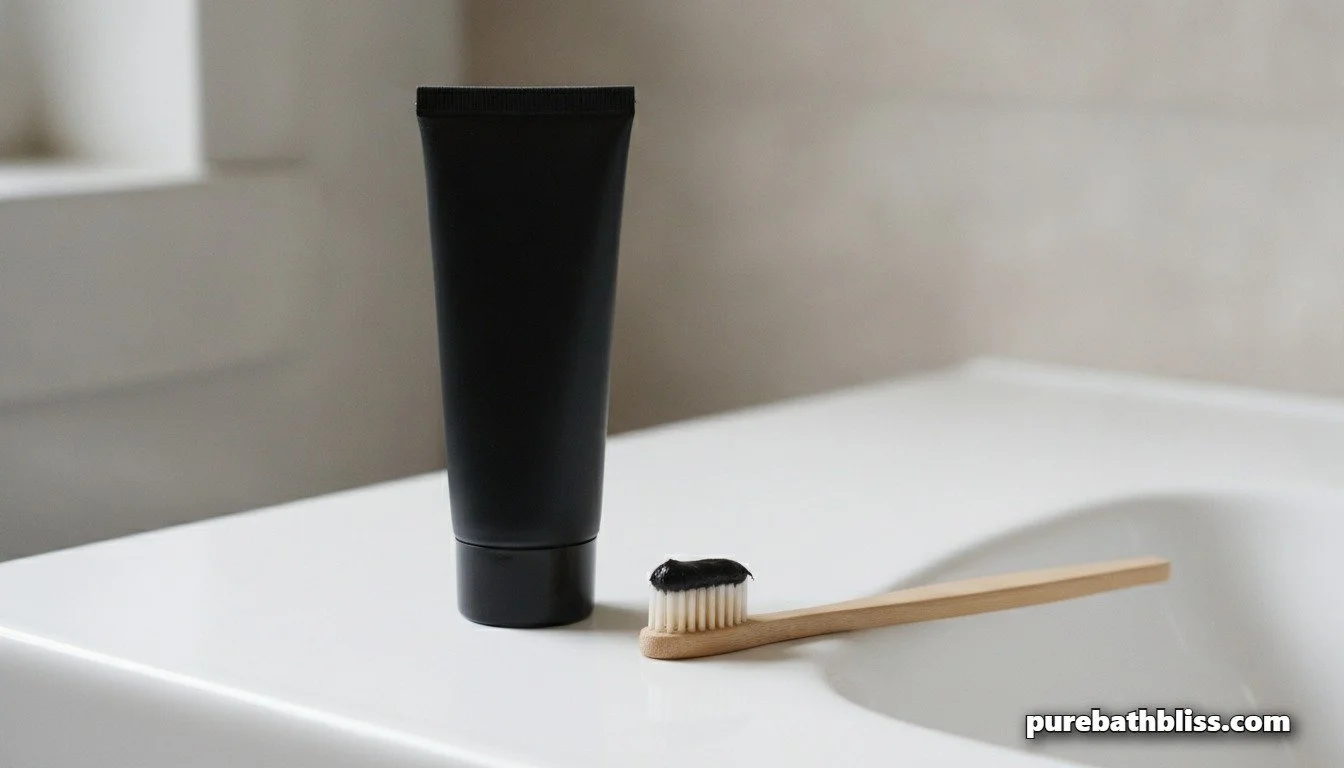
What Activated Charcoal Actually Is
Activated charcoal is not the same material as the briquettes in your backyard grill. It is carbon, typically derived from coconut shells, wood, or peat, that has been processed at extremely high temperatures to increase its surface area dramatically. The result is a fine black powder riddled with millions of tiny pores, which gives it a very high capacity to absorb other substances on contact.
This absorptive property is why activated charcoal has legitimate medical applications. It is used in emergency medicine to treat certain types of poisoning, where its ability to bind to toxins in the digestive system before they can be absorbed is genuinely valuable. The reasoning behind its appearance in toothpaste follows the same logic: if it can bind to toxins in the gut, maybe it can bind to stains on teeth.
The theory is not unreasonable. The practice, as we'll get to, is where it gets more complicated.
What It Does Well
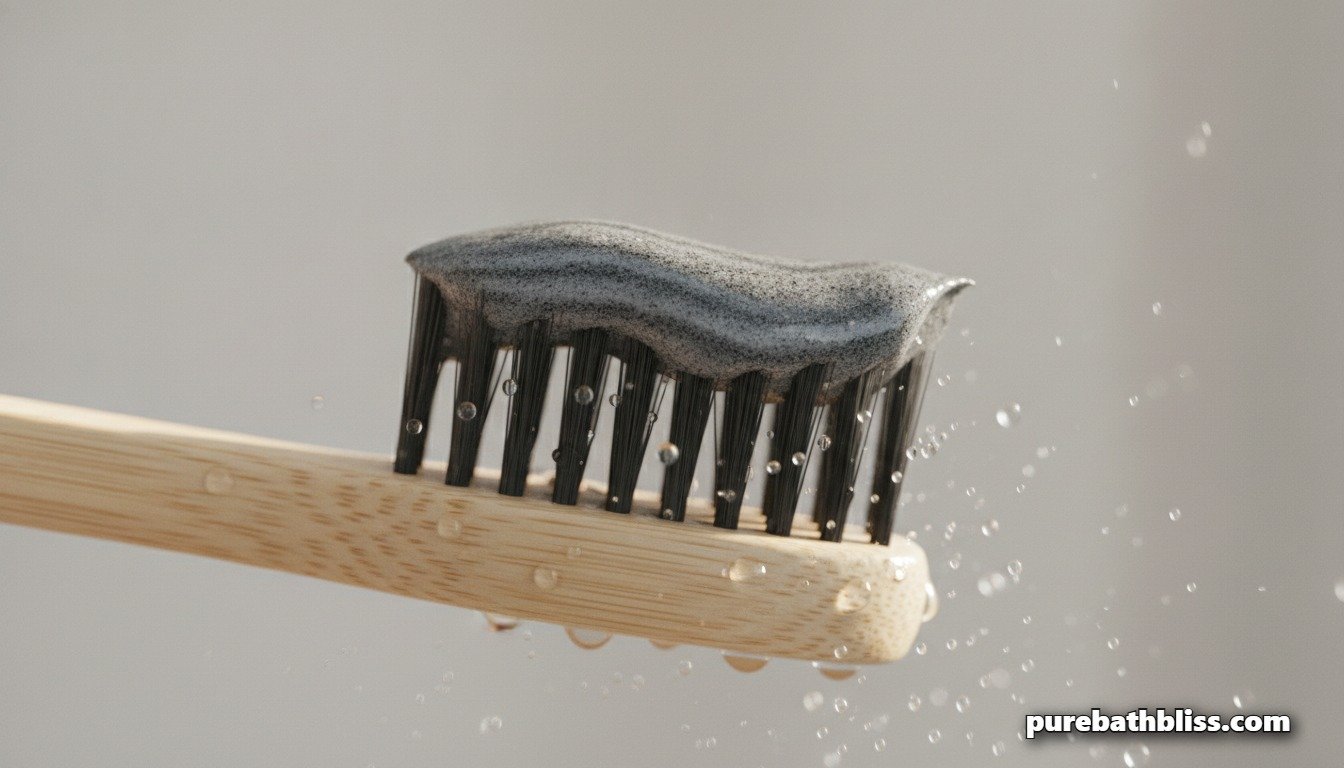
Charcoal toothpaste is genuinely effective at one specific thing: removing extrinsic surface stains. These are the stains that sit on the outside of the tooth enamel rather than inside it, the kind that build up from coffee, tea, red wine, and tobacco over time. The charcoal works here through two mechanisms. First, its porous structure does absorb some of the compounds responsible for these stains on contact. Second, and more significantly, activated charcoal is abrasive. It physically scrubs stains off the enamel surface the same way a mild abrasive cleaner removes marks from a surface.
The result is that after using charcoal toothpaste, many people genuinely do see a difference. The surface staining that accumulates gradually over months is removed in a few brushing sessions and the teeth look noticeably brighter. The before-and-after photos are not lying about that part. The question is what the process is doing to the underlying enamel in the process, and that is where the picture becomes less straightforward.
It also freshens breath effectively. The activated charcoal absorbs odor-causing compounds in a similar way to how baking soda works as a deodorizer, and many charcoal toothpastes include peppermint or other essential oils that contribute to the fresh feeling after brushing.
What the Science Says About the Risks
The dental profession has been looking carefully at charcoal toothpaste since it went mainstream, and the conclusions are worth taking seriously. As of 2025, no activated charcoal toothpaste has earned the ADA Seal of Acceptance, which is the American Dental Association's designation for products that have demonstrated safety and efficacy through rigorous clinical testing. The ADA's formal position, laid out in a 2017 Journal of the American Dental Association review and updated since, is that there is insufficient clinical evidence to support the safety or efficacy claims made for charcoal-based dental products.
The primary concern is abrasivity. Enamel is the hardest substance in the human body, but it is not renewable. Once enamel is worn away, it does not grow back. The abrasive particles in charcoal toothpaste that so effectively remove surface stains are also, over time, capable of wearing away a thin layer of enamel with each brushing session. A 2025 study published in Dentistry Journal using scanning electron microscopy confirmed measurable enamel abrasion and increased surface roughness in samples brushed with charcoal-containing toothpaste compared to conventional formulas.
There is a particular irony here that dentists point out regularly. As enamel thins, the underlying layer of the tooth, called dentin, begins to show through. Dentin is naturally yellow. This means that prolonged use of charcoal toothpaste to whiten teeth can, over time, make teeth appear more yellow rather than less, because it is eroding the white enamel surface to expose the yellow dentin underneath. The short-term result looks great. The long-term result is the opposite of the intended effect.
A secondary concern is fluoride. Most charcoal toothpastes either contain no fluoride or contain reduced amounts. Fluoride is the primary evidence-based agent for enamel remineralization and cavity prevention. Using a fluoride-free toothpaste as your primary brushing agent removes that protection, and the increased enamel roughness that charcoal toothpaste can create actually makes enamel more susceptible to decay in between brushing sessions.
The Bathroom Side Effects Nobody Mentions
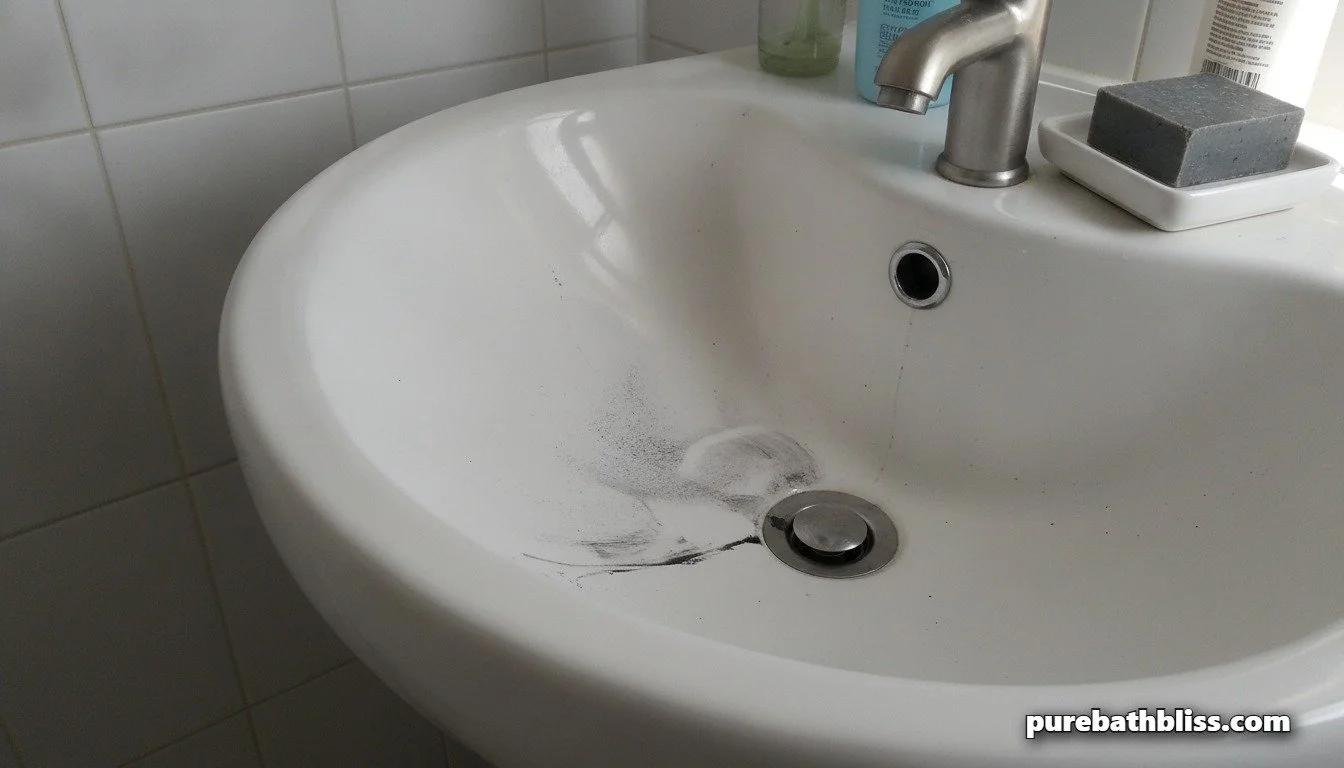
Something the TikTok videos rarely linger on: charcoal toothpaste is genuinely messy and it stains. The black paste gets on the countertop, on the faucet, on the sink bowl, and occasionally on white grout around the sink area. Most of it rinses away easily with water, but repeated use over weeks and months can leave a faint grey tint in grout lines and porous surfaces around the sink that is harder to shift.
It can also stain dental work. Charcoal particles can deposit in the microcracks and margins of composite resin fillings, porcelain crowns, and at the gum line, leaving permanent dark staining in restorations that was not there before. This is a concern that many dentists flag specifically for patients who have had cosmetic or restorative dental work.
If you do use it, rinsing the sink immediately after spitting and thoroughly rinsing your mouth minimizes both of these issues. But they are worth knowing about before you commit to using it as a daily product.
Our Household Take: How We Use It Now
After going through the research, here is where we landed. We stopped using charcoal toothpaste as a daily product and shifted to using it occasionally, roughly once a month or before an event, specifically for the surface stain removal effect. At that frequency, the enamel abrasion risk is considerably lower and the whitening benefit is still real. It is more like an occasional scrub than a daily cleanser.
For daily brushing, we use a conventional fluoride toothpaste for the kids and a hydroxyapatite formula for the adults, which is a newer category of toothpaste that remineralizes enamel similarly to fluoride and is gaining clinical support as a genuinely effective enamel-protective alternative. The non-toxic oral care space has moved a long way in the past few years and there are now legitimately good options that do not require the trade-offs that charcoal toothpaste involves.
One thing we did keep: the bamboo toothbrush. If you are going to use charcoal toothpaste occasionally, pairing it with a soft-bristle bamboo brush reduces the abrasive effect compared to a medium or hard bristle brush. Our full bamboo toothbrush guide covers what to look for in bristle softness and handle quality if you want to make that switch, and it pairs well with any toothpaste choice since the brush material does not affect the chemistry of whatever paste you use.
Who Should Avoid It Entirely
There are specific groups for whom charcoal toothpaste is not a good idea even occasionally.
Children should not use it. Developing enamel is more susceptible to abrasive damage than adult enamel, and the fluoride question is particularly important for kids whose teeth are still forming. If you are building a non-toxic oral care routine for your children, the same ingredient-scrutiny principles that apply to their bath products apply here. Our guide to the five ingredients never to use on babies covers the broader principle of how developing systems respond differently to ingredients that adults can tolerate.
Anyone with existing enamel erosion, tooth sensitivity, or a history of enamel wear should avoid it. If your teeth are already sensitive to hot and cold, that is often a sign that enamel is thinner than ideal, and adding an abrasive product will accelerate that thinning.
Anyone with composite fillings, porcelain crowns, or cosmetic dental work should be aware of the staining risk to restorations and discuss it with their dentist before using charcoal products regularly.
Safer Alternatives That Actually Work
If a genuinely whiter smile is what you are after, there are options with stronger clinical backing and fewer trade-offs.
Baking soda toothpastes are the most evidence-supported natural whitening option. Baking soda is mildly abrasive, considerably less so than activated charcoal, and multiple clinical studies confirm it removes surface staining effectively. It also has the benefit of being alkaline, which neutralizes the acids in the mouth that contribute to enamel erosion over time. ADA-approved baking soda toothpastes exist, which is more than can be said for any charcoal formula currently on the market.
Hydroxyapatite toothpastes are the newer category most worth watching. Hydroxyapatite is the mineral that makes up 97 percent of tooth enamel, and toothpastes using nano-hydroxyapatite particles work by filling in microscopic surface defects in the enamel rather than scrubbing them away. The result is a smoothing and brightening effect that also remineralizes rather than erodes. Brands like Boka and Davids have brought this format to a mainstream price point and the clinical literature supporting hydroxyapatite is growing quickly.
Oil pulling with coconut oil is a traditional practice with some evidence for reducing surface staining and plaque over time. It does not whiten dramatically or quickly, but it has essentially no downside for most adults and can be a useful addition to a natural oral care routine rather than a replacement for brushing.
For the electric toothbrush users in the household, keeping the brush head clean is as important as what you put on it. Our guide to cleaning your electric toothbrush the eco-friendly way covers the vinegar and baking soda method that removes the mineral and toothpaste buildup that accumulates in the brush head over time and affects both hygiene and motor performance.
The Bottom Line
Charcoal toothpaste is not a scam and it is not dangerous if used occasionally and thoughtfully. It does remove surface stains effectively and the whitening effect people see in the first few uses is real. The problem is the trade-off: the same mechanism that removes stains also gradually removes enamel, and enamel is irreplaceable. Used daily as your primary toothpaste it is hard to justify given the risk. Used occasionally as a surface stain treatment, the risk is considerably lower and the benefit is real.
The broader principle applies here, which is the same one we come back to throughout the non-toxic bathroom content. "Natural" is not automatically synonymous with "safe," and the source of an ingredient tells you less about its effect on your body than the actual chemistry does. Activated charcoal is derived from coconuts and wood, which sounds reassuring, but its action on tooth enamel is purely mechanical and abrasion does not care whether the abrasive particle is natural or synthetic.
If you are building a genuinely non-toxic bathroom routine from the ground up and want a framework for thinking about what goes on and in your body, our guide to the five toxic chemicals hiding in your bathroom is a good starting point for understanding which ingredients deserve scrutiny and which natural alternatives have the research to back them up.