Baby Bath Safety Guide: Creating a Secure & Serene Splash Time
Transparency Note: We independently select these products based on research and user reviews. If you buy something through our links, we may earn a commission.
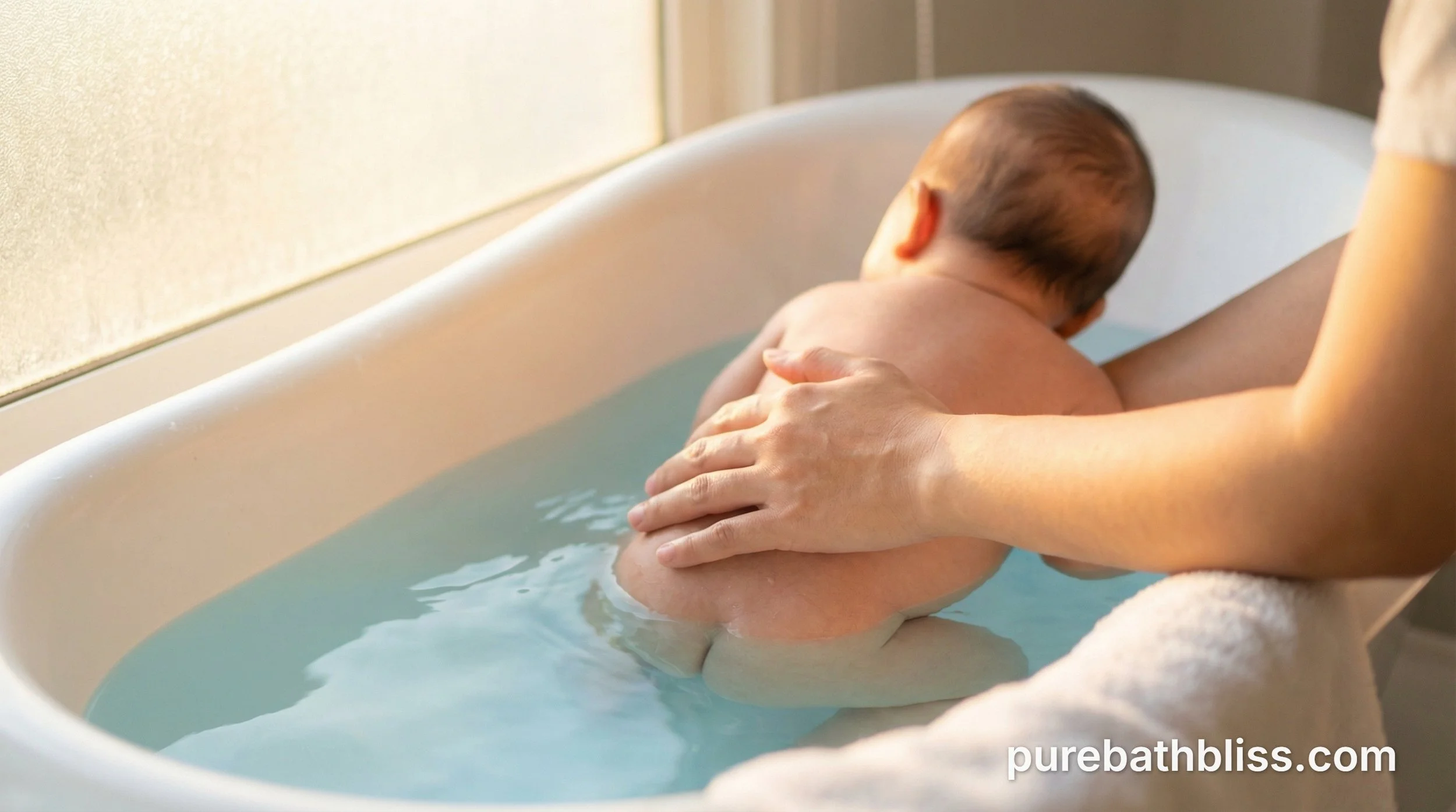
For many parents, bath time is a highlight of the day—a chance for giggles, bubbles, and bonding. But let’s be honest: wet porcelain, slippery skin, and water can also make it a source of anxiety.
At PureBathBliss.com, we believe that a "blissful" bathroom is, first and foremost, a safe one. Whether you are bathing a newborn in the sink or a toddler in the big tub, this guide covers the essential protocols for 2026, blending strict safety standards with our signature eco-friendly approach.
Here is how to turn potential panic into a peaceful, secure ritual.
The Golden Rule: "Touch Supervision"
If you take only one thing away from this guide, let it be this phrase.
In the past, experts advised keeping a baby "in sight." Today, safety organizations like the AAP (American Academy of Pediatrics) and pediatric experts emphasize Touch Supervision. This means the supervising adult must be within arm's reach of the child at all times, with eyes glued to them.
Drowning is silent and quick—it doesn't look like the splashing you see in movies. It can happen in less than 60 seconds in just 1-2 inches of water.
The "Phone-Free Zone" Policy: Treat the bathroom as a verified "dead zone" for technology. No texting, no scrolling, and no answering calls. If the doorbell rings, you have two choices: ignore it, or scoop the baby up in a towel and take them with you.
The Setup: Temperature & Environment
Babies cannot regulate their body temperature as well as adults. What feels like a "lukewarm" shower to you might be freezing for them, and what feels "nice and hot" could cause serious burns in seconds due to their thinner skin.
1. The Ideal Water Temperature
Aim for a body-temperature bath.
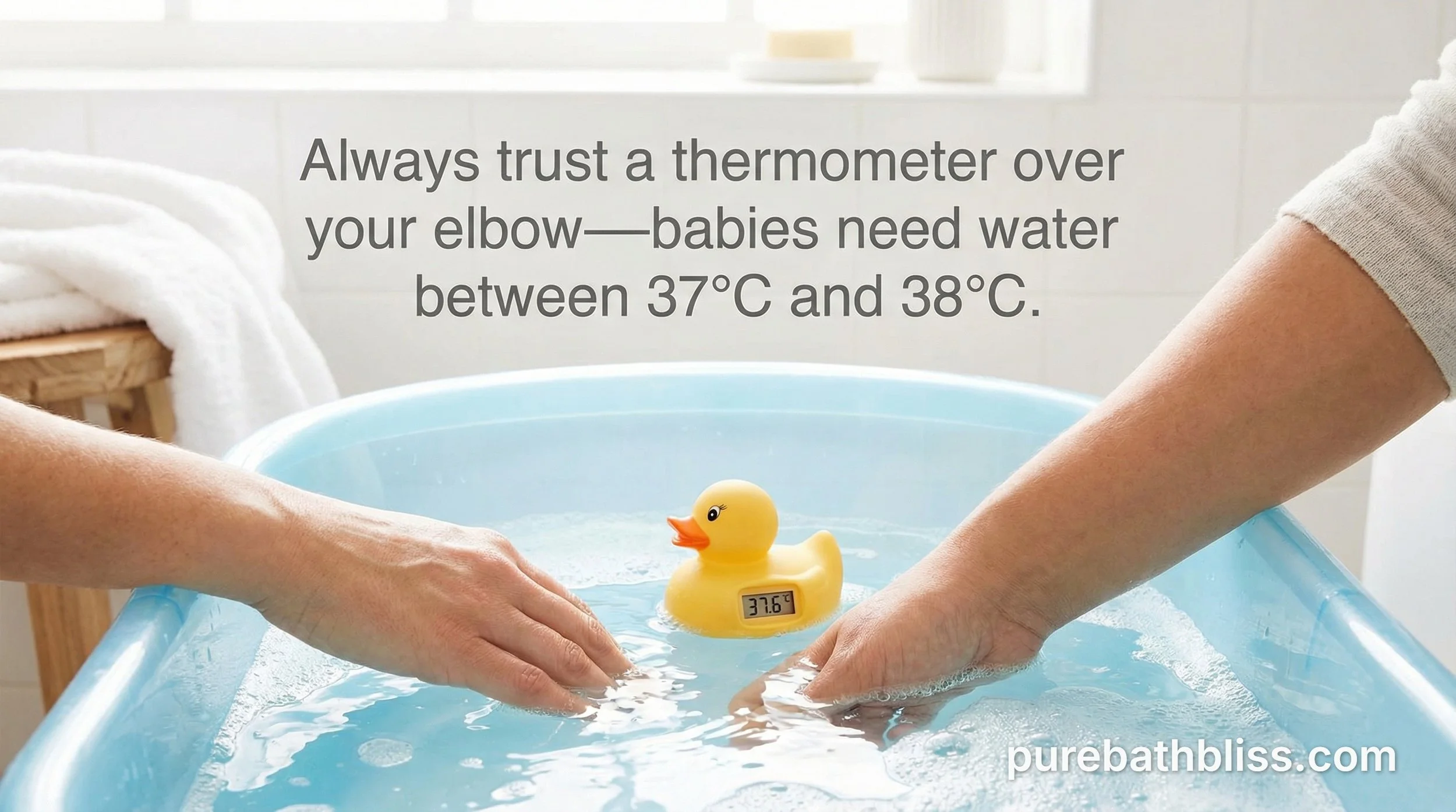
Target: 98.6°F to 100°F (37°C to 38°C).
The Scald Limit: Never exceed 100.4°F (38°C).
Water Heater Setting: Ensure your home's water heater is set to a maximum of 120°F (49°C) to prevent accidental scalds from the tap.
Pro Tip: Don't rely solely on your wrist (which is desensitized to heat). Use a reliable digital bath thermometer. Many eco-friendly options now double as safe, floating toys.
2. Water Depth
Less is more.
Newborns/Infants: 2 to 3 inches of water is plenty.
Toddlers: Waist-high when sitting down is the maximum recommended depth.
Eco-Friendly & Safe Gear
At PureBathBliss, we hate hidden toxins. Unfortunately, many standard bath products harbor dangers like mold or phthalates. Here is how to choose gear that keeps your baby safe and your home green.
1. The Mold-Free Toy Rule
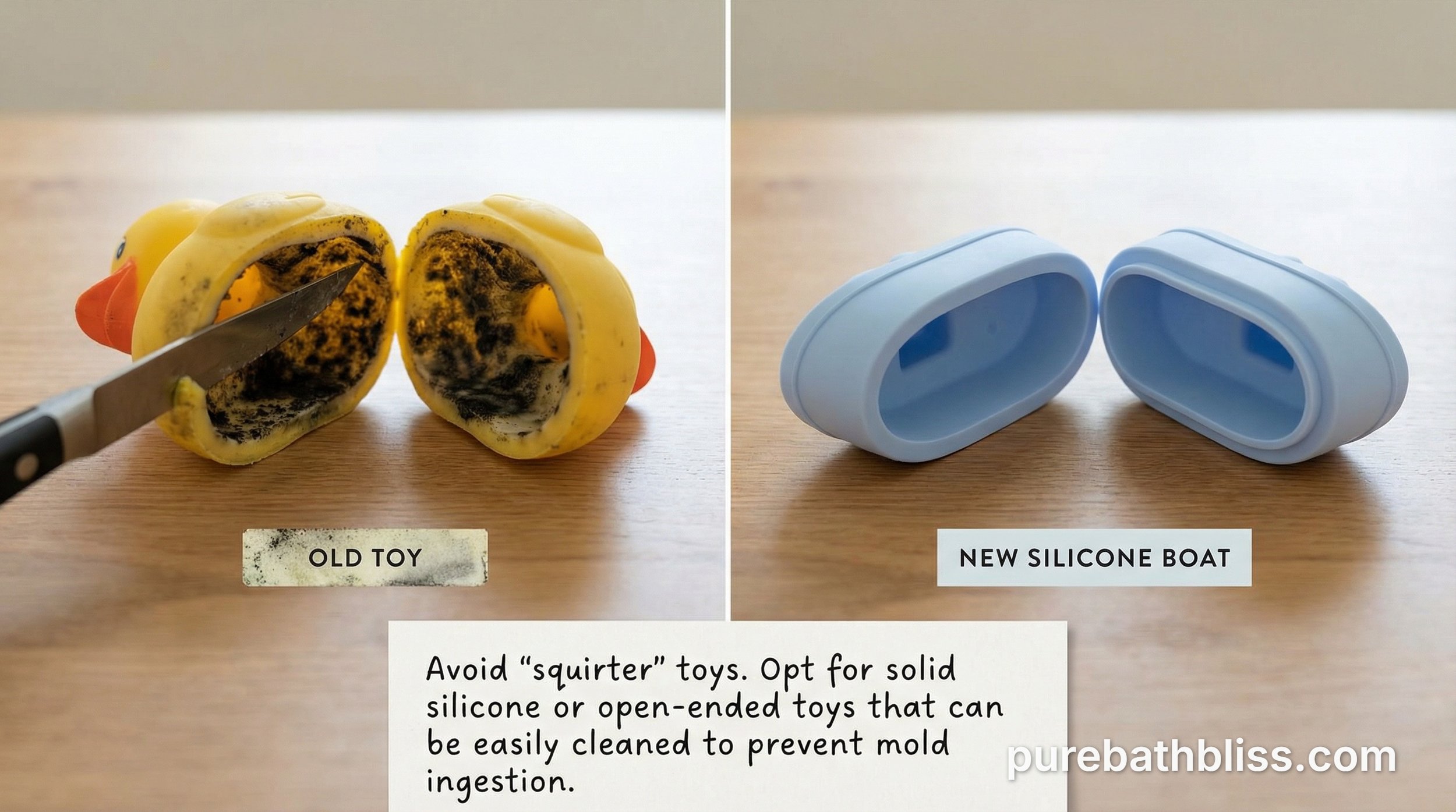
We’ve discussed the horrors of hidden grime in our “Mold-Free Shower” guide, but baby toys are the worst offenders. Squirting rubber duckies typically have a small hole in the bottom that sucks in bathwater. This water never fully dries, turning the inside of the toy into a black mold factory.
The Swap: Choose hermetically sealed toys (no holes) or solid silicone toys that can be opened and scrubbed.
Material: Opt for 100% food-grade silicone or natural Hevea rubber to avoid BPAs and phthalates.
2. Spout Covers
The metal faucet is a magnet for bumps and bruises. A soft silicone spout cover protects your baby’s head if they slip or stand up suddenly. Look for covers made from recycled materials or non-toxic silicone that resists mildew.
3. Slip Prevention
Once your baby can sit up, the tub floor becomes a slip-n-slide.
Avoid: Cheap PVC mats that off-gas chemicals and trap soap scum underneath.
Choose: Natural rubber mats with strong suction cups. Note that these need to be pulled up and hung to dry after every bath to prevent mold growth on your tub surface.
The Process: "Mise en Place"
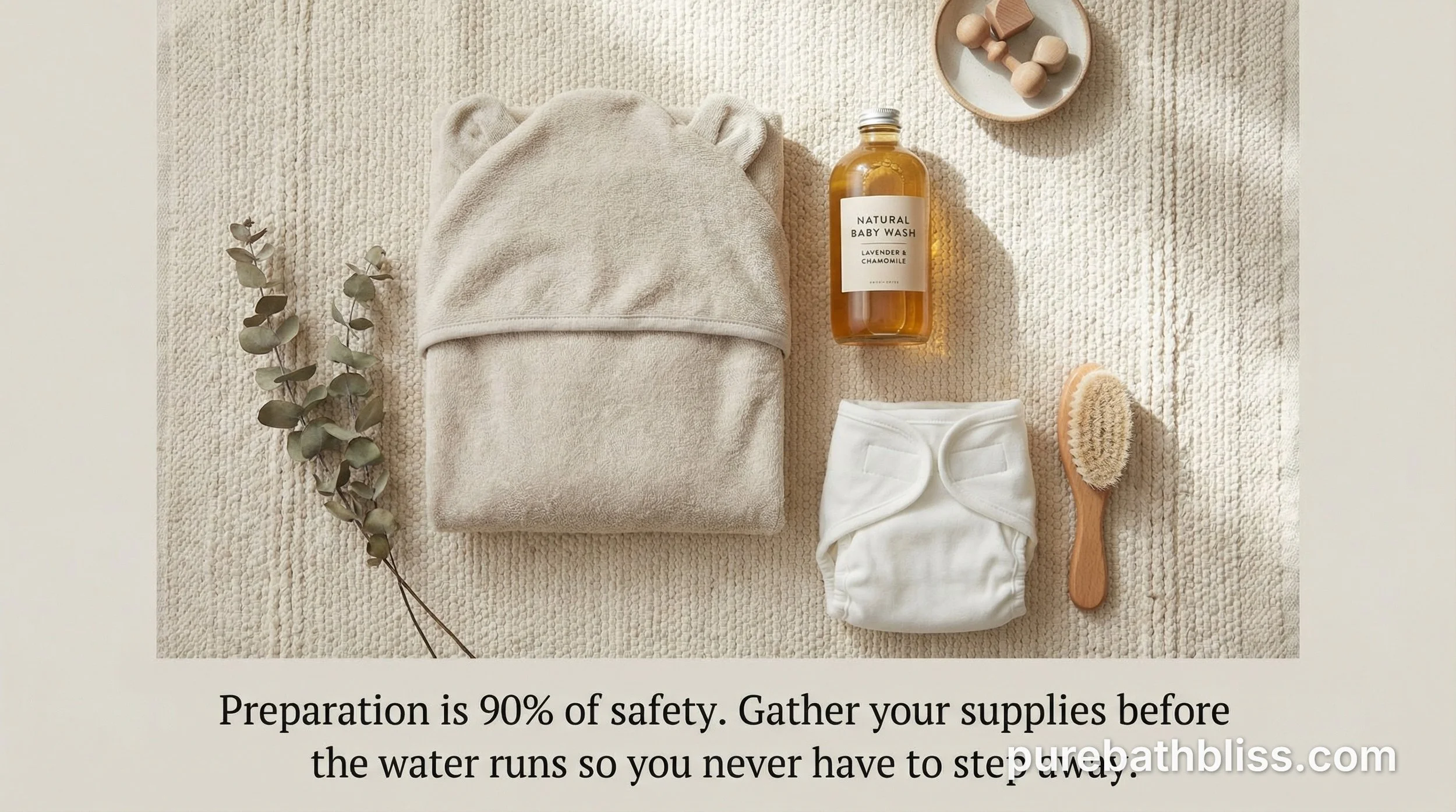
Chefs use "mise en place" (everything in its place) to cook safely. You should use it to bathe safely. Because you cannot leave the tub side, you must gather everything before the water starts running.
Your Pre-Bath Checklist:
Towels: Hooded towels are best for retaining heat.
Clean Diaper & Clothes: Lay these out in the bathroom or the immediate adjacent room.
Toiletries: Have your gentle, tear-free soap and washcloth within arm's reach of the tub.
The Rinse Cup: Essential for keeping soapy water out of eyes.
A Note on "Natural" Soaps
Baby skin is highly permeable. Conventional baby soaps often contain "fragrance" (a catch-all term for chemicals) and sulfates that can strip natural oils.
Align with our “DIY Natural Cleaning Solutions” ethos by choosing:
Fragrance-free options.
Plant-based surfactants (like coco-glucoside).
Minimal ingredients.
Bonus: You can even use simple organic almond or jojoba oil for post-bath moisturizing instead of chemical-laden lotions.
Get our thoughts on are bars of soap safe for baby’s skin.
Final Thoughts: Bliss is Peace of Mind
Bathing your baby shouldn't be a chore you dread. By setting up a safe environment—temperature checked, phone put away, and non-toxic gear at the ready—you create a space where you can truly focus on the joy of the moment.
Secure the safety basics, and the bliss will follow.