Are Bars of Soap Safe for Babies? The pH Problem Most Parents Don't Know About
Originally published December 2025, Updated July 2026
Transparency Note: We independently select these products based on research and user reviews. If you buy something through our links, we may earn a commission.
When our first child was a newborn, someone gave us a gift basket that included a beautifully packaged bar of baby soap. It smelled wonderful, it was labelled "gentle" and "natural," and we used it for about two weeks before her skin started showing dry red patches across her trunk. The soap went in the bin. The patches cleared up within a few days of switching to plain warm water and a mild liquid wash.
At the time I attributed this to her having sensitive skin. What I understand now, having looked at the research properly, is that the problem was not her skin specifically. The problem was the pH of the soap, and it would have caused the same reaction in the majority of infants because of how infant skin chemistry works.
The short answer to whether bar soap is safe for babies is that conventional bar soap is genuinely not appropriate for infant skin at any age, and even bars marketed specifically for babies are often in the wrong pH range. Here is the science behind that, what to use instead, and exactly when different types of cleansers become appropriate as your baby grows.labeled
Why Baby Skin Is Different
Infant skin is not simply smaller adult skin. It has meaningfully different properties that make the choice of cleanser considerably more consequential than it is for an adult.
A newborn's stratum corneum, the outermost protective layer of the skin that regulates water loss and blocks irritants, is thinner and more permeable than an adult's. The transepidermal water loss rate is significantly higher, meaning infant skin loses moisture faster and is more vulnerable to drying out. The skin's immune barrier is also still developing, making it more prone to inflammatory responses to irritating compounds.
The most critical factor for cleanser choice is the skin's acid mantle, a very fine protective film on the surface of the skin formed from sebum and sweat. This acid mantle has a natural pH of approximately 5.5, slightly acidic, and it plays a central role in keeping the skin barrier intact, preventing bacterial colonisation, and regulating the enzymes that maintain healthy skin cell turnover. When the pH of the acid mantle is disrupted upward toward alkaline, even temporarily, these protective functions are impaired and the skin becomes more vulnerable to dryness, irritation, and infection.
Newborn skin starts at a slightly higher pH than adult skin, around 6.5 at birth, and gradually acidifies over the first few weeks of life toward the adult range of 4.5 to 5.5. This transition period makes newborn skin particularly vulnerable to alkaline cleansers during exactly the time when most parents are establishing their bath routine.
The pH Problem with Conventional Bar Soap
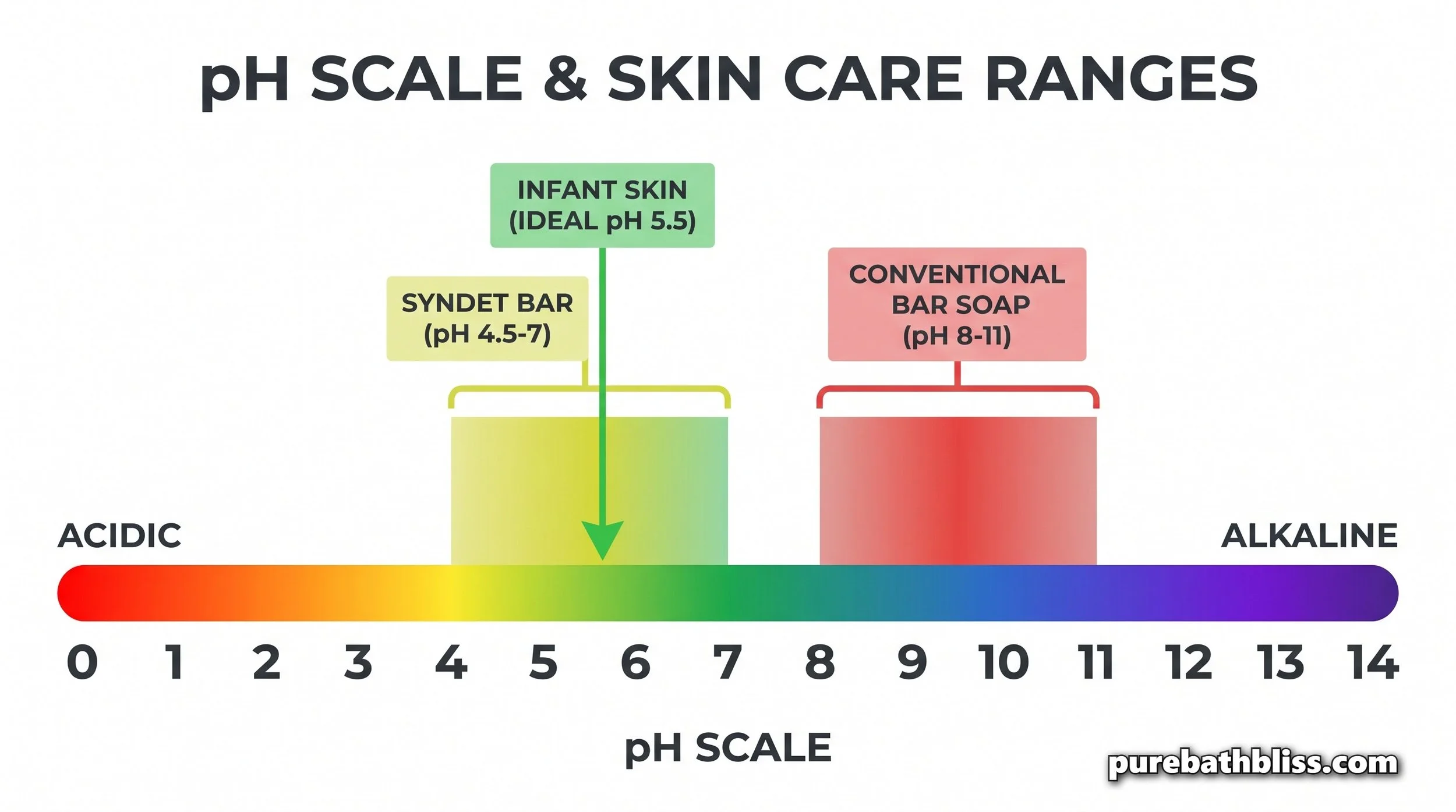
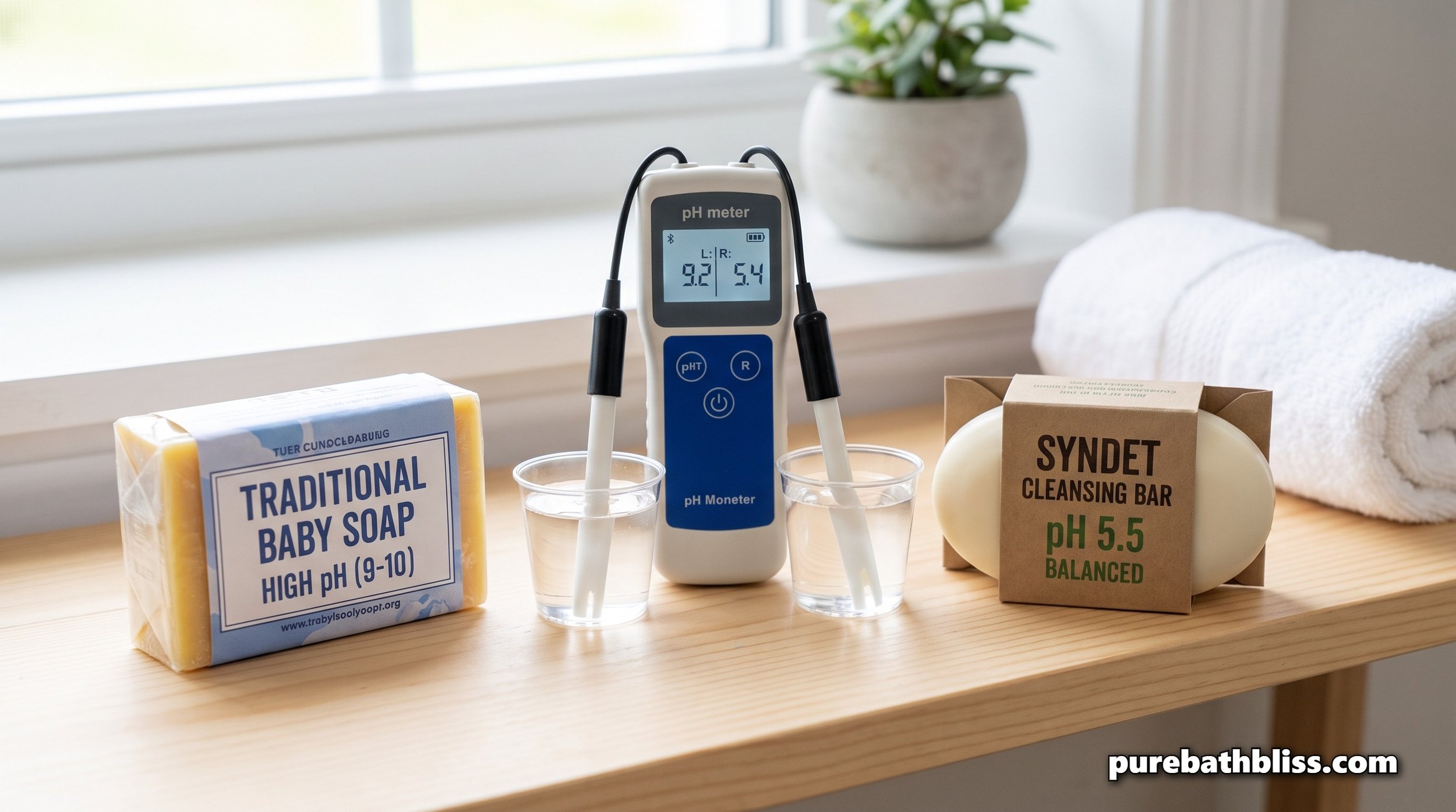
Traditional bar soap is made through a process called saponification, where fats or oils are reacted with a strong alkali such as sodium hydroxide (lye). This chemical process produces soap that is inherently alkaline, with a pH typically between 9 and 10. Even so-called "natural" bar soaps made with plant oils go through the same alkaline production process and have the same pH profile.
A 2025 study published in the Journal of Pediatrics specifically examined the pH of children's soaps and cleansers available in retail stores. The findings were striking: bar soaps showed pH values between 8.01 and 11.01, far outside the infant skin's physiological range of around 5.5. Crucially, the study also found that products labelled "pH-balanced," "neutral pH," or "dermatologically tested" frequently had pH levels above 5.0 despite these claims on the packaging, with most still in the alkaline range. Only one brand, Eucerin, displayed its actual pH specification on the packaging across all soaps evaluated.
The practical consequence of applying a pH 9 to 10 soap to infant skin at pH 5.5 is a significant disruption of the acid mantle that can take hours to recover. Repeated disruption over daily or frequent baths prevents the acid mantle from fully restoring between sessions, leading to the cumulative barrier damage that shows up as dryness, redness, and irritation.
True Soap vs Syndet: The Distinction That Matters
This is the most important concept in baby cleanser choice and the one most parents have never heard of.
What most people call "soap" in a bar format actually covers two very different products. True soap, as described above, is made through saponification and is always alkaline. A syndet bar (short for synthetic detergent bar) looks identical to a bar of soap but is made from surfactants formulated to maintain a pH close to 5.5, matching the skin's natural range. Syndets can be formulated to be as mild or gentler than liquid washes while having the convenience and zero-waste appeal of a bar format.
The 2025 Journal of Pediatrics study confirmed that syndets tested with pH values between 4.99 and 7.78, significantly closer to the physiological range than true soaps. The study concluded that bar soaps are not suitable for children's skin cleansing, while syndets represent a meaningfully better option when a bar format is desired.
The problem is that syndet bars are rarely labelled clearly as syndets. They are typically marketed as "soap-free cleansing bars," "beauty bars," or "pH-balanced bars." The distinction between true soap and syndet is almost never stated on the front of the packaging. If the ingredient list contains sodium cocoyl isethionate, sodium lauroyl isethionate, or similar synthetic surfactant names rather than "sodium palmate," "sodium tallowate," or other saponified oil names, you are looking at a syndet. This distinction is worth understanding because it completely changes the suitability of the product for infant skin.
What to Use at Each Age
| Age | Recommended Cleanser | Conventional Bar Soap? | Syndet Bar? | Frequency |
|---|---|---|---|---|
| 0 to 8 weeks | Plain warm water only | No | No | 2 to 3 times per week. Sponge bath only until cord stump falls off. |
| 2 to 6 months | Mild fragrance-free liquid wash, pH 5.5. Spot use on dirty areas only. | No | No — liquid preferred at this age | 2 to 3 times per week. Plain water for the rest of the body. |
| 6 to 12 months | Mild liquid wash or pH-balanced syndet bar | No | Yes — if fragrance-free and pH 5.5 | 3 to 4 times per week as activity increases |
| 12 months and up | Mild liquid wash or gentle syndet bar | Not recommended — no benefit over pH-appropriate alternatives | Yes — if fragrance-free and pH appropriate | As needed. Daily bathing fine with mild products. |
Newborns (0 to 8 weeks)
Plain warm water only for the first few weeks is the recommendation from the American Academy of Pediatrics and the European round table on infant skin care. The vernix caseosa, the waxy coating present at birth, is beneficial to the developing skin barrier and should not be washed off aggressively. The AAP recommends sponge baths only until the umbilical cord stump falls off, typically within two to three weeks. After that, brief warm baths two to three times per week with plain water are appropriate before any cleanser is introduced.
Younger Infants (2 to 6 months)
A mild, fragrance-free, sulfate-free liquid baby wash at pH 5.5 is the right choice when cleansing beyond plain water becomes necessary. Limit soap to genuinely dirty areas, the diaper zone and hands, and use plain water for the rest of the body. The entire concept of needing to clean a baby's trunk with soap at this age is largely a cultural habit rather than a hygiene necessity. Two to three baths per week with plain water and spot cleaning with a damp cloth between baths is the evidence-based approach.
Older Infants (6 to 12 months)
A mild liquid wash remains preferable to bar soap at this age. If a bar format is desired for sustainability reasons, a pH-balanced syndet bar is appropriate. Avoid conventional bar soap at any age during infancy. At this stage babies are more active, getting messier, and baths can become more frequent, which makes the pH question more relevant since the acid mantle is being disrupted more often.
Toddlers (12 months and up)
The skin barrier is more robust at this age and tolerates a wider range of cleansers, though sensitive skin remains common through early childhood. A gentle syndet bar or a mild liquid wash is still preferable to conventional bar soap. Conventional bar soap is not harmful in the way it is for a newborn, but there is no benefit to using it over a pH-appropriate alternative. The habit of checking pH and avoiding synthetic fragrance in skin products used on children is worth maintaining through the early years.
Ingredients to Avoid in Any Baby Cleanser
| Ingredient | What to Look for on Label | Why to Avoid for Babies |
|---|---|---|
| Synthetic fragrance | Fragrance, Parfum, Aroma, Scent | Leading cause of contact dermatitis in infants. Can conceal phthalates and other undisclosed compounds. |
| Sulfates | Sodium Lauryl Sulfate (SLS), Sodium Laureth Sulfate (SLES) | Aggressive surfactants that strip the skin's natural moisture barrier. Particularly harsh on developing infant skin. |
| Parabens | Methylparaben, Propylparaben, any "-paraben" | Endocrine-disrupting compounds. EU has banned propylparaben and butylparaben from leave-on products for children under 3. |
| Conventional bar soap (saponified) | Sodium palmate, Sodium tallowate, Sodium cocoate, Sodium olivate | Always alkaline (pH 8 to 11). Disrupts infant skin's acid mantle regardless of how it is marketed. |
| Formaldehyde releasers | DMDM Hydantoin, Quaternium-15, Imidazolidinyl Urea | Release formaldehyde over time, a known carcinogen. Found in some baby washes as preservatives. |
| Artificial dyes | FD&C or D&C followed by colour name and number | No cleansing benefit. Petroleum-derived. EU requires warning labels for potential behavioural effects in children. |
The full breakdown of why synthetic fragrance and parabens are particularly problematic for infant skin during the developmental window is covered in our guide to the five toxic ingredients never to use on babies. The cleanser is applied directly to skin at bath time and rinsed off, making it a lower exposure risk than a leave-on moisturiser, but repeated daily or near-daily contact with synthetic fragrance and sulfates across years of bathing is still meaningful cumulative exposure on developing skin.
What to Look for on the Label
Finding a genuinely suitable baby cleanser requires reading the back of the label rather than the front. The front of most baby products is designed to reassure rather than inform. Words like "gentle," "natural," "mild," and "baby" have no standardised regulatory definition and require no specific formulation criteria to be used.
The back label tells you what you need to know. Look for a stated pH of 5.5 or close to it. Look for fragrance-free rather than "unscented," since unscented products can contain masking fragrances. Look for syndet surfactants rather than saponified oils in the first few ingredients. And look for third party certifications like the National Eczema Association Seal of Acceptance or MADE SAFE, which require specific ingredient standards rather than just brand claims.
Recommended Products
For liquid wash (infants of all ages): CeraVe Baby Wash and Shampoo is fragrance-free, sulfate-free, pH-balanced, and formulated with ceramides that specifically support the skin barrier. Developed with pediatric dermatologists and carries the National Eczema Association Seal of Acceptance. Find CeraVe Baby Wash on Amazon.
For a syndet bar (6 months and up): Dove Baby Sensitive Skin Bar is technically a syndet rather than true soap despite its bar format, with a pH closer to skin's physiological range than conventional soap. Fragrance-free, widely available, and significantly more appropriate for infant skin than conventional bar soaps. Find Dove Baby Sensitive on Amazon.
For eczema-prone infant skin: Aveeno Baby Eczema Therapy Wash uses colloidal oatmeal as a primary active ingredient alongside a fragrance-free, sulfate-free formula specifically designed for the compromised skin barrier of eczema-prone infants. Find Aveeno Baby Eczema Wash on Amazon.
The Post-Bath Step That Matters as Much as the Cleanser
The cleanser choice matters. What happens in the three minutes after the bath matters equally. Applying a fragrance-free moisturizer to still-damp skin immediately after patting dry seals in the bath hydration and supports the skin barrier recovery that the cleanser may have partially disrupted. This is the soak and seal method recommended for eczema-prone skin but genuinely beneficial for all infant skin regardless of sensitivity.
Our guide to post-bath baby skincare and the three-minute moisturising window covers the exact timing, the towel technique that does not disrupt the damp skin surface, and the moisturiser choices that provide the most effective barrier support for different skin types. And for the broader question of what else should and should not be in your baby's bath routine, our guide to whether bubble bath is safe for babies covers the same pH and surfactant concerns applied to bath additives.