The Hidden Danger of Mixing Vinegar and Hydrogen Peroxide for Cleaning
Originally published December 2025, Updated June 2026
I almost made this mistake myself a few years ago. I had read somewhere that mixing equal parts vinegar and hydrogen peroxide made an unstoppable natural disinfectant, and it made intuitive sense to me. Two cheap, green, pantry-staple ingredients combining into something stronger than either alone. I had the spray bottle in hand and the two bottles open on the counter before something nagged at me to actually look into it first. That five minutes of research changed my entire approach to natural cleaning.
What I learned is that vinegar and hydrogen peroxide react with each other the moment they touch. That reaction produces a compound called peracetic acid, which is a genuinely powerful industrial disinfectant used in hospitals and food processing plants under strict ventilation and protective equipment protocols. It is not something you want forming unpredictably in a closed spray bottle in your bathroom.
Here is exactly what happens chemically when you combine the two, what the real risks are, and the simple sequential method that gives you the disinfecting power you were after in the first place, without the hazard.
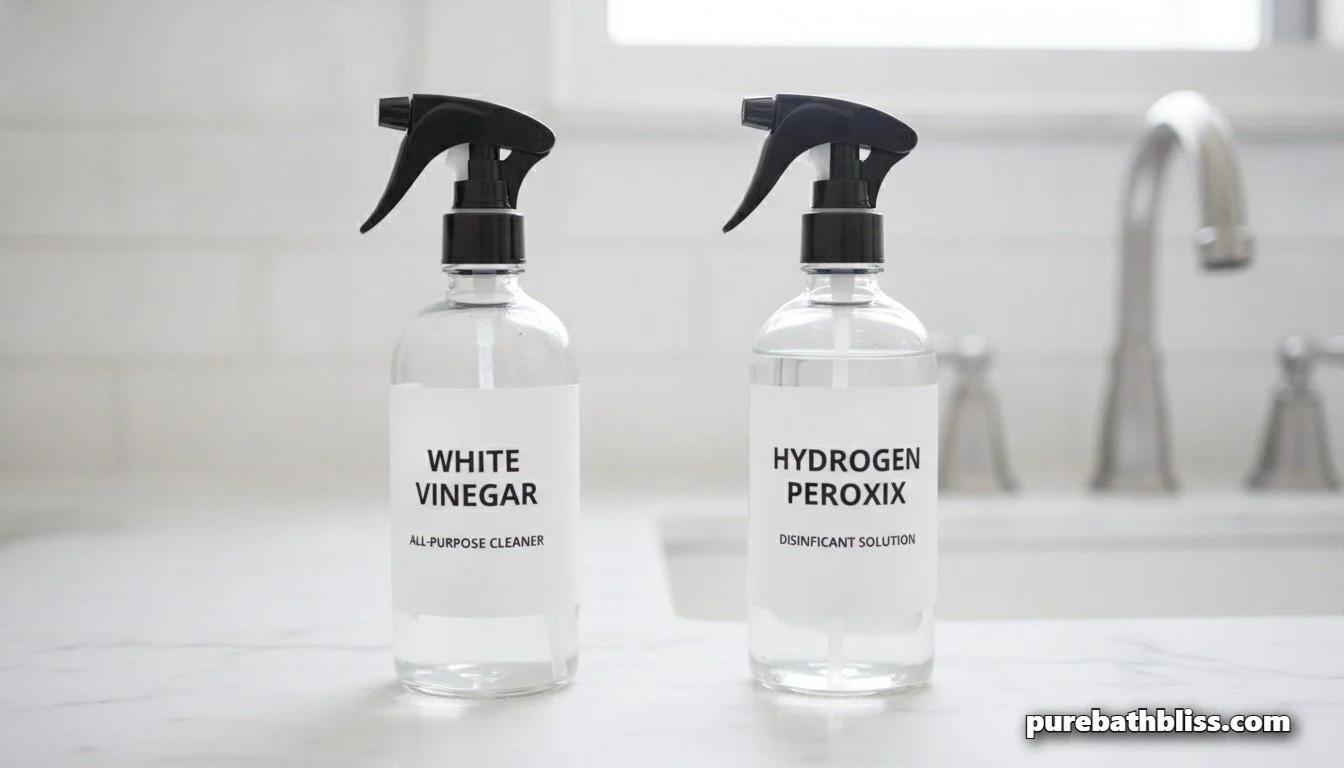
The Chemistry: What Actually Happens When You Mix Them
Vinegar is a dilute solution of acetic acid, typically around five percent, with the rest being water. Hydrogen peroxide sold for home use is typically a three percent solution, an unstable molecule that readily gives up an oxygen atom, which is what makes it useful as a bleaching agent and disinfectant on its own.
When you combine the two, the acetic acid reacts with the hydrogen peroxide in what chemists call an equilibrium reaction, producing peracetic acid and water. The reaction looks like this: CH3COOH plus H2O2 yields CH3COOOH plus H2O. Peracetic acid, also called peroxyacetic acid, is a significantly more aggressive oxidizer than either of its parent ingredients. It is genuinely effective at killing bacteria, viruses, and mold spores, which is exactly why it gets used industrially. The problem is entirely about control. Commercial peracetic acid products are manufactured at precise, stabilized concentrations and handled with ventilation systems, protective gear, and specific safety protocols. None of that exists when two bottles meet on your bathroom counter.
The amount of peracetic acid formed in a homemade mixture is unpredictable. It depends on the exact concentrations of your vinegar and peroxide, the ratio you use, the temperature, and how long the mixture sits. That unpredictability, not a fixed toxicity number, is the core of why this combination is genuinely risky for home use.
Why the Closed Spray Bottle Makes It Worse
If you mix vinegar and hydrogen peroxide and use the result immediately, the exposure risk is the irritation from a single use. The genuinely dangerous version of this mistake happens when the mixture sits in a sealed spray bottle for days or weeks, which is how most people who make this mistake actually end up using it, mixing a batch and keeping it under the sink for future cleaning sessions.
Peracetic acid is chemically unstable. It continuously decomposes, releasing oxygen gas as a byproduct. In an open container that gas simply escapes. In a sealed spray bottle, it has nowhere to go, and pressure builds steadily inside the container. This is the same basic physics as a shaken soda bottle, except the contents are corrosive rather than merely fizzy. Reports of bottles rupturing or spraying forcefully when finally opened are well documented, and the result is a sudden release of a corrosive substance directly toward whoever opened it.
This is the single most important practical takeaway. Even if you decide the immediate-use risk feels acceptable to you, never store a premixed batch. The danger compounds with time, not just with concentration.
The Real Health Risks
It's worth being honest about the range here rather than overstating it. At typical household concentrations, most people who accidentally mix a small batch and use it immediately in a ventilated space experience mild, temporary irritation rather than severe injury. That said, documented cases of more serious reactions exist, and the risk scales with concentration, volume, ventilation, and how long the mixture has had to react before use.
Respiratory irritation is the most commonly reported effect. Peracetic acid vapor has a sharp, acrid smell, sometimes described as vinegar with a chlorine-like edge, and it irritates the mucous membranes of the nose, throat, and lungs on contact. Coughing, throat burning, and watery eyes are the typical immediate symptoms. There are documented case reports of more serious reactions, including a diagnosis called reactive airway dysfunction syndrome following acute exposure to a homemade vinegar and peroxide mixture used to scrub grout in an enclosed bathroom. That is not the typical outcome, but it illustrates that the risk is real rather than theoretical.
Skin and eye contact with the liquid itself, rather than just the vapor, carries a higher risk of irritation or burns, since peracetic acid is more corrosive than vinegar alone.
The pressurized bottle hazard described above is a separate and distinct risk from the vapor exposure, and it is the scenario most likely to cause an acute injury, since it involves direct contact with concentrated liquid rather than diluted vapor.
The Safe Way: Use Them Sequentially Instead
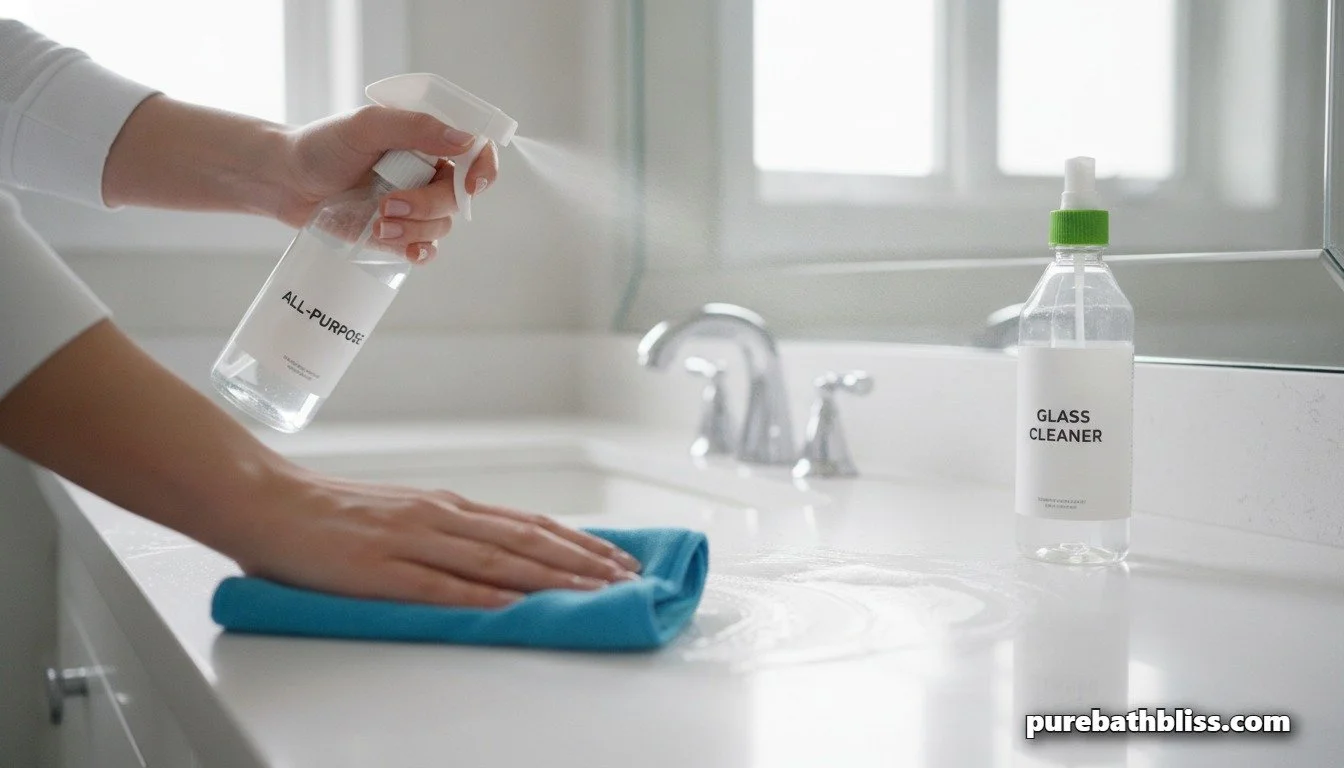
Here is the part that should put your mind at ease. You do not have to give up the combined disinfecting power of vinegar and hydrogen peroxide. You just have to stop combining them in the same container.
Multiple sources, including guidance referenced by the CDC on sequential disinfection protocols, support using the two agents one after another on the same surface. Applied this way, you get a genuinely synergistic disinfecting effect against bacteria including salmonella, E. coli, and staph, often outperforming single-agent cleaners, without ever creating a stored, concentrated batch of peracetic acid.
Here is the protocol I use:
Spray the surface with undiluted white vinegar from its own dedicated bottle.
Wipe with a clean cloth. This removes dirt and mineral deposits and also clears most of the vinegar before the next step.
Spray the same surface with 3 percent hydrogen peroxide from its own separate bottle.
Let it air dry, or wipe with a fresh, clean cloth.
A small trace amount of residual vinegar reacting with the peroxide directly on the surface is what produces the localized disinfecting boost. Because this happens in open air on a hard surface rather than inside a sealed bottle, the reaction has nowhere to build pressure and dissipates immediately. This is functionally a different scenario from premixing in a container, even though the same chemistry is technically occurring at a microscopic level.
Safe Storage and Handling Rules
Keep them physically separated. Store vinegar and hydrogen peroxide in different cabinets, or at opposite ends of your cleaning caddy. The goal is to make an accidental mix-up genuinely difficult, not just unlikely.
Respect hydrogen peroxide's light sensitivity. Always keep it in its original dark brown bottle, or transfer it to an opaque spray bottle if you need a different format. Light breaks hydrogen peroxide down into plain water over time, which means a peroxide bottle left in a clear container on a sunny windowsill for a few weeks will have lost most of its disinfecting power without you realizing it.
Label everything clearly if you transfer either liquid into a different spray bottle. Never rely on remembering which bottle is which, especially in a household with kids who might grab the wrong one.
If You've Already Mixed Them
If you realize you have accidentally combined the two in a spray bottle, here is what to do. Do not sniff the bottle to check what happened. Take it outside immediately into open air. Slowly add baking soda to the mixture, which will neutralize the acid and cause it to fizz. Once the fizzing has stopped, dilute the mixture with a large amount of water and pour it down the drain with the tap running. Wash the container thoroughly with soap and water afterward, or simply discard it if you have any doubt about whether it's been fully neutralized.
If you experience any respiratory symptoms, eye irritation, or skin contact with the mixture beyond mild, brief discomfort, move to fresh air immediately and seek medical attention if symptoms persist.
Natural Cleaning Recipes That Actually Work Safely
Once you understand the rule, both ingredients remain genuinely excellent cleaners in their own right. Here is how I use each of them around the bathroom without ever combining them in a container.
Mold killer: Straight 3 percent hydrogen peroxide in a dark spray bottle. Spray directly on mold or mildew, let it sit for 10 minutes, then wipe or scrub. We cover the full floor cleaning version of this method in our guide to cleaning bathroom floors with only hydrogen peroxide, including grout-specific technique.
Soap scum remover: Undiluted white vinegar, heated for about 30 seconds in the microwave to improve its mineral-dissolving power, then applied directly to the affected area.
All-purpose disinfectant: The sequential one-two method described above, vinegar first, wipe, then peroxide.
Glass cleaner: One part vinegar to four parts water with a single drop of dish soap, in its own dedicated bottle.
Pink slime and grout disinfecting: Hydrogen peroxide applied directly to the affected area is genuinely effective against Serratia marcescens, the bacteria responsible for the pink residue many people find in their shower. Our full guide to stopping pink shower mold covers the complete treatment and prevention protocol.
Grout deep clean: A baking soda and hydrogen peroxide paste for whitening and disinfecting, followed by a separate vinegar rinse for stubborn calcium deposits on ceramic or porcelain only. Our non-toxic grout cleaning guide walks through the full sequence, including a critical warning never to use vinegar on natural stone surfaces.
The Bigger Lesson Here
The reason this particular mistake is so common is that it feels intuitively safe. Both ingredients are things we keep around the house without a second thought. Vinegar is something we cook with. Hydrogen peroxide is something we put on cuts. Neither one registers in our minds as a chemical that requires careful handling, so combining two "safe" things feels like it should produce something even safer, not something more hazardous.
But chemistry doesn't care where an ingredient came from. Acetic acid is acetic acid whether it's in a salad dressing or a cleaning spray, and it will react with hydrogen peroxide the same way regardless of how natural either ingredient feels. This is genuinely one of the more important things to understand if you're building a natural cleaning routine for your home, because the natural cleaning world has plenty of well-intentioned advice circulating that doesn't account for basic chemistry. If you're working to reduce the toxic load in your bathroom more broadly, our guide to 5 toxic chemicals hiding in your bathroom and their organic swaps covers other areas where intuition and actual chemistry don't always line up.
Natural cleaning genuinely works, and both vinegar and hydrogen peroxide deserve their place in a non-toxic cleaning routine. The fix here is not avoiding either ingredient. It's respecting the basic rule that keeps them both doing their best work for you: separate bottles, sequential application, never stored together. Get that one detail right and you get all the disinfecting power you were originally after, with none of the risk.