DIY Lavender Oat Bath Soak: A Zero-Waste Spa Ritual in 15 Minutes
Transparency Note: We independently select these products based on research and user reviews. If you buy something through our links, we may earn a commission.
In a world of "fast beauty" and plastic-laden bath bombs, there is something deeply grounding about making your own self-care products. If you’ve been following our journey into creating a Zero-Waste Sanctuary, you know that the bathroom is often the biggest source of hidden plastic in the home.
From synthetic fragrances to microplastics in exfoliants, the average "relaxing bath" can be quite hard on the environment. This guide isn't just a recipe; it's a deep dive into the philosophy and science of the Lavender Oat Bath Soak.
Part 1: The Science of the Soak (Why it Works)
To understand why this ritual is so effective, we have to look at the biology of the skin. Most commercial bath products use surfactants to create bubbles, which can actually strip the skin of its natural oils (the acid mantle).
The Miracle of Colloidal Oatmeal
Oats contain avenanthramides, a group of phenolic antioxidants that are unique to oats. Scientific studies have shown that these compounds significantly reduce inflammation and itching. When we grind oats into a fine powder, we are creating "colloidal oatmeal."
The Protective Barrier: Colloidal oats are hydrophilic, meaning they bind to water and form a protective film on the skin. This prevents "Trans-Epidermal Water Loss" (TEWL).
pH Balancing: Skin is naturally slightly acidic (pH approx 5.5). Bathing in plain tap water can disrupt this. Oats act as a buffering agent, helping to return your skin to its natural pH level.
Magnesium Absorption via Epsom Salts
Epsom salt is magnesium sulfate. While the scientific community debates exactly how much magnesium is absorbed through the skin, the "osmotic pressure" created by a salt bath helps draw out toxins and reduce swelling in joints. This makes it an essential partner to the soothing oats.
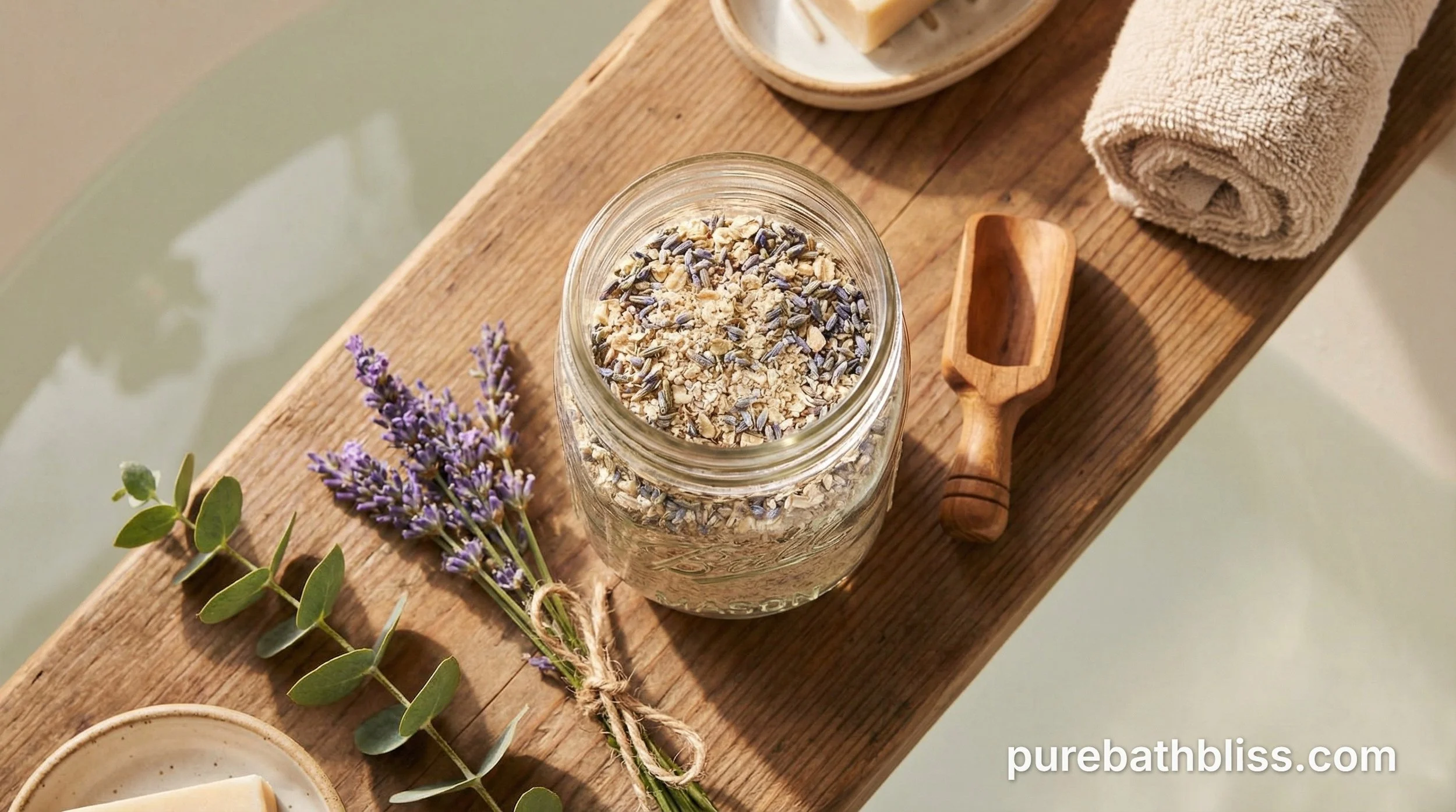
Part 2: The Zero-Waste Sourcing Guide
A DIY project isn't truly zero-waste if you’re buying three different plastic bottles to make it. Here is how to source your ingredients like a sustainability pro:
1. The Bulk Bin Strategy
Most local health food stores (and even some large chains) have bulk sections.
Oats: Bring your own organic cotton bag. Avoid "Instant Oats" which are too processed; look for "Old Fashioned Rolled Oats."
Epsom Salts: These often come in heavy plastic bags. Look for stores that sell it in bulk bins where you can fill your own glass jar. If not available, look for the largest cardboard box option, which is easier to recycle than film plastic.
2. Sourcing Lavender Buds
If you have space, growing your own lavender is the ultimate zero-waste win.
Home Grown: Harvest in mid-summer when the buds are tight. Hang them upside down in a dark, dry place.
Buying: If buying, search for "culinary grade" dried lavender. It is usually higher quality and lacks the synthetic "scent boosters" found in craft-store potpourri.
Part 3: The Recipe (15-Minute Execution)
Prep Time: 10 minutes | Yields: 2 cups
Ingredients:
1 cup Organic Rolled Oats
1/2 cup Epsom Salts
2 tbsp Dried Lavender Buds
5–10 drops Lavender Essential Oil (Ensure it is 100% pure, no synthetic carriers)
Instructions:
Milling the Oats: Using a high-speed blender, process the oats until they are a fine dust. To test: stir a spoonful into a glass of warm water. If the water turns milky and the oats don't immediately sink, you've reached the "colloidal" stage.
Infusing the Salts: Place Epsom salts in a bowl. Add the essential oil. Stir well. The salts act as a carrier, ensuring the oil distributes evenly rather than floating on top of the bath water in a single "hot" droplet.
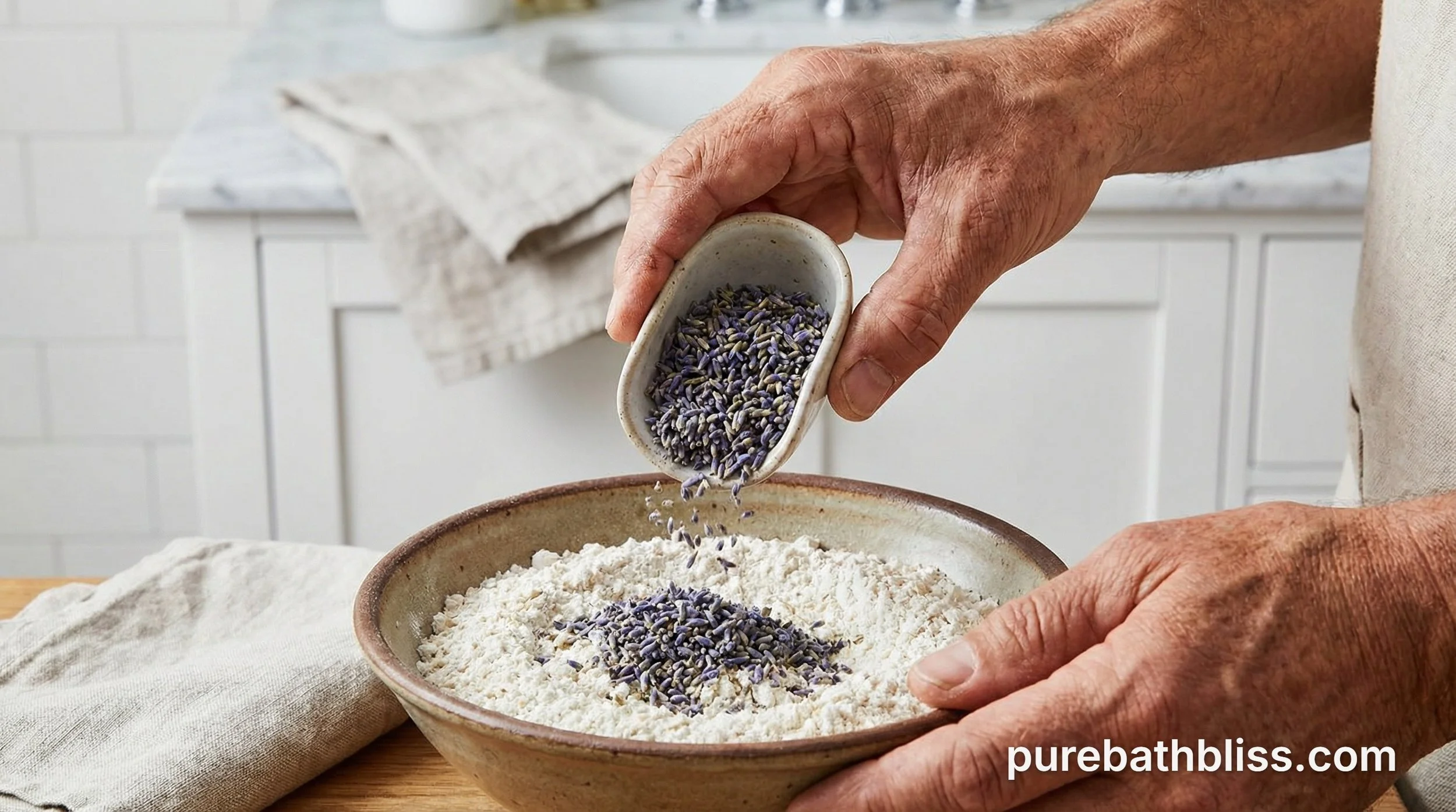
The Final Blend: Fold in the oat flour and the dried lavender buds.
Part 4: Preventing Bathroom Disasters (Plumbing & Cleanup)
As a medium-sized niche site owner, you know that home maintenance is part of the eco-friendly journey. Nothing is less "green" than having to call a plumber to snake a drain full of wet oats.
The "Tea Bag" Method
Never pour this mixture directly into the water. Instead, use a reusable muslin bag.
Why: The bag acts as a filter. You get the minerals and the "oat milk" in the water, but the physical debris stays contained.
Cleaning: After the bath, turn the bag inside out and dump the contents into your compost. Rinse and hang to dry.
A Note on Clogs
If you do get some debris in the drain, don't reach for Drano (which is a chemical nightmare for our waterways). Use the baking soda and vinegar method.
Part 5: Zero-Waste Gifting & Presentation
This soak makes an incredible gift for the holidays or a housewarming. To keep it zero-waste:
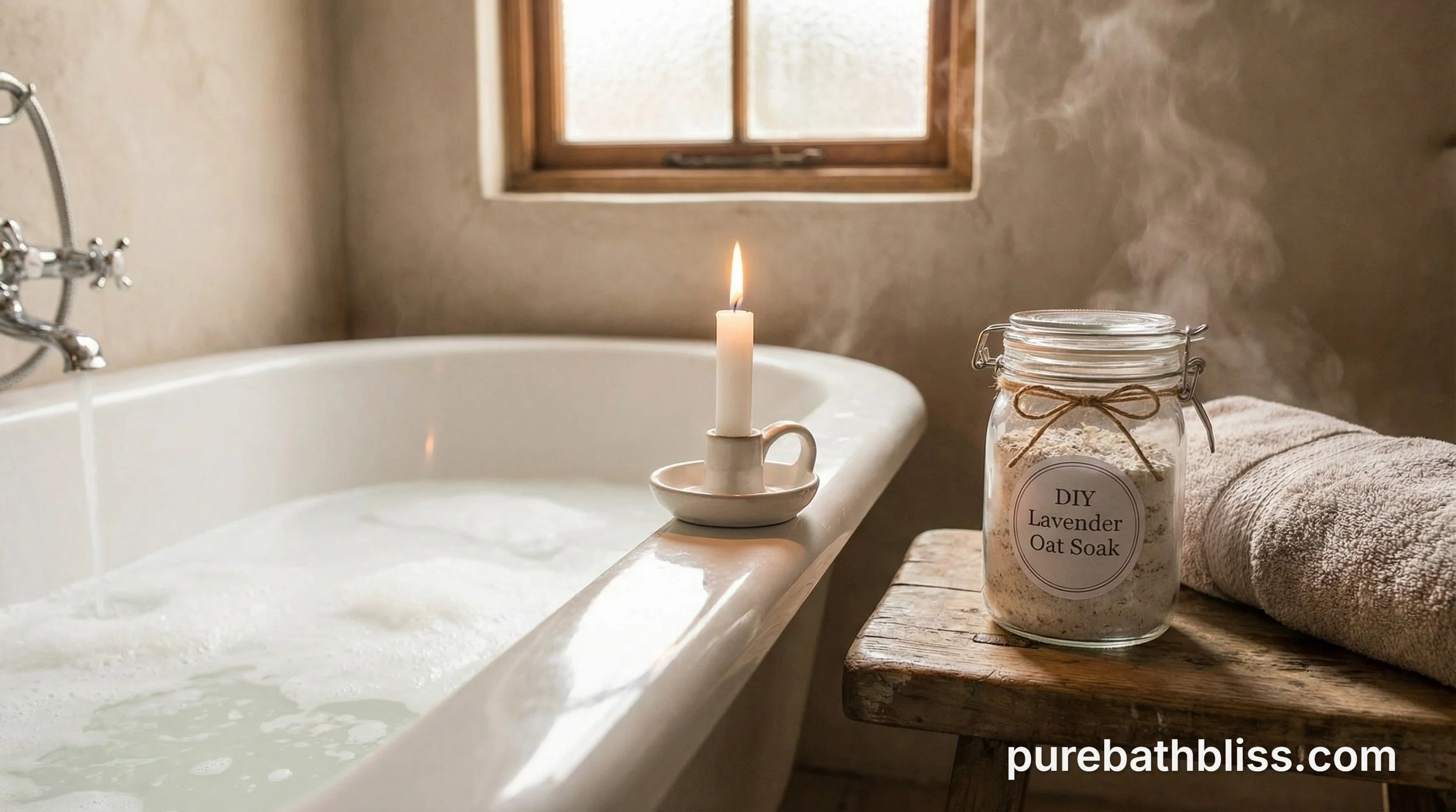
The Jar: Use an upcycled glass jar (like an old jelly jar). Remove the label by soaking it in warm water and baking soda.
The Tie: Use compostable jute twine or a strip of scrap fabric from an old shirt.
The Tag: Use recycled cardstock or even a dried bay leaf written on with a non-toxic marker.
Part 6: Customizing for Different Rituals
The "Deep Sleep" Blend
Add 1/4 cup of dried chamomile flowers to the mix. Chamomile contains apigenin, an antioxidant that binds to certain receptors in your brain that may promote sleepiness.
The "Winter Skin" Rescue
Add 1 tablespoon of organic coconut milk powder. The fats in the coconut milk provide extra lubrication for severely dry, itchy skin during the colder months.
Part 7: FAQ (Frequently Asked Questions)
Q: How long does the soak stay fresh?
A: Since there is no water in the dry mix, it will stay fresh for about 6 months. However, the essential oil scent will begin to fade after 3 months. Store in a cool, dark place.
Q: Can I use this on babies?
A: Colloidal oat baths are great for diaper rash or heat rash, but leave out the essential oils for infants, as their skin is too sensitive for concentrated scents.
Q: What if I don't have a blender?
A: You can use a mortar and pestle, though it will take significantly more effort! The goal is a fine powder.
Conclusion
Creating a zero-waste spa ritual is about reclaiming your time and your health from the corporate beauty cycle. By spending 15 minutes making this Lavender Oat Bath Soak, you are reducing plastic waste, avoiding synthetic toxins, and giving your skin the "colloidal" treatment it deserves.
Next Step: Ready to tackle the rest of your bathroom? Check out our guide on 10 Zero-Waste Toilet Paper Storage Hacks to keep your new "sanctuary" clutter-free.
🛍️ What You’ll Need for This Ritual
The Base: Bulk Organic Rolled Oats (Choose the 5lb paper bag to stay plastic-free!)
The Mineral: Pure Epsom Salt (Fragrance-free and USP grade).
The Scent: Organic Lavender Essential Oil (100% pure steam-distilled).
The Botanical: Dried Lavender Buds (Culinary grade for the best aroma).
The Secret Weapon: Reusable Cotton Muslin Bags (Essential for a mess-free soak).