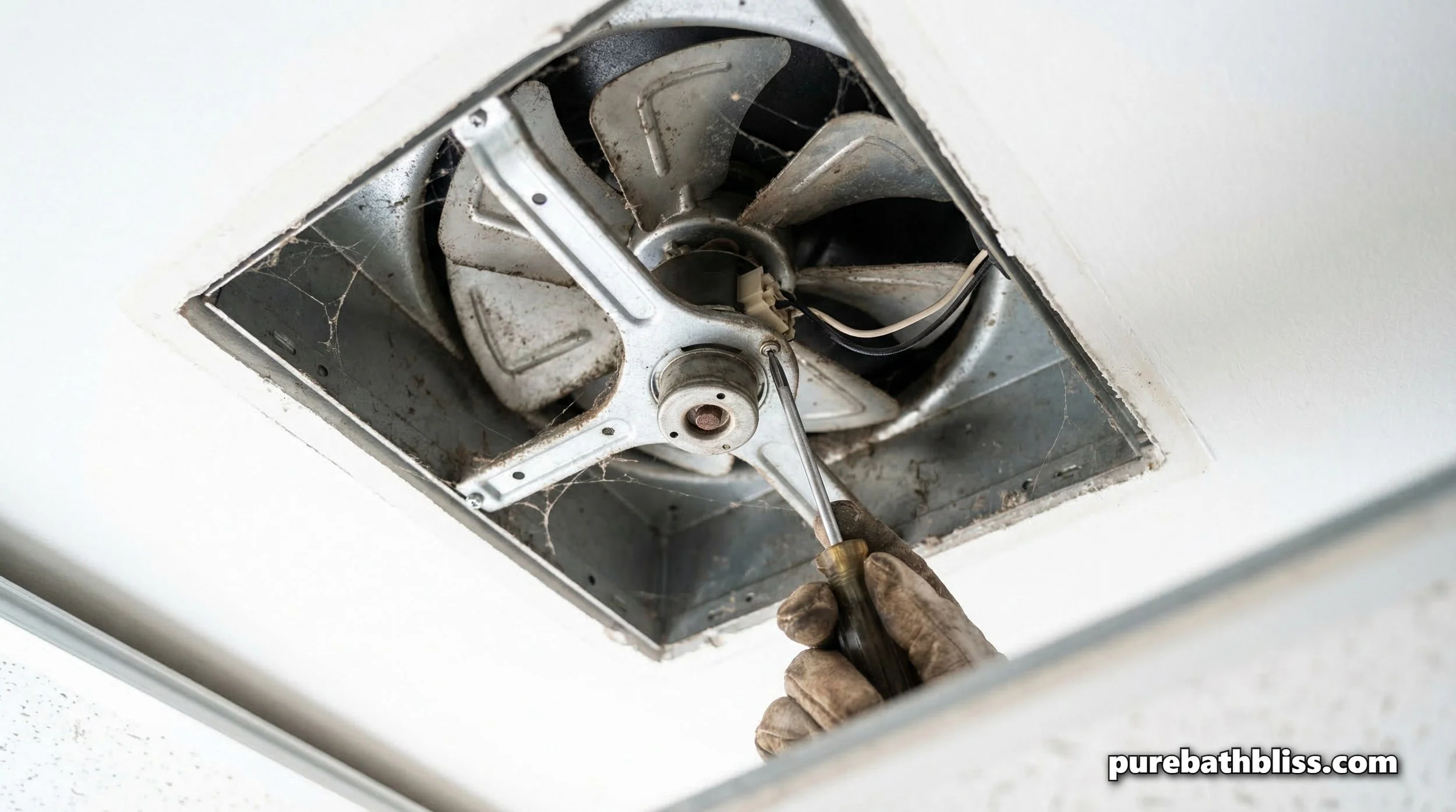
Why Is My Bathroom Fan Vibrating?
A bathroom fan should be a background hum, a steady, reassuring sound that tells you moisture is being pulled out of the room. But when that hum turns into a violent vibration or a loud rattling noise, it becomes impossible to relax. Beyond the noise, a vibrating fan is a sign that something is mechanically wrong. If left ignored, that vibration can shake the mounting screws loose, damage your ceiling drywall, or cause the motor to burn out prematurely.
As we discussed in How to Stop Moisture Before It Causes Damage, the exhaust fan is the most important piece of infrastructure in your bathroom. If you stop using it because the noise is too annoying, you are inviting mold and mildew to take over. Fixing a vibrating fan is usually a simple DIY task that requires no special plumbing or electrical skills. In this guide, we will look at the science of why fans vibrate and how you can silence yours for good.
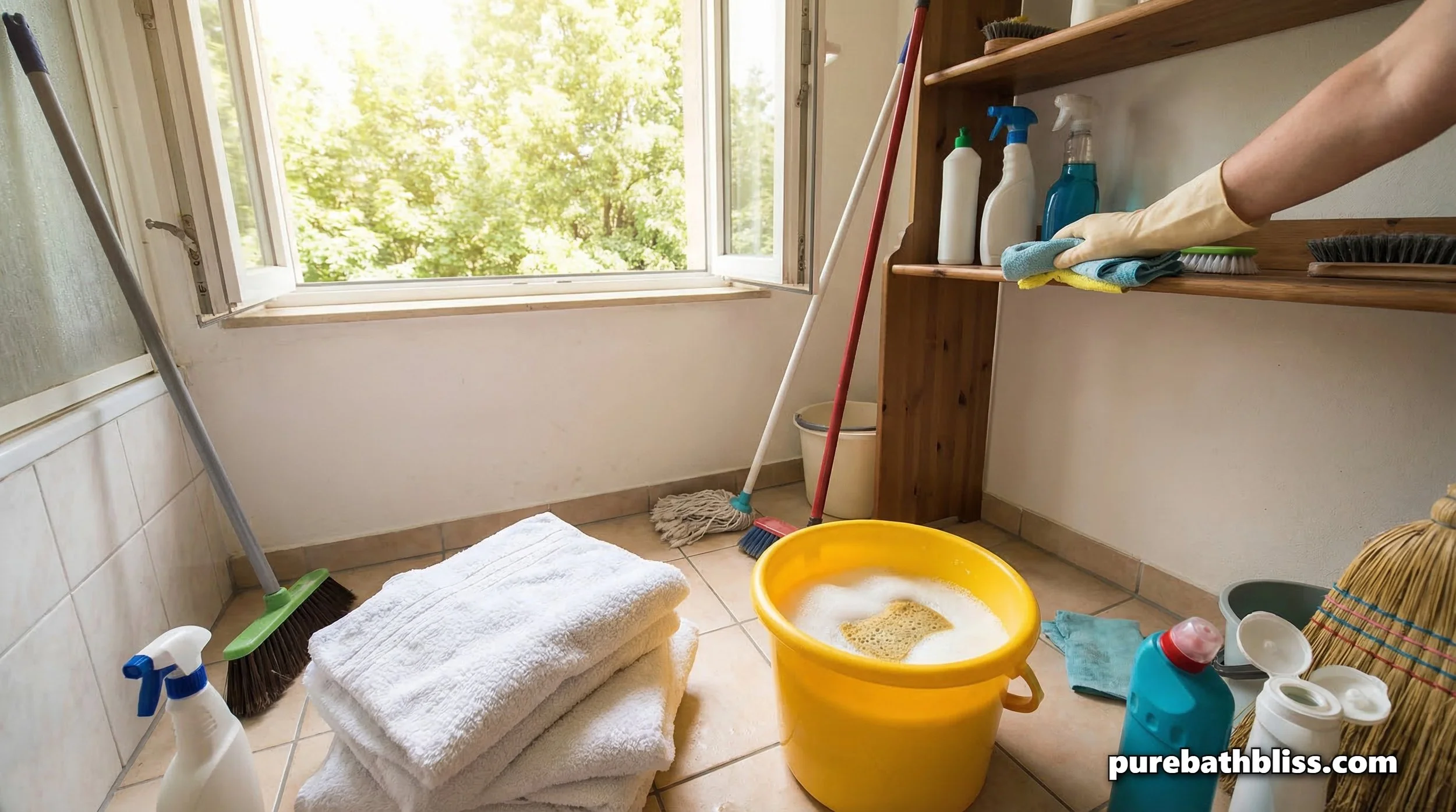
7 Tips for Spring Cleaning Your Bathroom
Spring cleaning is more than just a tradition; it is a vital part of home maintenance. In a bathroom, where moisture and daily use are constant, a deep clean once a year allows you to inspect the "bones" of the room. It is the time to look behind the vanity, check the seals, and clear out the dust that has settled in the hard-to-reach places.
If you have been following our recent guides, you know that keeping a bathroom in top shape is about more than just aesthetics. It is about protecting your infrastructure. When you let dust and grime build up, you are inviting moisture to settle and mold to grow. By taking a day to perform a thorough spring reset, you are extending the life of your tile, your fixtures, and your flooring.
Here are seven essential tips for spring cleaning your bathroom to ensure it remains a clean, functional sanctuary for the rest of the year.
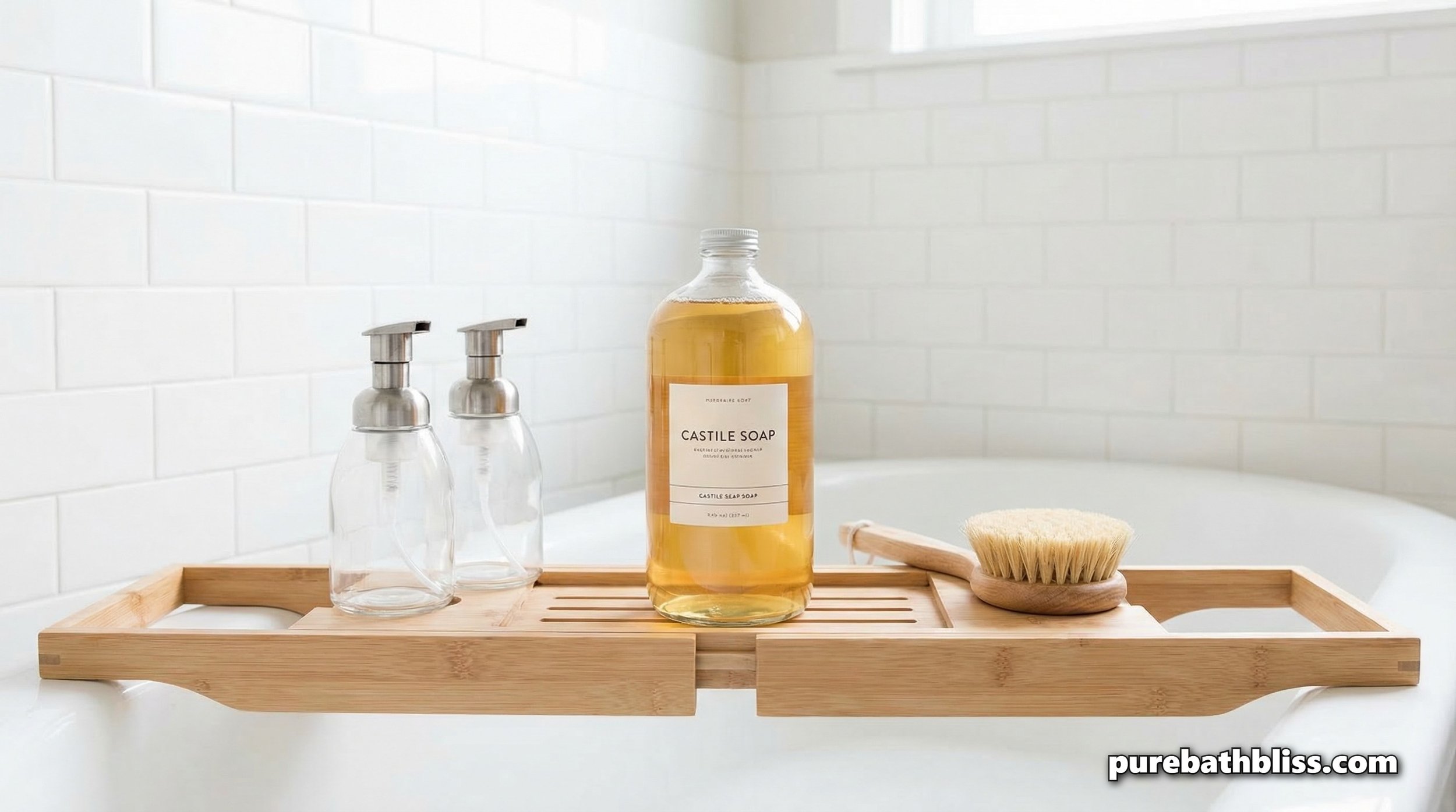
6 Brilliant Uses for Castile Soap in the Bathroom
In our quest to create a healthier, more sustainable home, we often overlook the simplest solutions. We tend to buy a different plastic bottle for every single task: one for the mirror, one for the floor, one for the toilet, and another for our skin. Not only does this clutter your cabinets, making it harder to stay organized as we discussed in How to Keep Your Guest Bathroom Simple, but it also fills your home with a cocktail of synthetic chemicals and artificial fragrances.
Enter Castile soap. Named after the Castile region of Spain where it was traditionally made with 100% olive oil, modern Castile soap is a concentrated, vegetable-based soap that is entirely biodegradable and non-toxic. It is the "Swiss Army Knife" of the cleaning world.
If you’ve already started simplifying your home, you might have seen our sister site's guide on 5 Brilliant Uses for Castile Soap in the Kitchen. But today, we are bringing this powerhouse into the bathroom. Because it is a true soap (made from fats and oils) rather than a synthetic detergent, it works differently than store-bought cleaners. It emulsifies dirt and oils, allowing them to be rinsed away without leaving behind the harsh residues that can damage your bathroom’s infrastructure.
Here are six brilliant ways to use Castile soap in your bathroom sanctuary.
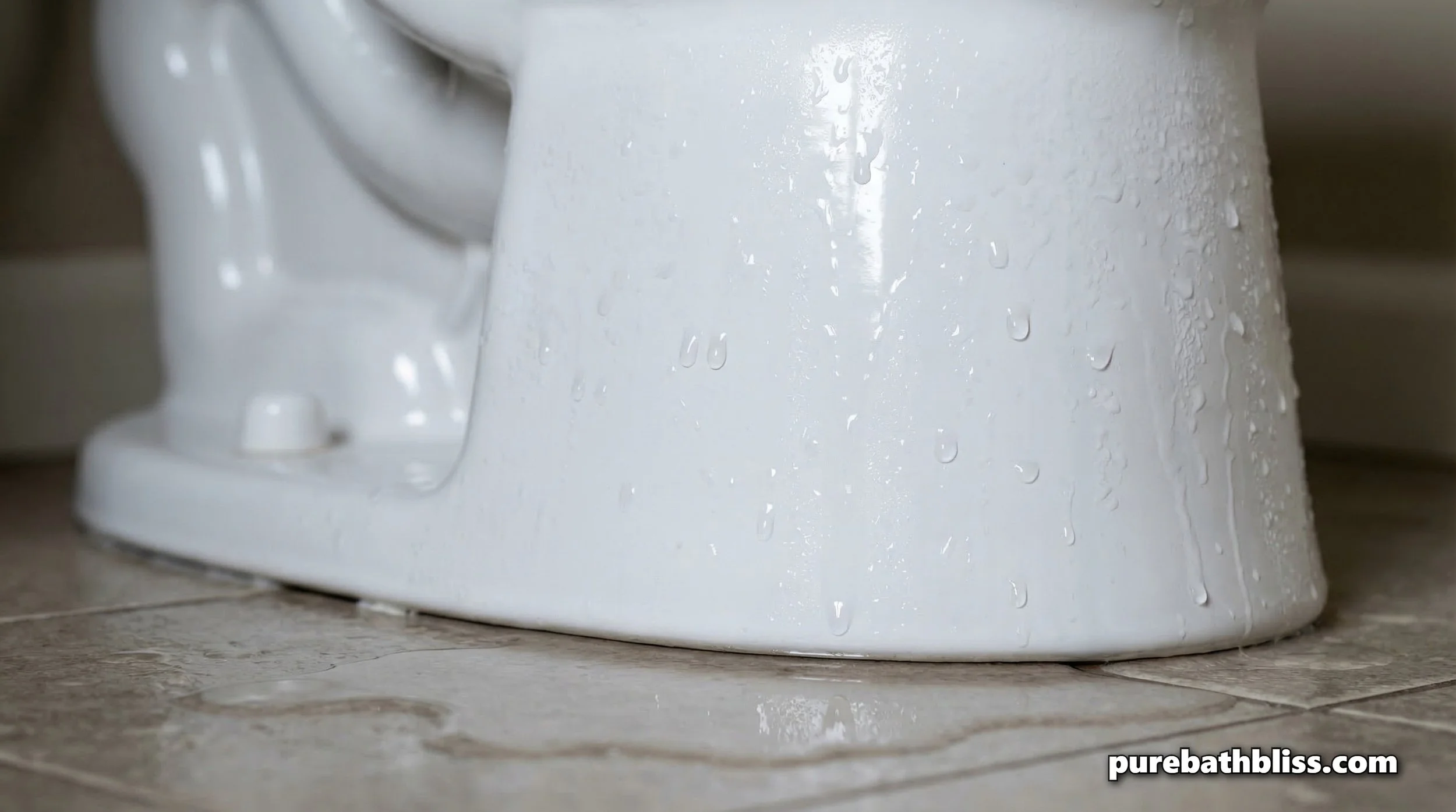
Why Is My Toilet Sweating?
If you have ever walked into your bathroom and noticed a puddle of water on the floor around the base of the toilet, your first thought is likely a leak. You check the wax ring, you check the supply line, but everything seems dry. Then you look up and see the entire outside of the porcelain tank covered in beads of water.
This is what we call a "sweating toilet," and while it looks like a small problem, it is actually a major threat to your home’s infrastructure. In a bathroom, moisture is the enemy of longevity. If your toilet sweats every day, that water is constantly dripping onto your floor, soaking into your grout, and potentially rotting the subfloor beneath your tile.
As we discussed in Why Your Bathroom Floor is Working Harder Than You Think, your floor is designed to handle some surface water, but it is not designed to be a permanent sponge for a dripping tank. In this guide, we are going to look at the science of why toilets sweat and the simple steps you can take to keep your bathroom dry and safe.
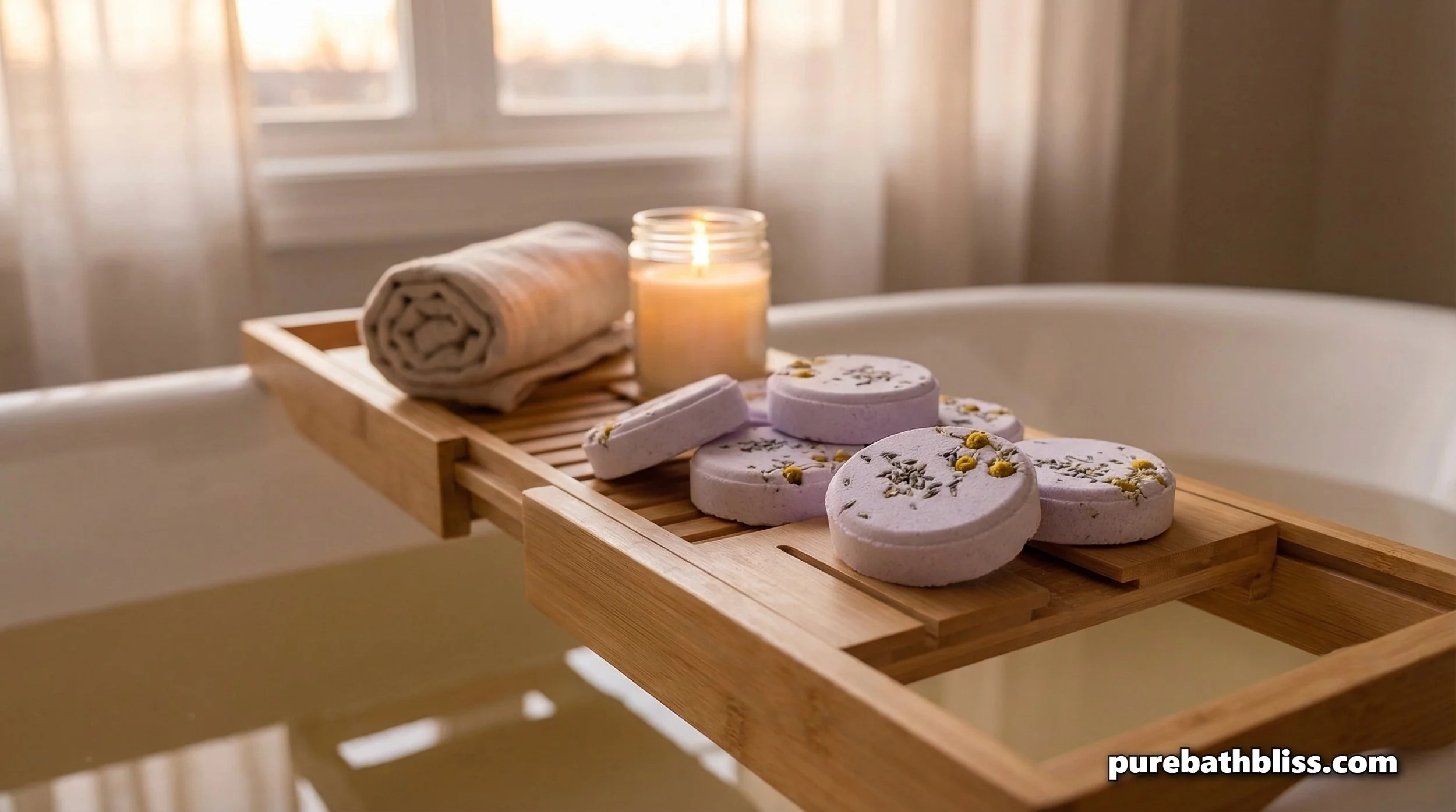
DIY Relaxing Shower Steamers: The Lavender Chamomile Sleep Blend
If you are looking for a way to wind down at night without a full bathtub ritual, shower steamers are the answer. Many people love the idea of a spa-like experience but simply do not have the time, or the desire, to soak in a tub for an hour. This is where the shower steamer comes in. It is essentially a bath bomb for your shower, designed to dissolve slowly and release essential oils into the steam.
This specific "Sleep Blend" uses lavender and chamomile to help calm the mind and soothe tension. It is the perfect project for anyone trying to build a more restorative nighttime routine. However, making these isn't just about mixing ingredients; it’s about understanding the science of how they work and how to store them so they don't lose their scent.
In this guide, we will walk through the exact recipe for Lavender Chamomile steamers and discuss how they fit into a healthy, non-toxic bathroom environment.
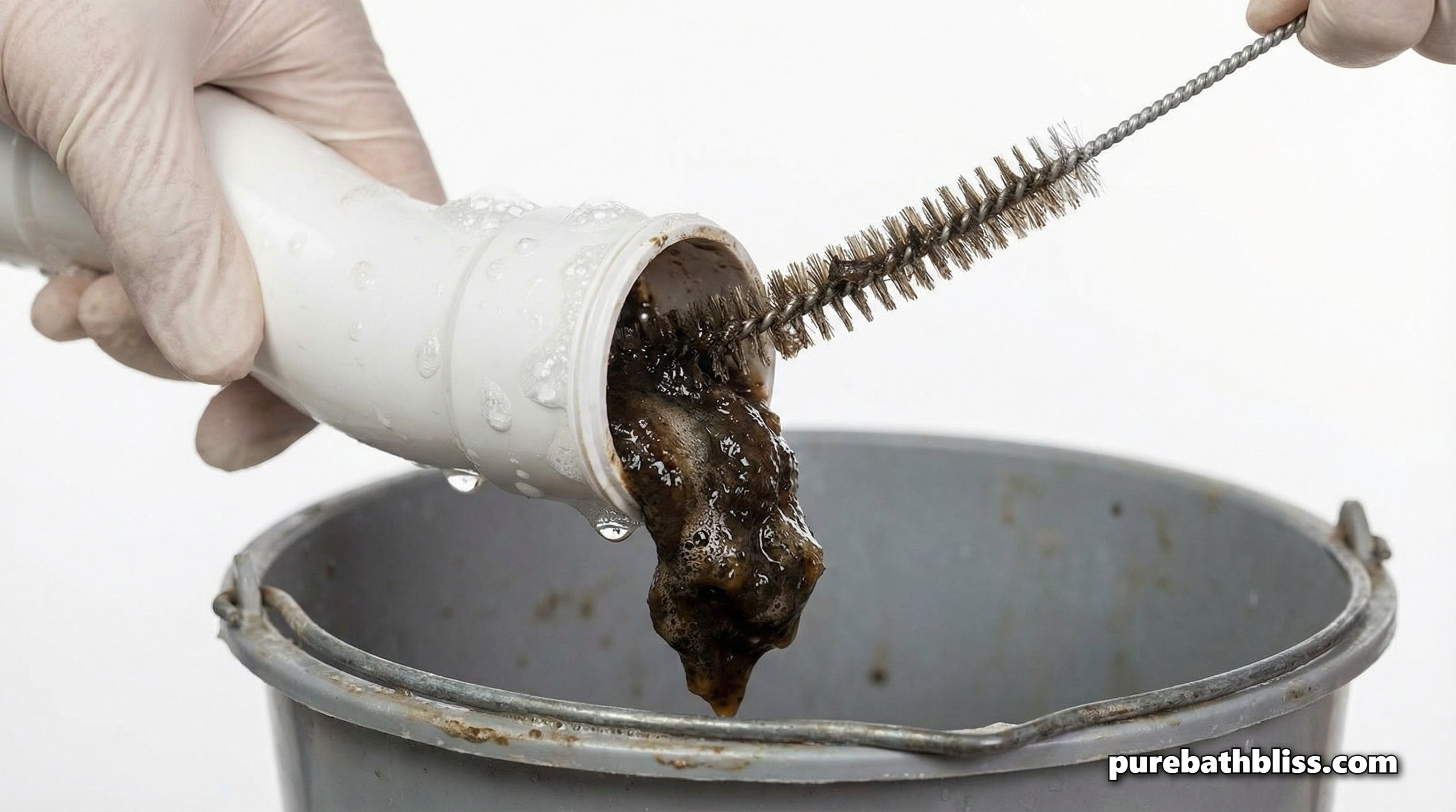
Why Your Bathroom Sink Smells Like Sulfur
It usually starts as a faint scent. You walk into the bathroom to brush your teeth, turn on the faucet, and suddenly you are hit with the smell of rotten eggs. It is unpleasant, embarrassing if you have guests over, and immediately makes the room feel "dirty," no matter how much you scrub the counters.
When a sink smells like sulfur, most people assume there is a major problem with their sewer line or that the water itself is contaminated. While those are possibilities, the answer is usually much simpler and involves the "infrastructure" hidden directly beneath your sink.
In this guide, we are going to look at the science of why your sink smells like sulfur, how to troubleshoot the source of the odor, and how to fix it using simple
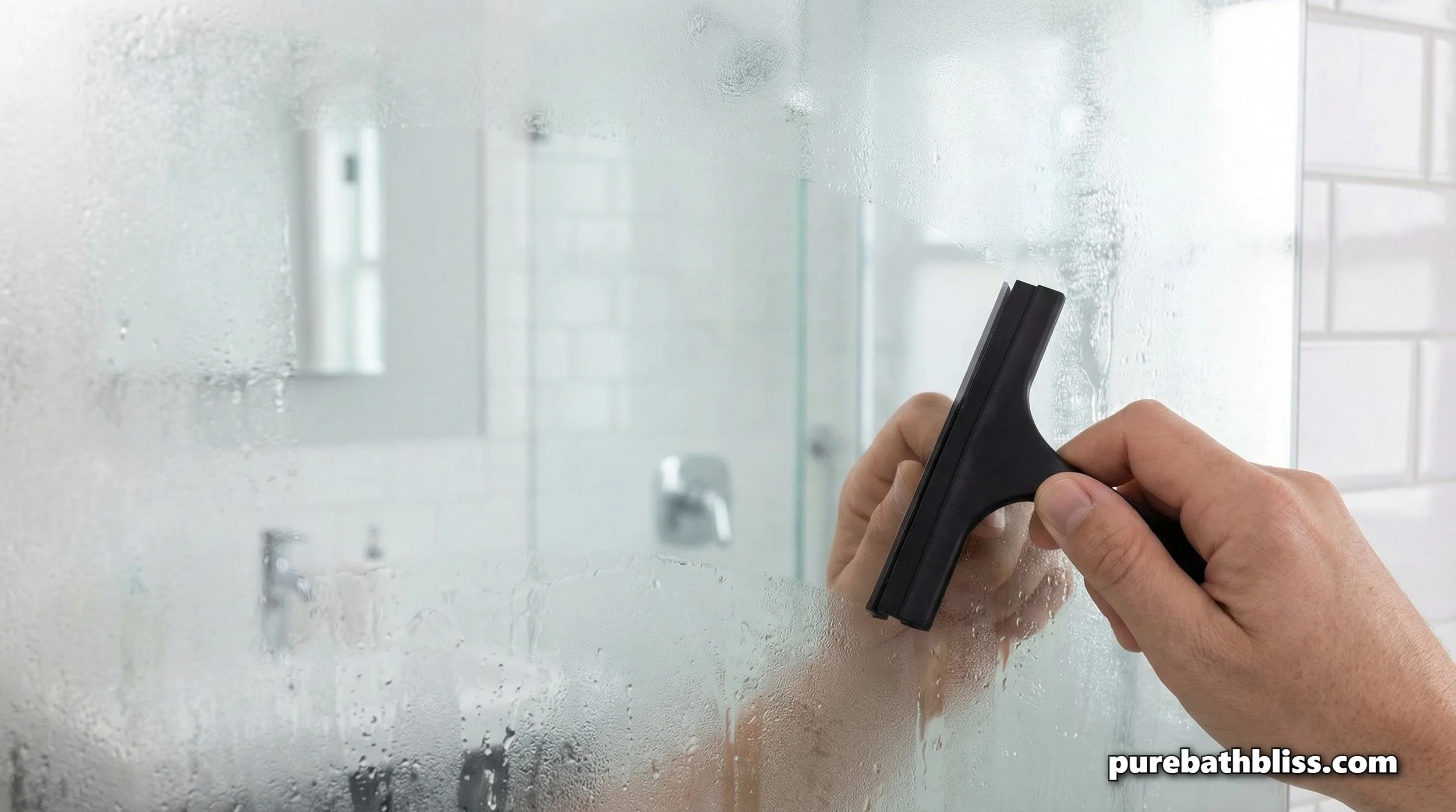
How to Stop Your Bathroom Mirror from Fogging Up
There is nothing more annoying than stepping out of a relaxing, hot shower only to find that you can't see yourself in the mirror. You reach out, wipe a big streak across the glass with your hand or a towel, but within seconds, the fog returns. Not only is it frustrating when you are trying to shave or apply makeup, but wiping a foggy mirror often leaves behind ugly streaks and water spots that you have to clean later.
As we discussed in Why Your Faucets Get Water Spots (And How to Clean Them), those white, cloudy marks are often caused by minerals in your water. When you wipe a foggy mirror, you are essentially spreading those minerals across the glass.
But mirror fog isn't just a nuisance, it’s a sign that your bathroom’s "infrastructure" is being overwhelmed by moisture. If your mirror is constantly fogged up, it means the air in your room is saturated, which can lead to much bigger problems like mold in your grout or peeling caulk. Let’s look at the science of why your mirror fogs up and how you can stop it for good using both quick hacks and permanent solutions.

The Best Room to Bathroom Ratio for Home Value
When you are looking at a house, the number of bedrooms usually gets the most attention. People want to know if there is enough space for their family, an office, or a guest room. But as anyone who has lived in a busy house knows, the number of bathrooms is often more important for daily life.
From a value perspective, bathrooms are one of the most important parts of a home. If a house has four bedrooms but only one bathroom, it is going to be very hard to sell. On the other hand, having too many bathrooms can sometimes feel awkward or like a waste of space.
Finding the right balance, the "ratio", is key to making sure your home is comfortable to live in and easy to sell when the time comes. Here is what you need to know about how many bathrooms a house should have and how that number affects your home's value in 2026.
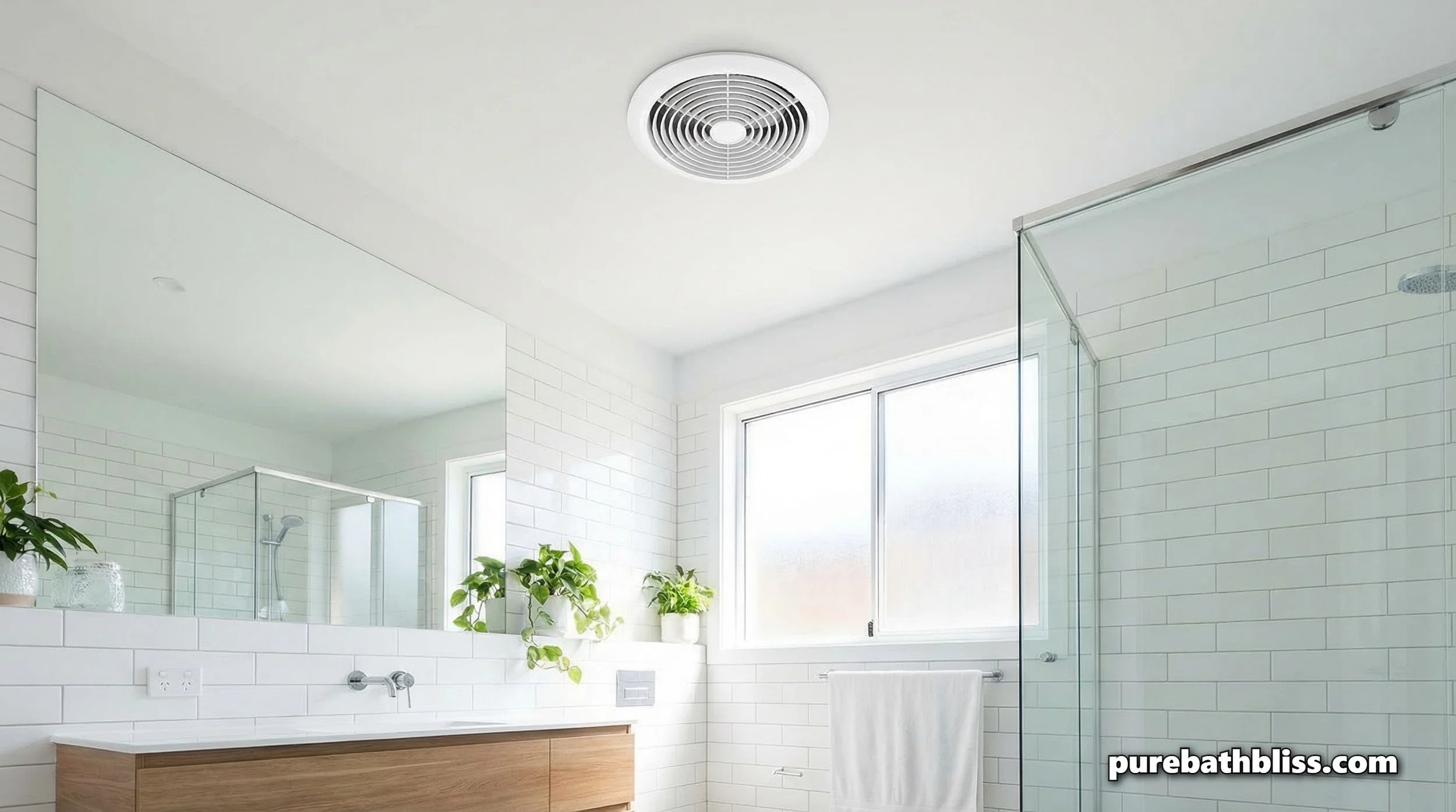
How to Stop Moisture Before It Causes Damage
We talk a lot about cleaning tile, fixing grout, and keeping your faucets shiny. But if you don't control the moisture in your bathroom, you are fighting a losing battle. Moisture is the single biggest "infrastructure" problem in any home. When moisture gets trapped in a room, it creates the perfect environment for mold to grow, paint to peel, and materials to rot.
Most people think that a steamy bathroom is just a normal part of life. They turn on the shower, the room fills with thick fog, and they assume that as long as they don't see standing water, everything is fine. This is a mistake. Humidity, the invisible moisture in the air, is just as damaging as a water leak.
If you want to keep your bathroom in great shape for years, you have to learn how to move that moisture out of the room. Here is the simple, science-backed way to manage the air in your bathroom and keep your home dry.
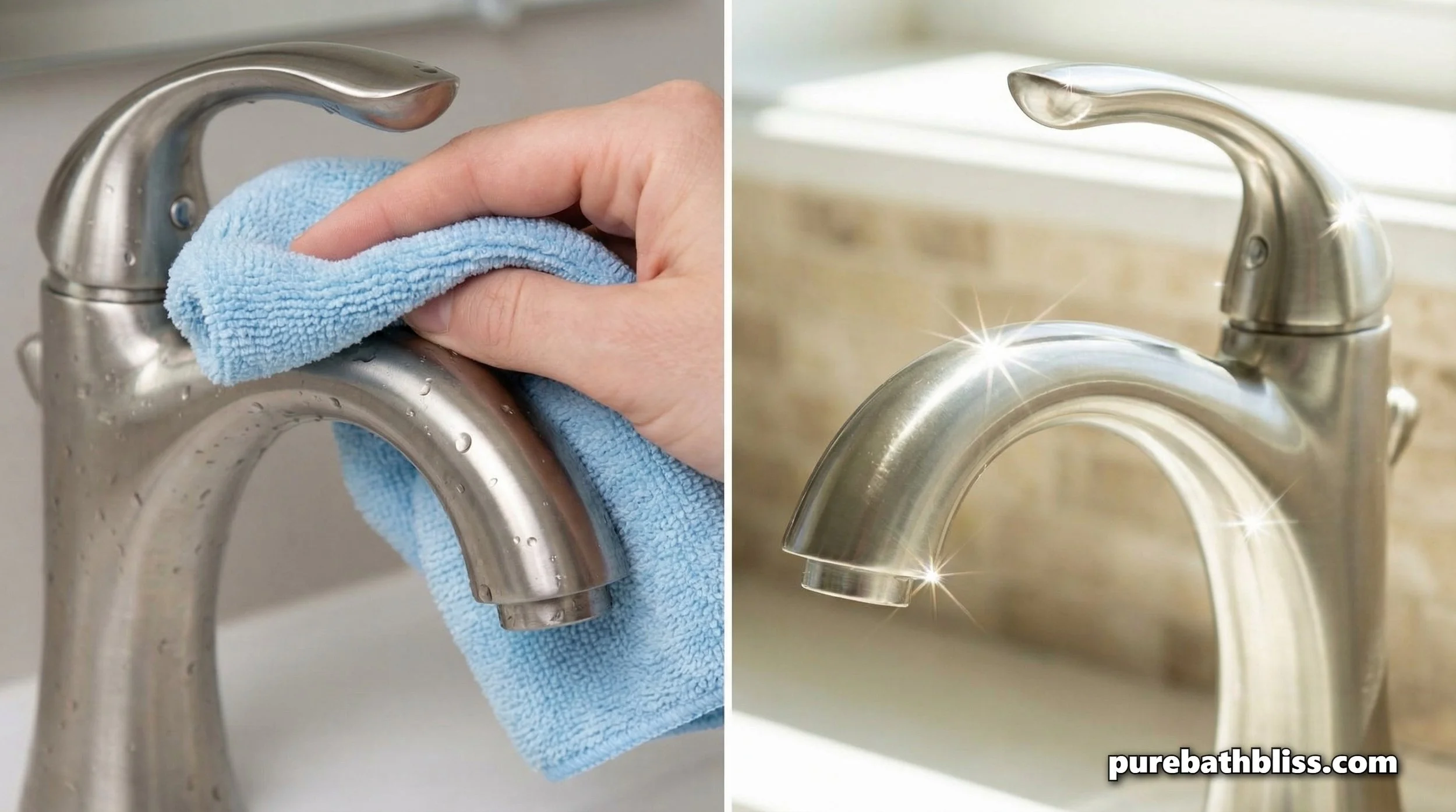
Why Your Faucets Get Water Spots (And How to Clean Them)
It is one of the most frustrating things in a bathroom. You spend an hour cleaning, scrubbing, and wiping down your sink. You polish the faucet until it shines like a mirror. You step back, admire your work, and feel great. Then, you turn on the water to wash your hands, a few drops splash onto the metal, and within minutes, those drops dry into white, cloudy spots.
It feels like you cannot win. You clean the faucet, but the very act of using the faucet makes it dirty again.
Most people think these spots are just dirt or soap. In reality, they are usually minerals. If you live in an area with "hard water," your tap water is full of calcium and magnesium. When the water evaporates, it leaves those minerals behind on your faucet. Over time, these spots build up, become harder to remove, and can even dull the finish of your fixtures.
The good news is that you don’t need to use harsh chemicals or expensive cleaners to fix this. In fact, using the wrong cleaners can be the reason your faucets look bad in the first place. Let's look at why this happens and the simplest way to keep your faucets looking new.
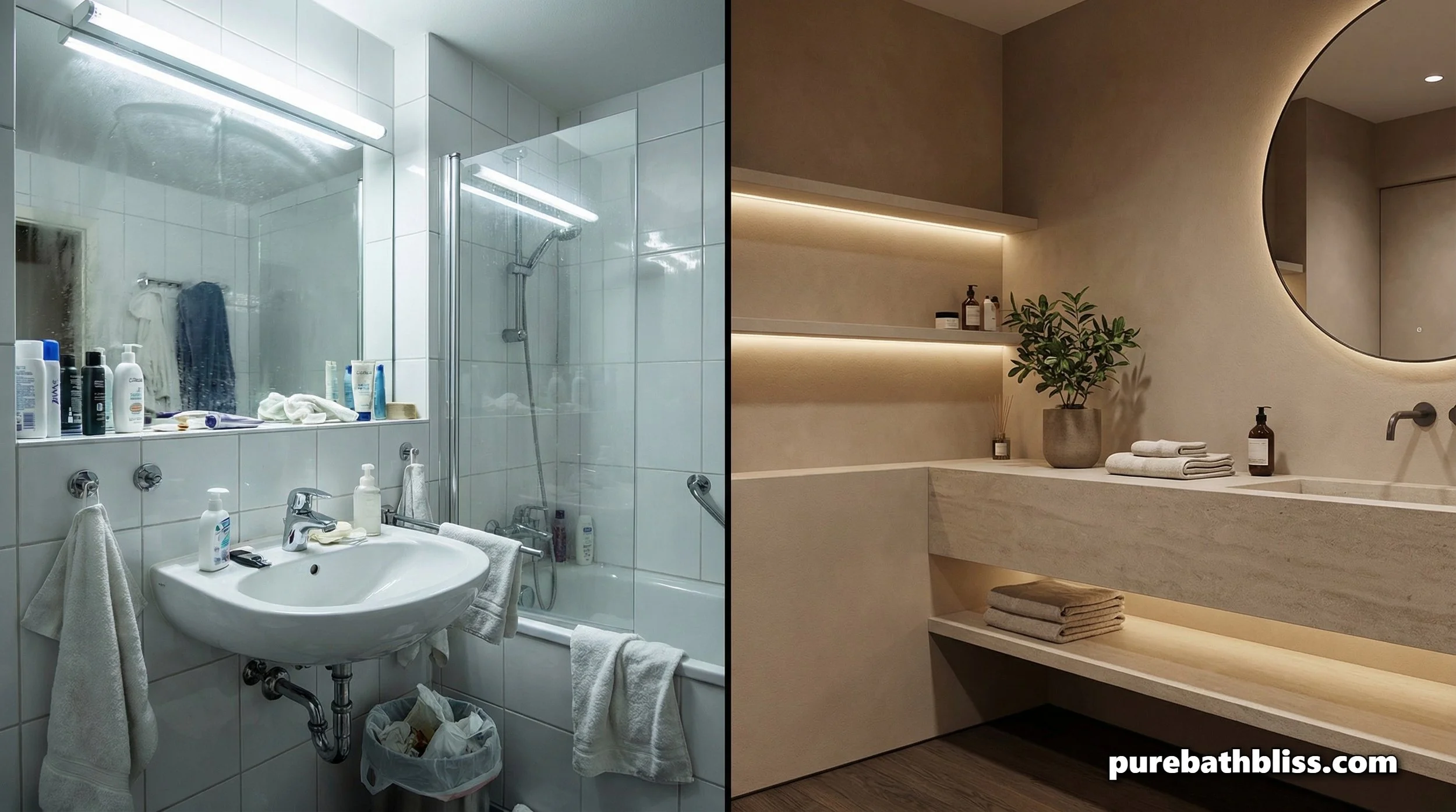
Top 5 Guest Bathroom Trends for 2026
When you think about the guest bathroom in your home, you probably want it to look nice, but you also need it to be easy to keep clean. In 2026, the trends for these spaces are moving away from complicated, high-maintenance looks and toward designs that are calm, simple, and very easy to manage. You don't need a total remodel to keep up with what is popular, but it is helpful to know what works well.
The best trends this year focus on making the room a pleasant place to be without adding extra work for your cleaning routine. Here are the five biggest trends we are seeing for guest bathrooms in 2026.
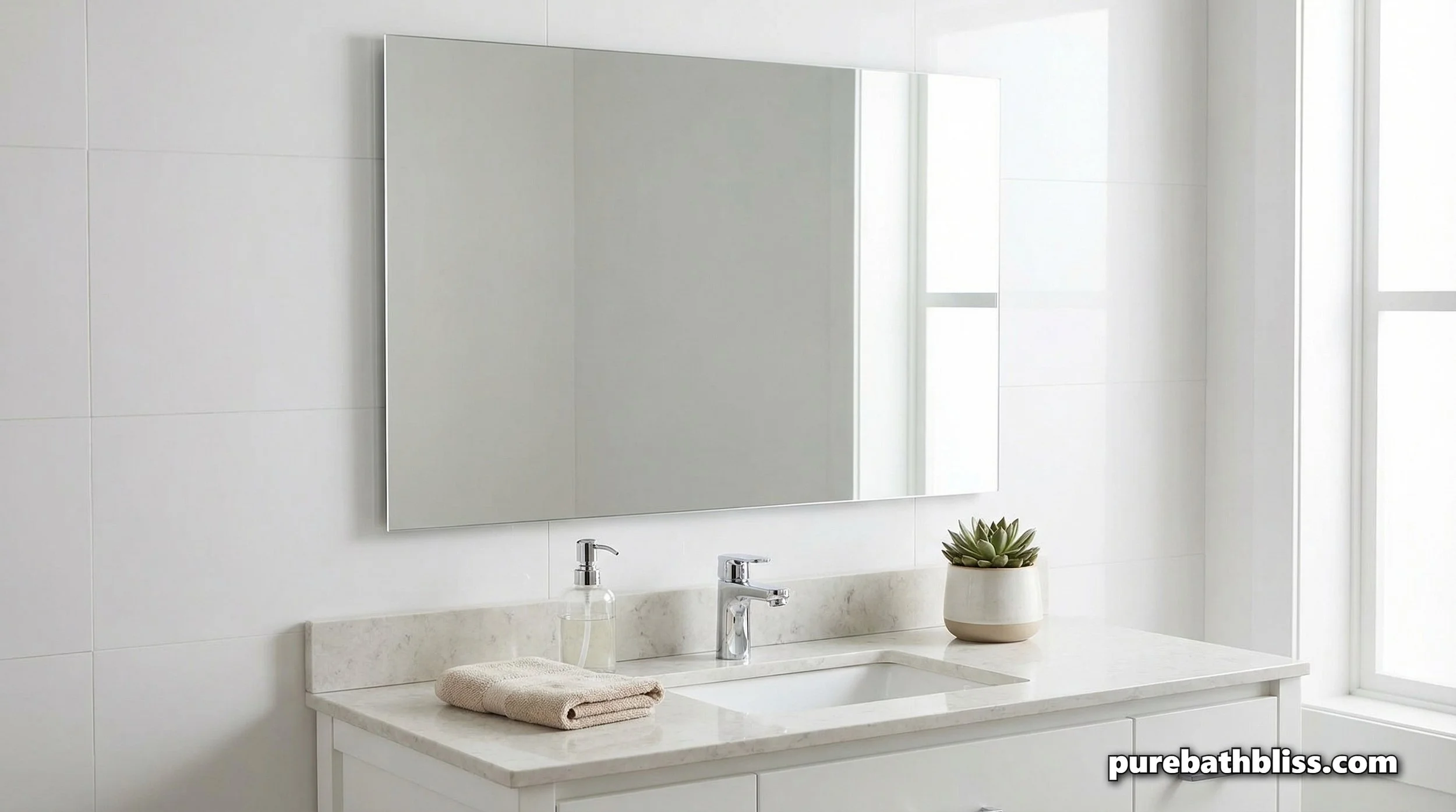
How to Keep Your Guest Bathroom Simple
It is very easy to overdo it when you are getting ready for houseguests. You might feel a lot of pressure to make your home look perfect, like a hotel. You want your friends and family to feel comfortable, so you might add extra toiletries, fancy decorative items, or specialized products to make the space feel luxurious.
In reality, most guests do not need a fancy setup. They just want a clean space that is easy to use. Adding too much stuff to your guest bathroom just creates more work for you to clean and more places for dust to hide. When you have too many things on your counters or shelves, keeping the room tidy becomes a chore.
Here is how to keep your guest bathroom simple, clean, and very easy to maintain.
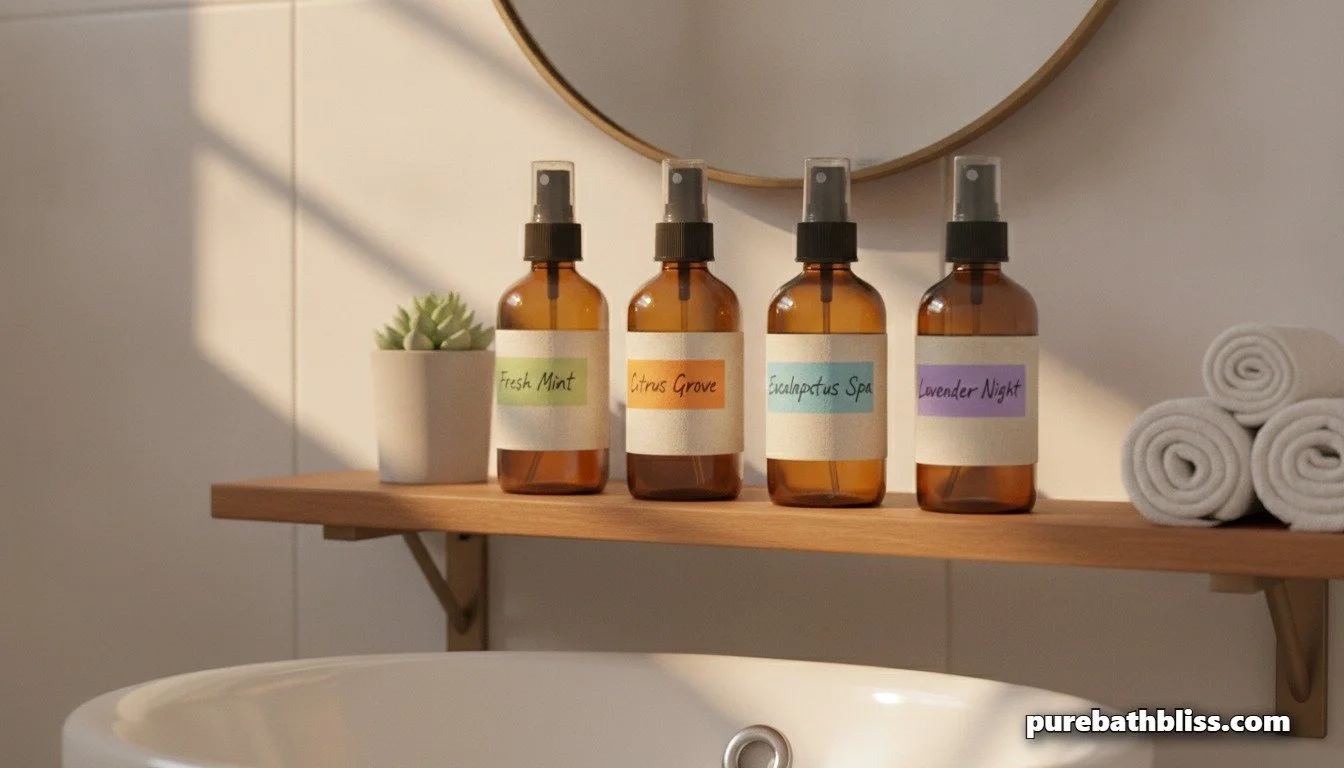
DIY Toilet Odor Neutralizer: The Before-You-Go Spray That Actually Works
A few years ago a family friend left a small amber bottle on the back of our toilet with no explanation. It had a handwritten label that just said "spray before." I assumed it was some kind of cleaner. Then someone in the family actually read the label properly and we tried it. Within a week every adult in our house was using it and asking where to get more.
The commercial version of this product, Poo-Pourri being the most famous, sells for around $10 to $15 for a two-ounce bottle. Once you understand how it works, you realise you can make the exact same thing at home for about forty cents a bottle using ingredients you can get anywhere. I have been making our own for two years now and we will never go back to the commercial version.
Here is the full recipe, the science behind why it works, four scent variations worth making, and the troubleshooting guide for the two most common mistakes people make.
Why Your Caulk is the Bathroom’s First Line of Defense
Most people treat caulk as a cosmetic detail, a white or clear line that "frames" the tub. As a Red Seal Carpenter, I see it differently. Caulk is a gasket. Its primary job is to accommodate the inevitable, microscopic movement between your wall, which expands and contracts with thermal changes, and your tub or shower base, which sits rigid.
When that gasket fails, water finds a way into your wall cavity. Once it's behind the wall, you aren't dealing with a cleaning problem anymore; you're dealing with rot, compromised structural integrity, and the kind of repair bills that keep me in business.
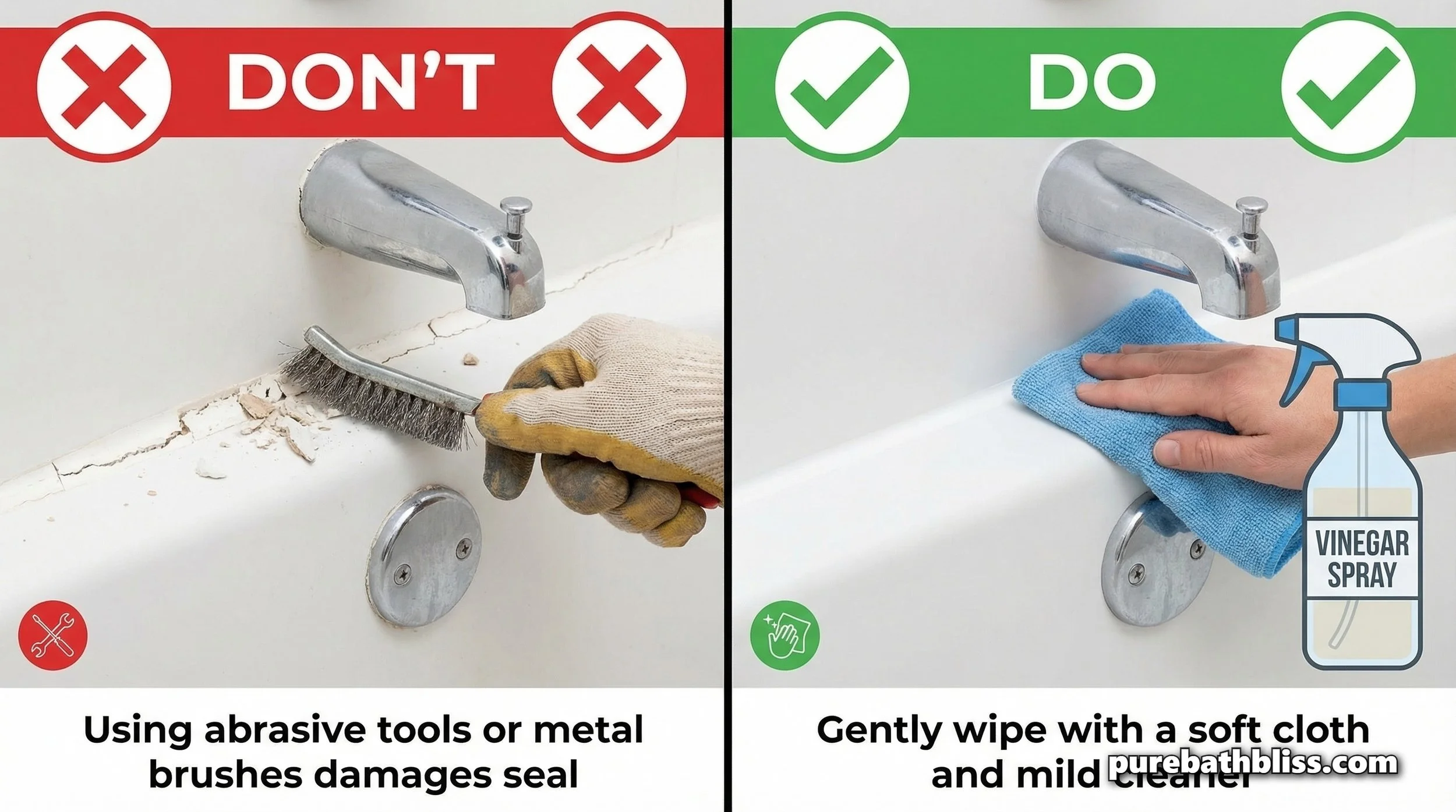
The trouble is that many homeowners treat caulk like it’s as durable as ceramic tile. They reach for the scouring pads, the stiff wire brushes, and the harsh acidic cleaners. In doing so, they inadvertently create micro-abrasions on the surface of the silicone or acrylic. Those tiny, jagged canyons are the perfect "landing strip" for mold spores to take root. You aren't just cleaning the caulk; you’re scoring it, which guarantees that mold will return faster and more aggressively next time.
Why Your Bathroom Floor is Working Harder Than You Think
As a Red Seal Carpenter, I’ve spent my fair share of time on my knees, not in prayer, but on the tile floor, fixing the "infrastructure" that nobody thinks about until it starts falling apart. Most homeowners look at tile and think of it as a solid, impermeable barrier. They see the hard ceramic or stone surface and assume the entire floor is an impenetrable fortress.
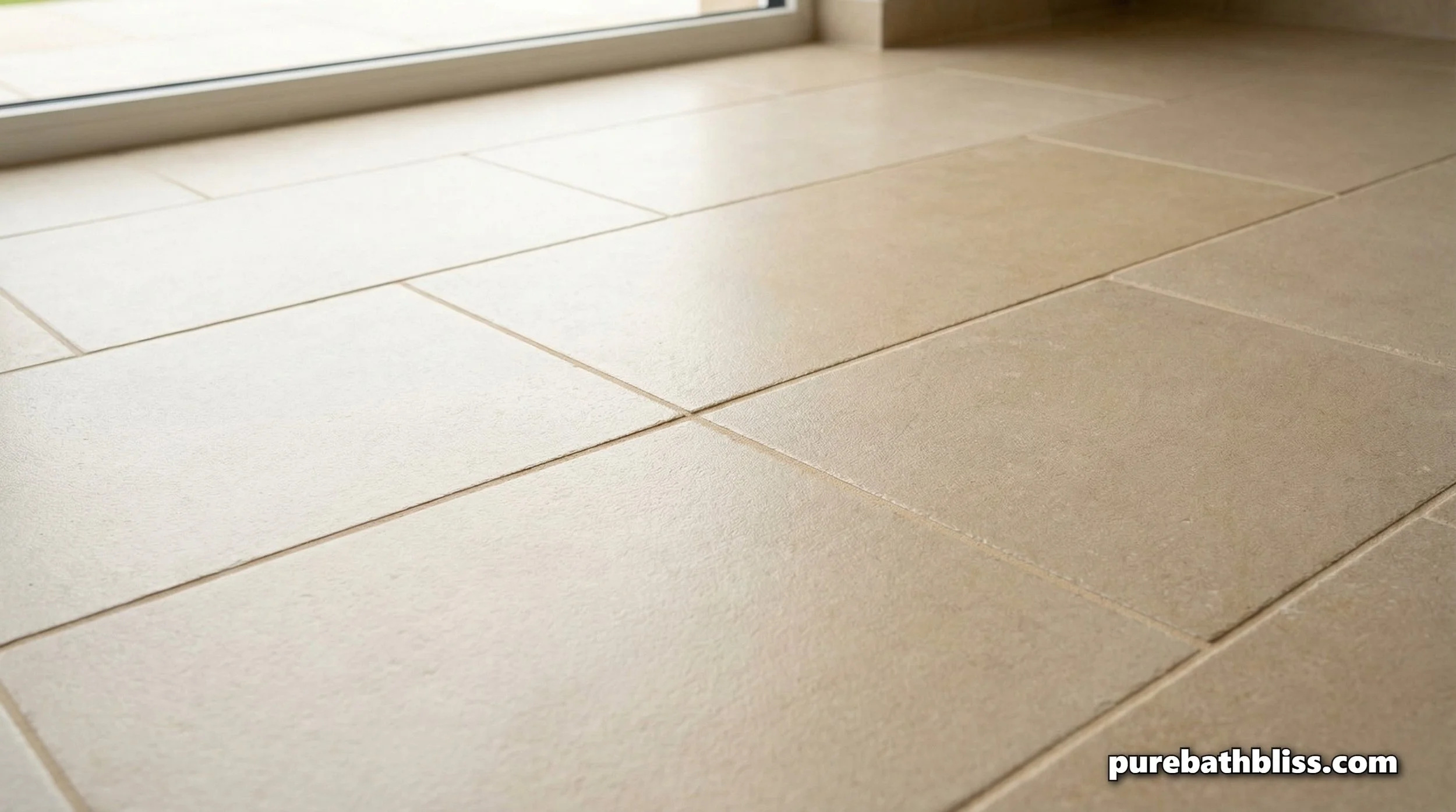
But if you’ve spent any time maintaining a busy household, you know the truth: that thin line of grout between the tiles is the "Achilles' heel" of your bathroom.
It’s not just about aesthetics. When we talk about grout, we’re talking about cementitious material science. That beautiful, crisp line of grout is essentially a microscopic sponge. If you don't understand the mechanics of how it absorbs moisture, you’re destined to spend your weekends with a scrub brush and a bottle of harsh chemicals. Let’s look at the infrastructure of your floor and how to protect it from the inside out.
The Builder’s Guide to Eco-Friendly Bath Toys
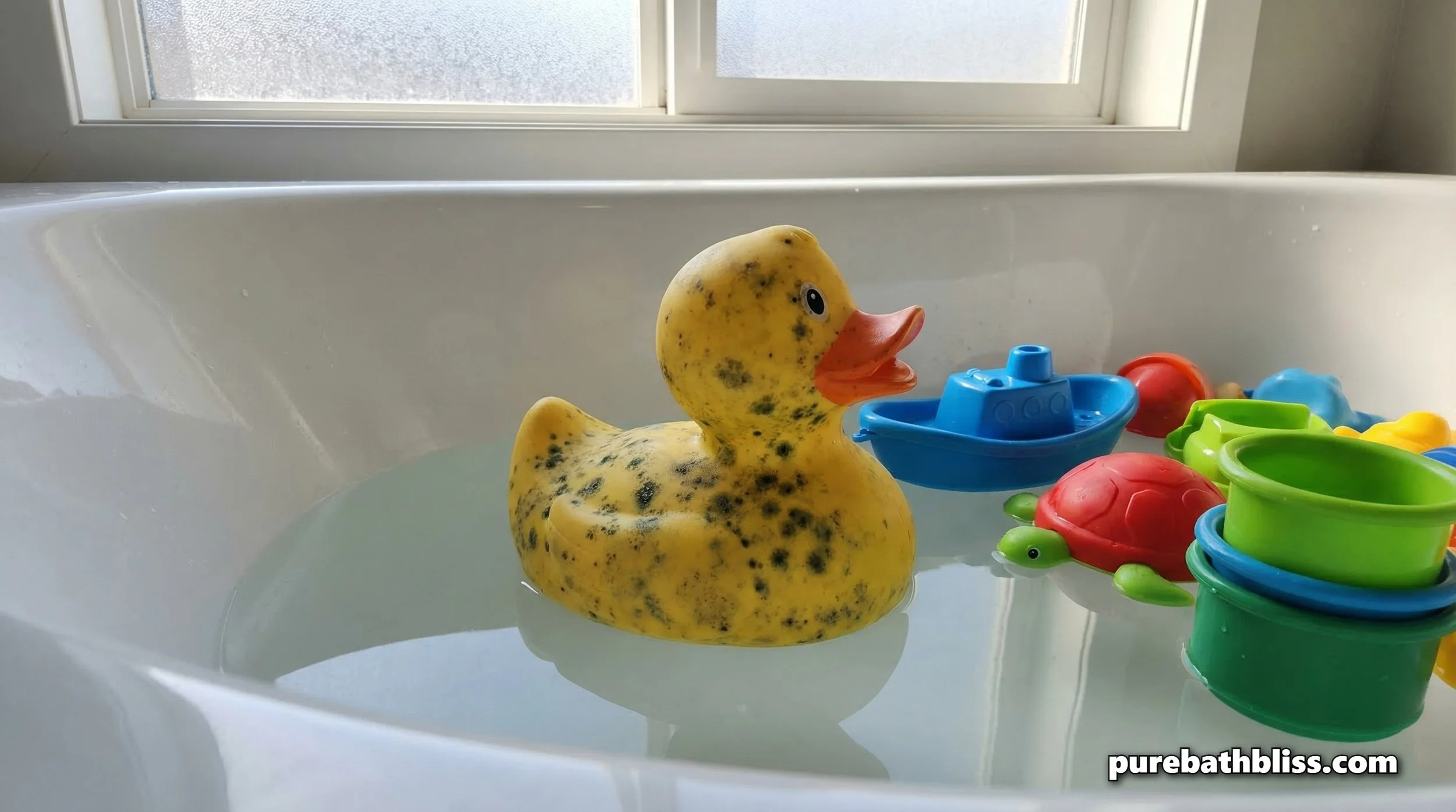
As a father of four, I’ve seen more "bath toy graveyards" than I’d like to admit. You know the ones—that collection of rubber ducks and plastic squirters that eventually start leaking black sludge into your pristine, clean tub.
It’s a common frustration for parents who are trying to maintain a Sustainable Sanctuary. The problem isn't just the toy; it’s the infrastructure of the toy. Most traditional bath toys are made of cheap PVC/vinyl and designed with a small hole in the bottom. That hole is a one-way ticket for moisture to enter, get trapped, and grow mold that you can never fully clean out.
If you’re ready to stop the cycle of buying, cleaning, and eventually tossing "mystery slime" toys, it’s time to upgrade to sustainable, mold-resistant options. Here are my top three eco-friendly picks for 2026 that you can find on Amazon.
Are Heated Bathroom Floors Worth It?
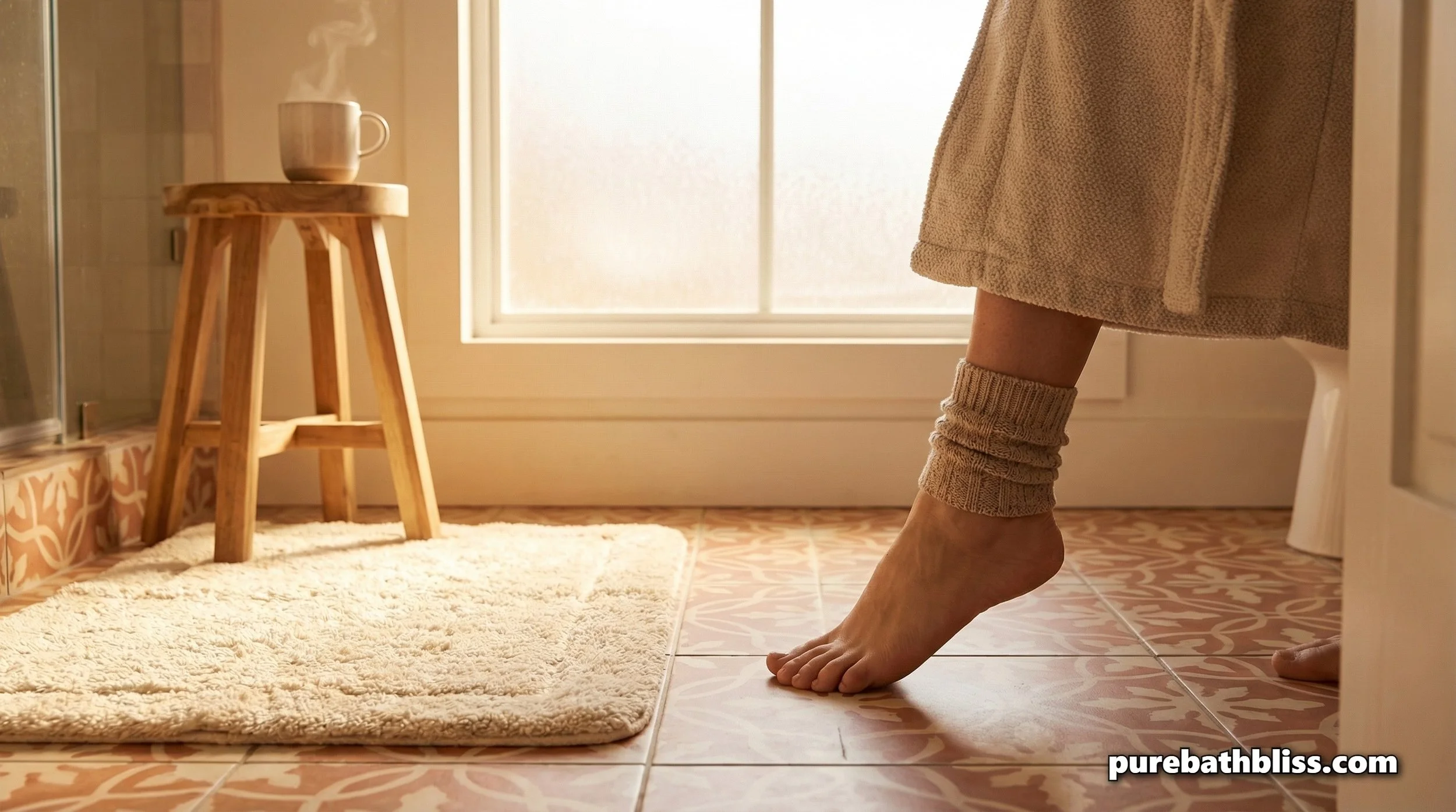
There is nothing quite like the shock of a cold tile floor on a winter morning. In the world of home renovation, few upgrades feel as indulgent as heated floors. It’s a feature that feels pure "luxury," but as a carpenter, I see it more as a piece of high-performance infrastructure.
Is it worth the investment? Does it actually add value, or is it just another system that can break?
As a father of four, I’m always balancing the desire for a high-end Sustainable Sanctuary with the reality of a family budget. Heated floors are a legitimate upgrade, but they aren't always the right choice for every bathroom. Let’s break down the builder’s perspective so you can decide if it belongs in your renovation plan.
Should You Keep a Hamper in the Bathroom?
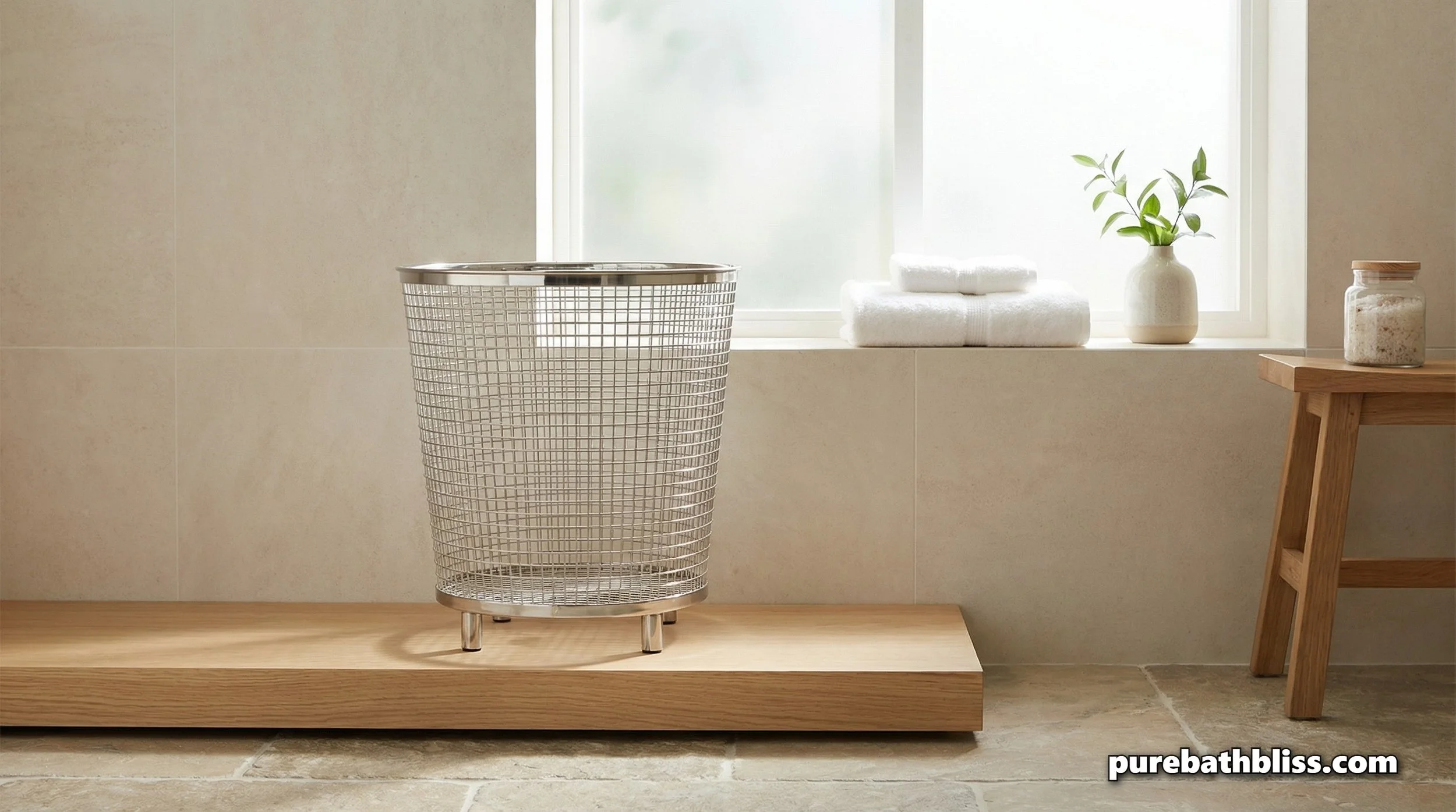
As a father of 4, I have fought the laundry battle for years. I understand the pull of the "bathroom hamper", it’s the ultimate convenience. You step out of the shower, shed your clothes, and clunk, right into the basket. It keeps the bedroom floor tidy and minimizes the steps between "done" and "in the wash."
But there is a reason professional organizers and home health experts are often divided on this. As a builder, I look at the bathroom as a high-performance system: a space designed to manage moisture, heat, and sanitation. When you introduce a hamper filled with soiled laundry into that system, you are introducing a variable that can compromise the health of your sanctuary.
Is it possible to keep a hamper in the bathroom? Yes. But it requires a strict set of "stewardship" rules. If you do it wrong, you are essentially building a localized mold farm. If you do it right, you can maintain the convenience without the hygiene penalty.
How to Store Your Shampoo
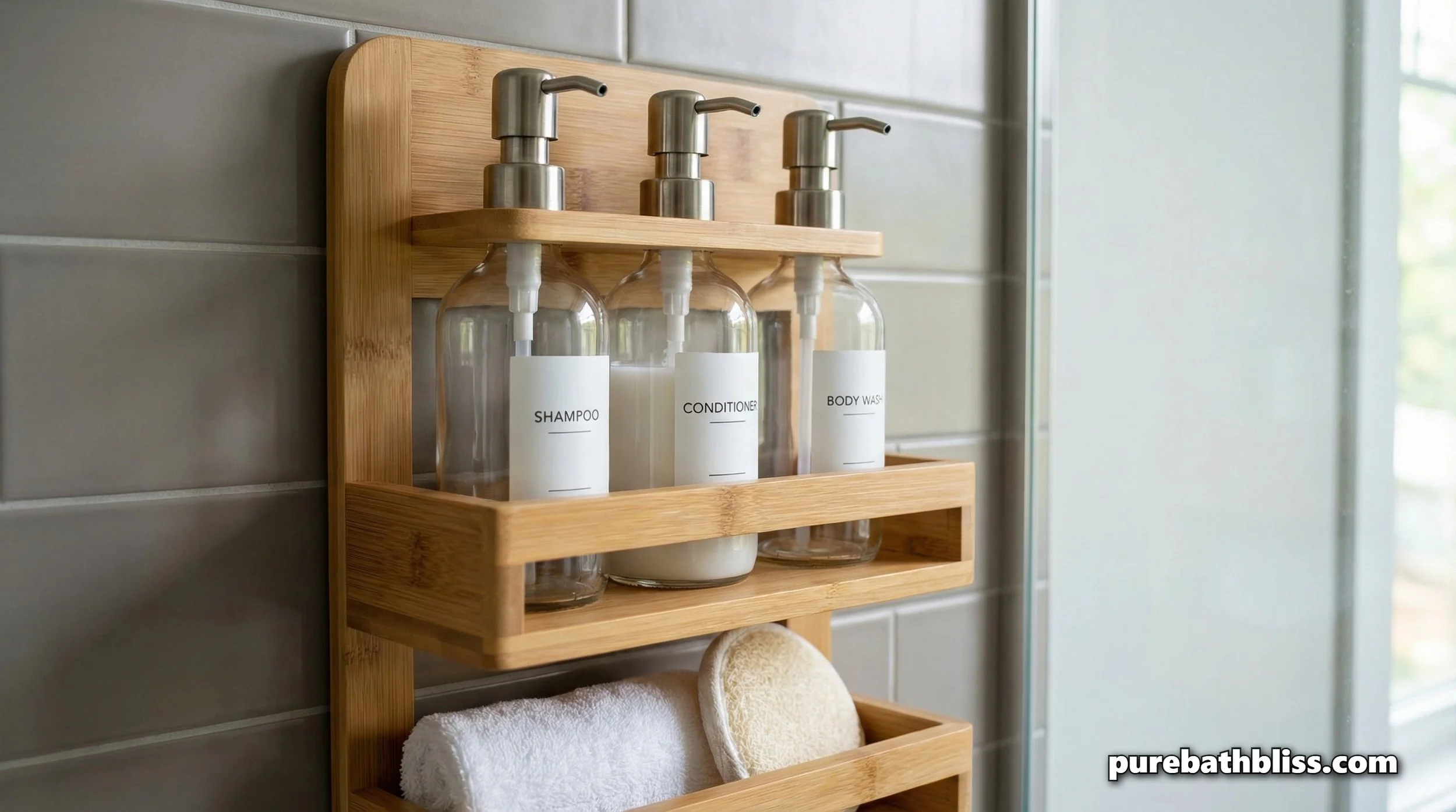
As a father of 4, I have seen the "floor graveyard" in more showers than I care to count. You know the one: fifteen half-empty bottles, caps crusted with dried product, all huddled in the corner of the tub, slowly accumulating a layer of orange, slimy "biofilm."
When people ask me, "Does shampoo storage really matter?" my answer is always a firm yes. It matters for three reasons: hygiene, product longevity, and safety. If you are just tossing your bottles on the shower floor, you aren't just creating visual noise; you are actively working against the health of your sanctuary. Proper storage is one of the easiest ways to keep your shower clean, extend the life of your products, and ensure your space remains a place of restoration rather than a chore zone.
The Bathroom Purge: A Strategy for a Clearer Sanctuary
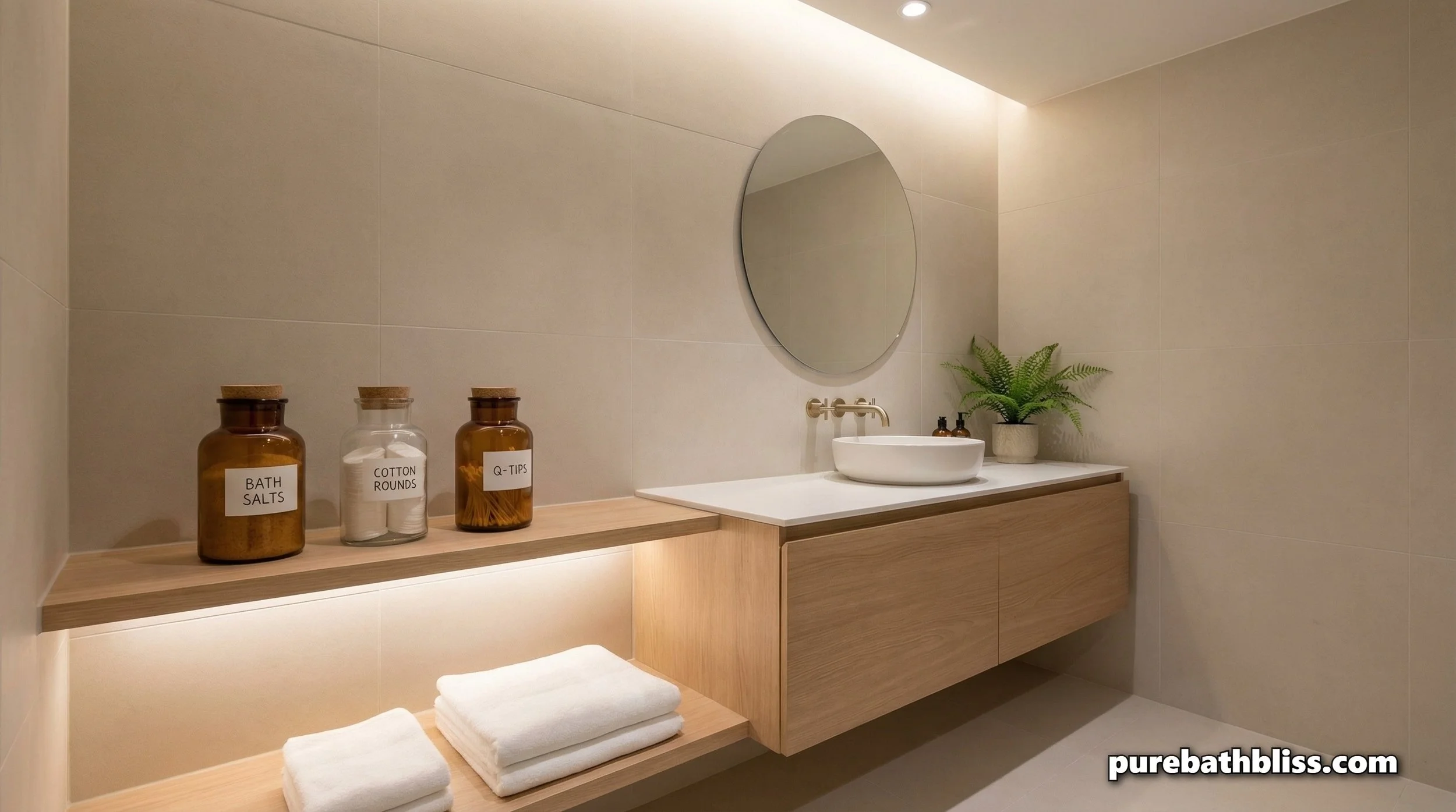
As a father of 4, I can tell you that the bathroom is the most high-traffic "infrastructure" room in the house. It is where we prepare for the day and where we decompress at night. However, it is also the easiest place for clutter to accumulate. Over the years, I’ve learned that a cluttered bathroom isn't just an aesthetic annoyance, it is a functional liability.
When you hold onto expired medicine, half-empty bottles of mystery potions, or frayed tools, you are creating hiding spots for moisture, dust, and potential bacterial growth. I’ve performed this purge countless times, and I can promise you this: your bathroom should not be a storage unit. It should be a curated wellness center. This isn't just about throwing things away; it is about reclaiming the physical space so your "Sanctuary" can actually serve its purpose.