Why Your Bathroom Sink Smells Like Sulfur
It usually starts as a faint scent. You walk into the bathroom to brush your teeth, turn on the faucet, and suddenly you are hit with the smell of rotten eggs. It is unpleasant, embarrassing if you have guests over, and immediately makes the room feel "dirty," no matter how much you scrub the counters.
When a sink smells like sulfur, most people assume there is a major problem with their sewer line or that the water itself is contaminated. While those are possibilities, the answer is usually much simpler and involves the "infrastructure" hidden directly beneath your sink.
In this guide, we are going to look at the science of why your sink smells like sulfur, how to troubleshoot the source of the odor, and how to fix it using simple
The Science of the "Rotten Egg" Smell
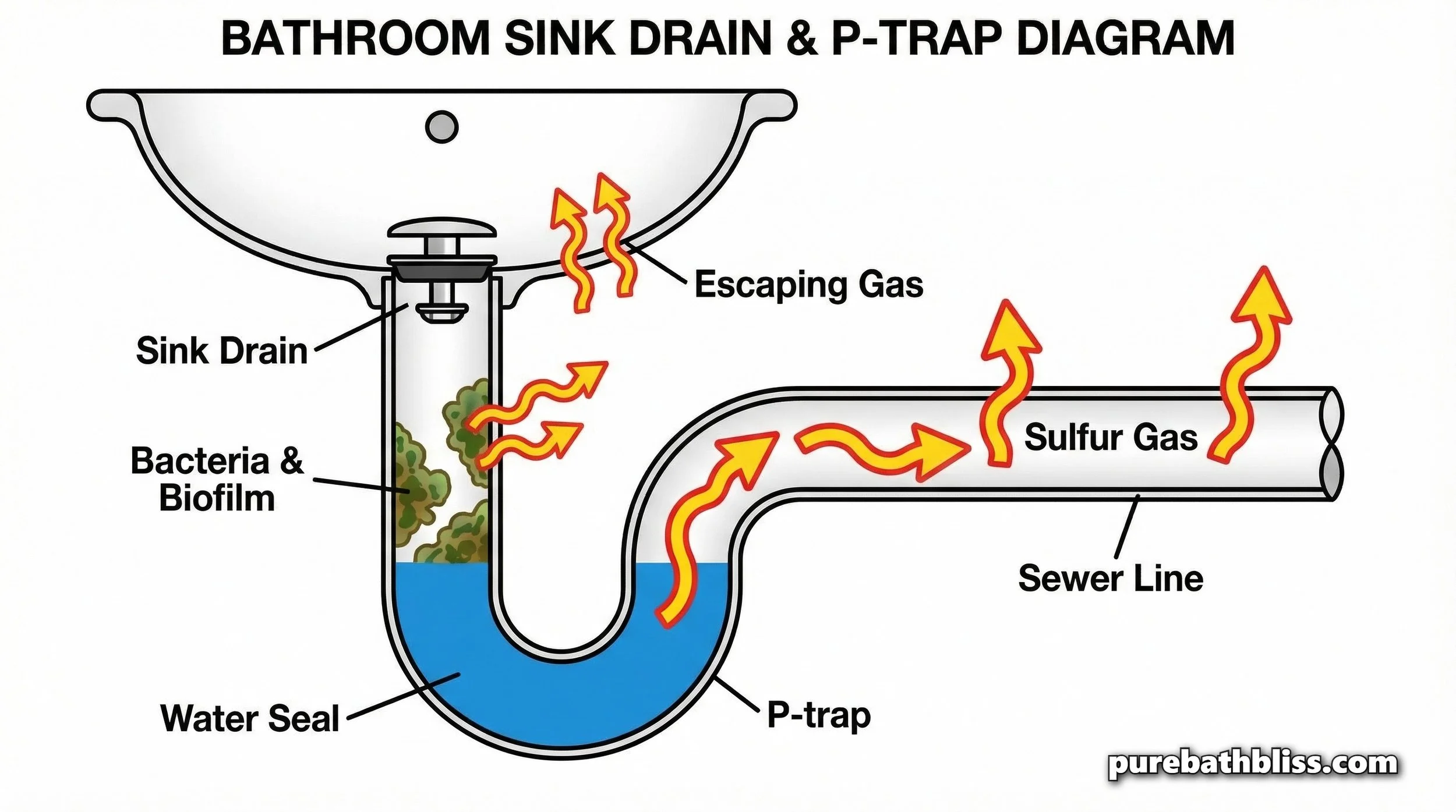
To fix the smell, you first have to understand what it actually is. That sulfur scent is caused by Hydrogen Sulfide gas. This gas is a byproduct of bacteria breaking down organic matter, things like hair, soap scum, toothpaste spit, and skin cells.
In a bathroom sink, these materials often get tangled together. Over time, they form a "biofilm" or a clog that sits inside your pipes. Because this area is dark and wet, bacteria thrive. As they "eat" the organic waste trapped in your drain, they release hydrogen sulfide gas. When you turn on the water, the air in the pipe is pushed upward, sending that gas directly into your nose.
This is a very different issue than moisture problems on your mirror, which we covered in How to Stop Your Bathroom Mirror from Fogging Up, but it is related to the overall health of your bathroom's air quality.
Step 1: Is it the Water or the Drain?
Before you start taking pipes apart, you need to determine where the smell is coming from. Sometimes the sulfur smell isn't in your pipes, it is actually in your water supply. This can happen if you have a private well or if your water heater has a failing "anode rod."
The Simple Test:
Fill a clean glass with water from the sink that smells.
Take the glass into a different room (like the kitchen or living room).
Smell the water in the glass.
If the water in the glass smells like sulfur: The problem is in your water supply or your water heater. You may need to flush your water heater or call a professional to test your well.
If the water in the glass smells fine: The problem is the drain itself. The gas is trapped in the pipes and is being pushed out when the water runs.
If the problem is the drain, it is often tied to how much "gunk" has built up over time. If you have recently done a The January Reset: A 5-Day Non-Toxic Bathroom Detox Guide, you might have cleared the surfaces, but the drains require a deeper look.
Step 2: The Role of the P-Trap
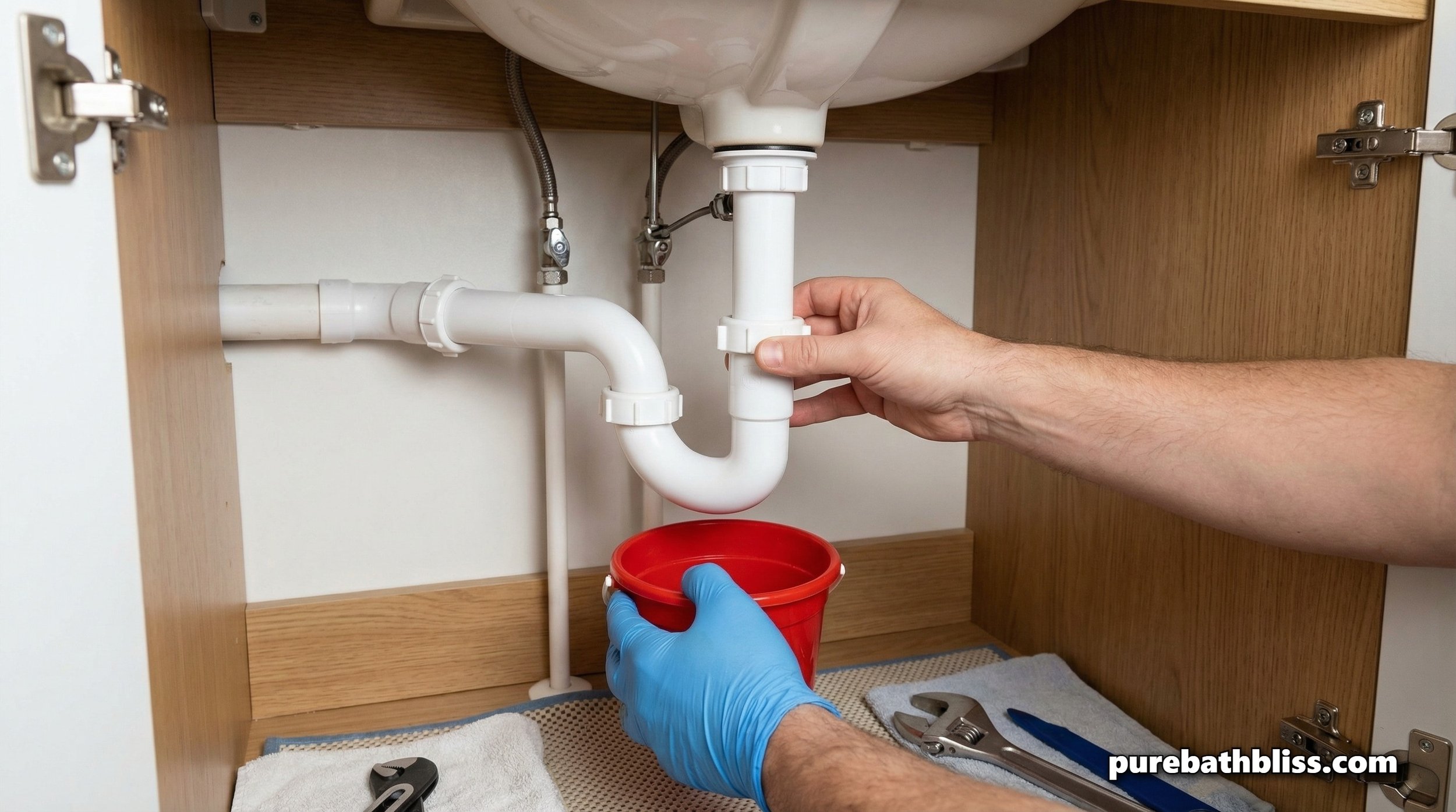
Every sink in your home has a U-shaped pipe underneath it called a P-trap. This pipe has one very important job: it is designed to hold a small amount of "trap water" at all times. This water acts as a physical seal (like a liquid gasket) that blocks sewer gases from coming up through the pipes and into your home.
If your sink smells like sulfur, one of two things is happening with your P-trap:
1. The Trap has Dried Out
If you have a guest bathroom that is rarely used, the water in the P-trap can evaporate. When the water is gone, there is no seal, and gases can flow freely into the room. This is a common issue we see when people are trying to figure out How to Keep Your Guest Bathroom Simple; they forget that the plumbing needs to stay "active" to work properly.
The Fix: Simply run the water for 60 seconds to refill the trap.
2. The Trap is Full of "Biofilm"
If the sink is used every day and still smells, the P-trap is likely coated in a thick layer of bacteria-laden slime. Hair and soap scum often get stuck in the bottom of the "U," creating a permanent home for the sulfur-producing bacteria.
How to Clean the Drain Safely
When people smell sulfur, their first instinct is often to pour a bottle of heavy, caustic drain cleaner down the sink. Do not do this. These chemicals are extremely harsh. They can damage your pipes, and if they don't clear the clog, you are left with a sink full of toxic acid that makes further repairs dangerous. Instead, use a non-toxic approach that breaks down the organic matter without hurting your plumbing.
The Vinegar and Baking Soda Method
This classic combination is perfect for breaking up the biofilm that causes sulfur smells. We have discussed the power of natural cleaners in Zesty Purity: 11 Ways to Clean Your Bathroom with a Lemon, and this follows the same safe-cleaning philosophy.
Boil Water: Pour a kettle of boiling water down the drain. This helps soften any soap scum or grease.
Baking Soda: Pour about a half-cup of baking soda down the drain.
Vinegar: Pour one cup of white vinegar down. It will fizz and bubble—this is the chemical reaction breaking up the slime.
Wait: Let it sit for 15 minutes.
Flush: Flush it with more hot water.
If you have an "overflow" hole in your sink (the small hole near the top of the bowl), don't forget to clean that too! Bacteria often hide in the overflow channel because it never gets flushed with water. You can use a small funnel to pour vinegar down the overflow hole to neutralize smells there.
When to Take the P-Trap Apart
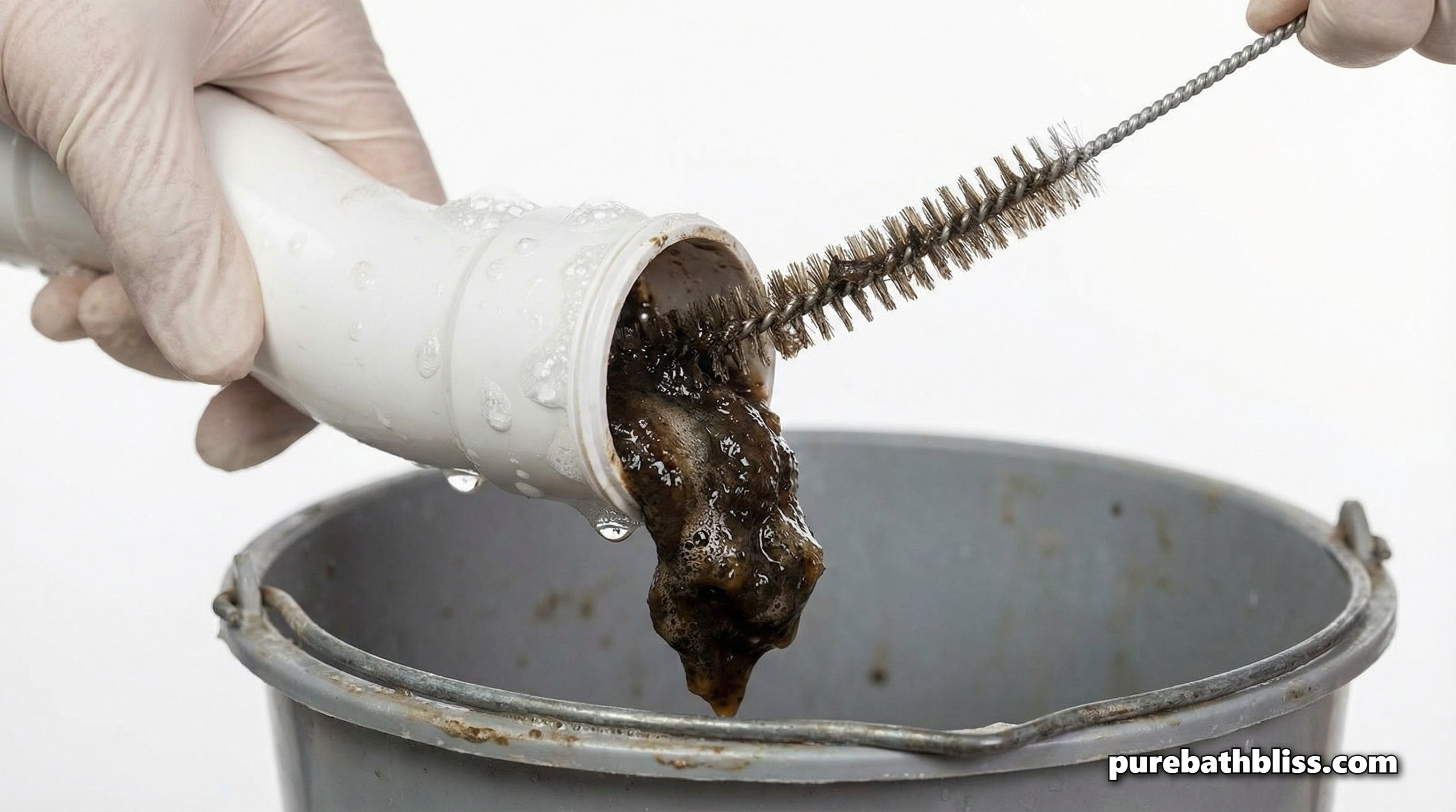
If the vinegar and baking soda method doesn't work, there is likely a physical clump of hair and gunk sitting in the trap that needs to be removed by hand.
Place a bucket under the P-trap.
Unscrew the two plastic nuts that hold the U-bend in place.
Remove the pipe and empty the water (and gunk) into the bucket.
Use an old brush to scrub the inside of the pipe.
Reinstall the pipe and make sure the nuts are tight.
While you are working under the sink, it is a great time to check for any leaks. Even a small drip can cause moisture damage to your vanity. We talk about the importance of keeping your seals tight in Why Your Caulk is the Bathroom’s First Line of Defense.
Long-Term Maintenance
To prevent the sulfur smell from coming back, you need to change the environment inside your pipes.
Watch the Hair: Hair is the primary "skeleton" that holds a clog together. Use a drain protector to catch hair before it enters the pipes.
Rinse Well: After you brush your teeth or wash your face, run the hot water for an extra 10 seconds to make sure all the soap and toothpaste have moved past the P-trap.
Weekly Flush: Once a week, pour a kettle of boiling water down the sink to melt away any new soap scum buildup.
If you are already in the habit of keeping your sink area clean and drying your fixtures to avoid mineral buildup, as we covered in Why Your Faucets Get Water Spots (And How to Clean Them), adding a weekly drain flush is an easy addition to your routine.
Dealing with Persistent Smells
If you have cleaned the P-trap and the smell is still there, the problem might be further down the line in the "vent stack." Your plumbing system has pipes that go up through your roof to let air in and gas out. If a bird's nest or debris blocks the vent on your roof, the pressure can change in your pipes, pulling the water out of your P-trap and letting gases in.
If your sink "gurgles" when you flush the toilet or run the tub, this is a sign of a venting issue. At that point, it is best to call a professional.
However, for 90% of homes, the sulfur smell is just a sign that your drain needs a bit of attention and a deep clean. Keeping your bathroom "infrastructure" healthy doesn't just make it look better; it ensures the air you breathe is fresh and safe.
Summary: Stop the Sulfur
Test the water: Make sure the smell is in the drain, not the water supply.
Check the usage: If the sink hasn't been used, run the water to refill the P-trap.
Use Vinegar and Baking Soda: Use non-toxic bubbles to break down the biofilm.
Clean the Overflow: Don't forget the hidden bacteria in the sink's overflow hole.
Manual Clean: If all else fails, take the P-trap apart and scrub it out.
By following these steps, you can get rid of that rotten egg smell and keep your bathroom smelling clean and fresh.