Why Is My Bathroom Fan Vibrating?
Transparency Note: We independently select these products based on research and user reviews. If you buy something through our links, we may earn a commission.
A bathroom fan should be a background hum, a steady, reassuring sound that tells you moisture is being pulled out of the room. But when that hum turns into a violent vibration or a loud rattling noise, it becomes impossible to relax. Beyond the noise, a vibrating fan is a sign that something is mechanically wrong. If left ignored, that vibration can shake the mounting screws loose, damage your ceiling drywall, or cause the motor to burn out prematurely.
As we discussed in How to Stop Moisture Before It Causes Damage, the exhaust fan is the most important piece of infrastructure in your bathroom. If you stop using it because the noise is too annoying, you are inviting mold and mildew to take over. Fixing a vibrating fan is usually a simple DIY task that requires no special plumbing or electrical skills. In this guide, we will look at the science of why fans vibrate and how you can silence yours for good.
The Physics of an Unbalanced Load
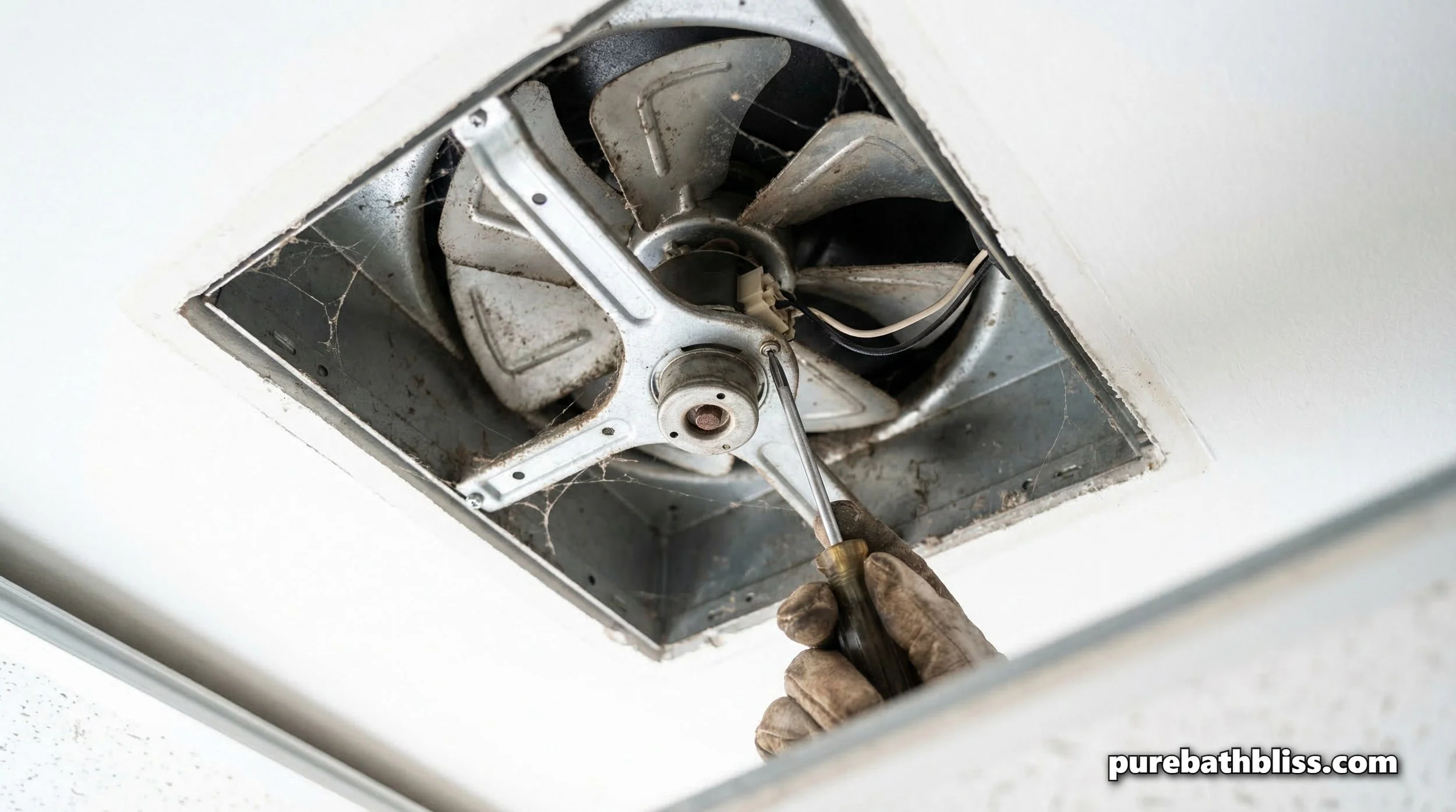
To understand a vibration, you have to understand how the fan works. Inside that ceiling box is a small electric motor connected to a "squirrel cage" blower or a plastic blade. For the fan to run quietly, the weight of that blade must be perfectly distributed around the center of the motor’s shaft.
Vibration happens when the fan becomes "unbalanced." Think of it like a washing machine during a spin cycle where all the heavy towels have shifted to one side. The machine shakes because the weight is uneven. In a bathroom fan, even a tiny amount of extra weight on one side of a blade can create a centrifugal force that shakes the entire housing against your ceiling joists.
Because these fans move air, they are constantly exposed to dust, steam, and even oils from hairspray. Over time, these materials build up, and they rarely build up evenly. This is the primary cause of the "rattle" that drives homeowners crazy.
Gather Your Supplies: The Fan Fixer’s Toolkit
Before you climb the ladder, make sure you have the right tools. Dealing with fans often involves fine dust and small hardware, so being prepared will save you several trips to the garage.
Precision Screwdriver Set – Essential for the tiny screws holding the motor in place.
Non-Conductive Compressed Air Duster – To blow dust out of the motor housing without touching sensitive parts.
High-Temp Silicone Lubricant – To quiet the motor bearings if they are starting to squeak.
Replacement Universal Bathroom Fan Motor – If the vibration has already bent the motor shaft beyond repair.
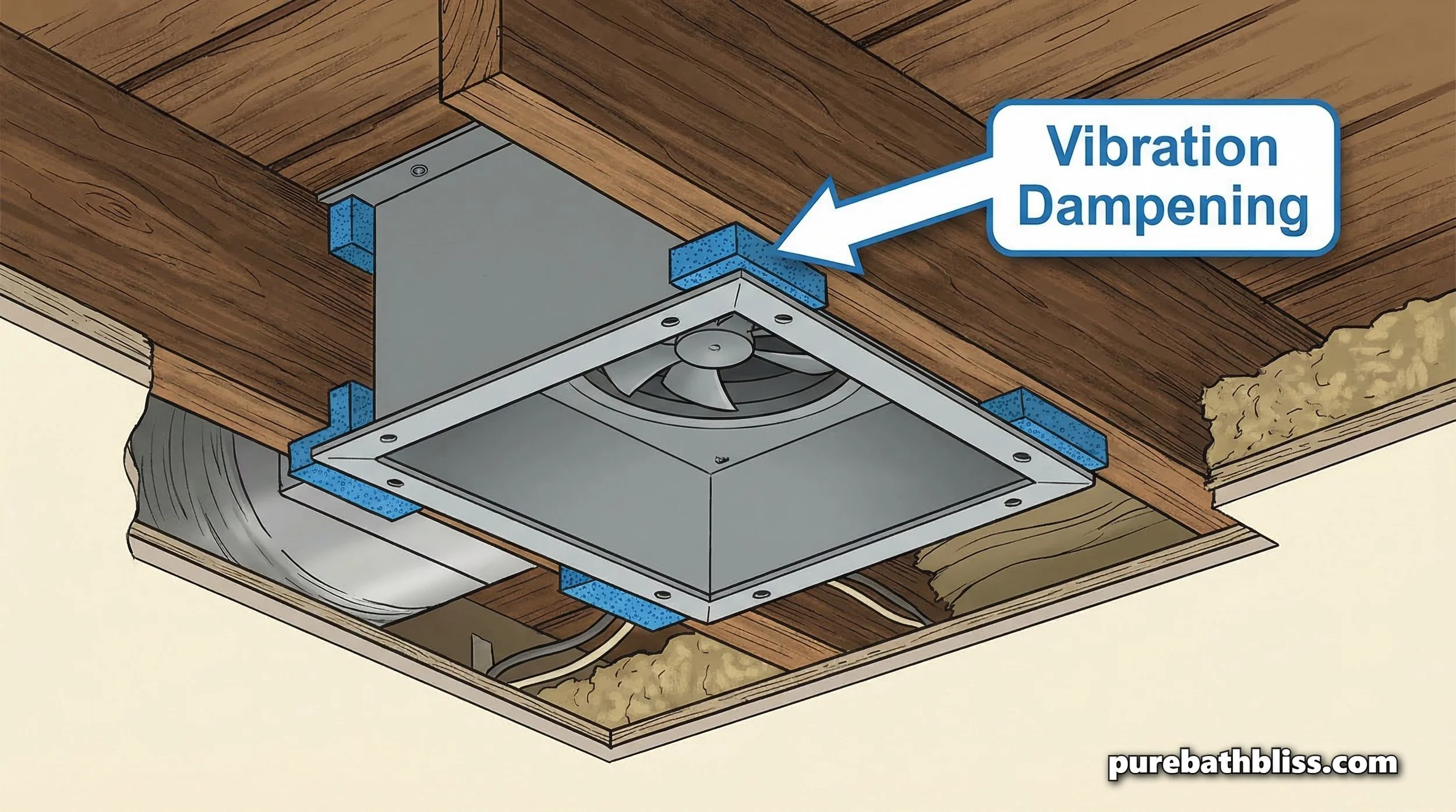
Foam Weatherstripping Tape – A "pro-trick" for dampening vibrations between the fan and the ceiling.
Step 1: The "Gunk" Audit (Cleaning)
Nine times out of ten, a vibrating fan is simply a dirty fan. Dust combines with bathroom moisture to create a heavy, sticky "mud" that clings to the fan blades. Because the blades spin at high speeds, a single gram of dust on one side of a blade is enough to cause a shake.
This is the perfect task to add to your routine, especially if you are already performing your 7 Tips for Spring Cleaning Your Bathroom.
Cut the Power: Turn the fan off at the wall switch. For extra safety, turn off the breaker.
Remove the Grill: Pull the plastic cover down and pinch the metal springs to release it.
Vacuum the Blades: Use a brush attachment to remove the loose dust.
Deep Clean: Use a damp cloth with a touch of the soap we recommended in 6 Brilliant Uses for Castile Soap in the Bathroom to wipe each individual blade.
Once the blades are perfectly clean and balanced again, turn the fan back on. In many cases, the vibration will disappear instantly.
Step 2: Tightening the Infrastructure
If the fan is clean but still vibrating, the problem is likely "mechanical looseness." The fan is housed in a metal box that is screwed into the wooden joists of your house. Every time the motor starts, it creates a small amount of torque. Over years of use, those vibrations can loosen the mounting screws.
When the screws are loose, the metal box bounces against the wood or the drywall. This creates a loud, rhythmic rattling sound.
The Fix: Check the screws that hold the motor bracket to the housing and the screws that hold the housing to the ceiling. Use your screwdriver to ensure everything is snug.
The Pro-Trick: If the metal housing is still vibrating against the drywall, you can tuck small pieces of foam weatherstripping between the metal edge and the ceiling. This acts as a shock absorber, silencing the noise.
Step 3: Checking the Motor Shaft
If you have cleaned the fan and tightened the screws but the vibration persists, the motor shaft itself might be bent. This often happens if the fan was hit by something or if it ran for a long time with a heavy, unbalanced load of dust.
To check this, turn the fan off and spin the blades slowly with your finger. Watch the center point of the motor. Does it spin in a perfect circle, or does it "wobble"? If you see a wobble, the metal shaft is bent. Unfortunately, there is no way to straighten a motor shaft at home; you will need to replace the motor assembly.
The good news is that most fan motors are "plug-and-play." You can unplug the old motor, unscrew the bracket, and swap in a new one for a fraction of the cost of a full fan replacement. While you have the motor out, check for any moisture damage or rust, which we often see in rooms that suffer from Why Is My Toilet Sweating?.
When the Vibration is in the Ducting
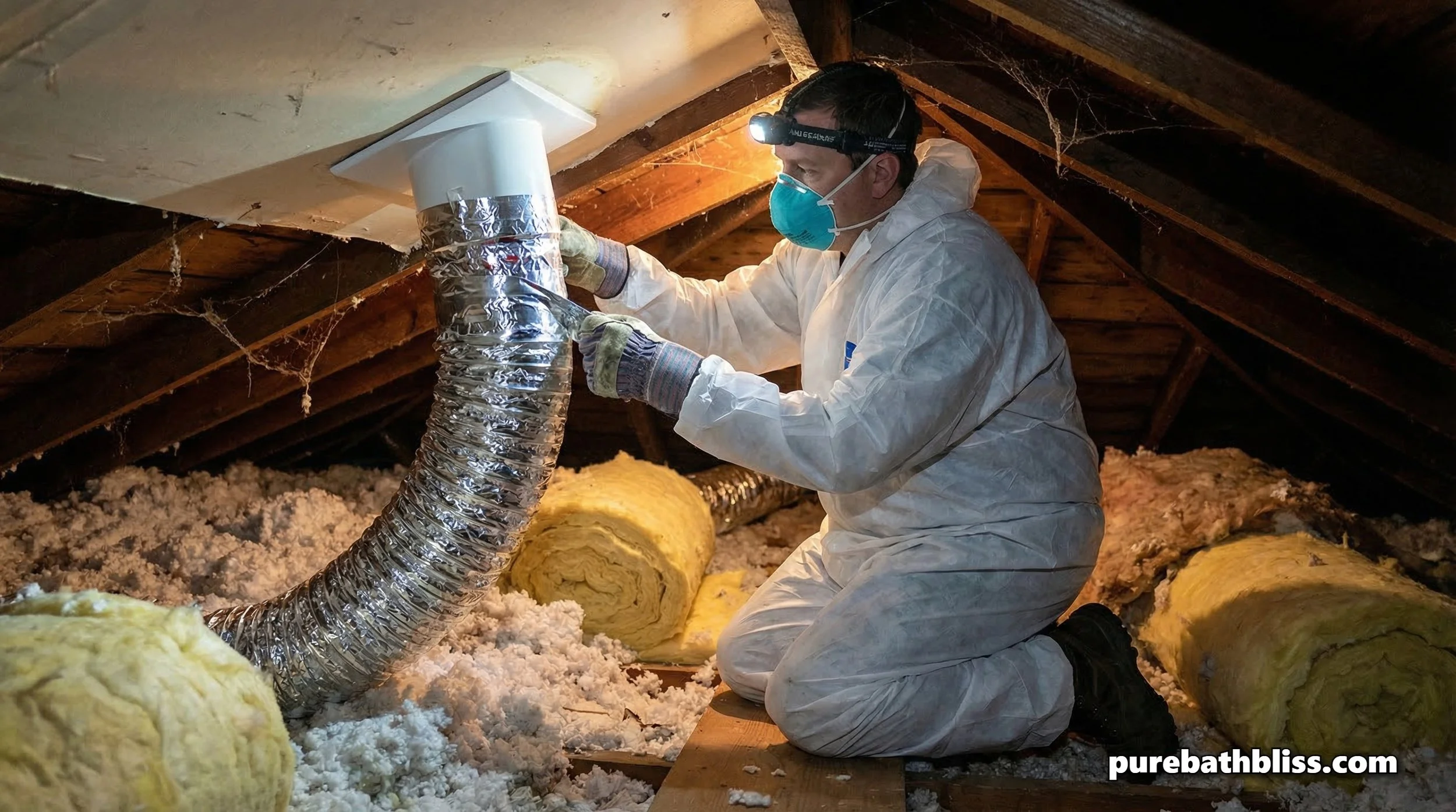
Sometimes the noise isn't coming from the fan itself, but from the pipe that leads to the outside of your house. If the ductwork is loose, it can rattle against the attic floor every time the air starts moving.
If the sound seems to be coming from "inside" the ceiling rather than right at the fan, you may need to go into the attic. Ensure the duct is securely taped with foil tape and that it isn't resting directly on any vibrating surfaces. Proper ducting is essential for preventing the steam issues we covered in How to Stop Your Bathroom Mirror from Fogging Up. If the duct is kinked or blocked, the back-pressure can also cause the fan motor to work harder and vibrate more.
Summary: Silencing the Shake
Clean the Blades: Remove the weighted "mud" of dust and moisture that causes an unbalanced spin.
Tighten the Screws: Ensure the motor and the housing are firmly attached to the building's frame.
Add Dampening: Use foam or rubber gaskets to stop metal-on-wood rattling.
Inspect the Shaft: Replace the motor if the internal shaft is bent or the bearings are failing.
Check the Duct: Make sure the air has a clear, smooth path to the outside.
A quiet fan is a sign of a healthy bathroom. By spending 20 minutes to fix a vibration, you are ensuring that your home’s primary defense against moisture stays in top working order. If you ever make a mess with dust or lubricant while working on your fan, remember to follow the cleanup steps in How to Clean a Bathroom Accident to protect your bathroom surfaces.