Why Your Faucets Get Water Spots (And How to Clean Them)
It is one of the most frustrating things in a bathroom. You spend an hour cleaning, scrubbing, and wiping down your sink. You polish the faucet until it shines like a mirror. You step back, admire your work, and feel great. Then, you turn on the water to wash your hands, a few drops splash onto the metal, and within minutes, those drops dry into white, cloudy spots.
It feels like you cannot win. You clean the faucet, but the very act of using the faucet makes it dirty again.
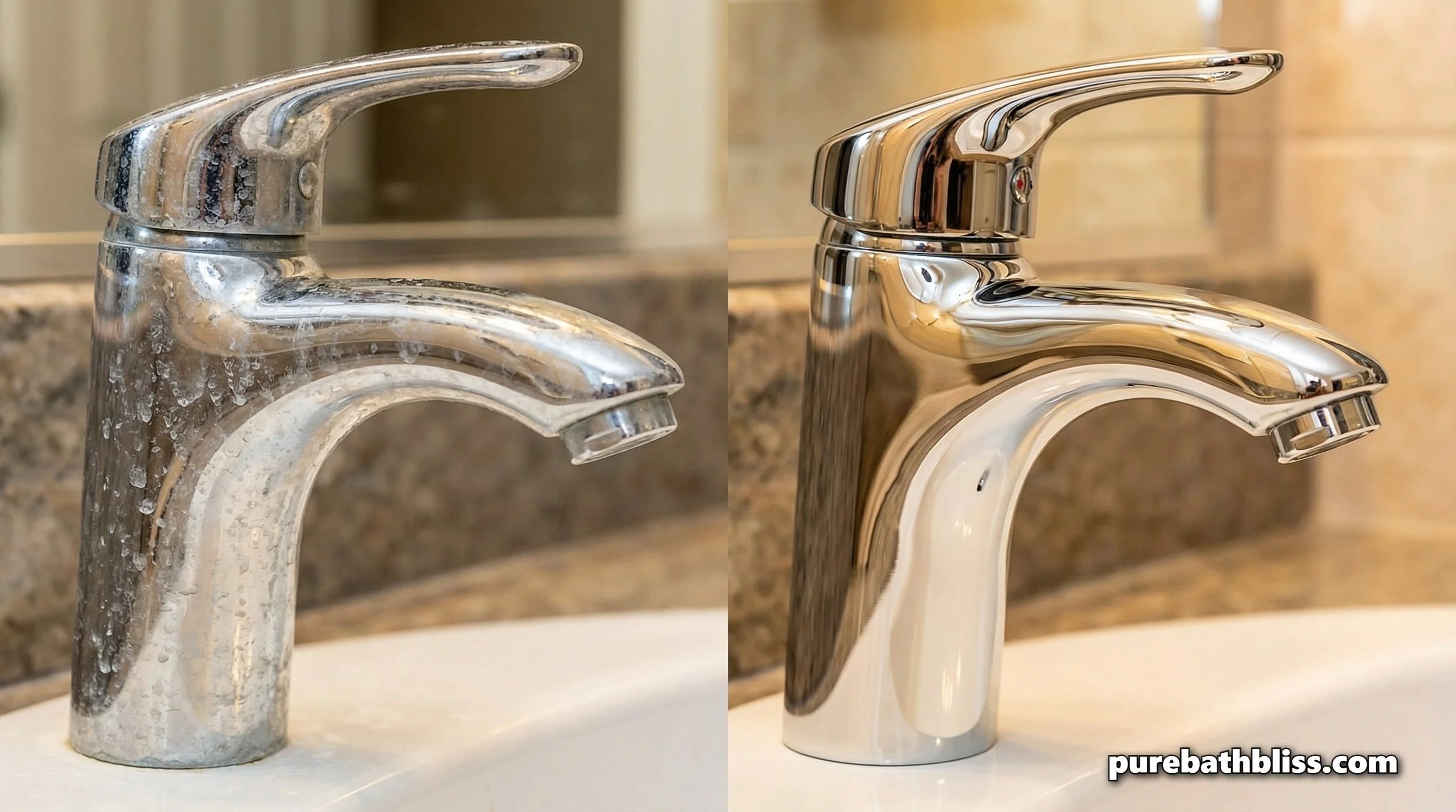
Most people think these spots are just dirt or soap. In reality, they are usually minerals. If you live in an area with "hard water," your tap water is full of calcium and magnesium. When the water evaporates, it leaves those minerals behind on your faucet. Over time, these spots build up, become harder to remove, and can even dull the finish of your fixtures.
The good news is that you don’t need to use harsh chemicals or expensive cleaners to fix this. In fact, using the wrong cleaners can be the reason your faucets look bad in the first place. Let's look at why this happens and the simplest way to keep your faucets looking new.
Why Water Spots Are More Than Just Dirt
To fix a problem, you have to understand what it is. If you just look at a water spot, it looks like white dust. If you try to wipe it off with a dry cloth, it doesn't move. If you scrub it with a sponge, you might scratch the metal.
These spots happen because of evaporation. Water sits on the surface of the metal. As the air touches the water, the water turns into vapor. However, the minerals, the calcium and magnesium, cannot turn into vapor. They stay behind. Every time you turn on the faucet, a little more water stays on the surface, and a little more mineral is left behind.
If you don't clean these spots, they build a layer. Eventually, this layer gets thick enough that it traps other dirt and soap scum. This makes the faucet look dull and tired. If you don't clean it for a long time, the minerals can actually eat into the finish of the faucet. Once the finish is damaged, it will never look shiny again, no matter how much you scrub.
Before you start worrying about your faucets, it helps to make sure the rest of your bathroom is in good shape. Clutter around the sink makes it harder to reach the faucet to clean it properly. If your sink area is messy, take a look at The Bathroom Purge to help you clear off your counters so you can actually reach the hardware you are trying to maintain.
The Secret to Prevention: The "Dry as You Go" Method
The best way to deal with water spots is to never let them form in the first place. This sounds simple, but it is the one thing most people skip.
If you make it a habit to dry your faucet after you use it, you will almost never have to do a "deep clean" to remove mineral spots. It takes five seconds.
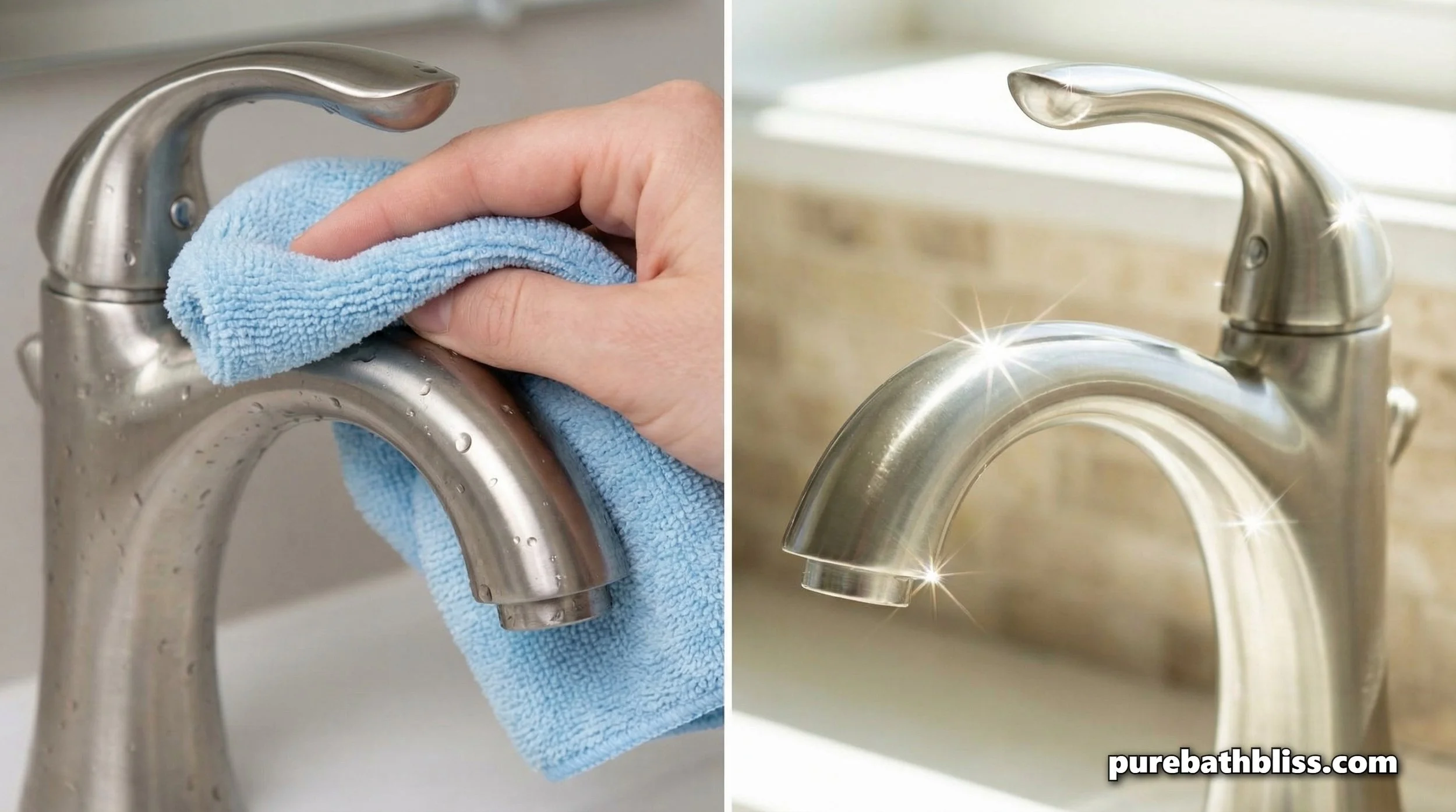
Keep a small, soft cloth or a microfiber towel near your sink. Every time you are finished washing your hands or brushing your teeth, take that cloth and give the faucet a quick wipe. Just get the water off the metal. If there is no water left on the surface, the water cannot evaporate, and the minerals cannot be left behind.
It feels like an extra step at first, but if you do it every time, your faucets will stay shiny for months without needing any chemicals. This is a much better way to maintain your room than letting it get dirty and then trying to fix it later. We talk more about keeping things simple and organized in How to Keep Your Guest Bathroom Simple. When you simplify your space, these small cleaning habits become much easier to keep up with.
How to Clean Spots Without Damaging the Finish
If your faucets already have spots, don't worry. You can remove them. However, you must be careful. Many people reach for bleach or strong acid cleaners because they think "stronger is better." This is the wrong approach.
Strong chemicals can strip the finish off your faucet. If you have a matte, nickel, or brass finish, harsh cleaners can permanently change the color or texture of the metal.
The Best Tool: White Vinegar
You don't need a fancy cleaning solution from the store. White vinegar is the best tool for this job. Vinegar is a mild acid, which is exactly what you need to break down the minerals.
Mix: Mix equal parts white vinegar and water in a spray bottle.
Apply: Spray the solution onto the faucet. Do not soak the sink; just get the metal wet.
Wait: Let it sit for about five to ten minutes. The vinegar needs time to soften the minerals. If you wipe it off immediately, it won't work.
Wipe: Use a soft cloth to wipe the faucet. You should see the spots come right off.
Dry: This is the most important part! Once you have wiped the vinegar off, take a dry, clean towel and dry the metal completely. If you leave it wet, the spots will just come back.
The "Paper Towel" Trick
If you have spots that are really stuck on, you can use the paper towel method. Soak a few paper towels in white vinegar and wrap them around the faucet. Leave them there for 30 minutes. The paper towel keeps the vinegar in contact with the minerals the whole time. When you remove the paper towels, the spots should wipe away easily.
Never use a scouring pad, a steel wool pad, or the rough side of a sponge. These will leave tiny scratches on your faucet. Once the metal is scratched, it is much easier for spots to stick to it the next time. Use only soft cloths.
Other Things to Watch Out For
If your faucets are constantly spotting, it might be more than just hard water.
1. Check for Leaks
If your faucet has a tiny leak, water will always be sitting there. If the faucet is always wet, it will always have water spots. If you notice a drip, you should fix the washer or the internal seal. If you ignore it, you will never be able to keep the faucet clean.
2. Bathroom Humidity
If your bathroom is always very damp, the water on your faucet will take longer to dry. This gives the minerals more time to stick to the metal. Proper ventilation is key. Always run your fan during and after a shower to keep the air dry. If your bathroom stays damp, it can also lead to issues with your grout and caulk. Keep an eye on those areas; if the seal around your tub is looking worn, check out Why Your Caulk is the Bathroom’s First Line of Defense for help.
3. Soap Scum
Sometimes, what you think is a "water spot" is actually a mix of water minerals and soap scum. If your vinegar spray isn't working, it might be because there is a layer of soap film on the faucet. Use a tiny bit of mild dish soap and water to wash the faucet first. Rinse it, dry it, and then use the vinegar spray to remove the remaining mineral spots.
If you have accidents where soap or cleaning products spill all over your bathroom surfaces, don't use harsh chemicals to clean them up. Keep your cleaning methods safe and gentle. We have a guide that covers how to handle spills correctly inHow to Clean a Bathroom Accident.
Different Faucet Finishes
Not all faucets are the same. How you clean them depends on the finish.
Chrome: Chrome is very shiny and hard. It is durable, but it shows fingerprints and water spots very clearly. Vinegar is safe for chrome.
Brushed Nickel: This has a softer look. It hides water spots better than chrome, but it can be sensitive to harsh acids. Never leave vinegar on brushed nickel for too long.
Matte Black: This is very popular right now. Matte finishes are great because they don't show spots as much as chrome, but they can be tricky to clean. If you use a rough cloth, you can actually rub the "matte" finish off. Only use the softest cloths on matte fixtures.
Brass: Real brass is beautiful, but it can tarnish. If you have a brass faucet, be very careful with vinegar, as it can be too strong. Stick to mild soap and water, and dry it very well.
If your faucet is looking dull even after you clean it, you might just have too many things on your counter getting in the way. Sometimes, the issue isn't the faucet, it's the clutter around it. You might want to reorganize your space so you have more room to work. For tips on managing your counter, see How to Store Your Shampoo.
Maintaining Your Bathroom Health
Taking care of your faucets is just one part of keeping your bathroom in good condition. When you get into the habit of drying your sink and wiping your faucets, you start to see the room differently. You realize that "cleaning" doesn't have to be a big, difficult project that takes all day. It can be a series of small, five-second habits that keep the room looking great.
If you let your bathroom get dirty for months, you will have to spend hours scrubbing. If you keep up with small things like drying your faucet and keeping your counters clear, you will find that you almost never have to do a deep, painful clean.
The same rule applies to your floors. If you take care of your floor and keep it clean, you won't have to worry about mold or deep stains. Read Why Your Bathroom Floor is Working Harder Than You Think to learn more about how to keep your floors in great shape.
Why This Matters for Your Home
A clean bathroom makes your whole home feel better. When the hardware is shiny and the surfaces are clear, the room feels calm and organized. It is a nice way to start and end your day.
You don't need to be a professional cleaner to have a beautiful bathroom. You just need to be consistent. Dry your faucets. Put away your supplies. Wipe up spills immediately. These small things add up to a room that always looks like you just cleaned it, even when you didn't.
If you find that your bathroom smells a bit stale because of the moisture, don't reach for a heavy perfume spray. That just adds more chemicals to your air. Instead, use the neutralizer spray you can make yourself. It is safe, natural, and it keeps the air smelling clean. Learn how to make it inHow to Make Your Own Toilet Odor Spray.
Remember, your bathroom is a hard-working part of your home. It deals with water, soap, and daily use every single day. By giving it just a little bit of care, you are protecting your investment and making sure the room stays a place where you can relax.
Summary: Keeping Faucets Spot-Free
Dry it off: Make a habit of wiping your faucet dry after every use. It is the best way to stop spots before they start.
Use vinegar: If spots appear, use a mild mix of water and vinegar. Let it sit, then wipe it away.
Be gentle: Never use rough sponges or steel wool. They will scratch your faucet and make the problem worse over time.
Watch your soap: Don't let soap build up on the faucet. Rinse it off regularly.
Check for leaks: A dripping faucet is a magnet for water spots. Fix leaks as soon as you see them.
Stay organized: Keep your counter clear so you can reach your faucet easily.
By following these simple steps, you can keep your faucets looking brand new for years. You don't need a lot of time, and you don't need expensive products. You just need a little bit of consistency and the right approach.