DIY Toilet Odor Neutralizer: The Before-You-Go Spray That Actually Works
Originally published March 2026, Updated July 2026
Transparency Note: We independently select these products based on research and user reviews. If you buy something through our links, we may earn a commission.
A few years ago a family friend left a small amber bottle on the back of our toilet with no explanation. It had a handwritten label that just said "spray before." I assumed it was some kind of cleaner. Then someone in the family actually read the label properly and we tried it. Within a week every adult in our house was using it and asking where to get more.
The commercial version of this product, Poo-Pourri being the most famous, sells for around $10 to $15 for a two-ounce bottle. Once you understand how it works, you realise you can make the exact same thing at home for about forty cents a bottle using ingredients you can get anywhere. I have been making our own for two years now and we will never go back to the commercial version.
Here is the full recipe, the science behind why it works, four scent variations worth making, and the troubleshooting guide for the two most common mistakes people make.
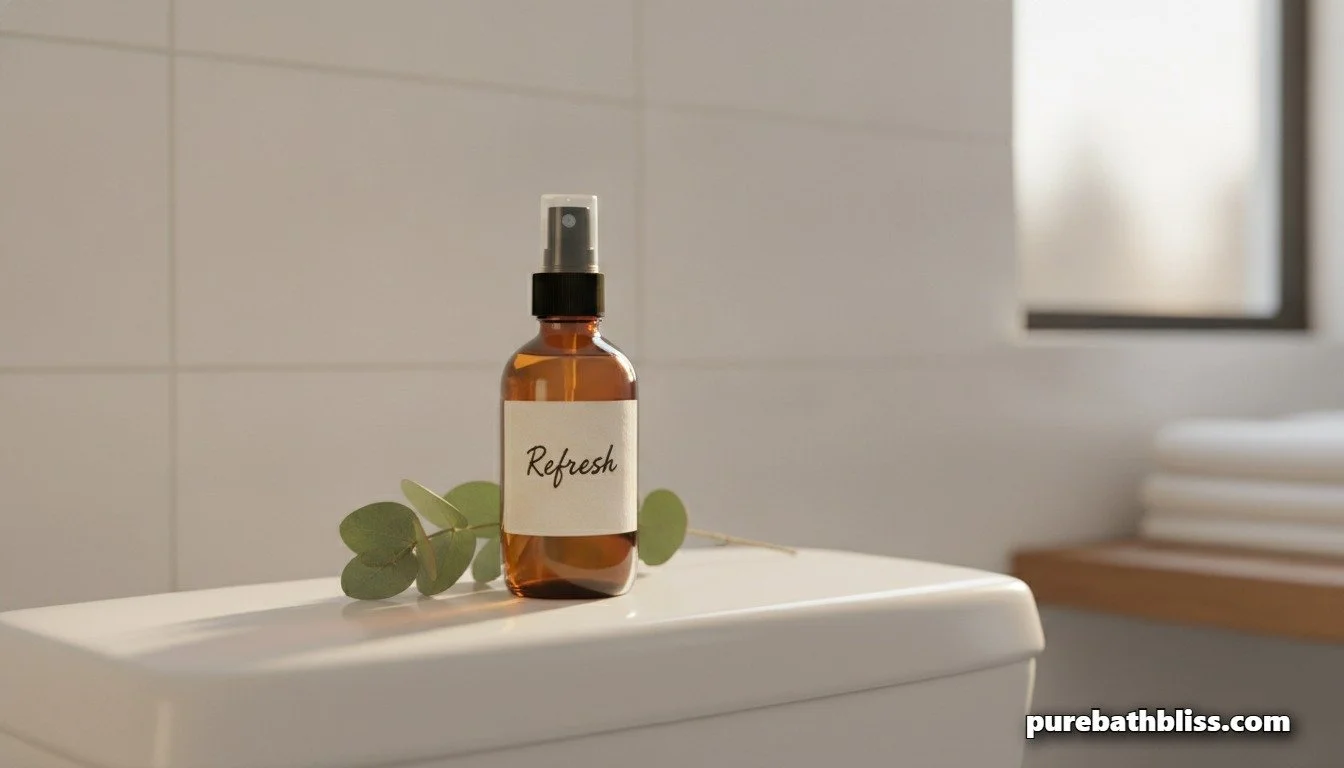
Why It Works: The Physics of the Barrier
Most bathroom air fresheners and aerosol sprays work by masking. They flood the room with synthetic fragrance molecules that overwhelm your olfactory system. You stop smelling the bad thing because you are being bombarded with a stronger artificial smell. The problem is twofold. First, you are still breathing the odour compounds, they are just being drowned out. Second, synthetic fragrance products are among the most phthalate-laden products in a typical home. We cover this in detail in our guide to the health risks of synthetic bathroom fragrance, but the short version is that "fragrance" on a label can legally conceal hundreds of undisclosed chemicals including known endocrine disruptors.
The before-you-go spray works on an entirely different principle. Instead of masking odours after they have already escaped into the air, it prevents them from escaping in the first place.
Here is the mechanism. Water has high surface tension due to hydrogen bonding between water molecules. When you spray an oil-based solution into the toilet bowl before use, the essential oils, which are hydrophobic meaning they actively repel water, immediately rise to the surface and spread out to form a thin, cohesive film across the entire water surface. This film acts as a physical barrier. When organic waste hits the water beneath it, the volatile sulfur compounds responsible for the odour, primarily hydrogen sulfide and methyl mercaptan, are physically trapped beneath the oil layer rather than rising into the air of the bathroom. They stay below the barrier until the flush, at which point everything goes down the drain together.
This is not masking. It is encapsulation. The odour molecules are physically prevented from entering the airspace of the bathroom. That is why this method is so dramatically more effective than anything you spray into the air after the fact.
Why Commercial Aerosol Sprays Are Worth Avoiding
Beyond the masking-versus-encapsulation difference, there is a practical reason to avoid commercial aerosol sprays in the bathroom specifically. Aerosol propellants, typically liquefied petroleum gases like butane or propane, carry VOCs that settle onto bathroom surfaces. Over time these compounds can interact with the sealant on your caulk, potentially degrading the flexibility of the silicone seal around your tub and toilet base. They can also dull the finish on chrome and matte metal fixtures with repeated contact.
A pump-action glass bottle with a water and oil base introduces none of that. You are not spraying propellant. You are not aerosolising synthetic fragrance into a small enclosed space where your family breathes it in. The pump delivers a fine mist of distilled water and essential oils that falls quickly onto the water surface where it needs to be.
The Ingredients and Why Each One Matters
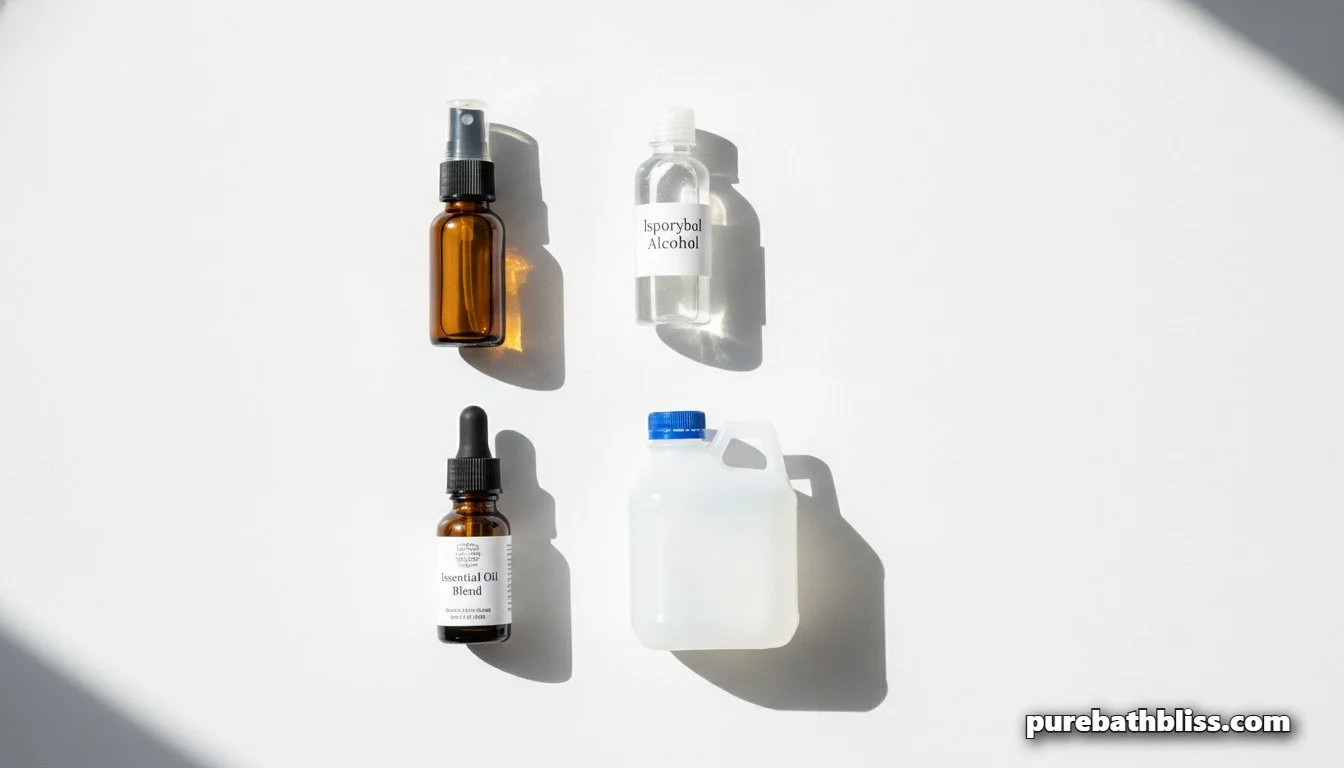
Essential oils are the active ingredient. They are hydrophobic, which is what makes the barrier work, and they carry the scent that makes the experience pleasant. Citrus oils, lemon, bergamot, and sweet orange, are naturally deodorising and antimicrobial. Herbaceous oils, eucalyptus, peppermint, and tea tree, add depth and carry genuine antibacterial and antifungal properties. Tea tree in particular is one of the most well-documented natural antimicrobials available, which is why we use it as a baseline in almost every DIY bathroom product we make. Our tea tree oil bathroom guide covers its specific applications in detail if you want to understand the chemistry behind why it works so well.
Rubbing alcohol (isopropyl alcohol at 70 percent or higher) is the solubiliser. Oil and water do not mix. If you combine them without a bridge, the oil will float in large globules and clog your spray nozzle within a day or two. The alcohol acts as a molecular bridge, allowing the essential oils to disperse evenly through the water. This is the step most people skip when they try to make this recipe for the first time and then wonder why their nozzle keeps clogging.
Distilled water is the carrier. Always use distilled rather than tap water. Tap water contains minerals and trace microorganisms that can cause bacterial growth inside a sealed spray bottle over time, particularly when essential oils create a warm, sealed environment. Distilled water eliminates that risk and also keeps the mixture clearer and more stable.
The Shopping List
These are the exact products we use. Do not substitute the glass bottle for plastic, essential oils degrade certain plastics over time and can leach compounds from the container into your spray.
The Bottle: Amber or Cobalt Glass Spray Bottle (2oz) — Amber glass blocks UV light which would otherwise oxidise your essential oils and degrade the scent and effectiveness over time. Never use clear plastic.
The Essential Oils: High-quality therapeutic-grade essential oils — Eucalyptus, peppermint, lemon, bergamot, or tea tree. Use 30 to 40 drops per 2oz bottle total across your chosen combination.
The Solubiliser: High-proof isopropyl rubbing alcohol (70% or higher) — This is the non-negotiable ingredient. Without it your spray will clog within days.
The Carrier: Distilled water — Not tap water. Distilled only.
The Bundle: Shop the complete supply kit on Amazon
The Recipe: Step by Step
The order of operations here matters. Mix in the wrong sequence and you will end up with an unstable solution that separates immediately.
Step 1: Prep the bottle
Make sure your 2oz amber glass spray bottle is clean and completely dry. Any residual moisture from washing can introduce bacteria and affect stability. If you are reusing a bottle, rinse it with isopropyl alcohol and let it air dry fully before refilling.
Step 2: Add the solubiliser first
Measure one tablespoon (15ml) of isopropyl alcohol into the bottle. This goes in before anything else. The alcohol needs to be the base that the oils dissolve into before the water is added.
Step 3: Add the essential oils to the alcohol
Add your 30 to 40 drops of essential oils directly into the alcohol in the bottle. Gently swirl or shake for ten seconds. You should see the oils dispersing evenly through the alcohol rather than floating on top. This step is the key to a spray that never clogs. The oils are now fully dissolved in the alcohol before the water is introduced, which means they will stay evenly dispersed rather than separating out.
Step 4: Top up with distilled water
Carefully fill the bottle with distilled water, leaving about half an inch of headspace at the top for the spray mechanism. The water will cloud slightly as it mixes with the oil-alcohol solution. That is normal and expected.
Step 5: Seal and shake
Attach the spray top, seal it firmly, and shake vigorously for twenty seconds. Your neutralizer is ready to use. Give it a quick shake before every use since the components will naturally settle slightly over time.
How to Use It
Spray two to three pumps directly onto the surface of the toilet bowl water before you sit down. The spray needs to be on the water before use, not after. That is the entire mechanism. The oil film forms on the water surface and is in place by the time it is needed. After, flush normally. The film goes down the drain with everything else.
Four Scent Variations Worth Making
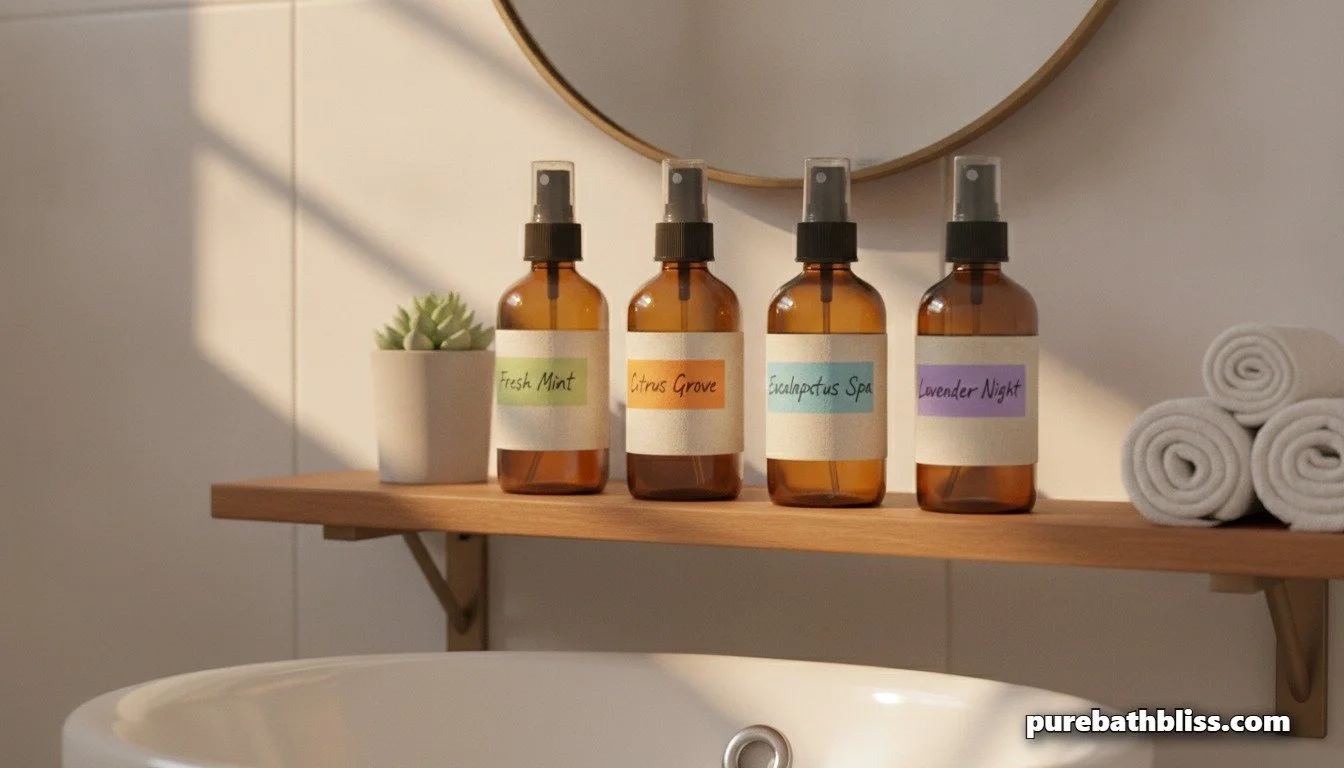
The basic recipe works with almost any combination of essential oils. Here are the four blends we keep in rotation in our house, each with a specific character and slightly different functional profile.
Fresh Mint (The Classic)
20 drops peppermint, 10 drops lemon, 5 drops tea tree. The peppermint delivers a sharp, clean scent that reads as immediately fresh. The lemon adds brightness and natural deodorising properties. The tea tree adds a subtle medicinal note and genuine antimicrobial action. This is the blend that works best for a shared bathroom with multiple users. It is universally inoffensive and reliably effective.
Citrus Grove (The Morning Blend)
15 drops sweet orange, 10 drops bergamot, 10 drops lemon. All three are citrus oils with strong natural deodorising properties and a warm, energising scent profile. This is the blend that works best in the morning when you want something bright rather than clinical. Bergamot in particular has documented anxiolytic properties and contributes a more complex, floral note that elevates this beyond a standard lemon spray.
Eucalyptus Spa (The Guest Bathroom Blend)
20 drops eucalyptus, 10 drops peppermint, 5 drops lavender. Eucalyptus has one of the strongest natural odour-masking profiles of any essential oil, making it particularly effective as the base of this spray. This blend smells expensive and spa-like rather than DIY. It is the one we put in the guest bathroom where we want visitors to feel like they are using a premium product. Nobody has ever suspected it cost forty cents to make.
Lavender Night (The Evening Blend)
20 drops lavender, 10 drops cedarwood, 5 drops vetiver. Lavender has well-documented calming properties and pairs beautifully with the woody, grounding quality of cedarwood and vetiver. This blend works best in the bathroom used for the evening routine. It is calming rather than energising and fits naturally into a wind-down ritual. Vetiver in particular has a deep, earthy quality that adds complexity and helps anchor the scent so it lingers slightly longer on the water surface.
Troubleshooting: The Two Most Common Mistakes
The nozzle keeps clogging
This almost always means you did not use enough alcohol, or you added the water before the oils were fully dissolved in the alcohol. The fix is to increase the ratio of isopropyl alcohol to one and a half tablespoons rather than one, and to make sure the oils are fully dissolved in the alcohol before any water is added. Do not use dish soap as an emulsifier. It creates foam in the toilet bowl and does not solve the clogging problem effectively.
The spray smells weak after a few weeks
Essential oils oxidise when exposed to light and heat. If your bottle is clear, or if it is stored on a sunny windowsill, the oils will degrade faster than the recipe intends. Always use amber or cobalt glass and store the bottle somewhere away from direct sunlight, ideally in a cabinet or on the back of the toilet cistern away from direct window light. If the scent fades significantly within two weeks, increase the oil count to 40 drops per bottle and consider storing a backup batch in a sealed jar in a cool dark cupboard.
Pairing This with the Rest of Your Non-Toxic Bathroom Routine
The before-you-go spray solves one specific and very common bathroom problem elegantly and cheaply. It fits naturally alongside other DIY non-toxic bathroom products that address cleaning rather than air quality. Our DIY toilet cleaning bombs handle the limescale and grime in the bowl itself using the same baking soda and citric acid chemistry that makes the fizzing toilet bombs work. Between the spray and the bombs, the toilet is handled without a single commercial product that requires a hazmat warning on the label.
If you are building out the broader non-toxic bathroom routine beyond just the toilet, our guide to the five toxic chemicals hiding in your bathroom covers the other product categories most worth replacing and why synthetic fragrance specifically is one of the highest-priority swaps you can make for indoor air quality in a home with children.
And if the bathroom still has a lingering smell even after you have implemented the spray, the problem is almost certainly not the air freshener situation but a structural source: a dry P-trap, biofilm in the drain, or mold behind failing caulk. Our bathroom smell diagnosis guide covers all seven common causes and exactly how to fix each one. A spray on the water surface addresses what happens in the bowl. It cannot fix what is coming up through the drain or out of the walls.