Why Your Bathroom Floor is Working Harder Than You Think
As a Red Seal Carpenter, I’ve spent my fair share of time on my knees, not in prayer, but on the tile floor, fixing the "infrastructure" that nobody thinks about until it starts falling apart. Most homeowners look at tile and think of it as a solid, impermeable barrier. They see the hard ceramic or stone surface and assume the entire floor is an impenetrable fortress.
But if you’ve spent any time maintaining a busy household, you know the truth: that thin line of grout between the tiles is the "Achilles' heel" of your bathroom.
It’s not just about aesthetics. When we talk about grout, we’re talking about cementitious material science. That beautiful, crisp line of grout is essentially a microscopic sponge. If you don't understand the mechanics of how it absorbs moisture, you’re destined to spend your weekends with a scrub brush and a bottle of harsh chemicals. Let’s look at the infrastructure of your floor and how to protect it from the inside out.
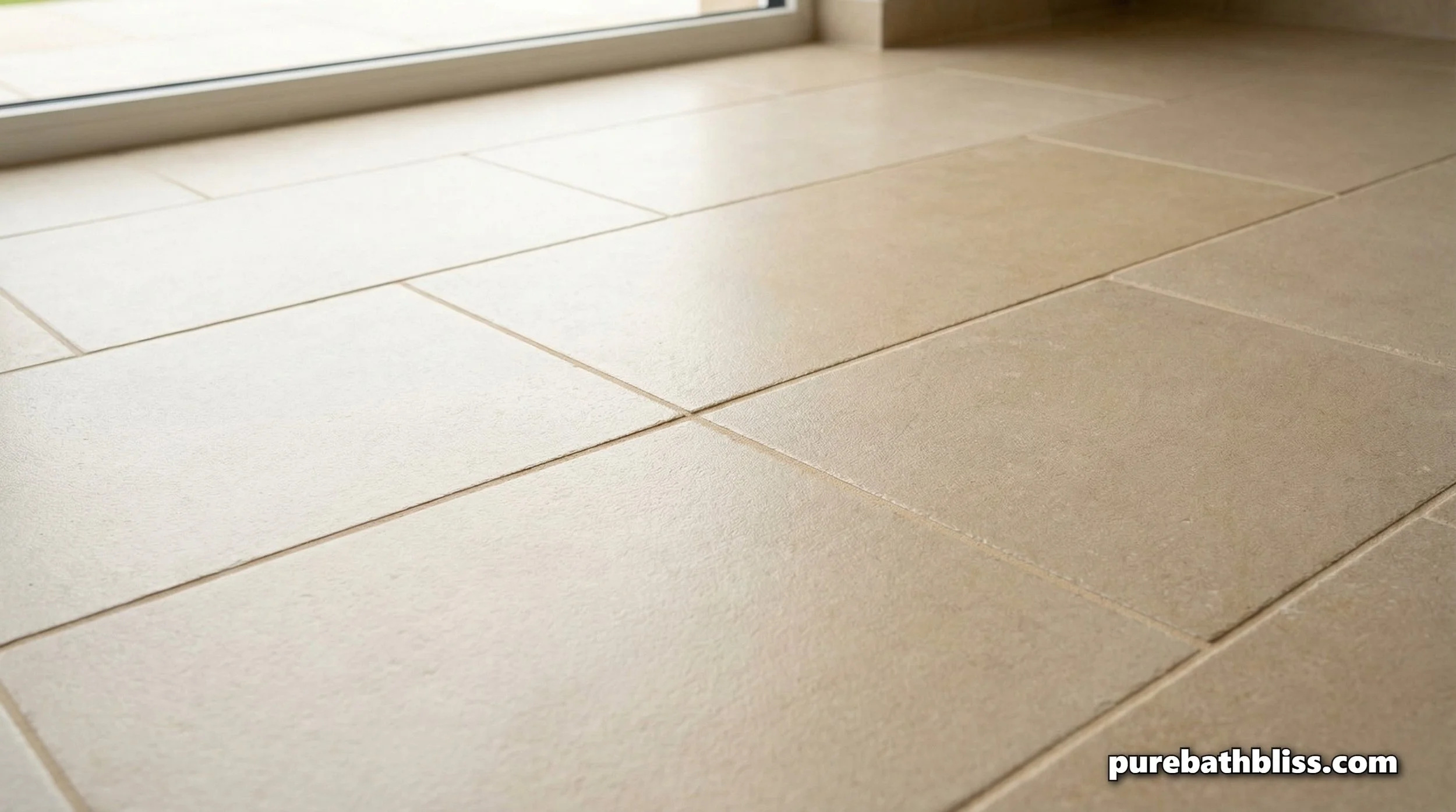
The Physics of Porosity: How Your Floor "Breathes"
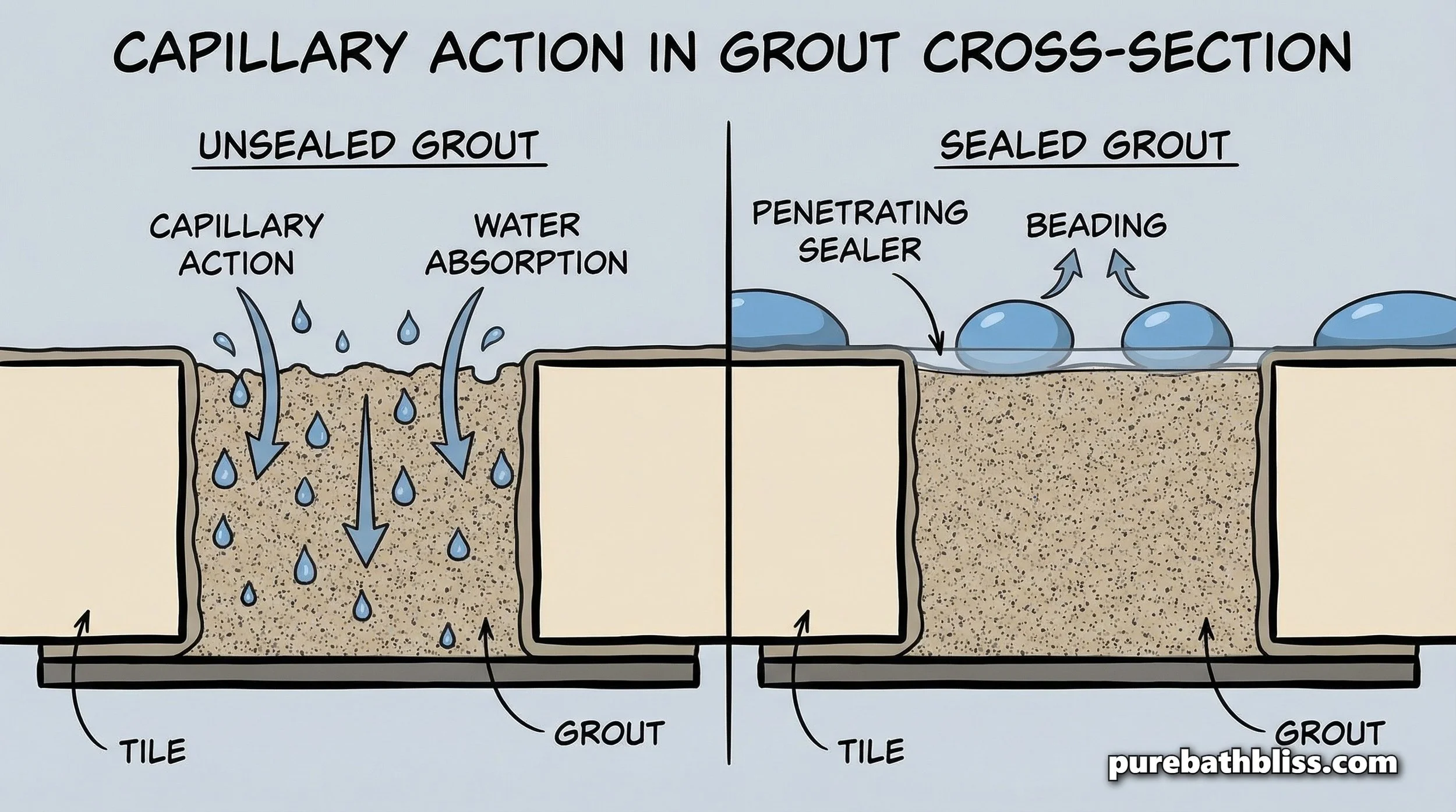
Cement-based grout is porous. If you were to look at it under a microscope, you wouldn't see a solid wall; you would see a complex network of pathways, capillaries. These capillaries allow water, soap scum, and body oils to travel deep into the material via capillary action.
When you take a hot shower, that humid air doesn't just sit on the tile; it pushes moisture into those pores. Once the moisture is trapped inside, the environment becomes stagnant. And where there is moisture, there is life: bacteria, fungi, and what we call biofilm.
Biofilm isn't just "dirt." It’s an organic, sticky colony that thrives in the protected environment of your grout’s pores. Once established, it acts as a magnet for more dirt, creating a cycle that traditional surface cleaners cannot break.
If you're constantly fighting this grime, the issue might be deeper than just the floor. I often tell my clients to perform a full audit of their space. If your bathroom is cluttered, it inhibits airflow, creating "dead zones" where moisture lingers. Before you deep clean, consider doing The Bathroom Purge to reclaim your space, which will inherently improve airflow and reduce moisture retention.
Technical Deep Dive: The Chemistry of Sealers
To stop biofilm, you have to stop the moisture. This is where "sealer science" comes in. Not all sealers are created equal, and choosing the wrong one can actually trap moisture inside the grout, leading to faster degradation.
There are two primary categories of penetrating sealers used by professionals:
1. Silane-Based Sealers
These are small-molecule sealants. Because the molecules are tiny, they can penetrate deeper into the grout's porous structure. They react chemically with the minerals in the grout to create a hydrophobic (water-repelling) barrier from the inside.
2. Siloxane-Based Sealers
These have larger molecules. They are better at bridging wider pores or surface imperfections. They are excellent for "topping off" the protection but don't penetrate as deeply as Silanes.
The Pro Secret: The best professional-grade products are often a blend of both. You get the deep-penetrating protection of Silane and the surface-bridging coverage of Siloxane. When you look for a sealer, stop looking at the price tag and start looking for these two ingredients on the label.
The Infrastructure Mindset: Cross-Room Maintenance
You might be wondering why a bathroom maintenance article references your storage habits. It’s because the "Infrastructure Mindset" is a philosophy of total home health. If you treat your home like a system rather than a collection of separate rooms, you’ll find that the tools and techniques overlap.
For instance, your bathroom’s moisture level is directly impacted by how you organize your daily essentials. Keeping too many products on your counters prevents them from drying properly, which leads to soap scum buildup that eventually migrates into the grout. For more on optimizing your workflow, see our guide on How to Store Your Shampoo.
Furthermore, if your bathroom has become a dumping ground for laundry, moisture will be trapped in fabrics, keeping the relative humidity of the room far higher than it needs to be. For a clearer understanding of how to manage your laundry storage, read Should You Keep a Hamper?. By controlling the contents of the room, you gain control over the room's health.
Pro-Troubleshooting: The "Failed Sealant" Case Study
I once worked on a renovation where the homeowner had a persistent, musty smell in their guest bathroom. They had scrubbed, bleached, and even painted the grout, but the odor remained.
When I arrived, I performed a simple Water Bead Test. I poured a tablespoon of water on the grout line. It didn't bead up; it soaked in instantly—the grout was thirsty. But the real issue was beneath: they had used a topical, film-forming wax on top of the grout months prior. Because that wax couldn't breathe, it had trapped moisture underneath, creating a hidden layer of mold that was slowly decomposing the grout from the bottom up.
If you've ever had a chemical cleaning accident or a spill that caused damage, don't try to "fix" it with more harsh chemicals. Reference our guide on How to Clean a Bathroom Accident to handle spills correctly without harming your infrastructure.
Quick Reference: Selecting Your Protection
| Sealer Type | Best For | Maintenance Interval |
|---|---|---|
| Penetrating (Silane/Siloxane) | Natural Stone, Porous Ceramic | Every 1–2 Years |
| Topical (Film-Forming) | Rough Slate, Flagstone (Use with caution) | Every 6–12 Months |
| Epoxy Grout | New Installs / Showers (Non-porous) | Never (Maintenance free) |
Expert Corner: Common Questions from the Workbench
"Can I use a steam cleaner on my grout?" Steam cleaners are fantastic for sanitizing, but use them with caution. If you have older, cracked grout, high-pressure steam can actually blow chunks of grout out or drive water deeper behind your tile. Use it sparingly.
"What about bleach for white grout?" Bleach is a short-term band-aid. It whitens the surface mold, but it doesn't kill the biofilm deep in the pores. If you want to whiten, look for oxygen-based bleaches (sodium percarbonate), they are safer and much more effective.
"When is it time to give up and re-grout?" If you have cracking, crumbling, or missing chunks of grout, no amount of cleaning or sealing will save it. That is a structural failure. You’ll need to remove the old material and apply a new layer.
Closing the Loop: The Sanctuary Standard
Maintaining your grout isn't about being a perfectionist; it's about protecting the investment you've made in your home’s infrastructure. By taking these small, calculated steps, you are effectively stopping water damage before it starts.
When the mechanics are invisible and effective, you stop worrying about "dampness" and start enjoying the restorative capacity of your space.