Should You Keep a Hamper in the Bathroom?
Transparency Note: We independently select these products based on research and user reviews. If you buy something through our links, we may earn a commission
As a father of 4, I have fought the laundry battle for years. I understand the pull of the "bathroom hamper", it’s the ultimate convenience. You step out of the shower, shed your clothes, and clunk, right into the basket. It keeps the bedroom floor tidy and minimizes the steps between "done" and "in the wash."
But there is a reason professional organizers and home health experts are often divided on this. As a builder, I look at the bathroom as a high-performance system: a space designed to manage moisture, heat, and sanitation. When you introduce a hamper filled with soiled laundry into that system, you are introducing a variable that can compromise the health of your sanctuary.
Is it possible to keep a hamper in the bathroom? Yes. But it requires a strict set of "stewardship" rules. If you do it wrong, you are essentially building a localized mold farm. If you do it right, you can maintain the convenience without the hygiene penalty.
1. The Humidity Trap
To understand why the bathroom hamper is controversial, we have to revisit the physics we discussed in Managing Humidity Levels in the Home.
Your bathroom is a "humidity engine." When you shower, you release moisture into the air. If you have a hamper full of clothes, those clothes act as a wick. They absorb the ambient moisture from the air. Now, you have a pile of damp, soiled fabric sitting in a dark, humid corner.
This environment is the "holy trinity" of mold growth: moisture, organic food (skin cells, sweat, fabric fibers), and warmth. In a room that is already struggling to regulate its humidity, a laundry hamper acts as a massive sponge that releases stagnant odors back into your clean sanctuary.
2. The Structural Liability
It isn't just about the smell; it’s about the room itself.
Wall Contact: Many people push their hampers flush against the bathroom wall to save space. When you do this, you block the airflow between the hamper and the wall. In a humid room, that "dead air" zone behind the hamper will almost certainly develop mold on the drywall or peeling paint behind the baseboard.
Floor Damage: If you use a solid-bottom hamper, especially one made of wicker or fabric, you are creating a moisture trap against your floor tiles or hardwood. This leads to the "biofilm" we’ve discussed in our guide to How to Clean a Bathroom Accident, making the floor harder to sanitize and eventually damaging the sealant in your grout.
3. The Three Rules of the "Pure" Hamper
If your bathroom layout makes a hamper mandatory, you need to follow these three rules to ensure you aren't compromising your home’s "Pure" status.
Rule 1: Breathability is Nonnegotiable
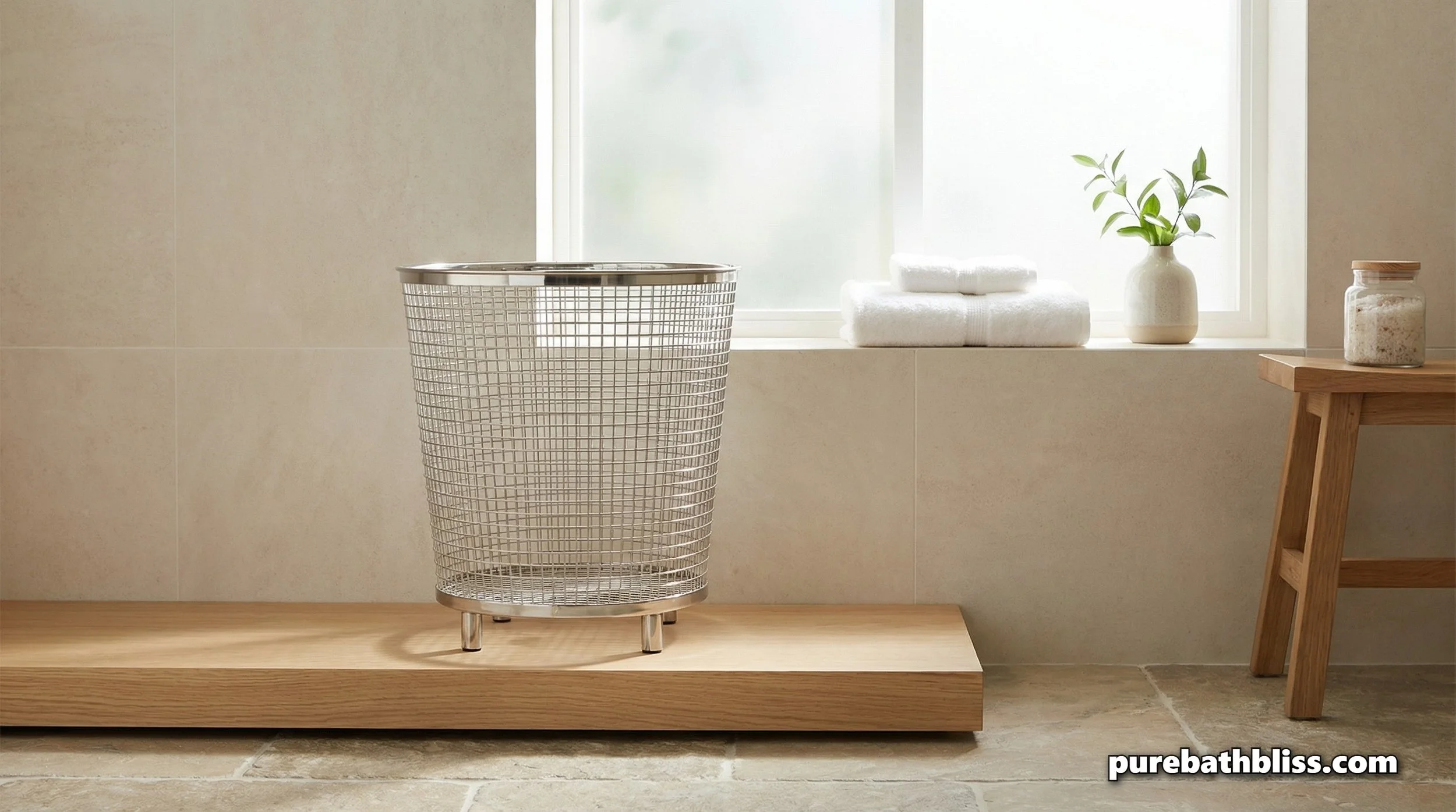
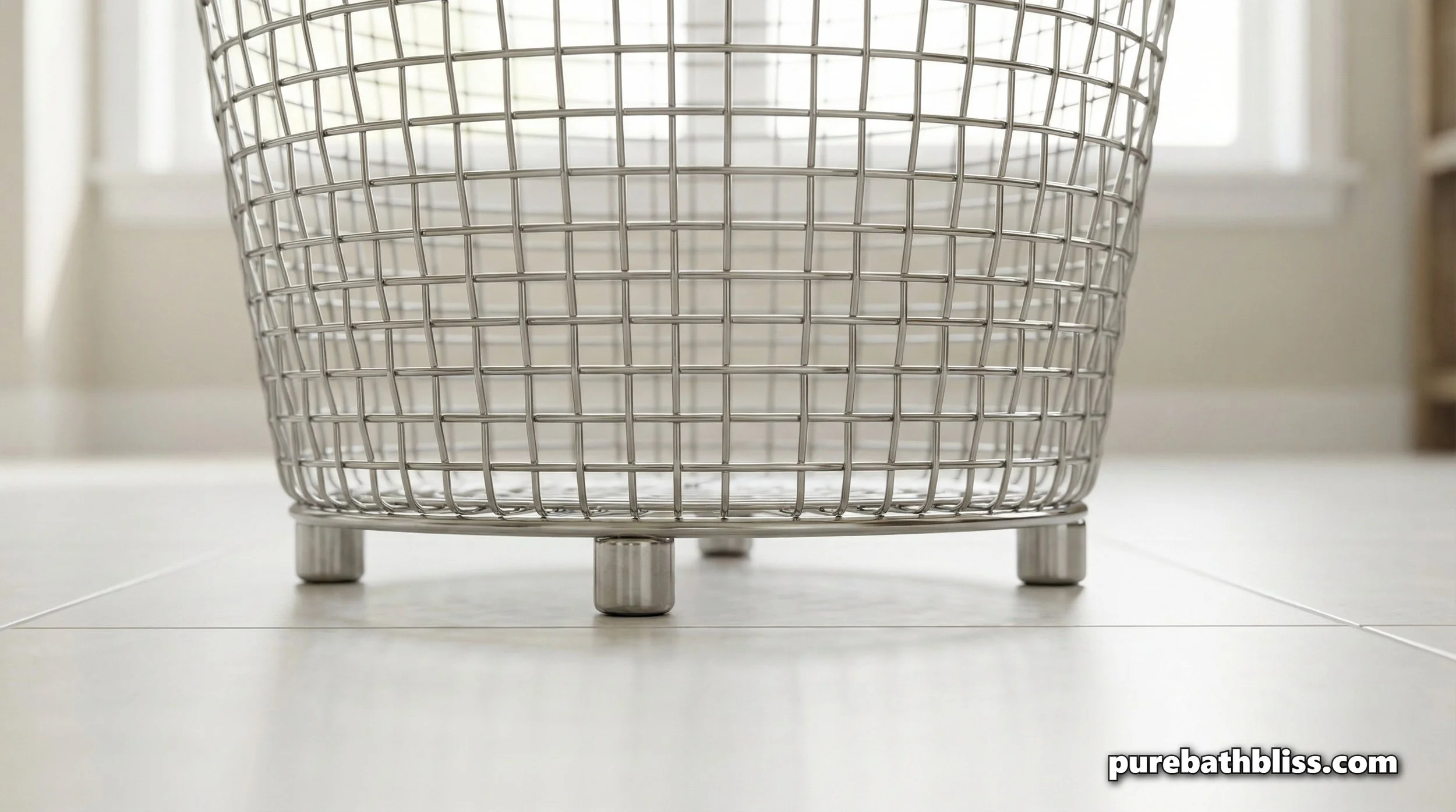
Never use a solid-sided plastic hamper or a sealed bin in a bathroom. You need maximum airflow. Opt for a wire, stainless steel, or open-weave basket that allows air to pass through the clothes. If air can’t move through the laundry, moisture will settle, and odor will form.
Rule 2: Elevate the Base
Never let your hamper sit flush on the floor. Use a hamper with "feet" that lifts the base at least 2 inches off the tile. This creates an air gap that allows the floor beneath the hamper to dry out after a shower, preventing mold and keeping the base of the hamper clean.
Rule 3: The "No-Wet" Policy
This is the most important rule of the Sanctuary Reset Guide. Damp towels, washcloths, or wet swimsuits should never go into the hamper. If they are wet, they go directly into the washer or onto a drying rack. A hamper is for dry clothes only. Adding even one wet item turns the entire basket into a humidifier.
4. Selection Matrix: Hamper Materials
The material of your hamper matters as much as the placement. Some materials are inherently better suited for the "wet zone" of a bathroom.
| Material | Sanctuary Rating | Why? |
|---|---|---|
| Stainless Steel Wire | Excellent | Rust-resistant, highly breathable, easy to clean. |
| Bamboo/Wicker | Poor | Absorbs moisture, prone to hidden mold growth. |
| Canvas/Fabric | Fair | Requires frequent washing; traps odors. |
| Solid Plastic | Poor | Zero airflow, promotes stagnant air/odors. |
5. Pro-Troubleshooting: How to Spot a Problem
If you have been keeping a hamper in the bathroom, do an audit today. Pull the hamper out and look at the wall behind it.
Do you see black specks? That is mold.
Does the wall feel cool or damp to the touch? You are likely trapping moisture.
Is there a "musty" smell when you lift the lid? The laundry is acting as a sponge, absorbing your shower steam.
If you see these signs, it is time to move the hamper to the bedroom or a laundry closet. Clean the wall with your hydrogen peroxide solution (as per our How to Clean a Bathroom Accident protocol), and reconsider the placement.
6. Maintenance: The "Empty Hamper" Ritual
Even if you follow the rules, a bathroom hamper should be a high-turnover item.
The Weekly Wash: Do not let clothes sit in a bathroom hamper for more than 3-4 days. The longer they sit, the more they absorb the bathroom’s ambient humidity.
The "Clear Floor" Check: During your Maintenance & Care routine, move the hamper and wipe down the floor underneath it. If your hamper is heavy or sits directly on the floor, you are likely missing a spot where dust, hair, and moisture love to hide.
7. Stewardship of Your Space
Creating a Sustainable Sanctuary is about being honest with yourself about your habits. If you are diligent about ventilation, if you have a high-performance exhaust fan, and if you are willing to keep the hamper elevated and mesh-style, you can make a bathroom hamper work.
But if you are busy (and as a father of 4, I know how busy life gets), the risk of "laundry creep", where wet clothes inevitably end up in the dry pile, is high. If you value the hygiene and structural integrity of your bathroom, the best place for a hamper is still in the bedroom. It creates a clearer separation between your "getting ready" space and your "restorative" space, and it keeps your bathroom surfaces clean, dry, and free from unnecessary clutter.
Builder-Curator Essentials
The Upgrade: Stainless Steel Wire Laundry Basket - The gold standard for airflow.
The Protection: Penetrating Grout Sealer - Apply this to the floor where your hamper sits to prevent moisture absorption.
The Habit: Airtight Linen Storage - If you must keep a hamper, consider moving your main laundry storage to the closet.
The Tool: Digital Hygrometer - Keep an eye on the humidity in your bathroom to ensure your hamper isn't causing a moisture spike.