How to Store Your Shampoo
Transparency Note: We independently select these products based on research and user reviews. If you buy something through our links, we may earn a commission.
As a father of 4, I have seen the "floor graveyard" in more showers than I care to count. You know the one: fifteen half-empty bottles, caps crusted with dried product, all huddled in the corner of the tub, slowly accumulating a layer of orange, slimy "biofilm."
When people ask me, "Does shampoo storage really matter?" my answer is always a firm yes. It matters for three reasons: hygiene, product longevity, and safety. If you are just tossing your bottles on the shower floor, you aren't just creating visual noise; you are actively working against the health of your sanctuary. Proper storage is one of the easiest ways to keep your shower clean, extend the life of your products, and ensure your space remains a place of restoration rather than a chore zone.
1. The Hygiene Reality: The "Biofilm" Factor
The most significant issue with storing shampoo on the shower floor is the moisture-trap effect. When a bottle sits directly on the floor of the shower, the bottom of the bottle creates a seal against the tile. This area stays permanently wet.
This environment is the perfect breeding ground for biofilm that slimy, orange or black residue you see on your shower surfaces. Biofilm isn't just "soap scum"; it is a colony of bacteria protecting itself. By elevating your bottles off the floor, you eliminate that stagnant water zone. You stop the cycle of mold growth before it even has a chance to start.
2. Product Integrity: Heat, Light, and Water
Most of us treat shampoo as an indestructible substance. In reality, it is a chemical formulation designed for specific stability.
Water Ingress: Many shampoo and conditioner bottles have "flip-top" caps. When these are stored in the direct spray of the shower, water inevitably leaks into the bottle. This dilutes the product, changes its pH, and can even introduce bacteria into the formula, turning your high-end conditioner into a watered-down, less effective mess.
Oxidation: If your bottles sit in direct, high-heat steam or under harsh bathroom lighting, the active ingredients can oxidize. This leads to the product changing color, losing its scent, or separating. Storing your products away from the direct "splash zone" of the shower head, even if they are still in the shower, is a key step in keeping them effective for months.
3. The Structural Solutions: Choosing Your Setup
If you want to move from "floor graveyard" to a high-end, curated sanctuary, you have three primary infrastructure options.
The Built-in Niche
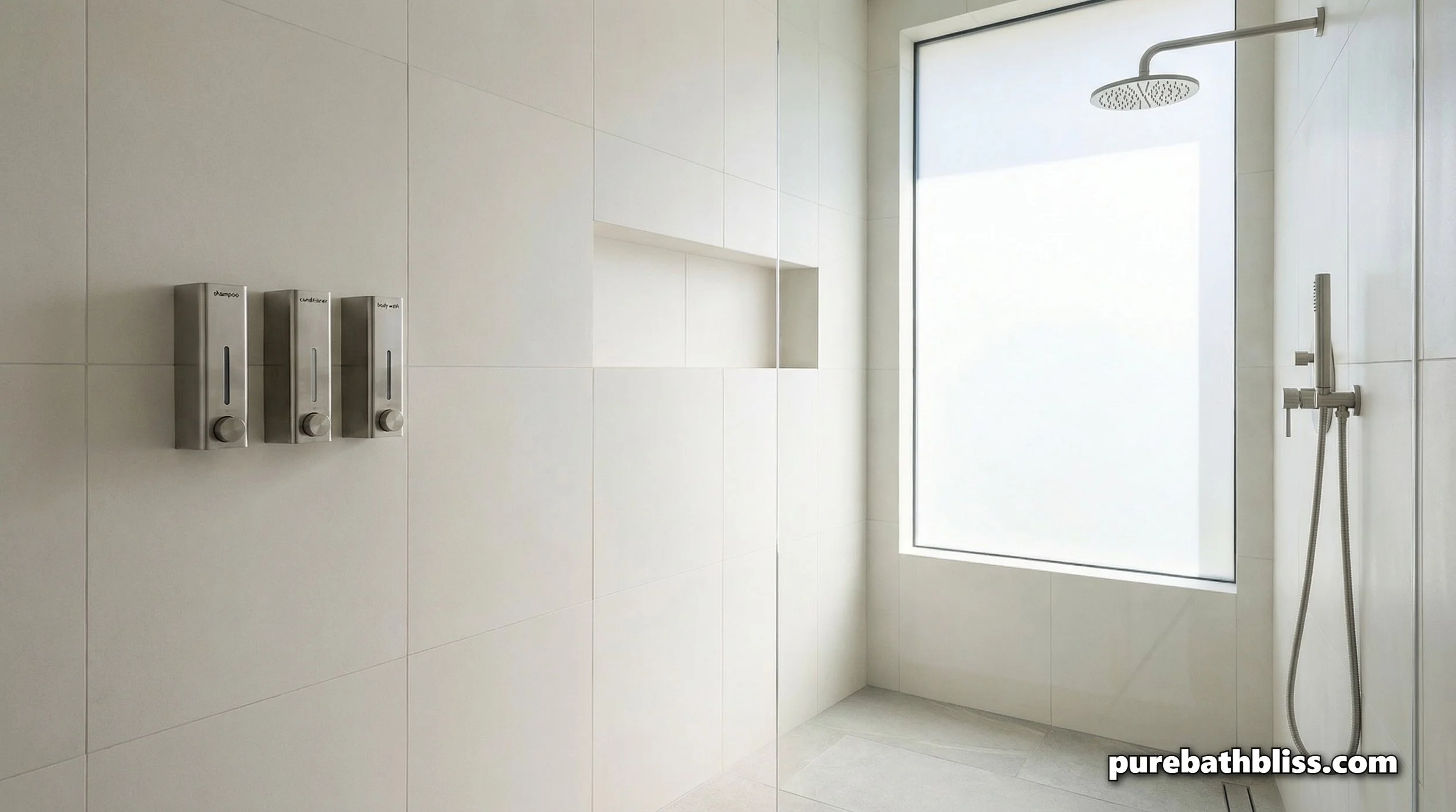
If you are currently renovating or planning an upgrade, a tiled wall niche is the "gold standard." It creates a dedicated space that is recessed into the wall.
The Pro-Tip: If you build a niche, slope the shelf downward by about 1/8th of an inch. This ensures water runs off the shelf and into the shower, rather than pooling inside the niche and damaging your grout.
Wall-Mounted Dispensers
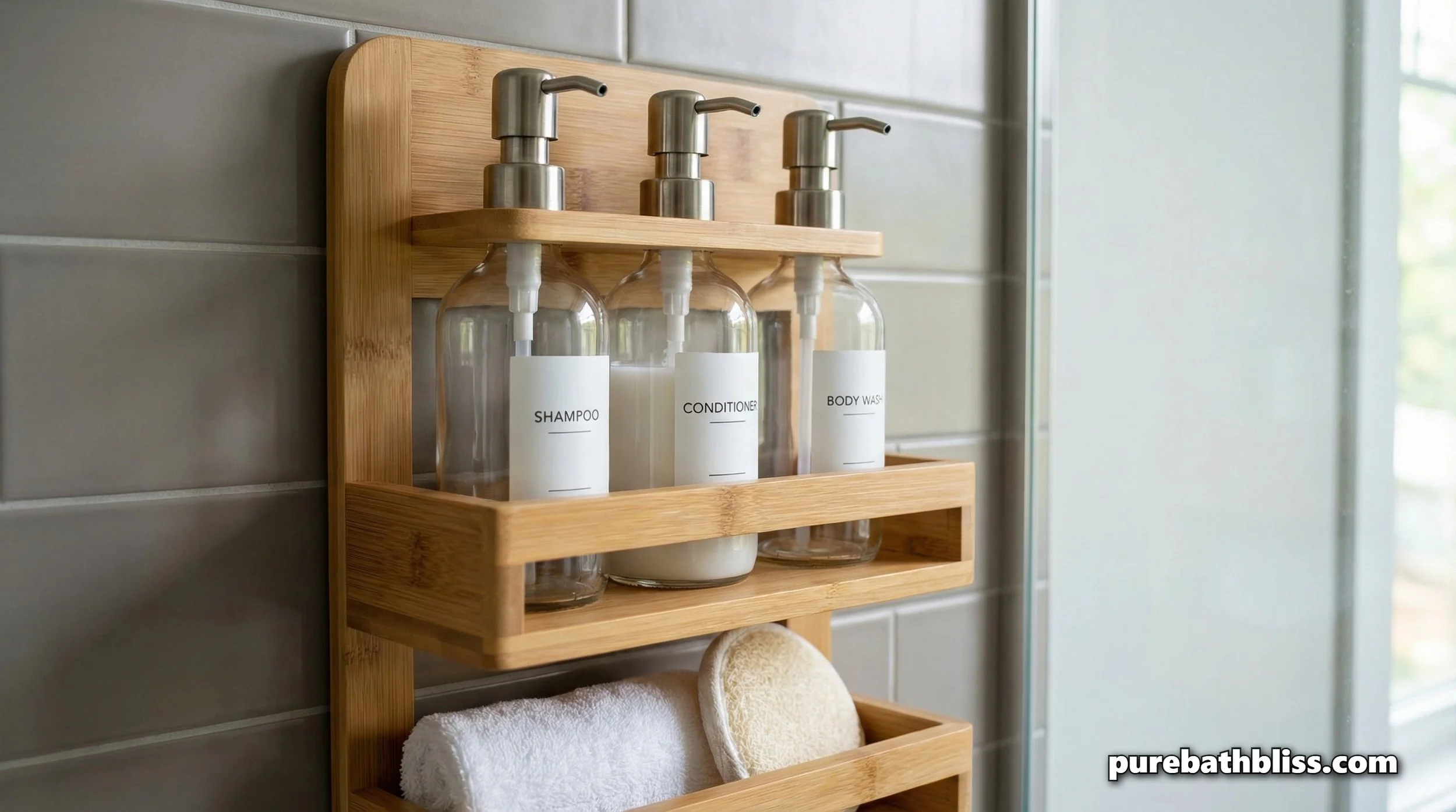
For a truly "Pure" aesthetic, remove the plastic bottles entirely. High-quality wall-mounted dispensers allow you to buy shampoo in bulk, eliminating the "visual noise" of mismatched plastic labels. They also make the shower floor easier to clean because there are no bottles to move when you are scrubbing.
Shower Caddies
If you aren't doing a renovation, a shower caddy is your best friend. Look for stainless steel or bamboo options that hang from the showerhead.
The Maintenance: The key here is to periodically scrub the caddy itself. It’s an infrastructure piece, not an accessory. A quick wipe down during your weekly cleaning ritual keeps it from rusting or becoming a magnet for soap scum.
4. The "Pure" Storage Matrix
Use this table to decide which storage architecture fits your sanctuary best.
| Storage Type | Pro | Con |
|---|---|---|
| Built-in Niche | Seamless, clean, durable. | Requires renovation; grout maintenance. |
| Wall Dispensers | Eliminates bottle clutter; eco-friendly. | Requires initial installation. |
| Hanging Caddy | No renovation; flexible. | Can rust if not stainless steel. |
| Floor Storage | Free/Easy. | Promotes mold; safety hazard; clutter. |
5. Safety: The "Clear Floor" Rule
With four kids, I’ve learned that the shower floor is a dangerous place. A cluttered floor is a slip-and-fall hazard waiting to happen. By adopting a "clear floor" policy, you aren't just making the room look better, you are making it objectively safer. When the floor is clear, you don't have to navigate around bottles while you’re showering, which reduces the chance of accidents.
6. Maintenance: The Quarterly "Bottle Audit"
Include your shampoo storage in your Maintenance & Care routine. Every three months, when you do your seasonal reset:
Remove all bottles from the shower.
Wipe down the shelves/caddy with an all-purpose cleaner.
Check the bottom of your bottles, if they have "gunk" on them, wipe it off.
Consolidate or discard empty bottles.
This 5-minute task keeps your shower from becoming a source of stress and keeps your "Sanctuary" looking like the spa you want it to be.
7. A Note on Stewardship
Caring for your bathroom is about respecting the room’s function. We use these spaces to cleanse and restore, but if the space itself is cluttered and harboring bacteria, we lose that restorative effect. Proper shampoo storage is a small change that ripples outward, making the entire room easier to maintain, cleaner, and ultimately more peaceful.
Builder-Curator Essentials
The Infrastructure: Stainless Steel Shower Caddy - Rust-resistant and durable.
The Aesthetic: Glass Refillable Shampoo Dispensers - Eliminates plastic noise.
The Maintenance: Microfiber Utility Cloths - Keep your storage surfaces moisture-free.
The Upgrade: Penetrating Grout Sealer - Apply to your shower niche to prevent water ingress.