The Bathroom Purge: A Strategy for a Clearer Sanctuary
Transparency Note: We independently select these products based on research and user reviews. If you buy something through our links, we may earn a commission.
As a father of 4, I can tell you that the bathroom is the most high-traffic "infrastructure" room in the house. It is where we prepare for the day and where we decompress at night. However, it is also the easiest place for clutter to accumulate. Over the years, I’ve learned that a cluttered bathroom isn't just an aesthetic annoyance, it is a functional liability.
When you hold onto expired medicine, half-empty bottles of mystery potions, or frayed tools, you are creating hiding spots for moisture, dust, and potential bacterial growth. I’ve performed this purge countless times, and I can promise you this: your bathroom should not be a storage unit. It should be a curated wellness center. This isn't just about throwing things away; it is about reclaiming the physical space so your "Sanctuary" can actually serve its purpose.
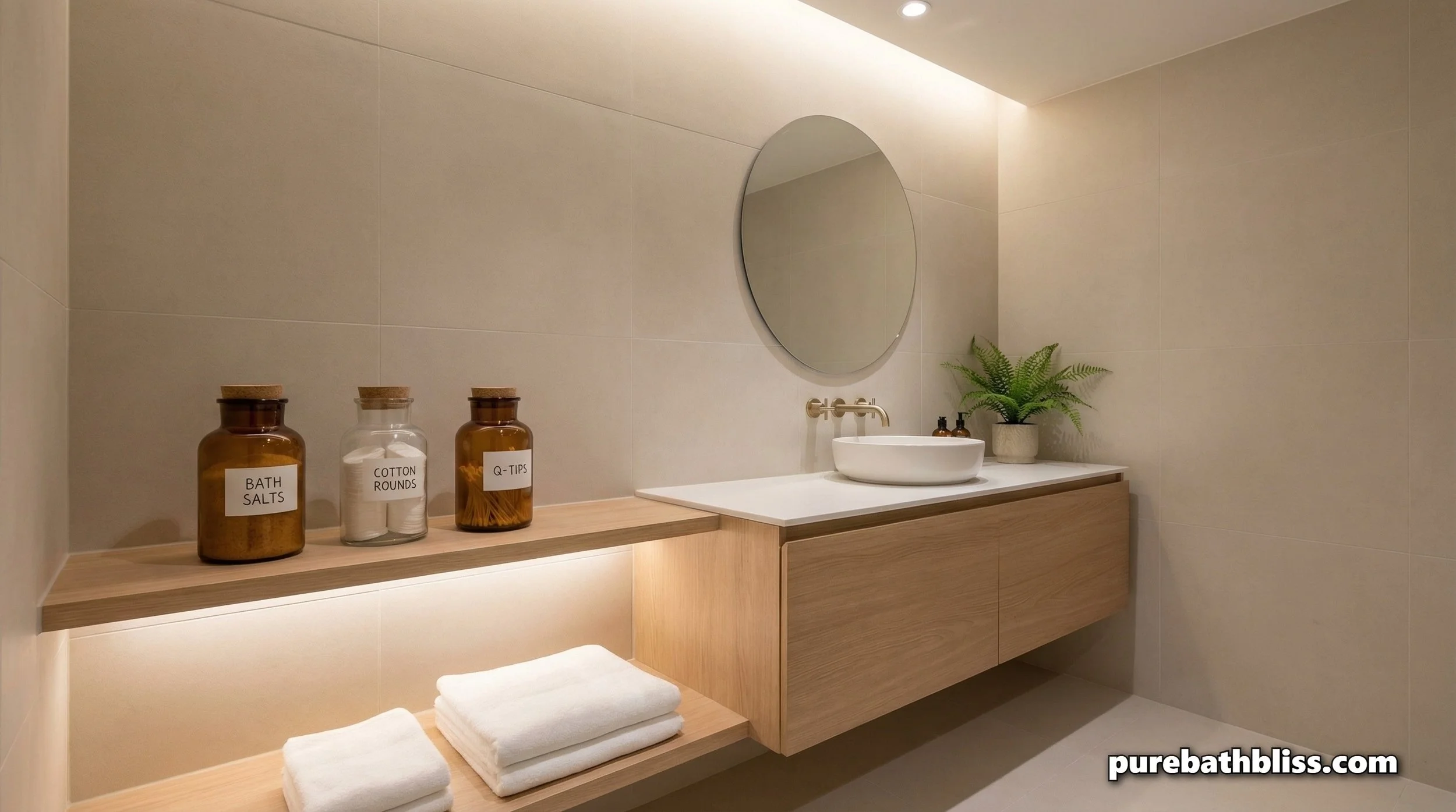
1. The Medicine Cabinet Audit: Safety First
Your medicine cabinet is not the place for long-term storage. The environment in a bathroom, characterized by temperature swings and high humidity, is the literal enemy of pharmaceutical efficacy.
When you perform your audit, be ruthless. Look for medications that are past their expiration date. Check for lotions or ointments that have separated or changed in texture.
The "Why": Medications degrade when exposed to heat and moisture. A pill that has "expired" may not be actively harmful, but it may have lost its potency, meaning it won't work when you or your family need it most.
The Disposal: Do not flush pills down the toilet. Most local pharmacies offer "take-back" programs where they will handle the proper disposal of old prescriptions. Treat your medicine cabinet as a high-performance tool kit, only keep what is currently relevant and effective.
2. Skincare and Makeup: The Biofilm Risk
We have discussed the dangers of Managing Humidity Levels in the Home extensively, but skincare products bring another dimension to the problem. Every time you open a jar of cream, you are introducing air and potentially bacteria into the product.
The Expiration Reality: Check the back of your lotions and cleansers for the "PAO" symbol (Period After Opening), usually a small jar icon with a number like "6M" or "12M." This tells you how many months the product is safe to use after you break the seal.
The Texture Test: If a product has changed color, smell, or consistency, discard it.
The Biofilm: Especially in "clean" beauty products without strong preservatives, bacteria can form a microscopic layer called a “biofilm ” inside the bottle. Once this happens, no amount of "keeping it clean" will make it safe to use on your skin.
3. The Tool Reset: Loofahs, Sponges, and Brushes
This is the category that most people get wrong. We tend to keep bath accessories far longer than their hygienic lifespan.
The Loofah/Pouf: These are essentially mesh labyrinths. They are designed to exfoliate, but in the process, they trap dead skin cells and moisture in their thousands of folds. Even if you rinse them well, they rarely dry out completely between uses in a humid bathroom.
The Threshold: If your loofah is more than 3–4 weeks old, it is time to retire it. If it smells "off" or "earthy," it’s already harboring mold.
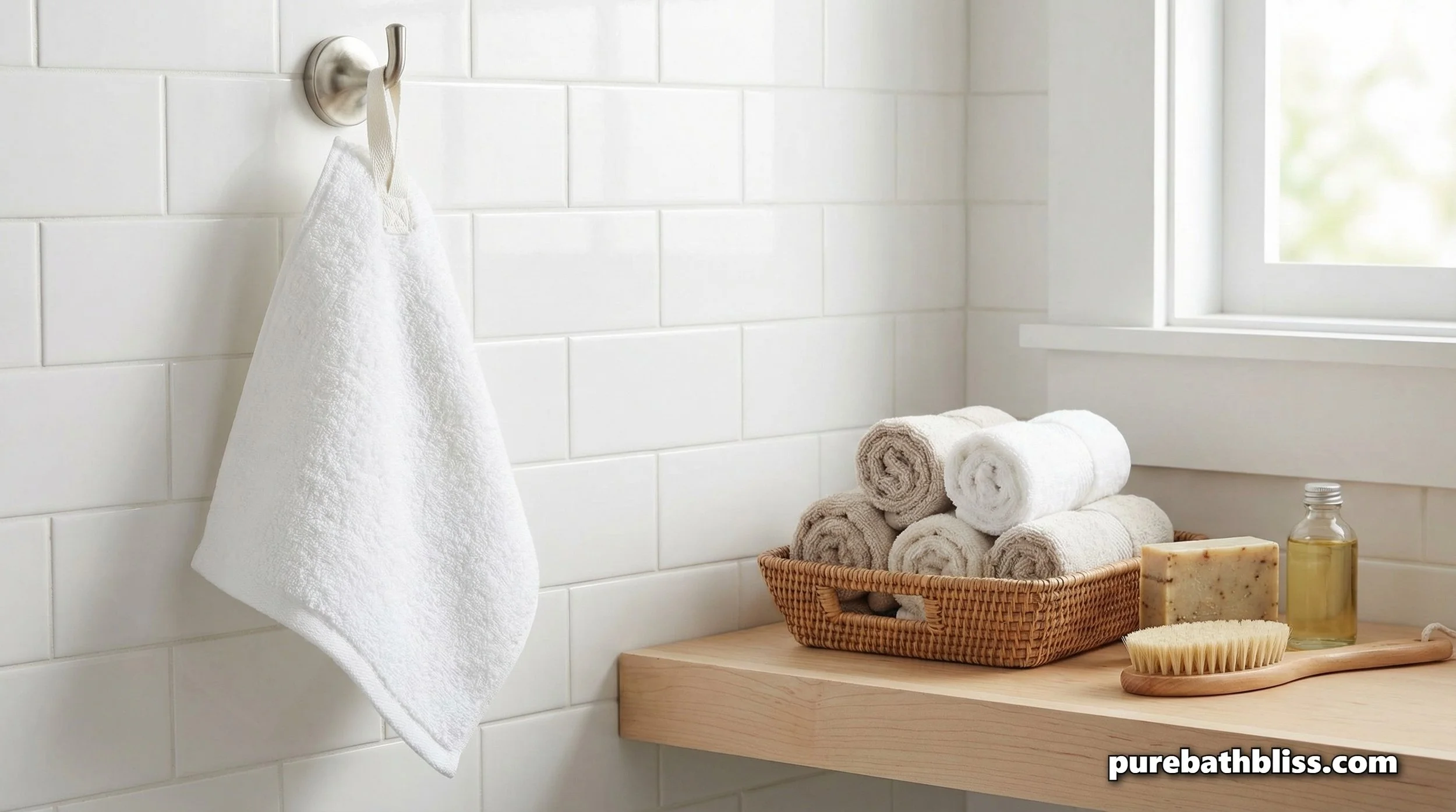
The Alternative: I prefer to use a high-quality washcloth that can be laundered in a hot, sanitizing cycle. It is a much more [Sustainable Zero-Waste] approach that aligns with the principles of a healthy home.
4. The "Just-in-Case" Trap: Managing Inventory
We often hold onto products because we "might use them someday." This is the psychological root of bathroom clutter. If you haven't used a specific shampoo, bath bomb, or styling product in the last six months, it is occupying valuable real estate in your sanctuary.
Inventory Stewardship: If you have an abundance of products, create a "first-in, first-out" system. Store the extra inventory in a linen closet, not on your bathroom vanity.
The Purge: If the product doesn't serve you, if it doesn't align with your Non-Toxic Living goals or if you simply don't like the result, let it go. Don't punish yourself by forcing yourself to "finish" a product you don't enjoy. That is a form of mental clutter that is just as heavy as the physical bottles.
5. Audit Checklist: The Purge Matrix
Use this table as your master checklist when you perform your quarterly audit.
| Category | Check For | Disposal Strategy |
|---|---|---|
| Medications | Expiration dates; cracked tablets. | Local pharmacy take-back. |
| Lotions/Creams | PAO symbol; texture separation. | Recycle/Trash based on local rules. |
| Loofahs/Sponges | Age (>4 weeks); musty odor. | Trash (Immediate disposal). |
| Hair Tools | Damaged cords; burnt bristles. | E-waste recycling center. |
6. Maintenance: Preventing Future Clutter
The purge is the hard part. Keeping it clean is the easy part. To prevent your sanctuary from becoming a graveyard of half-used bottles again, adopt these two habits:
The Quarterly Audit: Link this task to the seasons. When you perform your Sanctuary Reset Guide, take 15 minutes to do a quick purge of the vanity.
The "One-In, One-Out" Rule: If you buy a new moisturizer, don't just add it to the stack. Assess what you are using, finish the old one, or discard it if it’s no longer the right product for your needs.
7. A Note on Stewardship
As a father of 4, I know that keeping a bathroom clean feels like an uphill battle. But remember that your home is a system. When you remove the unnecessary, you aren't just saving space; you are removing the barriers to your daily wellness rituals. You are making your home easier to clean, easier to maintain, and more enjoyable to inhabit.
Don't be afraid to clear the shelves. There is a deep, quiet power in a bathroom where everything has a purpose and everything is fresh. Your sanctuary deserves to be a place of clarity, not a place where you are tripping over the remnants of last year's purchases.
Builder-Curator Essentials
The Apothecary: Glass Storage Canisters - For organizing the things you actually use.
The Tool: Microfiber Cleaning Cloths - Replace those loofahs and sponges with something you can sanitize.
The Habit: Airtight Storage Bins - For keeping surplus inventory in the linen closet, not the bathroom.