We talk a lot about cleaning tile, fixing grout, and keeping your faucets shiny. But if you don't control the moisture in your bathroom, you are fighting a losing battle. Moisture is the single biggest "infrastructure" problem in any home. When moisture gets trapped in a room, it creates the perfect environment for mold to grow, paint to peel, and materials to rot.
Most people think that a steamy bathroom is just a normal part of life. They turn on the shower, the room fills with thick fog, and they assume that as long as they don't see standing water, everything is fine. This is a mistake. Humidity, the invisible moisture in the air, is just as damaging as a water leak.
If you want to keep your bathroom in great shape for years, you have to learn how to move that moisture out of the room. Here is the simple, science-backed way to manage the air in your bathroom and keep your home dry.
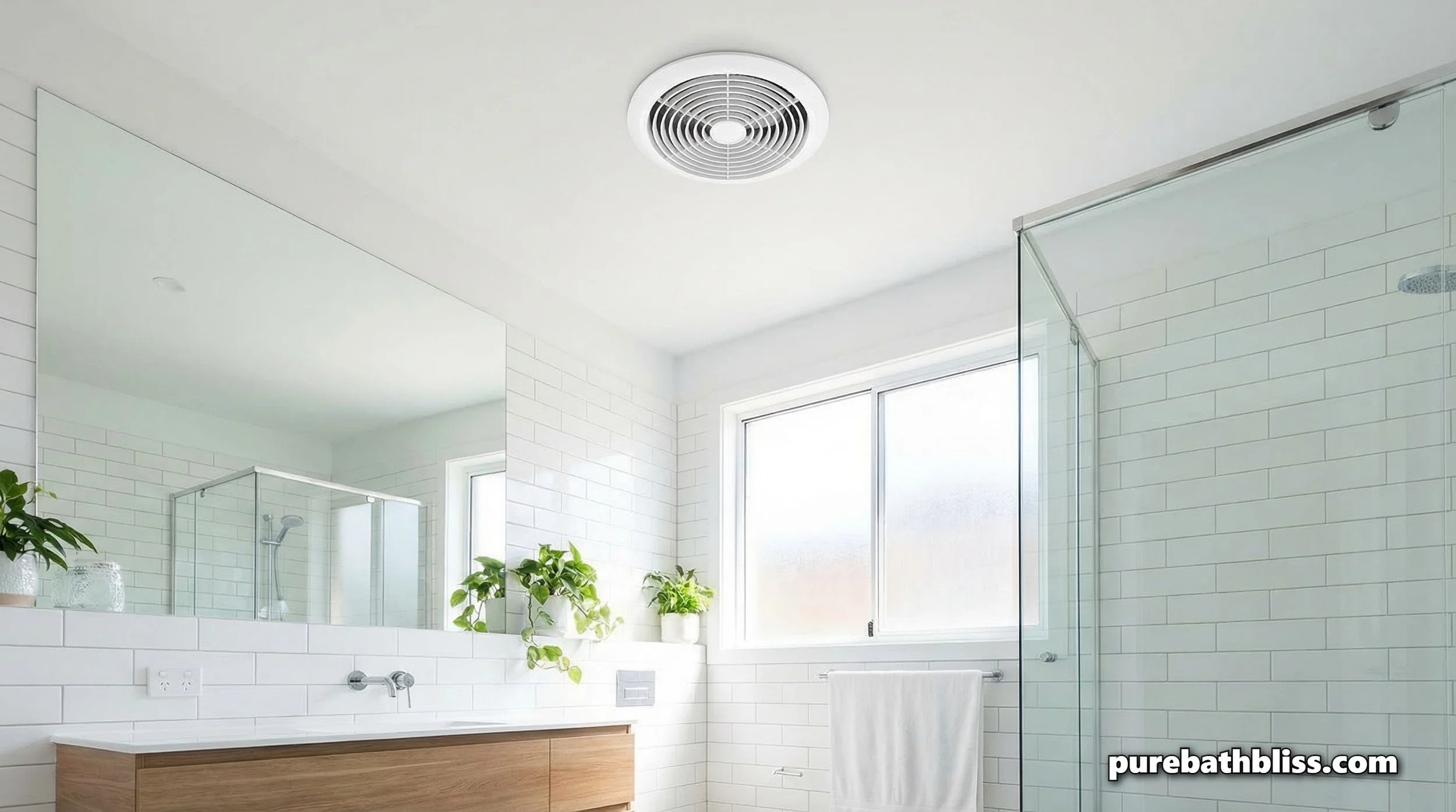
Why Moisture is Your Bathroom's Biggest Enemy
To understand why moisture is so dangerous, you have to think about what a bathroom is actually made of. Your walls, your vanity, and your floor are not perfectly sealed units. Even with the best paint and the best caulk, moisture will find the smallest gap.
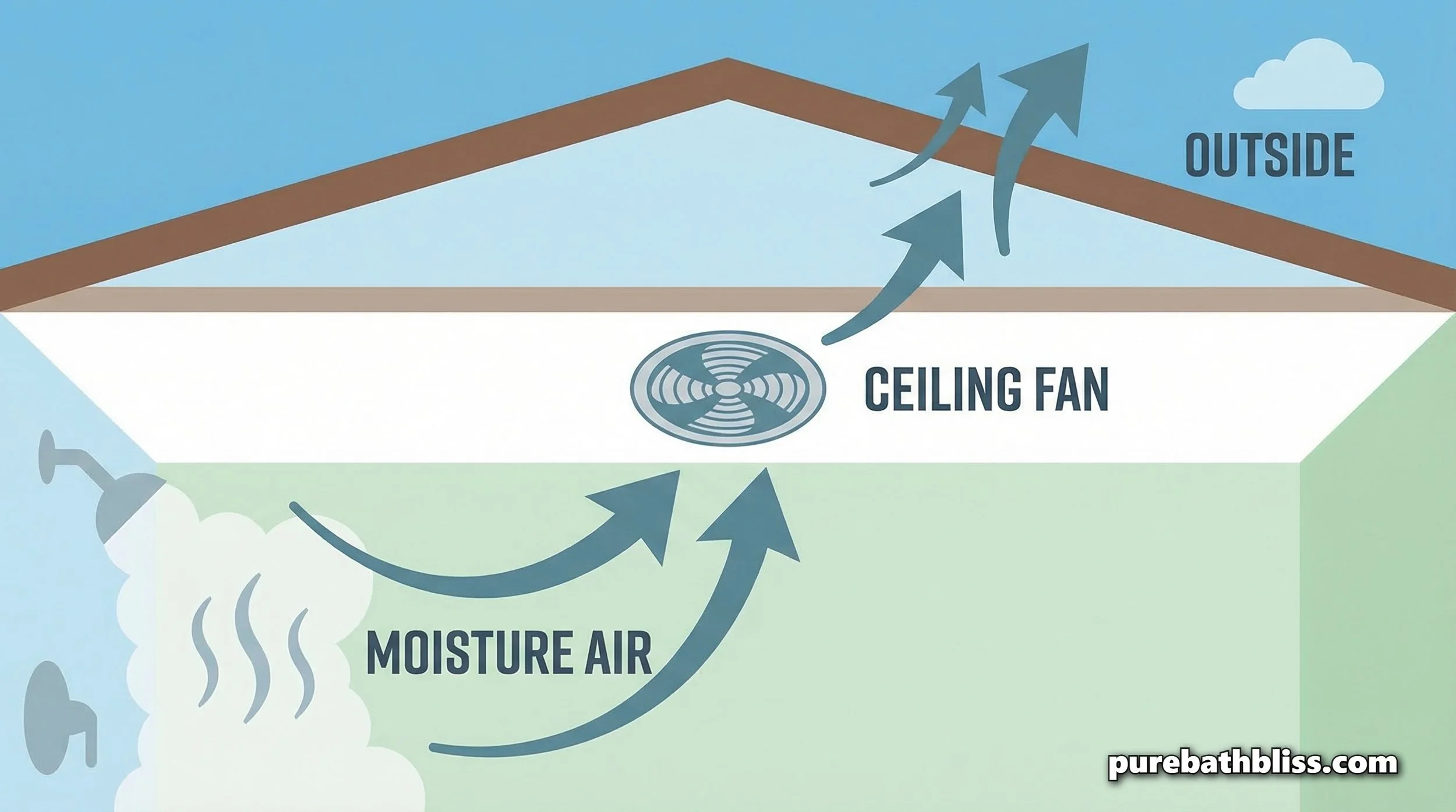
When you take a hot shower, you are essentially creating a mini-weather system in a small room. The warm air holds a lot of water vapor. As that air touches cold surfaces, like your mirror, your window, or your tile walls, it turns into tiny water droplets. This is condensation.
If this condensation sits on your walls or your fixtures, it eventually works its way into the tiny, invisible pores of your surfaces. Once it is trapped behind the paint or behind the tile, it starts to break down the material. This is where you get the "musty" smell that you can't get rid of, or the black spots in the corners of your ceiling.
If you don't stop the moisture, you will have to fix the damage later. And fixing rot behind a wall is much, much harder than just running a fan for a few minutes.
The Simple Science of the Exhaust Fan
The most important tool in your bathroom is not your scrub brush or your cleaner. It is your exhaust fan. Many people think the fan is just for smells, but its real job is to move humid air out of the room and replace it with dry air from the rest of your house.
If your fan is weak, old, or just dusty, it isn't doing its job. You might think it is working because it makes a loud humming noise, but a loud fan doesn't mean a strong fan.
The Tissue Test
You can check your fan in five seconds. Take a single square of toilet paper or a thin tissue. Turn the fan on and hold the tissue up to the grill of the fan.
If it sticks: Your fan is pulling air well.
If it falls: Your fan is not pulling enough air. It is either clogged with dust, or it is too weak to do the job.
If the tissue falls, you need to clean the grill. Over time, dust builds up and blocks the airflow. If it is still weak after you clean the dust, the motor might be dying. Replacing an old, weak fan with a new, strong one is one of the best investments you can make in your home's health.
How to Manage Moisture Daily
Even with a great fan, you need to use good habits. Moisture control isn't a "set it and forget it" task; it is a daily habit.
Run the Fan Long Enough: Most people turn the fan off the second they step out of the shower. This is a mistake. The air is still full of moisture. You should run the fan for at least 15 to 20 minutes after you finish your shower. If you have a smart switch or a timer, set it to run automatically.
Open the Door: Once you are done in the bathroom, leave the door open. This lets the air move through the room. If you keep the door closed, you are trapping the moisture in a small space, which makes it take much longer for the room to dry out.
Wipe Down the Walls: This is a simple trick that pros use. After you shower, use a squeegee or a towel to wipe down the glass and the tile walls. If you remove the water from the surface, it doesn't have a chance to evaporate into the air. This is a huge help for your grout and caulk. Read more about protecting those surfaces in Why Your Caulk is the Bathroom’s First Line of Defense.
Stop Storing Moisture
Believe it or not, the things you keep in your bathroom can act like sponges. If you keep piles of towels, rugs, or bathroom supplies on your counters, they can hold onto humidity.
If you have a rug that stays damp all day, it is keeping the floor underneath it wet. This can lead to issues with your tile and your subfloor over time. If you have problems with damp floors, you should definitely read Why Your Bathroom Floor is Working Harder Than You Think
Try to keep your bathroom as empty as possible. The less "stuff" you have in the room, the easier it is for the air to move, and the faster the room will dry out. If you have too many things in your cabinets, you might be keeping wet items tucked away where they cannot dry. Use the tips inThe Bathroom Purge to clear out the excess.
Preventing Hidden Damage
If you are doing all of these things, running the fan, opening the door, and keeping the room clear, but the room still feels damp, you might have a problem you cannot see.
Check your seals. If your caulk is failing, water is getting behind the wall every time you shower. If you see paint bubbling or soft spots on the wall, that is a sign that moisture has already gotten behind the surface.
Small leaks can also cause big problems. Even a tiny drip from a faucet can keep the sink area wet, which adds to the humidity in the room. Keep an eye on your faucets and fix leaks fast. If you are struggling with spots and leaks, check out Why Your Faucets Get Water Spots (And How to Clean Them) for more help.
Also, be careful with your cleaning products. Sometimes, we create moisture problems by over-cleaning. If you use a lot of water to rinse your floors and walls, you are just adding more moisture to the air. Use just enough water to get the job done. If you have an accident and spill a lot of water, clean it up immediately. Learn the safe way to do this in How to Clean a Bathroom Accident.
The "Simple Life" Approach
You don't need a fancy dehumidifier or a massive renovation to keep your bathroom dry. You just need to be smart about how you use the room.
When you keep the room dry, you protect the work you have already done. You protect your grout from staining, you protect your caulk from peeling, and you protect your paint from chipping. It is all connected. Your bathroom is a system, and moisture is the one thing that can break that system if you don't keep an eye on it.
If you make these small changes, running your fan, clearing your counters, and wiping down your surfaces, you will spend much less time "fixing" your bathroom and much more time just enjoying it.
Summary: Keeping Your Bathroom Dry
Test your fan: If a piece of tissue doesn't stick to the grill, your fan needs to be cleaned or replaced.
Run the fan longer: Keep the fan on for 20 minutes after you leave the shower.
Leave the door open: Let the air move through the room.
Wipe it down: Remove water from walls and glass with a squeegee.
Limit the "sponges": Don't keep too many towels or rugs in the room.
Watch for leaks: Fix dripping faucets or failing caulk immediately.
Keeping your bathroom dry is the simplest, most effective way to protect your home. It isn't exciting, and it isn't glamorous, but it works. It is the foundation of a clean, healthy, and easy-to-maintain space. By doing these simple things, you create a system that keeps your bathroom looking good without requiring you to do a deep clean every single week.