Are Heated Bathroom Floors Worth It?
There is nothing quite like the shock of a cold tile floor on a winter morning. In the world of home renovation, few upgrades feel as indulgent as heated floors. It’s a feature that feels pure "luxury," but as a carpenter, I see it more as a piece of high-performance infrastructure.
Is it worth the investment? Does it actually add value, or is it just another system that can break?
As a father of four, I’m always balancing the desire for a high-end Sustainable Sanctuary with the reality of a family budget. Heated floors are a legitimate upgrade, but they aren't always the right choice for every bathroom. Let’s break down the builder’s perspective so you can decide if it belongs in your renovation plan.
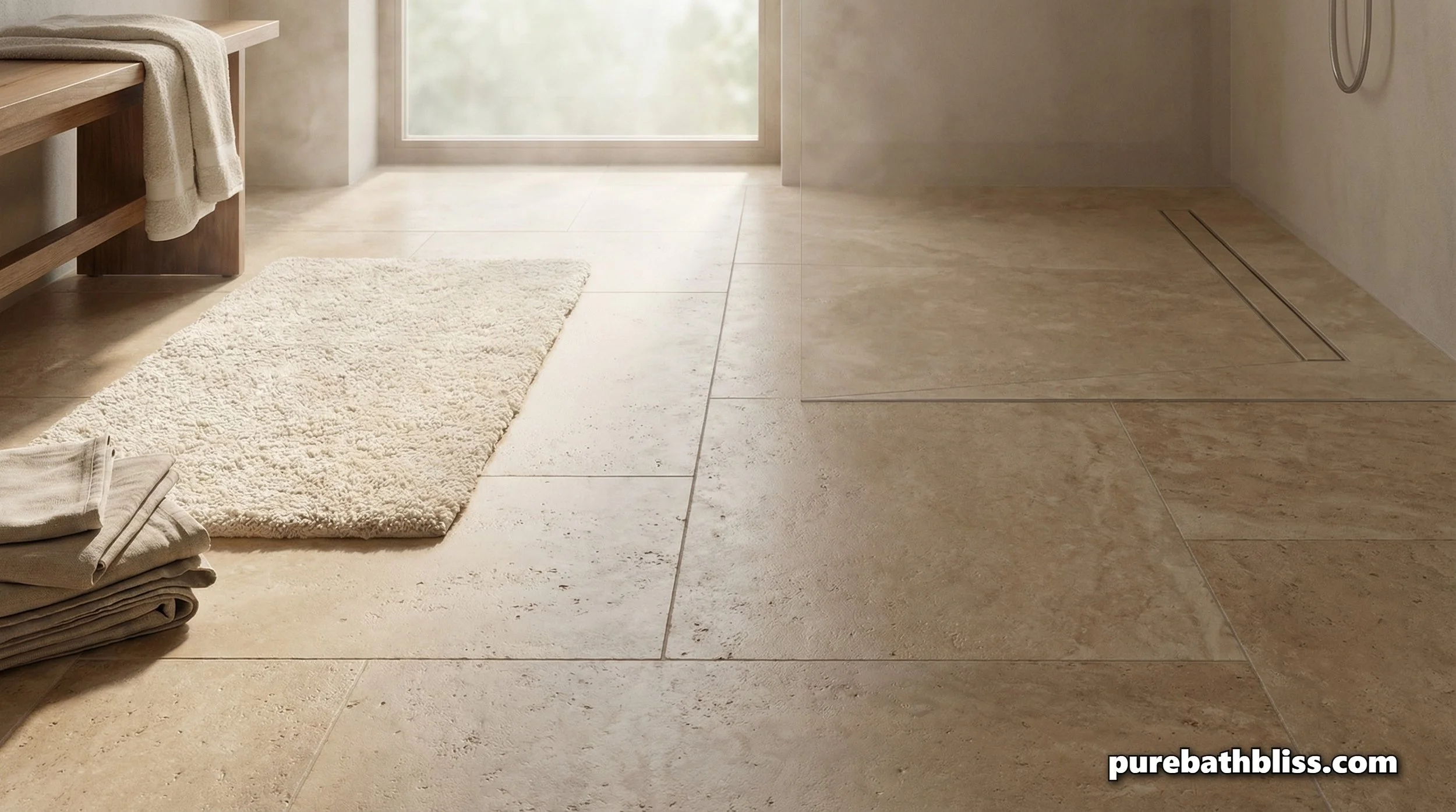
1. The Two Types of Systems
Before you decide, you need to know which system you are looking at. They operate very differently in terms of installation and cost.
Electric Radiant Heat
This is the most common choice for bathroom remodels. It consists of a thin mat or wire system that sits in the mortar bed directly beneath your tile.
The Pro: It’s easy to install during a standard tile job and can be controlled by a simple thermostat.
The Reality: It’s strictly for comfort, not for heating the entire room. You aren't going to heat your whole house with this; you are just taking the "chill" off the tile.
Hydronic Radiant Heat
This system circulates warm water through tubes beneath the floor.
The Pro: It is incredibly energy-efficient and can provide primary heat for an entire room or even a house.
The Reality: It is expensive and complex. Installing this in a single bathroom as a "retrofit" is almost never cost-effective. This is typically reserved for major, whole-house builds or major additions.
2. The Retrofit Reality Check
If you are doing a full gut renovation of your bathroom, installing an electric mat system is surprisingly straightforward. You add the mat, lay your mortar, and tile over it.
However, if you are not tearing up your existing floor, the "retrofit" options are limited. There are some "underfloor" heating panels that can be installed from a crawlspace or basement below, but they are expensive and less efficient because they have to heat the entire subfloor assembly before the heat reaches your feet. If you aren't already tiling, skip it.
3. Energy Consumption: Is it "Sustainable"?
Many people worry about the energy usage. The good news? Electric radiant mats are actually quite efficient if you use them correctly.
The Programmable Advantage: You don't need the floor to be 90°F at 2:00 PM on a Tuesday. Use a programmable thermostat to have the floor warm up 30 minutes before your morning routine and shut down when you leave.
The Insulation Factor: The biggest energy-waster isn't the mat, it’s a cold subfloor. If you install heated floors, you must use an uncoupling membrane (like Ditra-Heat) or insulation board underneath the heating wires. This pushes the heat up into the tile instead of down into your floor joists. Without insulation, you’re just heating your basement ceiling.
4. The Decision Matrix: Is it for You?
Use this guide to see if the investment aligns with your goals.
| Factor | Verdict |
|---|---|
| Climate | Worth it if your winters are long/harsh. |
| Budget | Consider it "luxury," not "necessity." |
| Reno Scope | Only worth it if you are already retiling. |
| Comfort | The highest return on investment. |

5. The "Hidden" Benefits
Aside from the immediate comfort, there is a technical benefit to heated floors: Dryness.
Because the floor is warm, water that splashes out of the shower evaporates much faster. This reduces the risk of mold in your grout lines and keeps your floor dry and safe. In a high-humidity room, this is a legitimate "infrastructure" win.
6. A Note on Stewardship
I am a builder, and I love installing these systems, but I always tell my clients: Don't sacrifice your structural integrity for a luxury feature. If your budget is tight, it is better to spend that money on a high-quality waterproofing membrane, a proper exhaust fan, or better plumbing valves, things that keep your house from failing. A warm floor is a "want"; a dry, rot-free bathroom is a "need." If you have the budget for both, go for it. But if you have to choose, always prioritize the infrastructure first.