The Back-to-School Bathroom Reset: Deep Clean, Restock, and Survive the Morning Rush
Every year, the week before school starts, I do a full reset of our bathrooms. Not just a clean, though that is part of it. A reset. We go through every product, every shelf, every drawer, and every habit that formed over summer and assess what is working, what needs to go, and what needs to change before the first school morning hits.
With four kids, a bathroom that works casually in summer does not necessarily survive the 7am school rush. The chaos of four people trying to use the same space in a forty-five minute window requires a different level of organisation than the looser summer routine. The products need to be in the right places. The supplies need to be stocked. The surfaces need to be genuinely clean, not just visually tidy. And everyone needs to know where everything is so the morning does not become a search party.
This is the reset I run every August. It takes about three hours across a weekend and pays off in calmer mornings for the next nine months. Here is the complete guide.

Why September Is the Right Time for a Bathroom Reset
Most people do their big bathroom cleanout in spring. And spring cleaning is worthwhile. But September is arguably more impactful for a family with school-age children, because it is when your bathroom actually changes how it is being used.
Summer bathroom use is relaxed and irregular. People shower at different times, bed times drift, morning routines have no urgency. Products accumulate during summer travels, sunscreen and beach spray and insect repellent takes up counter space, towels multiply because nobody is tracking them, and the medicine cabinet fills with things picked up for camping trips or vacations that are no longer needed. By late August, the average family bathroom has accumulated two to three months of that drift.
September resets all of that. School mornings are unforgiving. If the toothpaste is not where it is supposed to be, if someone's towel is not on their hook, if the hair dryer cord is draped across the counter, those frictions compound daily and contribute to the morning stress that exhausts the whole family before nine in the morning. A bathroom that is set up specifically for the school year routine removes that friction before it has a chance to develop.
The reset also coincides with cold and flu season beginning in earnest. School returns, kids come home with germs, and the bathroom becomes the frontline of household hygiene. It is worth having that space genuinely clean and properly stocked before the first illness of the year arrives rather than scrambling to deal with it mid-September.
Part 1: The End-of-Summer Deep Clean
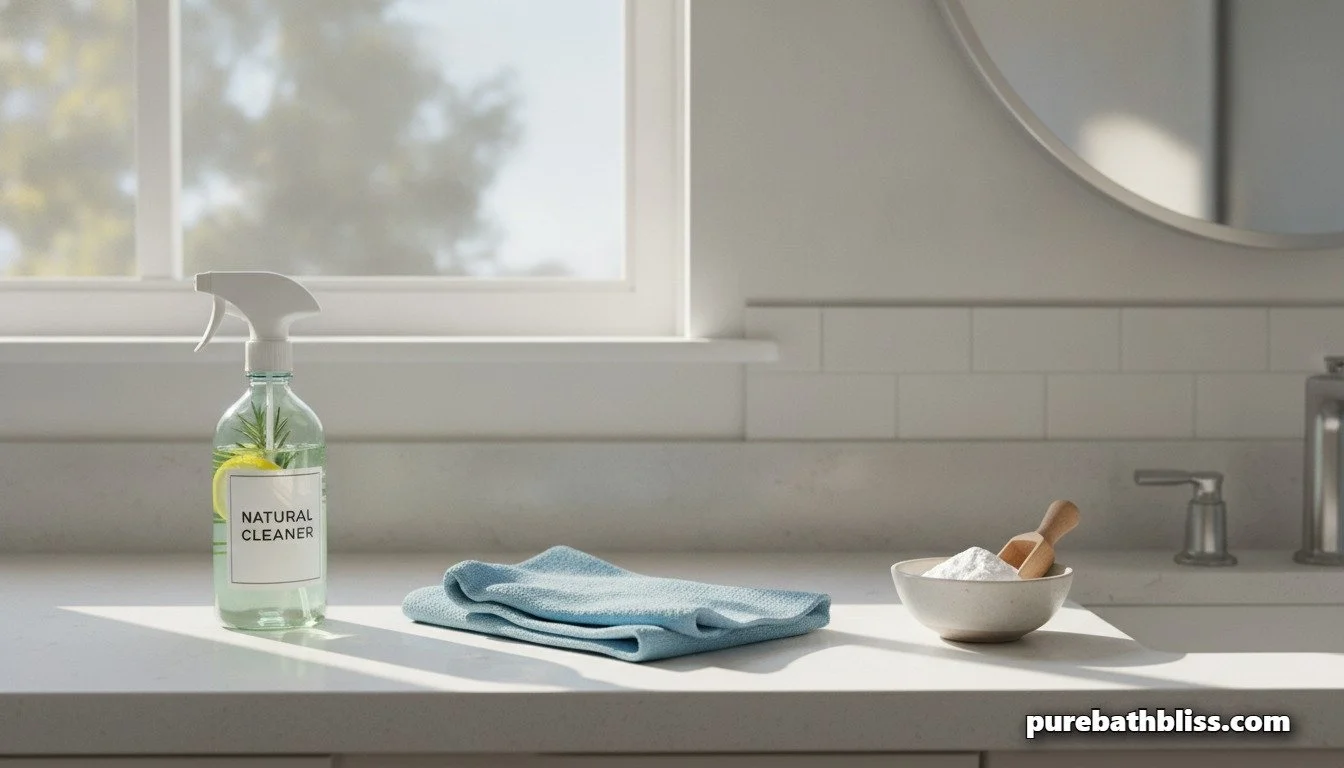
The deep clean happens first, before any restocking or organising. There is no point in putting things back neatly until the surfaces underneath are genuinely clean.
The Grout and Tile Audit
Summer means longer showers, more frequent baths, and generally more moisture moving through the bathroom. By late August, grout lines and tile surfaces in the shower and around the tub have typically accumulated more soap scum, mineral deposits, and early-stage mould than at any other point in the year. Work through the grout with a baking soda and hydrogen peroxide paste on a stiff brush, paying particular attention to the corners and the bottom row of tiles where water pools longest. On ceramic and porcelain, a vinegar spray after the scrub addresses any remaining hard water deposits. Our non-toxic grout cleaning guide covers the full step-by-step method including the one surface where you should never use vinegar.
The Caulk Check
Press gently along every caulk line around the tub, shower, and sink. Caulk that feels soft, spongy, or that pulls away from the surface at any point needs to be replaced before school starts. This is not an aesthetic issue. Failed caulk allows water behind the wall or subfloor, and the damage from a summer of that happening is always more expensive than an afternoon of recaulking. If the caulk has only surface mould rather than structural failure, a cotton swab with tea tree oil along the line once a week prevents it from progressing. Our recaulking guide covers the full process if you do need to replace it.
The Drain Flush
Summer means more hair. More sunscreen and body oil. More of everything going down the drain. Before school starts, flush every drain with a baking soda and boiling water treatment, followed by a cup of white vinegar and another hot water chase fifteen minutes later. This breaks up the biofilm layer that accumulates in the pipes over summer and prevents the sulfur smell that develops when that biofilm sits too long undisturbed. If any drain is running slower than normal, address it now rather than in November when everyone is sick and the bathroom is getting maximum use. Our bathroom smell diagnosis guide covers the full drain cleaning protocol and how to tell whether slowness is biofilm, a P-trap issue, or something that needs a plumber.
The Exhaust Fan
Remove the fan grill and soak it in white vinegar and warm water for twenty minutes. A bathroom fan clogged with summer dust and lint cannot move enough air to manage the humidity from four kids showering in quick succession each morning. A clean fan running properly is the single best mould prevention tool in the room. While the grill is soaking, wipe out the inside of the fan housing with a dry cloth. Dust on the motor housing reduces efficiency and creates a fire risk over time.
The Towel Situation
Count your towels. In our house, summer always ends with a mysterious surplus of beach towels and a shortage of bath towels that anyone can actually explain. Pull every towel out of the linen shelf or closet, assess the condition of each one, and retire anything that is threadbare, permanently stained, or that smells musty even after washing. Each person gets two bath towels maximum, their own hook or bar spot, and the expectation that wet towels are hung immediately after use. Set that expectation at the start of September and enforce it. The alternative is the pile on the bathroom floor that generates a sour smell by the end of the week.
If you want to maximise storage capacity on whatever shelf you have available, our spa fold guide covers the two hotel folding techniques that fit 25 to 40 percent more towels in the same space just by changing the fold.
Part 2: The Medicine Cabinet and Products Audit

This is the step most people skip and the one that has the most direct impact on the health of the people using the bathroom. The medicine cabinet is where products expire quietly in the dark, where summer purchases accumulate, and where important cold-season supplies run out unnoticed until someone is sick at ten at night.
Check Every Expiry Date
Pull everything out of the medicine cabinet and check the expiry date on every single item. Medications that are past their date are not just ineffective — some break down into compounds that are actively harmful. Sunscreen from the summer needs to be checked. Most sunscreens have a shelf life of two to three years, but a bottle that has been left in a hot car or a beach bag has likely degraded faster than its label date suggests. If you cannot remember where a product has been stored, and it smells different from when it was new, that is reason enough to replace it.
For medicines specifically, Health Canada and the FDA both recommend disposal at a pharmacy take-back programme rather than flushing or binning them. Pharmaceuticals that enter the water system through flushing are a genuine environmental problem and the take-back option is worth the minor inconvenience. Most pharmacies accept unused or expired medications without any paperwork or fee.
Restock the Cold Season Essentials
September is the right time to stock up before you need something at two in the morning. Our family keeps a specific school-year kit in the medicine cabinet: children's fever reducer in the correct weight-based dosing, a non-toxic sore throat spray, a saline nasal rinse, electrolyte sachets, and a thermometer that actually works. Check all of these now. Replace the thermometer batteries. Confirm the fever reducer has not expired. Buy the nasal rinse before everyone in the family needs it simultaneously.
Replace the Toothbrushes
September is one of the four natural toothbrush replacement points in the year, and it is the most important one. School means shared spaces, shared germs, and the beginning of the respiratory virus season. Starting the year with a fresh toothbrush for every family member is a small act of hygiene that genuinely matters. If you are switching to a more sustainable option, our bamboo toothbrush guide covers what to look for in bristle softness, handle quality, and the specific care steps that prevent bamboo handles from developing mould. And if you use an electric toothbrush, replace the head and do a thorough deep clean of the handle and charging base. Our complete electric toothbrush cleaning guide covers every step including the post-illness disinfection protocol you will want ready for when the first school cold arrives.
The Summer Product Clearout
Move summer-specific products out of the bathroom entirely. Sunscreen goes to a bathroom drawer or under-sink cabinet where it will be found next May, not left on the counter to take up daily space it no longer earns. Insect repellent, after-sun lotion, and anything else with a specific seasonal purpose follows the same logic. The counter and cabinet space they were occupying goes back to the school year products that need to be accessible every morning. If you want a framework for deciding what stays and what goes, our Bathroom Purge guide covers every product category with a clear decision framework for each one.
Part 3: Setting Up the Morning Routine Infrastructure
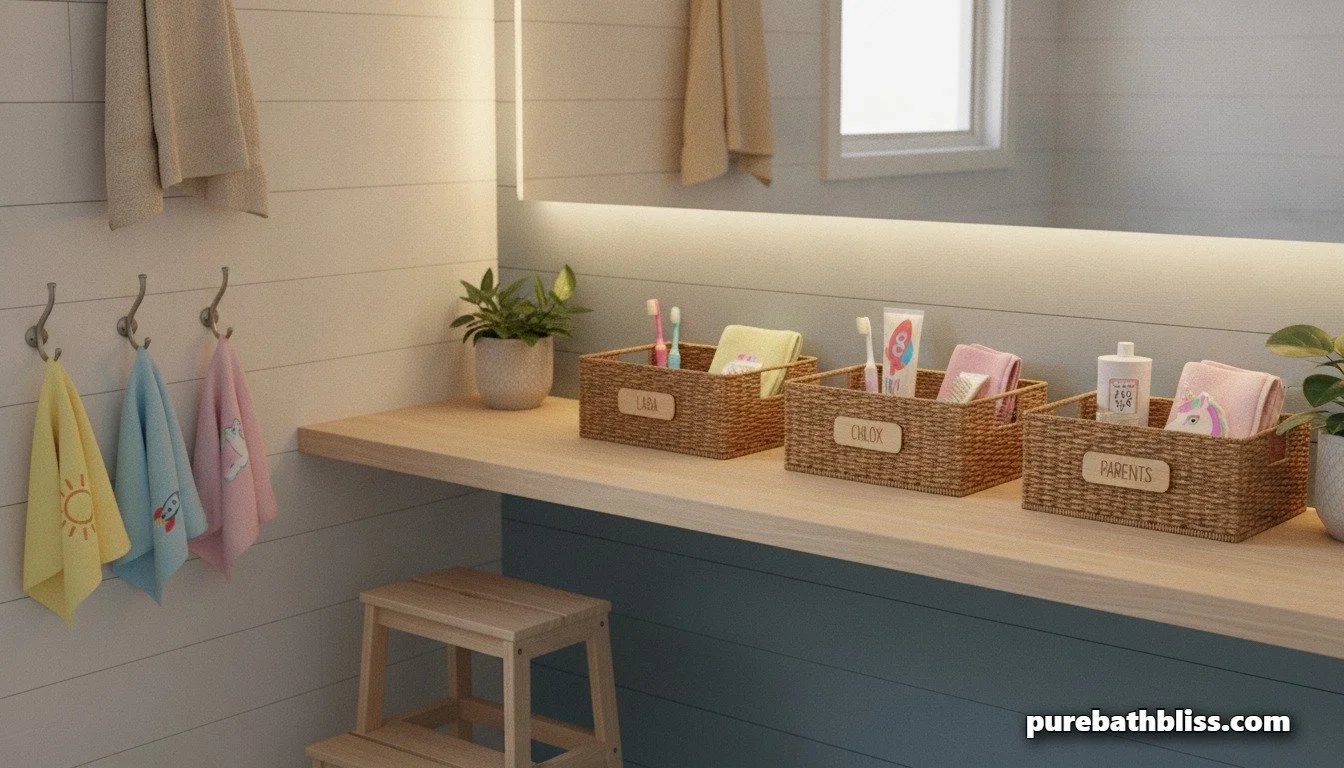
The physical setup of the bathroom determines how well the morning routine flows. Every extra second someone spends looking for something, every towel that falls off an inadequate hook, every product that is not where it is supposed to be adds friction to a process that needs to happen quickly and without conflict.
Assign Zones, Not Just Shelves
With multiple children sharing a bathroom, the single most effective organisational change you can make is assigning each person a dedicated zone for their daily products rather than a shared shelf where everything gets mixed together. In our bathroom, each child has a small basket or caddy that contains only their specific daily items, their toothbrush, their toothpaste, their hair product, and nothing else. The caddy goes back in its spot after use. When something runs out, it is obvious because the caddy has an empty spot. When something is missing, only one person's caddy needs to be checked.
This system also makes it easier to notice when a product has been brought in from elsewhere, or when something has been borrowed and not returned, which is the primary cause of the "where is my thing" conversation at 7:15am.
The Hook System
One hook per person, at a height they can reach without tiptoeing, is the single most effective towel management system for a family bathroom. Each person knows their hook. Wet towels go on their hook immediately after use. Clean towels are retrieved from the shelf and go on the same hook. Nobody's towel ends up on the floor because there is a specific, accessible, designated place for it that requires less effort to use than the floor does.
If you are renting or do not want to drill more holes, adhesive hooks rated for the weight of a bath towel work reliably on tile and painted drywall and come off cleanly with a hair dryer applied to the adhesive base when you eventually remove them. If you are ready to install permanent hardware, our towel bar installation guide covers hitting studs versus drywall anchors for a secure mount that will not pull out mid-year under the weight of four damp towels.
Counter Rules for School Days
Establish a clear counter rule at the start of September and hold to it: nothing lives on the counter permanently except the soap dispenser and the hand towel. Everything else is picked up and put away after use. Hair dryers, straighteners, and styling tools are the biggest offenders in most family bathrooms. A wall-mounted holder or a dedicated drawer eliminates the counter chaos and also removes an electrical safety hazard. Our guide to why hair dryers should not live on the bathroom counter covers the electrical hazard aspect specifically, which is worth understanding if you have teenagers or kids who are just starting to use heat styling tools.
The Under-Sink Stock Zone
Under the sink is where backup stock lives, not primary supplies. Back-to-school is the right time to inventory the under-sink cabinet and make sure it is stocked with the things you will need over the next three months: spare toothpaste, spare hand soap refills, spare toilet paper, replacement toothbrush heads, and your cleaning supplies. A tension rod across the front of the cabinet to hang spray bottles keeps the floor clear and accessible. Clear bins grouped by category prevent the avalanche when someone opens the door looking for something at the back.
Part 4: The Germ Management Plan
School starts and within three to four weeks the first illness arrives. It is not a question of whether but when. The bathroom is both the primary hygiene space for fighting illness and the primary transmission vector when someone is sick. Getting the germ management protocols in place before the first cold is considerably easier than scrambling to implement them while someone is already ill.
The Illness Protocol
When someone is sick, three things change in our bathroom immediately. First, their toothbrush moves to a separate cup away from everyone else's. Second, their towel gets a dedicated hook or goes straight to the laundry after each use rather than being reused. Third, the door handles, tap handles, and toilet flush get a wipe with a diluted hydrogen peroxide spray twice a day for the duration of the illness. These three steps cost almost nothing and meaningfully reduce how much of the illness moves to other family members.
After the illness passes, the toothbrush is replaced regardless of when it was last replaced. Our electric toothbrush cleaning guide covers the full post-illness disinfection protocol including the hydrogen peroxide soak method, but the simplest version for a manual brush is simply to bin it and start fresh. A toothbrush costs two dollars and the risk of reinfection is not worth it.
The Handwashing Setup
This sounds obvious but it is worth actually checking: is the handwashing setup at your bathroom sink genuinely usable for your kids? Is the soap dispenser easy for smaller hands to operate? Is there a step stool if needed? Is the soap something that does not require ten pumps to get enough to lather? A refillable glass dispenser with a proper pump and a good castile soap or plant-based liquid soap is all you need. Antibacterial soaps are no more effective than regular soap for household use according to the FDA and they disrupt the skin microbiome with repeated use. Regular soap and proper technique is the standard and it is enough.
The Weekly Non-Toxic Disinfect
Establish a weekly surface disinfection routine using the sequential vinegar and hydrogen peroxide method rather than conventional disinfectant sprays. The vinegar first, wipe, then hydrogen peroxide approach achieves comparable disinfection to commercial products without the chemical residue. During cold and flu season specifically, add tea tree oil to the maintenance spray for an extra antifungal and antibacterial layer. Our tea tree oil bathroom guide covers the specific dilution ratios for a surface spray that is genuinely effective against the bacteria and mould that concentrate in a heavily-used school-year bathroom.
Part 5: Getting the Kids Involved
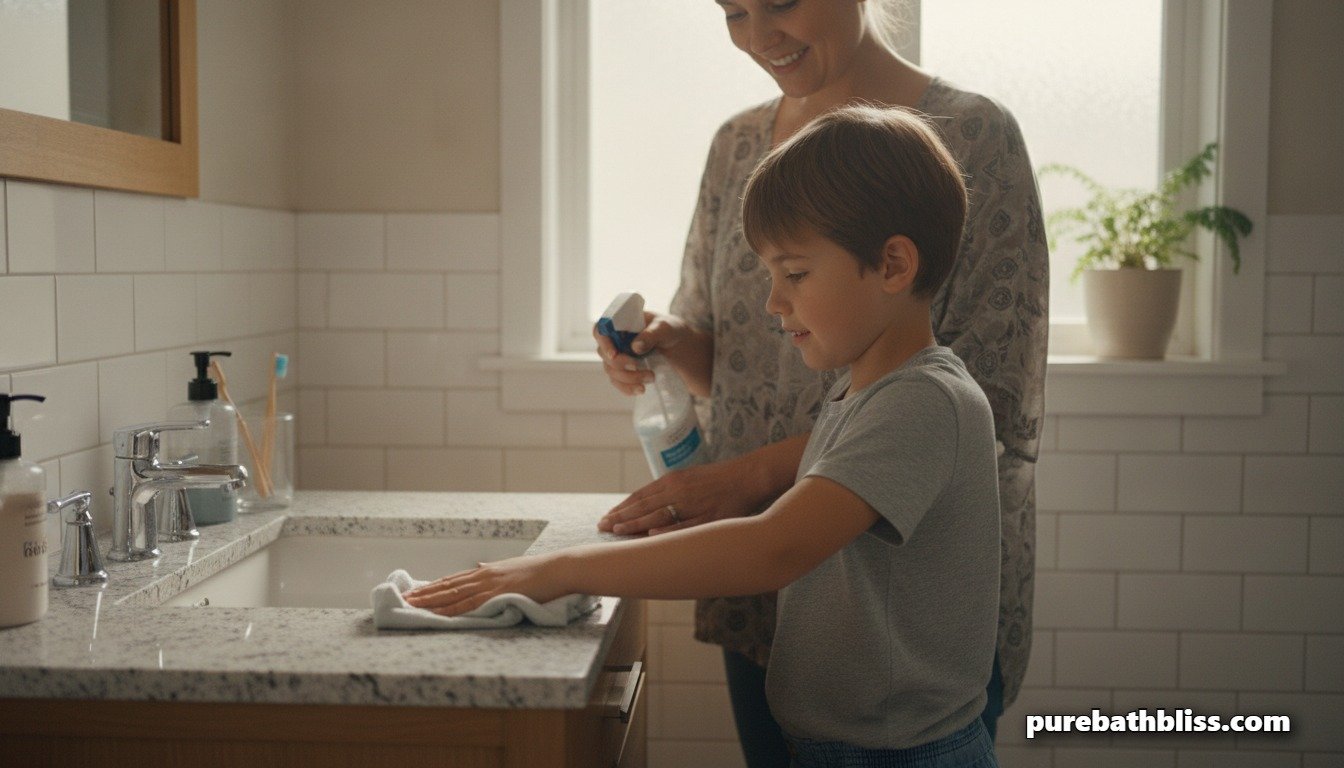
The bathroom reset is also an opportunity to reset the expectations around who is responsible for what in the bathroom, and that conversation goes better if the kids are involved in the reset rather than just presented with rules at the start of the year.
What we do in our house: each child participates in cleaning their own bathroom zone as part of the reset weekend. They wipe their own shelf section, restock their own caddy, and put their towel and hook assignment in place. This is not about having perfect cleaning standards from a ten-year-old. It is about ownership. When a child has set up their own space, they are considerably more likely to maintain it than when a parent has done it for them and handed over a set of rules.
Age-appropriate tasks are worth thinking about explicitly. A six-year-old can wipe their shelf with a damp cloth and put their products back. A nine-year-old can clean their own section of the sink and mirror. A twelve-year-old can manage a toilet clean with guidance. These are not chores in the punitive sense. They are the development of basic functional competence that will serve them for the rest of their lives. Our guide to when children are ready for bathroom independence covers the developmental milestones that determine which tasks are appropriate at which ages, including the specific signs that a child is ready to take on more responsibility without it becoming a source of conflict.
The weekly reset, a ten-minute tidy at the end of every week where each person restocks their caddy, hangs their towel properly, and wipes their zone, is the maintenance habit that keeps the September reset from needing to be redone in November. We do ours on Sunday evenings as part of the general house reset before the school week. It takes less time than the conversation about why it has not been done.
The Back-to-School Bathroom Reset Checklist
For easy reference, here is the complete checklist you can work through over a weekend:
Deep Clean: Grout and tile scrub, caulk inspection and repair if needed, full drain flush on every drain, exhaust fan grill soak and clean, toilet base clean and reseal if needed
Towels: Full inventory and condition audit, retire anything threadbare or musty, assign hooks and establish the hung-immediately-after-use rule
Medicine Cabinet: Check every expiry date, dispose of expired medications at pharmacy, restock cold season essentials, replace all toothbrushes and electric toothbrush heads
Products: Move summer products out, clear counter to daily essentials only, set up individual caddies per child, stock under-sink with school-year backups
Infrastructure: Confirm hooks are at the right height for each child, install or check towel bar hardware, sort out hair tool storage so nothing lives on the counter
Germ Management: Confirm illness protocol is understood by everyone, check handwashing setup is usable for kids, set up weekly non-toxic disinfection routine
Kids: Involve each child in setting up their zone, confirm responsibilities by age, establish the Sunday weekly reset habit
One Weekend, Nine Months of Calmer Mornings

The September bathroom reset is one of those investments that feels disproportionately valuable relative to the time it takes. Three hours once produces calmer, faster, less conflicted mornings for the next nine months. That is a return on investment that almost nothing else in the house offers.
It also sets a standard that persists. When the bathroom has been properly set up and the kids understand the system, maintaining it week to week is considerably easier than continuously putting out the fires of a bathroom that was never properly organised in the first place. The Sunday reset takes ten minutes instead of an hour precisely because the September reset established what the baseline looks like.
If the September reset reveals that the bathroom has accumulated more clutter than a single weekend can address, our full overcluttered bathroom guide covers the five signs your bathroom has crossed from messy into genuinely dysfunctional, and exactly what to do about each one. Sometimes the reset reveals that the real problem is not the summer drift but a structural organisation issue that has been building for longer. Either way, September is the right time to deal with it.