Originally published Apr 25, 2026 · Updated September 26, 2026
Transparency Note: We independently select these products based on research and user reviews. If you buy something through our links, we may earn a commission.
In the course of my carpentry career I have opened up more bathroom walls than I can count. The majority of the water damage I have found behind tub surrounds, in subfloors under shower bases, and in wall cavities around fixtures was not caused by plumbing failures. It was caused by failed caulk joints that were either never installed correctly or that were maintained with the wrong product. The water entered through a lifted or cracked caulk line at the tub edge, reached materials behind the visible surface, and accumulated silently for months or years before it became detectable as a smell, a stain, or a structural problem.
A correctly installed 100 percent silicone caulk bead at the tub surround costs under $15 in materials and an hour of time. The subfloor and wall repairs that a failed caulk joint eventually produces typically cost several thousand dollars. The math on doing this correctly is straightforward.
Most recaulk jobs fail within two years because of three specific mistakes: using the wrong product, failing to remove the old caulk completely before applying new, and applying the caulk with the tub empty rather than filled with water. Here is the complete method that avoids all three, absorbs the non-toxic and VOC considerations worth understanding for a sealed bathroom space, and produces a bead that lasts ten to twenty years.
Why the Wrong Product Causes Most Failures
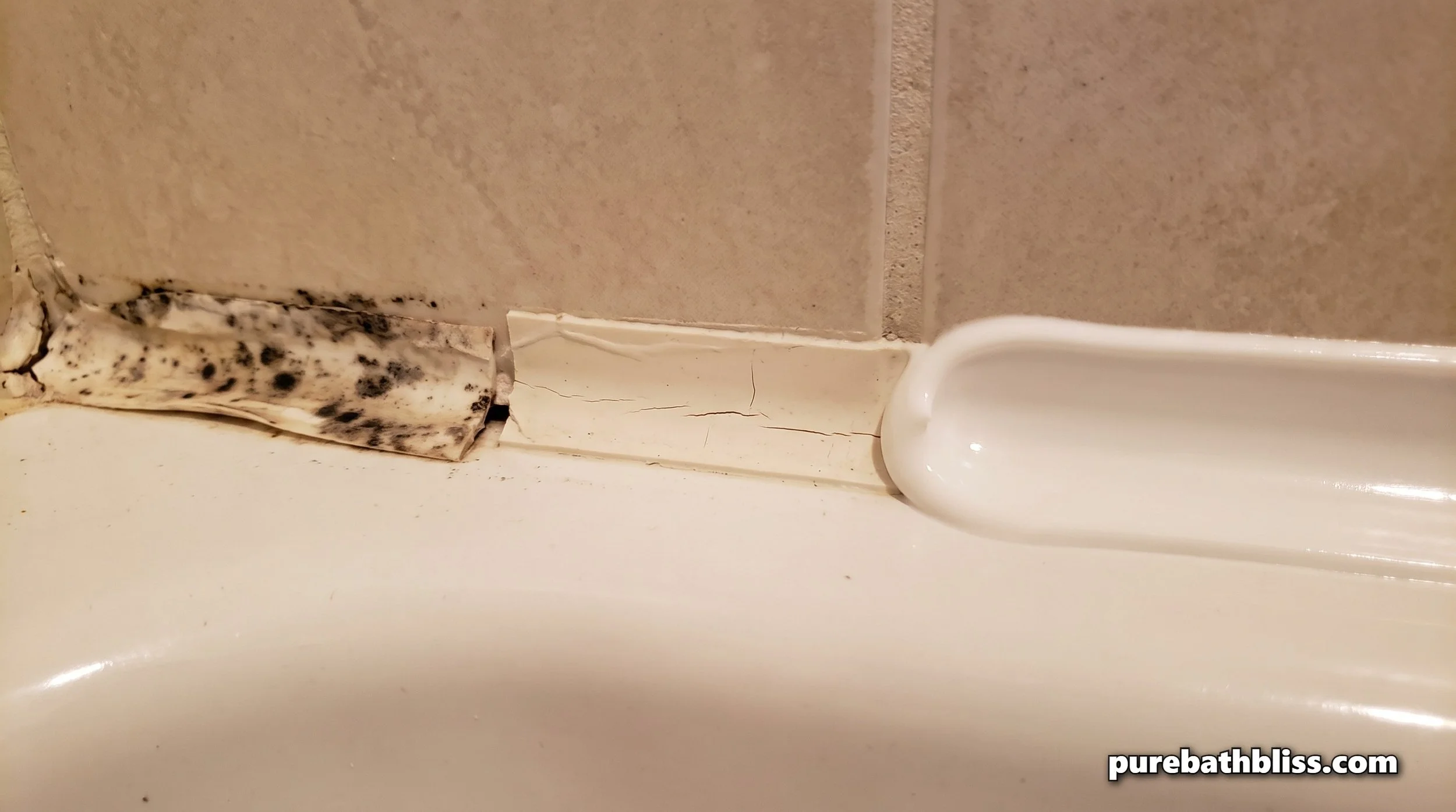
The single most common recaulk mistake is using acrylic latex caulk, or a "siliconized acrylic" blend that contains only a small percentage of silicone, in a bathroom wet zone. Acrylic latex is paintable, cheap, easy to tool, and entirely wrong for a tub surround. It shrinks by 20 to 30 percent as it dries, which creates the hairline cracks that allow water infiltration within the first year. It is porous, which allows moisture absorption and the mould colonization that produces the black discolouration most people see at the tub line. And it has almost no flexibility, which means it tears as the tub shifts under the weight of water and of a person getting in and out.
100 percent silicone is the only appropriate product for a tub surround, shower base, or any bathroom wet zone joint. The polymer chain in silicone remains permanently flexible, elongating 400 to 600 percent before tearing, which accommodates the thermal expansion and contraction and weight loading that a tub joint experiences daily without cracking. Silicone is non-porous, meaning water beads on its surface rather than absorbing into it. And silicone bonds permanently to the materials it contacts, including porcelain, ceramic tile, glass, acrylic, and fiberglass, without primer.
The VOC consideration matters specifically in the bathroom because it is an enclosed space with limited ventilation. Traditional silicone caulk off-gases acetic acid during cure, which produces the vinegar smell familiar to anyone who has used standard silicone in an enclosed space. Low-odor 100 percent silicone formulas use a different cure chemistry that produces significantly less off-gassing during the cure window. For chemically sensitive households, AFM Safecoat zero-VOC caulk is the appropriate specification. The same silicone polymer chemistry that makes bathroom caulk the right material for a wet joint also makes silicone gaskets on kitchen appliances the most durable seal type in the home, which our sister site Pure Kitchen Bliss covers in their guide to maintaining silicone seals on kitchen appliances.
The Complete Removal Protocol
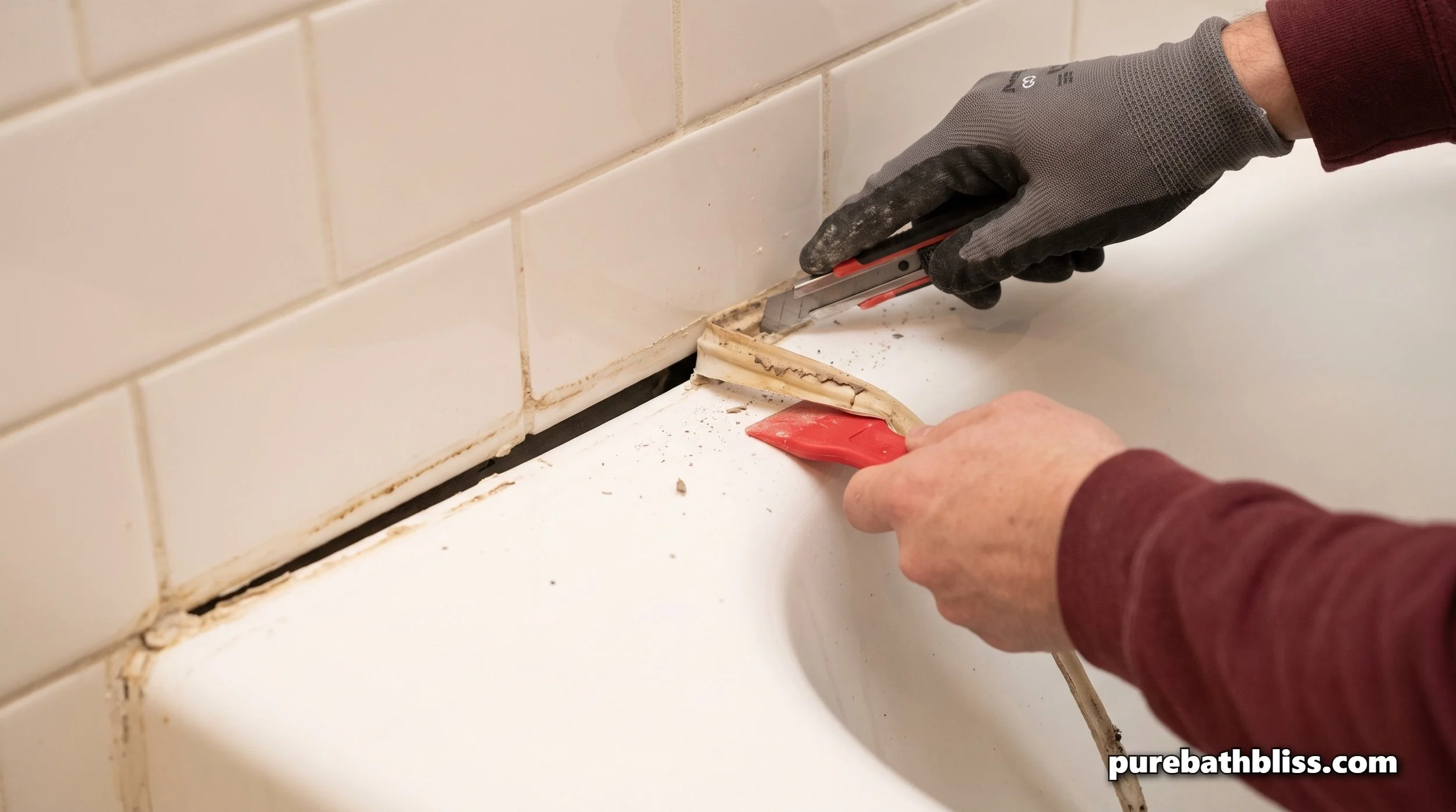
New caulk applied over old caulk fails. This is the most important single fact about recaulking and the step most DIY guides underemphasize. Silicone does not bond to existing silicone. Silicone does not bond to acrylic residue. Any trace of old caulk in the joint becomes the failure point for the new bead, regardless of how correctly everything else is done. The old caulk must be completely removed and the substrate must be clean before any new product is applied.
Step 1: Score both edges. Use a sharp utility knife to cut along the top and bottom edges of the existing caulk bead where it contacts the tub and where it contacts the tile or wall surround. Cut at a shallow angle that follows the joint rather than cutting into the substrate. This releases the adhesive bond at both edges and allows the bead to be peeled away cleanly rather than torn away in fragments.
Step 2: Peel and pull. Grip the cut bead with needle-nose pliers or grip tape and pull along the length of the joint in continuous sections rather than picking at it from multiple points. Long continuous pulls remove the bead more cleanly than short repeated grabs. For old silicone that has been in place for many years and has bonded very firmly, a dedicated plastic caulk removal tool with its angled edge gives better purchase than pliers alone.
Step 3: Remove all residue. After the bead is removed there will be a thin film of adhesive residue on both the tub and the tile surfaces. A plastic scraper removes the majority of it without scratching porcelain or tile. For stubborn residue, mineral spirits or a commercial caulk remover product applied on a rag and left for five minutes softens the residue enough for a plastic scraper to remove it completely. Never use a metal blade on a porcelain tub surface.
Step 4: Clean and degrease. Wipe the entire joint and the surfaces immediately adjacent to it with 70 percent isopropyl alcohol on a clean cloth. The alcohol removes soap film, body oil residue, and any mineral deposits that would prevent the new silicone from bonding. Allow the surfaces to dry completely, minimum 30 minutes with the exhaust fan running. The joint must be bone dry before caulk is applied. Silicone does not cure correctly over moisture and a joint that feels dry to the touch may still carry enough ambient moisture to compromise the cure if application proceeds immediately after cleaning.
The Water Fill Step Most Guides Skip
This is the step that most recaulk guides either do not mention or mention without adequately explaining why it matters. Before applying new caulk, fill the tub with water.
A bathtub filled with water weighs several hundred kilograms. Under that load, the tub body flexes and sinks between 3 and 6 millimetres depending on the tub material, mounting configuration, and subfloor stiffness. This downward movement widens the joint between the tub edge and the tile surround. When caulk is applied to an empty tub, it cures with the joint at its narrowest. The first time the tub is filled after caulking, the joint widens as the tub loads and the cured silicone is put under tension. If the movement exceeds the cured bead's elongation capacity in that narrow configuration, the bead tears from one of its bonding surfaces. This is the failure that produces the lifted caulk line within weeks of a fresh application that appears to have been done correctly.
Filling the tub before caulking reverses this. The joint is at its widest when the caulk is applied. The bead cures in the stressed, wide-joint position. When the water is eventually drained, the joint narrows slightly and the bead sits in slight compression rather than tension. Compression does not produce caulk failure. Tension does. Fill the tub completely, allow the weight to settle for five minutes, then proceed with caulk application. Keep the tub filled until the caulk is fully cured, which is a minimum of 24 hours for most low-odour silicone formulas.
Application Technique
Tape the joint. Apply painter's tape along both sides of the joint, approximately 3 to 4 millimetres back from the joint edge on both the tub and tile surfaces. Tape produces clean, defined edges that require no tooling correction after the bead is applied. Press the tape firmly along its full length with the edge of a putty knife so there is no gap at the tape line that would allow caulk to bleed under it.
Prepare the tube. Cut the tip of the caulk tube at 45 degrees. Start with a small opening, approximately 4 millimetres, which can be widened if the joint requires more material. A smaller opening gives more control than a large one and allows the bead diameter to be adjusted by application pressure rather than by tip size. Puncture the inner foil seal with the poker on the caulk gun handle or with a wire.
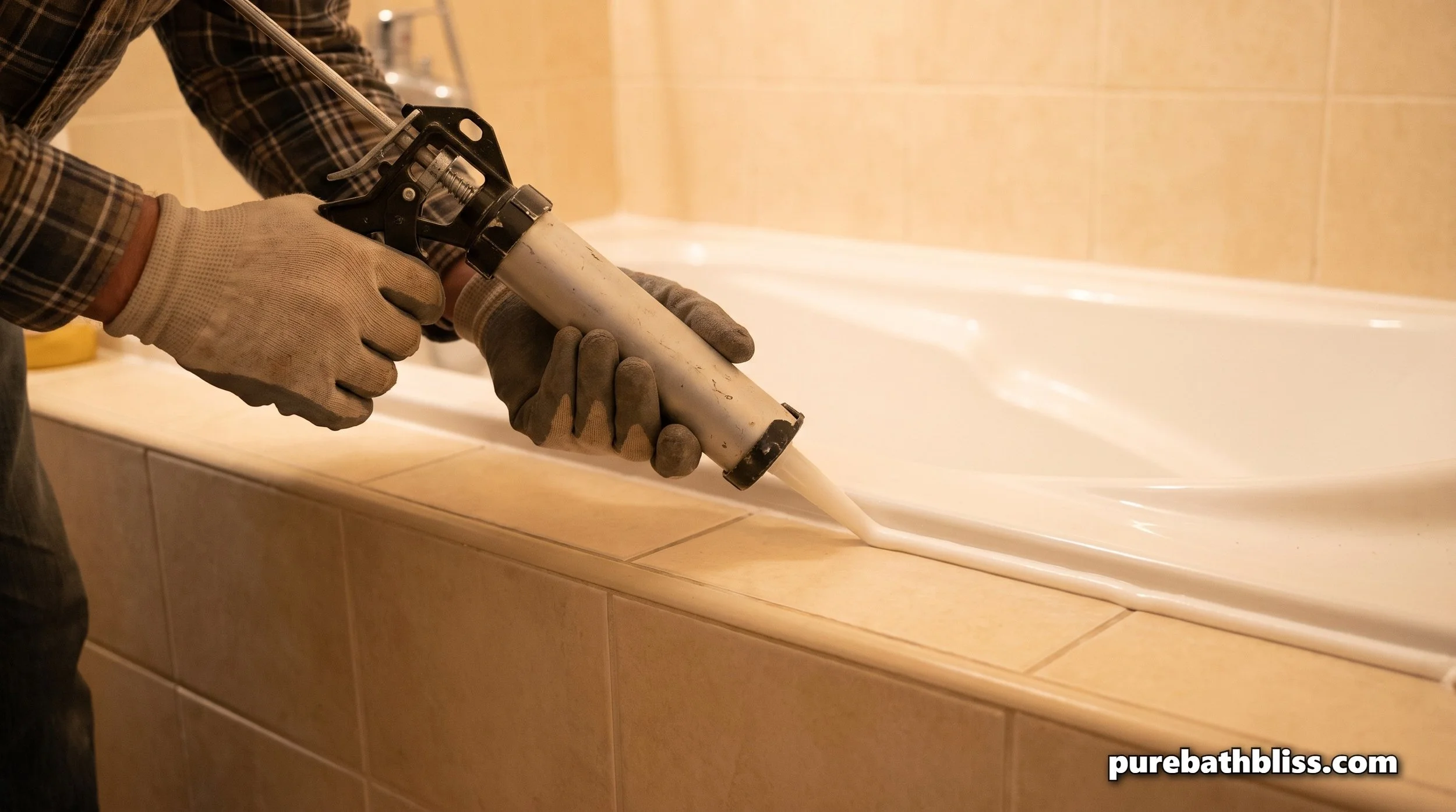
Apply the bead. Hold the gun at 45 degrees to the joint and push it forward, meaning move the gun in the direction the tip is pointing rather than pulling it backward. Pushing forces the silicone into the depth of the joint rather than just laying it on the surface. Apply in one continuous motion from one end of the joint to the other without stopping. A stopped bead has a joint at the stopping point that can become a future failure point. Maintain steady, even pressure on the gun trigger throughout.
Tool the bead. Immediately after completing the bead, tool it with a wet gloved finger or a caulk finishing tool dipped in soapy water. The soapy water prevents the silicone from sticking to the tooling surface and allows a smooth, concave profile to be drawn along the full bead length in one continuous pass. The concave profile is not cosmetic. It creates a wider bonding footprint on both surfaces and sheds water away from the joint centre rather than allowing it to pool in a flat or convex bead.
Remove the tape. Pull the tape while the bead is still wet, not after it has begun to skin. Tape removed from cured silicone tears the edges of the bead. Pull at 45 degrees back over the tape length, slowly and continuously. The tape leaves clean straight edges at both sides of the bead that no amount of post-cure trimming can replicate.
Products, Cure Time, and Ongoing Maintenance
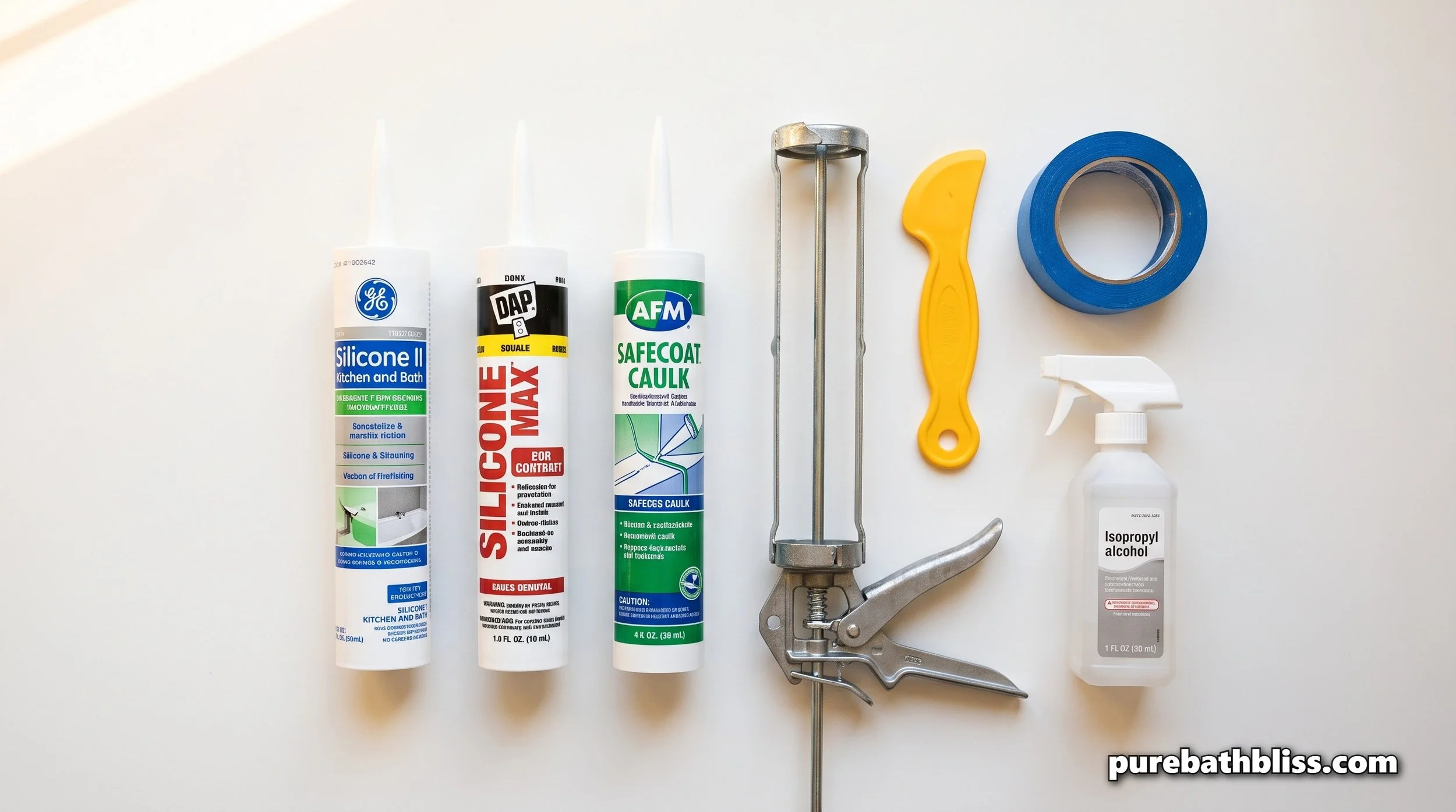
Product recommendations. GE Silicone II Kitchen and Bath is the standard recommendation for most bathrooms. It is 100 percent silicone, rated for 30-year mould-free performance by the manufacturer, skins in 10 minutes, and is available in white, clear, and almond at most hardware stores. DAP Silicone Max is the low-odour alternative at a slightly lower price point with under 30 g/L VOC and a faster overall cure time. AFM Safecoat Caulk is the zero-VOC specification for chemically sensitive households, available from specialty retailers rather than standard hardware stores.
Cure time. The cure protocol is the step most homeowners get wrong because dry-to-touch and fully-cured are not the same thing. GE Silicone II skins in 10 minutes, meaning it will not smear if lightly contacted after that window. It is tack-free within 1 to 2 hours. It is fully cured at 24 hours under normal conditions. No water should contact the bead for the full 24-hour cure window. The tub filled for the water trick should remain filled for 24 hours, then drained. The bathroom should be ventilated during the cure period with the exhaust fan running continuously. We cover the exhaust fan specifications and the ventilation requirements for bathroom repairs in our guide to bathroom exhaust fans and dehumidifiers.
Ongoing maintenance. A correctly installed silicone bead requires minimal maintenance. Wipe it dry after the last shower of the day as part of the squeegee habit. Inspect it annually for any lifted sections or dark discolouration that does not clean off with the hydrogen peroxide treatment covered in our guide to shower biofilm and mould treatment. Discolouration that does not respond to surface treatment indicates mould within the caulk body rather than on its surface, which means the bead needs replacement rather than cleaning. A caulk bead correctly installed with the full protocol in this guide should last ten to twenty years before requiring replacement.
The full bathroom painting sequence, including how the recaulk step fits into the preparation protocol before priming and painting, is covered in our guide to how to paint a bathroom correctly. The caulk and the paint are the two surface systems that determine whether the bathroom's wet zone stays dry for a decade or requires repair work within a couple of years, and both are worth doing correctly the first time.
The Complete Recaulk Checklist
| Step | What to Do | Time Required | Why It Matters | Done? | |
|---|---|---|---|---|---|
| 1. Score old caulk | Utility knife along both edges at shallow angle | 5 minutes | Releases adhesive bond at both surfaces for clean removal | ☐ | |
| 2. Remove old caulk completely | Peel in long strips with pliers or caulk removal tool | 10 to 20 minutes | Silicone does not bond to old caulk residue. Zero residue is the standard. | ☐ | |
| 3. Remove all residue | Plastic scraper, then mineral spirits on stubborn sections | 10 minutes | Adhesive residue is an invisible bond failure point for the new bead | ☐ | |
| 4. Clean and degrease | 70% isopropyl alcohol on clean cloth. Allow 30 minutes to fully dry. | 5 minutes active. 30 minutes drying. | Soap film and body oil prevent silicone adhesion. Moisture compromises cure. | ☐ | |
| 5. Fill the tub with water | Fill completely. Allow 5 minutes for weight to settle. | 10 minutes | Cures bead in widest joint position. Prevents tension failure when tub loads in use. | ☐ | |
| 6. Apply painter's tape | 3 to 4mm back from joint edge on both surfaces. Press firmly with putty knife edge. | 10 minutes | Produces clean defined edges. No cleanup or trimming needed after application. | ☐ | |
| 7. Apply bead | Push gun forward at 45 degrees. One continuous pass per joint. | 5 to 10 minutes | Pushing forces caulk into joint depth. Single continuous pass avoids stop-joint failures. | ☐ | |
| 8. Tool the bead | Wet gloved finger or caulk tool in soapy water. One continuous concave pass. | 5 minutes | Concave profile widens bond footprint and sheds water away from joint centre. | ☐ | |
| 9. Remove tape while wet | Pull at 45 degrees back over tape. Slow and continuous. | 2 minutes | Tape removed from cured silicone tears the bead edges. Wet removal only. | ☐ | |
| 10. Cure 24 hours | Keep tub filled. Exhaust fan running. No water contact with bead. | 24 hours | Silicone cures fully at 24 hours. Early water contact compromises the cure chemistry. | ☐ |
Greg is a Red Seal Carpenter, coffee shop owner, dad of four, and founder of Pure Bath Bliss. He writes about making smarter choices for your home and family.