Why Does My Bathroom Smell? 7 Causes and Exactly How to Fix Each One
Originally published October 2025, Updated June 2026
There is a specific kind of frustration that comes from a bathroom that smells bad even though you just cleaned it. You have wiped down every surface, scrubbed the toilet, bleached the grout, and the moment you close the door and come back twenty minutes later, that smell is still there. It is one of the most common complaints I hear from homeowners, and the answer is almost always the same: you were cleaning the surfaces, but the smell is coming from somewhere else entirely.
Bathroom odors have specific sources. Each source has a specific smell, a specific location, and a specific fix. Once you know what to look for, diagnosing the problem is usually straightforward and the fix is almost always something you can handle yourself without calling a plumber.
Here are the seven most common causes of bathroom odor, how to tell which one you are dealing with, and exactly what to do about each one.
How to Diagnose the Smell Before You Start Fixing
The most useful first step is figuring out where the smell is actually coming from, which is almost always not where you think it is. Most people assume a smelly bathroom means the toilet needs cleaning. In my experience, the toilet is the source far less often than the drain, the caulk, or the walls.
Start by closing the bathroom door for ten minutes with the exhaust fan off and no ventilation. Then go in and stand still for thirty seconds. The smell will be noticeably stronger somewhere specific. Walk toward it. Get down low near the floor and near the drain. Sniff near the base of the toilet. Put your nose near the overflow hole on the sink. Check around the caulk lines at the base of the tub and shower. The location of the strongest smell tells you what the source is.
The other useful diagnostic is the type of smell. Sewer gas smells distinctly like rotten eggs, musty smells come from mold and mildew, sour smells usually indicate bacteria in organic buildup, and a general stale damp smell is almost always a ventilation issue.
1. The Drain (The Most Common Culprit)
What it smells like: Sour, musty, or rotten egg, often strongest when you run the water or after the room has been closed for a while.
The drain is the source of bathroom odor more often than any other single cause. There are two distinct drain problems that produce different smells and require different fixes.
The first is biofilm buildup. Hair, soap scum, skin cells, and toothpaste residue accumulate inside the drain pipe over time and form a layer of bacteria. As those bacteria break down the organic matter, they release hydrogen sulfide gas, which is the rotten egg or sulfur smell. The biofilm usually sits in the drain itself or just inside the trap. The fix is mechanical removal followed by a baking soda and boiling water flush. If the smell is specifically sulfur, our dedicated guide to why your bathroom sink smells like sulfur walks through the full diagnosis and non-toxic treatment protocol in detail.
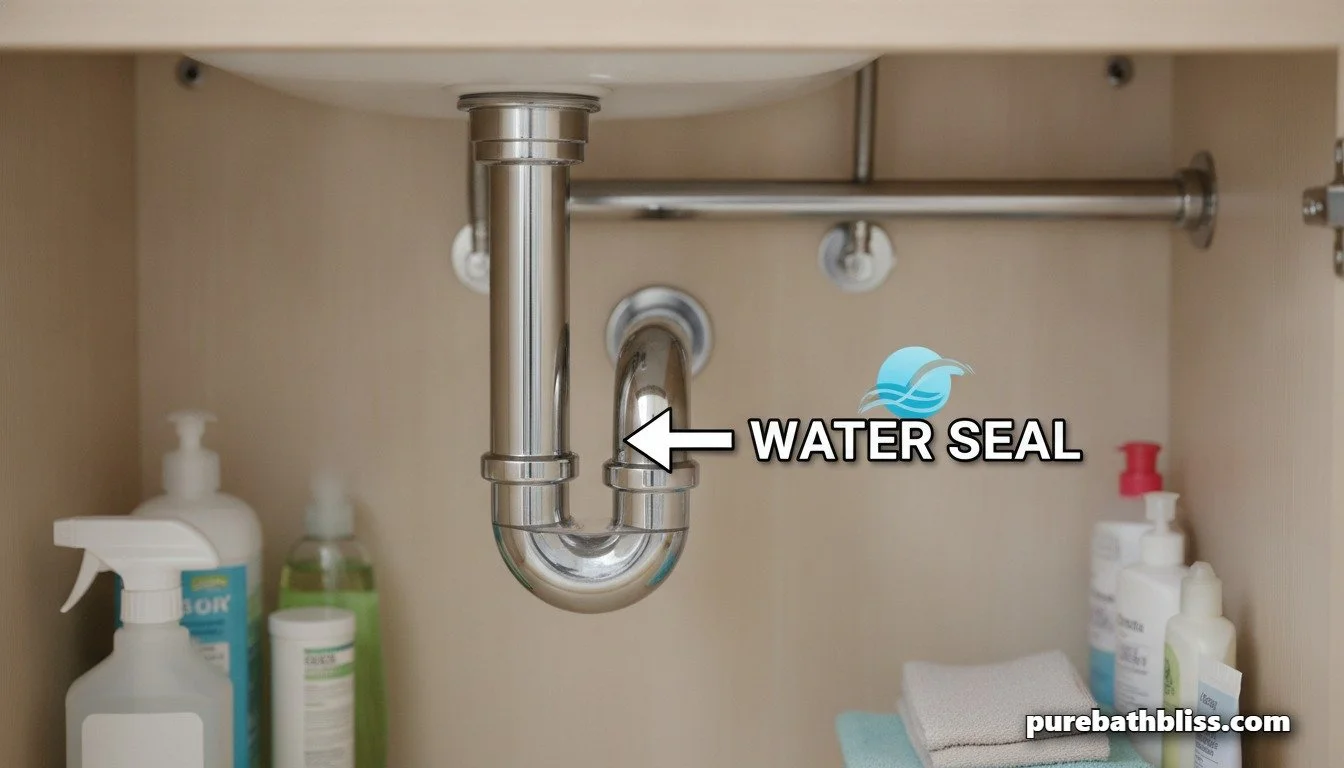
The second drain issue is a dry or empty P-trap. Look under your sink at the U-shaped pipe. That curve is deliberately designed to hold a small amount of water at all times. That water acts as a physical seal between your bathroom and the sewer system, blocking sewer gas from coming up through the drain. If a sink, shower, or floor drain is rarely used, the water in the trap evaporates. Once it is empty, sewer gas, which contains hydrogen sulfide, ammonia, methane, and other compounds, can flow freely into the room.
The fix for a dry P-trap is simply running the water for thirty seconds to refill it. If you have a floor drain or guest bathroom drain that rarely gets used, pour a cup of water down it every few weeks to keep the seal intact. For a sink overflow hole that has developed its own musty smell from biofilm buildup in the channel, our guide to the hidden purpose and cleaning method for your sink overflow hole covers the fizz-and-flush method that clears it in minutes.
For clogged drains specifically, our sister site Pure Kitchen Bliss has a thorough guide to unclogging a drain with baking soda and vinegar — the same method works equally well on bathroom drains and requires nothing more than pantry staples.
2. Mold Behind or Beneath the Caulk
What it smells like: Musty, earthy, and persistent even when the bathroom is visually clean. Strongest around the tub, shower corners, or sink base.
Caulk lines are where water finds its way into places it is not supposed to be. When caulk starts to peel, crack, or pull away from the tile, water gets behind it and sits there in a dark, damp space where it cannot dry out. That is a perfect environment for mold, and the musty smell from caulk mold is one of the most stubborn odors in the bathroom because it is coming from inside the wall structure rather than from a surface you can clean.
If you press the caulk and it feels soft, spongy, or hollow, water has already gotten behind it. Painting over it or applying new caulk on top of old caulk will not fix the problem. The mold will grow right through a new seal within weeks. The only real fix is full caulk removal, mold treatment, thorough drying, and a fresh application of 100 percent silicone. Our step-by-step guide to recaulking your tub like a pro covers exactly how to do this, including why silicone is the only material worth using in a wet environment and the soapy finger technique for a clean professional finish.
As a maintenance measure before you reach that point, running a cotton swab dipped in tea tree oil along caulk lines monthly creates an antifungal barrier that prevents mold from establishing itself in the first place. Our tea tree oil bathroom guide covers this and a dozen other applications for the same bottle.
3. The Toilet Base and Wax Ring
What it smells like: Urine or sewer gas, strongest near the floor around the base of the toilet rather than from the bowl.
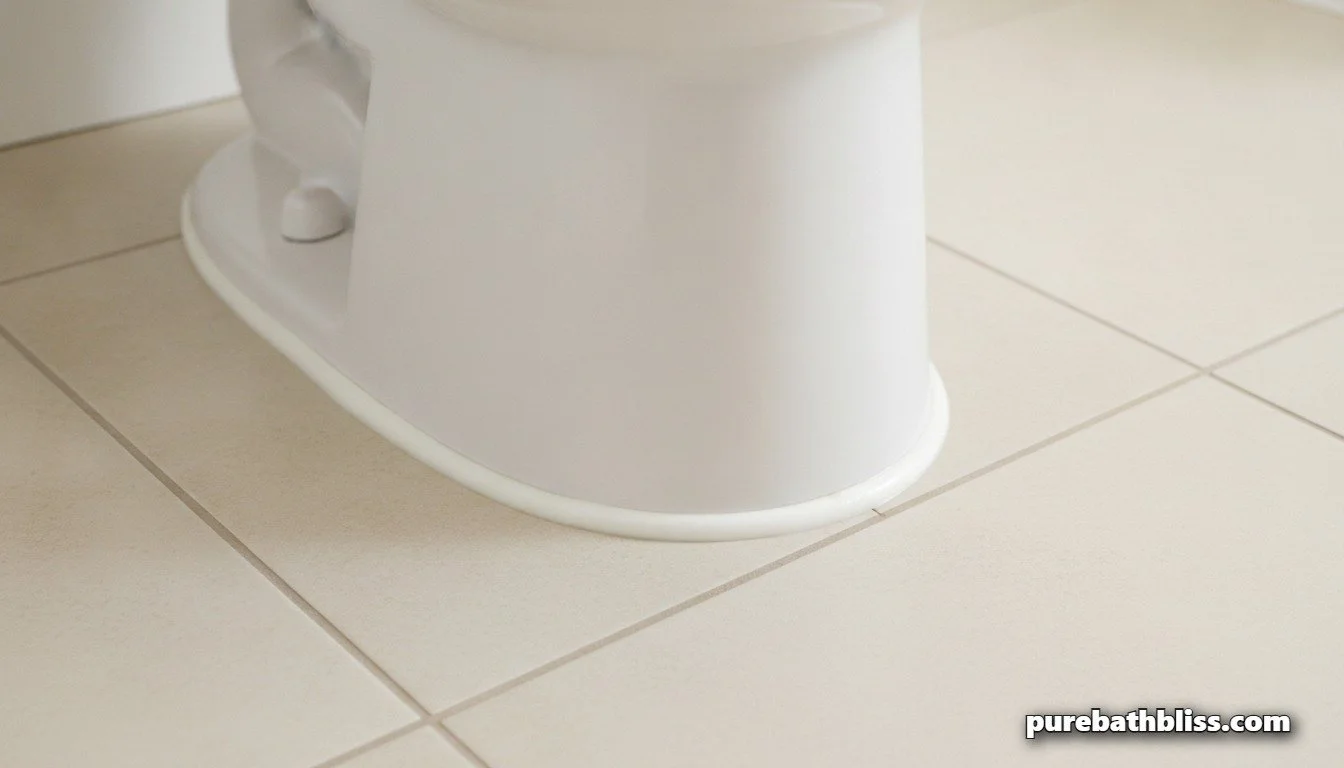
When the smell in your bathroom is distinctly urine-like but cleaning the bowl makes no difference, the problem is usually either urine residue that has worked its way under the base of the toilet, or a failing wax ring seal between the toilet and the floor drain.
Urine seeps under the toilet base over time, especially in households with young kids, and pools in a gap between the toilet base and the floor that you simply cannot reach with a standard cleaning cloth. It dries and concentrates there and produces a persistent ammonia smell that no amount of toilet bowl cleaner can address because the source is under the toilet, not inside it. The fix is to thoroughly clean around and as far as possible under the base with an enzyme-based cleaner, which breaks down the uric acid crystals that regular cleaners leave behind. Then seal the base with a continuous bead of caulk to prevent future seepage.
If the smell is specifically sewer gas rather than urine, and it is strongest at the base of the toilet, the wax ring seal may be failing. This is more of a plumbing job than a DIY fix. A loose or broken wax ring means sewer gas is bypassing the seal and entering the room through the gap. If the toilet has any rocking or movement when you sit on it, that is a strong indicator of a wax ring issue and worth a call to a plumber before the problem extends further.
4. Damp Towels and Bath Mats
What it smells like: Sour, slightly mildewy, and most noticeable immediately after someone showers or when the bathroom door has been closed overnight.
This is the most overlooked source of bathroom odor and the easiest to fix. Towels and bath mats that do not dry completely between uses develop bacterial growth in the damp fibers within 24 to 48 hours. That bacterial activity produces a sour, mildewy smell. The smell transfers back onto skin when you use the towel, and it fills the bathroom every time humidity rises and reactivates the bacteria in the fibers.
The fix is partly about hanging, partly about washing frequency, and partly about the bathroom's ability to actually dry things out. Towels need to be hung with full surface area exposed to airflow, not folded over a single bar where the interior stays permanently damp. Bath mats need to be hung on the edge of the tub or on a hook after every use rather than left flat on the floor where the underside never dries. Wash both more frequently than you think necessary — bath mats every week, towels every two to three uses rather than every week.
Adding a cup of white vinegar to the rinse cycle when washing towels and bath mats strips away the soap residue and mineral buildup in the fibers that trap moisture and create the conditions for bacterial growth. Our vinegar bathroom guide covers the towel refresh method and why fabric softener actually makes the problem significantly worse over time.
5. Pink Slime and Grout Mold
What it smells like: Musty and faintly sweet, most noticeable in the shower or around the bath. Often accompanied by visible pink, orange, or grey discoloration in grout lines or on the shower curtain.
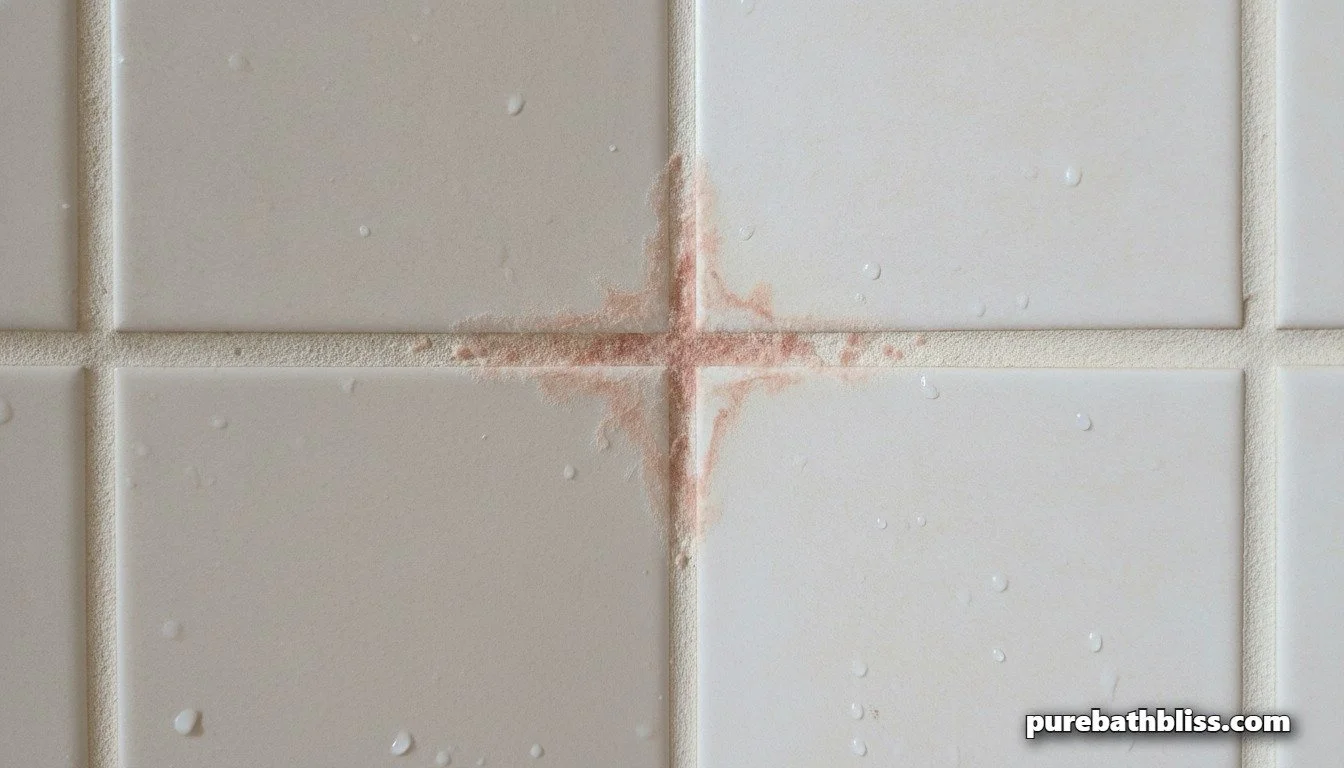
The pink or reddish film that appears in shower grout and around drain areas is a bacteria called Serratia marcescens, not mold. It feeds on soap residue, body oils, and the mineral content in hard water, and it produces a distinctly musty, slightly sweet smell as it metabolizes. Black grout discoloration, on the other hand, is usually actual mold growing in the porous cement of the grout lines.
Both produce odors that cleaning the tile surface alone does not eliminate, because the bacteria and mold are growing inside the porous structure of the grout rather than on top of it. A surface spray cleans the visible layer but leaves the colony intact underneath. The treatment for Serratia is hydrogen peroxide applied directly to the affected area and allowed to dwell for ten minutes before scrubbing. For actual mold in grout, a baking soda and hydrogen peroxide paste applied and left for fifteen minutes, then scrubbed with a stiff brush, penetrates more effectively than a spray. Our full guide to stopping pink shower mold covers both the treatment and the prevention protocol in detail.
6. Poor Ventilation
What it smells like: Stale, humid, and generally unpleasant without a specific identifiable odor. The bathroom always feels slightly damp even when nothing is visibly wet.
Ventilation failure is less a direct source of smell and more the condition that allows all the other smells to develop and persist. A bathroom exhaust fan that is undersized, clogged with dust, or simply not run long enough after a shower leaves the room in a state of chronic humidity that feeds mold, slows the drying of towels and mats, and allows drain odors to build up rather than being expelled.
The standard guidance is to run your exhaust fan for at least twenty minutes after every shower. Most people run it for five minutes while they get dressed and then turn it off. That is not enough time to meaningfully reduce the humidity in a typical bathroom. A smart exhaust fan with a built-in humidity sensor that automatically runs until the humidity drops to a target level takes the guesswork out of this entirely and is one of the most worthwhile bathroom upgrades available for a household that struggles with persistent moisture issues.
Even if your fan is properly sized, it needs maintenance. A fan grill clogged with dust and lint cannot move air effectively. Remove the grill every few months and soak it in a basin of white vinegar and water for twenty minutes. The dust and grease release cleanly and the fan performs significantly better immediately afterward. Our vinegar guide covers exactly this method and how much of a difference a clean grill makes to actual airflow in the room.
7. The Synthetic Air Freshener Making It Worse
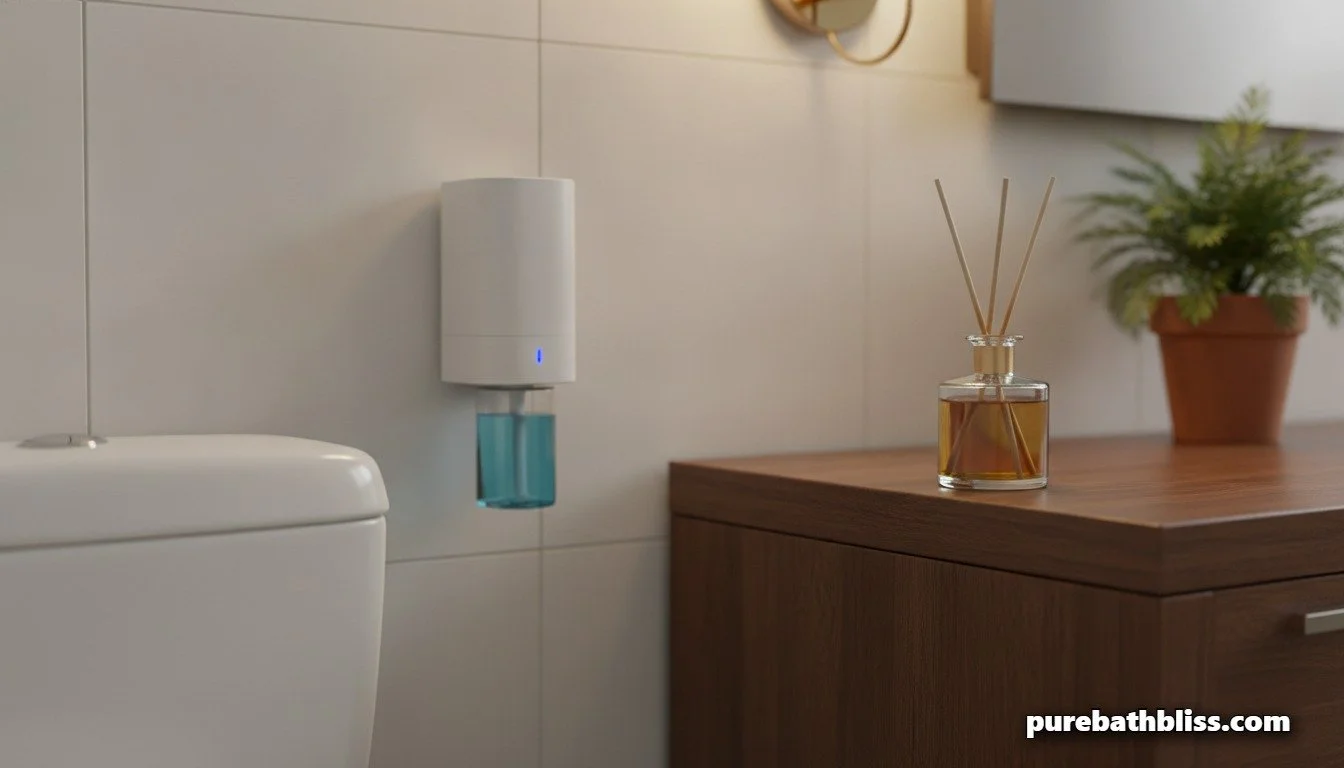
What it smells like: A headache-inducing combination of artificial fragrance on top of an underlying smell that never quite goes away.
This is a cause of bathroom odor complaints that no one expects. Plug-in air fresheners, aerosol sprays, and scented candles made from paraffin wax do not eliminate bathroom odors. They mask them. The artificial fragrance molecules blend with the existing odor compounds in the air to create a layered smell that is often more unpleasant than either component alone, and the chemical off-gassing from synthetic fragrance in an enclosed, poorly ventilated bathroom adds its own irritating compounds to the air.
People who replace their synthetic air freshener with nothing, find and fix the actual odor source, and then add a small reed diffuser with a pure essential oil blend often report that their bathroom smells better than it has in years. Not just fresher, but cleaner. The absence of a masking agent lets you notice and address the actual odor sources rather than constantly applying a chemical layer on top of them.
If you want a natural alternative that adds scent while also doing functional work, our guide to making a DIY toilet odor neutralizer covers a simple essential oil spray that actually neutralizes odor compounds rather than masking them, and a before-you-flush method used in many eco-conscious households that prevents toilet odors from escaping the bowl in the first place.
The Quick Diagnostic Checklist
If you are still unsure which source you are dealing with, work through this in order:
Rotten egg or sulfur smell: Start with the drain. Check the P-trap. Run water down every drain including the floor drain if you have one.
Musty smell near the tub or shower: Check the caulk lines by pressing gently with a finger. Look for any softness, cracking, or black discoloration.
Urine smell near the floor: Check around the base of the toilet, not just the bowl. Look for any movement or rocking in the toilet when you apply pressure.
Sour smell after showering: Check your towels and bath mat. Smell them directly. If they are the source, the solution is washing frequency and drying habits rather than any cleaning product.
Musty pink or grey tint in grout: Bacteria or mold in the grout. Hydrogen peroxide is your first tool.
General stale dampness: Ventilation issue. Check the exhaust fan grill for dust buildup and extend your post-shower run time.
The smell comes back every time despite cleaning: You have a plug-in or spray masking agent. Remove it, address the actual source, and reassess.
The Preventive Routine That Keeps It From Coming Back
Once you have addressed the specific source, keeping the bathroom genuinely fresh comes down to a few consistent habits that take almost no time individually.
Run the fan for a full twenty minutes after every shower. Pour a kettle of boiling water down the drain once a week to flush biofilm before it accumulates. Add a cup of white vinegar to the rinse cycle every time you wash towels. Hang the bath mat after every use rather than leaving it flat on the floor. Check the caulk lines for any early softening or discoloration once a month and address it immediately rather than waiting. And once a month, pour a cup of water down any floor drain or guest bathroom drain that rarely gets used to keep the P-trap seal intact.
Those six habits, each taking under two minutes, prevent every source on this list from developing. A bathroom maintained this way does not need an air freshener. It simply does not smell.