Transparency Note: We independently select these products based on research and user reviews. If you buy something through our links, we may earn a commission.
In the journey toward a Sustainable Sanctuary, we often look for complex solutions to common household problems. But sometimes, the most effective tool is a single, potent essential oil derived from the Australian paperbark tree.
Most people reach for bleach to solve bathroom woes, but bleach is a "blunt instrument." It’s harsh on your lungs, corrosive to your home’s surfaces, and often just "whitens" mold rather than neutralizing it at the root. Tea Tree Oil is the organic alternative. With its powerful antifungal, antibacterial, and antiseptic properties, it isn't just an apothecary staple; it’s a powerhouse for maintaining a healthy, non-toxic home.
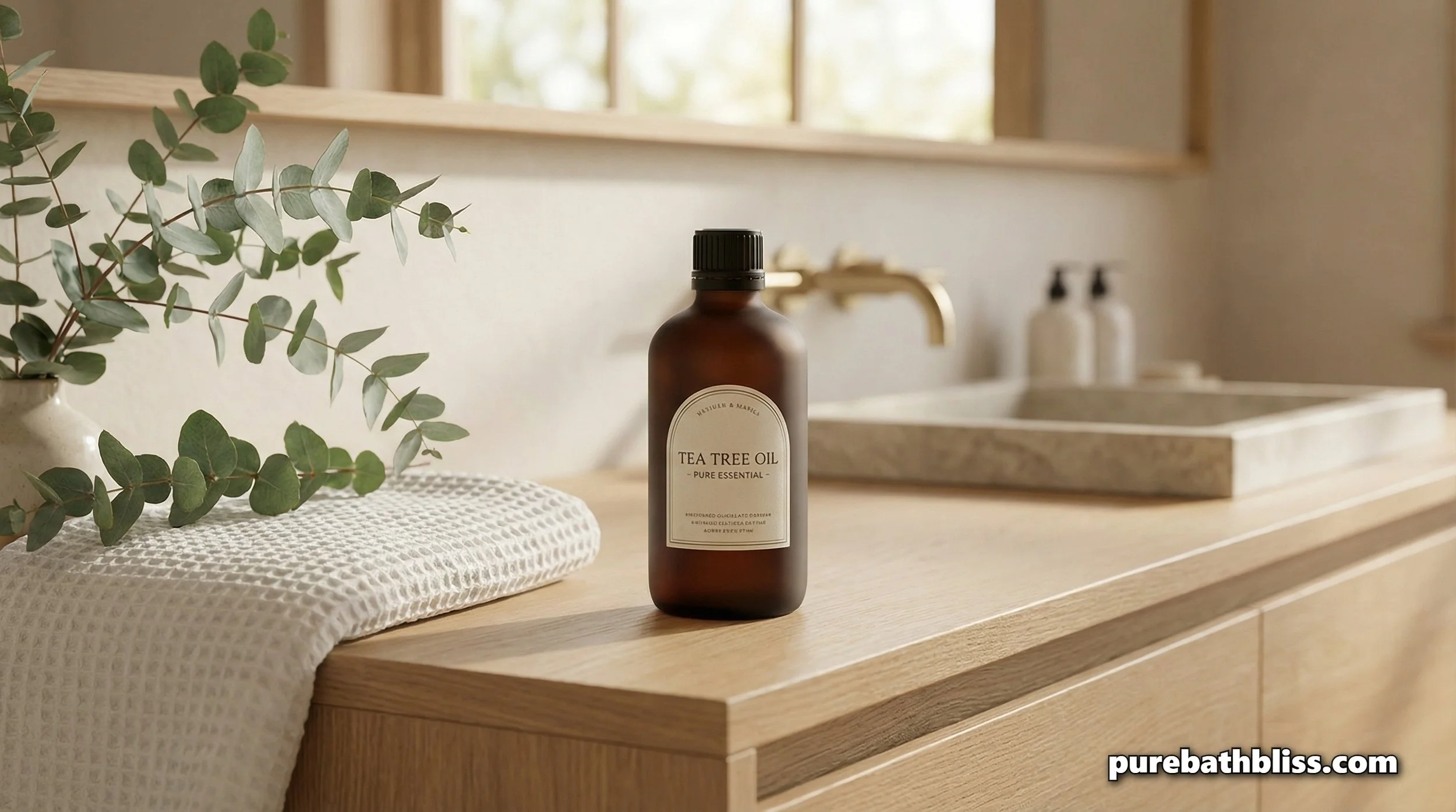
1. The Ultimate Grout and Tile Refresher
Grout is naturally porous, meaning it absorbs moisture and bacteria rather than just sitting on the surface.
The Organic Solution: Mix 1 cup of baking soda with 1/4 cup of liquid castile soap and 10 drops of Tea Tree Oil.
Why it Works: The oil penetrates the pores to neutralize spores, while the baking soda provides a gentle abrasive to lift stains without scratching your tile.
2. Preventing the "Pink Slime" in Your Shower
That pinkish film often found on shower curtains is actually a bacteria called Serratia marcescens.
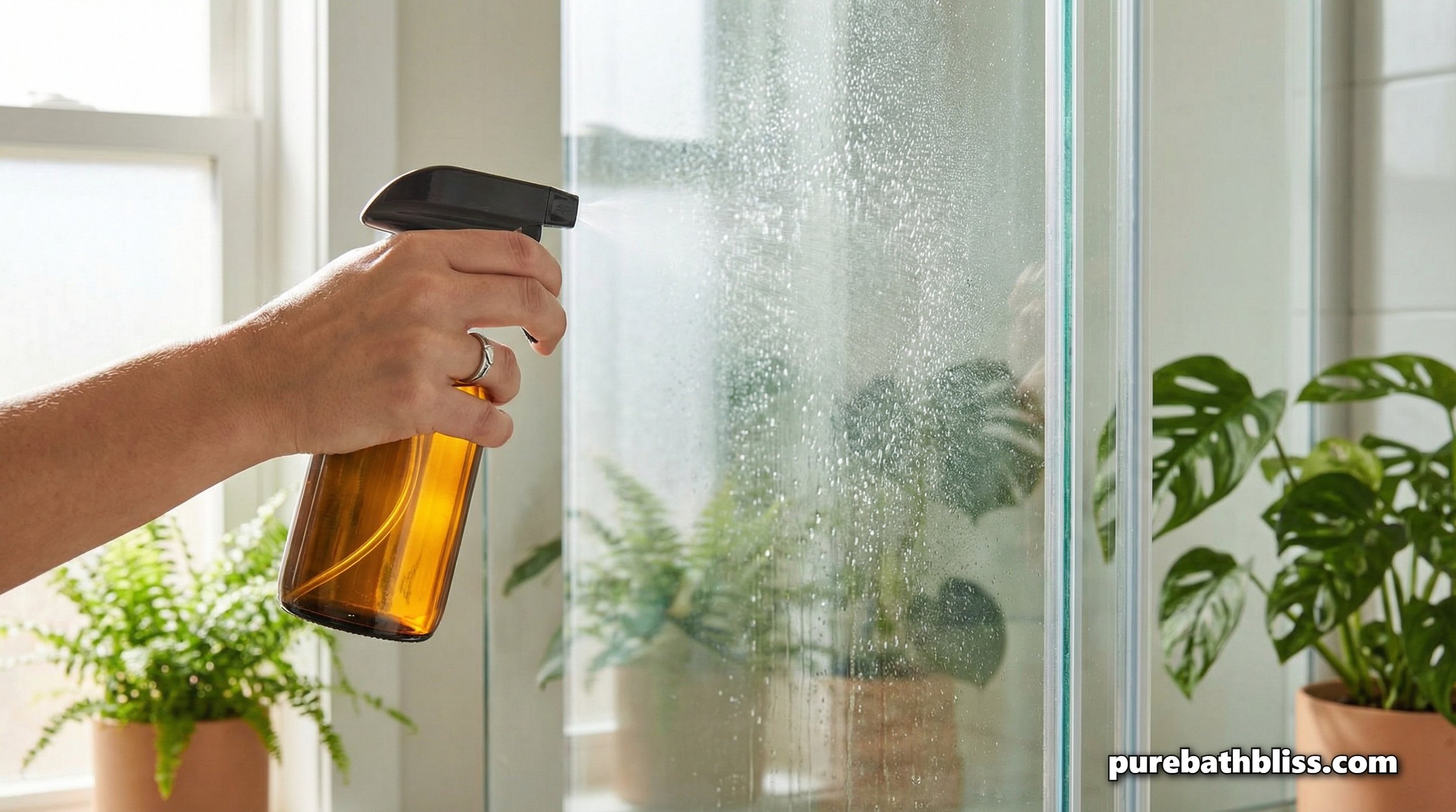
The Daily Ritual: In a 16oz glass spray bottle, mix 1.5 cups of water, 1/2 cup of white vinegar, and 15 drops of Tea Tree Oil.
The Benefit: Mist this on your tiles and glass daily. It creates a natural barrier that keeps your shower smelling like a spa and prevents the need for heavy scrubbing later.
3. Purifying the Air (Without Synthetic Fragrance)
Most bathroom air fresheners use synthetic chemicals to mask odors. In a small, enclosed space, these are the last things you want to breathe in.
The "Hidden" Hack: Put 3-5 drops of Tea Tree Oil on the inside of your toilet paper roll (the cardboard center).
The Magic: Every time the roll spins, it releases a subtle, clean, medicinal scent that actually cleans the air instead of just covering up smells.
4. Salvaging Musty Bath Mats and Towels
Bath mats are notorious for holding onto dampness. Over time, they develop a musty scent that regular detergent can't always reach.
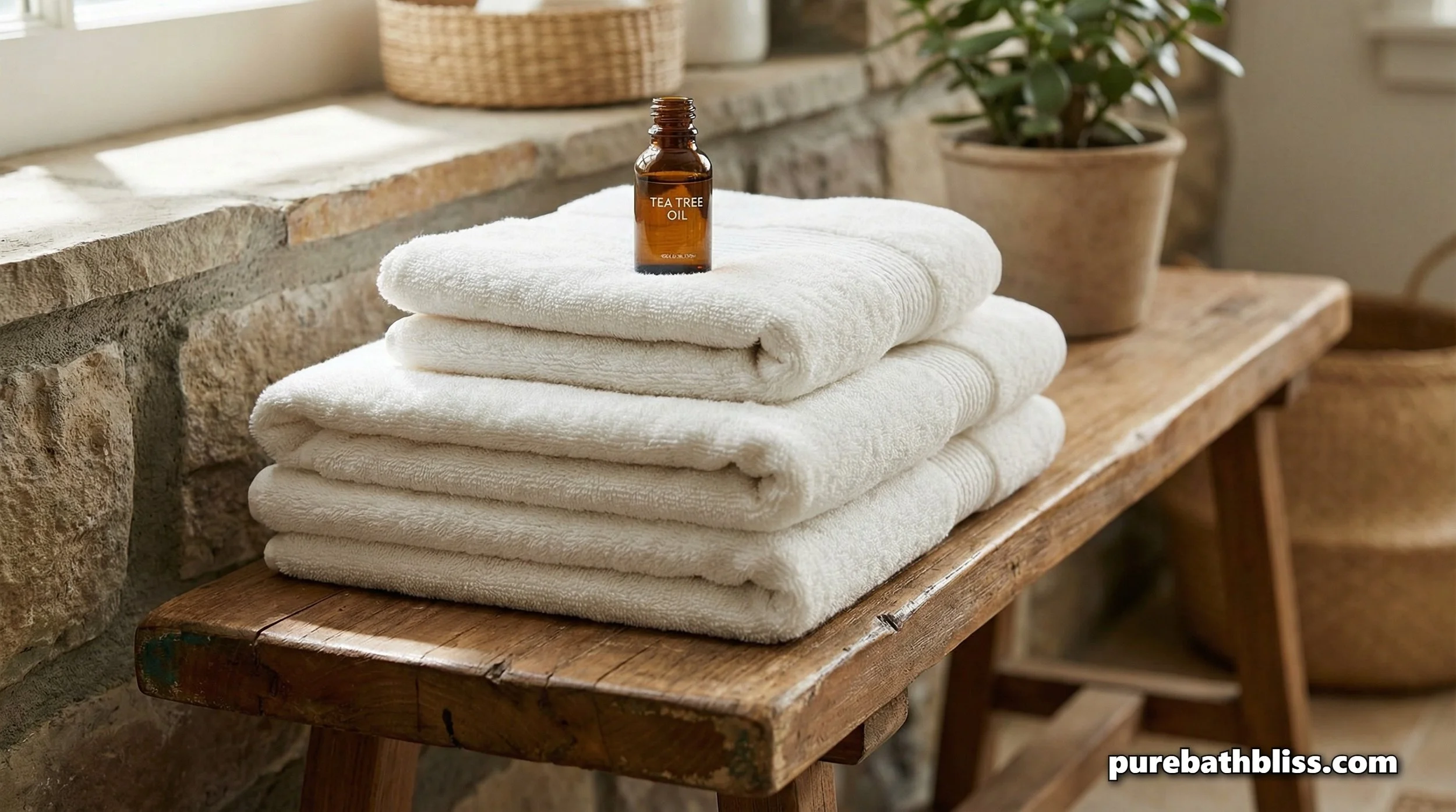
The Fix: When washing your mats or towels, add 10 drops of Tea Tree Oil directly into the machine. It reaches deep into the fabric fibers to eliminate the source of the odor, leaving your laundry truly fresh.
5. The Toilet Bowl "Deep Clean"
Traditional toilet cleaners are among the most toxic substances in the home. You can achieve the same sparkle with organic ingredients.
The Routine: Sprinkle baking soda into the bowl, add a splash of vinegar, and 5 drops of Tea Tree Oil.
The Result: The "fizzing" action combined with the oil’s antiseptic properties leaves the bowl sparkling without off-gassing toxic fumes into your sanctuary.
6. Sanitizing Your Personal Tools
Your toothbrush and loofah stay damp in a high-humidity environment, making them breeding grounds for bacteria.
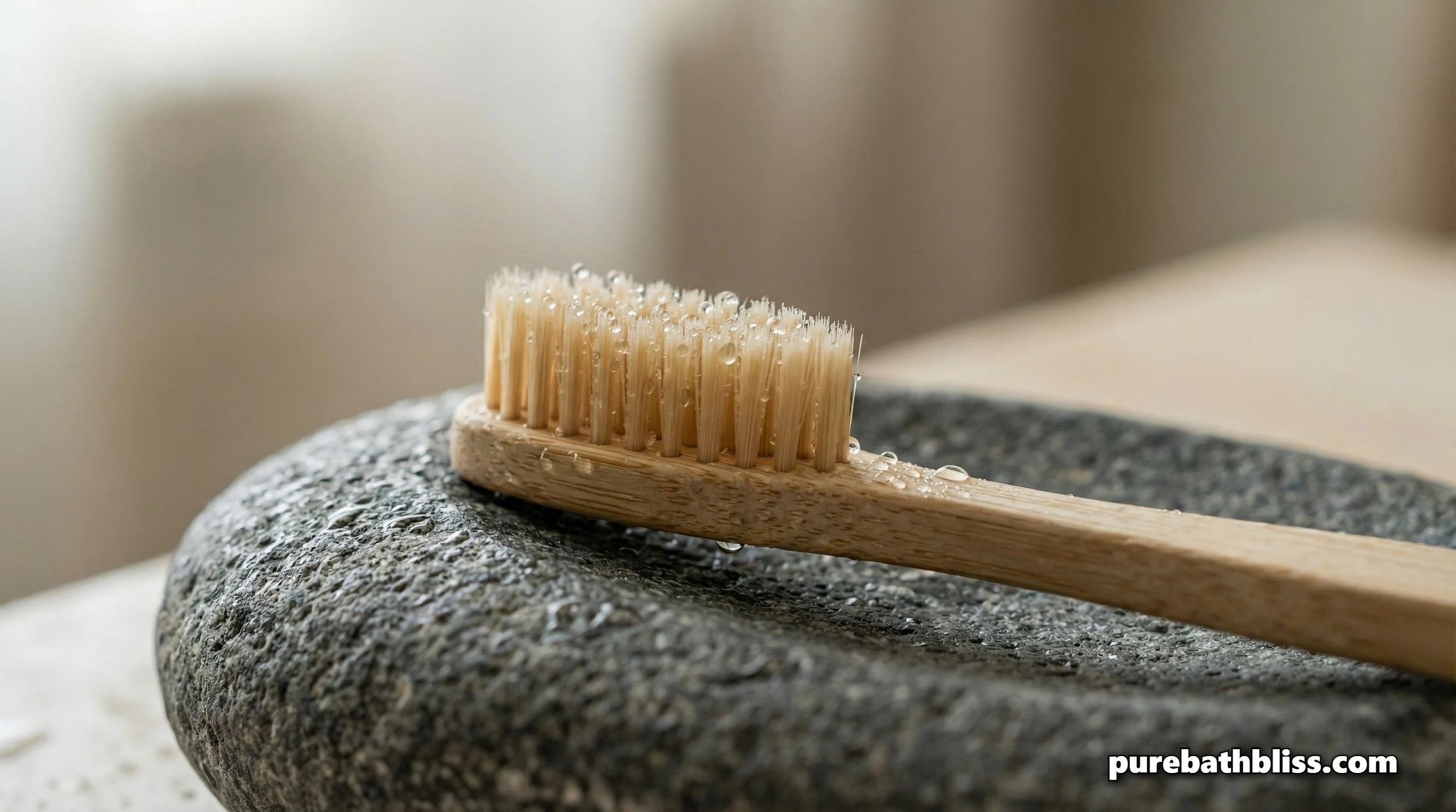
Toothbrush Soak: Once a week, soak your toothbrush head in a small glass of water with 2 drops of Tea Tree Oil for 10 minutes.
The Loofah Refresh: Natural loofahs are great for the planet, but they need regular sanitizing. A Tea Tree soak keeps them fresh and extends their lifespan.
7. Preserving Natural Wood and Bamboo
If you have wooden vanities, bamboo bath mats, or a [Teak Shower Bench], they need protection from the steam.
The Conditioner: Mix 1/4 cup of olive oil with 5 drops of Tea Tree Oil.
The Care: Rub this into your wooden surfaces. The olive oil conditions the material to prevent cracking, while the Tea Tree Oil prevents humidity from causing surface damage.
8. Safety and Sustainability: What to Look For
To stay true to the Sustainable Sanctuary ethos, not all oils are created equal:
Check the Label: Look for "100% Pure Essential Oil" and the botanical name Melaleuca Alternifolia.
Dark Glass Only: Tea Tree Oil is light-sensitive. Always buy it in amber or cobalt glass bottles to ensure it stays potent.
Pet Safety: Tea Tree Oil is toxic to cats and dogs if ingested. Keep your bottles stored safely away from curious paws.
9. The Sink Drain "Biofilm" Flush
Drains often develop a hidden layer of bacteria and organic buildup—known as biofilm—that produces a faint, musty odor even if the sink looks clean.
The Routine: Once a week, pour 1/2 cup of baking soda down your sink and shower drains, followed by 10 drops of Tea Tree Oil and a cup of warm vinegar.
The Result: The fizzing reaction carries the Tea Tree Oil into the "p-trap" and along the pipe walls, neutralizing odors and breaking down the organic sludge that eventually leads to slow drains. It’s a simple way to keep your plumbing "breathing" clearly.
10. Protecting the "Wet Zone" Seals (Silicone & Caulk)
The silicone caulking around your tub and sink is the frontline defense for your home's structure. Once mold gets behind the caulk, it’s nearly impossible to remove without cutting the seal out entirely.
The Preventive Strike: Using a cotton swab, apply a tiny amount of undiluted Tea Tree Oil directly along the caulking lines in the corners of your shower once a month.
Why it Matters: This creates a long-lasting antifungal barrier that prevents those dreaded black spots from ever forming. It keeps your bathroom looking brand new and saves you from the waste and chemicals involved in a "re-caulking" project.
Conclusion: One Bottle, Infinite Possibilities
Tea Tree Oil is more than just a scent—it’s an essential component of an organic, high-efficiency home. By integrating this one simple oil into your routine, you’re reducing your chemical footprint and ensuring your sanctuary remains a healthy, vibrant place.
Tea Tree Essentials for Your Sanctuary
The Oil: Organic 100% Pure Tea Tree Oil.
The Vessel: Amber Glass Spray Bottles with Silicone Sleeves.
The Clean: Natural Fiber Scrub Brush.