How to Clean Your Electric Toothbrush: The Ultimate Eco-Friendly Guide
Originally published December 2025, Updated June 2026
Transparency Note: We independently select these products based on research and user reviews. If you buy something through our links, we may earn a commission.
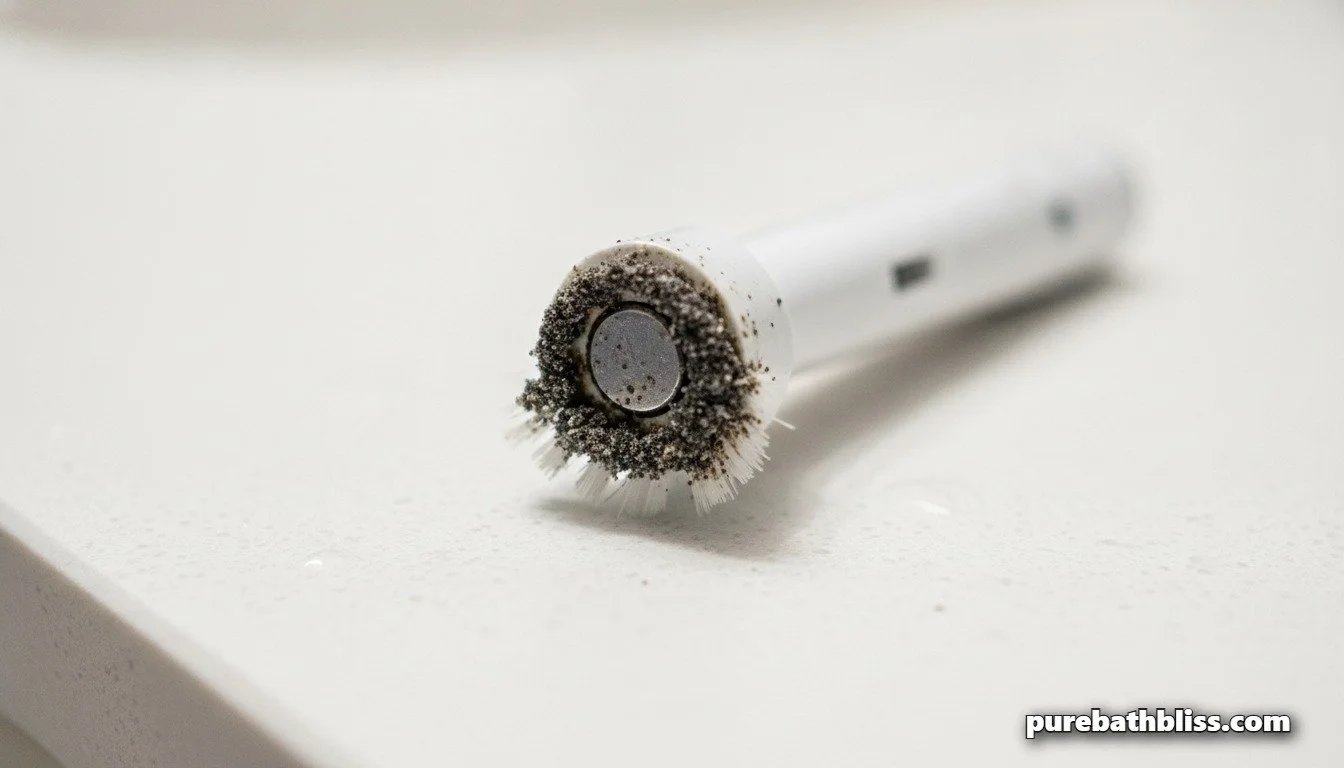
Pick up your electric toothbrush right now and look at the connection point where the brush head meets the handle. If you see a ring of grey or black residue, you are looking at a mixture of dried toothpaste, hard water minerals, mold, and bacteria that has been building up every single day since you bought it. Most people see it, rinse it under the tap, watch it stay exactly where it is, and then put the brush back in their mouth.
I did this for years. We all do. The toothbrush is a cleaning tool, so we assume it cleans itself. It does not. It accumulates in specific, predictable ways, and if you have never given yours a proper clean, it is almost certainly harboring more bacteria than you want to think about. A 2025 study published in a peer-reviewed PMC journal specifically tested toothbrushes stored in bathrooms with attached toilets and found Enterococcus faecalis, Candida albicans, Pseudomonas aeruginosa, and other pathogens on the bristles. Not from the mouth. From the air in the bathroom.
Here is everything you need to know to clean every part of your electric toothbrush properly, store it correctly, and extend its life significantly, using ingredients you already own and nothing that will end up back in your mouth as a chemical residue.
The Toilet Plume Problem (And Why Where You Store Your Brush Matters More Than You Think)
Before we get into cleaning, we need to talk about what your toothbrush is being exposed to between brushing sessions, because this changes the entire conversation about how often to clean it.
Every time a toilet flushes, it creates an aerosol mist of microscopic droplets containing whatever was in the bowl. Those droplets become airborne and can travel up to 1.5 metres from the toilet before settling on surfaces. In most bathrooms, that means the vanity counter where your toothbrush sits. The 2025 PMC study referenced above, which examined toothbrush contamination in bathrooms with and without attached toilets over a two-month period, confirmed that toothbrushes stored in an open holder in a combined bathroom and toilet space showed measurably higher bacterial contamination than those stored in a separate area. The specific bacteria found included Enterococcus faecalis, a marker of fecal contamination.
There is a counterintuitive finding that most toothbrush storage guides get wrong. The instinct is to cover the brush head to protect it from toilet plume, and the logic seems sound. The reality is the opposite. Toothbrush covers and closed storage containers trap moisture against the bristles, creating the warm, dark, humid environment that bacteria and mold need to multiply. Multiple studies have found higher bacterial counts on toothbrushes stored in closed containers compared to those stored upright in open air. You are choosing between toilet plume exposure and bacterial incubation. The answer is to close the toilet lid before flushing, which dramatically reduces aerosol spread, and store the brush upright in open air where it can dry completely between uses.
The optimal setup is a toothbrush stored in a ventilated holder, positioned as far from the toilet as your bathroom allows, with the toilet lid closed before every flush. If your bathroom is small and this distance is not achievable, a medicine cabinet with a slightly open door allows airflow while providing a physical barrier from direct aerosol exposure. These storage decisions matter more than how often you clean the brush, because they determine the bacterial load that accumulates in the first place.
What the Black Gunk Actually Is
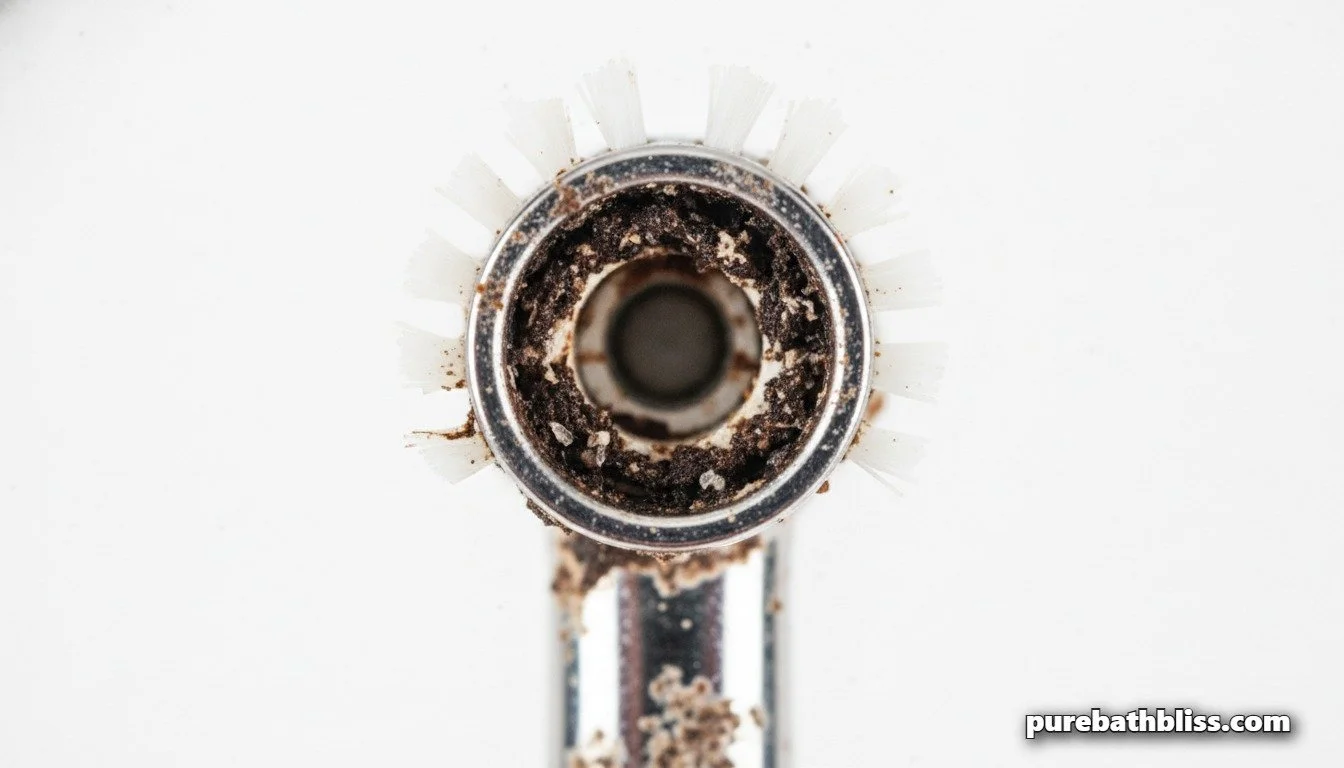
The dark residue that accumulates at the brush head connection point has a specific composition worth understanding, because it determines which cleaning approach actually removes it versus which ones just push it around.
The white or yellowish crusty layer is primarily calcium and magnesium carbonate from hard water minerals, the same compounds that form limescale on your shower glass and taps. Every time you rinse the brush under the tap after brushing, a small amount of mineral-laden water runs down the handle and into the connection joint. It evaporates, leaving the minerals behind. Layer by layer, this builds into the crusty white ring you can see.
The grey or black layer underneath is biofilm: a community of bacteria and mold that has colonized the mineral layer as a substrate. Biofilm is the same structure we see in drain buildup, on shower grout, and on any damp surface that combines organic material with persistent moisture. In this location it is particularly concerning because it sits at the base of the bristles that go into your mouth twice a day.
The reason simple rinsing does not remove this buildup is that the mineral layer bonds chemically to the plastic surface of the brush head and handle, and the biofilm grows into the porous structure of that mineral layer. Water alone cannot dissolve either. You need an acid to break the mineral bonds and an antimicrobial agent to address the biological layer. Which is exactly what the cleaning protocol below delivers.
Oral-B vs Sonicare: Does It Change How You Clean?
Most cleaning guides treat all electric toothbrushes as identical. There are some meaningful differences worth knowing.
Oral-B uses a rotating-oscillating mechanism with a small circular brush head. The shaft that the head attaches to is relatively thin and the connection socket on the brush head is deep and narrow. This geometry means buildup concentrates in a tight circular channel that is harder to reach with a cloth and easier to access with a cotton swab or a thin brush. The head detaches with a straight pull and reattaches with a firm push. When cleaning the connection point, pay particular attention to the circular groove around the base of the shaft where the plastic meets the seal.
Sonicare uses a sonic vibration mechanism with a larger, more elongated brush head. The shaft is broader and the connection socket is shallower, which means the buildup ring is more visible and slightly easier to reach with a cloth or small brush. Sonicare heads have a small rubber gasket at the base of the head that creates the seal. This gasket traps more moisture than the Oral-B design and is the primary site of mold growth on Sonicare brushes. Pay close attention to that rubber seal and dry it thoroughly after cleaning.
Both brands use proprietary head fittings that are not cross-compatible. Both have their own brush head recycling programs. Oral-B participates in a TerraCycle partnership and Sonicare offers a recycling program through select retailers. If you are replacing heads every three months as recommended and want to stay genuinely zero-waste, it is worth checking the current program for your specific brand before discarding old heads.
The Weekly 15-Minute Deep Clean
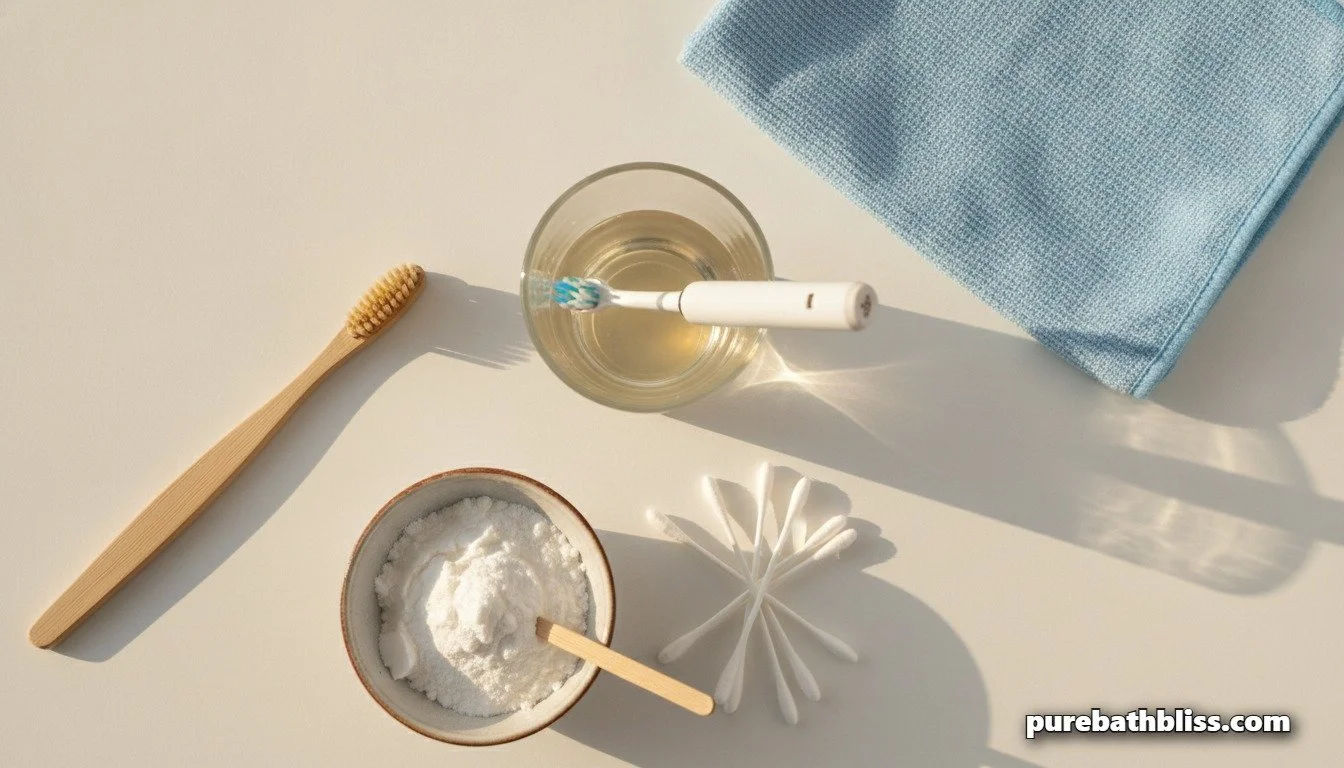
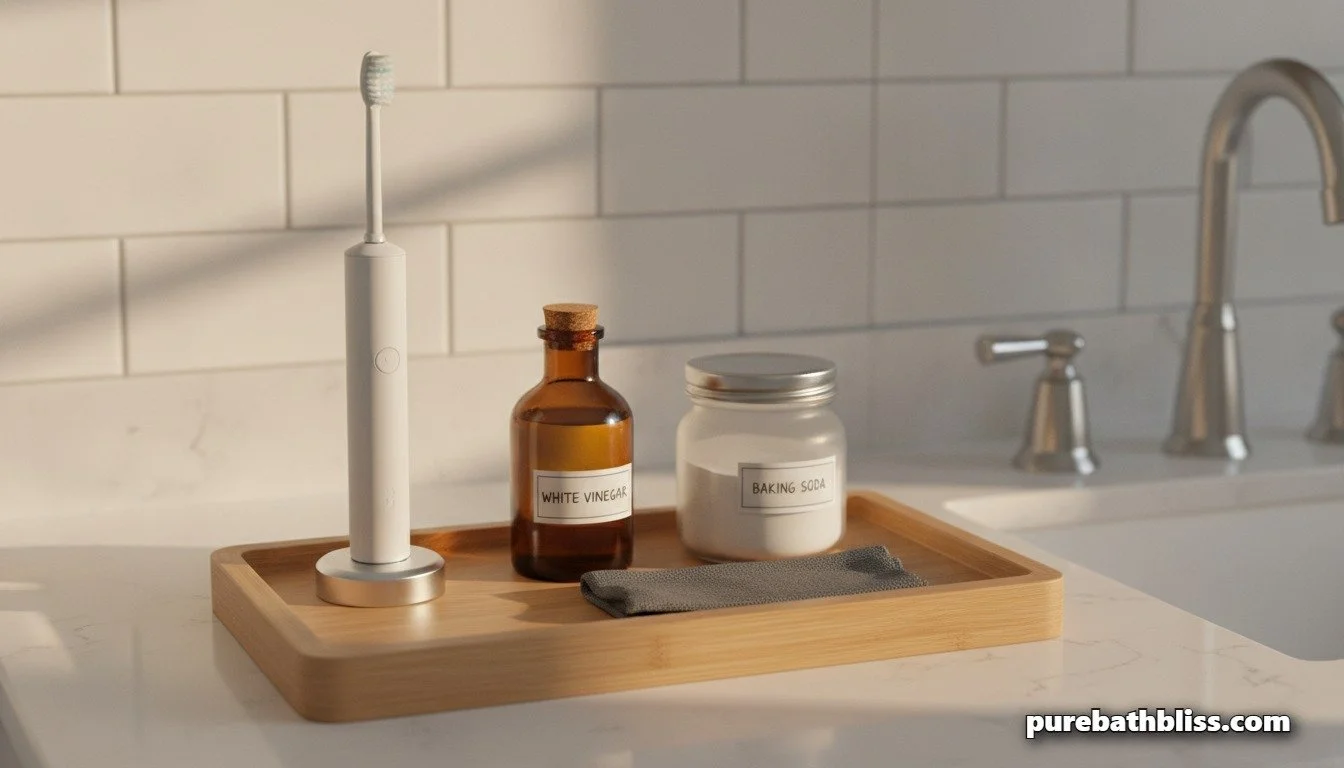
What you need: Distilled white vinegar, baking soda, a retired bamboo toothbrush (or any soft-bristle brush you keep specifically for cleaning tasks), cotton swabs, a small glass or ramekin, and a dry microfiber cloth.
Step 1: The Brush Head Vinegar Soak
Detach the brush head from the handle. Fill a small glass with a solution of one part white vinegar to two parts warm water. Submerge the brush head bristles-down into the solution. Set a timer for fifteen to thirty minutes. The acetic acid in the vinegar will dissolve the calcium carbonate mineral layer and kill most of the bacteria in the biofilm. You may see small bubbles forming around the head as the acid reacts with the mineral deposits. That is the reaction you want. While it soaks, move on to the handle.
Step 2: The Handle and Shaft Scrub
Mix a small amount of baking soda with just enough water to make a thick paste. Dip your retired bamboo toothbrush into the paste and scrub around the metal shaft on the handle, paying particular attention to the base where the shaft meets the handle body and any rubber seals or gaskets. The baking soda acts as a mild abrasive that lifts the mineral layer without scratching the plastic. Use a cotton swab dipped in straight white vinegar to get into the groove that runs around the base of the shaft and any other narrow crevices around the power button and charging port area. Wipe everything clean with a damp microfiber cloth. The handle should never be submerged or held under running water. Wipe rather than soak.
Step 3: The Brush Head Rinse and Inspection
Remove the brush head from the vinegar soak and rinse thoroughly under warm running water, rubbing your thumb across the bristles to clear any loosened deposits. Look inside the connection socket on the brush head. If there is still dark residue visible inside the cavity, a cotton swab dipped in the vinegar solution can reach in and clean it directly. Rinse again until no vinegar smell remains. Shake off excess water and place upright to air dry completely before reattaching to the handle.
Step 4: The Charging Base
Unplug the charging base before touching it with any moisture. Wipe the charging surface and the surrounding tray with a cloth dipped in a diluted vinegar solution. Toothpaste drips down the handle during and after brushing and pools at the charging collar, creating a sticky ring that attracts more mineral deposits over time. Drying this area after every brushing session prevents the buildup from establishing in the first place. If the base has developed a yellowed appearance, a cloth dampened with straight white vinegar and left in contact for five minutes will usually lift the discoloration.
The Post-Illness Disinfection Protocol
A regular vinegar soak reduces bacterial load significantly but is not a medical-grade disinfectant. After a cold, flu, strep throat, or any bacterial infection, a stronger approach is warranted before you resume normal use.
Option 1: Hydrogen Peroxide Soak (Recommended)
A 50/50 mix of 3 percent hydrogen peroxide and water, with the brush head submerged bristles-down for ten minutes, achieves near-complete bacterial elimination according to controlled testing. Hydrogen peroxide is a genuine disinfectant that kills viruses and bacteria by oxidizing their cell membranes, and it breaks down into water and oxygen afterward, leaving no chemical residue on the bristles. Rinse thoroughly after the soak. This is the same disinfection chemistry we use in other parts of the bathroom as covered in our guide to cleaning with hydrogen peroxide, and it works equally well on toothbrush bristles.
Option 2: Tea Tree Oil Soak
Add two drops of pure tea tree essential oil to a glass of warm water and soak the brush head for ten minutes. Tea tree oil has well-documented broad-spectrum antimicrobial properties against both bacteria and fungi. It is a gentler option than hydrogen peroxide and appropriate for routine post-illness cleaning if you prefer to avoid the slight bleaching effect that peroxide can have on colored bristle indicator markers over time. Our tea tree oil bathroom guide covers this application in the context of a broader non-toxic hygiene routine.
Option 3: UV-C Sanitizer
UV-C toothbrush sanitizers do work. Studies have measured approximately an 86 percent reduction in viable bacteria after UV-C irradiation, which is meaningful though not dramatically better than a hydrogen peroxide soak in controlled testing. The advantage is convenience: you place the brush head inside, close the lid, and the cycle runs automatically. The disadvantage is cost, typically $30 to $80 for a quality unit, and the fact that UV-C light only treats surfaces it can directly reach, meaning buildup in the connection socket still requires manual cleaning. If you already own one, use it. If you do not, a hydrogen peroxide soak achieves comparable results for essentially no cost.
One important note: regardless of which disinfection method you use after illness, replace the brush head. Viral particles can survive in bristle fibers and the connection socket for longer than a disinfection soak can reliably reach. The three-month replacement schedule exists partly for this reason. An illness that falls mid-cycle is a valid reason to replace early.
The Daily Habits That Make Weekly Cleaning Faster
The fifteen-minute weekly clean is much faster if three daily habits prevent the worst of the buildup from forming in the first place.
Separate the head from the handle after every brushing session. Reattaching the head immediately after use traps moisture in the connection joint and creates exactly the dark, damp environment where biofilm grows. Leaving the two pieces separate for at least an hour after brushing, or until the next use if you brush twice a day, allows both pieces to dry completely. This single habit does more to prevent the black gunk than any cleaning product.
Rinse and shake, then dry the shaft. After removing the head, rinse the metal shaft on the handle under warm water and wipe it dry with a corner of your towel. Thirty seconds. The shaft is the primary site of mineral deposit accumulation and simply keeping it dry between sessions dramatically slows that process.
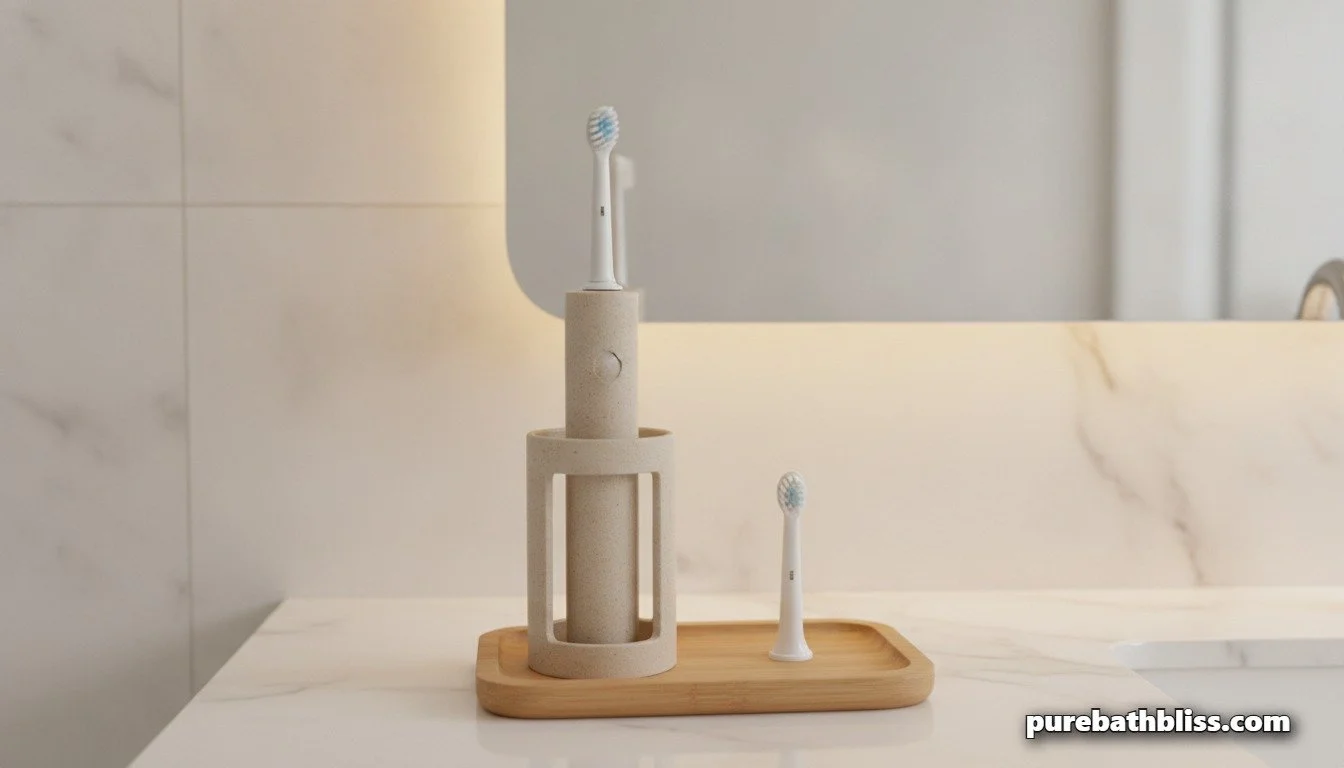
Store horizontally or upright, never in a sealed container. Upright with good airflow is the default for most people and works well. Some builders prefer a horizontal storage tray, which allows any residual water in the connection socket to drain freely rather than running down the handle. The key variable is not the orientation but the airflow: the brush must be able to completely dry between uses. A bamboo vanity tray that elevates the brush off the damp counter surface solves both the drying and the toilet plume distance problem simultaneously, which is why it is the storage recommendation we keep coming back to. For a full picture of what belongs on your bathroom counter and what should be stored elsewhere, our bathroom counter safety guide covers the counter as a functional space rather than a permanent storage surface.
Repair vs Replace: The Sustainability Question
A quality electric toothbrush handle should last five to ten years with proper care. The head should be replaced every three months. Those are two completely different timelines, and conflating them is how people end up buying a whole new toothbrush when only the head needed replacing.
Battery degradation is the most common reason people replace the full handle prematurely. Oral-B and Sonicare handles use sealed rechargeable NiMH or lithium-ion batteries. If your handle is no longer holding charge but the motor still works, the battery is the issue, not the brush. iFixit has published teardown guides for most major models. Replacing the battery yourself is a moderate-difficulty repair that costs about $8 to $15 in parts and extends the handle life by several years. It keeps one electronic device out of landfill and is genuinely worth attempting before buying a replacement unit.
Rubber seal degradation at the top of the handle is the second most common issue. If water has begun getting into the handle body, you will often notice the motor becoming less consistent or the handle developing an internal rattle. A tiny amount of food-grade silicone grease applied to a drying seal can extend its life and restore the water seal before failure occurs. This is a ten-second preventive measure worth doing annually.
Brush head sustainability has improved considerably. Oral-B's TerraCycle program accepts used brush heads for recycling. Sonicare offers a similar program. Bamboo-based brush heads that fit standard electric toothbrush mounts are also now widely available and represent the closest thing to a genuinely zero-waste option for the most frequently replaced component. Our bamboo toothbrush guide covers the broader plastic waste picture that makes this upgrade worth making, and the principles apply equally to electric brush heads.
When to Replace the Head (And the Signs Most People Miss)
The ADA recommends replacing electric toothbrush heads every three to four months, which is correct as a general guideline, but the actual signal is bristle condition rather than calendar time. Bristles that have fanned outward rather than sitting straight can no longer reach the spaces between teeth effectively regardless of motor power, and a frayed brush actually increases the risk of gum irritation by concentrating pressure on fewer points.
Most electric toothbrush heads include color indicator bristles, usually a different color from the main bristles, that fade as the head approaches the end of its effective life. When those indicator bristles have faded to about half their original color depth, the head should be replaced. This is a more reliable signal than a calendar date because it accounts for brushing pressure, frequency, and technique, which vary significantly between individuals.
The other replacement trigger is a persistent smell from the brush head that does not resolve after a thorough clean. If a head still smells after a vinegar soak, a hydrogen peroxide treatment, and thorough drying, the biofilm has penetrated beyond what surface cleaning can reach. Replace it.
Shop the Cleaning Kit
The Scrubber: Sustainable Bamboo Toothbrushes — your retired manual brush becomes your best cleaning tool for the shaft and connection point. Keep one specifically for this purpose.
The Descaler: Gallon Distilled White Vinegar — the acid that dissolves the mineral layer. Buying in bulk means you always have it on hand for every cleaning task in the bathroom.
The Abrasive: Baking Soda — for the shaft scrub paste. Also the backbone of the toilet cleaning bombs and half a dozen other bathroom applications.
The Disinfectant: 3% Hydrogen Peroxide — the post-illness soak and a genuine disinfectant that leaves no toxic residue behind. Keep it in a dark bottle away from light.
The Boost: Lemon Essential Oil — add a drop to the cleaning cloth for the charging base. Cuts through toothpaste residue and leaves no synthetic fragrance behind.
The Seal Protector: Food-Grade Silicone Grease — a tiny annual application to the rubber seal at the top of the handle extends its waterproof life significantly.
The Storage: Bamboo Bathroom Vanity Tray — keeps the brush elevated off the damp counter, increases distance from the toilet, and provides a dedicated drying surface for both pieces stored separately.
The Connection to a Broader Non-Toxic Bathroom
The reason we spend time on how to clean the tool that cleans our teeth is the same reason we care about what is in our bathroom cleaners, what our shower curtain is made of, and whether our kids' bath products contain the ingredients they shouldn't. A clean bathroom is not just about surfaces that look clean. It is about managing what actually lives in the room and goes into or onto the people using it every day.
The electric toothbrush is an easy win in that framework. A fifteen-minute clean once a week, three small daily habits, and a couple of product decisions around storage and replacement heads add up to a meaningfully cleaner tool for a task that directly affects oral health. For a broader look at which products in your bathroom are working against you rather than for you, our guide to the five toxic chemicals hiding in your bathroom covers the most important swaps available, including the toothpaste question that connects directly to what you are brushing with this tool.
And if the charcoal toothpaste question has been sitting in the back of your mind while reading this, our deep dive into what charcoal toothpaste actually does to your enamel covers the science behind whether that viral product is worth using with your freshly cleaned brush.