
How to Choose a Low Flow Showerhead That Still Feels Powerful
A 1.5 gallon per minute showerhead can feel weak or surprisingly strong, and the difference comes down to droplet size, spray design, pressure compensation, and the water pressure in your home. Here is how to choose one you will actually enjoy, with honest numbers on what it saves.

How to Make an Old Toilet Use Less Water (and Which Tank Hacks Actually Work)
A water bottle in the toilet tank saves far less than most guides claim, and on a modern toilet it can actually make things worse. Here is the honest math on tank hacks, and the fixes that genuinely reduce how much water an older toilet uses.

How Long After Painting a Bathroom Can You Shower? Cure Times, Ventilation, and Stopping Mildew
Fresh bathroom paint can feel dry in an hour but takes weeks to fully cure, and a hot shower in the first day or two is the most common way a good paint job gets ruined. Here is how long to wait, how to ventilate while you paint, and what those sticky brown drips on new paint actually are.

The Toilet Dye Test: How to Find and Fix the Silent Leaks Wasting Your Water
A few drops of food coloring will tell you in fifteen minutes whether your toilet is quietly leaking into the bowl, and the fix is usually a part that costs less than lunch. This guide covers how to read the result, the three tank leaks it reveals, and the leaks outside the tank that a dye test will never show.

The Bathroom Water Audit: How to Find Leaks and Cut Your Water Use
The bathroom accounts for more than half of the water used inside a typical American home, and a surprising share of it disappears through leaks nobody can hear. This audit walks through the dye test, the meter test, and the fixture upgrades that genuinely pay off, with the math done honestly.

The Paint Finish Showdown: Satin vs. Semi-Gloss—Which is Best for Your Bathroom?
Most people spend more time choosing their bathroom paint colour than their paint finish, and most bathroom paint failures come down to the finish rather than the colour. The sheen level determines the moisture resistance, the scrub rating, and ultimately how long the paint job lasts in the specific conditions of a bathroom. Here is the science behind why finish matters, the correct specification for each bathroom use case, and the two-finish approach that professional painters use on every bathroom job.
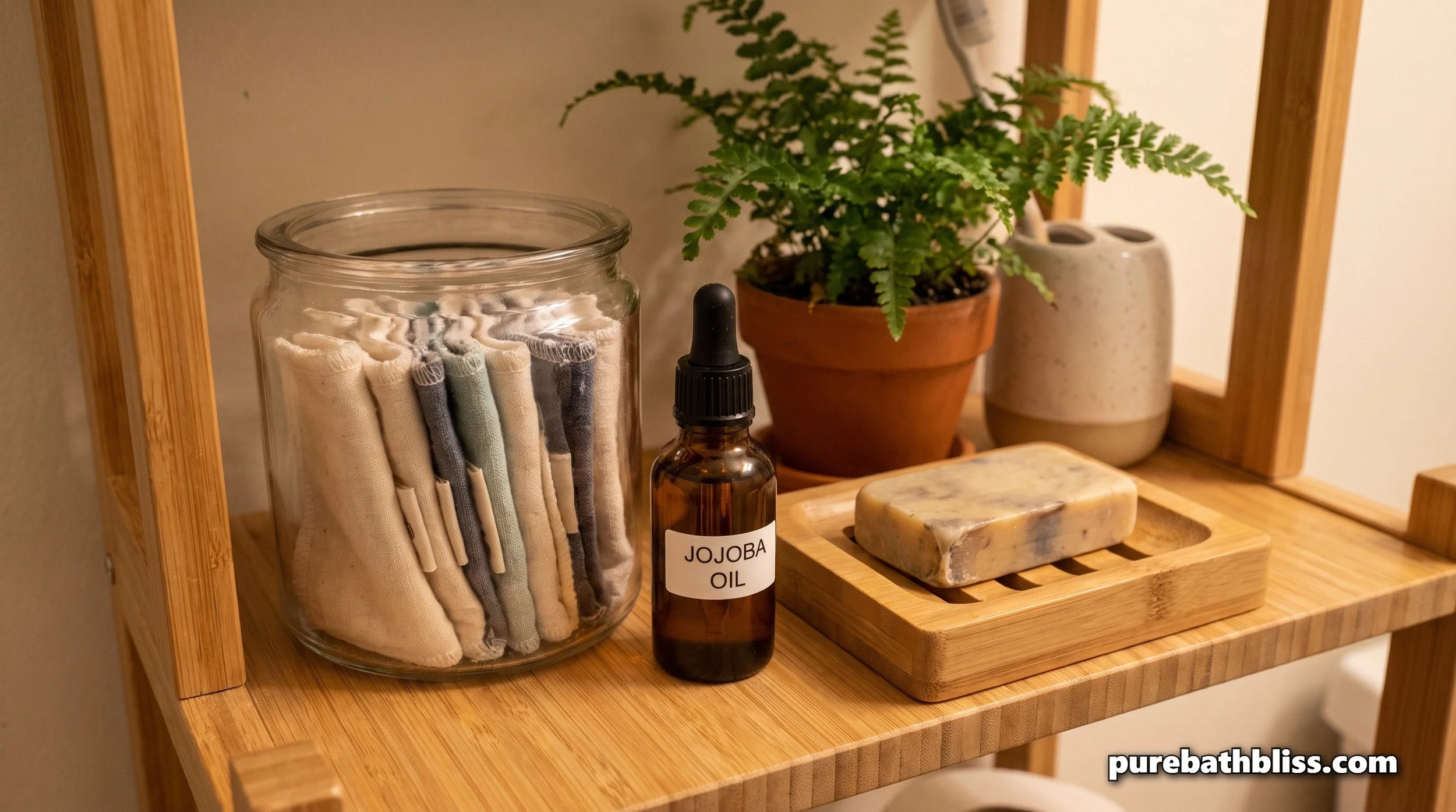
How to Sew Reusable Makeup Remover Pads: The Complete Guide to Fabric, Method, and Getting 100 Washes
Disposable cotton rounds are one of the most pointless single-use items in the bathroom. A round of unbleached organic flannel and bamboo terry sewn together in 30 minutes does the same job, feels better on skin, lasts over a year of daily use, and costs pennies per wash compared to dollars per pack. Here is the complete guide to making them, the fabric science behind why the material combination works so well for makeup removal, and the care protocol that gets the full 100 washes.

Is Your Hair Dryer a Fire Hazard? How to Clean the Filter, Store It Correctly, and Double Its Lifespan
The U.S. Fire Administration attributes over 1,200 home fires annually to hair dryers, the majority caused by lint-clogged intake filters rather than electrical faults. The fix is five minutes of monthly maintenance. Here is the complete protocol covering filter cleaning, cord storage, bathroom humidity management, and the maintenance schedule that keeps bathroom appliances running for a decade rather than two years.

The Hidden Hazard: Why You Must Use Low-VOC Primer in High-Humidity Rooms (And Our Top 3 Picks)
You’ve prepped your bathroom walls meticulously—cleaned every speck of soap scum, patched every ding, and taped crisp lines. You roll on a premium eco-friendly paint in a serene spa blue. It looks perfect… for about six weeks. Then the nightmare begins: bubbles form along the edges, paint peels in sheets, and black mildew spots bloom like a horror movie. The culprit? Skipping primer—or worse, using the wrong kind.
In high-humidity rooms like bathrooms, primer isn’t optional—it’s your non-negotiable moisture shield and health barrier. It’s the invisible foundation that locks paint in place, blocks mold from feasting on your drywall, and keeps toxic fumes out of your lungs. Skip it, and you’re gambling with your time, money, and family’s well-being.
This guide exposes the hidden hazards of traditional primers and arms you with the knowledge to choose low-VOC, mold-blocking formulas that deliver professional results. You’ll discover why primer is the smartest $30–$50 you’ll spend on your project—and our top 3 picks that outperform the rest.

The Ultimate Guide to Non-Toxic Caulk: Sealing Your Tub Without the Harmful VOCs
You’ve seen the horror: black, crusty caulk peeling away from your tub like old tape. Beneath it? Soggy drywall, mold colonies, and the faint smell of rot. That failed seal didn’t just ruin your bathroom’s look—it invited water behind the walls, where it silently destroys structure and air quality for years.
Caulk isn’t cosmetic—it’s your home’s final moisture firewall. One cracked bead = thousands in water damage. One moldy joint = respiratory risk for your family.
This guide cuts through the confusion to deliver the non-negotiable truth: only 100% silicone, low-VOC caulk belongs in a bathroom. We’ll show you why, how, and which brands to trust—so your seal lasts 20+ years, toxin-free.

The 5 Best Eco-Friendly Paints for Bathrooms and Humid Rooms
The eco-friendly paint category is crowded with products that make zero-VOC claims but vary significantly in how well they perform in the specific conditions of a bathroom. Heat, steam, and humidity cycling are more demanding than any other residential painting environment. Here are the five formulas that genuinely hold up, from a Red Seal Carpenter who has painted a lot of bathrooms and has specific opinions about what fails and why.

DIY Clay & Oat Face Mask Bar (Zero Waste, 30 Uses)
My wife has been into natural skincare for years, and for most of that time our bathroom counter had a rotating cast of glass and plastic jars, half-used tubs of clay mask, and little pump bottles of serums that cost more than they should. We were spending real money on products that were mostly water, preservatives, and packaging.
A while back she started making her own face masks from scratch, which I was skeptical about at first. But after watching her mix up batches that worked just as well as the store bought stuff, and then seeing how much less waste we were producing, I got curious about whether you could take it further. Could you make a solid bar version that doesn't need to be refrigerated, travels easily, and lasts for months? Turns out, yes you can.
These clay and oat face mask bars are now a staple in our bathroom. One batch makes three bars, each bar gives you about ten uses, and the whole thing costs maybe a dollar fifty to make. That's thirty full face treatments for less than the price of a single-use sheet mask. Here's exactly how to make them.

Post-Bath Baby Skincare and Eco-Friendly Towels: What Actually Works
Most of the work in a baby's bath routine happens after the bath ends. The towel material, the drying technique, and the moisturizer you apply in the first three minutes after lifting your baby out make a bigger difference to skin health than almost anything that happens in the water. Here is the complete post-bath guide, from towel certifications to the soak and seal method.

What Is the Red Stuff in Your Shower? Serratia Marcescens, Why It Keeps Coming Back, and How to Actually Get Rid of It
The reddish-pink or orange film appearing around your shower drain, on grout lines, and at the toilet waterline is not mold. It is Serratia marcescens, an airborne bacterium that produces a pigment called prodigiosin and colonizes bathroom surfaces by forming a biofilm. Wiping it away removes the visible colour but leaves the biofilm matrix intact, which is why it comes back within days of cleaning. Here is the science behind it, the treatment that actually disrupts the biofilm, and the two habits that prevent it from returning.

DIY Solid Shampoo Bars: How to Make Them, Why They Work, and the Transition Period Nobody Warns You About
A solid shampoo bar made from saponified plant oils and castile soap replaces three plastic bottles, lasts up to 80 washes, costs under $2 per bar to make, and is TSA-friendly. It also comes with a two to four week scalp transition period that most DIY shampoo bar guides either minimise or deny entirely. Here is the complete recipe, the science behind the transition, and the specific techniques that make it through that window without giving up on the bar.

Baby Bath Water: The Complete Guide to Safe Temperature, Chlorine, and Water Purity
Baby bath water safety involves two distinct concerns that most guides treat separately but that are closely related: the temperature that prevents scalding while keeping the baby warm enough, and the chemical composition of the water that contacts the most permeable skin in the household. Here is the complete guide to both, including the specific temperature range, how to test it reliably, what chlorine does to developing baby skin, and the filtration options worth considering at different budgets.
Not the temperature, though that matters enormously. The chemistry of the water. What is in it, what it does to skin that is three times thinner and significantly more permeable than adult skin, and why a baby who has been bathed twice a week in regular tap water can end up with persistent dryness and irritation that parents spend months trying to solve with creams and products when the solution was the water all along.
By our fourth child, bath time was calm and informed. This guide covers everything we learned, including what the American Academy of Pediatrics and Mayo Clinic actually say about temperature, the specific chemistry that makes chlorinated tap water problematic for infant skin, and the practical filtration options that make a real difference without requiring a whole-house plumbing overhaul.

Are Bath Bombs Good for Your Skin? The Honest Guide to What They Do, What to Avoid, and Which Ones Are Worth Using
Whether bath bombs are good for your skin depends entirely on what is in them. A bath bomb made from colloidal oatmeal, carrier oils, and essential oils can genuinely soothe, moisturize, and support the skin barrier. A bath bomb made from synthetic fragrance, artificial dyes, and SLS can disrupt the acid mantle, trigger contact dermatitis, and introduce endocrine-disrupting phthalates through prolonged skin contact. Here is what the research says about each ingredient category and how to read a bath bomb label in sixty seconds.

How to Choose Baby-Safe Bath Toys: The Complete Non-Toxic Buying Guide
The bath toy aisle looks harmless. Bright colours, friendly shapes, affordable prices. What most parents do not know is that the majority of conventional bath toys are made from materials that leach chemicals into warm water and are designed in ways that guarantee mold growth inside them. This guide covers what to look for, what to avoid, and the best non-toxic options available right now.

DIY Zero-Waste Toilet Bombs That Dissolve Grime (And Smell Like a Spa)
I'll be honest about how this started. A few years ago I was standing in the cleaning aisle at the grocery store, staring at a plastic jug of blue toilet cleaner, doing the math. Six dollars a bottle, roughly two bottles a month across four bathrooms, twelve plastic jugs a year heading to a landfill. And I hadn't even thought about what was actually in the stuff, synthetic fragrance, hydrochloric acid, bleach derivatives. We were pouring that into our toilets and flushing it into the water system every single week.
I put the jug back and went home and started experimenting. What I landed on were these toilet cleaning bombs, small, dense little tablets made from baking soda and citric acid with essential oils pressed into them. You drop one in the bowl, it fizzes for a few minutes, you give it a light brush, and you flush. The toilet comes out genuinely clean, smells incredible, and the whole thing cost me about eighteen cents.
I've been making them ever since. One batch takes about twenty minutes and makes twenty-four bombs, roughly a month's supply for our household. Here's exactly how to make them.

My Baby Drank Bathwater: Will She Be OK? What to Do Right Now and When to Call the Doctor
The moment a baby swallows bathwater is one of the most common bath time panics and almost always resolves without any intervention. What actually determines the risk is not the water itself but what was dissolved in it. Here is the honest breakdown of what different bath products do if swallowed in small amounts, the specific symptoms that genuinely warrant a call to the doctor, and what to do right now if it just happened.