My Baby Drank Bathwater: Will She Be OK? What to Do Right Now and When to Call the Doctor
Originally published Nov 3, 2025 · Updated Sept 7, 2026
It has happened to every parent of a baby who baths. You turn to grab the towel or reach for the shampoo and hear that unmistakable gulping sound. Your baby has swallowed a mouthful of bathwater. The panic is instant and completely understandable.
All four of my kids did this at some point during the bath-every-evening stage. The first time it happened I was genuinely alarmed. By the fourth child I was still watching carefully but significantly less panicked, because the outcome across dozens of these incidents was consistently the same: nothing happened. That experience, combined with what the pediatric guidance actually says about this specific situation, is the basis for this article.
The short answer, which you probably need right now: a small amount of bathwater swallowed by a healthy baby is almost always harmless. What actually determines any risk is not the water itself but what was dissolved in it. Here is the full picture, including what different bath products do if swallowed in small quantities, the specific symptoms that genuinely warrant a call to the doctor or poison control, and what to do in the next thirty minutes.
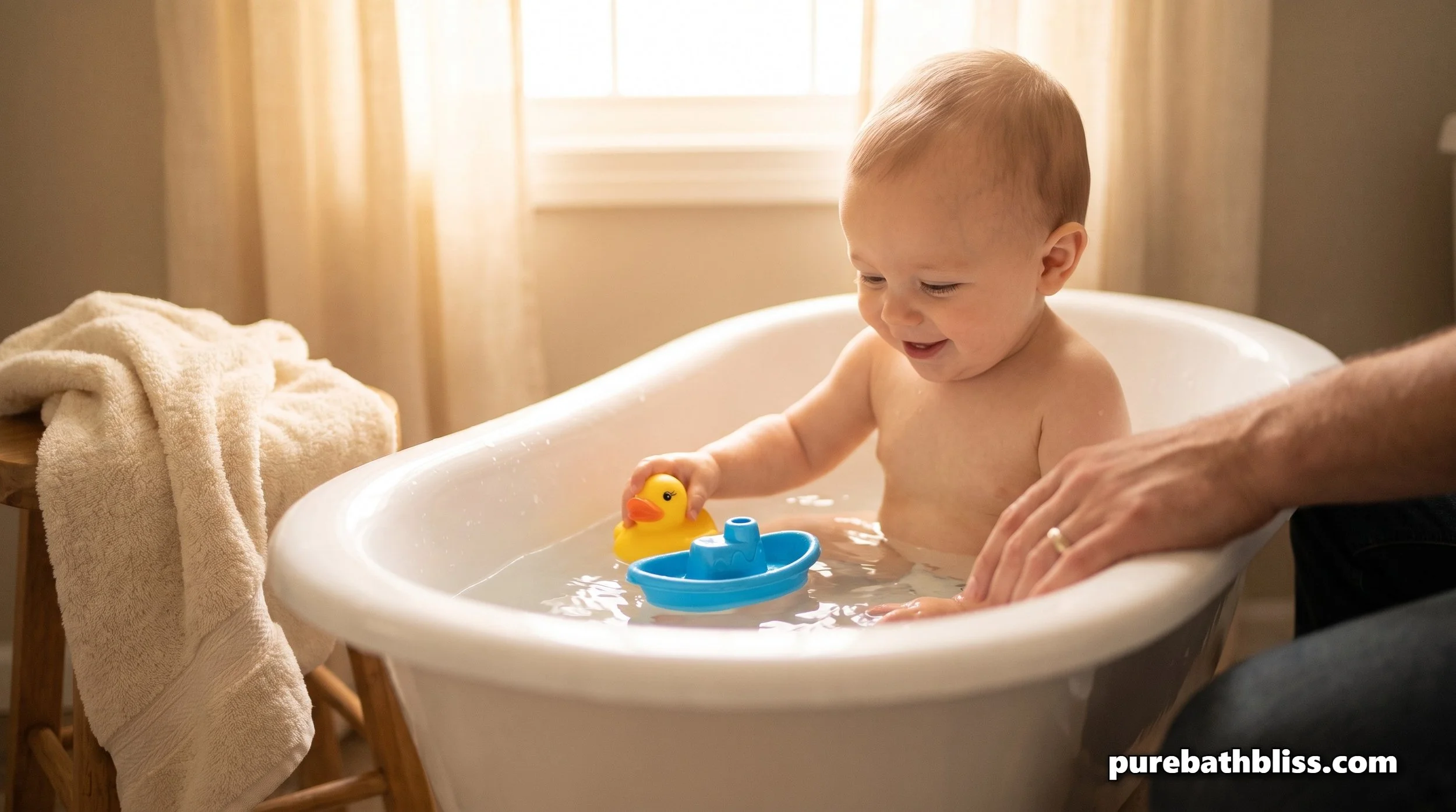
What to Do Right Now
If this just happened and you are reading this in the bathroom with a wet baby in your arms, here is the immediate response in order.
Stay calm. Your baby reads your stress response immediately and an alarmed parent produces an alarmed baby. In the vast majority of cases nothing harmful has happened and your calm is both appropriate and useful.
Get the baby out of the bath. Not because the situation is an emergency but because assessing what happened is easier when you are not still managing an active bath.
Identify what was in the water. This is the most important step and the one that determines everything that follows. Was the water plain or nearly plain at the start of the bath? Was there soap or shampoo dissolved in it? Bath bombs? Epsom salts? Bubble bath? The answer to this question matters far more than the volume swallowed.
Offer breast milk, formula, or water. For babies over six months, a few sips of clean water helps dilute whatever was swallowed. For babies under six months, breastfeed or formula-feed if the baby will take it. This is a comfort and dilution measure rather than a treatment.
Watch for thirty minutes to two hours. The symptoms that would indicate a problem appear within this window if they are going to appear at all. Most of the time nothing happens and bath time continues as normal tomorrow.
What Was in the Water: The Risk Breakdown
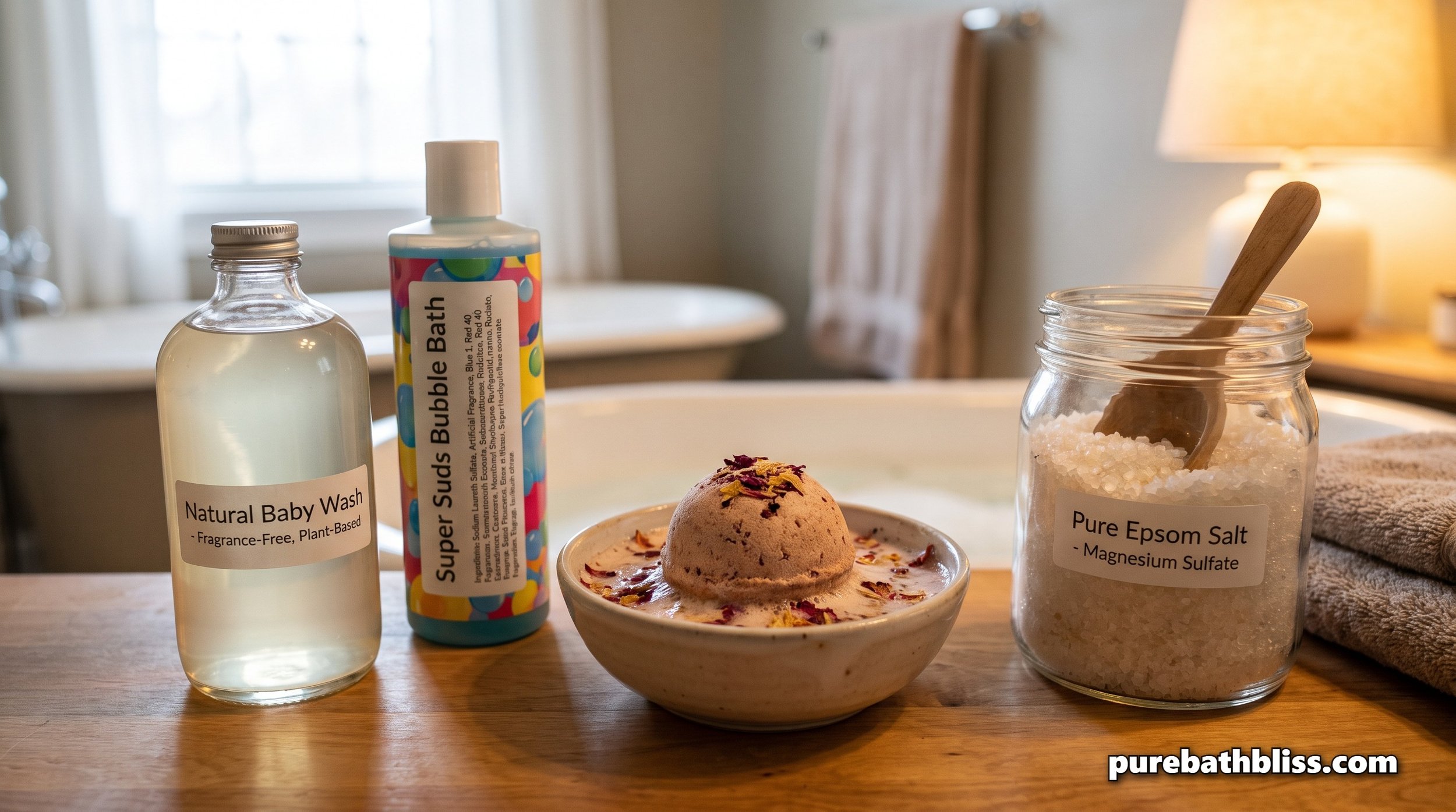
Plain Water or Nearly Plain Water
Tap water swallowed during a bath poses no meaningful risk to a healthy baby. The chlorine in municipal water is present at concentrations specifically regulated to be safe for drinking. A mouthful of plain bath water, or bath water with only trace amounts of natural body oils dissolved in it, will at most cause no reaction whatsoever. This is the most common scenario and the one where parental concern is highest relative to actual risk.
Fragrance-Free Natural Baby Wash or Castile Soap
A small amount of natural baby wash or castile soap dissolved in bathwater and swallowed is likely to cause nothing more than a brief upset stomach in some babies or no reaction at all. The saponified plant oils in castile soap, the format we cover in our guide to organic soap versus synthetic detergent, are not toxic when ingested in small quantities. The digestive system handles soap fatty acids similarly to dietary fats. A mouthful of soapy water may cause brief nausea or loose stools in the hours following but resolves without treatment in most cases.
Commercial Baby Wash or Shampoo With SLS and Synthetic Fragrance
This is the category where the distinction between natural and conventional products matters most for the swallowed bathwater scenario. Sodium lauryl sulfate, the primary surfactant in most commercial baby washes and shampoos, is a gastrointestinal irritant when ingested in sufficient quantities. A mouthful of bathwater diluted with a standard amount of commercial baby wash, meaning a capful dissolved in a full tub of water, contains SLS at a very low concentration. At that dilution, the likely result for most babies is nothing, or at most brief nausea or loose stools. The concern rises if the water was heavily soapy, meaning the product was used in significantly higher concentration than the label recommends, or if the baby swallowed multiple large mouthfuls rather than a single sip. Synthetic fragrance compounds, including the phthalates that hide under the fragrance label, are present in bathwater at very low concentrations after dilution. The acute ingestion risk at these concentrations is low. The cumulative exposure concern, which we cover in our guide to harmful chemicals in shampoo and body wash, is about repeated daily skin and steam exposure rather than the occasional swallowed mouthful.
Bubble Bath
Bubble bath is the highest-concern category in the swallowed bathwater scenario because of the surfactant concentration and the volume of foam that can be swallowed alongside the water. The American Association of Poison Control Centers notes that bubble bath ingestion is one of the more common baby bath time calls and that in most cases the outcome is gastrointestinal irritation, nausea, vomiting, or loose stools rather than serious toxicity. The risk scales with the amount ingested. A mouthful of bubble bath water is a different situation from a baby who has swallowed foam directly from the tub surface, which can contain significantly more concentrated surfactant. We cover the specific ingredients in bubble bath and why they pose concerns for baby skin in our guide to bubble bath safety for babies. If bubble bath was in the water when your baby swallowed it, this is the scenario most likely to produce a phone call to your pediatrician or poison control, not necessarily because serious harm has occurred but because the surfactant concentration is higher than in plain soap water and the symptoms are more likely to be uncomfortable.
Bath Bombs
A commercial bath bomb dissolved in a full tub of water produces a solution of citric acid, baking soda reaction products, colorants, fragrance, and carrier oils at very low concentrations. The citric acid and sodium bicarbonate have fully reacted and are no longer present in their original forms after the fizzing is complete. The resulting sodium citrate in the water is a harmless food-grade salt used as a food additive. The main variable is the colorant and fragrance load of the specific bath bomb. A bath bomb with synthetic dyes and synthetic fragrance produces water with those compounds dissolved in it at low concentration. A natural bath bomb with only essential oils and natural colorants produces water that is considerably lower concern. A small swallow of bath bomb water from a tub where a single bath bomb has dissolved is unlikely to cause anything beyond mild stomach upset in most babies. As with bubble bath, the risk is proportional to what was in the bomb and how much was swallowed.
Epsom Salts or Magnesium Flakes
Epsom salts are magnesium sulfate and magnesium flakes are magnesium chloride. Magnesium sulfate in sufficient oral doses is a saline laxative, which is why ingesting a meaningful amount of Epsom salt water is more likely to produce loose stools or diarrhea than any other symptom. The concentration of magnesium in a full tub of water with the recommended amount of Epsom salts is relatively low, and a mouthful at that dilution is unlikely to cause significant laxative effect in most babies. Watch for loose stools in the hours following and ensure the baby stays hydrated. We cover the difference between Epsom salts and magnesium flakes in our guide to therapeutic bath soaks.
The Age Factor: Why Under Six Months Is Different
The six-month threshold appears in most pediatric guidance on swallowed bathwater and it is worth understanding why rather than treating it as an arbitrary cutoff.
Before approximately six months, the infant gut is in a period of rapid development. The intestinal lining is more permeable than it will be later, a normal developmental characteristic sometimes called the open gut stage that allows maternal antibodies from breast milk to pass through the intestinal wall into the bloodstream. This same permeability means that compounds that would pass harmlessly through an older baby's digestive system have a slightly higher likelihood of absorption in a very young infant.
This does not mean that a small swallow of plain bathwater is dangerous for a baby under six months. It means that the margin is narrower and the threshold for calling a doctor is lower. For babies under three months specifically, any swallowing of water containing soap, shampoo, or other bath products is worth a call to your pediatrician for reassurance even if the baby appears completely well, simply because the gut permeability is at its highest in this window and the pediatrician can confirm whether any monitoring is needed based on the specific product involved.
Symptoms to Watch For and When to Call
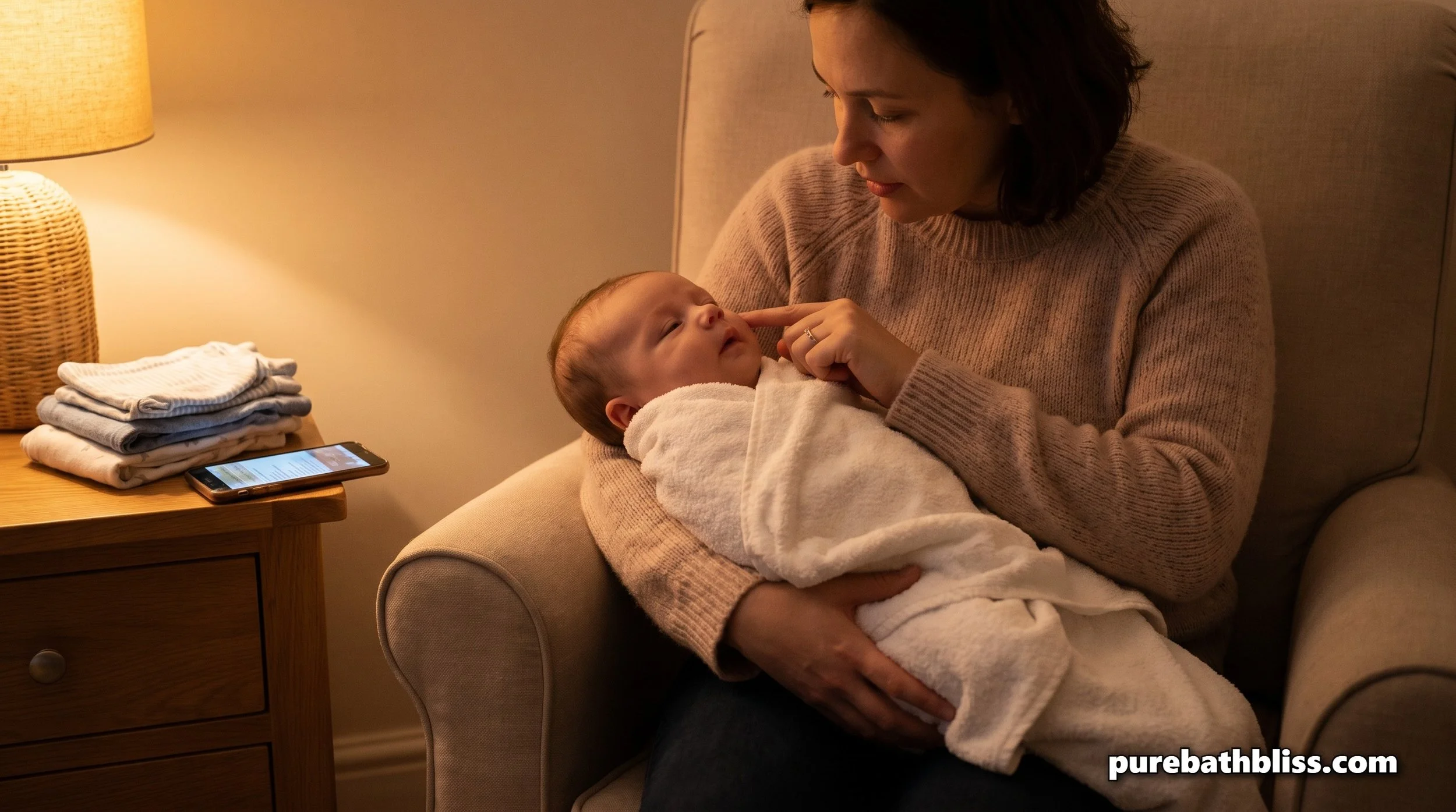
| Symptom | When It Appears | What It Means | Action |
|---|---|---|---|
| No symptoms at all | Most common outcome | The amount swallowed was too small to cause any reaction. This is the outcome in the majority of cases. | Nothing. Continue normal routine. |
| Mild fussiness | 30 to 60 minutes after | Mild stomach discomfort from surfactant or salt ingestion. Common and self-resolving. | Offer a feed. Monitor. No doctor call needed unless fussiness persists more than two hours. |
| Single vomiting episode | 30 minutes to 2 hours after | Stomach's response to unfamiliar substance. One episode without recurrence is common and self-limiting. | Offer fluid. Monitor for repeat episodes. No doctor call needed for a single episode in an otherwise well baby. |
| Loose stools | 2 to 6 hours after | Common after magnesium salt or soapy water ingestion. The digestive system passing the substance through. | Ensure adequate hydration. Monitor for more than 24 hours of loose stools which warrants a call. |
| Repeated vomiting | Within 2 hours | More significant gastric irritation. May indicate higher concentration of product was swallowed. | Call pediatrician or poison control. 1-800-222-1222 in the US. |
| Significant lethargy or difficulty waking | Any time after | Unusual and warrants prompt medical attention regardless of what was swallowed. | Call pediatrician immediately or go to emergency if unable to reach doctor promptly. |
| Breathing difficulty | Immediately or within minutes | Extremely rare from swallowed bathwater. Could indicate aspiration rather than ingestion. | Emergency. Call 911 immediately. |
| Fever above 38°C appearing within 24 hours | 12 to 24 hours after | May indicate bacterial contamination in the water rather than product reaction. Uncommon but worth monitoring. | Call pediatrician. Mention the bathwater incident when describing the timeline. |
Symptoms that are expected and manageable at home. Mild fussiness in the thirty to sixty minutes following the incident. A single episode of vomiting that does not repeat. Loose stools in the two to four hours following, particularly after magnesium salt or soap water ingestion. These are the digestive system's normal response to an unfamiliar substance and resolve without treatment in the vast majority of cases. Offer feeds as normal and keep the baby comfortable.
Symptoms that warrant a call to your pediatrician or poison control. Repeated vomiting, meaning more than two or three episodes within a two-hour window. Vomiting that continues more than four hours after the incident. Significant lethargy or unusual difficulty waking. Any signs of breathing difficulty, which would be extremely unusual from swallowed bathwater but warrants immediate emergency attention. Blood in vomit or stool. Fever above 38 degrees Celsius appearing within twenty-four hours, which may indicate a secondary bacterial issue rather than a direct product reaction.
If you are ever uncertain, calling poison control is the right move. In the United States the number is 1-800-222-1222 and it operates twenty-four hours a day. The toxicologists who staff these lines handle swallowed bathwater calls routinely and can give you specific guidance based on the exact product involved and the amount swallowed. You do not need to be certain something is wrong to call. That is what they are there for.
Why This Happens and How to Reduce the Frequency
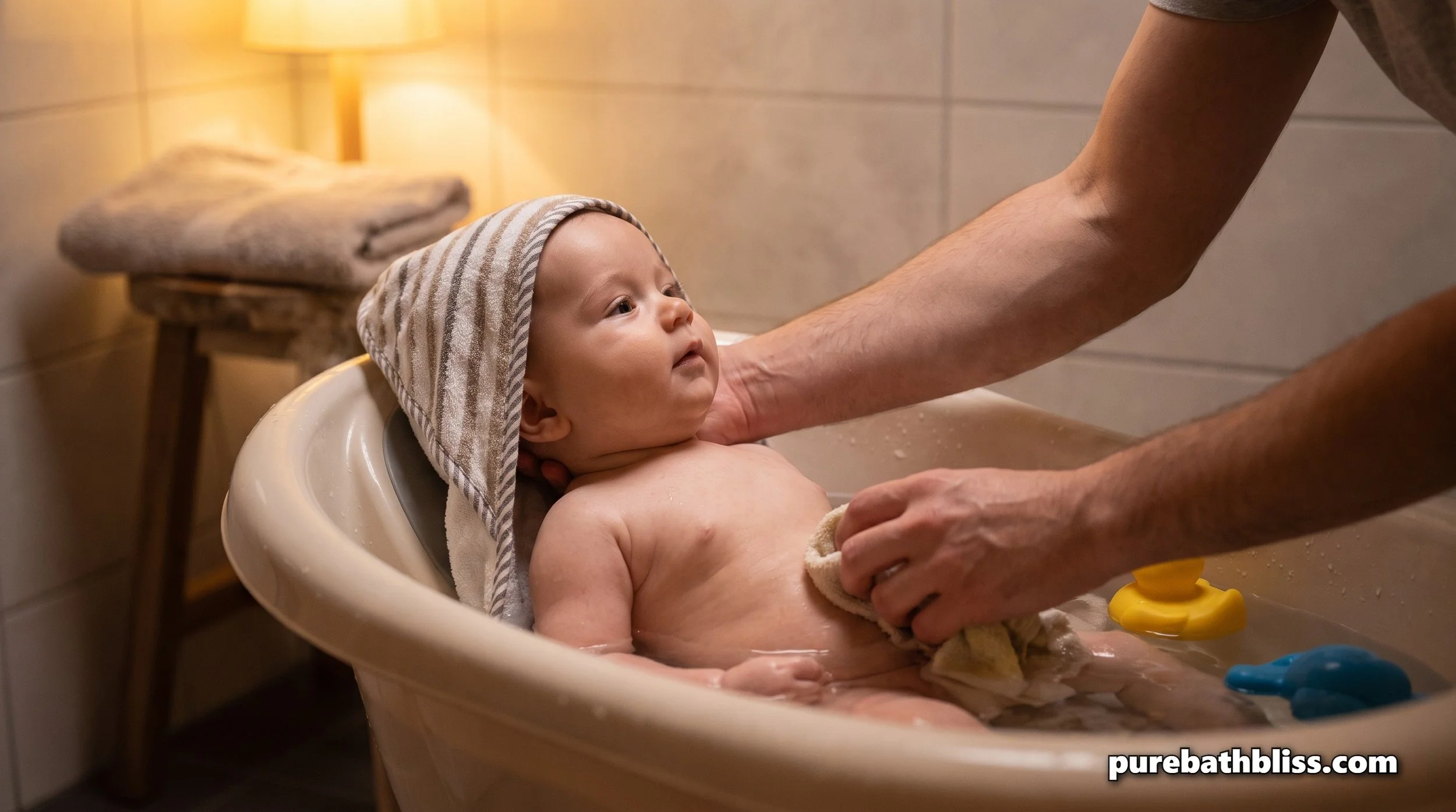
Babies swallow bathwater for two primary reasons. The first is developmental: babies in the four to twelve month range are in an oral exploration phase where putting everything including water in the mouth is a normal sensory behavior rather than a safety failure. The second is positional: a baby in a reclined or semi-reclined bath position with the water level above mid-chest has more opportunity for accidental water ingestion than a baby sitting more upright in a shallower bath.
Practical steps that reduce frequency without eliminating the bath time fun. Keep the water level at or below mid-torso for babies old enough to sit with support. A shallower bath reduces the water volume available for accidental ingestion and makes water entry into the mouth from a splash or dip significantly less likely. Keep the bath relatively short once the active washing is done. A baby left to play in cooling, increasingly soapy water for thirty minutes has significantly more swallowing opportunity than a baby bathed efficiently in fifteen minutes.
Using the gentlest possible products reduces the risk from whatever does get swallowed. A baby bathed in plain water or water with a minimal amount of fragrance-free castile soap has meaningfully lower concern if they swallow a mouthful than a baby bathed in bubble bath with synthetic fragrance and SLS. Switching to cleaner products is not going to prevent the swallowing behavior, which is developmental and normal, but it reduces what goes into the mouth when it happens. We cover the specific baby bath product standards worth applying in our guide to bubble bath safety for babies and our guide to whether regular shampoo is safe for babies.
The most honest advice I can give from four children and hundreds of bath times is that you cannot entirely prevent a determined baby from tasting the bathwater and you should not spend the bath time anxious about it. Close supervision, appropriate water depth, gentle products, and knowing the symptoms worth watching for is the complete picture. The rest is just bath time.
Greg is a Red Seal Carpenter, coffee shop owner, dad of four, and founder of Pure Bath Bliss. He writes about making smarter choices for your home and family.