Originally published Nov 16, 2025 · Updated October 15, 2026
Transparency Note: We independently select these products based on research and user reviews. If you buy something through our links, we may earn a commission.
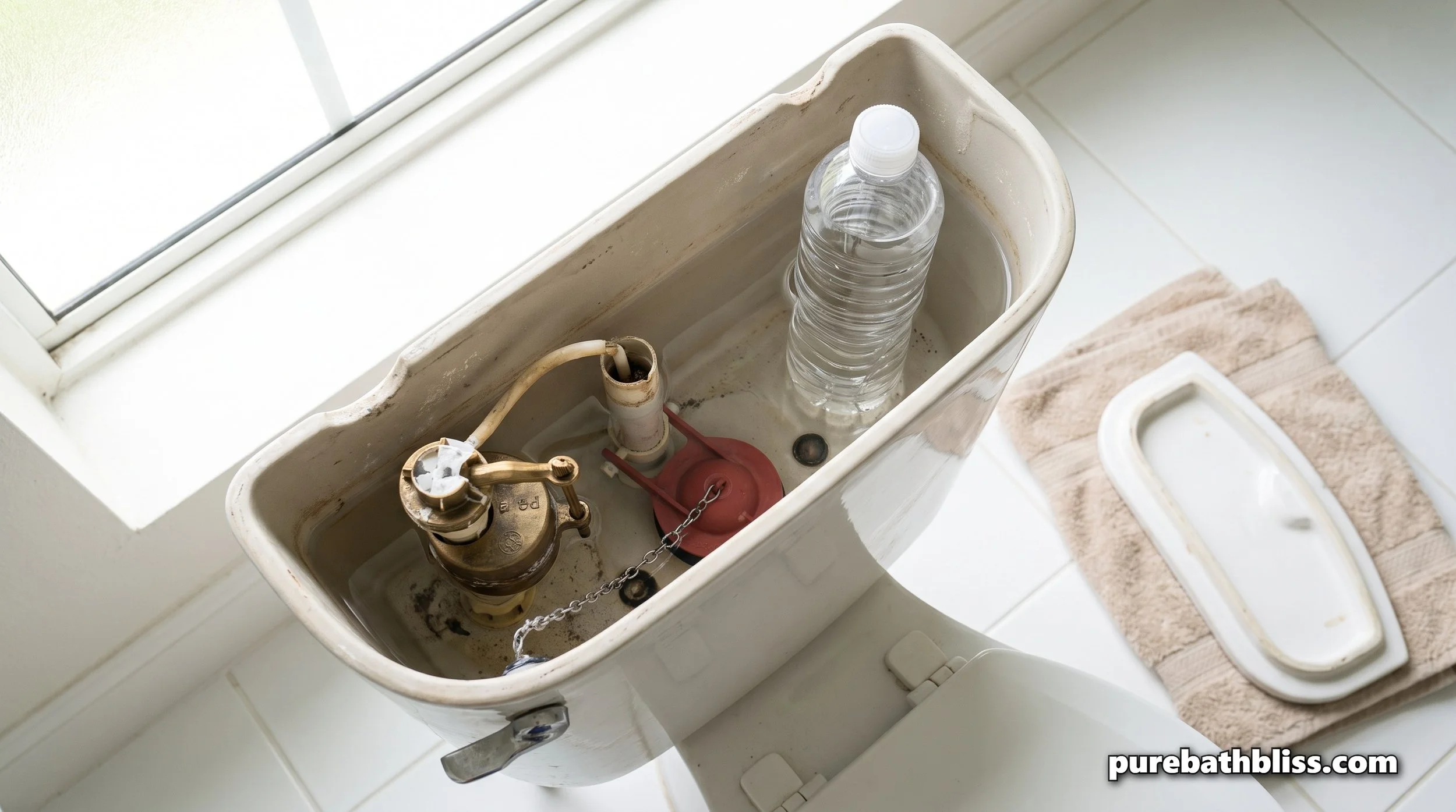
The water bottle in the toilet tank is one of the most repeated water saving tips on the internet. Fill a plastic bottle, drop it in the tank, and save water with every flush. It is true that it saves some water. What is usually wrong is how much. A standard 16 ounce bottle holds one eighth of a gallon, because a gallon is 128 ounces. So that bottle saves at most about an eighth of a gallon per flush, not the half gallon or full gallon you will see claimed in a lot of guides, including an earlier version of this one.
That does not mean making an old toilet more efficient is a waste of time. Toilets account for nearly 30 percent of the water used inside a typical American home, according to the EPA's WaterSense program, and older toilets can use as much as six gallons per flush. There is real water to save. It just comes from different places than most people expect: fixing leaks, setting the tank correctly, choosing the right flapper, and in many cases converting to dual flush.
I have worked on a lot of toilets over the years, from 1970s originals to brand new high efficiency models, and the most important thing I can tell you is that the right approach depends entirely on what your toilet already uses. A trick that helps a 3.5 gallon toilet can make a 1.28 gallon toilet flush poorly and waste more water through double flushing. This guide shows you how to find out what you have, what each fix realistically saves, and when replacing the toilet is the better investment.
First, Find Out How Much Water Your Toilet Uses
Before you change anything, find out how many gallons per flush your toilet is designed to use. Most toilets have the rating stamped into the porcelain, usually on the bowl just behind the seat hinges or on the inside back wall of the tank, shown as GPF (gallons per flush) and often LPF (liters per flush) as well. Many tanks also have a date stamped inside, which tells you roughly when the toilet was made.
The numbers fall into three broad groups. Toilets made before the early 1990s often use 3.5 gallons per flush, and some older ones use five to seven. Since 1994, federal law has limited new toilets to 1.6 gallons per flush. Toilets that carry the WaterSense label use 1.28 gallons or less, and many newer models use even less than that.
This one number decides everything else in this guide. If your toilet is rated at 3.5 gallons or more, displacement, flapper adjustments, and dual flush conversions can all reduce water use. If it is rated at 1.6 or 1.28 gallons, the toilet is already engineered to flush with exactly the water it holds, and removing water from the tank usually backfires. For those toilets, the savings come almost entirely from fixing leaks.
If you cannot find a stamp, you can estimate it. Turn off the water supply, mark the water level on the inside of the tank with a pencil, flush, and measure how much water it takes to refill the tank to the mark using a measuring jug. It is not exact, since some water also refills the bowl, but it will tell you whether you are dealing with a 1.6 gallon toilet or a 3.5 gallon one.
Fix Leaks First: The Biggest Savings Are Usually Hidden
Every toilet, old or new, should start here. A leaking flapper or a fill valve that never fully shuts off sends water down the drain 24 hours a day, and the EPA estimates a toilet that runs continuously can waste up to 200 gallons a day. Even a small, silent seep often wastes more water than any tank hack will ever save. If your water bill has crept up or you hear the toilet refill on its own, start here.
The quickest check is the dye test. Put ten drops of food coloring in the tank, wait fifteen minutes without flushing, and look for color in the bowl. If you see any, water is leaking from the tank. Also check that the water level sits about an inch below the top of the overflow tube; if water is spilling into that tube, the level is set too high. Our full guide to the toilet dye test walks through reading the result and fixing each type of leak.
Fixing a leak is almost always cheaper than any other upgrade on this list. A new flapper costs a few dollars and takes ten minutes. That is why I treat leak repair as step one, and everything else in this guide as the second step for older, high volume toilets that are already sealing properly.
| Fix | Realistic Savings | Use On |
|---|---|---|
| Fix a running toilet | Up to 200 gallons per day | Any toilet |
| 16 oz bottle in tank | About 0.125 gal per flush (about 230 gal per person per year) | 3.5+ GPF toilets only |
| 1 liter bottle in tank | About 0.26 gal per flush (about 480 gal per person per year) | 3.5+ GPF toilets only |
| Half gallon jug in tank | About 0.5 gal per flush (about 900 gal per person per year) | 3.5+ GPF toilets with roomy tanks |
| Lower an overfilled water level | Stops overflow waste; set to marked line | Any toilet (never below the mark) |
| Dual flush conversion kit | Reduced flush for most daily uses | Toilets with a 2 inch flush valve |
| Replace with WaterSense toilet | About 4,000 gal per person per year vs. 3.5 GPF | Pre-1994, cracked, or troublesome toilets |
Tank Displacement, Done Honestly
Displacement means placing a sealed object in the tank so it holds less water, and therefore sends less down the drain with each flush. It only makes sense on toilets rated at 3.5 gallons per flush or more. Those toilets were designed in an era of generous flush volumes and usually still clear the bowl with less water. On a 1.6 or 1.28 gallon toilet, do not do it.
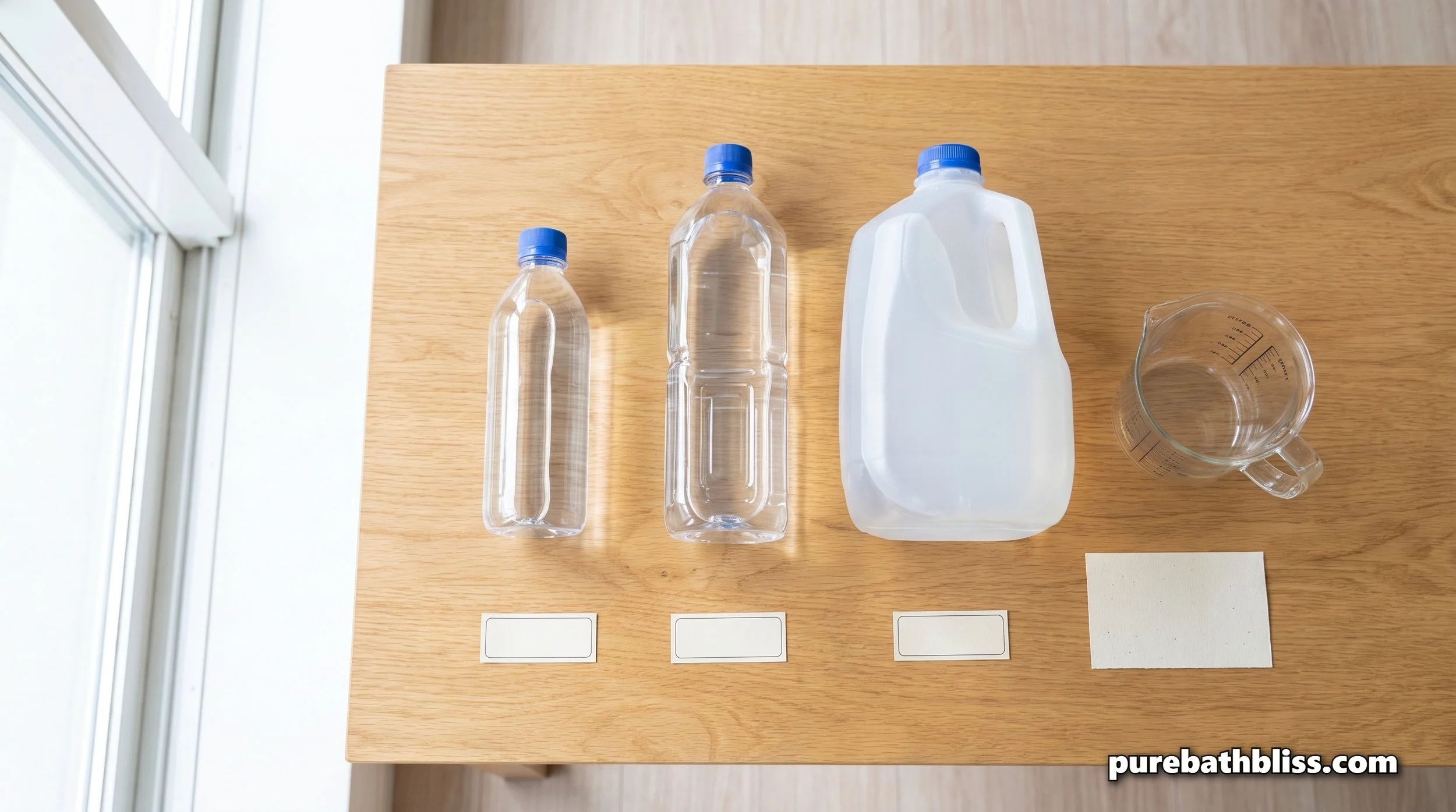
Now for the honest numbers. A 16 ounce bottle displaces about 0.125 gallons. A one liter bottle displaces about a quarter gallon. A half gallon jug displaces half a gallon. For one person flushing five times a day, a 16 ounce bottle saves roughly 230 gallons a year, a one liter bottle roughly 480, and a half gallon jug roughly 900. Those are worthwhile numbers for a free fix, but they are a fraction of what is often claimed.
There is also a detail most guides miss. When you flush, the tank does not empty completely; it drains down to roughly the height of the flush valve opening at the bottom, and the water below that level stays in the tank. So the only part of the bottle that saves water is the part that sits in the water that actually flushes. A short bottle lying on the bottom of the tank may displace water that was never going to leave anyway. An upright bottle standing in a corner works better.
Do it safely. Fill the bottle with water, or with a little sand or gravel and water so it does not float, and cap it tightly. Stand it in a corner of the tank where it cannot touch the flapper, the chain, the fill valve, or the flush lever. Never use a brick, which slowly breaks down in water and can grind particles into the flush valve and flapper seal. Then test it: flush a few times and watch the bowl. If waste does not clear on the first flush, or you find yourself flushing twice, take the bottle out, because a double flush wastes far more water than the bottle saves.
Water Level and Flapper: Set It Right, Not Low
The water level in the tank is controlled by the float on the fill valve. On older toilets with a float ball on an arm, the level is often set higher than necessary, sometimes right at the top of the overflow tube, which wastes water both by running into the overflow and by sending extra water down with each flush. Lowering it to about an inch below the top of the overflow tube, or to the water line mark molded inside the tank if there is one, is a sensible adjustment that costs nothing.
What I would not do is push the level much below the manufacturer's mark in an attempt to save more. A toilet's flush depends on a certain amount of water dropping into the bowl quickly. Starve it, and the bowl will not clear properly, which leads to double flushing and clogs. On 1.6 and 1.28 gallon toilets in particular, set the water to the marked line and leave it there.
The flapper is the other adjustable part. You will see advice to install an adjustable flapper and set it to close early, so the toilet only releases half a tank. I do not recommend this as a blanket rule. On some old high volume toilets it works, but on many toilets the half flush simply does not carry waste out of the bowl, and the second flush wipes out the savings. If you want a smaller flush for liquids, a proper dual flush conversion, covered next, is designed to do that reliably.
Where an adjustable flapper genuinely helps is in matching the flush to what the toilet was designed for. Generic replacement flappers sometimes stay open too long and release more water than the original part did. A quality adjustable universal flapper lets you set it to the toilet's rated flush volume, which is often a real saving on an older toilet that has been wasting water through the wrong replacement part for years.
Dual Flush Conversion: The Best Upgrade Without a New Toilet
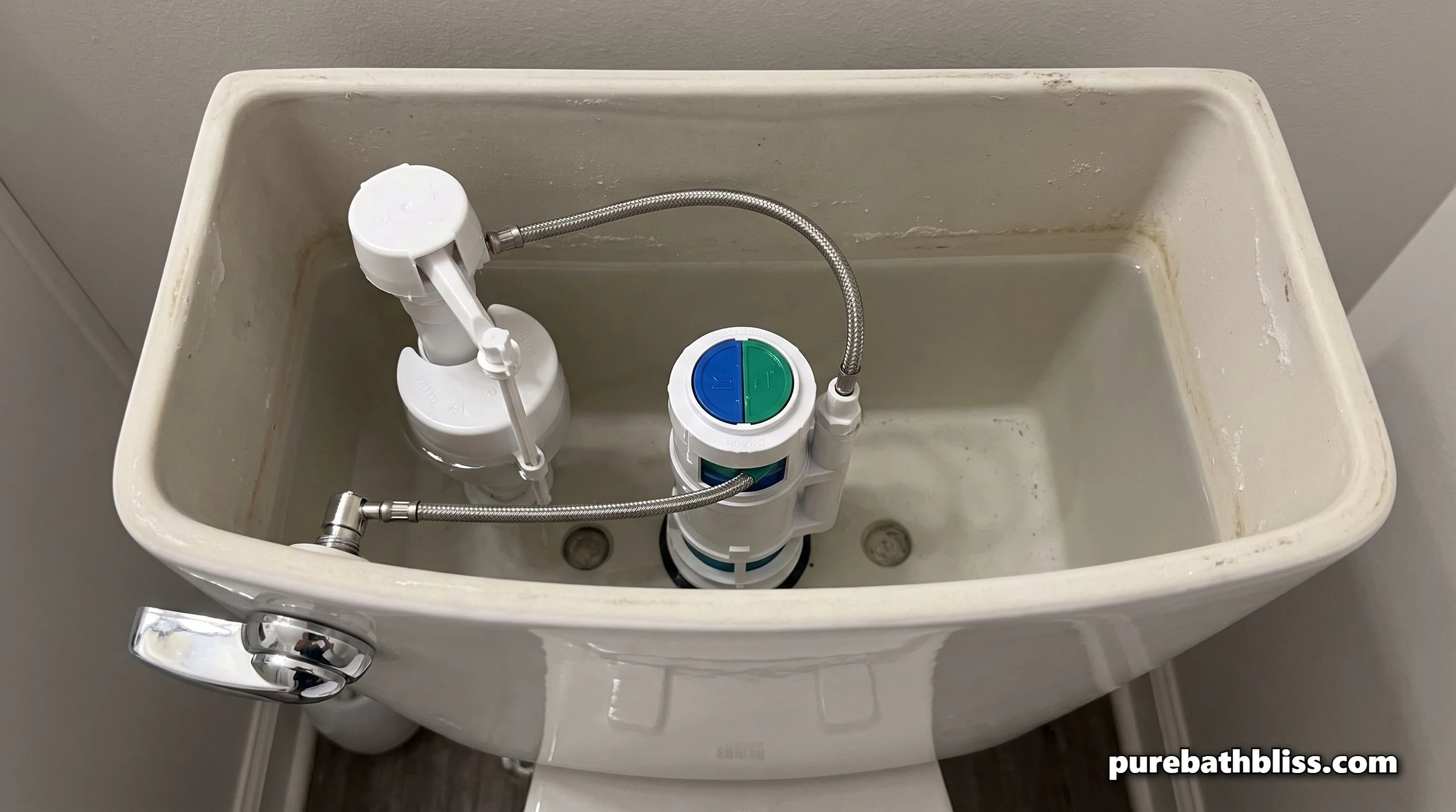
For an older toilet with a standard 2 inch flush valve, a dual flush conversion kit is the most effective way to cut water use without replacing the toilet. The kit replaces the flapper with a valve that offers two flush volumes: a short flush for liquids and a full flush for solids, usually operated by pushing the handle in two different directions. Because most flushes in a household are liquid only, the short flush handles the majority of uses with considerably less water.
Installation is a manageable DIY job for most people. Turn off the water, flush and sponge the tank dry, remove the old flapper and chain, and fit the new valve over the existing flush valve opening following the kit's instructions. Some kits also include a new fill valve and handle. The most important step is checking your flush valve size first, because 2 inch kits do not fit 3 inch flush valves, which are common on newer toilets.
Dual flush kits do require some adjustment once installed. Most let you tune how much water each flush releases, and it is worth taking a few minutes to find the lowest settings that still clear the bowl reliably on both flushes. Set it too low and you are back to double flushing. Also explain the new handle to everyone in the house; a dual flush only saves water if people actually use the short flush.
Conversion kits work best on toilets in good overall condition. If the porcelain is cracked, the bowl clogs regularly, or the toilet has other problems, the money is better spent on a new WaterSense toilet. Our roundup of the best low flow toilets covers models that use little water and still flush powerfully.
When Replacing the Toilet Makes More Sense
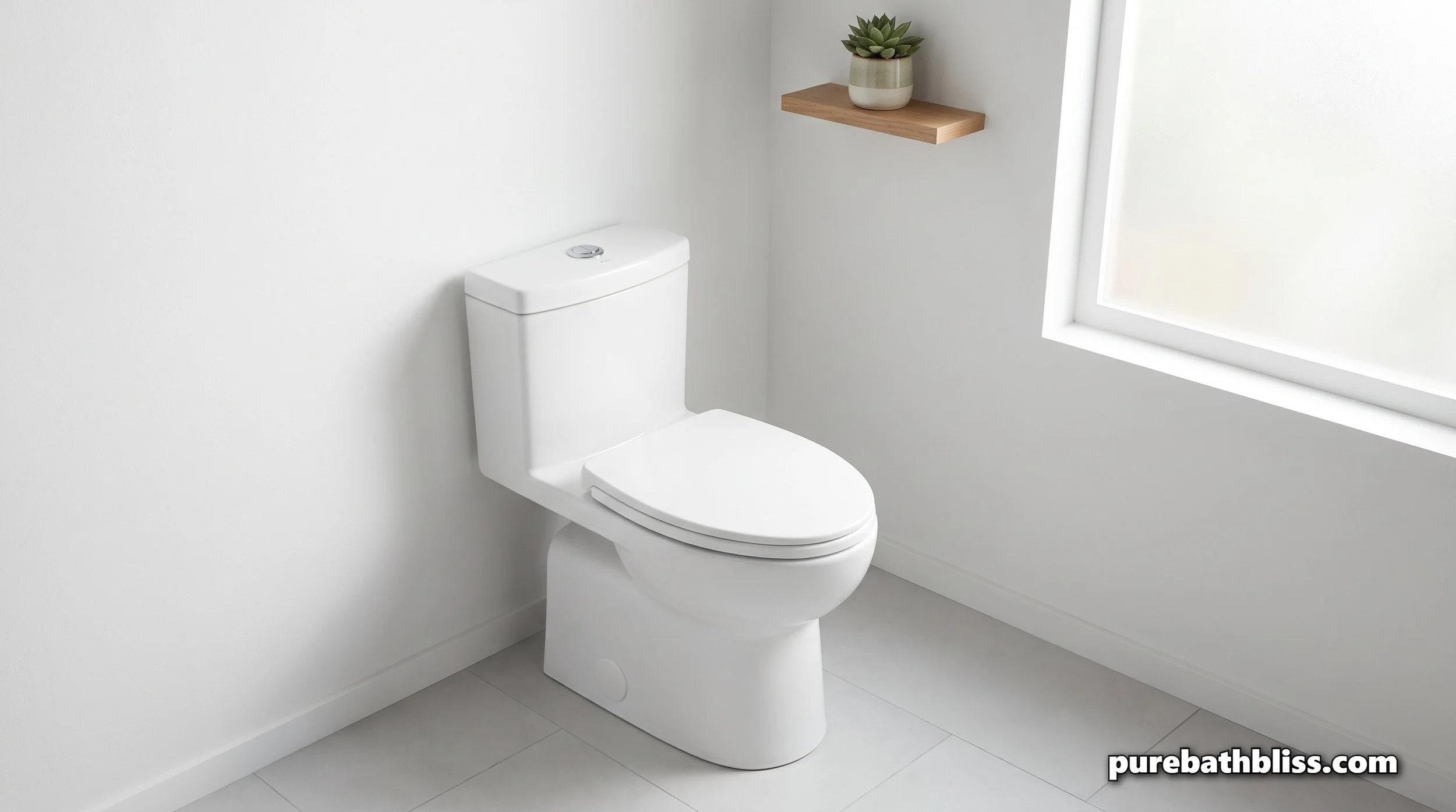
At some point, the best water saving upgrade is a new toilet. The EPA estimates that replacing older, inefficient toilets with WaterSense labeled models can save a family of four nearly 13,000 gallons of water a year. For one person, swapping a 3.5 gallon toilet for a 1.28 gallon model at five flushes a day saves roughly 4,000 gallons a year, far more than any tank hack can.
Replacement makes the most sense if your toilet was made before 1994, if it has a cracked tank or bowl, if it keeps running despite new parts, or if it clogs often. Many water utilities offer rebates on WaterSense toilets, so check with yours before you buy, since the rebate can cover a meaningful part of the cost. Installing a new toilet is also a reasonable DIY project for someone comfortable lifting about 70 to 100 pounds and setting a new wax ring.
Some households also choose to flush less often for liquid only uses, sometimes summed up as if it is yellow, let it mellow. That is a personal and household decision rather than a technical fix. It does save water, but it is not for every home, and it is worth agreeing on as a family rather than imposing it. Always flush solids, and keep the lid closed and the bowl cleaned regularly if you go this route.
If you are working through water use in the whole bathroom, the toilet is just one piece. Our bathroom water audit covers every fixture, and our guide to choosing a low flow showerhead that still feels strong covers the next biggest water user. The same thinking applies in the kitchen, where our sister site looks at the most water efficient way to wash dishes.
Our Top Picks for a More Efficient Toilet
These are the parts I would reach for to make an older toilet use less water, in the order you would usually need them.
1. Korky 100BP Universal Adjustable Flapper
The first part to buy if your toilet leaks or has a generic replacement flapper that releases too much water. It fits most standard 2 inch flush valves and adjusts to match the toilet's original flush volume across a range of tank sizes, from 1.28 gallons up to older 3.5 and 5 gallon toilets. It is made in the USA and installs in about ten minutes without tools.
2. Fluidmaster 550DFRK DuoFlush Dual Flush Conversion System
The most effective upgrade for an older toilet with a 2 inch flush valve. This complete kit replaces the flapper with a dual flush valve and includes a new fill valve and a dual action handle, giving you a full flush and a reduced flush for liquids. Check that your toilet has a 2 inch flush valve before ordering.
3. Fluidmaster 400H Universal Fill Valve
If your fill valve hisses, refills on its own, or makes it hard to set the right water level, this universal replacement makes the adjustment easy. Its height adjusts to fit most tanks, and it has separate settings for the tank water level and the bowl refill, so you can set the tank exactly where the manufacturer intended.
The Bottom Line
Start by finding your toilet's flush rating and running a dye test. Fixing a leak almost always saves more water than any tank hack. If your toilet uses 3.5 gallons or more, a sealed bottle or jug in the tank is a safe, free tweak, but expect realistic savings: about an eighth of a gallon per flush for a 16 ounce bottle, not a gallon. Never displace water in a 1.6 or 1.28 gallon toilet, and remove any displacement if the toilet starts double flushing.
For bigger savings without a new toilet, set the water level correctly, use a flapper matched to the toilet's rated volume, and consider a dual flush conversion kit. And if the toilet is old, damaged, or troublesome, a WaterSense replacement, ideally with a utility rebate, saves more water than everything else on this list combined.
Greg is a Red Seal Carpenter, coffee shop owner, dad of four, and founder of Pure Bath Bliss. He writes about making smarter choices for your home and family.