Post-Bath Baby Skincare and Eco-Friendly Towels: What Actually Works
Originally published November 2025, Updated July 2026
Transparency Note: We independently select these products based on research and user reviews. If you buy something through our links, we may earn a commission.
With our first child, we spent a lot of time thinking about what went into the bath. The water temperature, the wash, the toys. What we did not think nearly as carefully about was what happened in the ninety seconds after we lifted her out. The towel we used was a soft conventional cotton one that had come in a gift set. We dried her off quickly, got her into a onesie, and moved on. She had persistent dry patches on her cheeks and the backs of her knees for the first year that we blamed on winter air and tried to solve with various creams.
By our fourth child we had learned considerably more about infant skin physiology and the post-bath window specifically. The three minutes immediately after a bath are when a baby's skin is most hydrated and most receptive to a moisturizer that can lock that hydration in. If you let the skin air dry or rub it vigorously with a towel and then apply moisturizer, you have missed the window. The water evaporates and takes the skin's natural oils with it, leaving the skin drier than before the bath. This is the mechanism behind the dry patches we kept trying to solve with more cream rather than with better timing.
The towel also matters more than most parents realize, both for what it is made of and what was used to process the fibers during manufacturing. Here is the complete guide to getting the post-bath routine right from the moment you lift your baby out of the water.
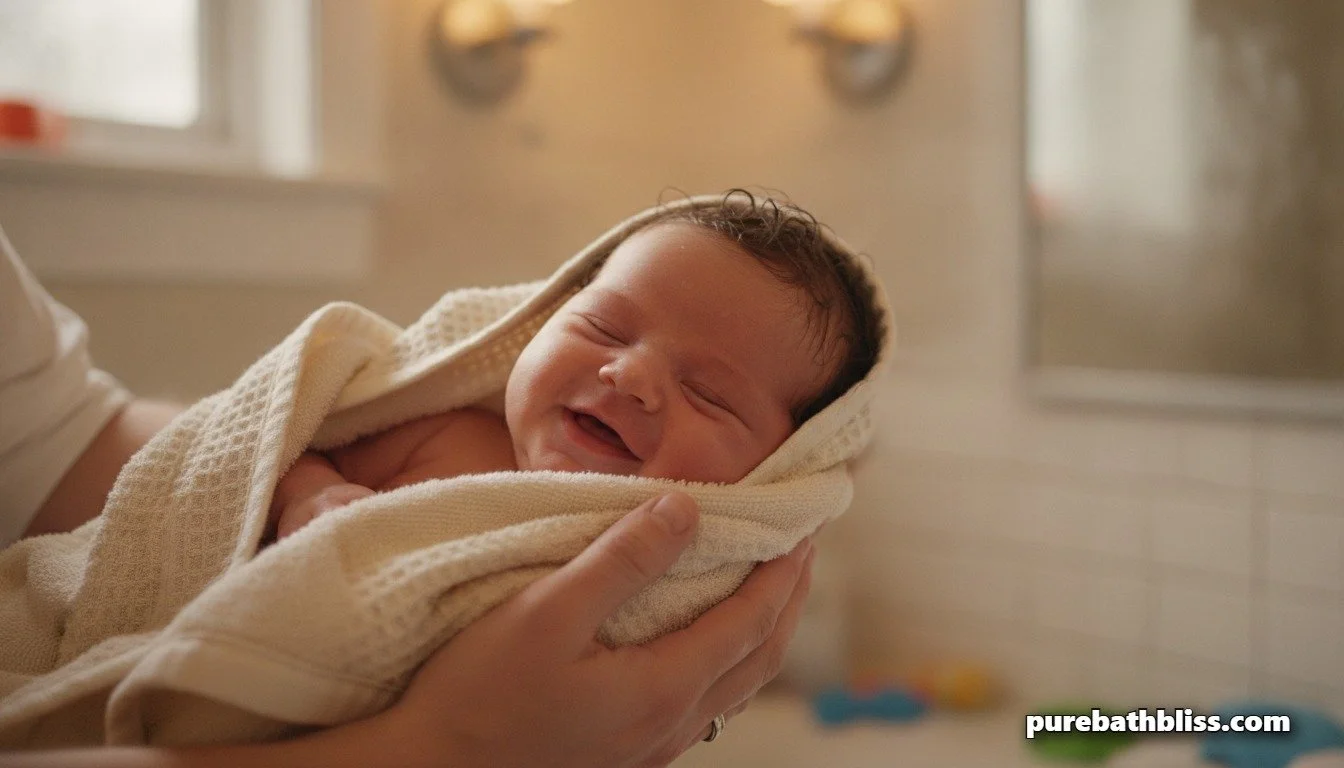
Why the Post-Bath Three Minutes Matter
Infant skin is not simply smaller adult skin. It is structurally different in ways that make the post-bath routine considerably more consequential than it is for adults.
A newborn's stratum corneum, the outermost layer of the skin that regulates water loss and blocks external irritants, is thinner and more permeable than an adult's. Transepidermal water loss (TEWL), the rate at which water evaporates from the skin surface, is significantly higher in infants than in adults, particularly in the first few months of life. When a baby comes out of a warm bath, the skin is fully saturated and temporarily more permeable than usual. As the surface water evaporates over the following few minutes, it actively pulls moisture from the deeper skin layers with it, a process that worsens if the skin is rubbed dry and left exposed to air.
The dermatological guidance for infant eczema and dry skin consistently recommends what is called the soak and seal method: a warm bath to hydrate the skin, followed immediately by patting dry to remove surface water while leaving the skin slightly damp, followed within three minutes by a thick moisturiser that seals the remaining moisture against the skin barrier. This protocol is not just for babies with diagnosed eczema. It produces noticeably better skin outcomes for any infant compared to standard dry-and-dress routines. Our full guide to the soak and seal method covers the science behind it in detail.
The towel you use is the first material that contacts your baby's skin at exactly this critical window. What it is made of, how it was processed, and how you use it all affect how well the post-bath skin sealing works.
Why Conventional Baby Towels Are Worth Thinking About
Most conventional baby towels are made from standard cotton that has been through an industrial textile production process involving pesticide residues from non-organic cotton farming, synthetic dyes to achieve the pastel colors on most baby products, optical brighteners to make them look whiter and newer in packaging, formaldehyde-based resin finishes to prevent wrinkling during shipping, and fabric softeners applied during manufacturing that coat the fibers with a waxy layer.
None of these compounds are present in quantities that cause acute harm. The concern is chronic, repeated exposure on skin that is significantly more permeable than adult skin. A baby who is bathed two to three times a week and wrapped in the same towel repeatedly is having prolonged contact with whatever is in that towel's fiber at exactly the moment their skin barrier is most open and receptive. For most healthy infants this causes no obvious problems. For infants with sensitive skin or a genetic predisposition to eczema, it can be a meaningful contributing factor to the persistent irritation that parents struggle to resolve.
This is the same principle we apply to bath products in our guide to the five ingredients to never use on babies. What goes on the skin matters, and the towel is the first product that contacts the skin after every bath.
Towel Materials: What the Certifications Actually Mean
| Material | Softness | Absorbency | Dries Quickly? | Best Certification | Best For |
|---|---|---|---|---|---|
| Organic Cotton Terry | Very soft, gets softer with washing | Excellent | Moderate | GOTS | All year round, general use |
| Bamboo Blend | Exceptionally soft, silky feel | Good | Fast | OEKO-TEX Standard 100 | Sensitive or eczema-prone skin |
| Organic Cotton Muslin | Light and breathable | Moderate | Fast | GOTS | Summer, newborns, babies who overheat |
| Organic Turkish Cotton | Very soft, gets softer with use | Excellent, long-staple fiber | Moderate to fast | GOTS or OEKO-TEX | Premium option, durable and long-lasting |
| Conventional Cotton | Varies | Good | Moderate | None required | Not recommended for newborns or sensitive skin |
Two certifications are worth understanding before buying any fabric product for a baby:
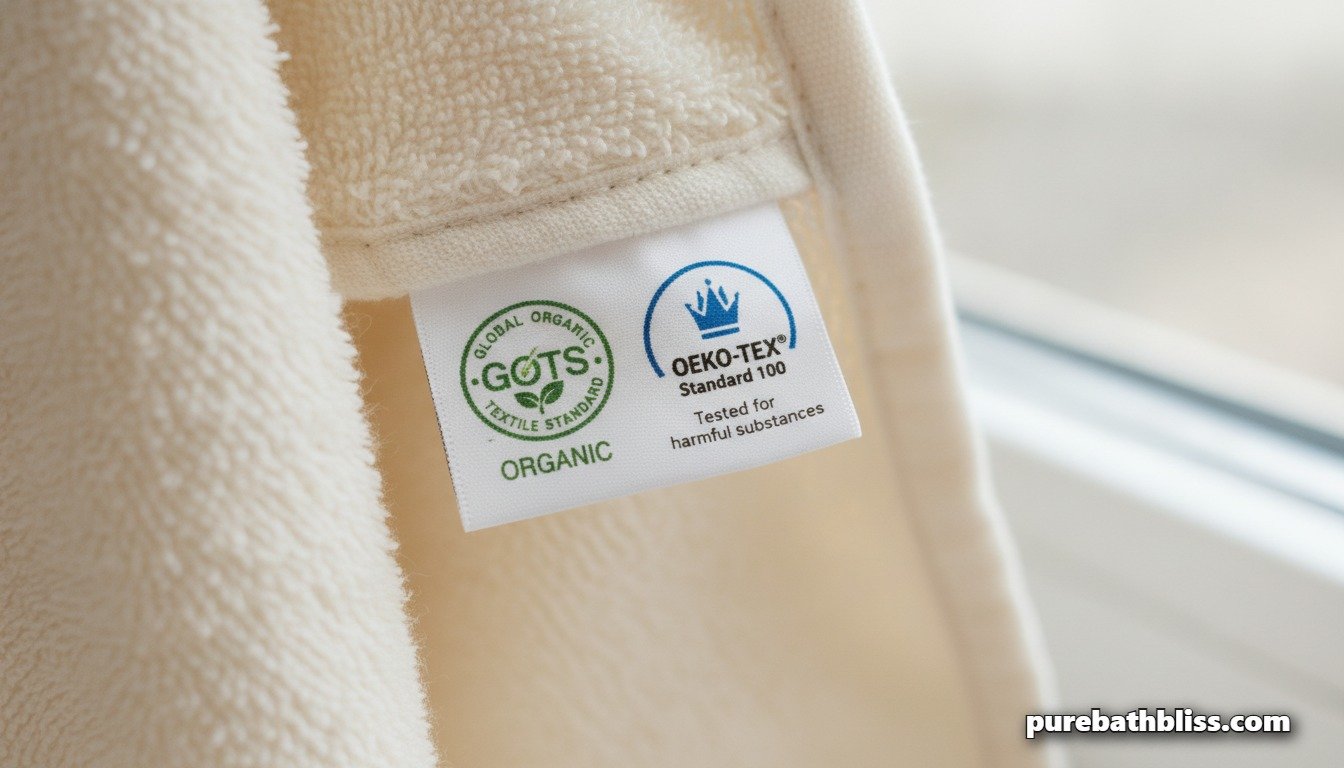
GOTS (Global Organic Textile Standard) is the most comprehensive certification available for organic textiles. It covers the entire supply chain from raw fiber through to finished product, requiring at least 95 percent certified organic fiber content, prohibition of toxic chemicals including formaldehyde, heavy metals, and certain dyes, and social criteria for workers throughout the production chain. A GOTS label means the towel in your hand went through a documented, audited process that excluded the most concerning conventional textile chemicals from field to finished product.
OEKO-TEX Standard 100 is a broader certification that tests the finished product rather than the entire supply chain. It confirms that the final textile contains no harmful substances above permitted levels. It does not require organic raw materials, which means a conventionally farmed cotton towel can carry the OEKO-TEX certification if the finished product tests clean. For baby products specifically, OEKO-TEX has a specific Product Class 1 category with stricter limits for items that come into contact with babies.
For a baby towel used directly on skin immediately post-bath, GOTS certification is the stronger standard. OEKO-TEX Product Class 1 is a meaningful secondary option. A towel with neither certification is a conventional textile with no third-party verification of what went into its production.
The Towels Worth Buying
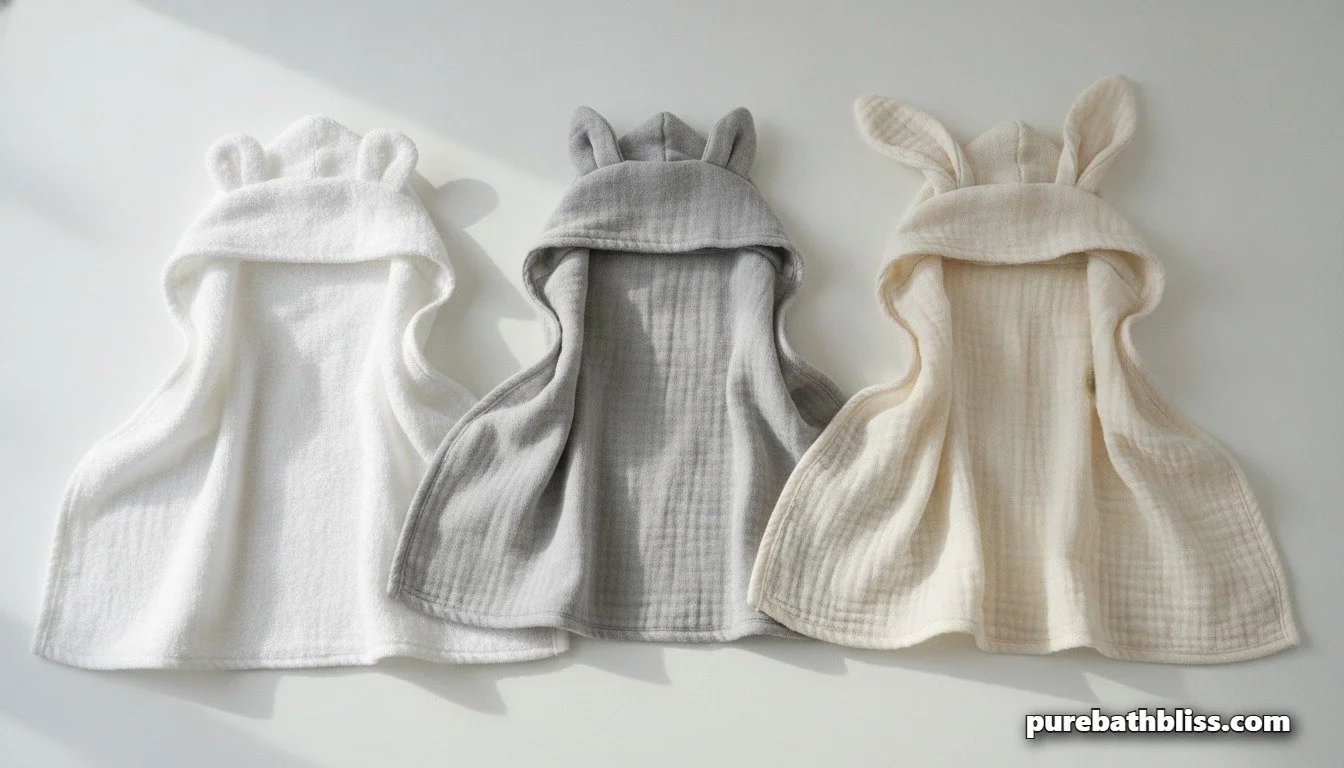
Burt's Bees Baby Organic Cotton Hooded Towel — GOTS-certified, 100 percent organic cotton terry, generously sized at 28 by 28 inches. This is the most widely available GOTS-certified baby towel at a reasonable price point and consistently well-reviewed for softness and durability. The hooded design keeps the head warm during the vulnerable post-bath window. Find it on Amazon.
Kyte Baby Bamboo Hooded Towel — Made from a bamboo and spandex blend, OEKO-TEX certified. Bamboo fiber is notably softer than cotton at the same weight, dries quickly, and has natural antimicrobial properties. The Kyte version in particular has an unusually soft feel that holds up well through repeated washing. Better for babies with skin that reacts to the slightly rougher texture of terry cotton. Find it on Amazon.
Natemia Organic Cotton Muslin Baby Towel — GOTS-certified, made from organic cotton muslin rather than terry. Muslin is lighter and more breathable than terry, which makes it better for summer baths or for babies who overheat easily. It is less absorbent than terry on a per-weight basis, so slightly more patting is required, but many parents find the lighter texture more comfortable for newborns who are bothered by the weight of a full terry towel. Find it on Amazon.
How to Dry a Baby Correctly
Pat, do not rub. This is the single most important technique point in the entire post-bath routine and the most commonly done wrong.
Rubbing a towel across a baby's skin, even a soft organic one, creates friction that disrupts the still-damp skin surface and stimulates the kind of physical irritation that makes eczema-prone skin flare. It also removes more surface water than is optimal for the soak and seal method, leaving the skin drier before the moisturizer is applied.
The correct technique is to lay the towel flat, place the baby on it, fold the sides up and over the body, and use gentle pressing and dabbing motions across every surface, including between fingers and toes, behind the knees, and in the neck folds where moisture tends to collect and can cause a minor yeast rash if not properly dried. The head goes into the hood and is pressed gently dry. The entire process should leave the skin slightly damp rather than fully dry, which is exactly the state you want before applying moisturizer.
Time matters here. The moisturizer should be applied within three minutes of the baby coming out of the bath. After that the transepidermal water loss accelerates, and you are sealing in progressively less moisture. Have the moisturizer open and ready before you lift the baby out of the water.
Post-Bath Skincare: What to Apply and Why
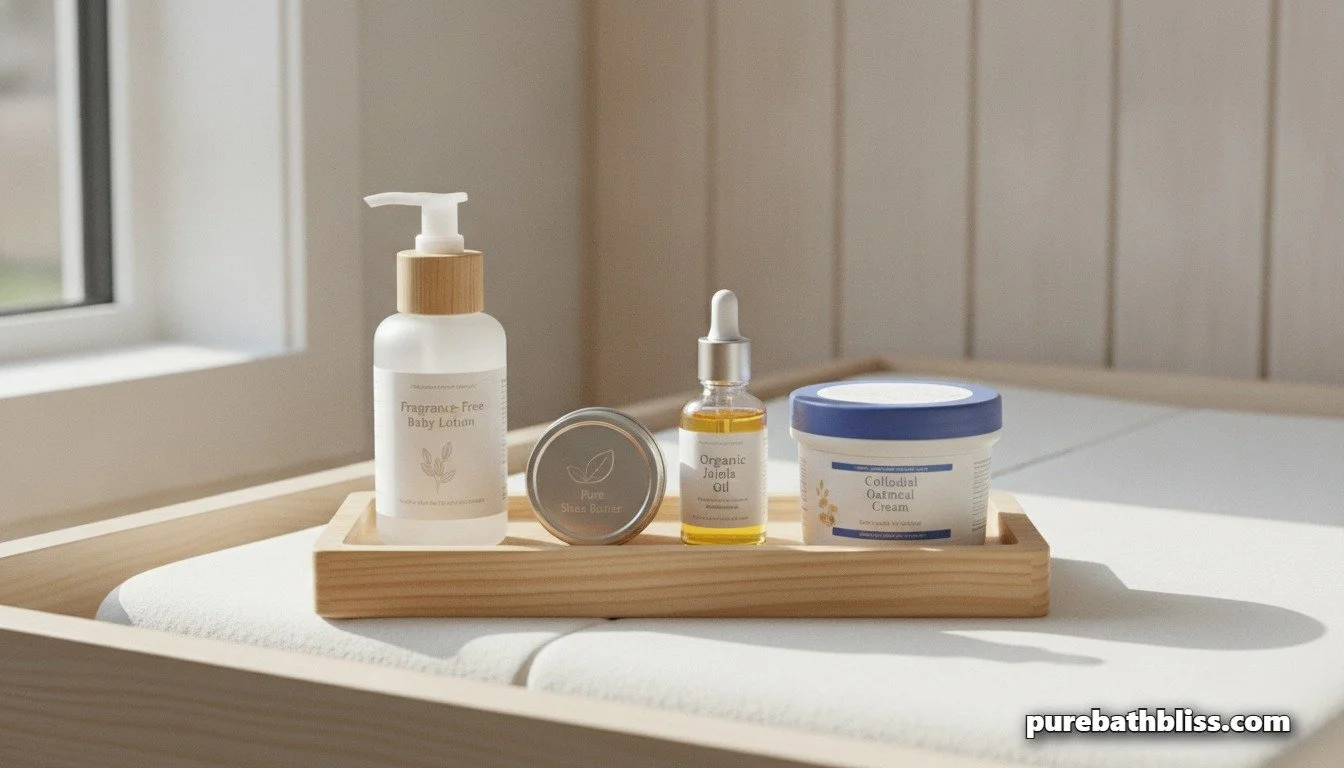
The post-bath moisturiser has one job: create an occlusive layer on the skin surface that slows transepidermal water loss and locks in the hydration from the bath. For this to work, it needs to be applied to damp skin while the moisture is still present, and it needs to have enough occlusivity to actually create that barrier.
Thin liquid lotions are the least effective option for this application. They absorb quickly, which feels pleasant, but they do not create a durable enough barrier to meaningfully slow TEWL over the hours between baths. For general healthy infant skin in normal humidity conditions, they are fine. For babies with dry skin, eczema, or skin that reacts easily, a thicker cream or balm is more effective.
For Normal to Slightly Dry Infant Skin
A fragrance-free, paraben-free lotion with colloidal oatmeal as a key ingredient is the right starting point. Colloidal oatmeal is an FDA-recognised skin protectant with well-documented anti-inflammatory and skin barrier-supporting properties. Look for it listed as "Avena sativa kernel flour" or "colloidal oatmeal" in the first half of the ingredient list. A fragrance-free colloidal oatmeal baby lotion covers most healthy infants well.
For Dry or Eczema-Prone Skin
Step up to a thicker cream or balm. Shea butter is one of the most effective natural occlusives available and well-tolerated by infant skin. Pure organic shea butter, or a cream with shea as a primary ingredient alongside ceramides or jojoba oil, creates a meaningful skin barrier seal. Apply a generous amount and massage in gently using circular motions. For babies with active eczema or significant dryness, the full soak and seal protocol covered in our eczema and dry skin guide describes the exact bath temperature, additive, and moisturiser approach that consistently produces the best results.
For Newborns Under Three Months
Less is more. For the first few weeks, plain warm water bathing is entirely sufficient and the AAP actually recommends against using any bath products for the first month while the vernix caseosa, the waxy protective coating present at birth, is still beneficial to the skin. If moisturiser is needed for visible dryness, a single-ingredient oil, pure jojoba, sunflower seed, or coconut oil with no additives, is the safest starting point. Avoid mineral oil and petroleum jelly as the primary moisturiser despite their wide use in commercial baby products. They occlude effectively but are petroleum-derived and are better replaced by plant-based alternatives in a non-toxic routine. Organic jojoba oil is the simplest safe option for newborns.
Ingredients to Avoid in Baby Post-Bath Products
| Ingredient Category | What to Look For on the Label | Why to Avoid |
|---|---|---|
| Synthetic fragrance | Fragrance, Parfum, Aroma | Can conceal hundreds of undisclosed compounds including phthalates. Leading cause of contact dermatitis in infants. |
| Parabens | Any ingredient ending in "-paraben" (methylparaben, propylparaben etc.) | Endocrine-disrupting compounds that mimic estrogen. Banned from leave-on products for children under 3 in the EU. |
| Sulfates | Sodium Lauryl Sulfate (SLS), Sodium Laureth Sulfate (SLES) | Strip the natural lipid barrier. More relevant in wash products but present in some baby lotions as emulsifiers. |
| Formaldehyde releasers | DMDM Hydantoin, Quaternium-15, Imidazolidinyl Urea, Diazolidinyl Urea | Release formaldehyde (a known carcinogen) slowly over time. Found in some baby lotions as preservatives. |
| Artificial dyes | FD&C or D&C followed by a colour name and number | Petroleum-derived. No functional benefit in a moisturiser. Require EU warning labels for potential behavioural effects in children. |
| Mineral oil and petrolatum | Mineral oil, Petrolatum, Paraffinum Liquidum | Petroleum-derived. Not toxic at typical concentrations but better replaced by plant-based alternatives in a non-toxic routine. |
The full breakdown of why each of these categories is problematic for infant skin, with the specific research behind each one, is covered in our guide to the five toxic ingredients in baby bath products. The post-bath moisturizer is applied directly to skin at its most permeable and is left on for hours. It warrants at least as much ingredient scrutiny as the wash used in the bath itself.
Washing Baby Towels: What Most Parents Get Wrong
An organic GOTS-certified towel washed with a conventional detergent containing synthetic fragrance, optical brighteners, and fabric softener is no longer delivering the clean textile benefit you paid for. Whatever the detergent leaves behind in the fiber is going onto your baby's skin at the post-bath moment when the skin is most absorbent.
Baby towels should be washed with a fragrance-free, dye-free, enzyme-free detergent. Enzymes are excellent at removing protein stains but are unnecessary for towels and can cause irritation on sensitive infant skin. Fabric softener should never be used on baby towels. It coats the cotton fibers with a waxy film that reduces absorbency and adds a chemical layer that defeats the purpose of choosing organic fabric in the first place.
Wash baby towels separately from adult laundry at a warm temperature (60 degrees Celsius is the standard recommendation for adequate disinfection without damaging organic cotton fibers). Tumble dry low or line dry. Organic cotton towels dried in sunlight benefit from UV's natural disinfection, and the warmth restores fluffiness that a low tumble also achieves.
Replace baby towels when they show any signs of fraying at the edges or persistent dampness that does not resolve after washing. Towels that stay damp for hours after washing have developed bacterial growth in the fibers that regular washing cannot fully resolve.
The Complete Post-Bath Checklist
Have the hooded organic towel open and ready before lifting the baby from the water
Have the moisturiser open and within arm's reach
Lift directly into the towel and wrap immediately, do not let the baby air-cool before drying
Pat dry using pressing motions, never rub
Leave skin slightly damp rather than fully dry
Apply moisturiser within three minutes, generous layer, massage in gently
Dress immediately after moisturising to maintain warmth
Hang the wet towel to dry fully before the next use, never leave it folded damp
The Bigger Picture
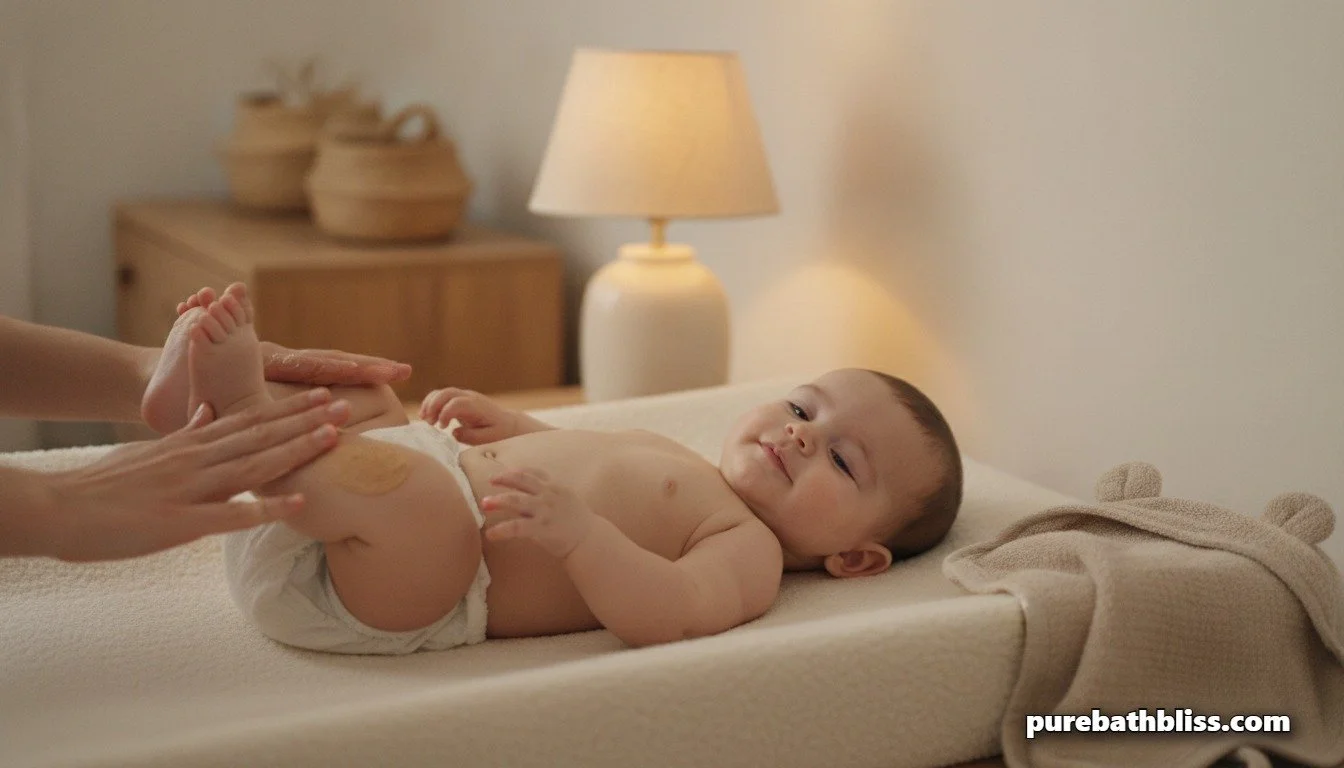
With our youngest, bath time became something we looked forward to rather than rushed through. Partly because we had three older children who had made us faster and more confident. But mostly because we had figured out what actually mattered and stopped doing everything else. Organic towel, three-minute moisturiser window, fragrance-free products with readable ingredient lists. That is essentially the whole routine.
The dry patches our first child had for most of her first year cleared up with our second child within a month of implementing the soak and seal timing properly. Not a new product. Not a different cream. Just better timing and a towel that was not introducing synthetic compounds at the worst possible moment. If you are working through the broader picture of what goes into and around the bath for your baby, our guide to baby bath water temperature and purity covers the in-bath side of the equation that sets up the post-bath routine to work as well as possible.