
Toilet Paper’s Environmental Cost: The Trees, Water, and Chemicals Behind Every Roll
Every day, 27,000 trees are felled just for toilet paper. That’s one tree every 3 seconds—a silent chainsaw in your bathroom routine.
You wipe, flush, and forget. But the ancient forests, rivers of water, and toxic chemicals don’t.
This investigation exposes the full cradle-to-sewer footprint of conventional TP—and hands you elegant, immediate alternatives that end the destruction.

Greywater Gold: Safe and Simple Ways to Reuse Warm-Up Water for Plants and Cleaning
Every single shower you take starts with a silent crime: 2–3 gallons of perfectly clean, drinkable water swirling down the drain while you wait for it to warm up. That’s 1,000–1,500 gallons per person per year—just for standing there.
The good news? You can stop it today with nothing more than a $12 bucket.
This is greywater reuse at its simplest and safest: capturing shower warm-up water and turning waste into a free resource for flushing, watering, and cleaning.

Beyond the Towel: Are Reusable Bidet Cloths the Ultimate Eco-Friendly Swap?
You finally installed the bidet. You love the clean feeling. Then you reach for the roll… and realize you’re still buying 100 rolls of toilet paper a year. That’s when the term “family cloth” or “bidet cloth” pops up—and your first reaction is almost universal: “Absolutely not.”
Fair. Let’s talk about it anyway.
This investigative guide strips away the cringe, looks at the real hygiene science, the actual costs, and the genuine environmental impact. By the end, you’ll know exactly whether reusable bidet cloths deserve a place in your zero-waste bathroom—or whether they’re a step too far.

Bidet vs. Paper: The Complete Financial and Eco-Friendly Cost-Benefit Analysis
You open your grocery app. Toilet paper: $38.49 (12 mega-rolls). Wet wipes: $14.99. That’s $53.48 this month—$641.76 a year.
Meanwhile, 27,000 trees fall daily for the privilege.
Enter the bidet attachment: a one-time $30–$60 purchase that eliminates 75–100% of paper, pays for itself in 3–6 months, and slashes your environmental footprint.
This data-driven showdown compares every dollar, drop, and tree. The verdict is undeniable.

How to Read Your Water Meter to Find Hidden Plumbing Leaks (The 2-Hour Audit)
You’ve fixed the dripping faucet. Replaced the flapper. Still, your water bill climbs $50–$100 every month.
The culprit? A hidden leak—slab foundation, irrigation line, or underground supply. These silent thieves waste 10–100 gallons daily—$500–$5,000 yearly.
This is your scientific defense. The 2-hour meter audit detects any flow in your entire system—foolproof, free, and final.

How to Install a Water Saving Faucet Aerator (and Choose the Right One)
Swapping a faucet aerator is one of the cheapest water saving upgrades in the house, but only if you get the right size and know how to remove the hidden type many newer faucets use. Here is how to identify yours, swap it in a few minutes, and choose a flow rate that still feels good to use.

How to Choose a Low Flow Showerhead That Still Feels Powerful
A 1.5 gallon per minute showerhead can feel weak or surprisingly strong, and the difference comes down to droplet size, spray design, pressure compensation, and the water pressure in your home. Here is how to choose one you will actually enjoy, with honest numbers on what it saves.

How to Make an Old Toilet Use Less Water (and Which Tank Hacks Actually Work)
A water bottle in the toilet tank saves far less than most guides claim, and on a modern toilet it can actually make things worse. Here is the honest math on tank hacks, and the fixes that genuinely reduce how much water an older toilet uses.

How Long After Painting a Bathroom Can You Shower? Cure Times, Ventilation, and Stopping Mildew
Fresh bathroom paint can feel dry in an hour but takes weeks to fully cure, and a hot shower in the first day or two is the most common way a good paint job gets ruined. Here is how long to wait, how to ventilate while you paint, and what those sticky brown drips on new paint actually are.

The Toilet Dye Test: How to Find and Fix the Silent Leaks Wasting Your Water
A few drops of food coloring will tell you in fifteen minutes whether your toilet is quietly leaking into the bowl, and the fix is usually a part that costs less than lunch. This guide covers how to read the result, the three tank leaks it reveals, and the leaks outside the tank that a dye test will never show.

The Bathroom Water Audit: How to Find Leaks and Cut Your Water Use
The bathroom accounts for more than half of the water used inside a typical American home, and a surprising share of it disappears through leaks nobody can hear. This audit walks through the dye test, the meter test, and the fixture upgrades that genuinely pay off, with the math done honestly.

The Paint Finish Showdown: Satin vs. Semi-Gloss—Which is Best for Your Bathroom?
Most people spend more time choosing their bathroom paint colour than their paint finish, and most bathroom paint failures come down to the finish rather than the colour. The sheen level determines the moisture resistance, the scrub rating, and ultimately how long the paint job lasts in the specific conditions of a bathroom. Here is the science behind why finish matters, the correct specification for each bathroom use case, and the two-finish approach that professional painters use on every bathroom job.
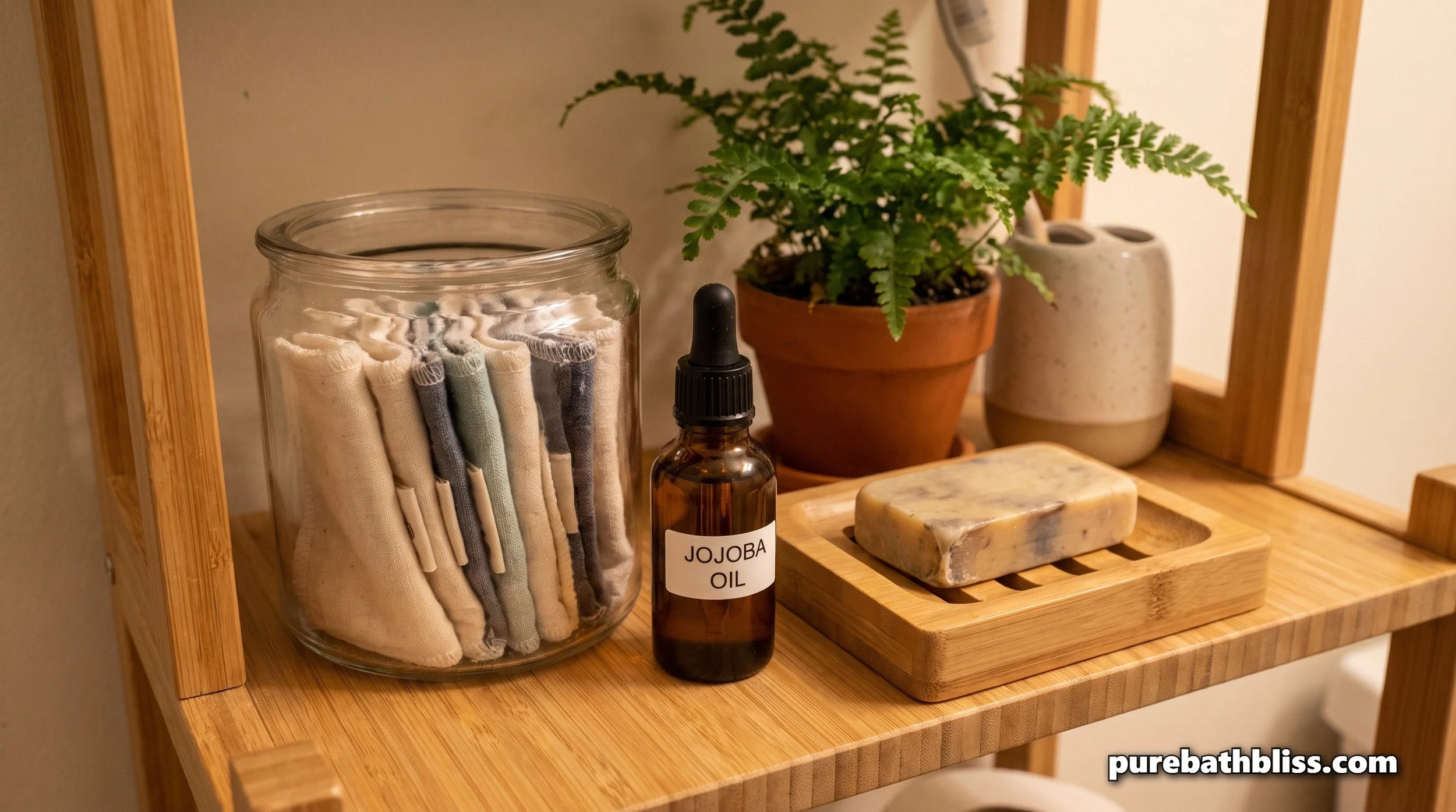
How to Sew Reusable Makeup Remover Pads: The Complete Guide to Fabric, Method, and Getting 100 Washes
Disposable cotton rounds are one of the most pointless single-use items in the bathroom. A round of unbleached organic flannel and bamboo terry sewn together in 30 minutes does the same job, feels better on skin, lasts over a year of daily use, and costs pennies per wash compared to dollars per pack. Here is the complete guide to making them, the fabric science behind why the material combination works so well for makeup removal, and the care protocol that gets the full 100 washes.

Is Your Hair Dryer a Fire Hazard? How to Clean the Filter, Store It Correctly, and Double Its Lifespan
The U.S. Fire Administration attributes over 1,200 home fires annually to hair dryers, the majority caused by lint-clogged intake filters rather than electrical faults. The fix is five minutes of monthly maintenance. Here is the complete protocol covering filter cleaning, cord storage, bathroom humidity management, and the maintenance schedule that keeps bathroom appliances running for a decade rather than two years.

The Hidden Hazard: Why You Must Use Low-VOC Primer in High-Humidity Rooms (And Our Top 3 Picks)
You’ve prepped your bathroom walls meticulously—cleaned every speck of soap scum, patched every ding, and taped crisp lines. You roll on a premium eco-friendly paint in a serene spa blue. It looks perfect… for about six weeks. Then the nightmare begins: bubbles form along the edges, paint peels in sheets, and black mildew spots bloom like a horror movie. The culprit? Skipping primer—or worse, using the wrong kind.
In high-humidity rooms like bathrooms, primer isn’t optional—it’s your non-negotiable moisture shield and health barrier. It’s the invisible foundation that locks paint in place, blocks mold from feasting on your drywall, and keeps toxic fumes out of your lungs. Skip it, and you’re gambling with your time, money, and family’s well-being.
This guide exposes the hidden hazards of traditional primers and arms you with the knowledge to choose low-VOC, mold-blocking formulas that deliver professional results. You’ll discover why primer is the smartest $30–$50 you’ll spend on your project—and our top 3 picks that outperform the rest.

The Ultimate Guide to Non-Toxic Caulk: Sealing Your Tub Without the Harmful VOCs
You’ve seen the horror: black, crusty caulk peeling away from your tub like old tape. Beneath it? Soggy drywall, mold colonies, and the faint smell of rot. That failed seal didn’t just ruin your bathroom’s look—it invited water behind the walls, where it silently destroys structure and air quality for years.
Caulk isn’t cosmetic—it’s your home’s final moisture firewall. One cracked bead = thousands in water damage. One moldy joint = respiratory risk for your family.
This guide cuts through the confusion to deliver the non-negotiable truth: only 100% silicone, low-VOC caulk belongs in a bathroom. We’ll show you why, how, and which brands to trust—so your seal lasts 20+ years, toxin-free.

The 5 Best Eco-Friendly Paints for Bathrooms and Humid Rooms
The eco-friendly paint category is crowded with products that make zero-VOC claims but vary significantly in how well they perform in the specific conditions of a bathroom. Heat, steam, and humidity cycling are more demanding than any other residential painting environment. Here are the five formulas that genuinely hold up, from a Red Seal Carpenter who has painted a lot of bathrooms and has specific opinions about what fails and why.

DIY Clay & Oat Face Mask Bar (Zero Waste, 30 Uses)
My wife has been into natural skincare for years, and for most of that time our bathroom counter had a rotating cast of glass and plastic jars, half-used tubs of clay mask, and little pump bottles of serums that cost more than they should. We were spending real money on products that were mostly water, preservatives, and packaging.
A while back she started making her own face masks from scratch, which I was skeptical about at first. But after watching her mix up batches that worked just as well as the store bought stuff, and then seeing how much less waste we were producing, I got curious about whether you could take it further. Could you make a solid bar version that doesn't need to be refrigerated, travels easily, and lasts for months? Turns out, yes you can.
These clay and oat face mask bars are now a staple in our bathroom. One batch makes three bars, each bar gives you about ten uses, and the whole thing costs maybe a dollar fifty to make. That's thirty full face treatments for less than the price of a single-use sheet mask. Here's exactly how to make them.

Post-Bath Baby Skincare and Eco-Friendly Towels: What Actually Works
Most of the work in a baby's bath routine happens after the bath ends. The towel material, the drying technique, and the moisturizer you apply in the first three minutes after lifting your baby out make a bigger difference to skin health than almost anything that happens in the water. Here is the complete post-bath guide, from towel certifications to the soak and seal method.

What Is the Red Stuff in Your Shower? Serratia Marcescens, Why It Keeps Coming Back, and How to Actually Get Rid of It
The reddish-pink or orange film appearing around your shower drain, on grout lines, and at the toilet waterline is not mold. It is Serratia marcescens, an airborne bacterium that produces a pigment called prodigiosin and colonizes bathroom surfaces by forming a biofilm. Wiping it away removes the visible colour but leaves the biofilm matrix intact, which is why it comes back within days of cleaning. Here is the science behind it, the treatment that actually disrupts the biofilm, and the two habits that prevent it from returning.