How to Choose the Right Bathroom Mirror Height: An Ergonomics Guide
In the world of professional renovation, the mirror is often treated as the final "decoration." But from a builder’s perspective, a mirror is a critical piece of functional infrastructure. If it’s hung too high, shorter family members are left staring at the top of their heads; if it’s too low, you’re constantly cleaning water splashes off the glass.
Finding the "Goldilocks" height for a bathroom mirror is a balancing act between aesthetics and ergonomics. In 2026, we are moving away from the "one size fits all" contractor-grade sheets toward personalized, framed mirrors that complement the latest 2026 sink colors. Whether you’re a father of four trying to accommodate toddlers or a homeowner looking for that next level of design, getting the height right is what makes a bathroom feel truly custom.
In this guide, we’ll break down the specific measurements, the "Eye-Level Rule," and the professional tricks for mounting mirrors so they stay beautiful and functional for the long haul.
1. The Professional "Golden Rule" for Height
The industry standard for hanging a bathroom mirror is based on the average human eye level. For most adults, this is approximately 57 to 62 inches from the floor to the center of the mirror.
However, in a family home, you have to account for a wide range of heights.
The "Center-Line" Method: Identify the tallest and shortest frequent users of the bathroom. The "Center" of your mirror should ideally sit right at the eye level of the tallest person, provided the shortest person can still see their full face.
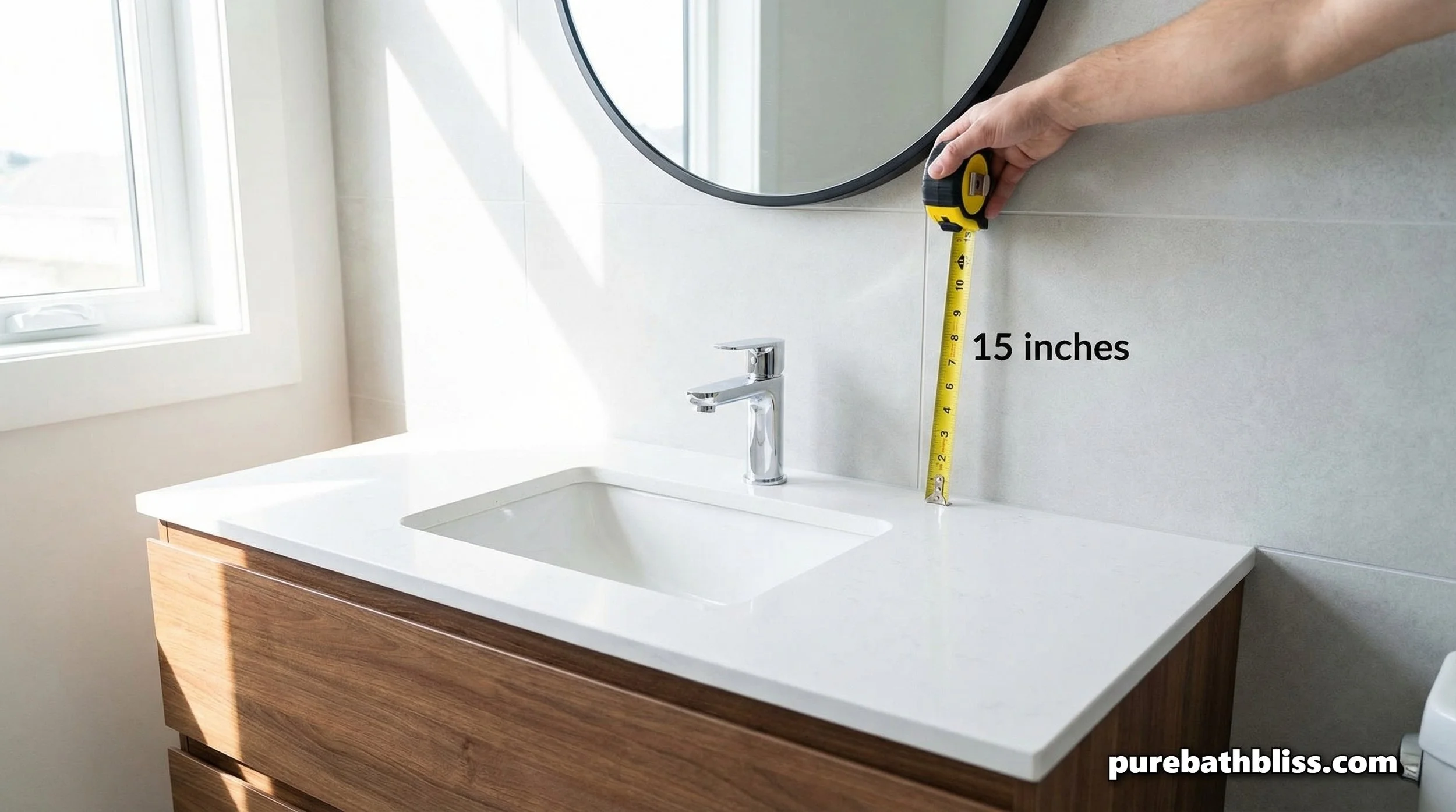
The Clearance Rule: You should always aim for at least 5 to 10 inches of space between the top of your faucet handle and the bottom of the mirror. This prevents water splashes from hitting the glass, which is the primary cause of mirror desilvering and black edges.
2. Accommodating a Family of Four
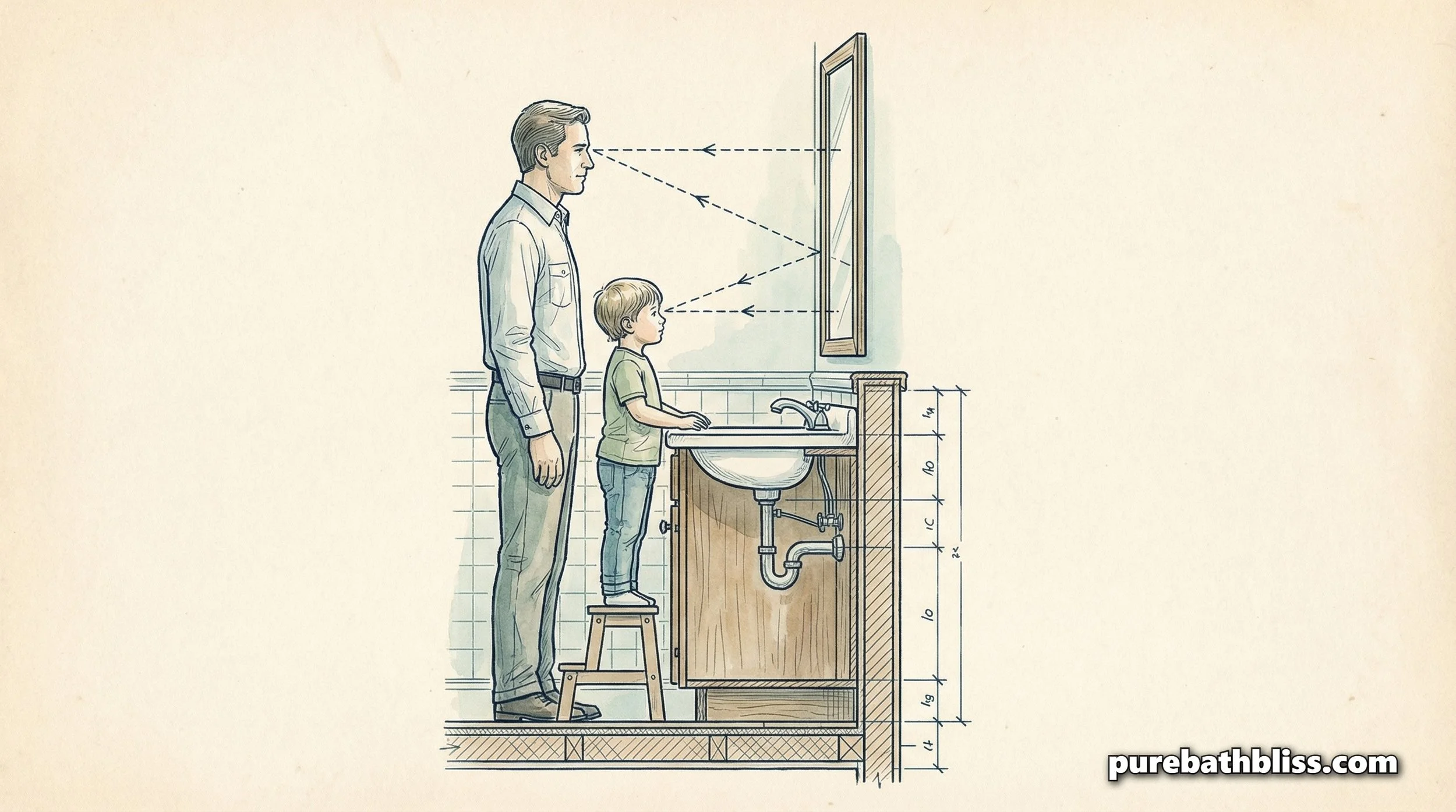
When you have multiple kids, ergonomics becomes a challenge. You don't want to hang the mirror so low that it looks like it belongs in a preschool, but you also don't want your toddlers standing on the very edge of a step stool to see their teeth.
The Oversized Mirror Solution: Instead of a small decorative mirror, opt for a taller "Portrait" orientation. A mirror that is 36 to 42 inches tall can be hung high enough to clear the backsplash while extending low enough for kids to use comfortably.
The "Tilt" Trick: Pivot mirrors (mirrors on a swivel) are a builder's secret for families. You can tilt the mirror downward for the kids and back up for the adults, ensuring everyone has the perfect angle without compromising the Psychology of a Clean Bathroom look.
3. Mirror Height vs. Lighting Infrastructure
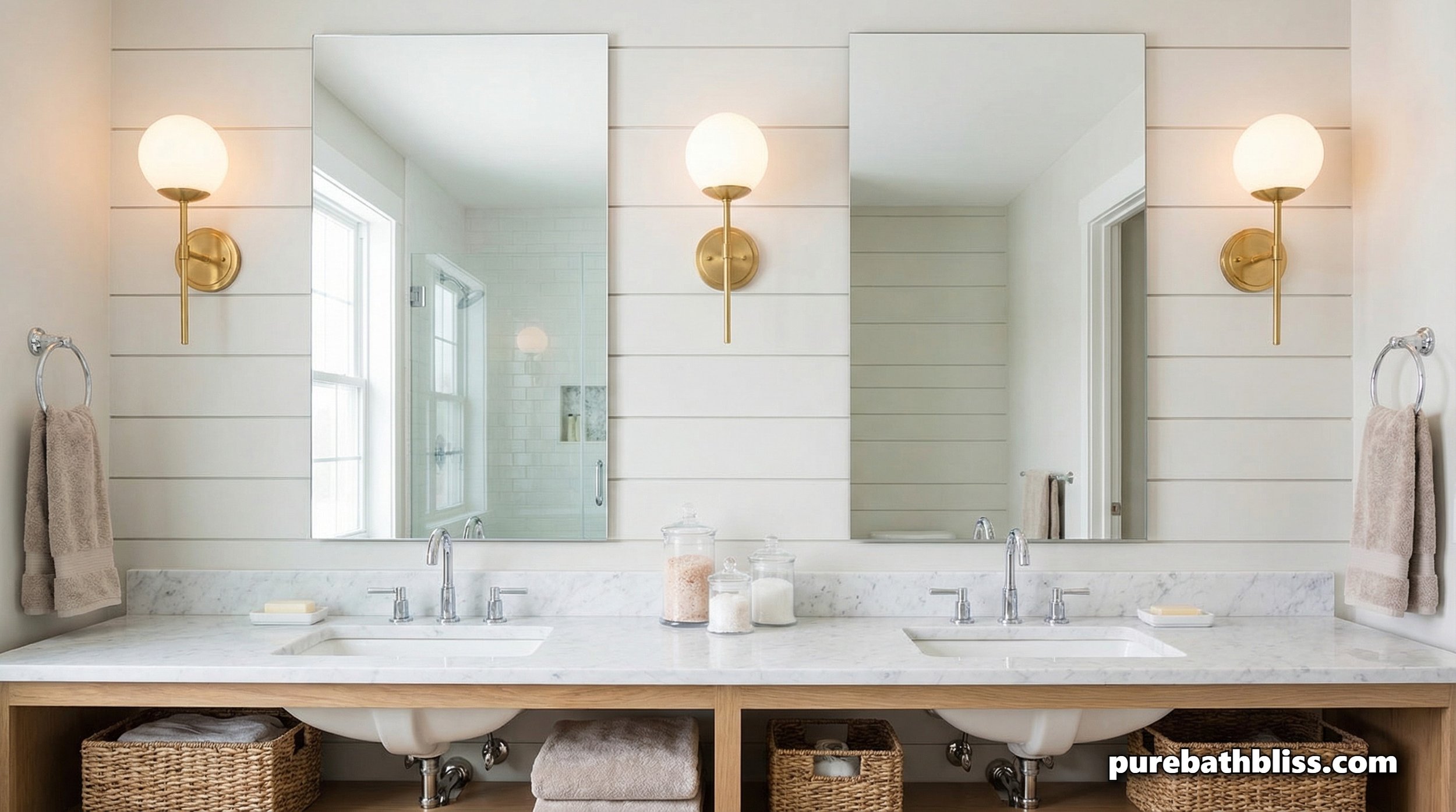
One of the most common mistakes in bathroom design is hanging the mirror first and the lights second. In 2026, the trend of Eye-Level Sconces is dominant because it provides the most flattering light for your face.
The Sconce Rule: If you are using side-mounted sconces, they should be hung about 60 to 64 inches from the floor. Your mirror should be centered vertically with these lights.
The Overhead Rule: If you are using a bar light above the mirror, the mirror should end at least 2 to 3 inches below the light fixture. If the mirror is too close to the light, it reflects the "guts" of the fixture and creates a harsh glare that highlights every pink slime stain on the counter.
4. Squarespace Table: Mirror Height Cheat Sheet
When you're standing in the aisle at the hardware store or browsing Amazon, use this quick reference guide to ensure your "Infrastructure" is sound.
| User / Setup | Standard Floor to Center | Distance from Countertop |
|---|---|---|
| Standard Adult | 60" - 62" | 5" - 10" above backsplash |
| Family (Multi-Age) | 58" - 60" | Use a taller mirror (36"+ vertical) |
| Powder Room | 60" | Flexible; aim for "Jewel Box" impact |
| Tall User (6'0"+) | 64" - 66" | Ensure top of mirror is above head |
5. Avoiding the "Desilvering" Zone
As a builder, I’ve seen thousands of mirrors ruined by poor placement. If a mirror is hung too close to the sink, it becomes a magnet for toothpaste, soap, and water.
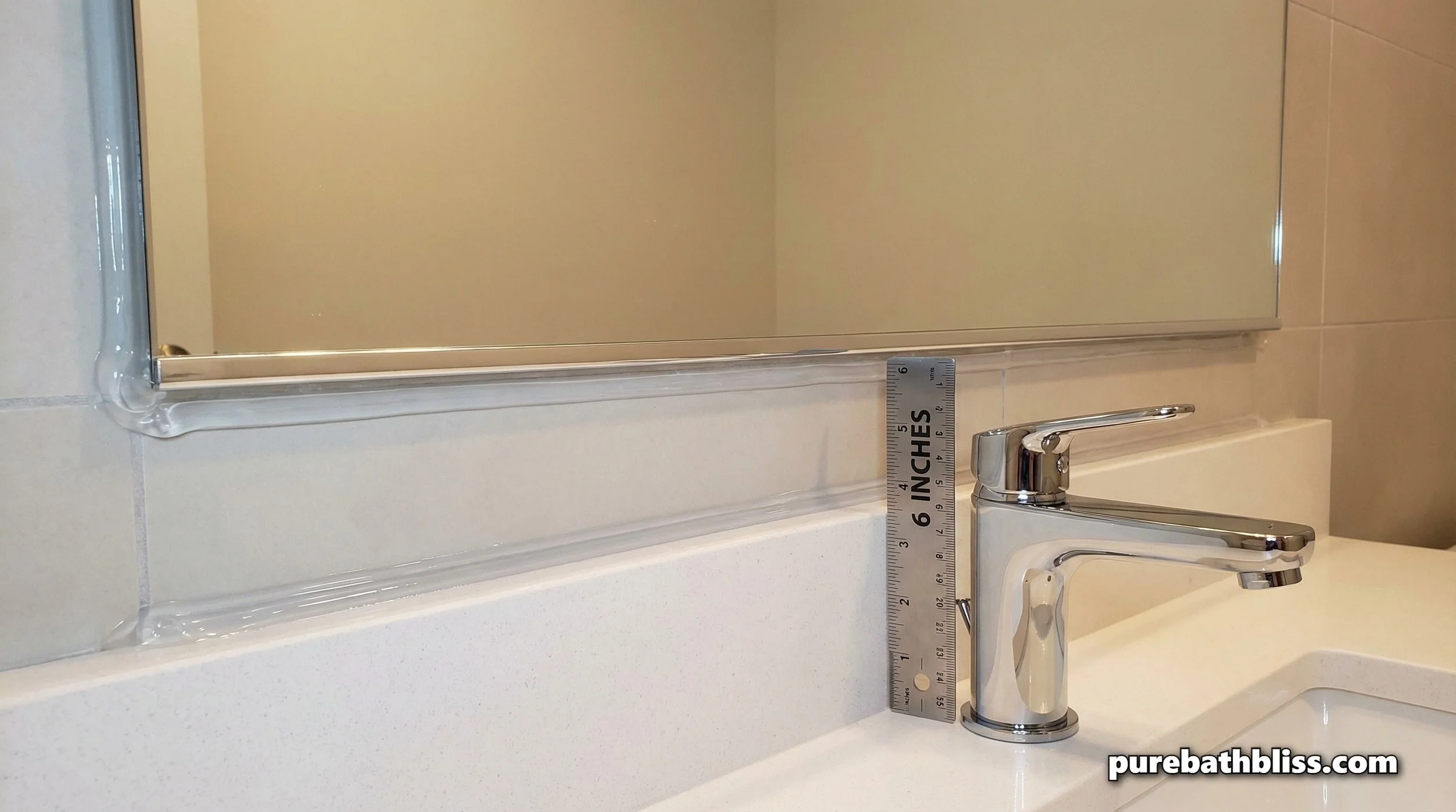
When water sits on the bottom edge of the glass, it seeps into the backing and causes Mirror Rot. By keeping your mirror at least 5 inches above the backsplash, you allow for better airflow. This airflow is essential, especially if your bathroom fan is not vibrating at full capacity, to keep the glass dry and prevent the edges from turning black.
Summary: The Mirror Ergonomics Checklist
Measure Eye Level: Aim for the center of the mirror to be 60 inches from the floor.
Mind the Faucet: Leave at least 5 inches of clearance to prevent water spots and rot.
Coordinate with Lights: Hang sconces at 60–64 inches to match the mirror's vertical center.
Go Vertical for Families: A taller mirror accommodates kids and adults simultaneously.
Check the "Rough-In": Ensure you aren't drilling into pipes behind the drywall.
Seal the Edges: Use an edge-sealer or silicone if the mirror is in a high-humidity zone.
Choosing the right mirror height is a small detail that has a huge impact on your daily routine. By following these ergonomic "Builder's Rules," you create a space that is comfortable for the whole family and protects your "Internal Infrastructure" for years to come.