The Best Non-Toxic Bath Mats for Kids: Safety Meets Sustainability
When you are a parent of four, the bathtub is the most dangerous "Job Site" in the house. It is a high-moisture environment where slick surfaces, sharp corners, and active toddlers create a perfect storm for accidents. As a builder, I look at bath safety through the lens of structural integrity, but as a parent, I’ve had to learn that the "safety products" we buy can sometimes introduce new "Internal Infrastructure" problems, namely, toxic off-gassing and hidden mold.
Most standard "kiddy" bath mats are made from cheap PVC or synthetic rubber. These materials don't just smell like chemicals; they release phthalates into the warm bath water where your child is soaking. Furthermore, those cute suction cups on the bottom are notorious for trapping water, leading to the rapid growth of pink slime bacteria and black mold that you can't see until it’s already a massive colony.
In this guide, we’re going to look at the 2026 standards for non-toxic bath safety. We’ll cover why certain materials are "out," how to spot hidden mold hazards, and which mats actually provide the "Builder-Grade" grip needed to keep your kids upright without compromising their health.
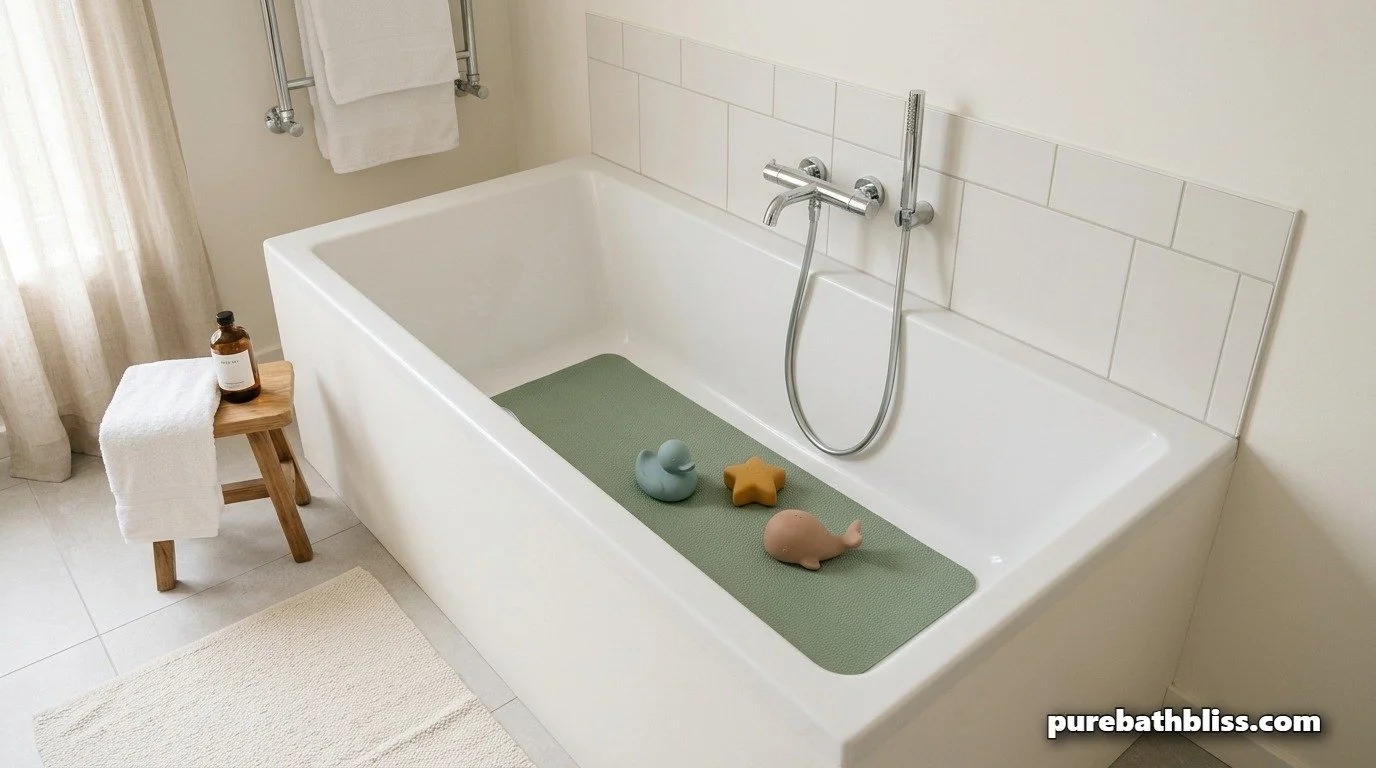
1. The PVC Warning: Why Plastic is a No-Go
We’ve discussed why PVC is out for shower curtains, but it’s even more critical for bath mats. When a PVC mat is submerged in hot water, the heat acts as a catalyst for "leaching." Phthalates and heavy metals like lead, often used as stabilizers in cheap plastics, can transfer from the mat into the water and be absorbed through a child's skin.
If you’re working on the psychology of a clean bathroom, the first step is removing this "chemical noise." A non-toxic mat doesn't just protect against physical slips; it protects the long-term air and water quality of the entire room. In 2026, we are seeing a massive shift toward "Biophilic Safety," where the materials we use for our children are as clean as the water they bathe in.
2. Natural Rubber: The "Gold Standard" for Grip
In 2026, the clear winner for in-tub safety is 100% Natural Rubber. Derived from the Hevea brasiliensis tree, this material is biodegradable, free of BPA, and naturally slip-resistant without the need for synthetic coatings.
The Grip Factor: Unlike synthetic plastic, natural rubber has a "grabby" texture that stays tacky even when covered in soapy water.
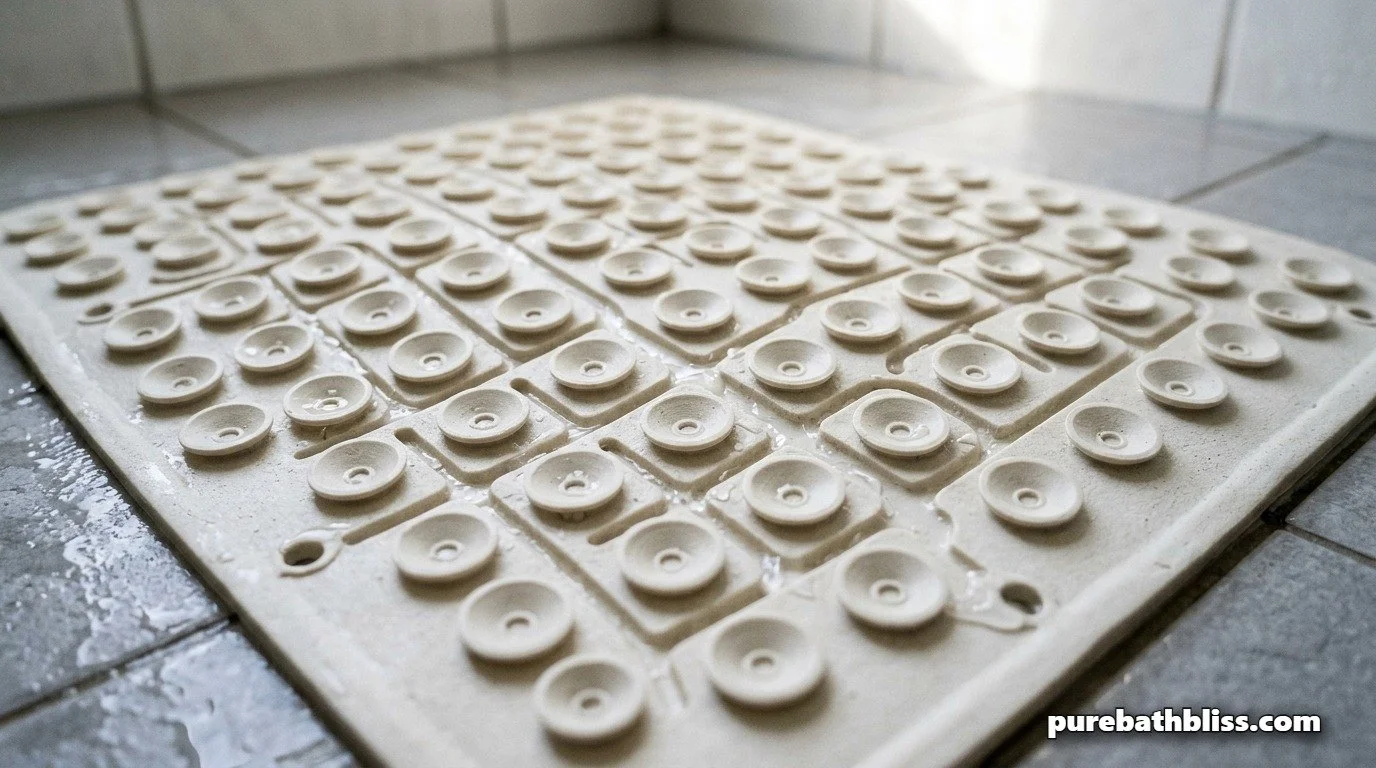
The Suction Solution: Look for mats with "open-drain" suction cups. These are designed with a small hole in the center or a low-profile edge that allows water to escape rather than pooling. This prevents the "Biofilm Abyss" that we often find in the bottom of vanity drawers.
HEVEA Natural Rubber Bath Mat—This is the industry favorite for a reason. It’s plastic-free and uses a natural textured surface rather than harsh chemical finishes.
3. Kid's Bath Mat Material Comparison
| Material | Non-Toxic Status | Grip Level | Mold Risk |
|---|---|---|---|
| PVC (Vinyl) | ✘ Contains Phthalates | Medium | High (Suction traps) |
| Synthetic TPE | ✔ Better than PVC | High | Medium |
| Natural Rubber | ✔ 100% Plant-Based | Excellent | Low (If hung to dry) |
| Organic Cotton | ✔ No Chemicals | N/A (External use) | Low (Washable) |
4. Outside the Tub: The Organic Cotton Choice
While the inside of the tub needs rubber for grip, the outside of the tub, where the kids step out, needs maximum absorbency. Many parents make the mistake of using microfiber mats here. Microfiber is essentially a form of plastic that sheds microplastics into our water systems every time you wash it.
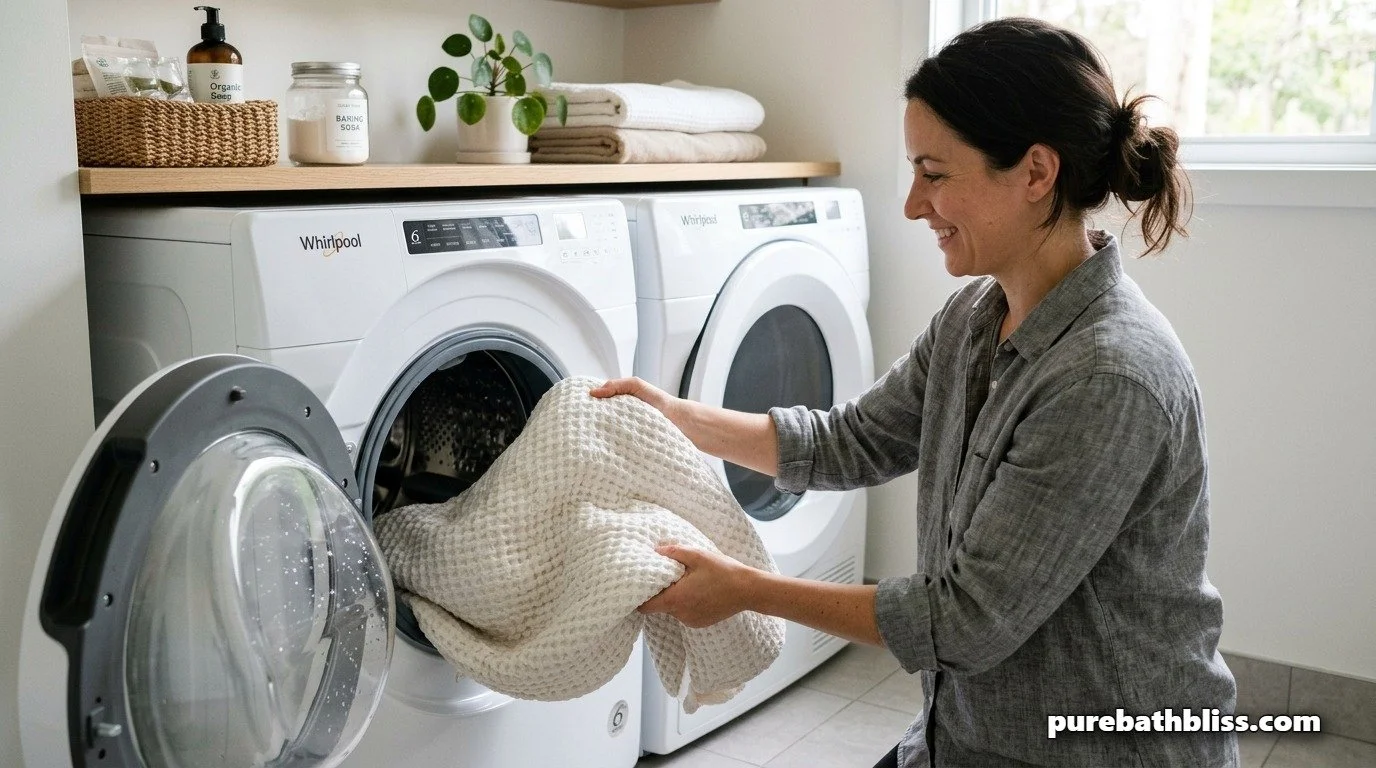
The Elevated Aesthetic: Go for GOTS-certified organic cotton or a heavy-duty linen mat. These can be tossed in the washing machine along with your non-toxic shower curtains.
The "Scent" Check: If your bath mat has a rubber backing that smells like a tire shop, it’s off-gassing. Look for mats with a "spray-on" natural latex backing or use a separate natural rubber underlay. This supports a healthy aromatic evening ritual without the chemical interference that disrupts the senses.
5. Maintenance: The "Pull and Hang" Protocol
As a builder, I know that even the best materials will fail if the "Operating Procedures" are wrong. The #1 cause of mirror desilvering and mat mold is standing water. When you leave a mat suctioned to the tub floor, you are creating an anaerobic environment where bacteria thrive.
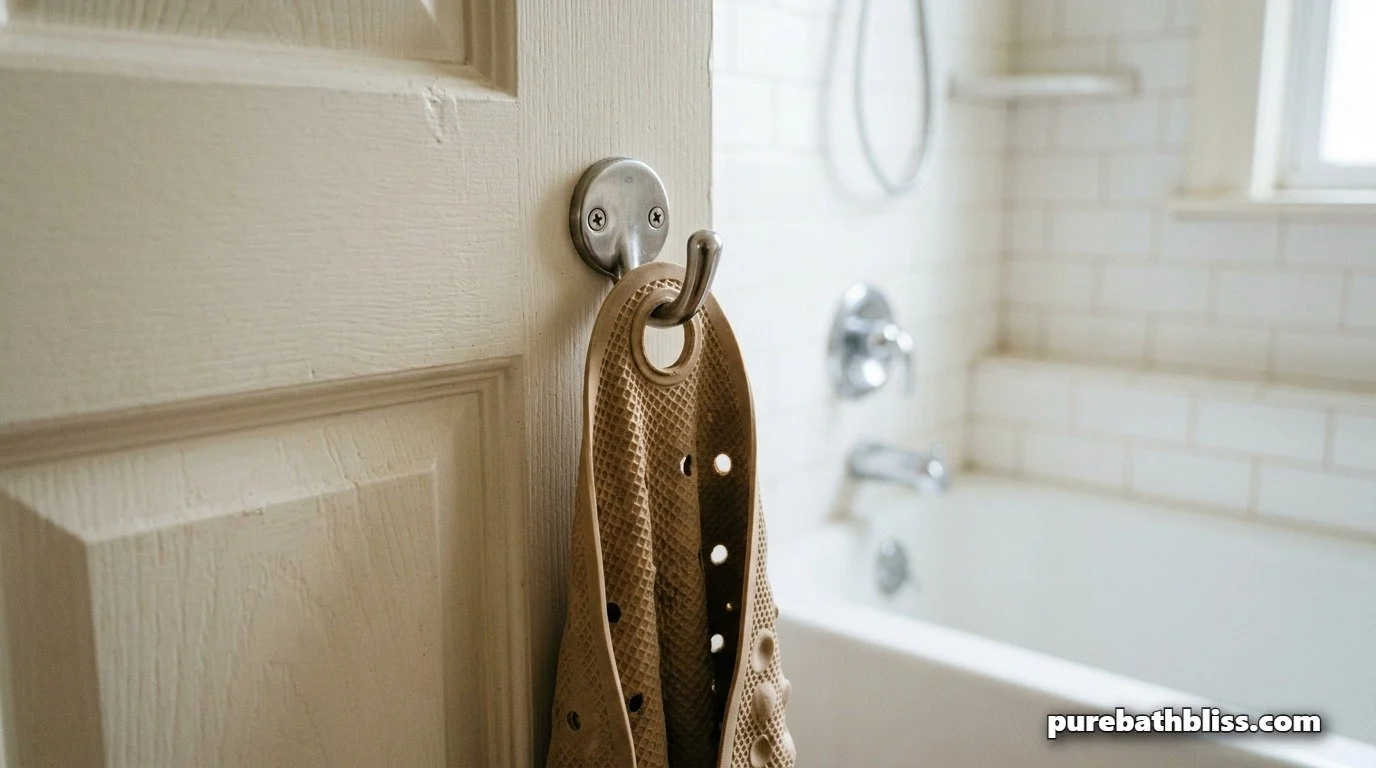
Daily Ritual: You must pull the rubber mat up after every bath. Hang it over the side of the tub or on a dedicated hook.
The Cleaning Connection: After you clear your mirror and tiles, use the same mindset for your mat. Once a week, spray the underside with a white vinegar solution. This breaks down the soap scum that acts as a "glue" for pink slime.
IMAGE PROMPT 4: A close-up of a bathroom hook behind the door. A natural rubber bath mat is hanging by a dedicated hole, allowing air to circulate on both sides. In the background, a clean, dry bathtub is visible.
6. Sizing and Ergonomics for Kids
Don't just buy the first mat you see. Measure your tub "Infrastructure" first.
Drain Alignment: Ensure the mat has a cutout for the drain. If the mat covers the drain, water will back up, leading to a slippery "floating" mat—a major safety hazard.
Surface Coverage: For kids, you want a mat that covers at least 70% of the tub floor. This ensures that no matter where they move during play, they have a secure footing. This attention to detail is just as important as choosing the right mirror height for their daily routine.
7. The 2026 Trend: Stone vs. Rubber
While we’ve focused on rubber, some modern homes are opting for Diatomaceous Earth (Stone) mats outside the tub. These stones dry instantly and are naturally antimicrobial. However, for the inside of the tub where the children are playing, natural rubber remains the undisputed king of impact-protection and grip. By combining a natural rubber mat inside with a stone mat outside, you create a high-performance "Dry Zone" that keeps the bathroom floor pristine.
Summary: The Kid-Safe Bath Mat Checklist
Ditch the PVC: If it smells like a pool floatie, it is releasing toxins.
Choose Natural Rubber: It is the safest, "grippiest," and most eco-friendly in-tub option.
Check the Suction: Look for cups that allow for drainage to prevent mold.
Organic Cotton Outside: Stick to natural fibers for the floor to avoid microplastics.
Wash Frequently: Toss floor mats in the wash weekly with a vinegar boost.
Always Hang Dry: Never leave a mat suctioned to the tub floor overnight.
Match the Hardware: Pair your safe space with brushed brass accents for a modern, non-toxic finish.
By upgrading your bath mat, you are making a structural improvement to your family's health. It’s a simple change that yields massive returns in safety and air quality, ensuring that your kids stay upright and your bathroom remains a true sanctuary.
5. Maintenance: The "Pull and Hang" Protocol
As a builder, I know that even the best materials will fail if the "Operating Procedures" are wrong. The #1 cause of mirror desilvering and mat mold is standing water. When you leave a mat suctioned to the tub floor, you are creating an anaerobic environment where bacteria thrive.
Daily Ritual: You must pull the rubber mat up after every bath. Hang it over the side of the tub or on a dedicated hook.
The Cleaning Connection: After you clear your mirror and tiles, use the same mindset for your mat. Once a week, spray the underside with a white vinegar solution. This breaks down the soap scum that acts as a "glue" for pink slime.
6. Sizing and Ergonomics for Kids
Don't just buy the first mat you see. Measure your tub "Infrastructure" first.
Drain Alignment: Ensure the mat has a cutout for the drain. If the mat covers the drain, water will back up, leading to a slippery "floating" mat—a major safety hazard.
Surface Coverage: For kids, you want a mat that covers at least 70% of the tub floor. This ensures that no matter where they move during play, they have a secure footing. This attention to detail is just as important as choosing the right mirror height for their daily routine.
The 2026 Trend: My Experience with Stone Mats
While we’ve focused on rubber for the interior of the tub, a major trend for 2026 is the use of Diatomaceous Earth (Stone) mats for the exterior. I’ve recently started using these type of mats in my own home, and honestly, I love them.
These "stone" mats are made from fossilized algae that is naturally porous. The moment you step on them with soaking wet feet, you can actually watch the water vanish. They dry almost instantly, which eliminates that soggy, damp towel feeling that usually lingers on the bathroom floor after four kids have cycled through. They are naturally antimicrobial and don't require machine washing, you just give them a quick sand with a specialized tool every few months to keep the pores open.
For the inside of the tub where the children are playing and sitting, natural rubber remains the undisputed king of impact-protection and grip. However, by combining a natural rubber mat inside with a stone mat outside, you create a high-performance "Dry Zone" that keeps the bathroom floor pristine and your feet bone-dry.
Summary: The Kid-Safe Bath Mat Checklist
Ditch the PVC: If it smells like a pool floatie, it is releasing toxins.
Choose Natural Rubber: It is the safest, "grippiest," and most eco-friendly in-tub option.
Check the Suction: Look for cups that allow for drainage to prevent mold.
Organic Cotton Outside: Stick to natural fibers for the floor to avoid microplastics.
Wash Frequently: Toss floor mats in the wash weekly with a vinegar boost.
Always Hang Dry: Never leave a mat suctioned to the tub floor overnight.
Match the Hardware: Pair your safe space with brushed brass accents for a modern, non-toxic finish.
By upgrading your bath mat, you are making a structural improvement to your family's health. It’s a simple change that yields massive returns in safety and air quality, ensuring that your kids stay upright and your bathroom remains a true sanctuary.