The "Stone" Bath Mat Deep Dive: Diatomaceous Earth vs. Bamboo
Transparency Note: We independently select these products based on research and user reviews. If you buy something through our links, we may earn a commission.
For decades, the standard bathroom "Infrastructure" involved a plush, shaggy rug that sat in front of the tub, soaking up gallons of water and skin cells until it became a literal breeding ground for pink slime bacteria. As a builder and a father of four, I’ve spent far too much time dealing with the musty smell of damp cotton and the hidden black mold that grows on the subfloor beneath a wet mat.
In 2026, the trend has shifted toward "Hard Surface" mats. We are moving away from textiles and toward sustainable, fast-drying materials like Diatomaceous Earth (Stone) and Bamboo. As I mentioned in our guide on non-toxic bath mats for kids, I’ve recently made the switch to a stone mat in my own home, and the results have been a game-changer for our daily workflow.
But which one is right for your home? Today, we’re doing a professional deep dive into the pros, cons, and maintenance requirements of Stone vs. Bamboo to help you build a high-performance "Dry Zone."
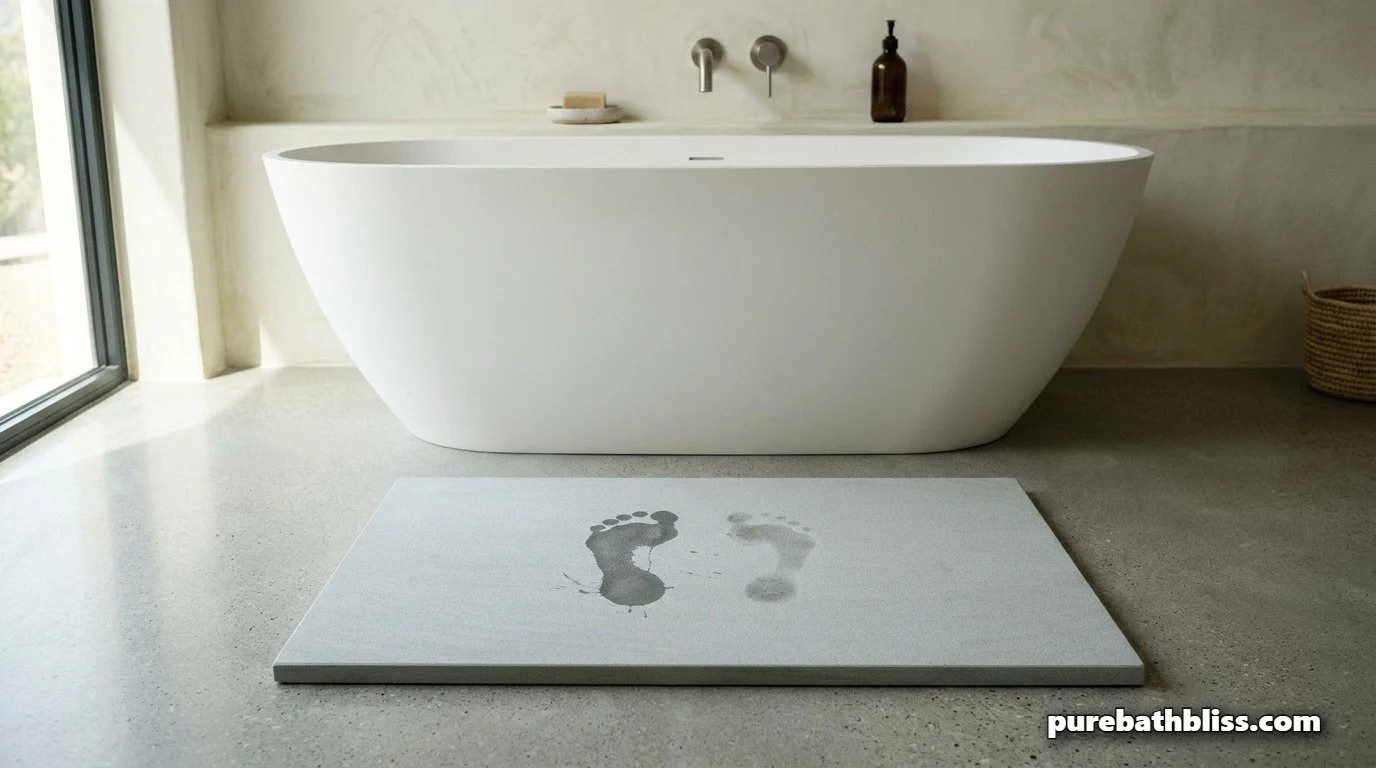
1. Diatomaceous Earth: The "Magic" Stone
Diatomaceous Earth (DE) is a naturally occurring, siliceous sedimentary rock. It’s composed of the fossilized remains of tiny, aquatic organisms called diatoms.
The Science of Absorption: DE is incredibly porous at a microscopic level. When you step on it with soaking wet feet, the water isn't just sitting on top; it's being pulled into the pores via capillary action. This is why you can literally watch your footprint vanish in seconds.
Why I Love It: In a house with four kids, the "soggy rug" syndrome is real. With a stone mat, the third kid to shower gets the same dry, crisp experience as the first. It eliminates the "swampy" feeling and supports the psychology of a clean bathroom by staying visually pristine all day.
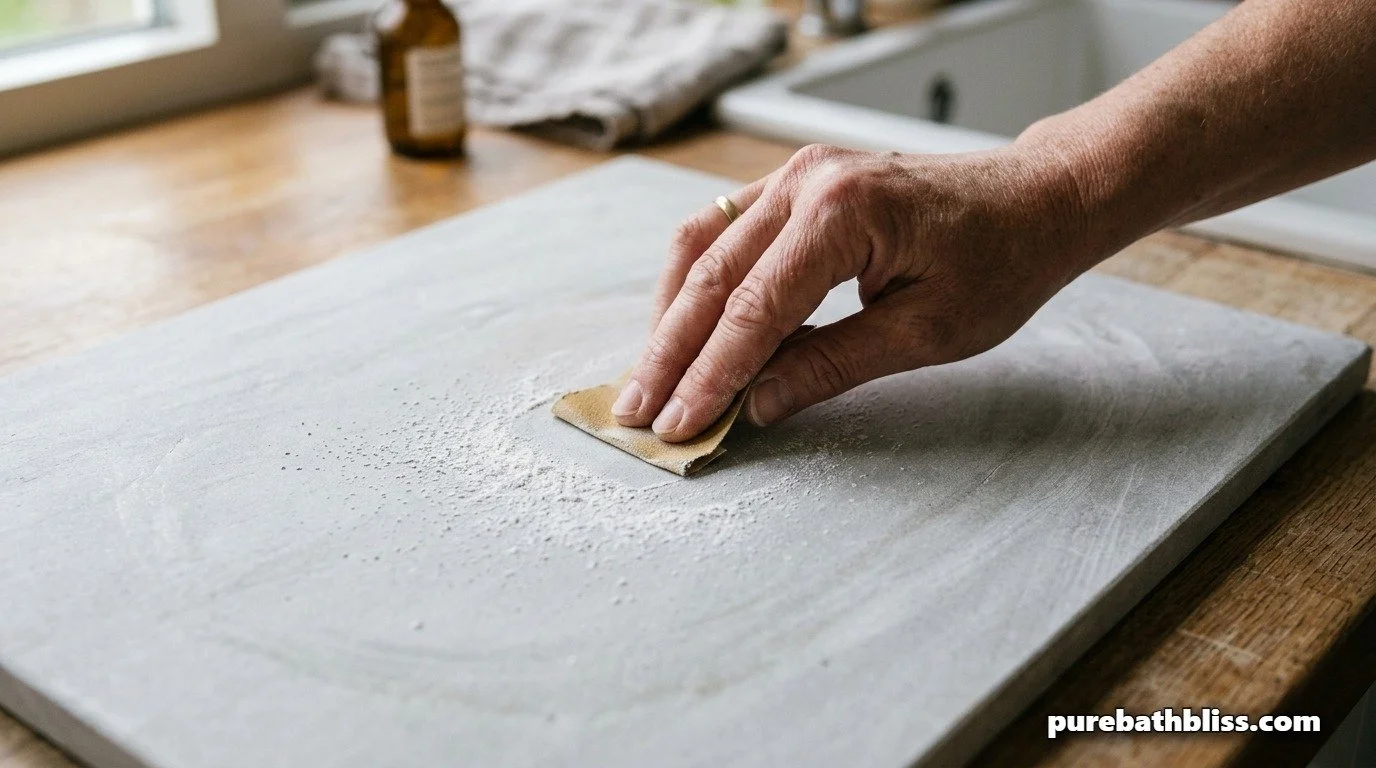
Maintenance: It doesn't need a washing machine. If the absorption slows down, you simply use a small piece of sandpaper (usually included) to lightly buff the surface. This re-opens the pores and removes any soap scum buildup.
2. Bamboo: The Sustainable Classic
Bamboo has been a staple in "Zen" bathroom design for years. It offers a warm, organic aesthetic that pairs beautifully with brushed brass fixtures.
The Drainage Factor: Unlike stone, bamboo doesn't "absorb" water; it allows it to drain through the slats. It keeps your feet elevated above the puddle, allowing the water on the floor to evaporate.
The Durability Factor: Bamboo is technically a grass, and it's incredibly resilient to moisture. However, because it is an organic material, it can eventually develop a "biofilm" if it sits in standing water. It requires a non-slip rubber backing to ensure it doesn't slide on tile, a common safety concern for kids.
Maintenance: It needs to be wiped down weekly and occasionally treated with a food-safe oil to prevent the wood from drying out and splintering.
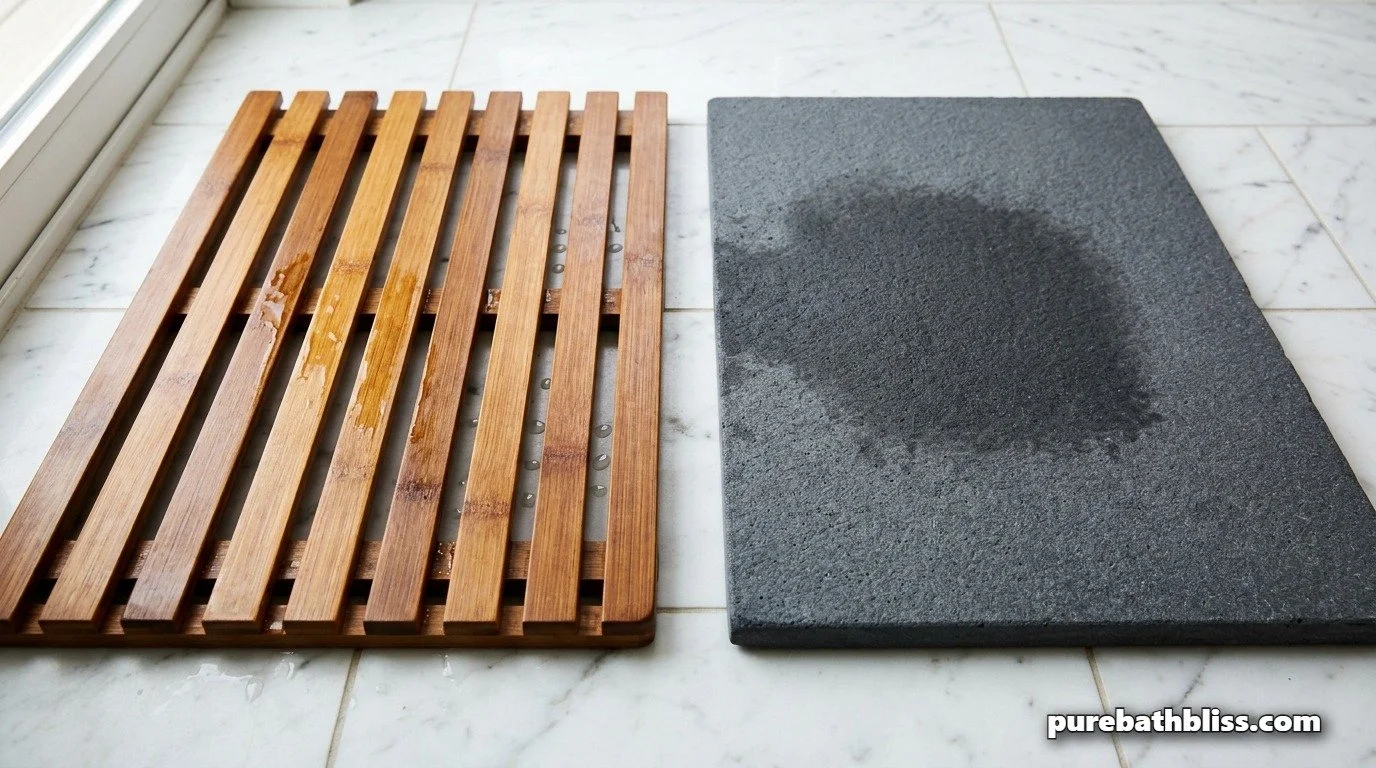
3. Stone vs. Bamboo Comparison
| Feature | Diatomaceous Earth (Stone) | Sustainable Bamboo |
|---|---|---|
| Drying Speed | Instant (Absorbs & Evaporates) | Fast (Airflow through slats) |
| Anti-Microbial | Naturally resistant to mold/bacteria | Naturally resistant, but can grow biofilm |
| Comfort | Hard, flat, and grounded | Flexible, warm, and textured |
| Maintenance | Occasional sanding (No washing) | Weekly wipe-down & occasional oiling |
| Safety | Heavy; doesn't budge | Requires non-slip backing |
4. The Impact on Air Quality and Health
One of the biggest benefits of switching to stone or bamboo is the immediate improvement in bathroom air quality.
Traditional fabric mats act like a sponge for VOCs and allergens. Because they stay damp for hours, they contribute to the "relative humidity" of the room, which can tax your bathroom exhaust fan. A stone mat removes that moisture from the equation entirely. By drying the water at the source, you reduce the risk of black mold spores becoming airborne.
As we move toward more non-toxic bathroom choices, removing "The Wet Fabric" is one of the most effective structural changes you can make.
5. Professional Installation and Placement
Even a "self-care" item like a bath mat requires a bit of builder logic.
Floor Leveling: Stone mats are rigid. If your bathroom tile is uneven or has a significant "lippage," the stone mat might wobble. Ensure you place it on a flat section of tile or use a thin silicone leveling shim if necessary.
Avoid the "Splash Zone": While stone mats love foot water, they shouldn't be submerged. Don't place them where the faucet spray or a leaky shower curtain will constantly drench them. They need "breathing time" between uses to evaporate the absorbed moisture.
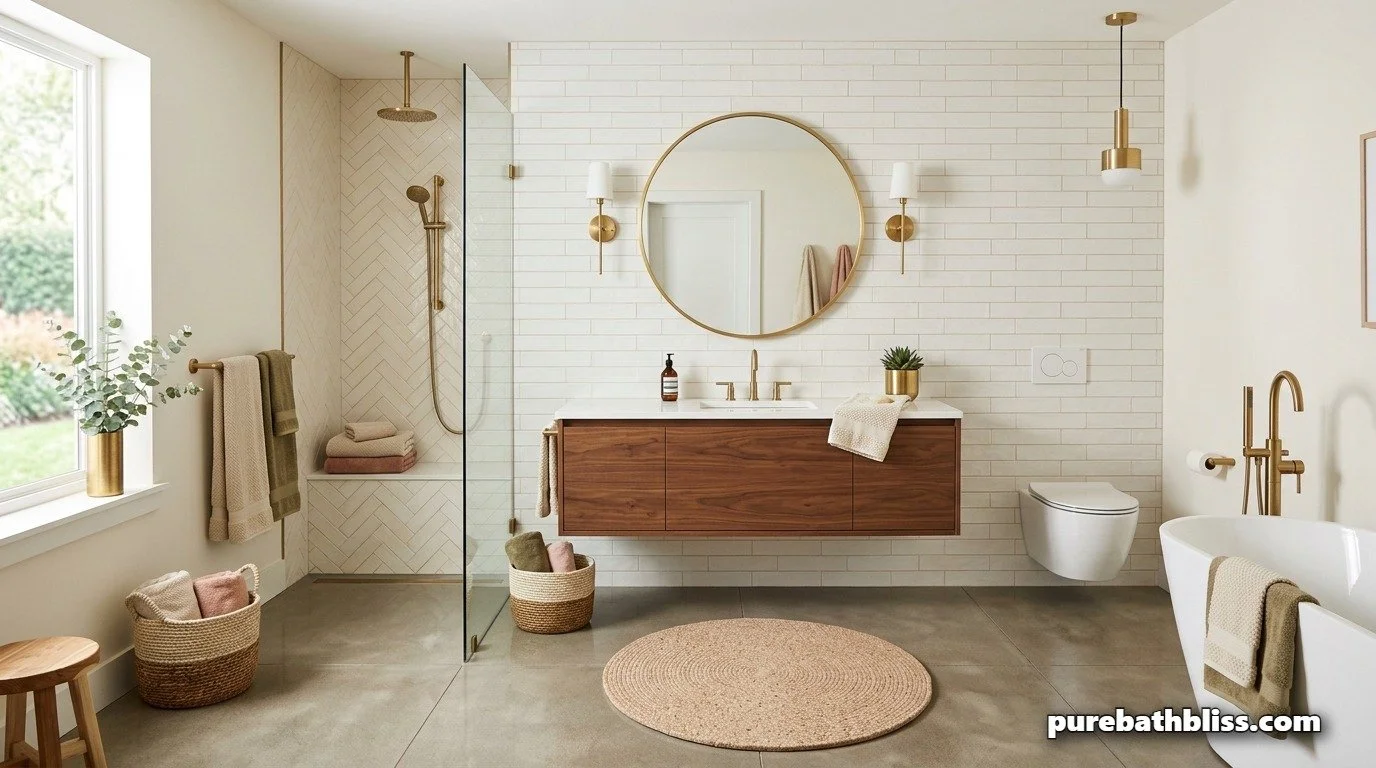
Ergonomics: For the best experience, center the mat with your mirror height. Having a centered "landing zone" makes the bathroom feel more intentional and spa-like.
6. My Top Picks: Amazon Shopping List
If you're ready to upgrade your "Dry Zone," these are the 2026 models that stand up to family use:
Dorai Home Diatomaceous Earth Bath Mat – This is the high-end standard. It features a collapsible design that makes it easy to move for cleaning.
Sutera Stone Bath Mat – A solid, heavy-duty option that is excellent for high-traffic kid bathrooms.
Bambüsi Luxury Bamboo Bath Mat – If you prefer the warmth of wood, this model features an elevated design for maximum airflow.
Summary: The Stone vs. Bamboo Checklist
Check Your Humidity: If your bathroom is consistently "swampy," go with Stone.
Assess Your Floor: If your tile is uneven, Bamboo is more forgiving.
Evaluate Comfort: Stone feels like a spa patio; Bamboo feels like a boardwalk.
Commit to Maintenance: Sand the stone every 3–4 months to maintain "Magic" absorption.
Ditch the Fabric: Regardless of which you choose, the goal is to remove the "Soggy Rug" from your healthy home infrastructure.
Style with Intent: Match your stone mat to your sink color for a seamless, designer finish.
Switching to a stone bath mat was one of those "Why didn't I do this sooner?" moments in our house. It’s cleaner, safer, and supports the psychology of a clean bathroom by removing one more source of "visual and olfactory clutter" from the room.