Homemade Citrus Peel All-Purpose Cleaner (Zero Waste, 10 Cents Per Bottle)
Originally published October 2025, Updated July 2026
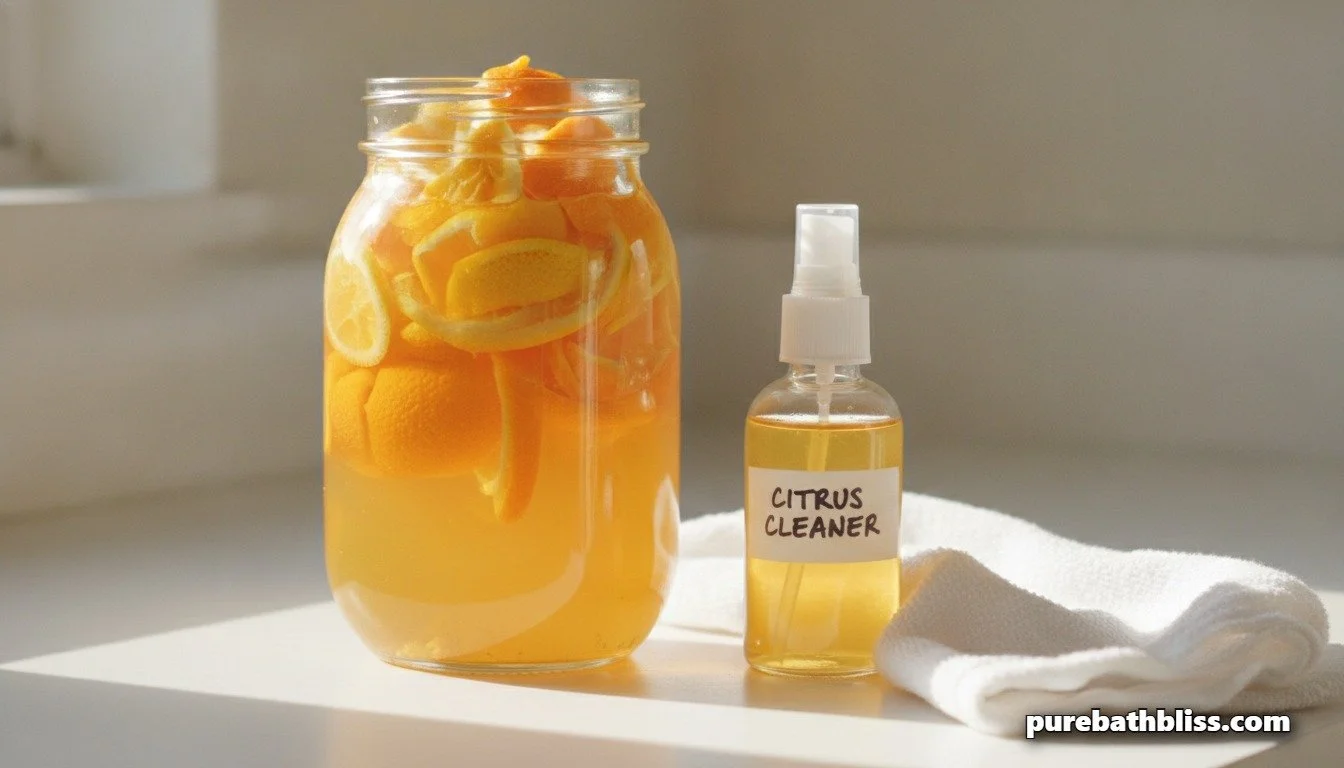
This recipe started as a winter habit. Every time we squeezed an orange or zested a lemon, the peel went into a mason jar on the kitchen counter instead of the compost. Once the jar was full, I topped it up with white vinegar, screwed the lid on, and forgot about it for two weeks. What comes out the other side is genuinely one of the best all-purpose cleaners I have used in years, brighter, fresher, and more effective on grease than the standard vinegar spray I had been using before.
The cost is borderline absurd. The peels cost nothing. A litre of white vinegar costs about two dollars and makes around six to eight bottles of finished cleaner. That works out to somewhere between ten and thirty cents per bottle depending on how much you dilute it. A comparable commercial non-toxic spray typically costs four to eight dollars. The homemade version smells dramatically better and does not have a label full of unpronounceable stabilizers.
Here is the full recipe, the science behind why it works so well, which surfaces to use it on, which to avoid, and four variations worth trying once you have the basic version dialled in.
Why This Works: The Chemistry Behind the Cleaner
There are two active ingredients doing the cleaning here, and understanding what each one does helps you use the finished product more effectively.
White vinegar is a 5 percent solution of acetic acid in water. That acidity makes it highly effective at dissolving the mineral deposits and calcium carbonate buildup that cause hard water stains, limescale rings, and the filmy residue that accumulates on bathroom tiles and faucets. It is also a broad-spectrum antimicrobial agent that inhibits bacterial and mold growth, which is why it has been used as a household disinfectant for centuries. On its own, it works well. The main objection is the smell — sharp, vinegary, and persistent until it dries. That is where the citrus comes in.
D-limonene is the compound extracted from citrus peels during the infusion process. It is a natural terpene, the same compound responsible for that distinctive fresh citrus smell. But it does more than improve the fragrance. D-limonene is a natural solvent and degreaser — it dissolves oils, grease, and organic residue the same way petroleum-based solvents do, but without the toxicity. A 2025 life cycle study on citrus peel waste confirmed that D-limonene extracted from orange and lemon peels has genuine cleaning value as a sustainable solvent. Commercial citrus cleaners typically contain three to ten percent D-limonene. Homemade infused vinegar, after a two-week steep, contains a meaningful concentration that translates to real cleaning performance on greasy surfaces.
The two compounds are complementary. Vinegar dissolves mineral deposits. D-limonene cuts through grease and oil. The citrus oils also mask the vinegar smell almost completely, leaving behind a clean, bright citrus scent that dissipates quickly. The finished cleaner is antimicrobial, degreasing, and mineral-dissolving in a single spray. We cover white vinegar's cleaning chemistry in more depth in our guide to 7 genius ways to use white vinegar in the bathroom, including the specific bathroom applications where it performs best.
The Basic Recipe
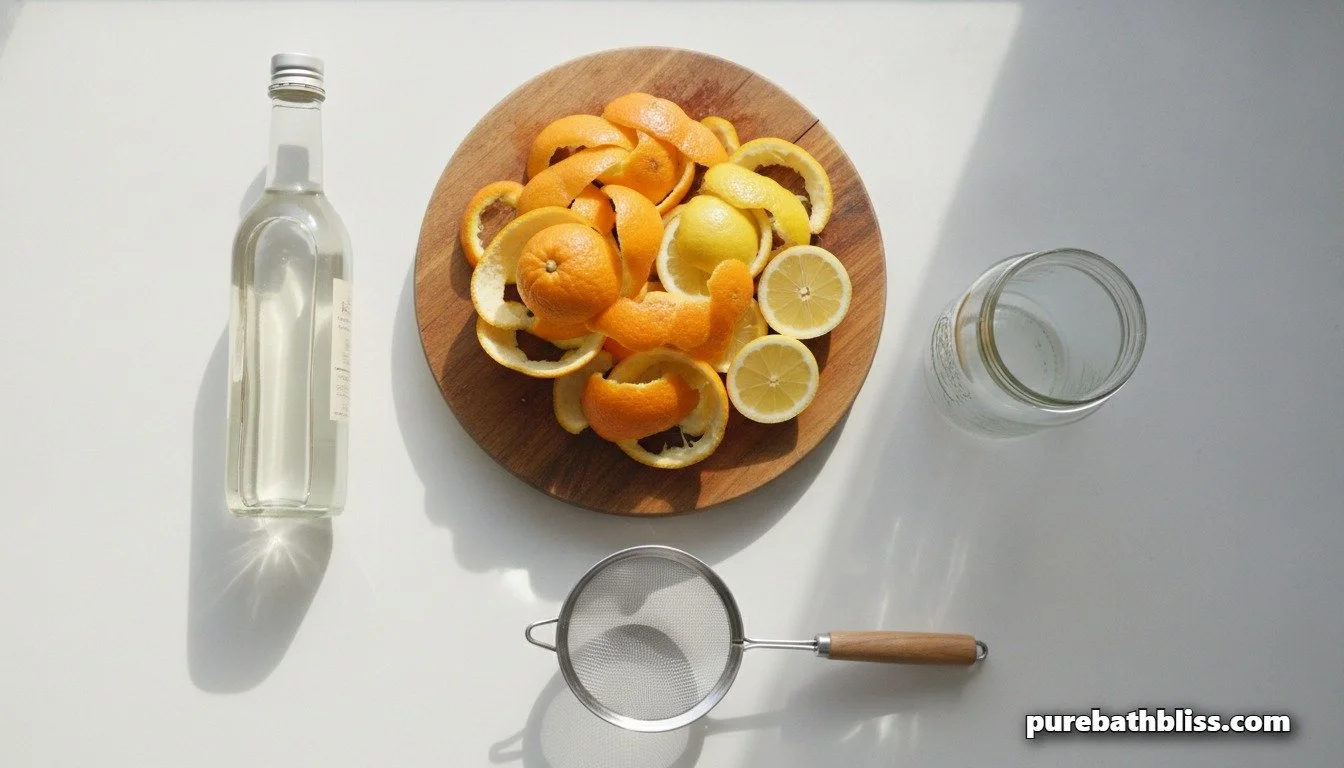
What you need:
Citrus peels from any combination of oranges, lemons, limes, or grapefruits — enough to fill a mason jar about two thirds full
White distilled vinegar — enough to completely submerge the peels
A wide-mouth mason jar with a lid
A fine mesh strainer or cheesecloth
A glass spray bottle for the finished product
Step 1: Collect and Prepare the Peels
Use organic citrus where possible since you want the natural oils from the peel without any pesticide residue going into your cleaner. Rinse the peels and remove as much of the white pith as you reasonably can. The pith contains very little D-limonene and can make the infusion slightly bitter-smelling. The coloured outer zest is where the oils are concentrated. You do not need to be obsessive about this — a little pith is fine — but removing the excess improves the final fragrance.
Step 2: Fill the Jar and Cover with Vinegar
Pack the peels into your mason jar until it is about two thirds full. Pour white vinegar over them until every peel is completely submerged. Push them down if any are floating above the surface. Seal the lid tightly. Give the jar a gentle shake to make sure everything is evenly distributed. If you are adding peels gradually over several days as you use fruit, that is completely fine. Just make sure you top up the vinegar to keep all peels submerged as you add more.
Step 3: Infuse for Two Weeks
Store the jar somewhere cool and dark for a minimum of two weeks. A kitchen cabinet, a shelf in the laundry room, or under the bathroom sink all work well. Give it a gentle shake every few days. You will notice the vinegar gradually changing colour as the citrus oils infuse into it, moving from clear to a warm golden amber. The longer you leave it, the more D-limonene extracts into the vinegar and the stronger the cleaning performance.
Some recipes suggest one week. My experience is that two weeks produces a noticeably more effective and better-smelling result. If you want maximum performance and have the patience, four weeks is even better. Three weeks is the sweet spot for most people between waiting and results.
Step 4: Strain and Dilute
After the infusion period, strain the liquid through a fine mesh strainer or cheesecloth into a clean bowl or jug. Press the peels gently to extract as much liquid as possible. The strained peels can go directly into the compost — they have given everything they have to the cleaner and are completely exhausted of their useful oils. Dilute the infused vinegar with water in a one-to-one ratio for general use, or use it at full strength for heavy grease or tough mineral deposits. Pour into a glass spray bottle and it is ready to use.
Where to Use It and Where to Avoid It
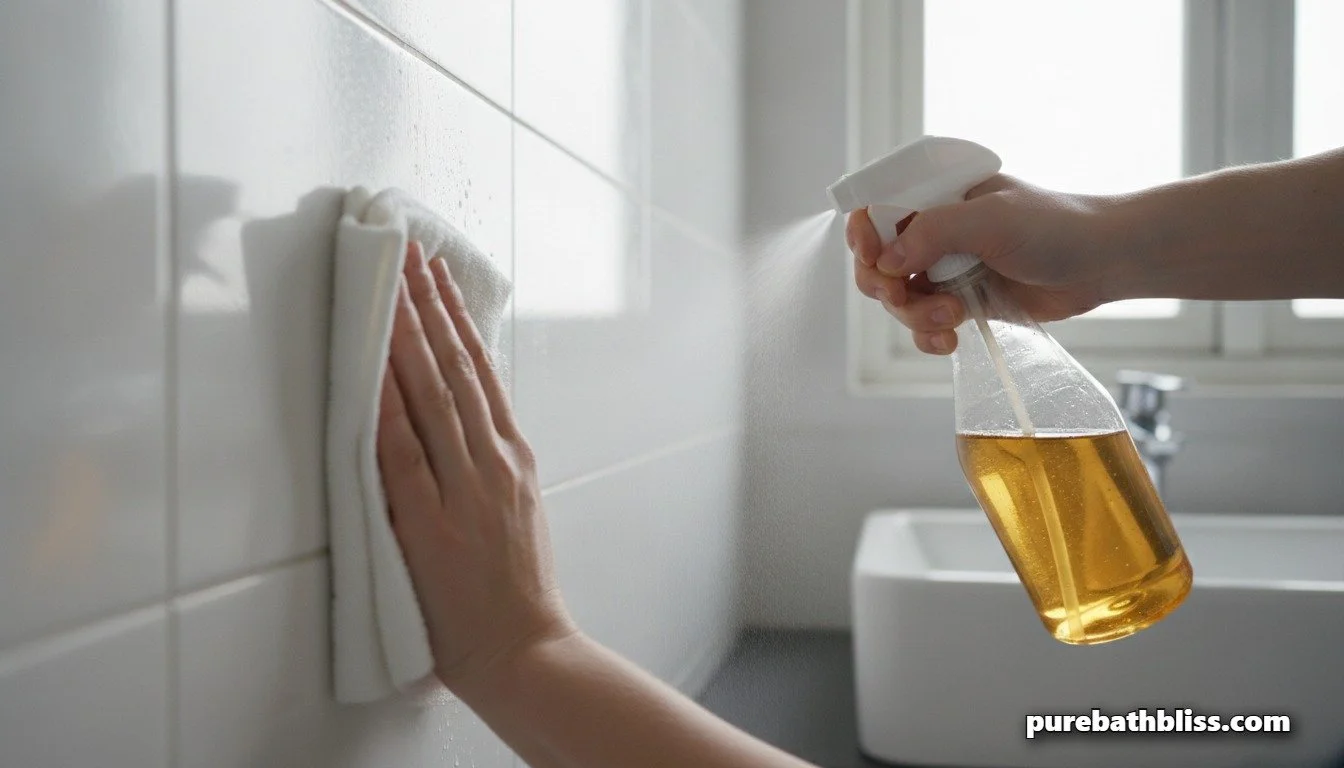
This cleaner performs best on surfaces that benefit from an acid, and should be avoided on surfaces that are damaged by acid. That distinction is important.
Ideal surfaces:
Ceramic and porcelain tiles — both in the bathroom and kitchen. Excellent on grout, soap scum, and mineral deposits. Let it dwell for thirty to sixty seconds for best results before wiping.
Glass shower screens and mirrors — cuts through the soap film and hard water deposits that standard glass cleaners fail on. Wipe with a microfiber cloth and finish with a squeegee for a streak-free result.
Stainless steel sinks and taps — the acid dissolves water spots and the D-limonene cuts through the oily film that accumulates around sink fixtures. Rinse well after.
Acrylic and fibreglass shower surrounds — effective on soap scum. Use a soft cloth rather than anything abrasive.
Sealed hardwood floors — use the diluted version for a gentle clean that does not strip the finish.
Kitchen stovetops and countertops (non-stone) — the degreasing power of D-limonene makes this one of the best kitchen surface cleaners in the DIY category. The same chemistry that makes it great in the bathroom makes it genuinely useful in the kitchen too. For tackling really heavy grease buildup on kitchen surfaces, our friends at Pure Kitchen Bliss cover the full natural kitchen degreasing protocol that pairs well with this cleaner.
Surfaces to avoid entirely:
Natural stone: marble, travertine, limestone, onyx, and granite — these are calcium-based and react with acid. Even diluted vinegar will etch the surface over time, leaving permanent dull marks. Use only pH-neutral cleaners on natural stone. This is the same warning we give in our non-toxic grout cleaning guide and it cannot be overstated.
Unsealed or porous grout — repeated acid exposure degrades cement-based grout over time. Sealed grout is fine. Unsealed or crumbling grout is not.
Brass and gold-finish fixtures — vinegar strips decorative finishes from brass and matte gold hardware. Use warm soapy water only on these surfaces.
Electronic screens and device surfaces — the acid can damage anti-reflective coatings on screens.
Rubber seals and gaskets — prolonged contact with vinegar degrades rubber over time. Quick contact and immediate rinsing is fine; soaking is not.
Four Variations Worth Trying
Once you have the basic recipe working, these variations target specific cleaning tasks or add extra functional ingredients.
1. Anti-Mold Bathroom Spray
After straining the citrus vinegar, add fifteen drops of tea tree essential oil per 500ml of finished spray. Tea tree has well-documented antifungal and antibacterial properties and is one of the few natural ingredients with genuine efficacy against mold spores. This version is what I use as a weekly maintenance spray in the shower — a light mist on the tile walls after cleaning, left to dry without rinsing, creates an antifungal barrier that slows mold regrowth between deep cleans. The tea tree and citrus scents work very well together. Our tea tree oil bathroom guide covers all the applications where this combination is genuinely effective.
2. Heavy-Duty Grout Cleaner
Use the infused vinegar at full strength rather than diluted, and add a tablespoon of baking soda directly into the spray bottle just before use. It will fizz immediately when you spray it onto the grout. That fizzing action is the acid-base reaction creating carbon dioxide, which mechanically agitates and lifts the grime out of the grout pores. Work in small sections, let it fizz for sixty seconds, and scrub with a stiff grout brush. This is the most powerful version of the cleaner for stubborn bathroom grout on ceramic and porcelain tile only. Never use on natural stone.
3. Lemon Lavender Calm Spray
Use lemon peels only for the infusion and add ten drops of pure lavender essential oil after straining. The lemon provides the strongest D-limonene concentration of any citrus fruit, making this the most effective version for grease. The lavender rounds off the sharp citrus note into something warmer and more spa-like. This is the version that lives in our main bathroom and gets used as a daily quick-clean spray on the sink and counter. It smells genuinely lovely, which matters for a product you are using every day.
4. Grapefruit and Rosemary Kitchen Spray
Grapefruit peel contains the highest D-limonene concentration of any common citrus fruit, making it the strongest degreasing option. Add a few sprigs of fresh rosemary to the jar during the infusion period. Rosemary contains compounds including 1,8-cineole that have their own antimicrobial properties and add a clean, herbal note that works particularly well in a kitchen context. This version handles stovetop grease, cutting board residue, and countertop cleaning remarkably well. It is the batch I make specifically for kitchen use.
Storage and Shelf Life
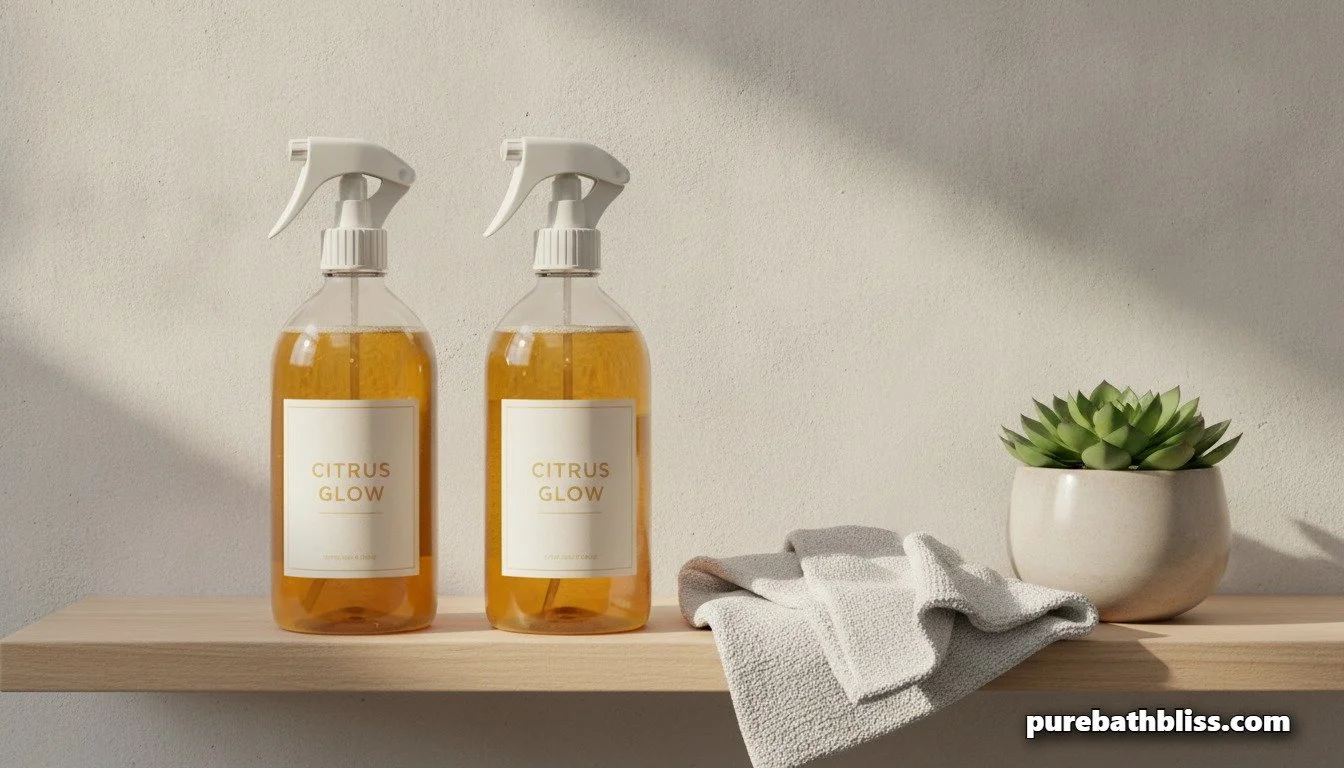
The finished cleaner lasts up to three months stored in a cool, dark place. Vinegar is self-preserving due to its acidity, so bacterial spoilage is not a concern. What degrades over time is the D-limonene content. Citrus terpenes oxidize gradually when exposed to light and heat, which is why a glass bottle stored in a dark cupboard will perform noticeably better than a plastic bottle left on a sunny counter after two months. Glass is preferable to plastic for storage since D-limonene can slowly degrade certain plastics over time and absorb into the container walls.
If you notice the cleaner starting to smell more strongly of vinegar and less of citrus, the D-limonene has oxidized and the cleaning power has reduced. At that point, simply start a new batch. Given how inexpensive the ingredients are, replacing it every two to three months is not a significant cost.
The Bigger Picture: Building a Non-Toxic Cleaning Kit
This cleaner fits into a broader approach to household cleaning that prioritizes transparency over convenience. Most commercial all-purpose sprays contain a combination of synthetic surfactants, fragrance compounds hiding phthalates and other undisclosed chemicals, preservatives, and stabilizers. They clean effectively but they also introduce a constant background level of chemical exposure in enclosed spaces. A bathroom where multiple cleaning products are stored and used regularly can have meaningfully higher VOC levels than one where the cleaning kit is white vinegar, baking soda, hydrogen peroxide, and a citrus infusion.
The citrus peel cleaner is a direct replacement for commercial all-purpose sprays in most household applications. For specific tasks, it pairs well with the rest of a natural cleaning toolkit. For disinfection where you need something stronger than vinegar, hydrogen peroxide is the right tool. For grout whitening, baking soda paste does what acid alone cannot. For mold specifically, tea tree oil either in this spray or applied separately outperforms vinegar alone. Between these four ingredients and this cleaner, you cover the vast majority of household cleaning tasks without a single product that requires a hazmat warning label. Our guide to the five toxic chemicals hiding in your bathroom covers the commercial products most worth replacing and why each one poses a genuine concern in an enclosed space.
The zero-waste aspect deserves one more mention. Every batch of this cleaner is built entirely on food waste. Citrus peels that would otherwise go straight to the compost or landfill are doing active, useful work for two to four weeks before they complete their composting cycle. For a household that goes through a few oranges and lemons a week, which is most households with kids, the supply of raw material is essentially unlimited and continuous. You never have to buy the peels. You simply redirect what was already leaving the kitchen in a slightly more purposeful direction.