Why Your Shower Curtain Gets That "Pink Slimy" Mold (and How to Stop It)
Transparency Note: We independently select these products based on research and user reviews. If you buy something through our links, we may earn a commission.
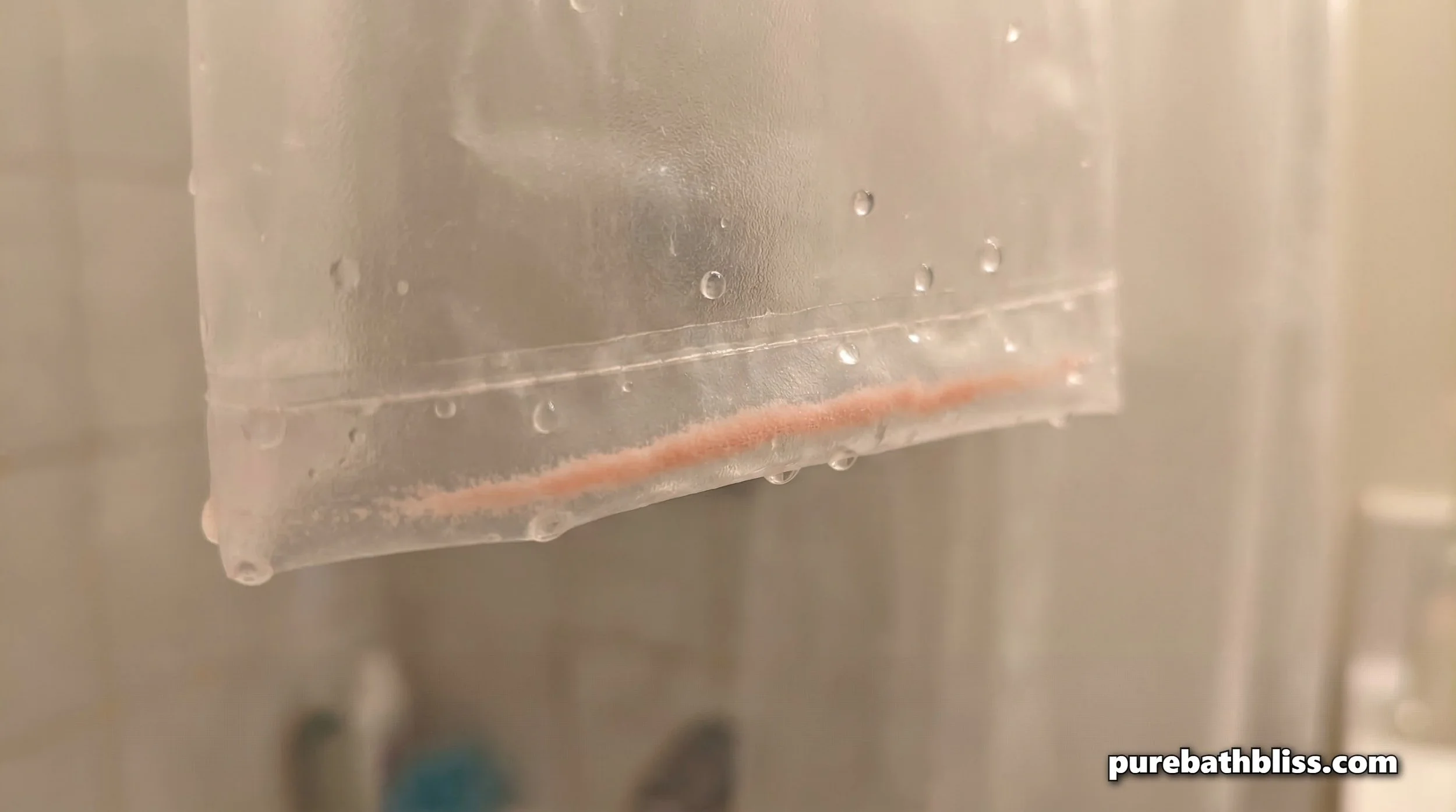
If you have ever pulled back your shower curtain only to find a bright pink, slimy residue creeping along the bottom edge or hiding in the folds of the liner, you aren’t alone. It looks like something from a science fiction movie, and it seems to appear out of nowhere, even if you clean your bathroom regularly.
While many homeowners refer to this as "pink mold," it is actually an airborne bacterium called Serratia marcescens. It thrives in the exact environment your bathroom provides: warm, moist, and full of "food" like soap residue and shampoo minerals.
In 2026, as we focus more on Air Quality & Healthy Home standards, understanding the biology of your bathroom is the first step in maintaining a true sanctuary. This "pink slime" isn't just an eyesore, if left unchecked, it can become a persistent nuisance that compromises your home’s purity. In this guide, we’ll dive into the science of Serratia, how to kill it without toxic chemicals, and the infrastructure changes you can make to stop it from coming back.
The Science of Serratia marcescens
Unlike the black mold we often fear, Serratia marcescens is a bacterium that is present almost everywhere in the air around us. It is particularly fond of phosphorus and fatty substances, two things found in abundance in your soap and hair conditioner.
When you shower, the steam carries these fatty particles onto your shower curtain. If the curtain stays damp, the Serratia bacteria settle in and start to grow, producing a red/pink pigment called prodigiosin.
This is why the pink slime often appears right after you’ve finished a restorative bath using something like the recipe in our 7 Brilliant Uses for Epsom Salt in Your Bathroom. The minerals and oils that make your skin feel great are also the favorite "meal" for this bacteria.
Gather Your Anti-Bacterial Supplies: The Purity Kit
To eliminate pink slime and prevent its return, you need tools that break down the organic biofilm without damaging your home's infrastructure:
Heavy-Duty PEVA Shower Curtain Liner – A PVC-free, non-toxic liner that resists bacterial attachment.
Stainless Steel Weighted Curtain Clips – To keep the liner from bunching up, which prevents the "damp folds" where bacteria grow.
Hydrogen Peroxide (3%) Spray – A safe, non-toxic alternative to bleach that kills Serratia on contact.
Long-Handled Detail Scrub Brush – To reach into the grommets and hems where pink slime hides.
1. The Power of Ventilation
The number one reason Serratia takes hold is lingering moisture. If your shower curtain stays wet for hours after you leave the room, you are essentially running a laboratory for bacteria.
This is why we emphasize the importance of your exhaust system. If your fan isn't pulling enough air, or if you've noticed it's becoming louder lately, refer to Why Is My Bathroom Fan Vibrating?. A properly functioning fan should clear the humidity within 20 minutes, depriving the bacteria of the water it needs to survive. This is the cornerstone of our Drying Out Your Bathroom: The Post-Soak Protocol.
2. Ditch the Bleach for Hydrogen Peroxide
Many people reach for bleach to kill pink mold, but bleach can actually be too harsh for many bathroom surfaces and can irritate your lungs. Furthermore, bleach can damage the protective coating on some high-end fixtures.
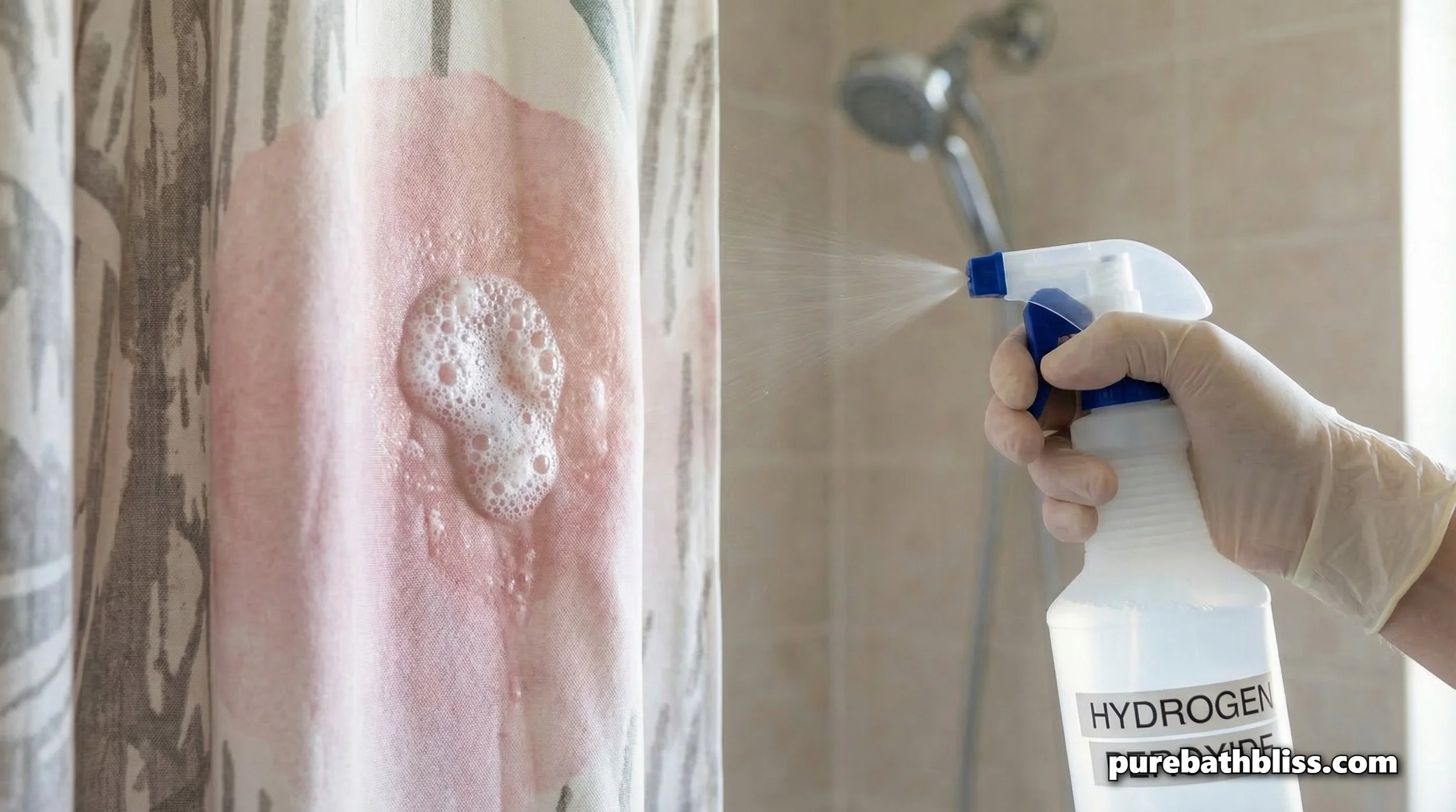
The Genius Fix: Use 3% Hydrogen Peroxide in a spray bottle.
The Method: Spray the pink areas and let it sit for 10-15 minutes. It will bubble as it kills the bacteria. Scrub gently with a soft brush and rinse with hot water.
This method is much safer for the air quality of your home, especially if you are following a routine like 7 Tips for Spring Cleaning Your Bathroom.
3. The Castile Soap Connection
As we’ve discussed in 6 Brilliant Uses for Castile Soap in the Bathroom, true soaps are excellent at emulsifying fats and oils. Because Serratia feeds on the fatty residues of commercial shampoos and conditioners, switching to a cleaner soap can actually reduce the "food source" available to the bacteria.
If you use Castile soap to clean your shower liner once a week, you remove the organic buildup before the bacteria can colonize it. It's a simple, "organic" way to manage your bathroom's biology.
4. Curtain Management: The "Fan Fold"
How you leave your shower curtain after you step out is the biggest factor in mold and bacteria growth.
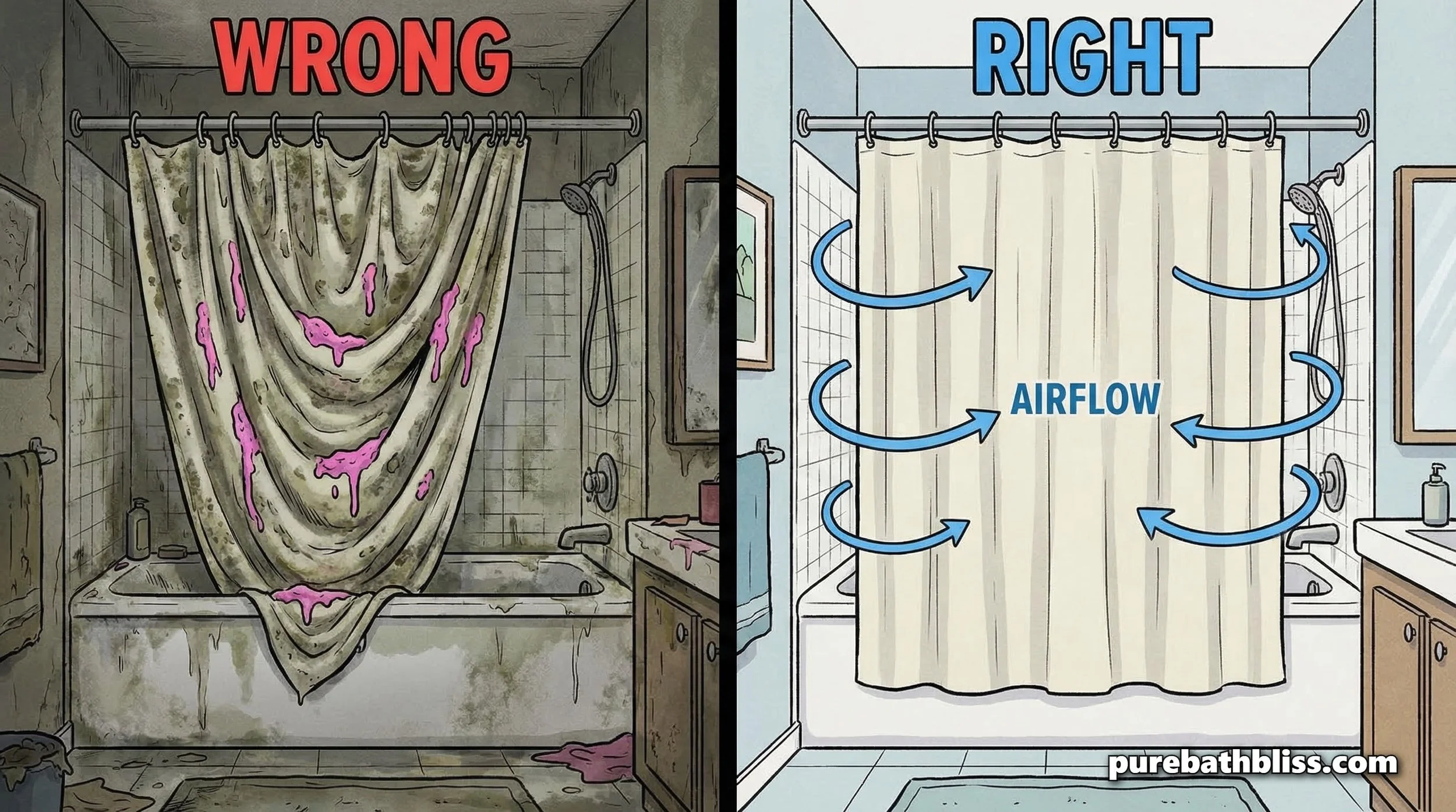
The Error: Pushing the curtain all the way to one side. This creates deep folds where water gets trapped and can't evaporate.
The Fix: Close the curtain completely across the tub. This allows the fabric or plastic to hang flat, maximizing the surface area exposed to the air.
If the air can reach the entire surface, the curtain will dry in a fraction of the time. This is the same principle of airflow we use for Why Your Bath Towels Take Forever to Dry.
5. The "Bottom Hem" Secret
Most pink slime starts in the bottom hem of the liner because water pools there. If you have a plastic liner that is too long and bunches up on the floor of the tub, it will never dry.
Pro-Tip: Trim your liner so it hangs about 2 inches above the bottom of the tub. This prevents it from sitting in the "puddle zone" and allows for better air circulation. Combined with a Diatomaceous Earth Stone Bath Mat, you can ensure that the area outside and inside the tub stays bone-dry.
Summary: The Pink Slime Prevention Checklist
Close the Curtain: Always pull the curtain flat after every shower.
Run the Fan: Ensure 20-30 minutes of ventilation post-shower.
Spray Weekly: Use hydrogen peroxide to kill bacteria before they turn pink.
Trim the Liner: Don't let the curtain "puddle" on the floor or tub ledge.
Wash the Liner: Most PEVA liners can go in the washing machine on a cold, gentle cycle with a cup of vinegar.
Reduce Food Sources: Rinse the walls and curtain of soap suds before you step out.
By understanding that "pink mold" is actually a living bacterium, you can take the necessary steps to make your bathroom an inhospitable place for it. A clean curtain is the final touch in a healthy, high-performance bathroom.