Why Your Bath Towels Take Forever to Dry
Transparency Note: We independently select these products based on research and user reviews. If you buy something through our links, we may earn a commission.
There is nothing quite as discouraging as reaching for a towel after a shower, only to find it is still damp and cold from the day before. Even worse is when that dampness turns into a lingering "sour" smell that no amount of laundry detergent seems to fix. If your towels take forever to dry, it isn't just an inconvenience, it’s a signal that your bathroom’s environment is out of balance.
A towel that stays wet for hours becomes a breeding ground for bacteria and mildew. This affects your skin health and the overall air quality of your home. To fix the problem, we have to look at the physics of evaporation, the material science of the towel itself, and the infrastructure of the room.
In this guide, we will explore why moisture gets trapped in your linens and the simple changes you can make to ensure your towels are fluffy, dry, and fresh every single morning.
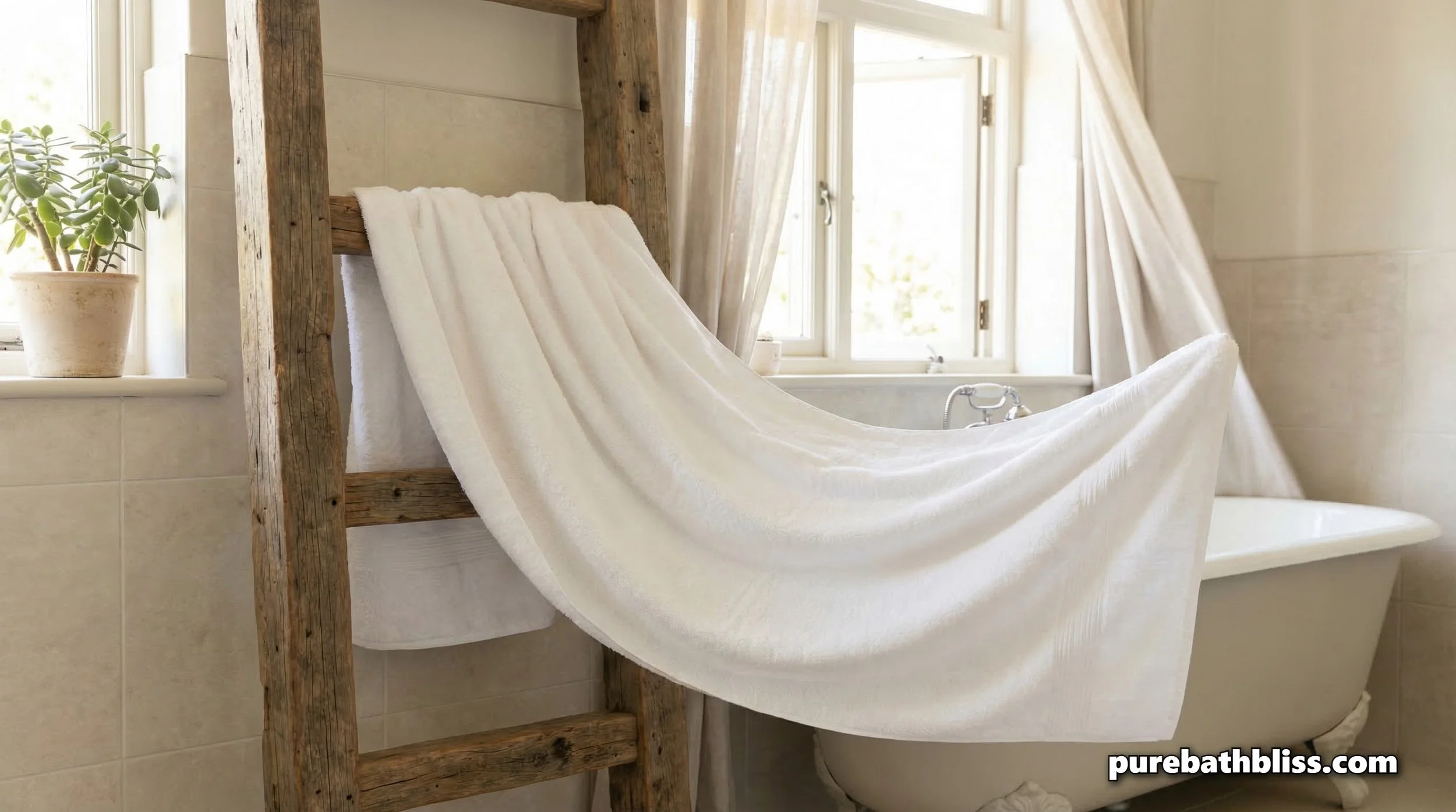
The Science of GSM and Absorption
When you buy towels, you’ve likely seen the term GSM, which stands for Grams per Square Meter. This is the measurement of the towel’s density.
300-400 GSM: Thin, light, and fast-drying (think gym towels).
600-900 GSM: Thick, heavy, and luxurious (think high-end hotel towels).
While a 900 GSM towel feels amazing against your skin, it is a massive sponge. The more fibers a towel has, the more water it can hold—and the longer it takes for that water to find its way out. If you have a high-GSM towel in a bathroom with poor airflow, it may never fully dry between uses.
The weight of the towel creates a "saturation trap." As we discussed in How to Stop Moisture Before It Causes Damage, moisture needs an escape route. In a dense towel, the inner fibers stay wet even when the surface feels dry, leading to that deep-seated musty odor.
Gather Your Drying Supplies: The Freshness Kit
If you are struggling with dampness, these tools can help accelerate evaporation and maintain your bathroom’s air quality:
Wall-Mounted Electric Heated Towel Warmer – Uses low-level heat to drive moisture out of heavy towels.
High-Airflow Bamboo Towel Ladder – Allows you to spread towels out flat rather than bunching them on a hook.
Wool Dryer Balls – To keep towels fluffy and absorbent in the laundry without using waxy softeners.
Compact Bathroom Dehumidifier – Essential for windowless bathrooms where humidity gets trapped.
Natural Linen Bath Towels – A faster-drying, more breathable alternative to heavy cotton.
1. The Humidity "Saturated Air" Problem
Evaporation is a simple process: water moves from a wet surface (your towel) into the air. However, air can only hold a certain amount of water vapor. If your bathroom is already humid from your shower, the air is "full." It cannot take any more moisture from your towel.
This is why your exhaust fan is your most important tool. If your fan is vibrating or making noise, as we covered in Why Is My Bathroom Fan Vibrating?, you might be tempted to turn it off too soon. To dry your towels, the fan needs to run for at least 20 to 30 minutes after you finish showering to replace the humid air with dry air from the rest of the house.
2. Hanging Habits: Hooks vs. Bars
How you hang your towel is just as important as the towel itself.
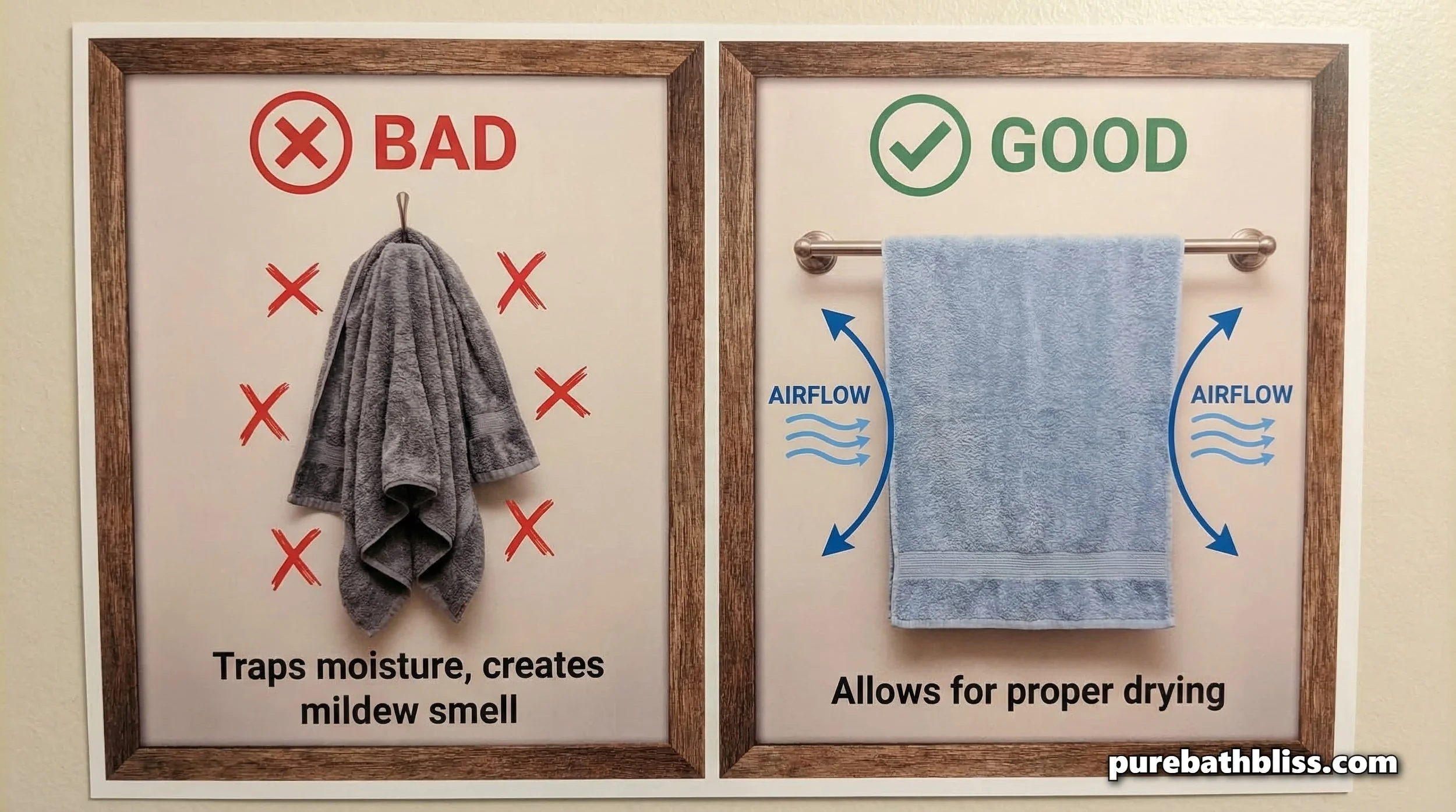
The Hook: When you hang a towel on a hook, the fabric bunches together. The air can only reach the outermost layers, while the folds in the middle stay wet and dark, the perfect environment for bacteria.
The Bar: A towel bar or ladder allows you to spread the towel out completely. This maximizes the surface area exposed to the air, allowing evaporation to happen across the entire piece of fabric at once.
If you are following the advice in7 Tips for Spring Cleaning Your Bathroom, take a moment to look at your towel bars. If they are crowded, your towels will never dry. Give each towel its own space to "breathe."
3. The Fabric Softener Trap
Most people don't realize that their laundry routine is actually making their towels stay wet longer. Fabric softeners and dryer sheets work by coating fibers in a thin layer of wax or silicone. This makes the towel feel soft, but it also makes it "hydrophobic,” meaning it repels water.
When a towel is coated in wax, it can't absorb water as well, and it can't release it as well during the drying process. Over time, this buildup leads to towels that feel "slimy" when wet and take forever to dry.
To fix this, try "stripping" your towels using the non-toxic methods we discussed in 6 Brilliant Uses for Castile Soap in the Bathroom. Washing your towels with a cup of white vinegar instead of softener will strip away the wax and restore the fiber’s natural ability to breathe.
4. Why Floor Moisture Matters
If your towel is hanging low enough to touch a damp floor or a wet bath mat, it will pull moisture up through capillary action. This keeps the bottom of the towel perpetually wet.
As we noted in Why Your Bathroom Floor is Working Harder Than You Think, bath mats are often the biggest "moisture sponges" in the room. If your mat is wet, it contributes to the overall humidity of the room, slowing down the drying time for everything else. Consider switching to a wooden or bamboo mat that doesn't hold water.
5. The Bathroom Micro-Climate
If you have integrated greenery into your space, like the plants we discussed in What to Do When Your Christmas Cactus Flowers in Your Bathroom, you have created a beautiful microclimate. However, plants also release moisture into the air through transpiration.
In a plant-heavy bathroom, you need even better ventilation to compensate for the extra humidity. If your towels are staying damp, it is a sign that your "Sanctuary" is becoming too tropical. Increasing the airflow will keep both your plants and your linens healthy.
Summary: The Fast-Dry Checklist
Check the GSM: If your bathroom has low airflow, switch to towels in the 400-600 range or try linen.
Run the Fan Longer: Keep that air moving for 30 minutes post-shower.
Spread it Out: Use a bar or a ladder, never a hook.
Ditch the Softener: Use vinegar to strip away wax buildup and restore absorbency.
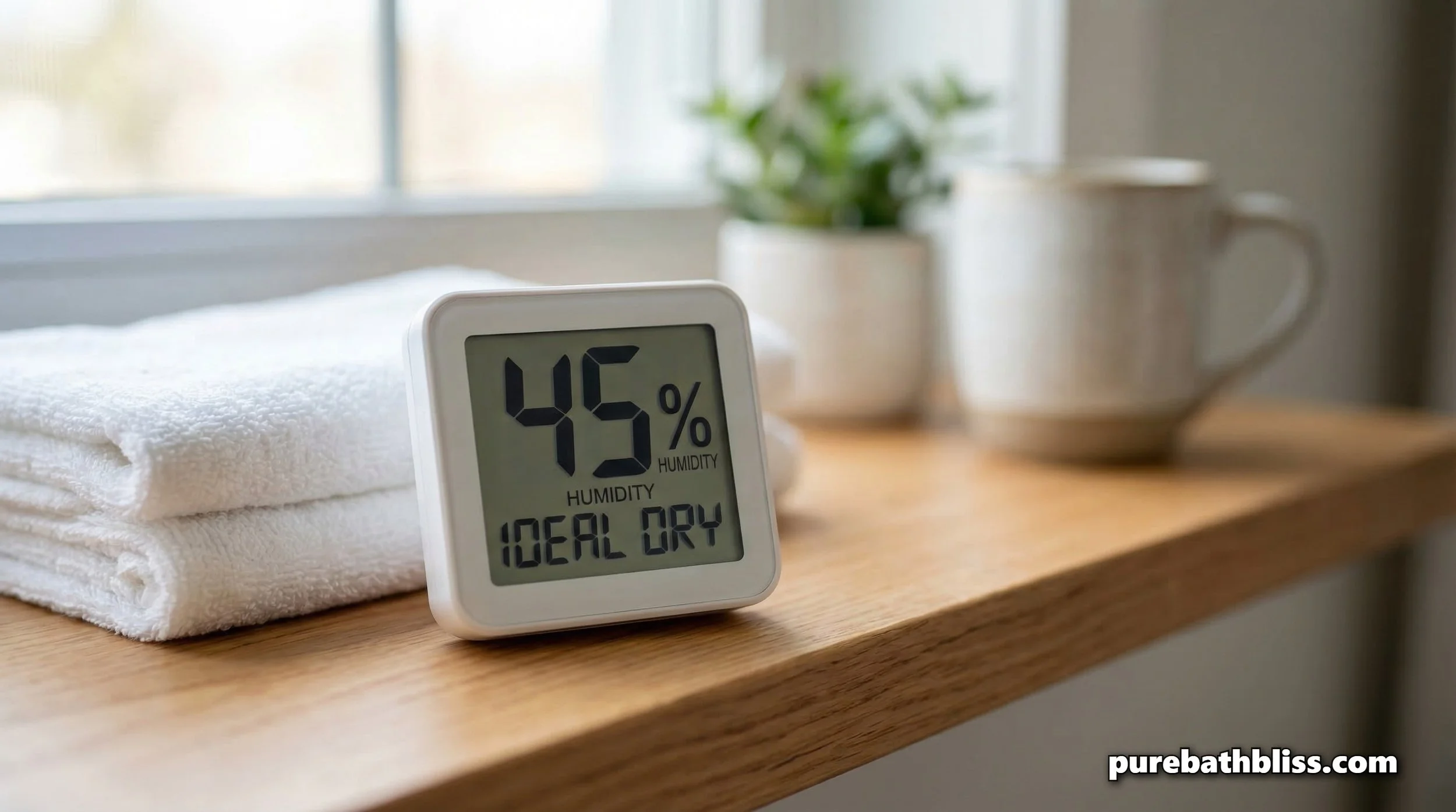
Lower the Room Humidity: If the air is dry, the towel will be dry.
Wash Frequently: A towel that stays damp for 3 days needs a hot wash to kill the bacteria that cause the sour smell.
By understanding the relationship between fabric, air, and heat, you can end the cycle of damp, smelly towels. A dry towel isn't just a luxury, it's a key part of a clean, healthy, and well-maintained home.