Can I Use Castile Soap to Clean Travertine and Marble Vanities?
Transparency Note: We independently select these products based on research and user reviews. If you buy something through our links, we may earn a commission.
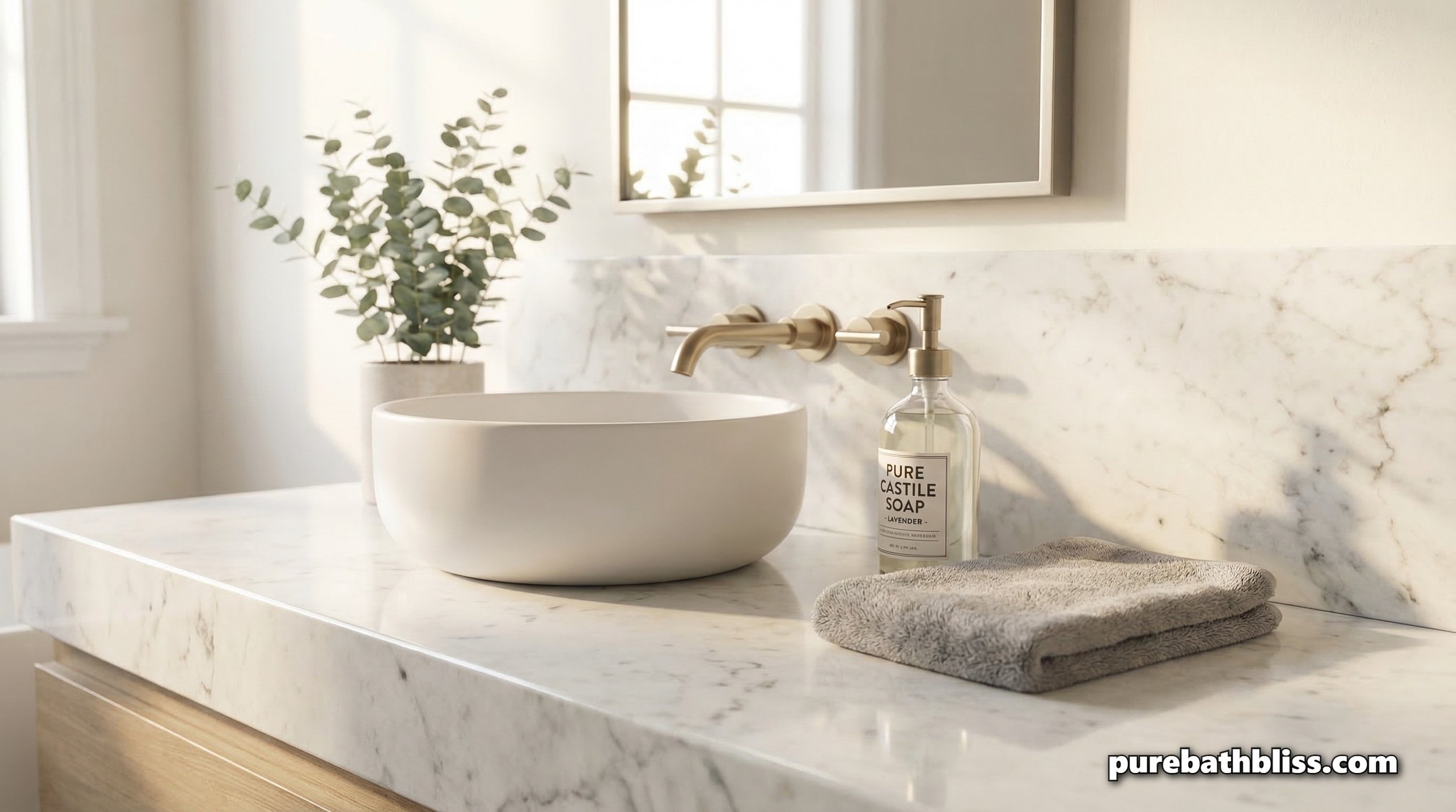
When you invest in a natural stone vanity, whether it is the warm, earthy tones of travertine or the classic, veined elegance of marble, you are adding a piece of the earth to your bathroom infrastructure. However, these stones come with a "manual" that most homeowners ignore. Natural stone is porous, sensitive, and incredibly easy to ruin with the wrong cleaner.
The short answer is yes, you can use Castile soap to clean travertine and marble, and in many cases, it is actually the best choice you can make. While many "all-purpose" bathroom cleaners contain acids that eat away at the stone, Castile soap is a gentle, alkaline-based cleaner that respects the delicate chemistry of natural rock.
In this guide, we will explore the science of why stone reacts to certain cleaners, how to use Castile soap effectively without leaving streaks, and how to protect your investment for decades.
The Science of Stone: Why pH Matters
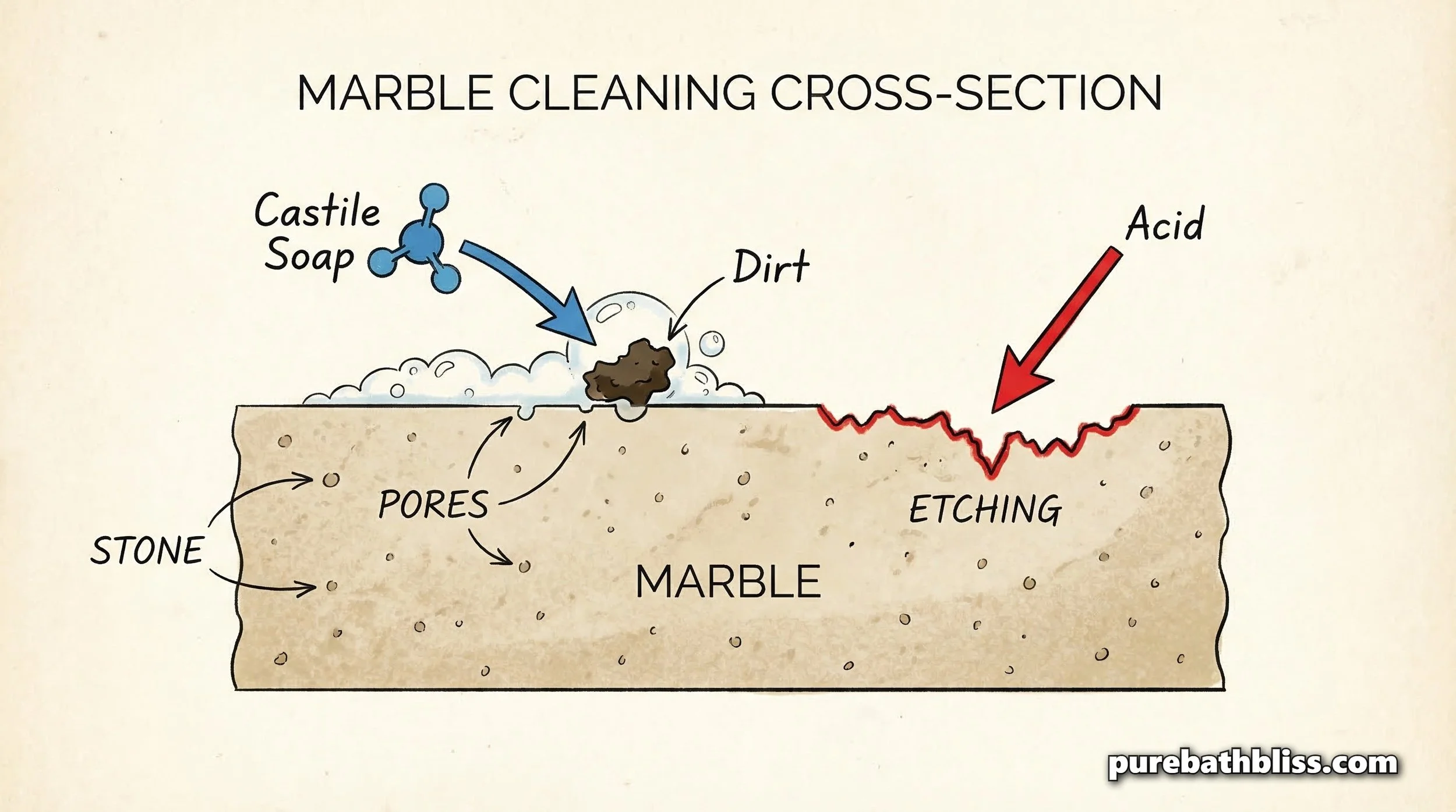
To understand why Castile soap is safe, you have to understand the chemistry of travertine and marble. Both are "calcitic" stones, meaning they are primarily composed of calcium carbonate.
Calcium carbonate is extremely reactive to acid. If you use a cleaner containing vinegar, lemon juice, or harsh chemicals like phosphoric acid, it causes a chemical reaction called "etching." Etching isn't a stain; it is a physical dulling of the surface where the acid has literally dissolved a tiny layer of the stone.
As we discussed in 6 Brilliant Uses for Castile Soap in the Bathroom, Castile soap is a true soap, not a detergent. It has a pH of around 8 or 9, which is slightly alkaline. Unlike vinegar, which we recommend for showerheads in our 7 Tips for Spring Cleaning Your Bathroom, Castile soap will not react with the calcium in your stone. It lifts oils and dirt without dissolving the rock itself.
Gather Your Stone Care Supplies
Cleaning natural stone requires a gentle touch and the right delivery system. Here are the tools you need to keep your travertine and marble looking like the day they were installed:
Organic Unscented Liquid Castile Soap – The safest base for your daily stone cleaner.
Ultra-Fine Microfiber Polishing Cloths – To prevent scratches and ensure a streak-free finish.
pH-Neutral Natural Stone Sealer – Essential for keeping your stone's pores closed to moisture.
Soft Bristle Detailing Brush – To clean around the base of the faucet without scratching the stone.
Distilled Water – Using distilled water in your spray mix prevents the mineral spots we covered in our faucet guide.
Why Travertine and Marble are Different from Diatomaceous Earth
It is important to note that not all "stone" surfaces in your home act the same way. For example, many modern bathrooms now feature Stone Dish Drying Mats made of Diatomaceous Earth. While those mats are designed to be ultra-absorbent and "thirsty" to prevent puddles, your marble vanity is the opposite.
You want your vanity to be non-absorbent. If your marble absorbs water, it can lead to internal staining or even the "sweating" issues we see in porcelain, as discussed in Why Is My Toilet Sweating?. Understanding the density of your stone helps you choose the right cleaning frequency.
How to Create a Castile Stone Spray
You should never use concentrated Castile soap directly on your stone. Because it is so rich in oils, it can leave a film that makes the stone look cloudy.
The Recipe: 2 cups of distilled water and 1 teaspoon of liquid Castile soap.
The Method: Mist the surface lightly and wipe with a microfiber cloth.
The Rinse: Follow up with a second cloth dampened with only water to "rinse" the soap away, then buff dry immediately.
Leaving stone wet is a recipe for trouble. In a humid bathroom, standing water can seep into the stone’s pores. This is especially true if you have a lot of plants, like the How to Care for Hoya Plants we recently added to our sanctuary, as they naturally increase the room's humidity.
The "Soap Scum" Myth
Many people worry that using soap on stone will create "soap scum." Soap scum happens when the fats in a true soap (like Castile) react with the minerals in "hard" water (calcium and magnesium).
If you have hard water, you may notice a slight film over time. To prevent this, always dry your vanity completely after cleaning. As we noted in Why Your Faucets Get Water Spots (And How to Clean Them) mineral evaporation is the enemy of a clean bathroom. By buffing the stone dry, you remove the minerals before they can bond with the soap.
Protecting the Infrastructure: Sealing Your Stone
Even the best cleaning routine won't protect your stone if it isn't sealed. Think of a sealer like the caulk in your shower; it is your first line of defense.
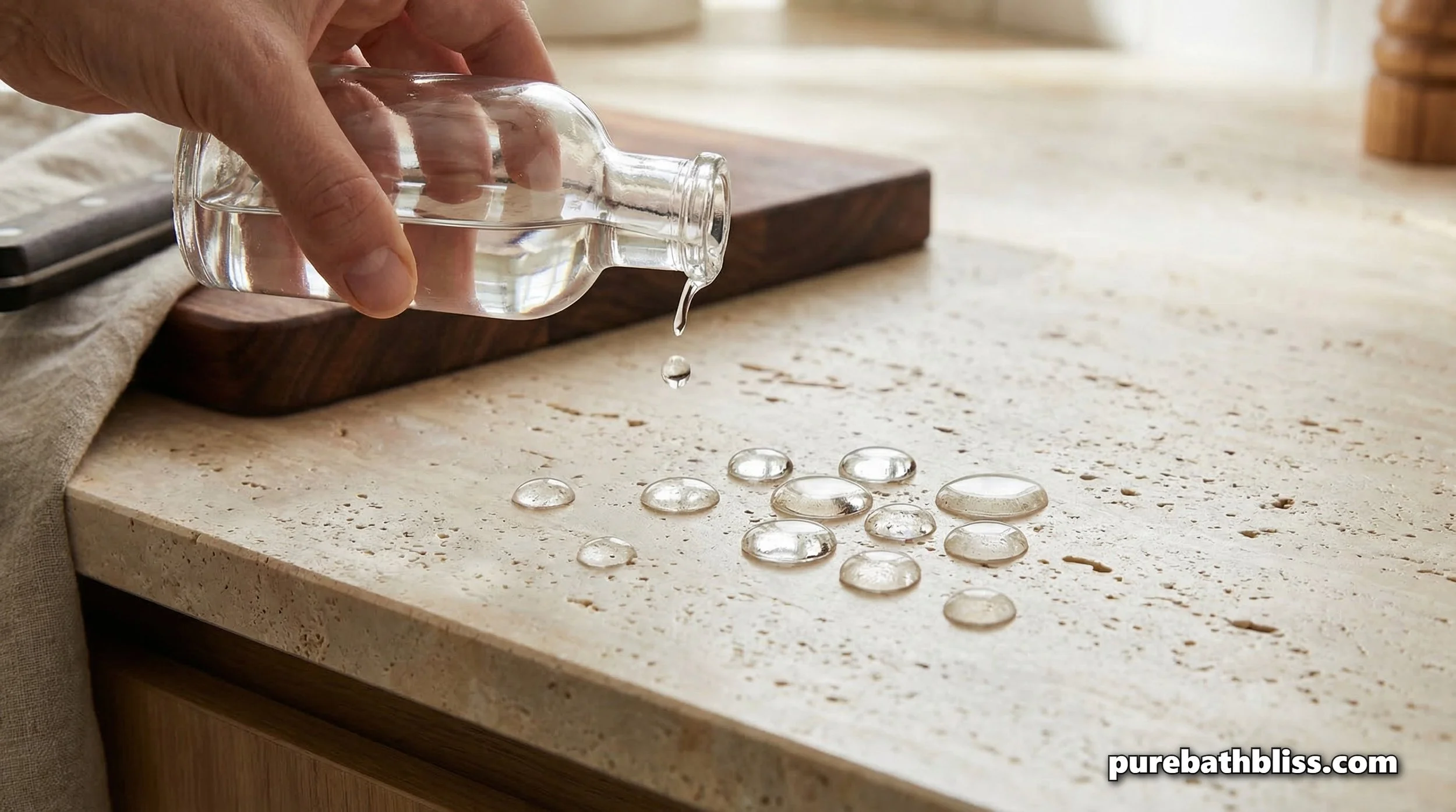
The Water Test: Pour a few drops of water on your vanity. If it beads up, your sealer is working. If it soaks in and leaves a dark spot after a minute, your stone is "thirsty" and needs to be resealed.
The Frequency: Most vanities should be resealed every 6 to 12 months, especially in high-use guest bathrooms.
Maintaining the seal ensures that if you have an accident, like spilling a bottle of hair dye or a harsh chemical, the stone won't be permanently ruined. We have a full guide on handling those moments in How to Clean a Bathroom Accident.
Summary: Stone Care Success
Never Use Acid: No vinegar, no lemon, and no "scrubbing bubbles" on natural stone.
Dilute Your Soap: 1 teaspoon of Castile soap per 2 cups of water is all you need.
Use Distilled Water: This prevents hard water minerals from clouding the stone.
Buff Dry: Never let stone air dry, as it can trap moisture in the pores.
Check Your Seal: Perform the water bead test every few months.
Soft Tools Only: Use microfiber, never steel wool or abrasive sponges.
By switching to a Castile-based cleaning routine, you are protecting the natural beauty of your bathroom while keeping the air quality high and the environment non-toxic. Natural stone is meant to last a lifetime; with the right "organic" approach, it will.