The Medicine Cabinet Audit: What to Replace Before Cold and Flu Season Hits
Transparency Note: We independently select these products based on research and user reviews. If you buy something through our links, we may earn a commission.
Two Octobers ago one of our kids came home from school on a Thursday with a fever that climbed to 39.5 by nine that evening. I went to the medicine cabinet for the children's acetaminophen and found a bottle that had expired the previous January. The next closest option expired in March. It was a Thursday night in a small city. Two of the three pharmacies I called were closed. The one that was open did not have the weight-appropriate formulation in stock.
We managed. But it was an entirely avoidable situation that cost forty-five minutes of stress at the worst possible moment, and it happened because I had assumed the medicine cabinet was stocked without actually checking it. I do the audit every October now. It takes about twenty minutes, and it has paid for itself in peace of mind every single cold season since.
Here is the complete guide to what to check, what to discard, what to stock, and how to handle the disposal of expired medications in a way that does not harm the environment or create a hazard for other people in the house.
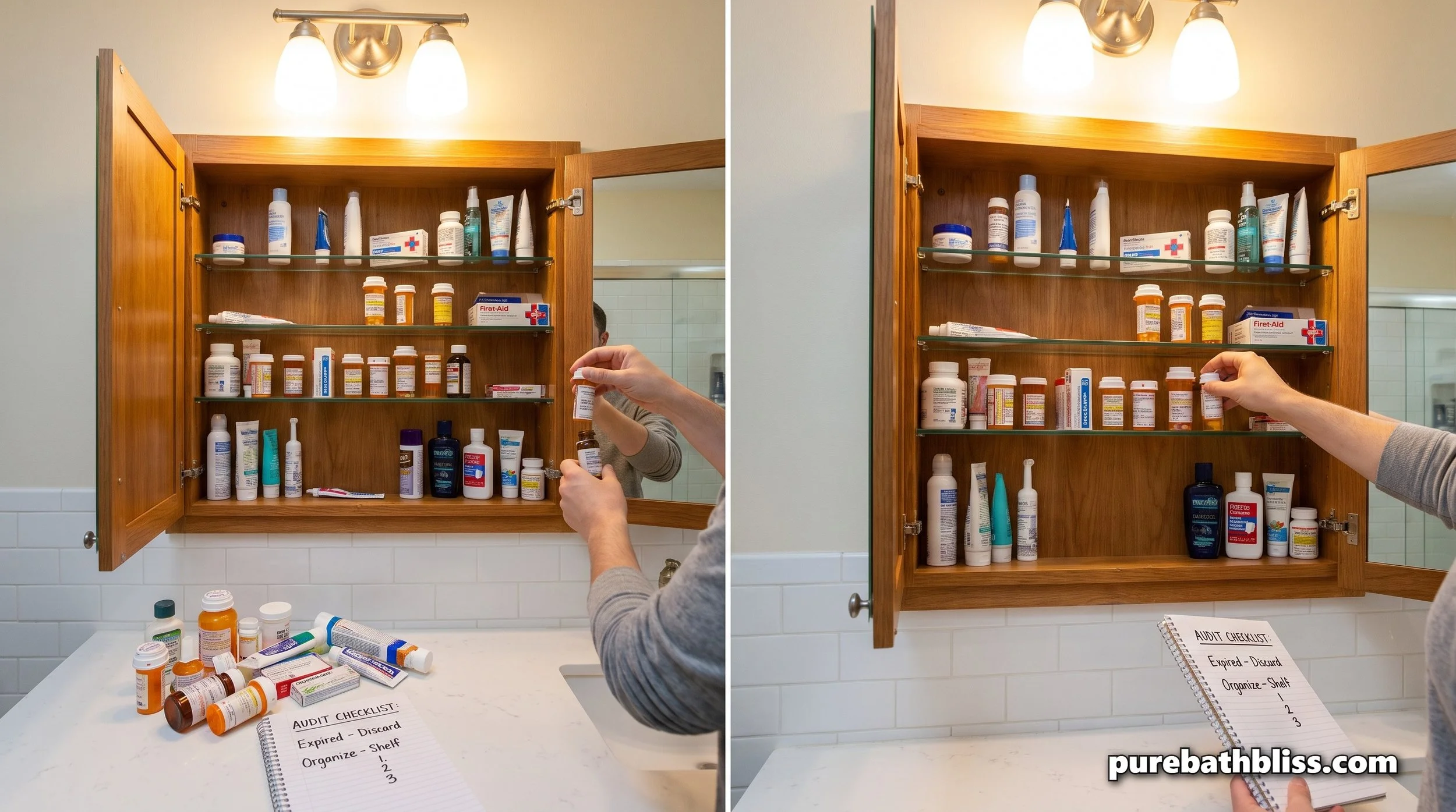
Why October Is the Right Time
Cold and flu season in Canada and the northern United States typically peaks between November and February, with activity beginning to climb meaningfully in October as school transmission rates increase and people start spending more time indoors. The two to three week window between mid-October and early November is genuinely the best time to do this audit because you are ahead of the first illness of the season rather than reacting to it.
Doing it during an illness is the worst scenario. Someone is sick, the household is stressed, and you are trying to simultaneously care for a child and figure out what you need to buy while the pharmacy is potentially crowded with other people doing the same thing. Doing it in a calm October afternoon before anything has happened means you can take stock properly, replace what needs replacing at a reasonable pace, and have everything you need before you need it.
It also aligns well with the broader fall home reset. We cover the full bathroom reset as part of back-to-school preparation in our back-to-school bathroom reset guide, and the medicine cabinet audit is the natural follow-up to that once school is underway and you can see what actually got used and what is running low.
Step 1: Pull Everything Out First
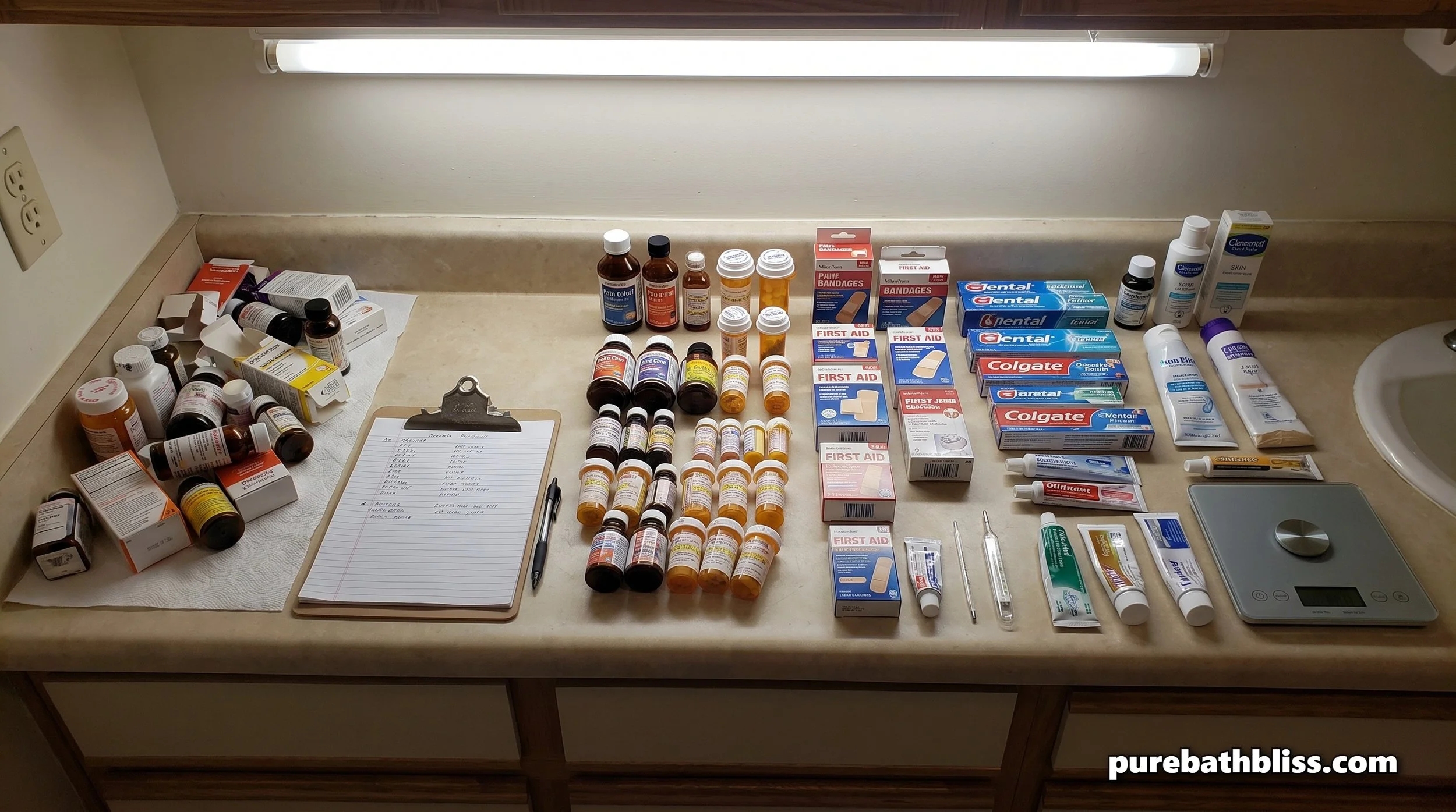
Do not audit the cabinet with everything still inside it. Pull every single item out and place it on the counter. This forces you to actually see what is in there rather than picking through it and missing things at the back. It also gives you the opportunity to wipe down the cabinet shelves, which tend to accumulate dried medicine residue, dust, and the occasional mysterious stickiness that nobody can explain.
Sort what you pull out into rough categories as you go: pain and fever, cold and flu, digestive, first aid, children's medications, prescription medications, and personal care products. This makes the next step, checking expiry dates, considerably faster than going through everything individually in random order.
Step 2: Check Every Expiry Date
The FDA's guidance on expired medications is clear: do not take medications beyond their expiry date because effectiveness and safety cannot be guaranteed. The expiry date on a medication is the manufacturer's guarantee of full potency under proper storage conditions up to that date. After the date, the active ingredients may have degraded to the point where the medication is less effective. In some cases, degradation produces compounds that are potentially harmful.
The format to know: EXP 06/2026 means the medication is good through the end of June 2026, not just until June 1. Use the full month.
Check every item without exception, including ones you think are new. Medications you bought two years ago "just in case" and never opened are still subject to the expiry date. Personal care products in the cabinet, sunscreen, eye drops, contact lens solution, and hydrogen peroxide have expiry dates too and degrade meaningfully after them. Sunscreen in particular loses its UV protection rating significantly after expiry and is worth replacing before summer the following year.
Also check for signs of degradation beyond just the date. Tablets that have changed color or developed a smell. Liquid medications that have separated, changed color, or developed particles. Creams that have separated or smell different from when they were new. Any of these are reasons to discard regardless of the printed date.
Step 3: Discard Safely
How you dispose of expired medications matters more than most people realize. Two disposal methods that seem convenient are both problematic.
Do not flush medications down the toilet. Pharmaceutical compounds that enter the water system through flushing are not fully removed by standard wastewater treatment. Research consistently finds measurable levels of common medications, including hormones, antibiotics, and pain relievers, in treated water supplies and aquatic environments. The environmental impact is cumulative and real.
Do not put medications directly in the recycling or household trash. Pills in a regular bin create access risks for children, pets, and anyone who goes through household waste.
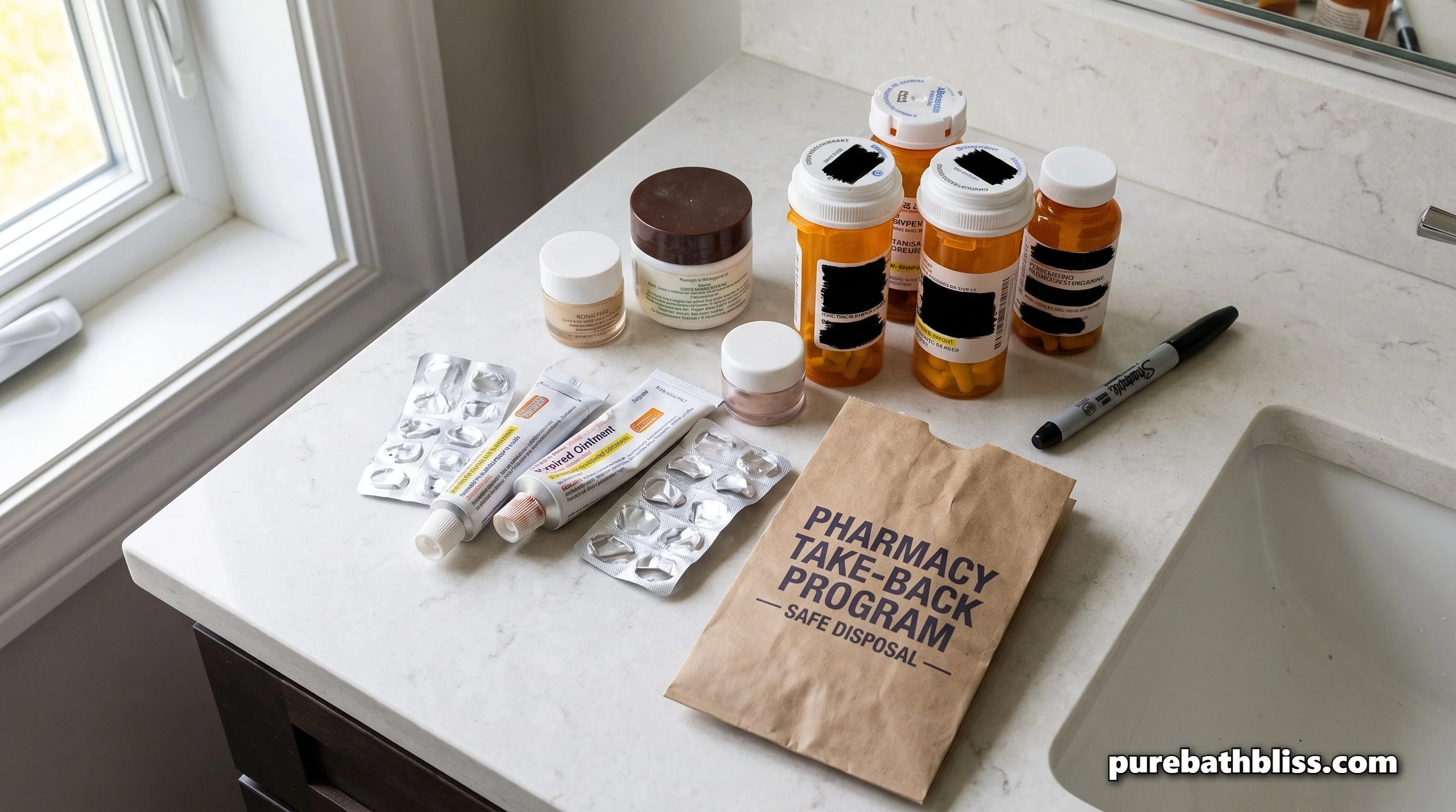
The right method: pharmacy take-back. Most pharmacies in Canada and the US accept unused or expired medications for safe disposal at no cost and without any paperwork. In Canada, most provincial governments mandate that pharmacies participate in a drug return programme. In the US, the DEA runs National Prescription Drug Take-Back Days twice yearly and maintains a year-round take-back locator at DEA's website. This is the correct disposal method, and the minor inconvenience of a pharmacy trip is worth it.
If no take-back is available: Health Canada and the FDA both recommend mixing medications with an undesirable substance like used coffee grounds, cat litter, or dirt in a sealed plastic bag before putting them in the household trash. This reduces the appeal to children and animals and degrades the medications. Remove or black out any personal information on prescription labels before discarding.
Step 4: The Cold Season Restock
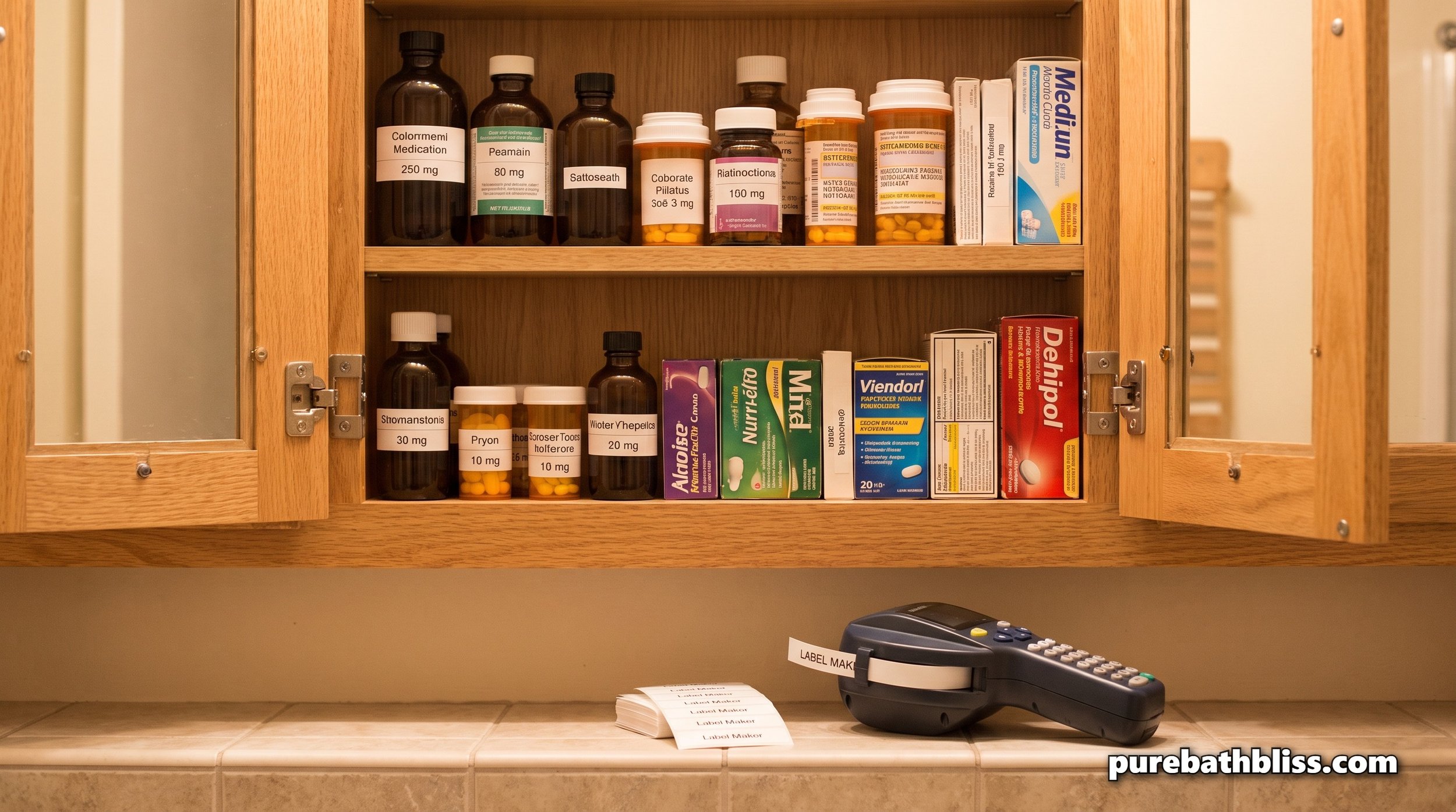
Once the expired and degraded items are out, stock what you actually need for cold season before the season starts. Here is the family cold-season kit we keep stocked from October through March.
| Category | What to Stock | Notes | For Families with Children |
|---|---|---|---|
| Fever and pain | Acetaminophen and ibuprofen — both adult and children's formulations | Having both allows alternating if one is not sufficient. Never give aspirin to under-18s. | Dose by weight not age. Know your child's current weight before you need it. |
| Nasal congestion | Saline nasal rinse or spray. Decongestant for adults if needed. | Saline rinse is safe for all ages and genuinely effective for congestion and sinus pressure. | Decongestants are not recommended for children under 6 without doctor guidance. |
| Sore throat | Throat lozenges or spray, honey for children over 1 year | A 2025 Finnish study confirmed honey is as effective as OTC cough suppressants for children over 12 months. | Never give honey to infants under 12 months due to botulism risk. |
| Thermometer | Infrared temporal artery or digital oral thermometer with fresh batteries | Test before you need it. Check batteries. Keep a spare CR2032 in the cabinet. | Temporal artery thermometers read in 2 to 3 seconds without child cooperation. |
| Electrolytes | Electrolyte sachets or tablets. Pedialyte for children under 5. | Essential for vomiting or diarrhea illnesses where dehydration is a real risk. | Flavoured Pedialyte freezer pops are often better accepted by sick children than liquid. |
| First aid basics | Adhesive bandages in multiple sizes, antiseptic wipes, gauze, medical tape | Check bandage adhesive — old bandages lose their stick. Replace if packaging is yellowed. | Character-print bandages are worth stocking if you have young children — compliance improves dramatically. |
| Hydrogen peroxide | 3% hydrogen peroxide in a dark bottle | Replace if opened more than 3 months ago — degrades to plain water once opened. Test by applying to a cut: if it does not fizz, it has lost its potency. | Also useful for post-illness bathroom surface disinfection. |
A few specific notes on children's medications that are worth stating clearly. Children's acetaminophen and ibuprofen are dosed by weight, not age. The dosing chart on the box uses age as a proxy for weight, but weight-based dosing is more accurate and safer. Know your child's current weight and calculate the dose from that rather than from the age bracket. Keep this information written down and stored with the medication so you are not doing the calculation at two in the morning.
Do not give aspirin to anyone under eighteen. Aspirin use in children and teenagers with viral illness is associated with Reye's syndrome, a rare but potentially life-threatening condition affecting the brain and liver. Acetaminophen and ibuprofen are the appropriate fever and pain medications for children. This is not a nuance, it is a hard rule from both Health Canada and the FDA.
The Thermometer Check
The thermometer is the most underappreciated item in the medicine cabinet and the one most likely to fail at the worst moment. Check the following before cold season.
Check the batteries. A digital thermometer that shows a low battery warning or gives inconsistent readings is not usable in a medical situation. Replace the batteries now. Most digital thermometers use a CR2032 coin cell. Keep a spare in the cabinet.
Verify accuracy. Test your thermometer against a known temperature or against a second thermometer. A thermometer that reads consistently 0.5 to 1 degree off is clinically meaningless for routine monitoring but matters when you are tracking a fever that is approaching the range where you need to make a medical decision.
Consider upgrading. If your thermometer is over five years old, takes more than thirty seconds to read, or requires the child to stay still with it under their tongue, an infrared temporal artery thermometer is worth the upgrade. These read accurately in two to three seconds from the forehead without any cooperation from the child, which is invaluable when dealing with a sick or sleeping child.
The Toothbrush Replacement
October is one of the four natural toothbrush replacement points in the year. After summer, before cold season is the most important one because toothbrushes accumulate bacteria from months of daily use and school exposure, and replacing them before cold season starts is a minor hygiene measure that costs almost nothing.
For electric toothbrush users, replace the brush head and do the full deep clean of the handle and charging base. Our electric toothbrush cleaning guide covers the post-illness disinfection protocol as well, which is worth doing after any household illness to prevent reinfection.
For manual toothbrush users, our bamboo toothbrush guide covers what to look for in bristle softness and the specific care steps that keep bamboo handles mold-free. October is the right time to stock a couple of replacement brushes so you have them ready for immediate replacement after any illness in the household rather than having to remember to buy one while you are already in recovery mode.
Storage: Why the Bathroom Is the Wrong Place for Most Medications
This is the detail that surprises most people: the bathroom is actually one of the worst places in the house to store medications. The combination of heat from showers and baths, humidity from steam, and light exposure through an often-uninsulated cabinet door creates conditions that accelerate medication degradation and reduce shelf life.
The FDA recommends storing medications in a cool, dry place away from heat and light. A bedroom drawer, a hall closet shelf, or a dedicated lockable box in a cool room are all better storage environments than the bathroom medicine cabinet for any medication you want to last its full shelf life.
The practical compromise most families use is keeping a small rotating stock of the most frequently needed items in the bathroom for convenience while storing backup supplies and less frequently needed medications elsewhere. If you keep medications in the bathroom, a cabinet with a solid door rather than a mirrored glass front provides some light protection. The key is keeping heat and humidity away from medications, so not above the shower or directly beside the sink where steam exposure is highest.
The October Medicine Cabinet Audit Checklist
| Task | What to Check | Action if Problem Found |
|---|---|---|
| Pull everything out | All items from every shelf and drawer | Wipe shelves clean before restocking |
| Check all expiry dates | Every medication, supplement, first aid item, sunscreen, eye drops, hydrogen peroxide | Set expired items aside for pharmacy take-back disposal |
| Check for physical degradation | Colour changes, separation, unusual smell, clumping, changed texture | Discard regardless of printed date if signs of degradation are present |
| Check children's medication stock | Acetaminophen and ibuprofen in weight-appropriate formulations. Note current weight of each child. | Replace expired or depleted stock before cold season. Write weight-based dosing on the bottle in permanent marker. |
| Test the thermometer | Battery level, read accuracy, speed | Replace batteries. Consider upgrading to infrared temporal artery if current model is slow or unreliable. |
| Replace toothbrushes | Check bristle condition. Check electric toothbrush head age. | Replace all brushes. Stock one spare per family member for post-illness replacement. |
| Stock the cold season kit | Pain and fever, nasal rinse, electrolytes, first aid basics, hydrogen peroxide | Buy what is missing or depleted before the season starts, not during the first illness |
| Dispose expired medications | Items set aside in first step | Take to pharmacy take-back programme. Do not flush or bin directly. |
| Review storage conditions | Are medications stored away from heat and steam? | Move backup stock to a cool dry location outside the bathroom if possible |
The medicine cabinet audit takes about twenty minutes done properly. The return on that twenty minutes is not having to scramble during the first illness of the season, knowing everything in the cabinet is current and effective, and not accidentally giving a child medication that has degraded past its effective date. It is one of the lower-effort, higher-return home maintenance tasks available and October is reliably the best time to do it.
The Illness Protocol: Having a Plan Before You Need It
Beyond having the right supplies, having a household illness protocol that everyone understands before the first illness of the season is genuinely useful. In our house, when someone is sick, three things happen immediately. Their toothbrush moves to a separate cup. Their towel gets a dedicated hook rather than being reused. The door handles, tap handles, and toilet flush get a twice-daily wipe with a diluted hydrogen peroxide spray for the duration of the illness.
After the illness passes, the toothbrush is replaced regardless of when it was last changed. The post-illness bathroom cleaning protocol prevents the pattern where a cold cycles through the whole family sequentially over three weeks because the bathroom surfaces are reintroducing the pathogen to each new person. A fifteen-minute bathroom clean with hydrogen peroxide at the end of an illness breaks that cycle. Our bathroom purge and reset guide covers the full cleaning approach that works alongside the medicine cabinet restock to keep the bathroom genuinely hygienic through the season.