The Fall Bathroom Refresh: 8 Small Changes That Make a Big Difference
Transparency Note: We independently select these products based on research and user reviews. If you buy something through our links, we may earn a commission.
Something shifts in late September. The air changes first, that specific quality of cool that does not feel like winter yet but definitely does not feel like summer. Then the light changes, lower in the sky, warmer in colour, coming through the bathroom window at a completely different angle than it did in July. The bathroom that felt fresh and bright in the summer suddenly feels slightly out of season, like wearing a linen shirt in October.
In our house, fall is when the bathroom gets its most deliberate attention. Not a renovation, not even a deep clean beyond the regular one. Just a series of small, specific changes that take the room from summer mode into something warmer, more considered, and more aligned with what we actually want from a bathroom when the evenings get cooler and the morning shower becomes the best part of the day again.
The bathroom is the easiest room in the house to refresh seasonally because almost everything in it is temporary and moveable. Here are the eight changes that make the most difference.
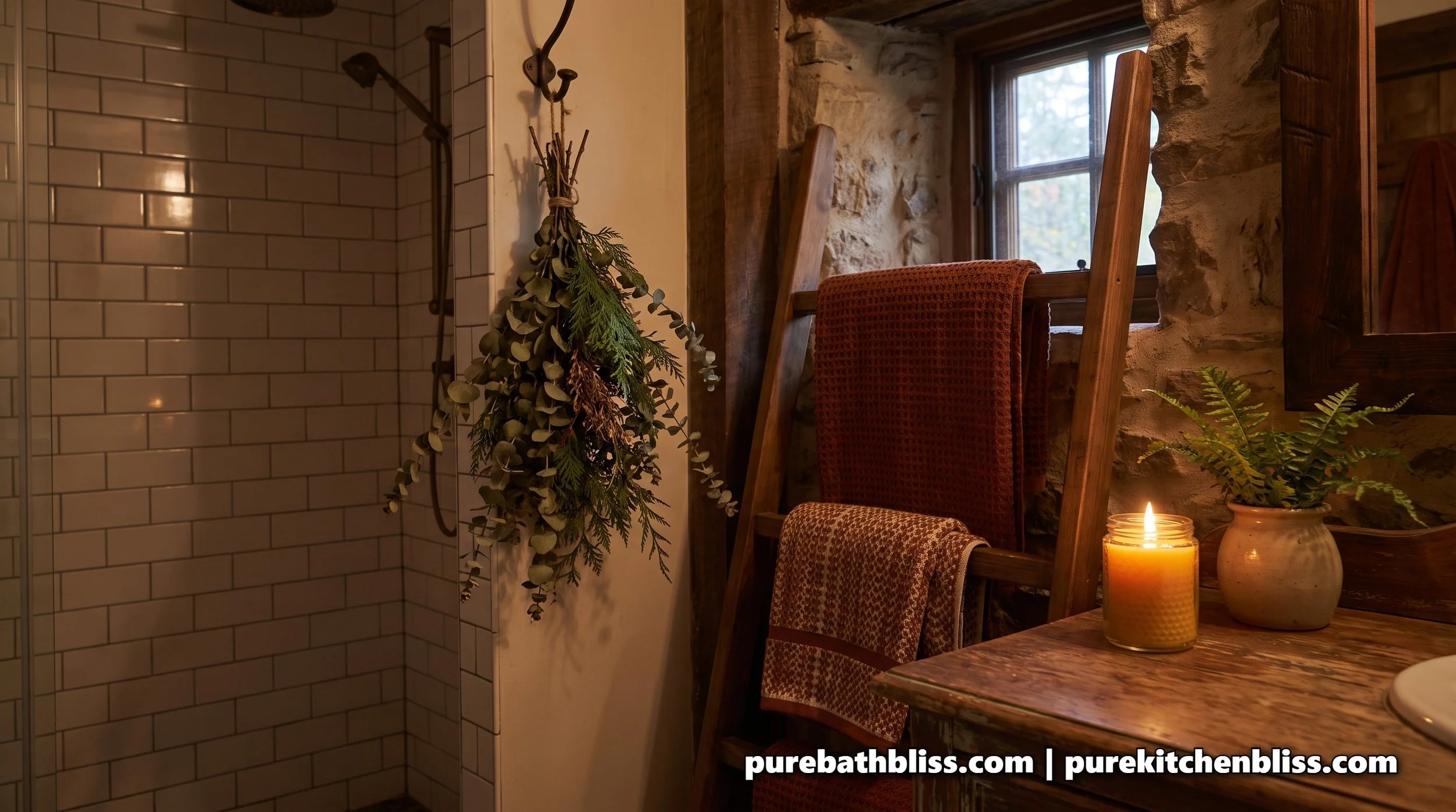
1. Swap the Towels to Warm Tones
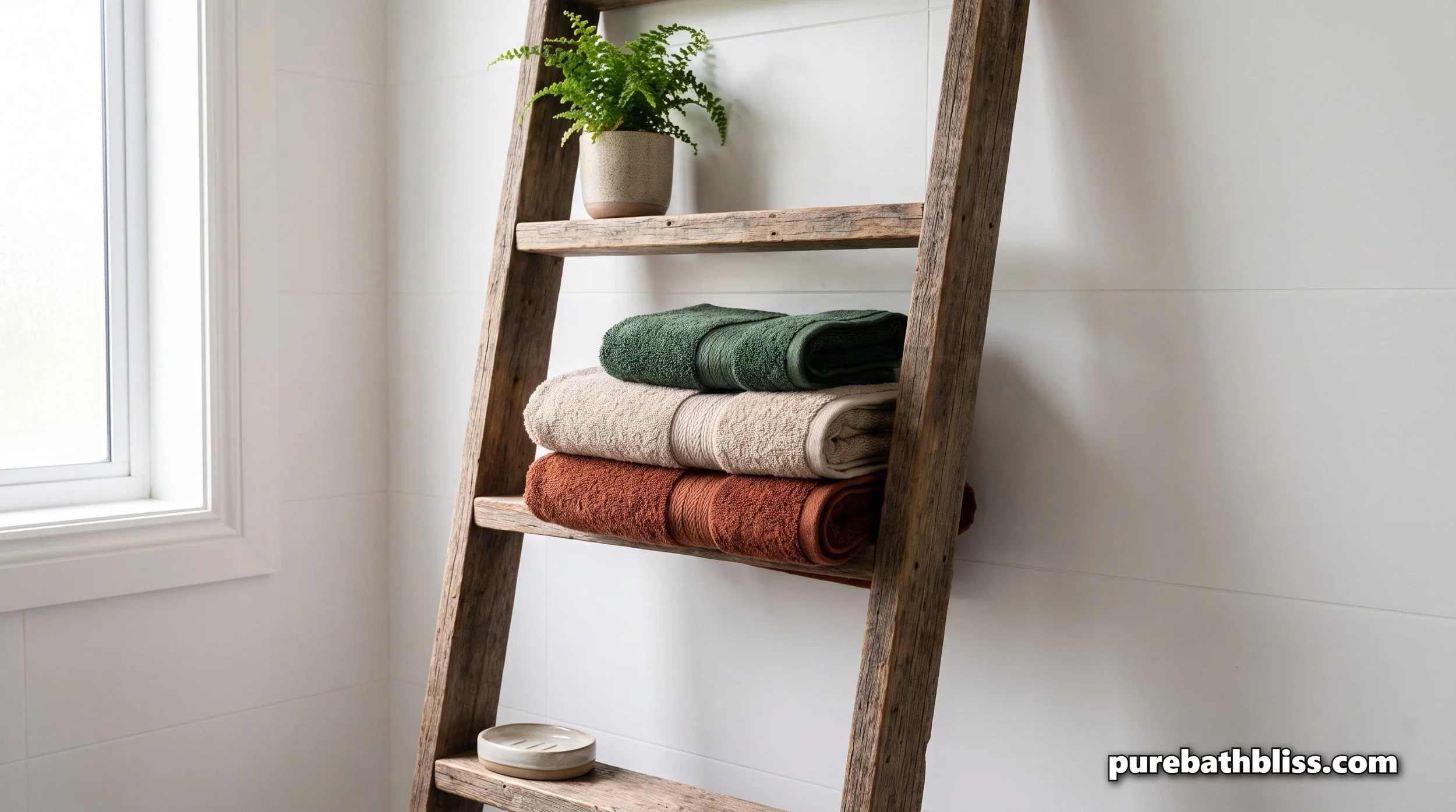
This is the single highest-impact change you can make to the visual character of a bathroom for the least money. Towels in white, grey, and pale blue read as summer and spring. The same bathroom with towels in terracotta, warm oatmeal, forest green, or deep rust reads as autumn immediately, and the change takes about thirty seconds to execute.
You do not need to buy new towels for this. Most households have enough towels that rotating which ones are on display is sufficient. Pull out the darker, warmer-toned ones and fold the white and grey set away until spring. If your towel collection is exclusively white or light-coloured, a set of fall-toned hand towels or a single bath sheet in a warm accent colour is a low-cost entry point. Terracotta cotton bath towels have been one of the most searched bathroom textile searches in September and October for two years running and the options at every price point are significantly better than they were even two years ago.
How you fold and display them matters as much as the colour. Our guide to the spa fold towel technique covers the two hotel-style folds that make even budget towels look deliberately styled on a shelf or ladder rack.
2. Switch to a Warm Lightbulb Temperature
Most bathroom vanity lights ship with bulbs in the 4000K to 5000K range, which is a cool, clinical white that suits summer mornings fine. In autumn, that same light feels harsh and cold. Swapping to a 2700K to 3000K warm white bulb costs $8 to $15 and transforms the character of the room more than almost any other single change. The warm amber tone of a 2700K bulb at six in the morning in October is genuinely different from the experience of the cool white it replaced.
If you have an LED bathroom mirror with adjustable color temperature, simply shifting your default setting from the 6000K daylight mode to the 3000K warm mode achieves the same result without changing any hardware. For bathroom sconces or overhead fixtures, check the base size before buying replacement bulbs. Most residential fixtures use an E26 standard base, but some bathroom bars use candelabra E12 bases, and buying the wrong size is the most common bulb swap mistake.
3. Bring in Dried Botanicals
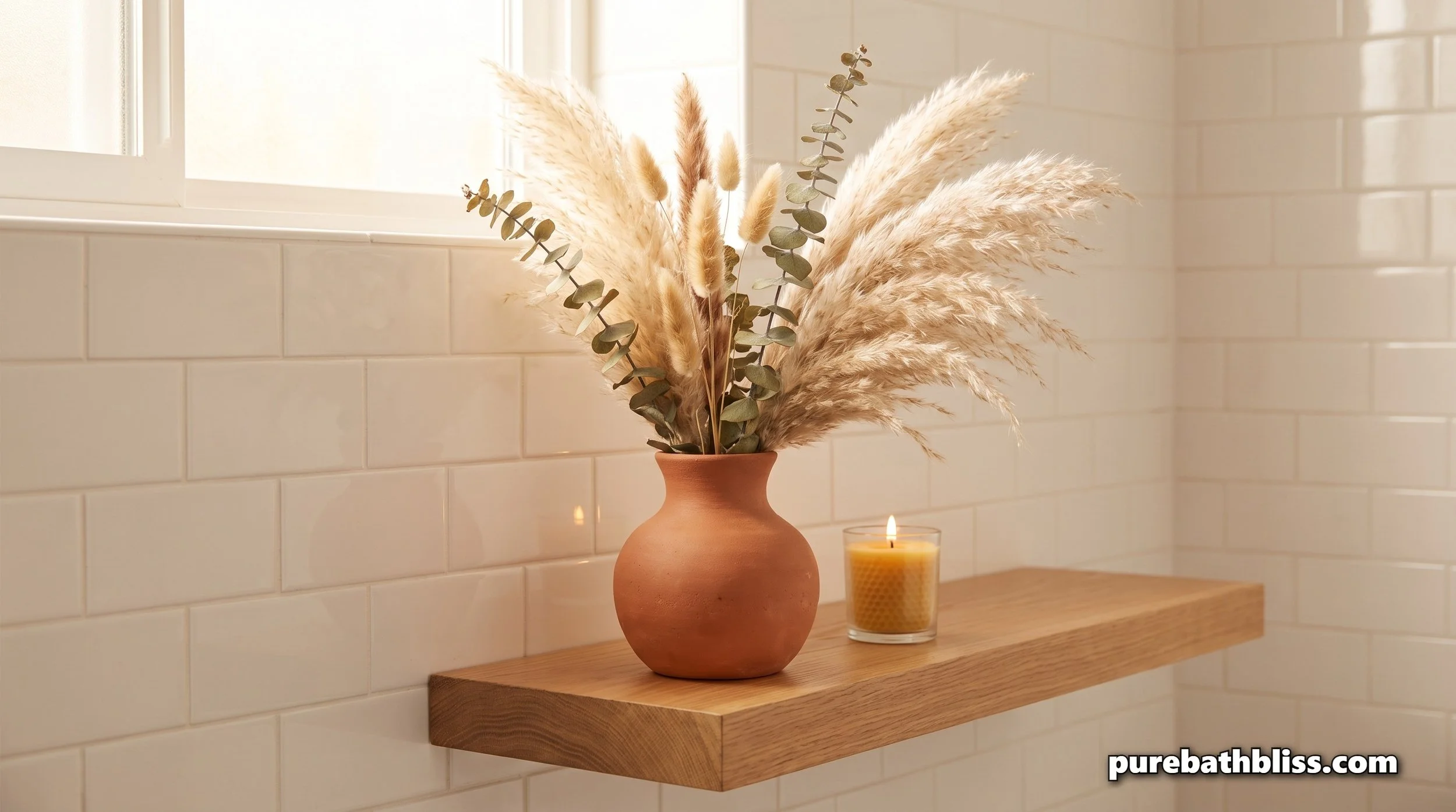
Fresh flowers feel like spring and summer. Dried botanicals feel like autumn and winter. The difference in the room is immediate and the maintenance requirement is essentially zero, which matters in a bathroom where fresh flowers would need replacing every week.
The combinations that work best in a bathroom for fall are dried pampas grass with eucalyptus stems, bundles of dried lavender with wheat stalks, or a single large dried cotton branch in a tall ceramic vase. These all have the warm, organic, textural quality that autumn interiors are reaching for right now. A small bundle of dried pampas grass costs $10 to $20, lasts a full season without any care, and photographs as well in October as any expensive arrangement.
The key is restraint. One or two vessels with botanicals in the same color family reads as intentional. Five different arrangements competing for attention reads as clutter. Pick a corner of the vanity counter or one shelf, keep everything else clear, and the effect is immediately spa-like.
4. Hang Fresh Eucalyptus in the Shower
This is the change that transforms the shower from a functional routine into something genuinely worth looking forward to on a cold October morning. The steam from a hot shower activates the eucalyptol in the leaves, turning the entire shower into a walk-in aromatherapy diffuser for the duration of the shower. The effect on sinuses, stress, and mood is measurable rather than just pleasant, and it costs $8 to $12 for a bundle that lasts two to three weeks.
The critical step most people miss is bruising the bundle before hanging it. Rolling the stems firmly with a rolling pin or heavy bottle breaks the cell walls in the leaves and releases significantly more eucalyptol than an unbrushed bundle. Our complete guide to hanging eucalyptus in the shower correctly covers the bruising technique, the best varieties, how long each bundle lasts, and the pet safety considerations worth knowing.
5. Switch the Reed Diffuser Blend to a Warm Autumn Scent
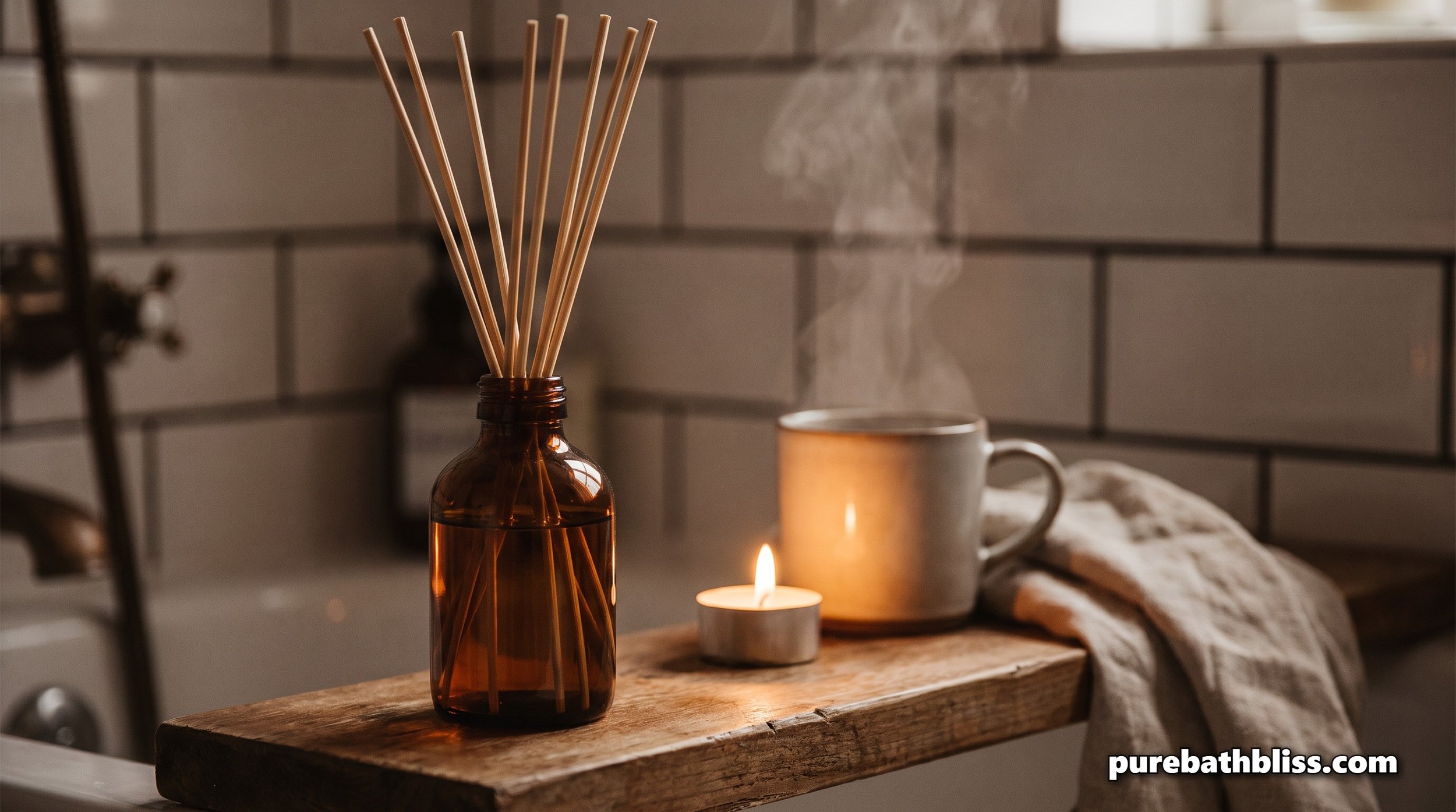
The scent profile that works for summer, citrus and peppermint, reads as slightly jarring in October. The transition to a cedarwood, sandalwood, and lavender blend or a cedarwood and vetiver combination takes about two minutes to execute and changes the entire sensory character of the bathroom. Top up the diffuser vessel with a fresh oil blend rather than replacing the whole unit.
The woody autumn blend that works best in a bathroom for this season is cedarwood 40 percent, sandalwood 30 percent, and lavender 30 percent at the standard 30 percent essential oil to 70 percent carrier oil ratio. This is the blend we cover in detail in the DIY reed diffuser guide, along with why the 30 percent oil concentration is what separates a diffuser that actually scents the room from one that smells like nothing.
6. Add a Beeswax Candle to the Evening Routine
A candle in a bathroom in summer feels redundant when the evening light stays bright until nine. In October, a beeswax candle on the vanity during an evening bath or shower makes the room feel completely different from the functional daytime version of itself. The warm amber light, the faint scent of honey and essential oil, and the visual focus of a flame at eye level create a sensory environment that signals winding down in a way that an overhead bathroom light never can.
Beeswax specifically rather than paraffin because paraffin releases toluene and benzene when it burns, which you do not want to be breathing in a small enclosed room. Beeswax burns completely cleanly. The sleep blend of lavender, vetiver, and cedarwood is the one worth lighting specifically as part of the pre-bed routine. Pure beeswax candles scented with essential oils are the right choice. Or our complete guide to making DIY beeswax candles for the bathroom covers the exact recipe and five scent blends that work particularly well in an autumn bathroom context.
7. Rotate to Autumn-Appropriate Plants
Certain bathroom plants have a naturally autumnal character that summer plants do not. The cast iron plant with its deep green architectural leaves, the ZZ plant with its waxy dark fronds, and the parlor palm with its feathery tropical silhouette all read as deliberately autumn-to-winter in a way that a bright variegated pothos does not. If you have multiple bathroom plants, bring the darker, more architectural specimens to the front for fall and let the lighter, summer-feeling ones recede to a less prominent position.
If you want to add one new plant specifically for autumn, a cast iron plant or a deep-green peace lily in a terracotta pot that matches your new towel palette creates a cohesive visual connection between the soft furnishings and the greenery that makes the room feel considered rather than assembled. Our guide to the seven unkillable bathroom plants covers care requirements for all of these species including how little light they actually need, which matters as the days get shorter.
8. Add a Wooden Tray or Shelf to the Counter
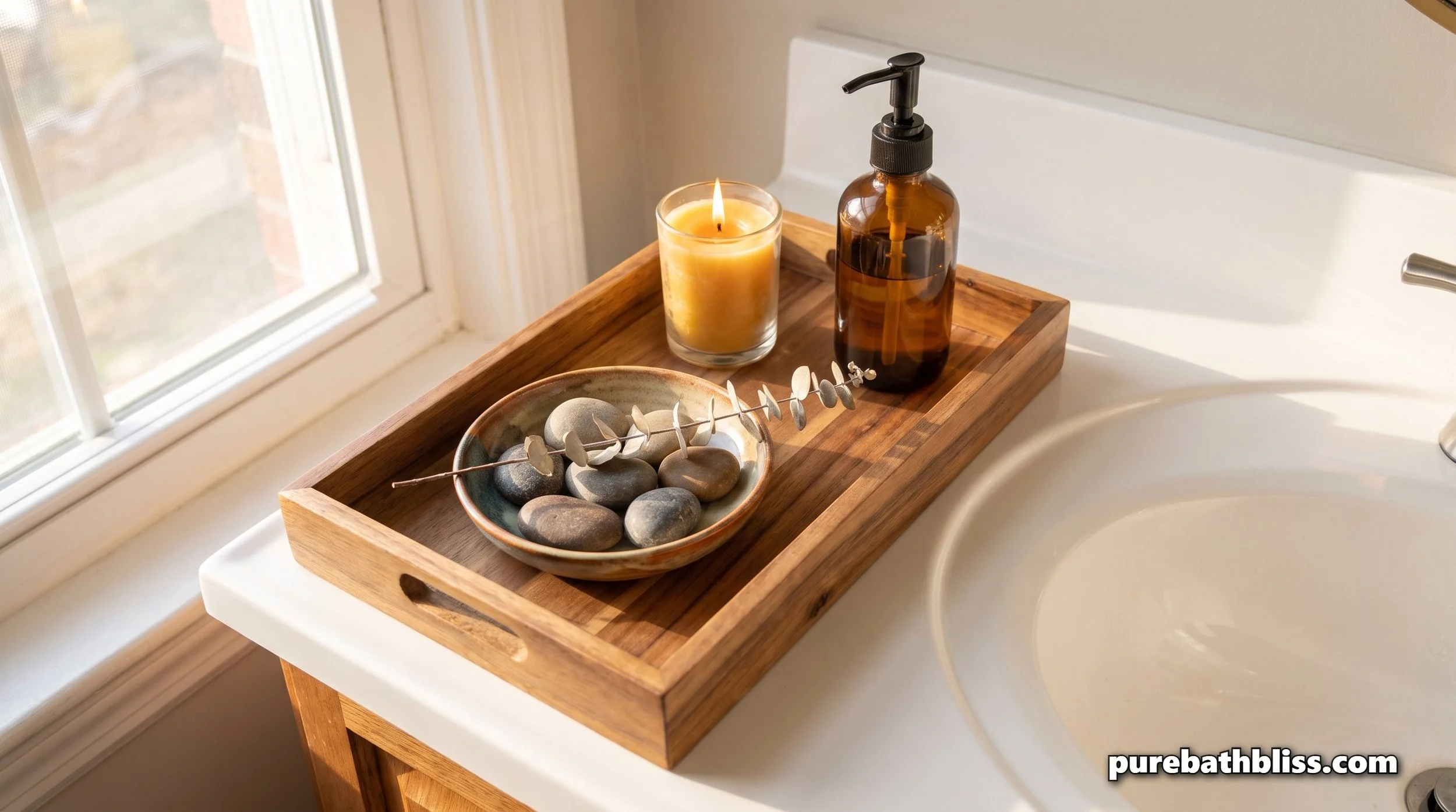
A wooden tray on the bathroom counter does two things simultaneously. It organizes the items on the counter so they read as a curated collection rather than random products, and it introduces a natural material with warmth and texture that white tile and chrome fixtures do not have on their own. Both effects are distinctly autumn in character, the organisation feels intentional and nesting-like, and the wood tone contributes warmth that summer's bright white aesthetic did not need but October does.
The tray does not need to be expensive. A small acacia wood tray costs $15 to $25 and works in virtually any bathroom color scheme because natural wood is neutral enough to work with everything. A small acacia wood vanity tray is the most versatile shape and size for most bathroom counters.
What goes on the tray matters as much as the tray itself. The edit is the point: a soap dispenser, one small plant or botanical, and a candle. That is typically enough. The visual effect of three intentional items on a wooden tray is significantly more impactful than ten items arranged directly on the counter, and it also makes cleaning considerably easier since the tray lifts as one unit.
The Autumn Bathroom Refresh at a Glance
| Change | Time Required | Approximate Cost | Impact |
|---|---|---|---|
| 1. Swap towels to warm tones | 5 minutes | $0 if rotating, $20 to $40 if buying | Highest visual impact of any change |
| 2. Switch to warm lightbulb | 2 minutes | $8 to $15 | Transforms the mood of the room instantly |
| 3. Bring in dried botanicals | 5 minutes | $10 to $20 | Zero maintenance, lasts the whole season |
| 4. Hang eucalyptus in the shower | 5 minutes | $8 to $12 per bundle | Highest sensory impact — transforms the shower experience |
| 5. Switch diffuser to autumn blend | 2 minutes | $5 to $10 in oils | Changes the scent character of the room immediately |
| 6. Add a beeswax candle | 1 minute | $10 to $25, or DIY for under $8 | Transforms the evening bathroom experience |
| 7. Rotate to autumn plants | 10 minutes | $0 if rotating, $15 to $30 if buying | Adds depth and texture to the seasonal palette |
| 8. Add a wooden vanity tray | 5 minutes | $15 to $25 | Organises the counter and introduces warmth and natural texture |
The total cost for all eight changes, assuming you are starting from scratch on everything, is roughly $80 to $150. Most households already own several of these items or can source them from what they have at home, which brings the actual spend considerably lower. Done selectively, even three or four of these changes together produce a room that feels genuinely different for the season. The goal is not a seasonal themed bathroom but a bathroom that feels as considered in October as it does in June, just with different materials doing the work.