The Safe Sanctuary: A Father’s Guide to Baby-Proofing the Bathroom
If you’re a regular reader here, you know I’m passionate about creating a Zero-Waste Sanctuary. But when you have four young daughters like I do, you quickly realize that a sanctuary isn't just about organic soaps and lush plants, it’s about safety.
As a Red Seal Carpenter, I look at a bathroom and see plumbing, hard surfaces, and potential hazards. As a dad, I see a place where my kids learn to brush their teeth and splash in the tub. Balancing those two perspectives is the key to a truly safe home.
Between you and me, baby-proofing can feel overwhelming. You look at all the gadgets in the store and wonder if you need to wrap the whole room in bubble wrap. You don't. You just need a practical, structural approach to the biggest risks.
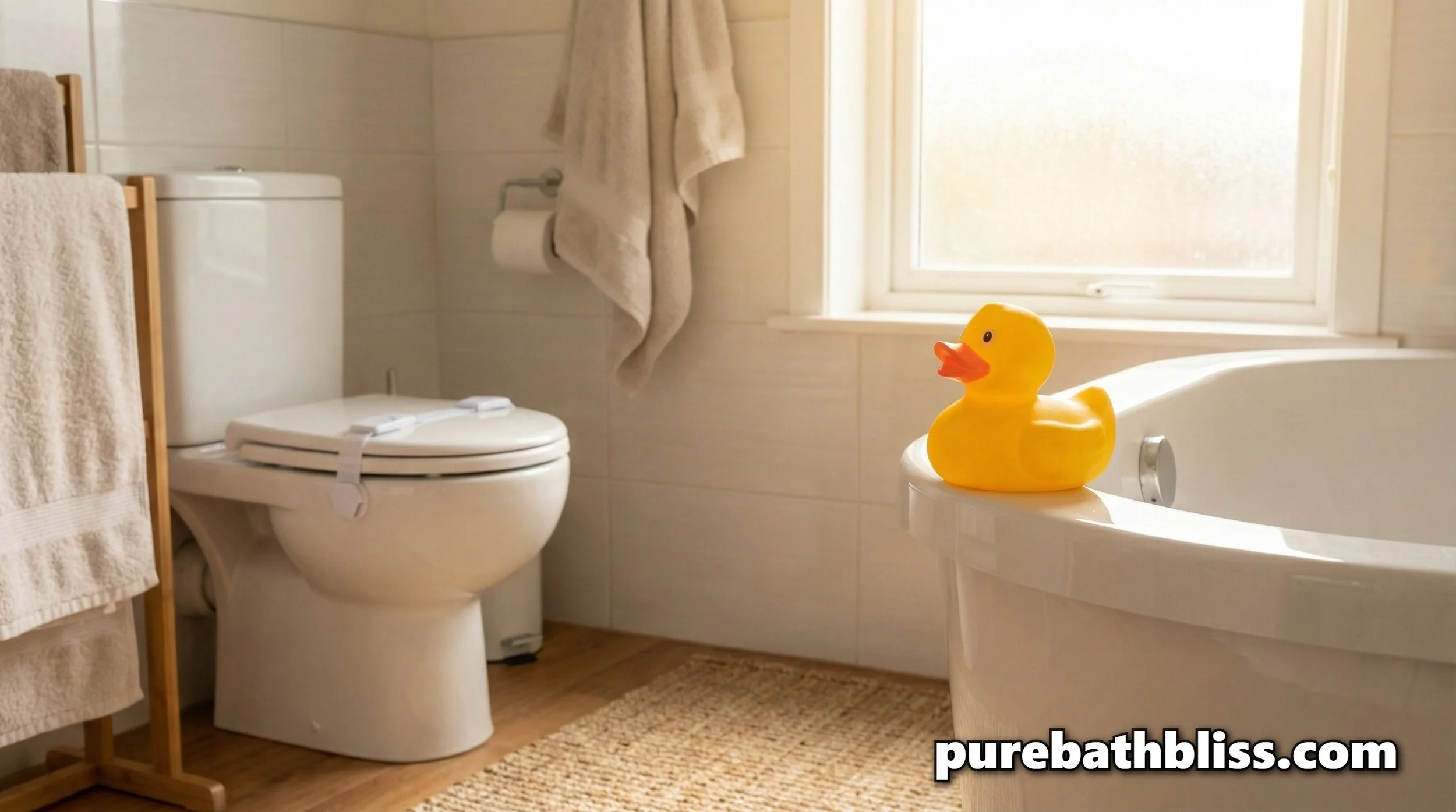
1. The "Scald-Proof" Strategy (Water Temperature)
Water temperature is the most invisible hazard in the bathroom. A baby’s skin is much thinner than ours, and what feels "nice and hot" to a carpenter coming home from a job site can cause a serious burn to a toddler in seconds.
The Structural Fix: I always recommend checking your water heater settings. Most are set to 140°F (60°C) by default, but for a home with young kids, you should dial that back to 120°F (48°C).
The "Wrist Test" Still Rules: Even with a lower heater setting, always test the water with your wrist or elbow before the kids get in. It’s an old-school dad move, but it’s the most reliable one we’ve got.
Anti-Scald Valves: If you're doing a renovation, ask your plumber about pressure-balance valves. They prevent that sudden "shock" of hot water when someone elsewhere in the house flushes a toilet.
2. Hard Surfaces and Soft Landings
Bathrooms are full of "unyielding" materials—tile, porcelain, and stone. As a builder, I love these for their durability, but as a dad, I know they aren't very forgiving when a toddler slips.
The "Slip-Free" Zone: Wet tile is like an ice rink. Investing in high-quality, non-slip mats is non-negotiable. If you're looking for sustainable options, have a look at our Stone vs. Cloth Bath Mats Review to see which holds up best to heavy family use.
Cushion the Corners: The sharp corners of a vanity or the edge of a tub are exactly at "toddler-head" height. Soft, rubberized corner guards might not match your "Bliss" aesthetic perfectly, but they are a temporary necessity for peace of mind.
3. The "Lock and Key" Philosophy
When you have four curious kids, "out of reach" isn't always enough. They are surprisingly good climbers!
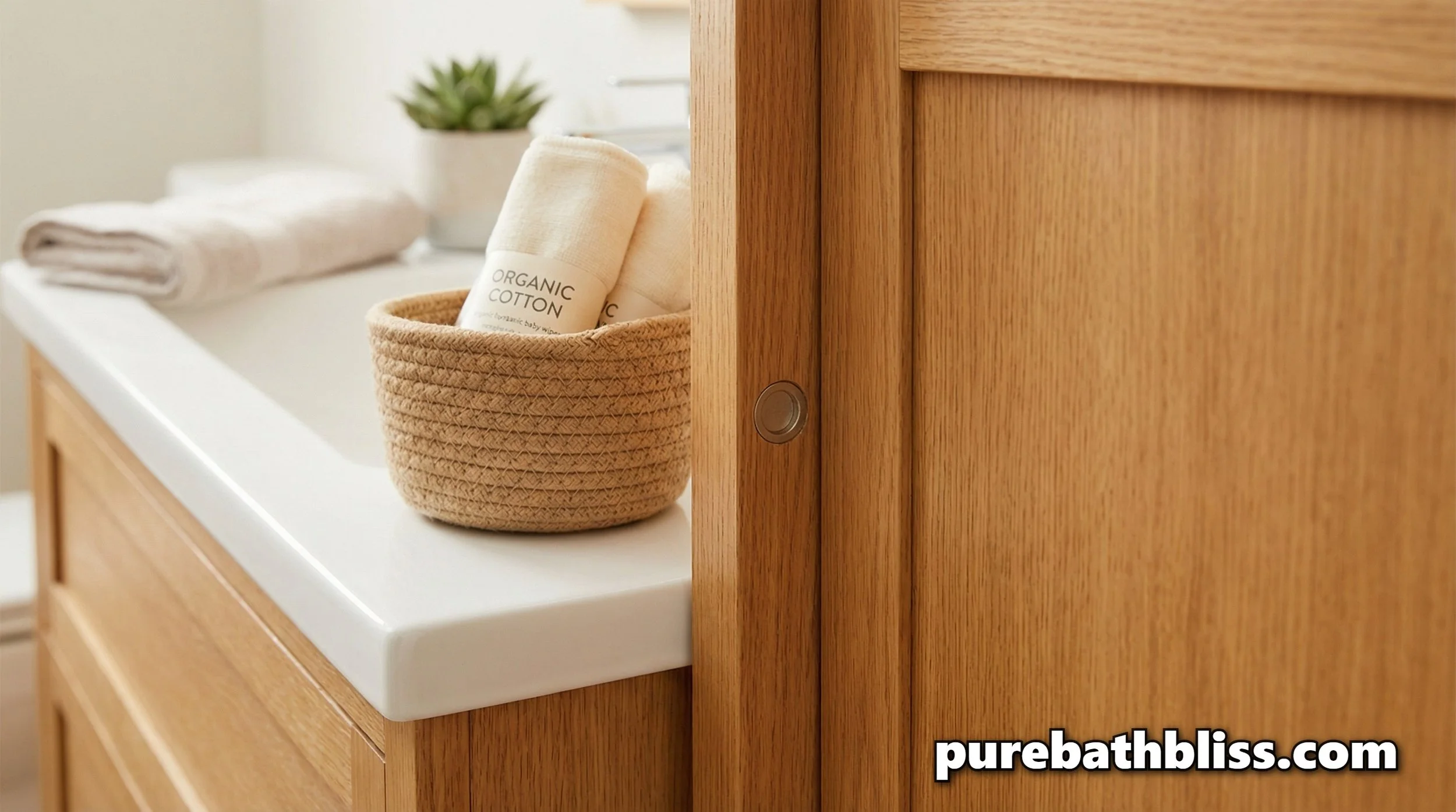
Cabinet Safety: Your bathroom cabinets often house cleaning supplies and medicines. Even if you've switched to Non-Toxic Cleaners, many can still be harmful if swallowed. Magnetic locks are my favorite because they don't require drilling into your nice cabinetry, and they are invisible from the outside.
The Toilet Lock: It’s not just about the mess; a heavy toilet lid can be a finger-pinching hazard, and open water is always a risk for a crawling baby. A simple lid lock is a small price to pay for security.
The High Shelf: Use your carpenter’s eye to find high-altitude storage. Things like razors, glass jars of bath salts, and essential oils should be stored on a high shelf that requires a ladder (or a very tall dad) to reach.
4. Air Quality and Chemical Safety
Safety isn't just about bumps and bruises; it’s about what your kids are breathing in.
The Ventilation Connection: As we discussed in our Spider Plant Care Guide, proper airflow is vital for removing moisture. High humidity can lead to mold and mildew, which can trigger allergies or respiratory issues in young children. Ensure your fan is running for at least 20 minutes after every bath.
Purity in the Tub: Babies absorb more through their skin than adults do. This is why I'm so vocal about avoiding harsh sulfates and synthetic fragrances. When you're choosing soaps and shampoos, look for "fragrance-free" or "organic" labels. It’s a bit more expensive, but as I say on my About Page, it's one of those "do it now" investments that truly matters.
5. Electrical Hazards: The Builder’s Checklist
Water and electricity are a dangerous mix.
GFCI Outlets: This is the "Red Seal" advice: every outlet in your bathroom must be a Ground Fault Circuit Interrupter (GFCI). These are the outlets with the "Test" and "Reset" buttons. They are designed to trip and cut the power instantly if they detect a surge or water contact.
Unplug and Store: Never leave a hair dryer or curling iron plugged in near a sink or tub, even if it's turned off. It only takes a second for a curious toddler to pull a cord.
6. The "Dad Habit" Routine
Safety isn't a one-time setup; it’s a daily practice.
Never Leave the Room: It sounds obvious, but a baby can drown in as little as two inches of water in the time it takes to grab a fresh towel. I always make sure I have the "towel, pajamas, and diaper" ready before the water starts running.
Empty the Tub Immediately: Once bath time is over, pull the plug. An empty tub is a safe tub.
The Stool Strategy: As your kids get older and want to wash their hands "by myself," make sure you have a sturdy, wide-based step stool. Avoid the cheap, tippy plastic ones, look for a solid wood stool that won't slide on the tiles.
Conclusion: Building Peace of Mind
Creating a baby-safe bathroom doesn't mean you have to give up on your dream of a beautiful, sustainable sanctuary. It just means taking a proactive, structural approach to the room's unique challenges.
By managing the water temperature, securing your cabinets, and keeping the floors dry, you’re building more than just a bathroom—you’re building a safe place for your family to grow.
Remember, you don't have to do it all today. Start with the "big three", water temp, non-slip mats, and cabinet locks. You can handle the rest as you go.
Greg’s Safety "Quick-Start" Checklist
[ ] Lower water heater to 120°F (48°C).
[ ] Install magnetic locks on all low cabinets.
[ ] Add a non-slip mat inside and outside the tub.
[ ] Check that all outlets are GFCI-protected.
[ ] Move all medicines and razors to a "high-zone" shelf.